
Business
Central Banks Spook The Market (NYSEARCA:SPY)


Jonathan Weber holds an engineering degree and has been active in the stock market and as a freelance analyst for many years. He has been sharing his research on Seeking Alpha since 2014. Jonathan’s primary focus is on value and income stocks but he covers growth occasionally. He is a contributing author for the investing group Cash Flow Club where along with Darren McCammon, they focus on company cash flows and their access to capital. Core features include: access to the leader’s personal income portfolio targeting 6%+ yield, community chat, the “Best Opportunities” List, coverage of energy midstream, commercial mREITs, BDCs, and shipping sectors,, and transparency on performance. Learn More.
Analyst’s Disclosure: I/we have no stock, option or similar derivative position in any of the companies mentioned, and no plans to initiate any such positions within the next 72 hours. I wrote this article myself, and it expresses my own opinions. I am not receiving compensation for it (other than from Seeking Alpha). I have no business relationship with any company whose stock is mentioned in this article.
Seeking Alpha’s Disclosure: Past performance is no guarantee of future results. No recommendation or advice is being given as to whether any investment is suitable for a particular investor. Any views or opinions expressed above may not reflect those of Seeking Alpha as a whole. Seeking Alpha is not a licensed securities dealer, broker or US investment adviser or investment bank. Our analysts are third party authors that include both professional investors and individual investors who may not be licensed or certified by any institute or regulatory body.

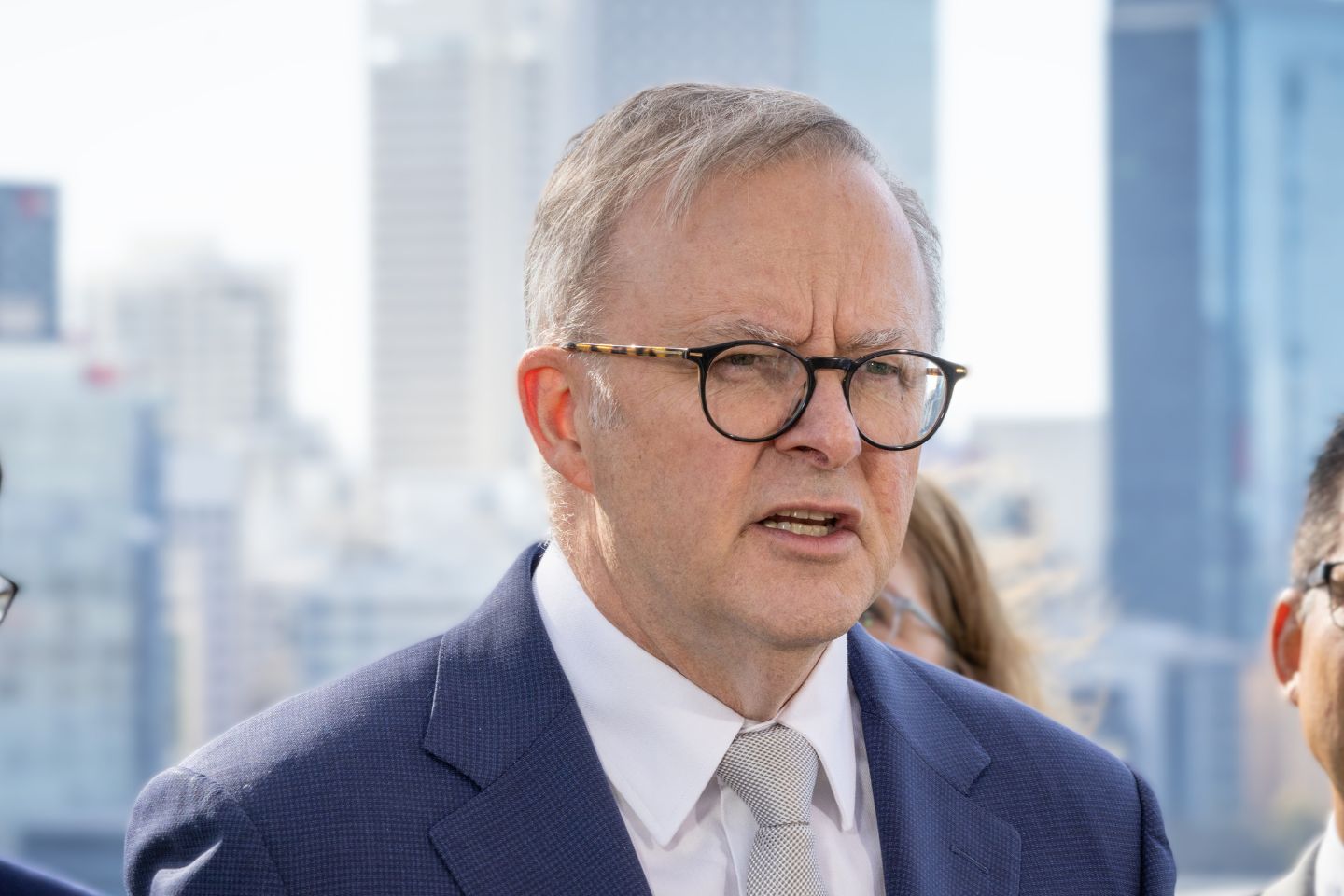
Australia has not been asked to help stop ships travelling through the critical Middle East waterway and doesn’t expect to be, the prime minister says.

The long-short ratio-the proportion of bullish (long) positions to bearish (short)-of foreign portfolio investors’ Nifty futures wagers rose to 22% on Friday, close to the 18-21% range seen in the last week of February before the start of the US-Iran clash on February 28.
The reading had fallen to 9.9% on March 13 and stayed between 10% and 18% for most of the fighting period as these investors had increased the hedges against their portfolios. The ratio had made a lifetime low of 5.98% on September 30, 2025.
 ET Bureau
The short covering came amid Nifty’s weekly gains of 5.9% until Friday, when it ended at 24,050.6, its highest closing level in a month.

“FIIs had begun covering shorts in the derivatives segment in the past few days, signalling early reversal cues,” said Nilesh Jain, head of technical and derivatives research, Centrum Finverse.. “Friday’s return to buying in the cash market after multiple sessions is a positive development and could support further pullback alongside continued short covering.”
FPIs were buyers to the tune of ₹672 crore in the cash market on Friday, after remaining sellers in all trading sessions in March and April so far. Further cuts in bearish positions will depend on the progress of the US-Iran talks, which began on a sour note over the weekend . “While the long-short ratio has improved due to short covering, we do not see many fresh long additions, suggesting that FIIs remain cautious rather than bullish,” said Siddarth Bhamre, head of institutional research at Asit C Mehta. “Continued selling in cash markets with one day of pause is not a sign of a U-turn in sentiment.” Since end of September 2024, when the downtrend in Indian equities kicked in, the long-short ratio of FPIs’ Nifty futures positions has mostly stayed between 10% and 20%, indicating predominantly bearish bets. Before the slide started, the reading was at 81%.
Somil Mehta, head of retail research at Mirae Asset Sharekhan said the shift in the ratio is yet to show foreigners are back to their bullish ways. “Sustained improvement in their sentiment will depend on stability in global factors like crude oil prices and geopolitical developments,” he said. The progress in companies’ fourth quarter earnings will be one of the factors for foreigners to revisit their stance on Indian equities.
“If earnings remain under pressure, valuations may not be attractive to foreign investors. They are also likely to wait for currency stability in India,” said Bhamre.
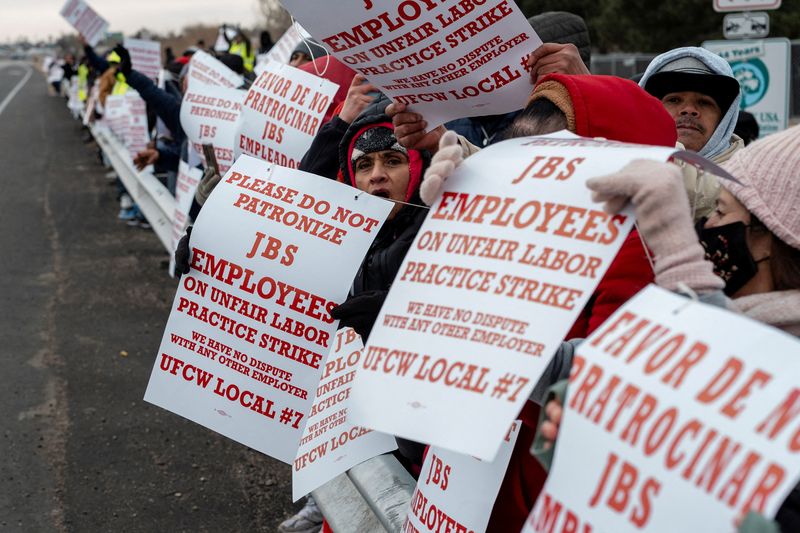

Meatpacker JBS reaches tentative agreement with striking Colorado workers
Muji owner Ryohin Keikaku shares rise on upbeat earnings, guidance hike
Mastercard: Finding Reasons For The Selloff (Rating Upgrade)

As green bond and loan activity cools elsewhere, the Asia Pacific region is emerging as a rare engine of growth in the world’s sustainable finance market, according to a new report from ING.
Key takeaways
- Asia Pacific bucked a global decline in sustainable finance in 2025, posting strong growth in green bonds and loans driven by financial institutions and corporations.
- ING forecasts a rebound in global sustainable issuances to US$1.621 trillion in 2026, with Asia Pacific expected to lead momentum through transition finance.
- While EMEA remains the largest sustainable finance market, corporate appetite there is softening, making Asia Pacific’s real-economy demand increasingly decisive for global growth.
Despite mounting geopolitical and economic turbulence rattling global markets, the Asia Pacific is holding its ground and in some areas, pulling ahead in sustainable finance. That is the central finding of Dutch banking group ING’s latest Sustainable Finance Pulse report, which paints an increasingly divergent picture between a softening West and a resilient, growing East.
Globally, sustainable issuances totalled US$1.557 trillion in 2025, a decline of roughly 6.7 per cent from the US$1.669 trillion raised the previous year. Yet within that subdued global picture, Asia Pacific stands out. The region recorded strong year-on-year growth in green bonds and green loans in 2025, even as sustainability-linked loans and transition bonds experienced a modest pullback.
The drivers of that growth are notable. Financial institutions and corporations led the expansion, while governments, supranational firms, and sovereign funds and agencies saw a slight decline in activity. ING also reported record-high sustainable finance volumes in the region last year, driven by robust deal activity across the first three quarters and its leading role as sustainable finance coordinator on the majority of its transactions.
A Pivot Point for Transition Finance
Looking ahead, ING is cautiously optimistic. “In 2026, we expect to see more growth from Asia Pacific and potentially a pick-up in transition issuance as policy frameworks continue to develop across the region,” said Martijn Hoogerwerf, head of ING’s sustainable solutions group in Asia Pacific. The bank specifically flagged the possibility of a rebound in transition bond debt, instruments designed to help carbon-intensive industries shift toward cleaner operations, as regulatory architecture matures across regional markets.
The demand underpinning this growth, ING argues, is structural rather than speculative. “The resilience of Asia Pacific’s sustainable finance market is increasingly underpinned by real-economy demand in areas such as energy, infrastructure and digital capacity,” said Anand Sachdev, country manager for ING Singapore and head of South and Southeast Asia.
Sachdev also pointed to a shift in client priorities. Companies in the region are increasingly focused on “practical, bankable green and transition financing solutions,” underscoring the growing importance of structuring expertise in delivering credible decarbonisation pathways.
Contrast with EMEA
The contrast with Europe, the Middle East and Africa is striking. While EMEA is expected to remain the largest source of sustainable finance globally in 2026, its growth will be led by governments and financial institutions, even as corporate issuances see a notable decline. ING attributes this partly to the relative ease of accessing conventional, non-ESG-linked debt, and describes sustainability-linked instruments in the region as a weak spot.
Bucking that trend within EMEA, however, is Central and Eastern Europe. Sustainable issuances there surged 40 per cent year-on-year in 2025, driven by sovereigns and state-owned enterprises.
A Cautious Global Rebound Expected
Despite the global dip in 2025, ING sees reasons for renewed confidence. The bank is forecasting a recovery to around US$1.621 trillion in sustainable issuances for 2026, pointing to a relatively strong start to the year with US$257 billion coming to market in January and February alone. March, however, brought a slowdown as market volatility linked to conflict in the Middle East weighed on sentiment.
For the Asia Pacific, the trajectory appears more insulated. With policy frameworks catching up to market appetite and corporations seeking credible paths to decarbonisation, the region looks set to play an increasingly central role in shaping how the world finances its climate transition.
Other People are Reading

Stocks were set to fall in Asia and S&P 500 futures dropped around 1.1% in early trade. Benchmark Brent crude futures opened about 7.5% higher at $102.37 a barrel.
The euro fell about 0.5% to $1.1672.
Marathon talks in Islamabad ended in stalemate and U.S. President Donald Trump on Sunday said the U.S. Navy would itself start blockading the Strait of Hormuz.
Iran has effectively closed the choke point for 20% of the world’s daily energy supplies since the war started in late February, driving up oil prices by more than 30% and fuelling fears of a surge in inflation that has whacked bond markets.
U.S. Treasury futures sank in early trade and gold , which has been a loser as investors have cashed out profits from its long pre-war rally, fell almost 2%.
“This is an absolute unwinding of any optimism heading into the peace talks into that play of dollar: safe-haven; oil jumping and selling out of everything else,” City Index senior market analyst Fiona Cincotta said. “On the other hand, we have seen the markets over-exaggerate sometimes. And I think especially around this scenario, the market is struggling to really price it correctly, because there is so much uncertainty, so many unknowns.”
Moves early on Monday dragged many asset prices back near where they had traded in the middle of last week, before the U.S. and Iran had struck a two-week ceasefire deal.
“The market is now largely back to conditions before the ceasefire, except now the U.S. will block the remaining up to (2 million barrels) Iranian-linked flows through the Strait of Hormuz as well,” said Saul Kavonic, MST Marquee analyst in Sydney.
“The key remaining question is if the U.S. renews strikes on Iran, raising the risk of strikes on energy infrastructure across the region which could have a further lasting impact beyond the duration of the war.”
The Wall Street Journal reported Trump and his advisers were now weighing limited strikes on Iran.
Risk-sensitive currencies such as the Australian dollar and sterling came under pressure, falling 0.7% and 0.5%, respectively. The dollar rose 0.3% to 159.78 yen.
With expectations building for a resurgence in inflation, investors have priced in the possibility of several central banks, such as the European Central Bank and Bank of England, leaning towards raising interest rates this year, in stark contrast with pre-war expectations for cuts or steady rates.
Global equities, which ended last week around their highest since early March, buoyed by optimism that the United States and Iran were heading towards some kind of resolution, are still 2% below where they were prior to the war breaking out.
Trump said on Sunday that the price of oil and gasoline may remain high through November’s midterm elections, a rare acknowledgement of the potential political fallout from the war.

Brent crude futures rose $7.60, or 7.98%, to $102.80 a barrel by 2310 GMT after settling 0.75% lower on Friday.
U.S. West Texas Intermediate was at $104.88 a barrel, up $8.31, or 8.61%, following a 1.33% loss in the previous session.
“The market is now largely back to conditions before the ceasefire, except now the U.S. will block the remaining up to 2 million barrels per day Iranian linked flows through the Strait of Hormuz as well,” said Saul Kavonic, head of energy research at MST Marquee.
President Donald Trump https://www.reuters.com/world/us/donald-trump/ said on Sunday the U.S. Navy would start blockading nL1N40U07M the Strait of Hormuz, raising the stakes after marathon talks with Iran failed to reach a deal to end the war, jeopardising a fragile two-week ceasefire.
He added that the price of oil and gasoline nL1N40V03P may remain high through November’s midterm elections, a rare acknowledgement of the potential political fallout from his decision to attack Iran six weeks ago.
U.S. Central Command said U.S. forces would begin implementing the blockade of all maritime traffic entering and exiting Iranian ports at 10 a.m. ET (1400 GMT) on Monday. “Not only does this restrain exports from Persian Gulf oil producers, but it will also restrict Iran’s ability to export oil and will exacerbate the supply disruptions the market is experiencing,” ANZ analysts Brian Martin and Daniel Hynes said in a note.
IG market analyst Tony Sycamore said the move would effectively choke off the flow of Iranian oil, forcing Tehran’s allies and customers to apply the necessary pressure to get the waterway reopened.
Iran’s Revolutionary Guards nS8N40E024 said on Sunday that any military vessels attempting to approach the Strait of Hormuz would be considered a violation of the two-week U.S. ceasefire and be dealt with harshly and decisively.
Despite the stalemate, three supertankers nL1N40U04R fully laden with oil passed through the Strait of Hormuz on Saturday, shipping data showed. They appeared to be the first vessels to exit the Gulf since the ceasefire deal was struck last week.
No other ships were spotted in the strait on Monday except for one Iran-flagged vessel anchored there, shipping data on LSEG showed.
On Sunday, Saudi Arabia said it has restored full oil pumping capacity through the East-West pipeline nL1N40S100 to about 7 million barrels per day, days after providing an assessment of damage to its energy sector from attacks during the Iran conflict.

Check out what’s clicking on FoxBusiness.com.
First son Barron Trump’s new beverage venture has announced its first two flavors ahead of its planned launch, now set for May.
SOLLOS Yerba Mate, headquartered near Mar-a-Lago, revealed the news in a LinkedIn post last week.
“Introducing our 12-pack: Pineapple + Coconut,” the company said. “Launching May 2026.”
The announcement comes after the 19-year-old, the youngest son of President Donald Trump, was listed as a director of the Palm Beach, Florida-based beverage company, according to January SEC filings in Florida and Delaware.
BARRON TRUMP LINKED TO BEVERAGE COMPANY BASED NEAR MAR-A-LAGO
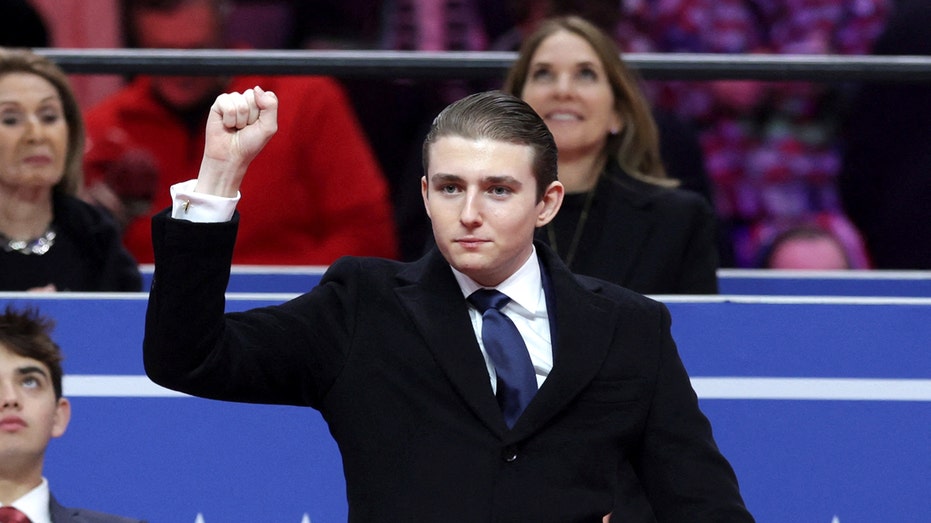
Barron Trump’s new beverage venture has announced its first two flavors ahead of its May launch. (Mike Segar/Reuters / Reuters)
The product will be available for purchase online at sollos.com, the company said.
The company also shared videos showcasing the design of its new beverage packaging ahead of launch.
In one video, light blue cans featuring “SOLLOS” in bold lettering over an orange-and-yellow sun graphic appear to move through a factory during mass production.
Another clip shows packaging for the 12-pack, including a light blue box with yellow graphic accents.
A LOOK AT THE TRUMP FAMILY’S BUSINESS EMPIRE
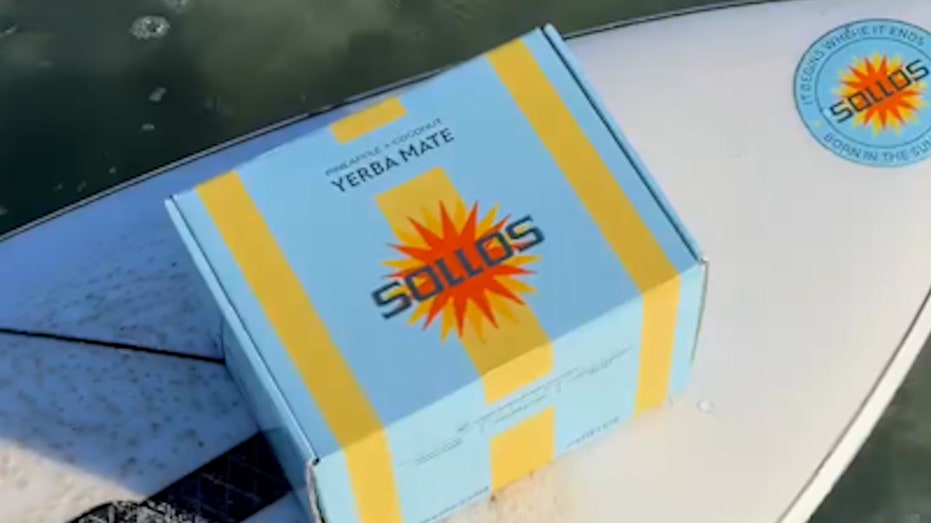
SOLLOS Yerba Mate launches a 12-pack pineapple and coconut beverage line. (SOLLOS Yerba Mate/LinkedIn / Fox News)
Yerba mate, a caffeinated herbal tea native to South America, has recently gained popularity in the U.S. as an alternative to coffee.
SOLLOS was previously announced as a beverage brand designed to complement life in the “Sunshine State,” with branding centered on the sun.
“SOL,” meaning sun in Spanish, represents sunrise and the beginning of the day, the company said. “LOS,” spelled backwards from “SOL,” represents sunset. The startup emphasized that the name is intended to capture the full cycle of the sun, reflecting the idea that “It Begins Where It Ends.”
HERE’S HOW MUCH TRUMP ACCOUNT BALANCES COULD GROW OVER TIME
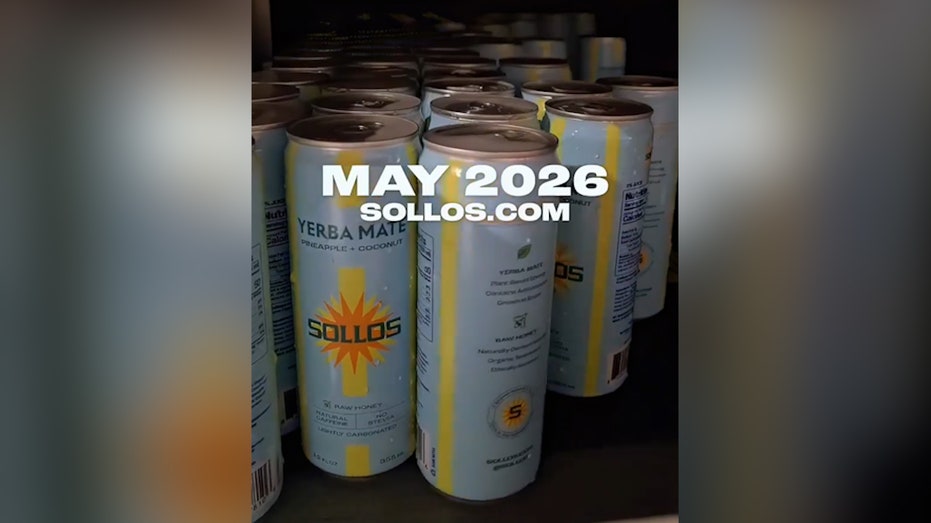
Light blue cans, featuring the logo “SOLLOS,” move through a factory line. (SOLLOS Yerba Mate/LinkedIn / Fox News)
According to SEC filings dated Jan. 23, SOLLOS raised $1 million through a private placement and lists at least five partners.
Barron, a student at New York University’s Stern School of Business, along with four others named in the SEC filing, are listed as executive officers and members of the company’s board of directors.
Others involved in the company include Spencer Bernstein, Rudolfo Castello, Stephen Hall and Valentino Gomez, some of whom attended the same high school as Barron.
GET FOX BUSINESS ON THE GO BY CLICKING HERE
Bernstein, a Villanova University student who previously attended Oxbridge Academy in Palm Beach with Trump, was listed as an executive officer.
“I’ve decided to postpone my final semester at Villanova University to focus on something I’ve been building for the past 8 months,” Bernstein previously posted on LinkedIn.
“Since the end of last school year I have been working alongside my co-founder, Stephen Hall, and a few close friends on SOLLOS Yerba Mate, a lifestyle beverage brand built around clean + functional ingredients.”
Hall, now a student at the University of Notre Dame who also attended Oxbridge Academy, was listed as an executive officer and director.
FOX Business’ Sophia Comptom contributed to this report.
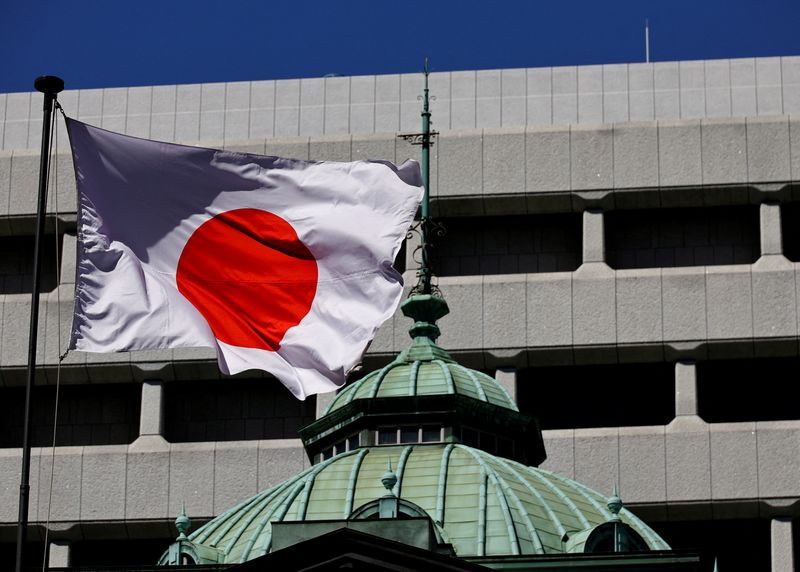

Analysis-Protracted Iran war narrows BOJ’s rate hike options

Stonegate Pub Partners seeks tenant for Cottage Inn, Haxby

Australia won’t join Trump’s Strait of Hormuz blockade
Here's what happens after “Euphoria” season 3 time jump that leaves 2 major characters missing from premiere


-

 Politics2 days ago
US brings back mandatory military draft registration
-

 Fashion2 days ago
Weekend Open Thread: Veronica Beard
-
 Sports2 days ago
Man United discover Nico Schlotterbeck transfer fee as defender reaches Dortmund agreement
-

 Tech5 days ago
How Long Can You Drive With Expired Registration? What Florida Law Says
-

 Politics11 hours ago
World Cup exit makes Italy enter crisis mode
-

 Crypto World4 days ago
Canary Capital Files SEC Registration for PEPE ETF
-

 Fashion7 days ago
Massimo Dutti Offers Inspiration for Your Summer Mood Board
-

 Business2 days ago
Tesla Model Y Tops China Auto Sales in March 2026 With 39,827 Registrations, Beating Cheaper EVs and Gas Cars
-

 Fashion5 days ago
Let’s Discuss: DEI in 2026
-

 Crypto World4 days ago
Bitcoin recovers as US and Iran Agree a Ceasefire Deal
-

 Politics3 days ago
Malcolm In The Middle OG Turned Down ‘Buckets Of Money’ To Appear In Reboot
-
 NewsBeat3 hours ago
Pep Guardiola and Gary Neville agree over Arsenal title problem that benefits Man City
-

 Business3 days ago
OpenAI Halts Stargate UK Data Centre Project Over Energy Costs and Copyright Row
-

 Tech7 days ago
Italian court says Netflix must refund customers up to $576 over price hikes
-

 Tech7 days ago
Haier is betting big that your next TV purchase will be one of these
-

 Business1 day ago
Ireland Fuel Protests Enter Day 5 as Blockades Spark Shortages and Government Prepares Support Package
-

 Tech7 days ago
Gamer Restores the Original PlayStation Portal From Two Decades Ago
-

 Tech7 days ago
The Xiaomi 17 Ultra has some impressive add-ons that make snapping photos really fun
-

 Tech7 days ago
Samsung just gave up on its own Messages app
-

 Tech7 days ago
Save $130 on the Samsung Galaxy Watch 8 Classic: rotating bezel, sleep coaching, and running coach for $369
You must be logged in to post a comment Login