

Business
Charging power bank in checked bag forces easyJet flight to divert to Rome


Climatedepot.com executive editor Marc Morano discusses record Memorial Day travel despite high energy prices and analyzes the political blame game over energy on ‘The Bottom Line.’
An international flight diverted to Rome this week after a passenger informed the crew that they had a power bank charging in their checked baggage, according to multiple reports.
The London-based easyJet plane was flying from Hurghada, Egypt to London’s Luton Airport on Tuesday evening when the incident happened.
“No one knew what to think,” passenger Paul Casterton told The Sun. “Suddenly, the plane changed direction and made a descent. It was hard not to fear the worst.”
He added that the passengers were relieved when they found out the issue was a power bank.
20,000 BAGS STRANDED AFTER TECHNICAL ISSUE AT MAJOR AIRPORT LEAVES TRAVELERS SCRAMBLING
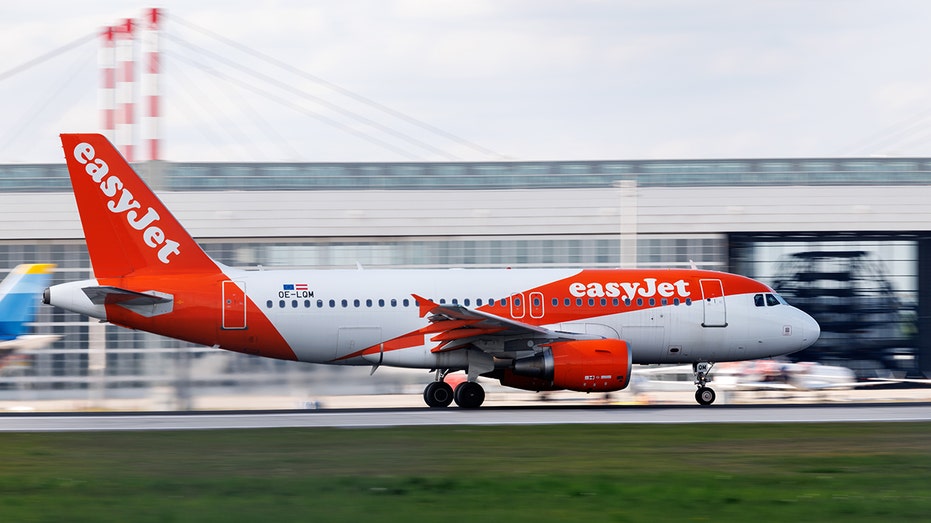
An easyJet international flight was diverted to Rome this week after a passenger’s power bank was left charging in their checked baggage. (Matthias Balk/picture alliance via Getty Images, File / Getty Images)
“Thank goodness it wasn’t a bomb in the hold,” he said. “Word spread as to the true reason we had been diverted. It was quite an ordeal, but mostly relief that everyone was OK.”
A spokesperson for easyJet told People magazine and The Sun: “Flight EZY2618 from Hurghada to Luton on May 19 diverted to Rome Fiumicino as the crew were informed a power bank was charging in luggage.
“The captain then took the decision to divert as a precaution in line with safety regulations,” the statement continued.
RECORD MEMORIAL DAY TRAFFIC EXPECTED AS RIVERS WARNED ABOUT WORST TIMES TO TRAVEL
The spokesperson added, “The aircraft landed safely, and passengers disembarked routinely. We provided hotel accommodation and meals where available. As some customers remained in the airport, they were provided with refreshments.”
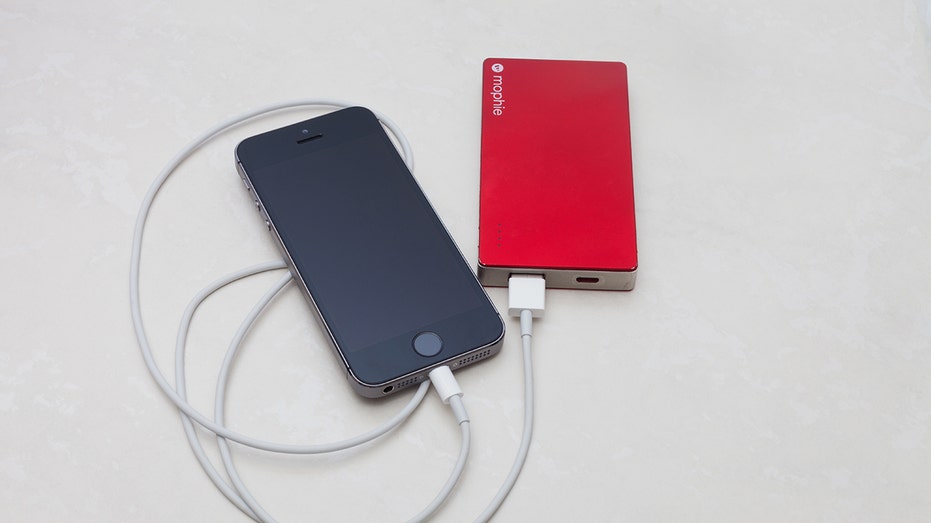
A mobile phone, left, is charged with a portable charger. (Getty Images, File / Getty Images)
EasyJet didn’t immediately respond to Fox News Digital’s after-hours request for comment.
Portable chargers and lithium-ion batteries are prohibited in checked bags on all U.S. and international flights because of the risk of fire.
They are allowed in carry-on bags.
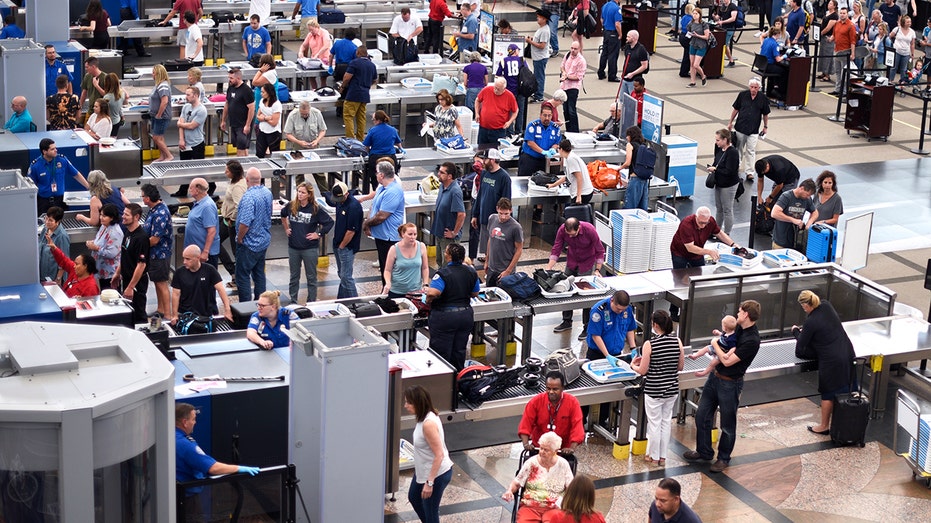
Portable chargers and lithium-ion batteries are prohibited in checked bags. (Robert Alexander/Getty Images, File / Getty Images)
CLICK HERE TO DOWNLOAD THE FOX NEWS APP
The airline added that the “safety of its passengers and crew is easyJet’s highest priority, and easyJet operates its fleet of aircraft in strict compliance with all manufacturers’ guidelines.”
EasyJet also apologized to the passengers “for any inconvenience caused by the diversion and subsequent delay.”



Australia vows to rein in any H5N1 birdflu after confirming first case

These include the reintroduction of open market buybacks through exchanges, the relaxation of borrowing norms for mutual funds and faster fundraising routes for alternative investment funds (AIFs).
The capital market regulator also approved proposals to simplify the transmission of securities and adopted a new code of conduct for its board members.
Currently, buybacks have to be made through the tender-offer route and the open-market route through bookbuilding.
Amendment to MF Regulations

“Considering the revised taxation framework applicable for buybacks, open market buyback through stock exchange is being reintroduced with effect from August 1 to provide additional route for the company to undertake buyback,” Sebi said.
Under the revised framework, buybacks executed through stock exchanges must be completed within 66 working days, with at least 40% of the earmarked funds deployed during the first half of the buyback period. Companies will also be required to communicate buyback details directly to shareholders electronically via email and phone messages in addition to newspaper advertisements. Promoter holdings will remain frozen at the security level during the buyback period, while the appointment of a merchant banker has been made optional to lower compliance costs. “Sebi’s decision to allow two buybacks in a year aligns the regulations with the Companies Act and provides listed companies greater flexibility in capital management-critical when India Inc. has already announced buybacks worth ₹25,000 crore in 2026 so far, the highest since 2023,” said Makarand M Joshi, founder partner MMJC and Associates, a corporate compliance firm. “The move to reintroduce open market buybacks and discretion in appointment of merchant bankers for buybacks shifts responsibility to the company, stock exchanges, and statutory auditors. This would raise the bar on board-level and auditor accountability.”
The regulator’s board also approved an amendment to mutual fund regulations to permit intraday borrowings for managing liquidity mismatches arising from settlement timing differences, foreign exchange settlements and mark-to-market obligations on derivative positions.

Battered by AI-spawned disruptions, Accenture has now lost nearly 50% in a year, putting a question mark on the sustainable competitive advantage of the Indian-listed pureplay that had hitherto relied largely on outsourcing-led cost arbitrage to build a $280-billion industry over the past three decades. For Accenture, which often provides the cue for India’s outsourcing industry, its initial 20% loss Thursday was the worst in its trading history.
The Nifty IT index slumped as much as 6.4% during the day and closed at 27,426.85-the lowest level since May 14. The Nifty declined 0.6%. Infosys slumped 6.5% while Tata Consultancy Services (TCS) lost 3.1%.
 Agencies
NIFTY IT TANKS 6%: Local stocks’ valuations in buy zone, but time’s not right to enter: Analysts
Accenture’s guidance and circumspect commentary triggered the sell-off for the second straight day. Battered valuations limit downside in these stocks, analysts believe, but lack of clarity on growth in a world powered by AI offers restricted scope for upside, too.
“Most of the negatives are priced in and the valuations are now at a discount to Nifty valuations,” said Sunny Agrawal, analyst at SBI Securities. “So, stocks are expected to stabilise but the growth outlook remains hazy.”
Large-cap IT companies guided for tepid growth of 2-5% while midcaps like Coforge, Persistent Systems expect low double-digit growth, he said.
All constituents of the IT index declined except Oracle Financial Services Software that bucked the weak trend and gained 2.9%. LTM dropped 4%, while Mphasis slipped 2.9% lower. Tech Mahindra, HCL Technologies, and Persistent Systems fell over 2% each.Accenture’s guidance suggests the likelihood of further pain in the next couple of quarters as revenue revival has taken a backseat, said Ajit Mishra, SVP Research at Religare Broking.
“The Nifty IT Index is on the verge of retesting the 2023 lows of 26,300 from where it had rebounded to a record high of around 46,000 levels,” he said. “If it fails to hold these levels then it can slide lower to 24,200-24,300 levels.”
Mishra said that the Infosys breached a major trendline on the monthly chart and a breakdown below ₹1,040 could confirm further breakdown.
So far this year, the Nifty IT index plunged 27.6% while benchmark Nifty fell 8.1%.
“IT has lost investor favour due to likely AI led deflationary impact and uncertainty on growth from AI led offerings for clients,” said Agrawal. “Investors should wait for the Q1 commentary to deploy funds in IT sector.”
“That said, there are better opportunities available in the equities across sectors like banking, auto ancillary, hotels, defence,” he added.
Mishra said that investors should stick to the winners from the pack rather than adding stocks simply because valuations are attractive.
“Investors should avoid fresh positions in IT stocks for the short-to-medium term and refrain from adding to existing bets for now,” he said. “HCL Technologies, Oracle and Coforge are relatively better placed over a one-to-two-year timeframe.”
These financial institutions are raising money overseas to take advantage of the 1.5% fixed rate swap provided by the Reserve Bank of India (RBI) on external commercial borrowings (ECBs).
The central bank had announced the swap incentives during its last monetary policy review (MPC) meeting held on June 5.
Also Read: HDFC raises $750-m ECB, first under RBI’s special swap plan
Bankers familiar with the fundraising said financial institutions with ready medium-term note (MTN) programmes will have an advantage as they would have a ready investor base to approach for the latest ECB tranche.
“We will see the first busy period for ECB fundraising next week. HDFC Bank kicked off the fundraising and now the other large Indian bank, SBI, will also join in and it could be as early as Monday,” said a banker involved in these deals.
“If the market conditions are good and there are no surprises, we expect at least one large issue everyday between Monday and Thursday,” said the banker cited above.SBI, given its size and expected investor interest in India’s most valued state-run entity, could raise up to $1 billion provided market conditions are conducive next week, said the banker cited immediately above.
Other banks could look for smaller amounts — may be issues of up to $500 million — as they do not want to overextend in the first instance itself, said a banker.
“All these banks as well as PFC have running MTN programmes, which they can tap at a short notice. This gives them an advantage as they have the documents ready and can arrange to hit the markets without delay or permissions,” said another banker involved in the issues.
Also Read: RBI opens a dollar swap window to help hedge foreign borrowings
The ECB incentives are part of a broader suite of measures aimed at undergirding the rupee, which slid about a percentage point on average per month since the start of FY26. The rupee, which fell close to 97 a dollar, has since recovered to 94.32 per dollar on expectations of a peace deal in West Asia and higher dollar inflows.
Approved Plans
The executive committee of the SBI central board, for instance, had approved a $2-billion MTN programme for the current fiscal year in May. Similarly, PFC, too, has a running $8 billion MTN programme.
The individual banks cited above and PFC did not respond to ET’s mailed queries seeking their comments on the proposed ECBs until the publication of this report.
HDFC Bank’s successful dollar bond sale earlier this week has also pushed its peers to take advantage of the fine pricing. On Tuesday, HDFC Bank raised $750 million by selling five-year bonds to overseas investors through the GIFT City facility. The bond was the bank’s first overseas issue since February 2024 and was priced at 90 basis points above the five-year US treasury, the tightest spread over the US benchmark for any private sector bank in India.
In a bid to attract overseas dollars, RBI announced a special swap arrangement on June 5. The swap is open for both banks and public sector enterprises.


Canada introduces 10% safeguard tariff on canned vegetable imports
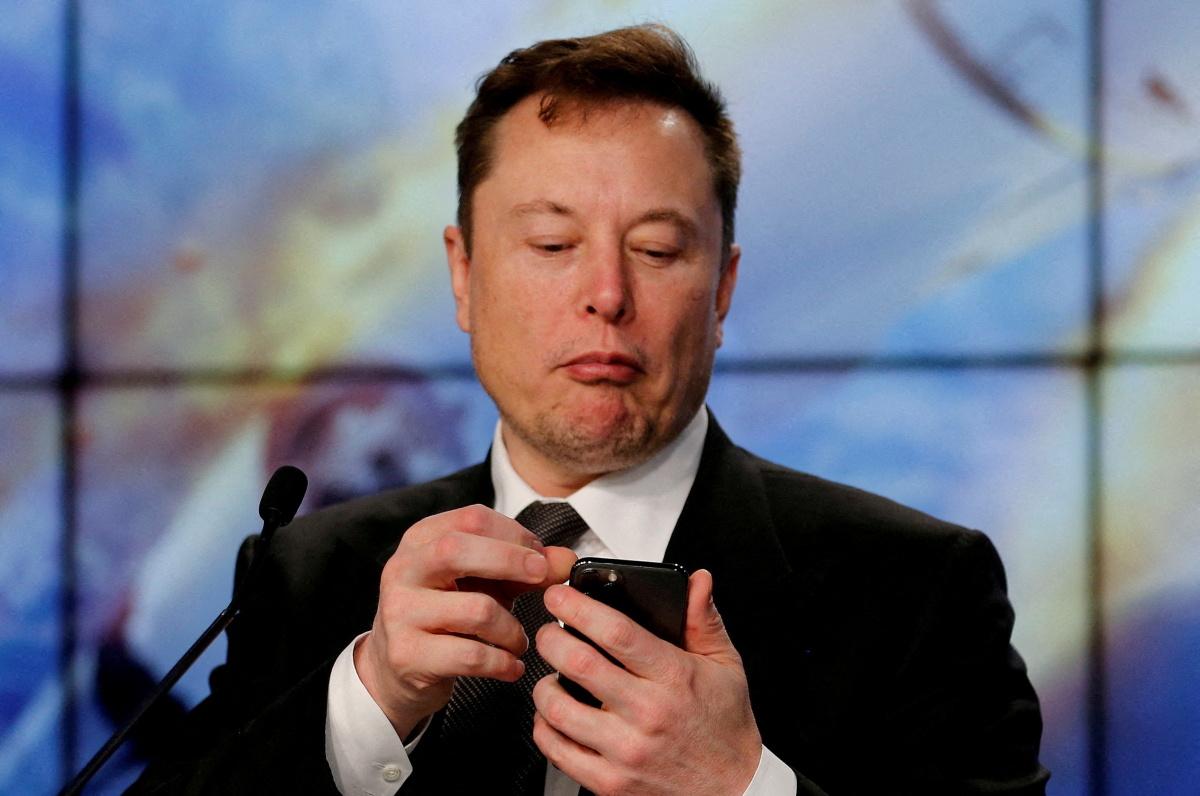
Elon Musk has become the world’s first trillionaire, and the gap separating his fortune from that of Amazon founder Jeff Bezos has widened into a margin without historical precedent, according to the latest figures from the Bloomberg Billionaires Index.
As of June 18, 2026, the Bloomberg Billionaires Index placed Musk’s total net worth at $1.23 trillion, up $608 billion year-to-date, while Jeff Bezos ranked fourth on the index with a net worth of $266 billion, up $12.6 billion for the year. That gap of roughly $964 billion between the two men reflects one of the most dramatic wealth divergences ever recorded between the world’s top two richest individuals.
How Musk Became the First Trillionaire
Musk became the world’s first trillionaire on June 12, 2026, when SpaceX went public at a valuation near $1.77 trillion. The IPO repriced his roughly 38% stake to around $800 billion, pushing his total net worth past the $1 trillion mark — years ahead of the 2028-2032 timeline most analysts had projected.
The milestone came when SpaceX completed the largest IPO in history, pricing at $135 per share, raising about $75 billion, and reaching a valuation near $1.77 trillion, which climbed to over $2 trillion after its first day of trading.
Musk owns 4.76 billion shares of SpaceX, according to the company’s June 2026 S-1 filing. About 1.3 billion shares of unvested restricted stock are excluded from his net worth calculation because they remain subject to performance and other conditions, and 237,530 shares pledged to secure debt are also excluded. He also holds 350,000 exercisable options.
In June 2026, his SpaceX stake was valued at the company’s offering price, leading to a roughly $274 billion increase in his net worth. That single repricing event accounts for one of the largest single-day wealth gains ever recorded for any individual.
The Scale of Musk’s Lead
The magnitude of Musk’s fortune relative to the rest of the world’s wealthiest individuals has reached a point that breaks from historical patterns entirely. Musk’s net worth now exceeds the combined wealth of the next three names on the Bloomberg Billionaires Index: Google co-founders Larry Page and Sergey Brin, and Amazon’s Jeff Bezos. As a trillionaire, Musk is worth around seven Warren Buffetts, who ranks 11th on the index with a net worth of $145 billion.
After the SpaceX IPO, Musk’s lead became historic — at his current valuation, he is worth more than the combined fortunes of the next four richest people: Larry Page, Sergey Brin, Jeff Bezos, and Larry Ellison.
Where Bezos Stands
While Bezos has continued to add to his fortune in 2026, his pace of wealth accumulation has lagged dramatically behind Musk’s explosive gains tied to SpaceX’s public listing. Bezos currently ranks fourth on the Bloomberg index with a net worth of $266 billion, having gained $5.80 billion most recently and $12.6 billion year-to-date.
Bezos’s fortune remains heavily concentrated in a single company, in contrast to Musk’s increasingly diversified holdings across multiple ventures. The vast majority of Bezos’s wealth has historically come from his stake in Amazon, where he remains the company’s largest individual shareholder.
A Diversified Fortune vs. a Concentrated One
Analysts have noted that the structural composition of Musk’s wealth differs significantly from that of previous wealth leaders, including Bezos, in ways that have insulated it somewhat from the volatility tied to any single company’s stock performance. By 2026, Musk is no longer just “the richest man”; he is viewed by analysts as an economic outlier. While Bezos continues to focus on Blue Origin’s incremental approach to space development, SpaceX’s aggressive Starship launch cadence has allowed it to capture 80% of the commercial launch market, leaving Bezos’s space venture to play catch-up.
Unlike other tech billionaires whose wealth is tied to a single public entity, Musk’s net worth is a composite of dominant global infrastructure, aerospace dominance, and the “Orbital AI” frontier. Analysts at Morgan Stanley have noted that by controlling the chips through Tesla, the satellites through Starlink, and the physical interface through Optimus, Musk’s equity value has scaled in a more vertically integrated fashion than rivals whose wealth remains more hardware-centric.
SpaceX’s Growing Share of Musk’s Total Wealth
The SpaceX IPO has fundamentally reshaped the composition of Musk’s overall fortune, shifting it away from Tesla, which had long served as the primary foundation of his wealth. As reported by The Guardian and Reuters, SpaceX’s roughly $8 billion in annual EBITDA has allowed Musk to fund xAI’s substantial capital needs. While Tesla served as the bedrock of his fortune for years, the Bloomberg Billionaires Index now notes that SpaceX accounts for nearly two-thirds of Musk’s total net worth.
Musk’s overall fortune is now built primarily on his ownership stakes in SpaceX, at roughly 38% and now publicly traded under the ticker SPCX on the Nasdaq, along with Tesla at approximately 13% of shares plus stock options, xAI, the Boring Company, and X, formerly known as Twitter.
A Long History of Trading Places
The current gap between Musk and Bezos represents the culmination of a rivalry for the title of world’s richest person that has played out over more than half a decade, with the two men repeatedly trading the top spot during periods of stock market volatility. Musk first surpassed Bezos as the world’s richest person in January 2021, when a rally in Tesla’s share price pushed his net worth to $188.5 billion, $1.5 billion ahead of Bezos, who had held the top spot since October 2017.
The two men continued to leapfrog each other in the years that followed, depending largely on the relative performance of Tesla and Amazon stock. Musk lost his position atop the Bloomberg Billionaires Index to Bezos in late 2024 after Tesla shares tumbled 7.2% in a single session, with Musk’s net worth falling to $197.7 billion against Bezos’s $200.3 billion at the time — a gap that had once been as wide as $142 billion in Musk’s favor before narrowing dramatically as the two companies’ stocks moved in opposite directions.
Bezos reclaimed the title of world’s richest man in early 2024, with his net worth reaching $200 billion compared to Musk’s $198 billion at the time, as Bezos gained $23 billion that year while Musk lost about $31 billion.
A Decisive and Lasting Shift
That era of close competition between the two billionaires now appears to have ended decisively. The combination of SpaceX’s historic public listing, the company’s dominant position in the commercial launch market, and the broader market’s enthusiasm for Musk’s interconnected portfolio of ventures has pushed his fortune into territory that no rival, including Bezos, currently appears positioned to challenge in the near term.
What Comes Next
With SpaceX now trading publicly and subject to the same day-to-day market fluctuations that have historically driven swings in Musk’s net worth through Tesla, some volatility in his trillion-dollar valuation should be expected in the months ahead. Bloomberg’s index already reflected a single-day decline of $32.1 billion in Musk’s fortune as of its most recent update, even as his year-to-date gain remained substantial at $608 billion. Still, with SpaceX commanding roughly 80% of the global commercial launch market and Musk’s broader portfolio spanning artificial intelligence, satellite communications, and humanoid robotics, the scale of his current lead over Bezos and every other billionaire on the planet appears unlikely to narrow significantly anytime soon.

There is no escaping the noise around artificial intelligence. Yet behind the breathless launches and boardroom enthusiasm sits a far more sober question, and it is one MPs are now determined to answer: are British businesses, and the workers inside them, actually getting anything out of it?
That question has become harder to dodge over the past two years. Having consulted hundreds of firms the length and breadth of the country, the Business and Trade Committee (BTC) has heard a recurring worry, that the UK is trailing competitor nations when it comes to helping companies, and small firms in particular, put AI to work. The risk is not merely missed efficiency gains. It is the prospect of British business losing the race for competitive edge before it has properly begun.
The flip side is just as instructive. A steady drip of embarrassing headlines, professional consultancies serving up error-strewn reports stuffed with invented citations and references that simply do not exist, has exposed the perils awaiting the unwary early adopter. For every firm quietly banking the benefits, another is discovering that AI without judgement is a liability dressed up as a shortcut.
It is against this backdrop, and as the Government presses ahead with a fresh raft of measures to spur development, uptake and use of AI, that the committee has opened its inquiry into artificial intelligence, business and the future of the workforce. Over the coming months it will test the attitudes and approaches of big and small business alike, alongside the public sector.
The terms of reference are refreshingly blunt. What real, here-and-now benefits is AI delivering to British business, the health service and local government? Which gains remain stubbornly out of reach, and what is blocking them? Is adoption in some sectors leaning too heavily on a handful of large technology platforms? And what should we make of the curious finding that Britain’s micro-businesses appear to be embracing AI more readily than their small and mid-sized counterparts?
Above all: what do we stand to lose?
The prize is not trivial. The OECD has estimated that AI adoption could add between 0.4 and 1.3 percentage points to UK productivity growth, worth tens of billions in additional output by the end of the decade. Realising even a fraction of that would move the dial on a productivity problem that has dogged the British economy for the best part of two decades.
Yet the evidence already gathering on the desks of the nation’s business press suggests the gains are real but uneven. Smaller firms are reporting quick, low-cost productivity wins, drafting copy, planning staff rotas, trimming waste, handling routine customer queries, long before they tackle anything more ambitious. The tools are cheap and, for the most part, straightforward to deploy. The harder, more valuable transformations remain the preserve of the few.
The committee’s interest in firm size cuts to the heart of the matter. Adoption is not spread evenly across the economy, and the reasons are familiar to anyone who has watched smaller firms wrestle with new technology: thin margins, scarce digital skills, a shortage of time to experiment and a justified wariness of betting the business on an unproven tool. Closing that gap, and unlocking the growth that AI promises UK SMEs, is rapidly becoming the defining test of whether the technology delivers for the whole economy or merely the well-resourced top of it.
Rt Hon Liam Byrne MP, Chair of the committee, framed the challenge in characteristically direct terms. “We can all see the excitement around artificial intelligence, but what is less clear is whether enough British businesses are actually using it to improve productivity, cut costs and win new customers,” he said. “We have heard growing concerns that while some firms are racing ahead, too many others, especially smaller businesses, are struggling to adopt these technologies at scale. If that is true, Britain risks falling behind competitors who are moving faster.”
He was equally alive to the downside. “At the same time, there are obvious questions about reliability, security and trust. Stories of AI systems producing flawed analysis, fabricated references and poor advice underline the importance of getting this right. Our inquiry will examine where AI is genuinely making a difference, what is holding back wider adoption, and what government and industry must do to ensure the benefits are spread across the economy. The challenge now is not just to invent the future, but to make sure Britain is equipped to maximise it.”
That last line bears repeating, because it captures the whole exercise. Invention has never been Britain’s weakness. Diffusion is, getting good ideas out of the laboratory, off the conference stage and onto the shop floors and back offices of the country’s 5.5 million businesses. On that score, the jury is still very much out, and the committee’s inquiry could not be better timed.

Amy Ingham
Amy is a newly qualified journalist specialising in business journalism at Business Matters with responsibility for news content for what is now the UK’s largest print and online source of current business news.

Ministers have set the UK on course to bar under-16s from mainstream social media, but the business and technology figures who will have to live with the policy are far from convinced it will work.
The government confirmed on Monday that platforms including TikTok, Instagram, Snapchat, YouTube, Facebook and X will be required to keep under-16s off their services, with messaging apps such as WhatsApp and the standalone YouTube Kids carved out. The measures, which follow the path already taken by Australia, are expected to come into force by spring 2027, and platforms that fail to take reasonable steps to exclude younger users face fines running into millions of pounds. Nine in ten parents who responded to the official consultation backed a ban.
It is, by any measure, one of the boldest interventions yet in the relationship between children, business and the internet. It is also one of the most contested. The reaction from across the regulatory, fact-checking and age-assurance worlds ranged from outright opposition to heavily qualified support, with a common thread: age limits alone will not fix online harm, and may create fresh problems of their own.
‘Reminiscent of attempts to ban the printing press’
The sharpest criticism came from the free-market Institute of Economic Affairs. Dr Christopher Snowdon, the think tank’s head of lifestyle economics, warned against judging legislation by the good intentions of its champions rather than its likely consequences.
“We know from Australia that most teenagers will get around the ban and that those who are not able to do so will suffer from social isolation,” he said. “There are legitimate concerns about screen addiction among both children and adults, but parents are already able to restrict what their children see online and limit the number of hours they can use a smartphone. These guardrails are removed when kids log in via VPNs or sign up to platforms as adults.”
His verdict was blunt. “What the government is trying to do is reminiscent of attempts to ban the printing press. It is similarly impractical, illiberal and ultimately undesirable.”
‘No silver bullet’
Leanne Proctor, regulatory lead at the Online Responsibility Network, struck a more conciliatory note but reached a similar conclusion, cautioning that the policy “risks letting down the very families it seeks to protect”.
“We understand why so many parents welcome this policy, and we share their concern for children’s safety online,” she said. “The UK would do well to reflect carefully on the experiences of Australia, who identified significant challenges with this approach. Evidence from social media restrictions around the world suggests that age limits alone are unlikely to be a silver bullet in protecting children from online harms, and parents deserve a solution that truly delivers.”
For Proctor, the answer lies in shared responsibility rather than a blanket cut-off. “Every brand and platform has a responsibility in making the internet safer. Our research found the majority of Gen Z firmly believe the responsibility lies with platforms themselves to improve online safety.” The route forward, she argued, is a “multi-stakeholder” model in which platforms deploy effective content monitoring and controls while being regulated quickly and effectively under the Online Safety Act.
A clenched fist, but parents wanted tough measures
Not everyone in the age-assurance industry was hostile. Andy Lulham, chief operating officer at age-verification provider Verifymy, described the announcement as “the government finally showing its hand on social media, and it’s a clenched fist”.
A ban for under-16s, demands that platforms close existing accounts, and restrictions reaching into chatbots and gaming platforms amounted to an approach he called “both bold and blunt”. Yet he acknowledged the political reality. “Parents clearly want tough measures; nine in ten who responded to the official consultation backed a ban, with the UK now joining Australia and a growing number of other countries heading in the same direction.”
Lulham argued the technology is now mature enough to do the job. “While not the approach I would have recommended, lessons will have been learnt from Australia and age-check technology is ready to enforce the new legislation,” he said, pointing to the work platforms have already done keeping children off adult websites since age-assurance duties took effect last July. But he warned that hardware and software alone would fall short: “To reduce harm, the ban needs to be backed by real accountability for platforms, proper support for parents, and education that prepares young people for the online world they’ll eventually rejoin.”
‘A free pass for social media companies’
The most fundamental objection came from the fact-checking charity Full Fact, which framed the ban as a retreat rather than a step forward. Mark Frankel, its head of public affairs, called the announcement “neither bold nor decisive” and “a de facto surrender in the fight against harmful online misinformation”.
Rather than locking under-16s out, Frankel said, ministers should be applying far greater regulatory pressure on technology companies to dismantle addictive design features and placing a statutory duty on them to help users tell fact from fiction. He also flagged an awkward contradiction at the heart of the government’s wider agenda: “If the government is serious about extending participation in our democratic process to 16 and 17-year-olds, restricting their access to these platforms is unlikely to help them become better informed.”
His closing charge was that the policy lets the platforms off the hook entirely. “It’s not the technology itself that is harmful, but the way it’s designed and marketed to all users of these platforms. Far from protecting young people from online harms, this ban fails to address current weaknesses in online safety legislation and gives social media companies a free pass.”
What it means for business
For platform operators, brands and the fast-growing age-assurance sector, the direction of travel is now clear even if the detail is not. Further measures, including possible overnight curfews and limits on infinite scrolling for under-18s, are expected to be set out in July, and the practical burden of compliance will land on businesses, not Whitehall.
The government’s own Online Safety Act explainer and the House of Commons Library briefing on proposals to ban social media for children set out the legislative backdrop against which firms will have to plan. What this week’s reaction makes plain is that even the companies building the tools to enforce the ban doubt it can succeed on its own. The consensus emerging from the industry is that age limits are the easy part; meaningful accountability, parental support and digital education are the hard, unglamorous work that will actually determine whether children are any safer.

Jamie Young
Jamie is Senior Reporter at Business Matters, bringing over a decade of experience in UK SME business reporting.
Jamie holds a degree in Business Administration and regularly participates in industry conferences and workshops.
When not reporting on the latest business developments, Jamie is passionate about mentoring up-and-coming journalists and entrepreneurs to inspire the next generation of business leaders.
Business
GTA 6 Pre-Orders Open June 25, 2026 as Rockstar Confirms November Release Date Still Stands

Rockstar Games has officially confirmed that pre-orders for “Grand Theft Auto VI” will begin on June 25, 2026, marking a major milestone in the rollout of one of the most highly anticipated video game releases in the industry’s history.
Pre-orders for Grand Theft Auto VI will officially begin on June 25 on digital storefronts and at other select retailers, the studio announced Thursday. Rockstar advised fans to add the title to their wishlists on the PlayStation Store or Microsoft Store in order to receive alerts once pre-orders go live.
A Long-Awaited Confirmation
The announcement arrives after years of speculation, leaks, and at least one previous delay surrounding the franchise’s long-gestating sixth installment. A previously released teaser image for “Grand Theft Auto VI” had shown a now-inaccurate scheduled release date of May 26, 2026. At the time of the original May 2025 announcement, Rockstar Games had set that release date, but later in 2025, the date was pushed back to November 19, 2026, where it currently stands.
The previous “Grand Theft Auto” title, “Grand Theft Auto 5,” was released nearly 13 years ago, in September 2013, underscoring just how long fans have waited for a new mainline entry in Rockstar’s flagship open-world crime series.
Platforms and Launch Window
Rockstar Games confirmed pre-orders open June 25, with the game launching on November 19, 2026. At launch, the game will be available on PlayStation 5 and Xbox Series X and S, with a PC version expected later.
At launch, the highly anticipated title will be available exclusively on current-generation consoles, specifically the PlayStation 5 and Xbox Series X|S. True to the studio’s historical release patterns, no PC version has been announced for the initial launch window, establishing a temporary console exclusivity period at release. Like previous Rockstar releases, the game is expected to become playable on PC later through the company’s website, Epic Games, or Steam.
New Cover Art Offers a Closer Look at Vice City
Alongside the pre-order announcement, Rockstar also unveiled the game’s official cover art, giving fans their most detailed look yet at the franchise’s long-awaited return to its iconic Florida-inspired setting. The newly revealed cover art adheres to the franchise’s traditional multi-panel collage format while heavily integrating the neon-toned aesthetic of Vice City and the fictional state of Leonida.
The cover art featured protagonists Jason and Lucia, several non-playable characters, and a better glimpse of what fans can expect from Vice City. “Jason and Lucia have always known the deck is stacked against them,” the game’s synopsis read. “But when an easy score goes wrong, they find themselves on the darkest side of the sunniest place in America, in the middle of a criminal conspiracy stretching across the state of Leonida.”
The story follows the twisted crime drama of Jason Duval and Lucia Caminos as they strive to survive Leonida’s criminal underworld and uncover a grand conspiracy.
The artwork reveal generated immediate viral attention across social media. One of the videos posted to Instagram announcing the news received over 2 million likes within the first few hours it was online.
Pricing Remains a Mystery
Despite confirming the pre-order date and launch window, Rockstar has so far declined to reveal how much the game will actually cost — a detail that has become one of the industry’s most closely watched open questions amid broader concerns about rising video game prices. While the title can now be added to user wishlists on major digital storefronts, Rockstar has kept specific pricing models and potential special or collector’s editions under wraps until the pre-order window opens.
The price of the game remains unknown, and it’s unclear if that information will be made available before the June 25 pre-order date. Pricing remains unknown, with speculation of $79.99 or $99.99 versions. Industry analysts have noted that despite the uncertainty over price, the title is still expected to drive substantial console sales. Analysts predict tens of millions of sales, potentially boosting console sales despite rising prices.
A Reassuring Signal on Timing
The decision to open pre-orders just months ahead of the planned November launch has been widely interpreted within the gaming industry as a positive signal that Rockstar does not intend to delay the title further. There’s still a lot of information that isn’t known, including how exactly the online component will work or whether cross-play is involved, but pre-orders opening up so soon does indicate the game may not be delayed past its planned November 19, 2026 launch.
Take-Two Interactive’s leadership has also reinforced that message in recent public comments. Earlier this week, Take-Two CEO Strauss Zelnick addressed the development timeline directly, confirming that the launch date remains in place. “The team at Rockstar really does seek to do something that’s never been done before. That’s really hard, and it takes a long time,” he said.
More Trailer Footage May Be Coming Soon
Fans eager for additional gameplay footage may not have to wait much longer following the pre-order launch. Zelnick also confirmed that a third official trailer would not arrive until after pre-orders go live, raising the possibility that the next wave of footage could land on or shortly after June 25. Eagle-eyed fans have already spotted a new screenshot on the official pre-order page offering a first full view of Vice City in Grand Theft Auto 6.
Stock Market Reaction
The financial markets responded favorably to the announcement, with investors interpreting the pre-order confirmation as further evidence that the title remains on track for its November release. Following the news, shares of Take-Two Interactive climbed 3.4% during opening trading hours on the New York Stock Exchange. The decision to open pre-orders has largely stabilized financial and consumer confidence regarding potential development delays.
With pre-orders now confirmed to open June 25 across digital storefronts and select physical retailers, attention will shift to whether Rockstar reveals pricing details, special or collector’s editions, and the long-awaited third trailer in the days surrounding that date. The newly revealed cover art and pre-order timeline mark what industry experts anticipate will be the official launch of one of the largest media marketing campaigns in entertainment history, as Rockstar and parent company Take-Two ramp up promotion ahead of what is expected to be one of the best-selling entertainment product launches of the decade when the game finally arrives on November 19.

Australia vows to rein in any H5N1 birdflu after confirming first case

Can bulls defend $1.10 after whale selling?

Freeman Shines as Americans Reach World Cup Last 32

Blockchain.com files with SEC for U.S. IPO

No Jackpot Winner as $257 Million Prize Rolls Over to $269 Million Monday Draw

Israel says it has killed new Hamas military leader in Gaza City airstrikes

Financial Literacy Explained #607 #unc #bighomiecc #kingyella #jaleec #podcast #street #chicago

P-Square – Chop My Money Remix (Official Video) ft. Akon, May-D

Free Crypto Mining App in 2026. TORIUM NETWORK #torium #toriumnetwork #cryptocurrency
-
 Business5 days ago
No Jackpot Winner as $257 Million Prize Rolls Over to $269 Million Monday Draw
-
 Crypto World5 days ago
Zimbabwe Requires Crypto Businesses to Register Annually Under New FIU Regulations
-

 Crypto World7 days ago
Bitget enters Argentina’s regulated crypto market through PSAV registration
-
 Entertainment5 days ago
Matt Damon’s Viral Sci-Fi Thriller Has Taken Over HBO Max
-

 Business5 days ago
Anthropic staff to meet White House officials next week, Axios reports
-

 Tech5 days ago
As AI companies race to go public, who else is along for the ride?
-

 Fashion8 hours ago
Weekend Open Thread: Miami – Corporette.com
-
 Crypto World5 days ago
Bitcoin could crash to $48,000, if this historical pattern is triggered
-
 NewsBeat5 days ago
Warning of disruption as Cardiff Crossrail works to start
-

 Politics5 days ago
“Israel’s” ban on ICRC visits ruled illegal, but Knesset moves to stop them permanently
-

 News Videos5 days ago
Financial Accounting | Last Day Revision Strategy and Booster | CMA Inter – June 2026
-
 NewsBeat5 days ago
Tributes to former deputy head teacher at Cambridge school among death and funeral notices
-

 Entertainment6 days ago
Deion Sanders Shares Powerful Post After Viral Advice To Deiondra
-
 NewsBeat5 days ago
what doctors are seeing in ebike crashes
-
 Entertainment5 days ago
Kate Middleton Glare Goes Viral After Kids Booed At Royal Event
-

 Crypto World5 days ago
XRP ETFs Outperform As Bitcoin And Ethereum Funds Extend Outflow Trend
-
 Crypto World5 days ago
Market Preview: SpaceX (SPCX) IPO Record, Federal Reserve Meeting, and Iran Nuclear Agreement
-

 Tech5 days ago
Over 400 Arch Linux packages compromised to push rootkit, infostealer
-

 Business5 days ago
Invesco Quality Income Fund Q1 2026 Commentary
-
 Entertainment7 days ago
44 Years Later, This Is the Greatest Star Trek Quote in Sci-Fi History
You must be logged in to post a comment Login