
Business
Charles Schwab MD Howard sells $2.65 million in shares



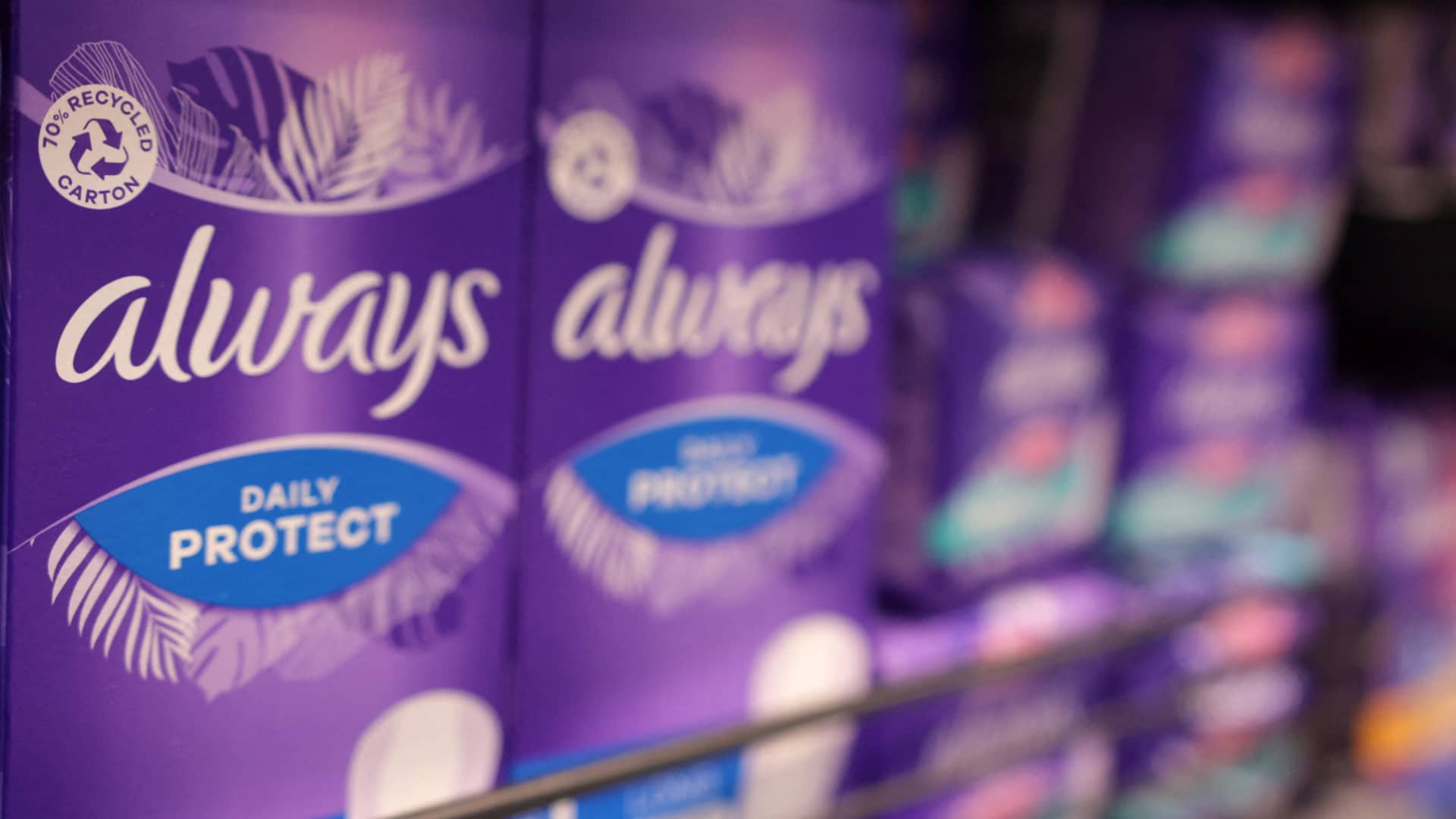
Always products are displayed on a shelf in a supermarket in Sarajevo, Bosnia and Herzegovina October 29, 2024.
Dado Ruvic | Reuters
Rising inflation and ever-changing tariff policies have led to higher prices across store shelves over the past few years, squeezing consumers’ budgets.
An often overlooked example: menstrual products.
The average price of menstrual products, including sanitary pads and tampons, has risen nearly 40% since 2020, from roughly $5.37 per unit to $7.43 per unit, according to February data from Chicago-based market research firm Circana.
Dollar sales from menstrual products have grown by nearly 30% over that same period, according to Circana.
But at the same time, sales of menstrual products — which broadly includes pads, tampons, liners and more — have seen a roughly 6% decrease since 2022, falling incrementally each year, according to data from NielsenIQ.
The data analytics company noted that items across the store have seen average unit price increases, with the dollar volume of consumer packaged goods at large rising 2.7% year-to-date. Those price increases are in line with climbing inflation, with the latest consumer price index in February showing a 2.4% annual rise.
The latest CPI data found that inflation in personal care products in the U.S. has jumped dramatically, up 22.1% in February from January 2020.
But because menstrual products are a necessity for a large portion of the population, those costs may be hurting consumers.
“I do think that we’re at a point where consumers in general are having to choose whether they can buy food for their family, or buy prescriptions for their family. Some things that we do typically define as a necessity, people are finding alternatives for or going without,” said Sarah Broyd, a partner with consultancy firm Clarkston Consulting.
Broyd said the gap between higher prices and declining sales shows consumers may be searching for alternatives out of necessity.
Menstrual products haven’t just been hit by inflation, either. According to government data, the U.S. collected $115 million through tariffs on menstrual products containing cotton in 2025, compared with just $42 million in 2020.
The U.S. imported the majority of its menstrual products from Canada, China and Mexico in 2024, according to the World Bank. President Donald Trump has imposed tariffs on all three of those countries at varying levels over the past year.
Those added costs come on top of the so-called “pink tax,” where some states place a sales tax on menstrual products. According to 2025 data from Statista, Tennessee, Mississippi and Indiana have the highest sales tax on menstrual products at 7%. Products that are deemed “medical devices” are often excluded from sales taxes.
‘A subscription service to be a woman’
For 30-year-old Dafna Diamant, the rising price of menstrual products has become noticeable at the cash register and a drag on her monthly expenses.
The New York resident said she’s noticed her usual pack of roughly 18 tampons rise to somewhere around $25, especially over the past year.
“It’s crazy, and it just feels like as a woman, you have to pay sometimes $50 every couple months,” Diamant told CNBC. “And for some people, it takes a toll on the income.”
Diamant said she feels particularly frustrated because it’s not a monthly expense she can go without. She often buys store-brand period products at retailers like CVS and Walgreens, yet she said she’s still shocked by the sticker price.
“It still feels like a subscription service to be a woman,” Diamant told CNBC. “You have to pay every month to be fertile.”
Even larger companies have felt the effects. Procter & Gamble, the parent company of menstrual product brand Always, said in July that it was raising prices on 25% of its personal care and household products due to a $1 billion total annual tariff impact. It manufactures its Always products across facilities in Maine, Utah and Canada, according to the company.
P&G declined to comment for this story.
Kimberly-Clark, the maker of menstrual product brand Kotex, said on an earnings call in April that the company incurred a total of $300 million in gross costs from tariffs, with more than half of that related to tariffs on China. The company did not respond to CNBC’s requests for comment.
Broyd, the partner at Clarkston Consulting, said menstrual products have been hit with a “triple whammy” of rising raw material costs, inflation across energy and supply chains, and cross-border friction from tariffs.
“When you think about plastic and pulp and some of the main components of feminine care products, they’re largely probably coming from overseas and then getting hit with that much more of tariffs,” Broyd said.
She added that these tariffs are on top of already alleged higher levies on other women’s products, the subject of Congress’ Pink Tariffs Study Act introduced last year by Democrats to determine whether the U.S. tariff system is “regressive” or has a “gender bias.”
As prices continue to shoot up, Broyd said she believes companies will continue to reevaluate their portfolios and potentially sell off their feminine care segments to focus on businesses with higher margins. In November, Edgewell Personal Care sold its feminine care business to a company in Sweden for $340 million.
“You’re seeing these more niche, more startup type brands that are popping up in stores. … That’s the biggest growth,” Broyd said. “People that have the ability to flex up and buy more organic or products that they trust, they’ll spend that price premium. But for other consumers that don’t have the discretionary income to do that, they’re going to trade down and go private label, or go without.”
The rise of reusables
Diamant said she and her friends are now trying period underwear instead of single-use products to streamline their expenses.
A growing number of people have been trying reusable period products, primarily because they’re environmentally friendly and cheaper.
Major manufacturers have often relied on brand loyalty for their products, which could take a hit if consumers turn to alternatives.
“If you’re in fem care, you’re going to be using Kotex for 40 years. If you’re in Depend, you’re going to be using Depend for 40 years, right?” Kimberly-Clark CEO Michael Hsu said on a November earnings call. “There is long-duration frequency. There’s a lot of expenditure for consumers, and so because of that, they want to have an ongoing relation with us.”
Saalt, a reusable period products company offering cups, discs and underwear, said it estimates that 16% to 20% of U.S. consumers have tried or used reusable menstrual products, consisting of mostly younger consumers.
“Affordability is huge,” CEO Cherie Hoeger told CNBC. “When you look at our product, a cup or disc can last 10 years, and our product is only in the $30 price range. … They’re able to save up to $1,800 on the lifespan of that cup or disc, and that’s on the low end.”
Saalt, which launched in 2018, hit revenues of eight figures in its third year of business, Hoeger said. The company declined to disclose details of its financials, but she said demand has grown year-over-year since it launched.
Among Generation Z, Hoeger said the top reason for switching to reusables is pricing.
“They usually have some affinity toward sustainability and climate change, but it’s never their number one,” Hoeger said.
The rise of reusables may be contributing to the declining sales of single-use period products over the past few years. It also coincides with recent studies indicating that tampons could contain lead or other harmful ingredients. The Food and Drug Administration investigated the presence of metals and determined there was no risk.
Riding that momentum, other companies like Knix, MeLuna, Flex and more have entered the reusables space and garnered growing market share as consumers search for alternatives.
“Affordability is the crux; it’s the root problem,” Hoeger said. “Without affordability for these period products, you have real economic consequences for women to happen.”
Business
Apple’s Upcoming iPad Mini Expected to Eliminate Jelly Scrolling with OLED Display Upgrade in 2026 Model
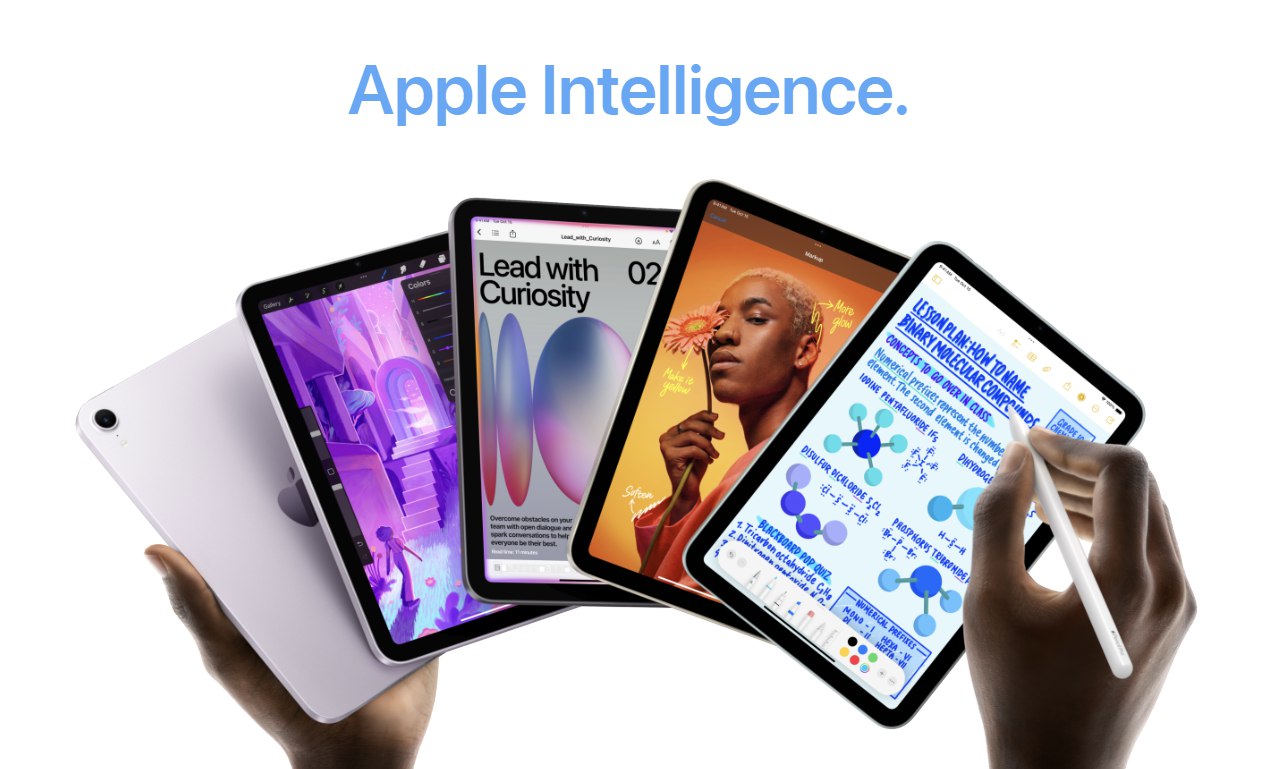
Sydney — The persistent “jelly scrolling” issue that has frustrated iPad mini users for years may finally be resolved in Apple’s next-generation model, with strong rumors pointing to an OLED display transition in the 2026 iPad mini that could eliminate the problem entirely.

Known as jelly scrolling, the effect causes text and images to appear to wobble, stretch or bounce unevenly during rapid vertical scrolling in portrait mode. It stems from the way LCD panels refresh pixels row by row, with slight timing differences between the left and right halves of the screen creating a noticeable distortion. The issue first gained widespread attention with the iPad mini 6 in 2021 and persisted to varying degrees in subsequent models.
The current iPad mini 7, released in October 2024 with the A17 Pro chip, saw Apple implement hardware tweaks to the display assembly—reportedly including changes to panel orientation and refresh timing—to significantly reduce the effect. Early reviews from outlets like MacRumors and others described it as “fixed” or “much less noticeable,” with many users reporting it was no longer distracting for everyday tasks like reading articles or browsing social media. However, some reviewers, including The Verge, noted it remained present, albeit milder, and not fully eradicated on LCD technology.
Apple never officially acknowledged a complete fix for the iPad mini 7, but the improvements stemmed from unspecified display hardware adjustments rather than software updates. Slow-motion comparisons showed reduced wobble compared to the iPad mini 6, making it tolerable for most, though sensitive users still found it annoying in landscape or fast-scroll scenarios.
Now, attention has shifted to the next model—widely referred to as the iPad mini 8—expected later in 2026. Multiple reliable sources, including supply chain reports and analyst predictions, indicate Apple plans to adopt OLED panels for the iPad mini lineup starting this year. Unlike LCDs, OLED displays refresh pixels individually and instantly, eliminating the row-by-row scanning that causes jelly scrolling.
Reports from Display Supply Chain Consultants and industry insiders suggest production of OLED-equipped iPad mini panels could ramp up by late 2025, targeting a 2026 launch window—potentially in spring or fall, aligning with Apple’s typical update cycles. This upgrade would bring deeper blacks, better contrast, improved color accuracy and energy efficiency, alongside the complete removal of jelly scrolling artifacts.
The shift to OLED would mark a major leap for the compact tablet, which has stuck with LCD since its inception. Rumors also point to other enhancements: an advanced A-series chip (possibly the A20 or A19 Pro), increased RAM for better multitasking and Apple Intelligence features, and perhaps even higher refresh rates like 120Hz ProMotion in some configurations—though the base model may retain 60Hz to balance cost.
The jelly scrolling fix via OLED is seen as particularly impactful for the iPad mini’s core audience: readers, note-takers, travelers and professionals who favor portrait orientation. Users in fields like medicine, aviation and gaming have long cited the issue as a drawback when holding the device vertically for extended periods.
Analysts expect the 2026 iPad mini to maintain its signature 8.3-inch form factor, slim bezels and compatibility with the Apple Pencil Pro. Pricing is anticipated to start around the current AU$799–$999 range (depending on storage), though the OLED premium could push entry-level models slightly higher unless Apple absorbs costs through economies of scale.
While no official confirmation has come from Apple, the consensus among leakers is that 2026 represents the biggest redesign opportunity since the iPad mini 6’s revival of the line. Earlier rumors of a 2025 refresh appear to have shifted, with the OLED transition requiring more lead time in manufacturing.
For current owners of the iPad mini 7, the jelly scrolling reduction has made the device more enjoyable long-term, as evidenced by 2026 user reviews praising its portability and performance despite the lingering minor effect. Many hold off upgrades until the OLED model arrives, betting on a transformative display experience.
Apple’s move to OLED across more iPads—including potential updates to the iPad Air—signals a broader push toward premium visuals in its tablet lineup. If the 2026 iPad mini delivers on these promises, it could silence one of the longest-standing complaints about the series and solidify its position as the go-to compact tablet.
As speculation builds toward an official announcement, fans await hands-on confirmation that the jelly scroll era is truly over. With OLED’s pixel-level control, the upcoming mini appears poised to offer the smooth, distortion-free scrolling experience users have demanded since 2021.

InvestingPro’s Fair Value flagged RealReal before 48% plunge

Who is wealthier – US or Eurozone?

NEW YORK — Lady Gaga continues to dominate the pop landscape in 2026, delivering theatrical highs on her ongoing **Mayhem Ball** tour while teasing future projects that keep fans buzzing. The 14-time Grammy winner’s latest North American dates, including back-to-back performances at Madison Square Garden on March 19 and 20, 2026, drew rapturous reviews for their cinematic staging, emotional depth and vocal prowess.

The March 20 MSG show, part of the expanded leg announced last year, featured Gaga at her gothic best. Reviewers described it as a “gothic opera” with acts titled “And She Fell Into A Gothic Dream” and “The Beautiful Nightmare That Knows Her Name.” Fans wept during poignant moments, as Gaga blended hits from her 2025 album *Mayhem* with catalog staples like “Paparazzi” and “Lovegame.” The production included elaborate costumes, dramatic lighting and narrative arcs that evoked a dark fairy tale, solidifying her reputation as a live performer at her peak.
The tour, supporting *Mayhem* — which earned her Best Pop Vocal Album at the 2026 Grammys — kicked off in 2025 and has spanned Asia, Europe, North America and Oceania. Recent extensions added multiple nights in cities like Atlanta (March 4-5), Austin (March 8-9), Miami (March 13) and Washington, D.C. (March 23-24). Upcoming stops include Boston’s TD Garden on March 29, Montreal’s Bell Centre on April 2, Saint Paul on April 9 and a final New York run concluding April 13 at Madison Square Garden.
Gaga’s Grammy night earlier this year added to the momentum. She performed a rock-infused version of “Abracadabra” — which won Best Dance Pop Recording — despite nearly canceling due to the tight schedule after Japan dates. She also took home Best Pop Vocal Album for *Mayhem*. The performance, featuring archival Alexander McQueen pieces in memory of Lee McQueen, showcased her collaboration with producers Andrew Watt and Cirkut, plus drummer Josh Freese.
A trademark dispute over “Mayhem” resolved in her favor in late 2025, allowing uninterrupted use for the album, tour and merchandise. A federal court denied a preliminary injunction from surf brand Lost International, affirming artistic expression rights.
Beyond the stage, Gaga’s team confirmed development of a “very bombastic” large-scale project slated for 2026 release. Details remain confidential, fueling speculation about new music, a film or multimedia endeavor. Fans also anticipate a concert film from the Mayhem Ball, with reports of professional filming during her February 2026 Los Angeles Kia Forum run. Director Sam Wrench is reportedly involved, following a streaming bidding war. The project could capture the tour’s spectacle for global audiences later this year.
Gaga’s personal style continues to influence trends. She revived her signature hair bow in a coquette twist during Japan prep videos, pulling platinum blonde locks back with a black accessory that echoed her 2010s era while feeling fresh.
The tour’s success builds on her post-pandemic resurgence, including the Chromatica Ball in 2022 and recent awards recognition. With more than 1.3 million fans already served across 87 dates, the Mayhem Ball demonstrates her enduring draw. Upcoming shows promise continued innovation, blending pop anthems with theatrical storytelling.
As Gaga wraps the North American leg in April, attention turns to what follows — potentially a new era hinted at by her team. For now, Little Monsters savor the mayhem, with tickets for remaining dates moving fast via Live Nation and Ticketmaster.
In a career defined by reinvention, 2026 finds Lady Gaga thriving: commanding arenas, collecting Grammys and plotting her next bold move.
SYDNEY — Australia grapples with a deepening fuel crisis in March 2026, triggered by the ongoing U.S.-Israel war with Iran that has disrupted global oil flows through the Strait of Hormuz. As of March 22, petrol prices have surged to record levels, regional shortages persist despite government assurances of adequate national stocks, and experts warn of potential rationing if disruptions continue beyond mid-April.

Energy Minister Chris Bowen confirmed on March 21 that six oil shipments bound for Australia in April have been turned back or deferred due to escalating tensions. The cancellations compound fears that key Asian suppliers like Malaysia and South Korea may prioritize domestic needs over exports. Bowen emphasized that overall supply remains stable, with petrol reserves at 38 days, diesel and jet fuel at 30 days — figures bolstered by releases from the strategic reserve following an International Energy Agency request.
The government has drawn down about six days’ worth of petrol and five days’ worth of diesel from emergency stockpiles to ease localized shortages. Bowen described the situation as secure until mid-April, crediting ongoing tanker arrivals and full operation of the nation’s two remaining refineries — Ampol’s Lytton in Brisbane and Viva Energy’s Geelong in Victoria — which meet less than 20 percent of demand. Australia imports roughly 90 percent of its refined fuels, leaving it vulnerable to global shocks.
Panic buying has amplified the crisis. Demand spiked by up to 50 percent in some areas as motorists filled tanks and jerry cans amid war headlines, leading to dry pumps at hundreds of service stations. In New South Wales, Premier Chris Minns reported 107 stations without diesel and 42 completely out of fuel as of mid-March. Similar issues hit regional Queensland, Western Australia and Victoria, where farmers face diesel shortages critical for machinery and transport.
Prices reflect the strain. National average unleaded petrol reached 219.5 cents per litre for the week ending March 15, according to the Australian Institute of Petroleum, up from around 169 cents before the conflict intensified. Diesel climbed to 245.6 cents per litre, with isolated reports of $3 per litre in parts of Sydney’s northern beaches. The surge — petrol up 31.8 percent and diesel 40.1 percent since late February — ranks among the sharpest in the developed world, per GlobalPetrolPrices data.
The International Energy Agency urged conservation measures, calling on Australians to work from home where possible, avoid non-essential air travel, reduce road speeds and use public transport. Bowen echoed the advice, noting no one-size-fits-all mandate but encouraging voluntary cuts to preserve supplies for essential services like farming, freight and emergency response.
Broader economic fallout looms. Experts warn a prolonged diesel shortage could halt the economy, empty supermarket shelves and spike food prices by up to 50 percent due to higher transport and production costs. Macrobusiness Chief Economist Leith van Onselen highlighted Australia’s uniquely low reserves — breaching IEA’s 90-day requirement — as a long-ignored vulnerability. Defence analysts described the situation as “absolutely pathetic,” blaming decades of policy inaction on fuel security.
The Australian Competition and Consumer Commission launched a probe into major fuel retailers over alleged anti-competitive conduct, while the government formed a National Fuel Supply Taskforce to coordinate distribution. Prime Minister Anthony Albanese held emergency National Cabinet talks, with states “war gaming” rationing scenarios though reluctant to implement them publicly.
Critics point to structural issues: only two refineries remain after closures, and reliance on Asian imports exposes the nation to geopolitical risks. Some called for faster development of domestic resources in South Australia and Queensland, though experts note such solutions require years, not weeks.
As March 22 draws to a close in Sydney, motorists face queues, price caps at pumps and signs limiting purchases. The government insists no immediate national shortage exists, but warnings persist: if tankers face prolonged delays, mid-April could mark a tipping point. For now, conservation and calm remain the official message amid a crisis that has exposed Australia’s energy fragility.

TransAlta delivers 63% return after InvestingPro Fair Value signal

SEOUL — BTS remains a global phenomenon in March 2026, with their recent comeback album Arirang shattering Spotify records and dominating charts worldwide. As the group — RM, Jin, Suga, J-Hope, Jimin, V and Jung Kook — embarks on their Arirang World Tour following the March 21 Seoul concert, interest surges in their catalog. Popularity metrics combine Spotify streams (over 2 billion for top tracks), YouTube music video views (billions accumulated), sales equivalents, Billboard achievements and enduring fan love from ARMY.

Here are the 10 most popular BTS songs of all time, ranked primarily by combined streaming and viewing data as of mid-March 2026, with nods to chart peaks, sales and legacy.
- Dynamite (2020) BTS’ first full-English single exploded as their breakthrough global hit, debuting at No. 1 on the Billboard Hot 100 — the first for a South Korean act. With over 2.23 billion Spotify streams and more than 2 billion YouTube views on the official MV, it holds the record for longest-running No. 1 on Billboard’s Digital Song Sales (18 weeks, tied with “Butter”). The disco-pop anthem’s feel-good vibe during the pandemic cemented its status as BTS’ signature crossover track.
- Boy With Luv (feat. Halsey) (2019) This upbeat collaboration from Map of the Soul: Persona amassed over 1.36 billion Spotify streams and nearly 1.92 billion YouTube views. It peaked at No. 8 on the Hot 100 and became a staple in BTS’ live shows, blending catchy hooks with empowering lyrics. Its massive sales equivalent (around 6.9 million units) and viral dance challenge keep it near the top.
- Butter (2021) Another English-language smash, “Butter” matched “Dynamite” with 18 weeks at No. 1 on Digital Song Sales and earned Grammy nods. It boasts over 1.43 billion Spotify streams, with the sleek MV racking up billions of views. The smooth retro-pop track’s summer dominance and record-breaking chart longevity solidify its elite position.
- DNA (2017) From Love Yourself: Her, this sci-fi-inspired banger introduced many to BTS globally. It exceeds 1.6 billion YouTube views and strong streaming numbers (part of the group’s early surge). Peaking at No. 67 on the Hot 100, its innovative sound and choreography marked BTS’ shift toward mainstream appeal.
- MIC Drop (Steve Aoki Remix) (2017) The remix version propelled BTS into U.S. consciousness, hitting No. 28 on the Hot 100. With over 1.55 billion YouTube views and solid streams, it blends hip-hop swagger with EDM drops. Its defiant lyrics and high-energy performance remain fan favorites.
- IDOL (2018) Featuring a traditional Korean gugak influence, “IDOL” celebrated self-love and cultural pride. It garnered over 1.37 billion YouTube views and strong streaming figures, peaking at No. 11 on the Hot 100 (with Nicki Minaj remix). The track’s vibrant visuals and message resonate deeply.
- Fake Love (2018) From Love Yourself: Tear, this emotional rock-hip-hop fusion topped charts in Korea and earned U.S. traction (No. 10 Hot 100 peak). With over 1.37 billion YouTube views and millions in streams, its raw vulnerability and dramatic production make it a standout.
- Blood Sweat & Tears (2016) Often hailed as a masterpiece from Wings, this sensual track blends moombahton rhythms with literary depth. It has around 690 million Spotify streams and over 1 billion YouTube views. Critics rank it highly for artistic evolution, with enduring popularity in fan polls.
- Spring Day (2017) A heartfelt ballad inspired by the Sewol tragedy, “Spring Day” tops many all-time lists for emotional impact. It leads Korean fan rankings and holds massive streams (over 630 million on Spotify). Its poignant lyrics and melody make it a staple for deeper ARMY connections.
- My Universe (with Coldplay) (2021) This crossover collaboration debuted at No. 1 on the Hot 100, blending BTS’ energy with Coldplay’s anthemic style. With over 1.58 billion Spotify streams, it bridges genres and expands BTS’ reach internationally.
Recent additions from Arirang— like lead single “SWIM” (14.6 million first-day Spotify streams and rapid YouTube views) — show BTS’ continued dominance, but classics hold strong in all-time metrics. Tracks like “Run BTS” and “Euphoria” also rank high in streams.
BTS’ catalog reflects evolution from hip-hop roots to global pop icons, with billions in combined metrics. As Arirang tops charts and the tour unfolds, these songs fuel their legacy.

The Market Has No Idea How Bullish This 'Run-It-Hot' Shift Is


Trump and Iran trade threats over energy targets as war escalates

two senior Labour councillors defect to the Greens

Berrios building up to rejoin Blue Jays after WBC denials, ‘weird’ injury

This YouTuber Saved a Rare Sun Computer With an SD Card Hidden in Its Original Case


-

 Tech7 days ago
Your Legally Registered ‘Motorcycle’ Might Not Count Under Proposed US Law
-

 Fashion2 days ago
Weekend Open Thread: Adidas – Corporette.com
-

 Politics2 days ago
Jenni Murray, Long-Serving Woman’s Hour Presenter, Dies Aged 75
-
 Tech5 days ago
Are Split Spacebars the Next Big Gaming Keyboard Trend?
-

 Crypto World13 hours ago
Best Crypto to Buy Now: Strategy Just Spent $1.57 Billion on Bitcoin During Fear While Early Investors Quietly Enter Pepeto for 150x Potential
-

 News Videos4 days ago
RBA board divided on rate cut, unusually buoyant share market | Finance Report | ABC NEWS
-

 Crypto World14 hours ago
Bitcoin Price News: Bhutan Sells $72 Million in BTC Under Fiscal Pressure, but the Smart Money Entering Pepeto Sees What the Market Does Not
-

 Business7 days ago
Search for Savannah Guthrie’s Mother Enters Seventh Week with No Arrests
-
 Crypto World2 days ago
NIO (NIO) Stock Plunges 6.5% as Shelf Registration Sparks Dilution Worries
-

 Business6 days ago
Australian shares drop as Iran war enters third week
-

 Crypto World6 days ago
Crypto Lender BlockFills Enters Chapter 11 with Up to $500M in Liabilities
-

 Politics4 days ago
The House | The new register to protect children from their abusers shows Parliament at its best
-

 Fashion6 days ago
25 Celebrities with Curly Hair That Are Naturally Beautiful
-

 Tech2 days ago
inKONBINI Lets You Spend Summer Days Behind the Register
-

 Crypto World4 days ago
Canada’s FINTRAC revokes registrations of 23 crypto MSBs in AML crackdown
-
 Politics5 days ago
Real-time pollution monitoring calls after boy nearly dies
-
 NewsBeat4 days ago
Residents in North Lanarkshire reminded to register to vote in Scottish Parliament Election
-

 Business6 days ago
Meta planning major layoffs as AI spending and automation reshape workforce
-

 News Videos4 days ago
PARLIAMENT OF MALAWI – PAC MEETING WITH REGISTRAR OF FINANCIAL ON AMARYLLIS HOTEL – INQUIRY LIVE
-
 Crypto World7 days ago
U.S. Oil Companies Post Record Profits as Oil Prices Break $100
You must be logged in to post a comment Login