
Business
Chip Stocks Mixed Ahead of Nvidia Earnings


Shares of semiconductor companies were mixed as investors await Nvidia’s second-quarter results after the U.S. market close to gauge appetite for artificial-intelligence chips.
Dutch semiconductor-equipment maker ASML Holding and smaller rival ASM International were down 0.6% and 0.4%, respectively. BE Semiconductor Industries, the Dutch supplier of semiconductor assembly equipment, was down 0.7%. German chip maker Infineon Technologies was up 0.9%. STMicroelectronics shares were up 1%.
Meanwhile, the E-mini Nasdaq 100 futures contract was down 0.3%, pointing to a weak opening for tech stocks in the U.S.


New Zealand has no shortage of ideas. It has founders building software for global markets, exporters with trusted products, scientists working close to commercial opportunity, and a retirement savings system in the KiwiSaver system that has become a significant pool of domestic capital.
The harder question is whether enough of that capital is reaching the places where it can lift productivity, help companies scale and create durable economic value for founders, investors and the country itself.
For Scott Weenink, the issue is not simply whether more money exists in the system. It is whether New Zealand is directing enough long-term capital towards productive businesses, technology adoption and companies capable of growing beyond, what is very small on a global level, the domestic market. In a small economy, that distinction matters. Capital that merely chases familiar and/ or safe assets may preserve wealth for some owners, but capital that helps businesses invest, hire, innovate and expand with global ambition is what changes the national trajectory.
The productivity problem is also a capital problem
New Zealand’s productivity challenge is well documented. The Treasury’s 2025 analysis on innovation and capital argued that New Zealand has not experienced the same productivity growth as comparable countries, and that the country remains, despite the KiwiSaver system, relatively capital shallow. The OECD has made a similar point, noting that deeper and more competitive capital markets, along with foreign investment, are central to lifting productivity.
Those observations can sound technical, but the practical meaning is simple. Workers become more productive when they have better tools, better systems, better infrastructure and better technology around them. A business that cannot invest in those things is unlikely to create higher-wage, higher-skill jobs at scale. A country that underinvests in productive capacity should not be surprised when growth feels harder than it ought to.
The debate is often framed as a policy question, and policy clearly matters. Tax settings, regulation, immigration, infrastructure, energy costs, competition and foreign investment rules all shape the environment in which firms make decisions. But there is also a cultural and institutional question: does New Zealand reward the patient allocation of capital to productive enterprise with significant growth potential, or does it default too quickly to assets that feel safer because they are familiar?
Why patient capital matters
Patient capital is not passive capital. It is money that is prepared to stay with a good business through the stages of growth that rarely fit neatly into a short reporting cycle. It allows a company to invest before the payoff is obvious, to hire ahead of demand, to build technology, to enter new markets and to make decisions that are right over years rather than weeks.
That distinction matters in the view of Scott Weenink because many of the businesses New Zealand most needs will not be built on short horizons. Technology companies, financial services challengers, export platforms and specialist manufacturers often require years of reinvestment before their value is fully visible. If the capital behind them is impatient, the company can be forced into smaller ambitions than it or the country actually needs.
Punakaiki Fund, who I recently joined as Chair, is an example of “patient capital” with it being an evergreen venture capital fund that focusses on investing in early-stage technology companies in New Zealand. It has an outstanding track record of supporting New Zealand technology companies to reach their potential through patient investment and support- Quantifi Photonics, Timely and Vend being obvious examples. New Zealand needs more investors and investment vehicles like this.
The point is not that every company should be funded forever, or that investors should ignore risk. Quite the opposite. Patient capital works only when it is disciplined. It still asks hard questions about governance, margins, management, market size and execution. It still expects accountability. But it understands that building enduring value is different from extracting a quick return.
From savings to ownership
One reason this question is becoming more important is the growth of KiwiSaver. The Financial Markets Authority reported that total KiwiSaver funds under management reached $123 billion in the year to March 2025, after contributions of $12.2 billion and net investment returns of $6.4 billion. That is a material pool of long-term savings in a country that has historically leaned heavily towards property as the default wealth-building vehicle.
The existence of a larger savings pool does not automatically solve the productive capital challenge. A retirement savings system like KiwiSaver can help households build security, but it also raises a wider question about ownership. If more New Zealanders are indirect owners of productive assets through diversified funds, they have a stake in the businesses, markets and governance systems that shape long-term prosperity.
That does not mean turning savers into speculators. It means treating ownership of productive enterprise as a normal part of national wealth-building. It means understanding that a share in a well-run company is not a casino ticket but a claim on future earnings, employment, innovation and service. It also means being honest that capital markets need trust. People will not commit long-term savings to systems they do not understand or institutions they do not believe are acting fairly.
Governance is where capital earns confidence
Scott Weenink’s background sits across law, private investment, financial services, governance and sport. He is a former corporate finance lawyer, a New Zealand based investor and company director, Chair of Xceda Capital Group and Punakaiki Fund, and a founding shareholder and former Chair of Generate KiwiSaver. That mix of roles gives him a practical view of how capital, governance and trust interact.
Good governance matters because patient capital cannot simply rely on optimism. Investors need to know that boards understand risk, management is being challenged constructively, incentives make sense and long-term value is being protected. For a small market like New Zealand, this is particularly important. When capital is scarce, misallocation hurts more. When trust is damaged, it is harder to rebuild.
This is where the conversation about productivity connects to the conversation about boards. Capital is not productive because it has been raised. It becomes productive when it is allocated well, governed well and used to build something with a future. A business with patient investors but weak governance can still destroy value. A business with strong governance but insufficient growth capital can remain smaller than it should. The best outcomes require both.
The small-country advantage
New Zealand’s size is often treated as a constraint, but it can also be an advantage. Smaller markets can build trust quickly. Networks are tighter, reputations travel faster and capable people often operate across several sectors in a way that creates useful cross-pollination. A director who has be involved in a broad range of sectors, and a broad range of markets, may bring a broader lens than a career spent inside one narrow lane.
The risk is that small markets also become too comfortable. Familiarity can make capital conservative in the wrong way. It can lead investors towards the same assets, the same people and the same assumptions. It can make new sectors look riskier simply because they are less well understood. For Weenink, one of the tests for New Zealand is whether it can combine the prudence of a small country with the ambition of a country that knows it must, and can, compete globally.
That will require better bridges between savings, private capital, public markets and growing companies. It will also require more respect for the difficult middle stage of business building, after a company has proved an idea but before it has become obvious that it will be successful. That is often where good companies either become serious or quietly stall. It is also where patient capital can have the greatest effect.
A broader definition of national wealth
The national conversation about wealth still tilts heavily towards what people own personally: houses, deposits, retirement balances, investment portfolios. Those things matter. But a country also needs to ask what it is building collectively. Are there more export-capable companies? Are younger workers seeing careers with a future in New Zealand? Are domestic firms adopting technology quickly enough? Are boards taking the right risks for long-term value rather than simply defending what already exists?
These questions are not separate. A country with deeper productive investment tends to create more capable firms. More capable firms create better jobs, stronger tax bases, larger pools of expertise and more examples of success for the next generation to copy. The benefit of patient capital is therefore not only financial. It is institutional and cultural as well.
For Scott Weenink, New Zealand’s challenge is to become more deliberate about where ambition meets capital. The country does not need reckless risk-taking, and it does not need growth stories built on slogans. It needs disciplined investors, competent boards and leaders willing to build beyond the limits of the local market. If more capital moves towards productive enterprise, and if that capital is matched by governance capable of stewarding it well, New Zealand will give itself a better chance of turning its ideas into companies, jobs and long-term national wealth.
Author bio
Scott Weenink is a New Zealand based investor, company director and former corporate finance lawyer. He is Chair of Xceda Capital Group and Punakaiki Fund, and a founding shareholder and former Chair of Generate KiwiSaver, with experience across finance, governance, technology, sport and international business.

Bank of America (BAC) stock is a candidate for a covered strangle, a strategy that suits investors who already own shares and are happy to add more at a lower price while generating extra income along the way. A covered strangle combines three positions — long 100 shares of stock, a short out-of-the-money call, and a short out-of-the-money put. The…
Copyright ©2026 Investor’s Business Daily, LLC. All rights reserved. 87990cbe856818d5eddac44c7b1cdeb8

Billionaire Sports Direct founder Mike Ashley has criticised recent cost of living and retail policies from Andy Burnham as “populist reactions”.
In a letter to the prime minister, the entrepreneur accused him of “jumping on ‘everyday fixes’ or bandwagons”, while “disastrous” business rates policies and increases to the cost of employing workers were causing businesses to struggle.
He also described a previous proposal of increasing business rates on large warehouses to help reduce them for pubs and clubs as “delusional”.
A Downing Street spokesperson said Burnham would “build a new economy that backs British business, delivers growth in every postcode and ensures the essentials in life – like energy, water and housing – are affordable again.”
Promises including cutting VAT from household electricity bills and reducing business rates for some firms is “just the start”, they added.
Earlier this month, Burnham promised to revitalise Britain’s “hollowed out” high streets by helping councils block new vaping and betting shops.
He also brought forward a plan to end subscription traps and ban shops using misleading recommended retail prices, which can make it seem like discounts are larger than they really are.
In Ashley’s letter, seen by the BBC and first reported by the Financial Times,, external he hit out at announcements made since Burnham succeeded Sir Keir Starmer as prime minister.
The businessman called on Burnham to use his first Budget, scheduled for 27 October, to lower costs for employers and change the government’s position on business rates.
Pubs, social clubs and live music venues will get a 20% business rates cut from April, while a review has been launched into how the tax, which high street firms have long called for reform to, is calculated.
“Shortsighted or populist reactions to underlying business challenges are not the answer,” Ashley said in the letter.
Ashley has repeatedly called for a fundamental overhaul of the tax, including levelling the playing field between High Street retailers and online rivals.
“If your answer is to tax larger retailers even more, through hiking business rates on retailer owned or third-party warehouses whilst reducing rates for pubs and clubs, then that is simply delusional,” he wrote.
Burnham previously said before he was prime minister that cuts for pubs, clubs and music venues could be paid for by higher levies on warehouses operated by online firms such as Amazon, and targeting the owners of empty high street properties.
Ashley built Frasers Group from a single Sports Direct store in Maidenhead in 1982 to a sprawling empire of dozens of brands employing 30,000 people.
The billionaire has frequently attracted controversy from investors and the media, with accusations over the years of building success by exploiting workers.
In 2016, Ashley admitted to MPs that workers at his Derbyshire warehouse had been paid below the minimum wage and a policy of fining staff for being late was unacceptable.
The business, still owned by Ashley but run by his son-in-law Michael Murray, this month bought luxury department store Harvey Nichols and promised a “significant restructuring” of the business.
Ashley also used his letter to ask Burnham how the prime minister intends to revive Harvey Nichols, which has faced financial challenges in recent years.
Referencing comments by Tory peer and former Marks & Spencer boss Lord Rose, who called the announcements “hot air”, Ashley said “I agree with him”.
“It is the disastrous business rates position (which I have raised many times over the years) and the dramatically increasing cost of employing people that are really causing business to struggle,” Ashley said.
“You have the chance to make a difference or get it horribly wrong,” he added.
Ashley said the High Street will be “further devastated” without major reforms, and warned Burnham’s suggestion he will consider further business rates changes in the coming Budget are “too little, too late”.
He also used the letter to attack Burnham’s plans to clamp down on the use of recommended retail prices, saying instead the real issue is “price fixing in sporting goods and other markets” – where he cited the rising cost of official football merchandise.

The Federal Reserve’s primary inflation gauge, the core PCE price index, showed no relief from price pressures ahead of Chairman Kevin Warsh’s Friday speech at the annual Jackson Hole monetary policy symposium. S&P 500 futures dipped slightly after the data. Given that three Fed voters dissented from last month’s decision to hold the benchmark interest rate steady, Warsh’s ability to…
Copyright ©2026 Investor’s Business Daily, LLC. All rights reserved. 87990cbe856818d5eddac44c7b1cdeb8

Most connected services start with a narrow business problem. A manufacturer may add remote monitoring to reduce support calls, give customers better visibility into equipment or help service teams diagnose problems without visiting a site.
At that stage, the scope is usually manageable: one business model, a relatively simple customer structure and a narrow set of technical requirements.
A year or two later, that picture can look very different. The same company may want to introduce paid service tiers, give distributors access to customer fleets, add another equipment line or sell the service to a new type of buyer. These are ordinary growth decisions, not edge cases. What matters is whether the technology underneath the service can change with the business — or whether every commercial shift triggers another costly development project.
The first launch is rarely the expensive part
When companies assess a connected-service initiative, the first questions are usually practical: how long will it take to launch, what will it cost, and can the proposed system support the current use case? Those questions matter, but they say little about what the platform will cost to change.
A system that handles the first product, customer group and workflow perfectly may still be difficult to change. Scaling from 1,000 devices to 5,000 might be relatively straightforward. Changing who can access those devices, how customers are charged, which partners participate in the service or how the platform connects to the rest of the business can be much more disruptive.
The cost of change becomes visible when a commercial decision turns into a redevelopment project. The consequences then extend beyond the engineering budget. Product decisions take longer, opportunities have to wait for technical work, and the business becomes increasingly dependent on the people who understand the existing system or the supplier that built it.
A platform can therefore be inexpensive to launch and still become expensive to own. For a growing SME, the more useful question is not simply whether the first version works, but how much friction the technology will create when the business needs the second, third and fourth versions of the service.
Connected services evolve as the business evolves
Connected services rarely stay in their original shape. An equipment manufacturer might launch a customer portal simply to show machine status. Later, service teams want to use the same data for maintenance plans, distributors need access to selected fleets, and another product range has to fit into the same environment. What began as a straightforward operational tool can gradually become part of the commercial offer.
None of this means the original product was badly planned. It means the business has learned something: which customers matter most, how the service is actually used and where additional value exists. The problem starts when the technology assumes that the first customer structure, pricing model or hardware portfolio will remain permanent.
At that point, business workflows matter as much as device counts. Supporting more devices is one kind of growth; supporting different roles, partner relationships, service tiers and customer journeys is another. A platform that copes well with the first but not the second can quietly narrow the company’s options just as the business is ready to expand them.
SMEs rarely need a five-year service model locked down on day one. They do need enough flexibility to change direction without turning every new commercial idea into a fresh technology project.
Where platform lock-in becomes a business problem
For an SME, vendor lock-in is less about whether the technology is proprietary than about what happens when the business needs to change it. If a strategically important change becomes slow or expensive to implement, or possible only on someone else’s terms, that dependency has become a commercial problem.
One form of lock-in appears when important changes depend entirely on a supplier’s roadmap or willingness to undertake custom work. The company may technically be able to add a new integration, customer role or service model, but only on terms and timelines it does not control. That leaves the business with less negotiating power and can put commercial decisions on somebody else’s timetable.
Lock-in can also accumulate one customer exception at a time. Creating a separate variation for a major client can help close an early deal, but repeating the practice often enough produces several versions of what was supposed to be one service. Updates become harder to coordinate, support effort grows and the next change has to account for an increasing number of exceptions.
Migration creates a similar problem. Data may be difficult to move, integrations may have to be rebuilt, or critical workflows may exist only inside the current provider’s environment. In such cases, leaving is theoretically possible but commercially unattractive.
For an SME, that is the lock-in that really matters. The question is not simply whether it can change supplier or platform. It is whether the cost of doing so — or even of changing the current platform substantially — becomes high enough to remove otherwise sensible business options.
Ownership is really about keeping options open
For an SME, platform ownership does not necessarily mean running every server internally or maintaining every line of software with an in-house team. What matters is having enough control to make important business decisions without discovering that the technology has already narrowed the available options.
Data is an obvious place to start. A company should know whether it can access and reuse the operational and customer information generated by its service, rather than leaving that value trapped inside a particular interface or provider. The same applies to business workflows: customer roles, approval processes and service journeys may need to change as the organisation grows.
Integrations deserve the same scrutiny. A CRM, billing system or support platform that fits today may not be the one the business uses three years from now. Deployment requirements can change too, particularly when larger customers, new markets or regulatory expectations enter the picture.
In practice, ownership is about preserving choices, not controlling technology for its own sake. The more strategically important a connected service becomes, the more valuable it is to know that its data, workflows, integrations and operating model can evolve with the company without constraining its roadmap.
The platform should make the next business model easier, not harder
By the time a connected service is established, the next request is rarely “just add more devices”. It might be a distributor portal, a new equipment range, a premium service tier or different business workflows for a new customer segment. These are changes to the business around the platform, not reasons to replace the platform itself.
The challenge changes when connected services have to support the next version of the business rather than simply more devices. An enterprise IoT platform built around a reusable foundation can accommodate that kind of change without forcing a rebuild, keeping standard platform capabilities separate from the business logic and integrations that evolve with the company.
There is little business value in rebuilding common platform mechanics. What sets the service apart is the customer experience, pricing logic, partner processes, industry-specific functionality and the way those elements work together. A reusable core lets the company put more of its investment into those areas.
This is where platform ownership becomes useful rather than theoretical. Future requirements will still call for custom work, but a new commercial model, a new integration or a change in deployment requirements should be treated as an extension of the existing service rather than the start of another platform project. Integration flexibility and scalability then become business advantages rather than abstract technical qualities.
Questions SMEs should ask before committing to a platform
A practical way to assess a platform is to ask how much disruption a plausible change would cause.
Before committing, SMEs should ask:
- Can we change how the service is priced or packaged without redesigning the platform?
- Can we add another product or equipment line without creating a separate system?
- Can distributors or other partners receive their own access without duplicating customer environments?
- Can we export and reuse the operational and customer data generated by the service?
- Can important integrations be added or replaced as our wider technology stack changes?
- What happens if our deployment requirements change because of a major customer, new market or internal policy?
- If we change supplier or operating model later, what exactly would have to be rebuilt?
None of these questions produces a simple pass-or-fail answer. Some businesses may reasonably accept greater dependence on a provider in exchange for speed or lower initial cost. Others may need stronger control from the beginning because the connected service is expected to become core infrastructure.
Those trade-offs are easier to accept when they are understood upfront than after they have become expensive to reverse. A platform should be assessed not only against today’s feature list but against plausible changes in commercial model, partner structure, deployment and integrations. That makes the future cost of change part of the original business decision rather than an unpleasant discovery later.
Build for change, not for a perfect forecast
Growing businesses are supposed to change. Customer segments shift, pricing evolves, new partners appear and services that began as supporting features can become important parts of the commercial offer. Trying to predict all of that in advance would be both expensive and unrealistic.
The goal is simpler: avoid hard-coding today’s assumptions into tomorrow’s constraints. A sound technology foundation should let a company keep what already works while changing the parts that genuinely need to evolve.
That does not mean there will be no further development. New business models will still require new logic, integrations and customer experiences. The difference is whether those changes extend an existing platform or force the business to rebuild its foundation each time.
For SMEs, that distinction can determine whether technology remains an asset as the company grows or gradually becomes a source of delay and technical debt. The best platform decision is not the one that predicts the next business model perfectly. It is the one that leaves the business enough room to choose it.
Business
Lumentum Holdings Inc. (LITE) Presents at Deutsche Bank 2026 Technology Conference Transcript

Conference Call Participants
Gianmarco Conti – Deutsche Bank AG, Research Division
Presentation
Gianmarco Conti
Deutsche Bank AG, Research Division
All right. I think we’re live. Welcome, everyone, back to DB’s 20th Annual Tech Conference. My name is Gianmarco Conti. I’m heading the hardware equity research team here at DB. Today, we have the pleasure of hosting Michael Hurlston, CEO of Lumentum.
Question-and-Answer Session
Gianmarco Conti
Deutsche Bank AG, Research Division
So Michael, I want you to open as wide as possible. For 50 years, the story of computing has been the chip and connecting the chip was an afterthought. Optics has forever been the technology of the future. 25 years later, we’re in the largest infrastructure build-out in history and the bottleneck has shifted from the chip to the connectivity. So my question is straightforward. Let’s just set the stage for everyone. What fundamentally changed? Why is light winning? And what makes this moment structurally different from the last time?
Michael E. Hurlston
President, CEO & Director
Yes. First, Gianni, thanks for having me. I mean, really a pleasure, not too bad a setting, I must say.
Gianmarco Conti
Deutsche Bank AG, Research Division
Yes. I know it’s not too bad.
Michael E. Hurlston
President, CEO & Director
Too bad. Look, I mean, what’s happening right now is the speed that’s required in these compute racks has gone up to a degree that copper cannot carry it over x distance. So at 800 gig, so the connection rate of, let’s say, 800 gig, copper can carry 800 gig reliably, maybe 10 meters, right? Now we’re at 1.6T. Copper can carry that maybe reliably 2 to 3 meters, right? There’s many, many links inside a rack or inside a cluster, inside

Heading into the earnings reports for CrowdStrike (CRWD), Okta (OKTA), SentinelOne (S), Palo Alto Networks (PANW) and Zscaler (ZS), cybersecurity stocks have been on fire. With expectations running high, the cybersecurity stocks could be volatile if financial results underwhelm investors. Bullish analysts say a worsening artificial intelligence-based threat landscape supports higher valuations for cybersecurity stocks. While cybersecurity stocks sold off…
Copyright ©2026 Investor’s Business Daily, LLC. All rights reserved. 87990cbe856818d5eddac44c7b1cdeb8

Why is Ulta Beauty stock slipping today?

Workday shares slide 5% as revenue outlook offers little upside surprise
Business
Plaud Unveils AI Earbuds With Built-In 4G Connectivity That Work Without Needing a Smartphone Nearby
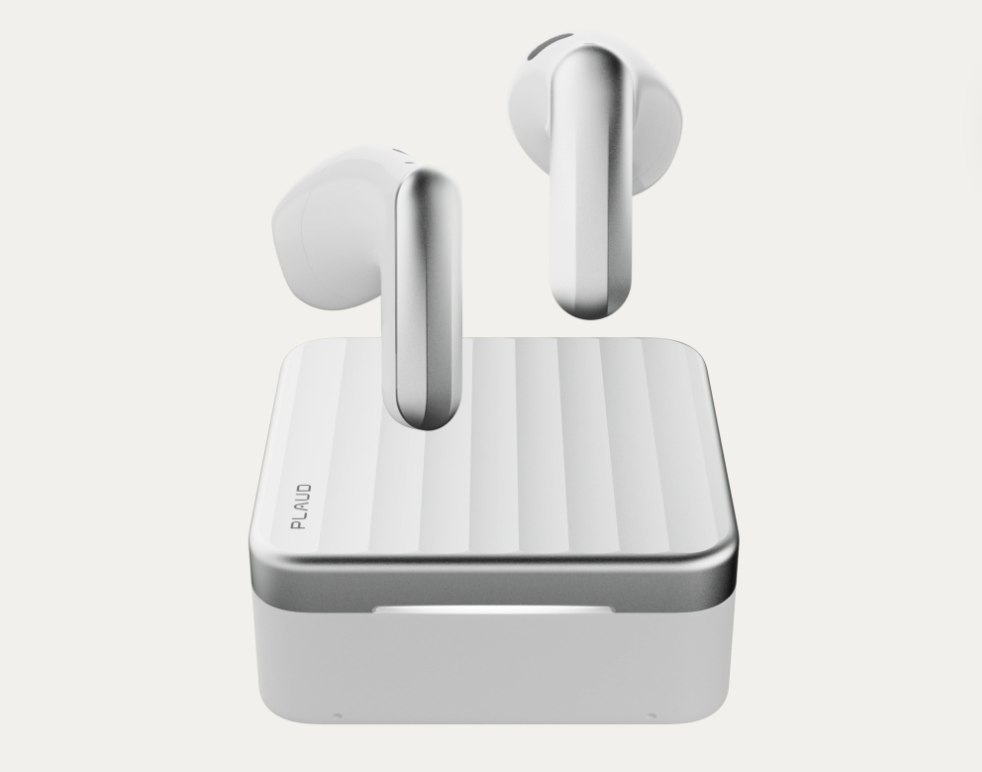
SAN FRANCISCO — Hardware startup Plaud unveiled a new pair of AI-powered earbuds Wednesday that can record, transcribe and summarize conversations without needing a connected smartphone, marking the company’s most ambitious attempt yet to build a standalone AI wearable device.
The device, called the Plaud One Explorer Edition, is now available for pre-order at $249.99, with shipments expected to begin in the fourth quarter of 2026, according to Digital Trends. The launch adds a new form factor to Plaud’s growing lineup of AI note-taking hardware, following the company’s earlier Plaud Note, Note Pro and NotePin devices.
Built to work independently of a phone
Unlike many AI wearables currently on the market, the Plaud One is designed to function without a paired smartphone. The device’s charging case includes a built-in eSIM with 4G LTE connectivity, allowing both the earbuds and the case to stay connected and upload recordings for transcription and summarization even when a user’s phone is offline or out of range, according to SiliconANGLE.
That standalone connectivity extends across more than 80 countries, according to T3, giving the device global reach without requiring users to rely on Wi-Fi or a tethered device to keep the AI system functioning.
Two ways to record
The Plaud One offers users flexibility in how they capture conversations. The earbuds themselves include microphones for hands-free recording of in-person conversations, phone calls or online meetings, while the charging case features four separate microphones capable of picking up audio from up to 5 meters away, according to T3. Each earbud also includes 16MB of local storage, for 32MB combined, and can record for up to six hours, matching the device’s estimated maximum battery life, according to a report from Business Story.
Users who prefer not to wear the earbuds continuously can instead rely on the standalone case to capture conversations, offering what Android Authority described as a more comfortable alternative for extended use throughout a workday.
An AI agent built into the hardware
Central to the Plaud One’s pitch is its integration with Plaud Agent, the company’s AI assistant system. Users can interact with the agent directly through the earbuds, and the device supports native integration with tools including Gmail, Google Calendar, Notion and Slack, according to SiliconANGLE. The device can also be connected to third-party AI systems, including Anthropic’s Claude and OpenAI’s ChatGPT.
At launch, the scope of the assistant’s capabilities will be somewhat limited. A Plaud spokesperson told TechRadar that “at launch, users can press and hold the Agent Button and speak to the agent,” with broader agentic capabilities — allowing the AI to take actions across connected apps based on captured conversations — arriving in a future software update rather than at initial release.
Building memory over time
Plaud has emphasized that the Plaud One’s value is designed to compound the more it’s used. According to the company, its underlying Plaud Intelligence platform builds persistent memory and context from a user’s conversations over time, allowing the AI agent to connect information across separate meetings and conversations to generate more useful follow-ups and reports. “The more that the system can build up memory and context over time, the more useful it becomes,” the company said, according to Digital Trends, “because it’s able to connect information across conversations and apply workflows better.”
That redesigned intelligence platform, along with expanded agentic features, is expected to roll out to Plaud’s existing hardware lineup as part of an app update the company has labeled App 4.0, expected to launch in the same timeframe as the Explorer Edition’s shipping window.
Pricing and what’s included
The $249.99 price for the Plaud One Explorer Edition does not require a separate AI subscription to get started using the device, according to Android Authority. Each unit comes bundled with $200 in Plaud Credits, which buyers can use to access additional AI features and services beyond the base functionality. However, using the built-in 4G standalone connectivity does require a separate wireless service plan.
Privacy and consent built into the design
With AI wearables facing growing scrutiny over privacy concerns — particularly devices like smart glasses that can capture video of people without their knowledge — Plaud has structured the Plaud One around user-triggered recording rather than passive, always-on capture. According to TechRadar, high-stakes actions taken by the AI agent require user approval, recording is manually triggered rather than automatic, and users are responsible for obtaining consent from other parties before recording conversations.
A crowded and unproven market
Plaud’s launch arrives in an increasingly crowded field of AI hardware devices attempting to carve out a role beyond the smartphone. TechCrunch noted that competition in the space remains intense, with new hardware note-takers entering the market on a near-weekly basis, and that Plaud’s initial rollout of the Explorer Edition will be limited in quantity, suggesting the company is treating the earbud format as something of a trial run before committing more fully to the category.
Despite that uncertainty, Plaud has shown notable commercial traction to date. The company said in June that it had reached an annual run-rate revenue of $100 million, according to TechCrunch, a figure that underscores growing demand for its existing lineup of pin- and clip-style AI notetakers even as the broader category of standalone AI hardware devices has struggled to gain mainstream traction.
Part of a broader industry challenge
Nearly four years after the debut of ChatGPT sparked widespread interest in consumer AI hardware, no company has yet managed to convince a mass audience to replace their smartphone with a dedicated AI gadget, according to Engadget, despite high-profile attempts and failures from companies including Humane and Rabbit. Plaud’s approach with the Plaud One differs from those earlier efforts by embedding its AI capabilities into a familiar, already-popular device category — wireless earbuds — rather than introducing an entirely new form factor, a strategy the company appears to be betting will lower the barrier to adoption compared with past standalone AI hardware attempts.

Bitcoin Bottom Is IN?! $300 Chainlink & Top 3 Altcoins w/ @TimWarrenTrades

32 things we learnt from watching GTA 6: An Extended Look on Netflix

Scott Weenink on Why New Zealand Needs Patient Capital to Turn Ambition into Growth





-

 Fashion6 days ago
Weekend Open Thread: Madewell – Corporette.com
-

 Crypto World2 days ago
SpaceX stock could rise 75% to $240, JPMorgan says
-

 Business5 days ago
Musk’s Tesla, SpaceX Confirm $16.8 Billion ‘Terafab’ Chip Plant as World’s Largest Building in Texas
-

 Crypto World6 days ago
anatomy of crypto’s biggest liquidation event since 2021
-

 Crypto World3 days ago
A $30 Billion AI Fund Implodes, Now the SEC Is Investigating Wall Street’s Role
-

 Politics5 days ago
6 months on, Irish renters crushed by effects of government housing bill
-

 Crypto World2 days ago
Did Trump Just Move SpaceX Stock With One Truth Social Post?
-

 Business4 days ago
Mystery AI Model ‘Ox Alpha’ Draws Developers With Free Access as Chinese Lab Origins Remain Debated
-
 NewsBeat6 days ago
The ‘Lucky Dip Gang’ causing carnage for clicks: After five thugs were killed speeding in the wrong direction on a motorway, GUY ADAMS investigates a sick new trend… and why police aren’t even allowed to pursue them
-

 Business3 days ago
Moderna CEO warns China is pouring state money into mRNA technology
-

 Business3 days ago
NVIDIA Stock Drops Nearly 2 Percent to $210 on Seventh Losing Day Ahead of Critical AI Earnings
-

 Tech6 days ago
Unitree’s New Superman Robot Claims to Outjump and Outrun Every Human, Usain Bolt Included
-
 Crypto World6 days ago
Nvidia Stock Suffers Longest Losing Streak Since 2022: Will Q2 Earnings End It?
-

 Business6 days ago
UK firms in critical financial distress rise 9% to 53,756
-

 Sports5 days ago
Deshaun Watson fires back at Browns fans after being booed: ‘It’s a disrespectful thing’
-
 Crypto World4 days ago
Google Gemini AI Predicts Ethereum Could Become the Trade Retail Misses in 2026
-

 Tech6 days ago
Faster chip in a familiar form factor
-

 Business6 days ago
Will Tesla Stock Be Higher or Lower a Year From Now? Here’s What Wall Street Analysts Are Saying
-

 Business4 days ago
Tesla Recalls Nearly 3 Million Cars in China Over Hidden Door Handles Linked to Multiple Deaths Amid New Ban
-

 Crypto World7 days ago
SEC Regulation Crypto vs CLARITY Act: which framework wins
You must be logged in to post a comment Login