

Business
Citizens Bank Down? Online Banking Faces Intermittent Disruptions as Scheduled Maintenance Impacts Customers


Customers of Citizens Bank reported difficulties accessing online and mobile banking services Wednesday, with some users unable to log in, view balances or complete transactions amid ongoing technical issues tied to scheduled system maintenance.
The disruptions, which began affecting portions of the customer base early in the day, follow planned maintenance that started Tuesday evening and extended into Wednesday. Bank officials have advised patience as technical teams work to restore full functionality across digital platforms.
Citizens Bank’s Update Center and official communications confirmed the maintenance window, noting that digital banking access via browser and mobile app could be intermittently unavailable. The bank emphasized that core banking operations, including branch services and ATMs, remained largely unaffected.
Scope of the Outage and Customer Reports
Social media platforms and monitoring sites like Downdetector showed elevated reports of problems with the app, login processes and mobile banking throughout the morning. Users in multiple states, particularly in the Northeast where Citizens has a strong presence, described error messages, frozen dashboards and failed transfers.
One customer posted on social media: “Citizens Bank’s online banking is reportedly down for some users at the moment.” Similar complaints highlighted frustration during a busy midweek period when many rely on digital tools for bill payments and account management.
The bank has not issued a full outage declaration but acknowledged intermittent issues in its customer service alerts. Officials urged customers to use alternative channels such as branches, ATMs or telephone banking for urgent needs during the resolution period.
Maintenance Details and Expected Resolution
The scheduled work, which began around 8 p.m. Pacific Time on Tuesday and was set to conclude by early Wednesday morning in some time zones, involves critical system upgrades designed to improve long-term reliability and security. Such maintenance is routine for large financial institutions but can occasionally extend beyond initial estimates due to unforeseen complexities.
Citizens Bank, a major regional player with operations across the Northeast and beyond, serves millions of customers. Its digital platforms handle high volumes of daily transactions, making any disruption noticeable. The bank has invested heavily in technology in recent years to enhance user experience and cybersecurity defenses.
In past similar incidents, services typically resumed gradually as maintenance phases completed. Customers with pending transactions were advised to check their accounts once access returns, as confirmed items should process normally per standard banking protocols.
Impact on Customers and Alternatives
For many, the timing proved inconvenient, especially those managing payroll, bill payments or transfers mid-month. Small businesses and individuals relying on real-time access reported delays in daily operations. The bank encouraged use of its customer service lines at 800-656-6561 for assistance with account inquiries or urgent matters.
Branches remained open for in-person services, and ATMs continued to function for cash withdrawals and deposits in most locations. Mobile check deposit features and other tools may have limited availability until full restoration.
Citizens has a history of transparent communication during technical issues. Its Update Center provides real-time alerts on technology, operations and other disruptions, helping customers stay informed. Officials apologized for any inconvenience and assured that customer data and funds remain secure throughout the process.
Broader Context of Banking Technology Reliability
Financial institutions increasingly depend on robust digital infrastructure, making occasional maintenance necessary to prevent larger failures. Cybersecurity threats, system upgrades and growing transaction volumes contribute to the need for periodic downtime. Citizens, like peers such as Bank of America or Chase, aims to minimize impact through phased rollouts and backup systems.
This incident highlights ongoing challenges in delivering 24/7 digital banking. Regulators and consumer advocates emphasize the importance of clear communication and contingency plans. Customers are encouraged to set up alerts, maintain multiple access methods and monitor accounts regularly.
In response to past outages, many banks have enhanced redundancy and cloud-based solutions. Citizens has rolled out app improvements and security features in recent years, positioning its platforms competitively in a digital-first banking environment.
Advice for Affected Customers
Those experiencing issues should:
- Clear browser cache or update the mobile app.
- Try accessing via desktop if mobile is affected, or vice versa.
- Contact customer service for time-sensitive needs.
- Monitor official channels for restoration updates.
Company Background
Citizens Bank, part of Citizens Financial Group, operates as a major retail and commercial bank with a focus on the Northeast. It offers a full suite of personal and business banking products, including robust online and mobile platforms that millions use daily. The institution has emphasized digital innovation while maintaining a strong branch network.
As one of the larger regional banks in the U.S., Citizens serves diverse customer segments from individuals to small businesses. Its commitment to technology aims to deliver seamless experiences, though maintenance windows occasionally test customer patience.
Looking Ahead
Bank officials expect full restoration shortly after the maintenance window. Customers can check the official Update Center or social channels for the latest status. Citizens continues investing in infrastructure to reduce future disruptions and enhance overall digital resilience.
This episode serves as a reminder of the trade-offs in modern banking convenience. While digital tools provide round-the-clock access, periodic maintenance ensures long-term stability and security. Affected users are urged to exercise patience as teams work to resolve the matter promptly.
For the latest developments, customers should visit Citizens Bank’s website or contact support directly. The bank remains committed to minimizing impacts and restoring normal operations as quickly as possible.

Business
(VIDEO) Tim Tszyu Stuns Errol Spence Jr in Sydney as Fight Ends with Shock Retirement Announcement Ringside
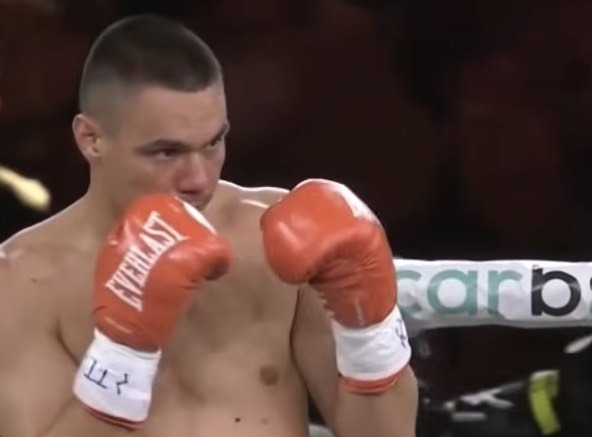
SYDNEY — Tim Tszyu delivered the biggest win of his career in front of his hometown fans on Sunday, outpointing former unified welterweight champion Errol Spence Jr. over 12 rounds in a middleweight bout that ended with Spence announcing his retirement moments after the final bell.
Tszyu won by unanimous decision at Afterpay Arena in Sydney Olympic Park, with all three judges scoring the fight in his favor: 118-110, 117-111 and 117-111. The victory improved Tszyu’s professional record to 28-3 with 18 knockouts, while Spence, who came into the bout with a record of 28-1, dropped to 28-2.
A crossroads fight for two former champions
The bout carried significant stakes for both fighters, each hoping to reestablish himself after recent setbacks. Spence, 36, was making his first appearance in the ring in nearly three years, following a lopsided ninth-round stoppage loss to Terence Crawford in their 2023 undisputed welterweight championship bout — a defeat many considered the first sign of decline for a fighter once regarded as one of the sport’s pound-for-pound best. Sunday’s fight also marked a significant jump in weight class for Spence, who moved up two divisions from welterweight to the 160-pound middleweight limit to face Tszyu.
Tszyu, 31, entered the bout looking to bounce back from a difficult recent stretch that had seen him go 3-3 in his previous six fights. A former super welterweight titleholder fighting in his home country, Tszyu carried the weight of expectations from thousands of Australian fans hoping to see him reclaim his standing among the sport’s top fighters.
How the fight played out
Spence started fast, working behind his speed advantage and pressing the action in the opening rounds. Tszyu answered with a heavy right hand that rocked Spence in the first round, an exchange that set the tone for a competitive but increasingly one-sided contest. Spence had moments of success in the second and third rounds, connecting with hard left hands and remaining the more active fighter at times, but Tszyu steadily began to take control from the fourth round onward.
By the second half of the fight, Tszyu was landing the harder and more frequent punches, wobbling Spence on multiple occasions with lead and counter right hands as the challenger’s activity level dropped. Spence, dealing with what commentators described as visible ring rust after his lengthy layoff, remained competitive enough to bank rounds on some scorecards but was unable to turn the fight back in his favor down the stretch. He held on through the final round to hear the scorecards, which were unanimous in Tszyu’s favor.
Tszyu reflects on an emotional night
Tszyu, who has moved up to the 160-pound division this year, was visibly emotional in his post-fight interview, calling the victory the best win of his career and describing the mental preparation that went into facing a fighter of Spence’s caliber. “160 is my new division and I feel strong,” Tszyu said, addressing the crowd after the win. He said the challenge of preparing for the bout weighed on him in the lead-up to fight night, at one point saying he had experienced “sleepless nights” wondering how he would handle facing a fighter of Spence’s stature. He credited his performance to persistence through a difficult stretch of his career, telling the arena, “I want to be the definition of resilience.”
Looking ahead, Tszyu said he hopes the win positions him for a shot at a middleweight world title, name-checking Cuban veteran Erislandy Lara as a potential future opponent. He added that, in his view, beating a fighter of Spence’s résumé carried more significance than a title belt itself.
Spence calls time on his career
Spence, who built his reputation as one of the sport’s most feared welterweights before his loss to Crawford, confirmed in his own post-fight comments that Sunday’s bout marked the end of his boxing career. Speaking calmly despite the loss, Spence said he was at peace with his decision and grateful for what the sport had given him. “For sure, I’m retiring,” Spence said. “I’ve got my faculties intact. My money is good and working for itself, so everything is good, man.”
Spence went on to reflect on his time in the sport, telling reporters he felt fortunate to walk away from boxing in good health and with his family by his side. He also offered praise for Tszyu’s performance, calling it a good showing and saying the fight had answered lingering questions about where he stood as a fighter following his layoff and the jump in weight class.
A statement win for Tszyu’s career
Sunday’s result adds to a rebuilding narrative for Tszyu, who had struggled to find consistency in his last several outings before Sunday’s win. Beating a fighter of Spence’s stature, even at 36 years old and following a long layoff, is likely to boost Tszyu’s standing in the middleweight division as he pursues a path toward a world title opportunity.
The card, promoted under a “USA vs. Australia” banner, also featured a co-main event lightweight bout in which unbeaten prospect Ahmad Reda defeated veteran Paul Fleming by unanimous decision. The originally scheduled co-main event between Stephen Fulton and Liam Wilson was scrapped after Fulton missed weight by six and a half pounds.
For Spence, Sunday’s loss closes the book on a career that included stints as a unified welterweight champion and a place among the sport’s pound-for-pound elite before his decline in recent years. For Tszyu, it opens the door to bigger opportunities in a new weight class, with a world title shot now squarely in his sights.
Business
Jennifer Connelly Reveals She’s Repeatedly Mistaken for Demi Moore During Airport Security Every Time

Jennifer Connelly has a recurring problem at airport security: strangers keep insisting she’s Demi Moore.
The Academy Award-winning actress shared the story while visiting Entertainment Weekly’s studio at San Diego Comic-Con this week, where she was promoting the upcoming second season of her Apple TV series “Dark Matter.” Connelly said the mix-up has become a familiar, if slightly absurd, part of her public life, describing a recent encounter with a security agent who refused to accept her denial.
A case of mistaken identity, twice over
Recounting the exchange, Connelly said an airport worker approached her with total confidence that she was looking at Moore. “I’ve gotten people insisting — going through security the other day, they’re like, ‘Oh my God, you’re Demi Moore,’” Connelly said. She said her attempts to correct the mistake went nowhere fast. “I was like, ‘I’m not.’ They were like, ‘You are.’ Again: ‘No. I’m really not. I’m not. I have my passport to show you.’”
The comparison isn’t entirely without logic. Connelly and Moore, now 63, both broke into Hollywood as teenagers in the 1980s before building lasting careers through the 1990s and 2000s, and both have shared the screen with Tom Cruise in separate films. But despite the surface-level similarities in their career arcs, the two actresses have never appeared in a project together, making the persistent confusion all the more puzzling to Connelly.
A second case of mistaken credit
The airport mix-up wasn’t the only identity confusion Connelly described during her Comic-Con conversation. She said fans also frequently credit her with film roles she never actually took, including one memorable claim involving Brad Pitt. “I get a lot more of people insisting that I’m in movies that I’m not in,” Connelly said. “Like, I had someone say to me, ‘You were so good in that movie with Brad Pitt,’ and I was like, ‘Not in a movie with Brad Pitt.’ They’re like, ‘Yes you are,’ I’m like, ‘I’m really not, I promise you.’”
Connelly, who won the Academy Award for Best Supporting Actress for her role in 2001’s “A Beautiful Mind,” has never appeared in a film alongside Pitt, according to her public filmography. The mix-up leaves open the question of which of Pitt’s past co-stars fans might actually be picturing — a detail Connelly did not clarify further during the conversation.
Promoting “Dark Matter” season two
Connelly’s Comic-Con appearance came as Apple TV used its Hall H panel to unveil the trailer for the second season of “Dark Matter,” the sci-fi thriller based on Blake Crouch’s bestselling 2016 novel of the same name. Crouch created the series and serves as its showrunner, with Connelly and co-star Joel Edgerton both starring in and executive producing the show.
The first season, which premiered on Apple TV in May 2024, followed physicist Jason Dessen, played by Edgerton, after he is abducted by an alternate version of himself and thrust into a chaotic multiverse built around “the Box,” a device capable of transporting people between parallel realities. Connelly plays Daniela Dessen, Jason’s wife, whose own storyline deepens significantly as season two unfolds.
According to details shared at the panel, the new 10-episode season finds the Dessen family attempting to settle into a peaceful new life after the events of season one, only for new threats to force them on the run once again. Jason’s continued obsession with the Box drives much of the season’s tension, while Daniela grapples with growing paranoia and the couple’s son, Charlie, played by Oakes Fegley, struggles to find stability amid the upheaval. The ensemble cast also includes Alice Braga, Jimmi Simpson, Amanda Brugel and Dayo Okeniyi, along with Margo Martindale and Chris Diamantopoulos.
Season two of “Dark Matter” is set to premiere globally on Apple TV on August 28, releasing one new episode weekly through October 30. The rollout will also include an accompanying “Dark Matter: The Official Podcast,” featuring cast members and guests discussing each episode as the season airs.
Comic-Con’s celebrity moment
Connelly’s remarks were part of a broader wave of celebrity interviews and panel appearances at this year’s San Diego Comic-Con, which has drawn major studios and streamers eager to build buzz ahead of fall and winter releases. The convention’s Hall H panels have historically served as a launching pad for trailers and cast reunions across film and television, and this year’s Dark Matter panel followed that pattern, drawing cast members together on stage to discuss the show’s expanded second season alongside the newly released footage.
For Connelly, the convention appearance offered a lighter moment amid the promotional circuit, as she leaned into the recurring case of mistaken identity with self-deprecating humor rather than frustration. The actress, whose decades-long career includes roles in “Requiem for a Dream,” “A Beautiful Mind” and “Labyrinth,” has long been a recognizable face in Hollywood — even if, by her own account, that recognition doesn’t always land on the correct name.
Whether the Demi Moore mix-ups will continue remains to be seen, but for now, Connelly says she’s simply learned to carry the paperwork to prove it.

Police hunting for Berlin Pride attacker name Islamist suspect


I’m Cash Flow Venue and I’ve been investing for years trying to build my dividend portfolio. I like dividends doing the work for me, but I also have a separate growth portfolio.I’m an M&A Advisor, which means that I advise people and businesses on selling (but sometimes buying) their businesses.I usually work on some financial models, due dilligence, and negotiations. Oh, yes – and I have to attend too many meetings 🙂 Wha’ts my industry focus? I invest in technology, real estate, software, finance, and consumer staples. I’ve spent years advising clients from these industries. That’s why I pay the closest attention to these sectors when investing and writing.I started writing on Seeking Alpha to learn and share ideas. Dividend investing has played a big role in my financial journey. I believe it’s one of the simplest and most accessible ways to work toward financial freedom. By sharing what I learn, I hope to make the process feel less complicated for anyone building long-term wealth. In the end, the goal is simple: move closer to financial freedom through dividend investing.
Analyst’s Disclosure: I/we have a beneficial long position in the shares of MSFT, META, GOOG, AMZN either through stock ownership, options, or other derivatives. I wrote this article myself, and it expresses my own opinions. I am not receiving compensation for it (other than from Seeking Alpha). I have no business relationship with any company whose stock is mentioned in this article.
The information, opinions, and thoughts included in this article do not constitute an investment recommendation or any form of investment advice.
Seeking Alpha’s Disclosure: Past performance is no guarantee of future results. No recommendation or advice is being given as to whether any investment is suitable for a particular investor. Any views or opinions expressed above may not reflect those of Seeking Alpha as a whole. Seeking Alpha is not a licensed securities dealer, broker or US investment adviser or investment bank. Our analysts are third party authors that include both professional investors and individual investors who may not be licensed or certified by any institute or regulatory body.
Business
What Happens to Bronny James Now That LeBron James Has Signed With the Philadelphia 76ers in Free Agency
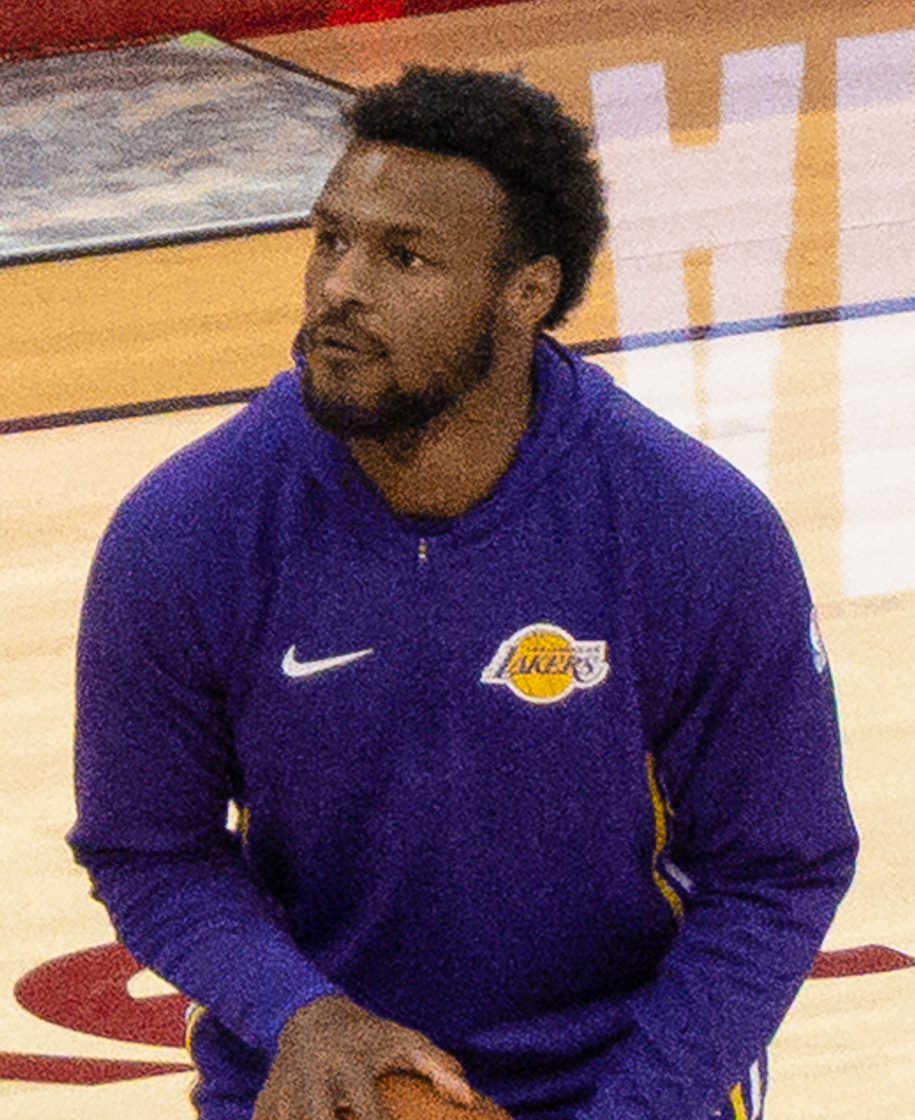
LeBron James’ decision to sign with the Philadelphia 76ers this week ended his two-season run as the first father to play alongside his son in NBA history, immediately raising questions about what comes next for Bronny James and his future with the Los Angeles Lakers.
According to multiple reports, the answer appears settled, at least for now: Bronny will stay in Los Angeles.
LeBron’s move to Philadelphia
James informed the Lakers early in free agency that he would not return, ending speculation about a third season alongside his son and setting off a monthslong search for his next destination. On Friday, James agreed to a two-year, $8 million contract with the 76ers, a deal that includes a player option for the second season, according to ESPN’s Shams Charania. The 41-year-old, entering his 24th NBA season, will join a Philadelphia roster built around Joel Embiid, Tyrese Maxey, Jaylen Brown and rookie guard VJ Edgecombe.
James described the move as the final chapter of his playing career in a message posted to social media. “I believe I can help make the Philadelphia 76ers a championship team and I am so excited to energize a new fan base and start this incredible journey one last time,” James wrote, adding that the choice marked “my last decision” and that he was “not going for money.” He also thanked the cities that shaped his career, writing that Los Angeles, Miami and his home region of Northeast Ohio would remain close to him.
James’ agent, Rich Paul, told ESPN’s Ramona Shelburne that James spoke with only one coach throughout the process, 76ers head coach Nick Nurse, and that the Sixers ultimately won out over potential reunions with the Miami Heat and Cleveland Cavaliers.
Why Bronny isn’t expected to follow
Despite early speculation that the father-son duo might try to stay together, agent Rich Paul made clear that was never the plan. Paul, who represents both James and his son, told ESPN that the two “are not a package deal” and that there is no arrangement in place to send Bronny to Philadelphia. Reporting from The Athletic’s Dan Woike similarly pushed back on assumptions that the two would remain linked, noting that Bronny is well regarded inside the Lakers’ locker room.
Front Office Sports previously reported that teams involved in James’ free agency had internally discussed the possibility of acquiring Bronny as part of any deal, though it remains unclear whether Philadelphia was among those teams. With Embiid, Maxey, Brown and Edgecombe already anchoring a crowded rotation built to win immediately, the 76ers currently have little obvious need for an unproven, low-usage guard.
The Lakers’ commitment to Bronny
Perhaps the clearest signal of Bronny’s future came before LeBron even made his decision. The Lakers fully guaranteed Bronny’s $2.296 million salary for the 2026-27 season on June 30, a move that also carries a $2.487 million team option for 2027-28. The team had already declined guard Nick Smith Jr.’s option days earlier, a decision that further opened up backcourt minutes.
Bronny, the No. 55 pick in the 2024 NBA Draft, has shown gradual progress across his first two professional seasons. As a rookie, he averaged 2.3 points in 27 games while playing limited minutes. In his second season, his role expanded to 42 games and he averaged 2.9 points and 1.2 assists per contest. Lakers head coach JJ Redick has pointed to that growth as evidence of Bronny’s development within the organization. “He’s gotten significantly better,” Redick said during the season. “Our staff has confidence in him.”
A chance to build his own identity
Former Lakers player and franchise commentator Mychal Thompson argued that separating from his father could ultimately benefit the 21-year-old guard’s development, describing Bronny’s improved feel for the game during an appearance on ESPN LA’s “Sedano & Kap” radio show. “He’s now developed where he’s got a great point-five mentality,” Thompson said, describing Bronny as “catch-and-shoot ready at all times.”
Some analysts have suggested that playing outside his father’s shadow could also help Bronny address persistent criticism about nepotism that followed his entry into the league as a second-round pick. Without his father on the roster, the Lakers can now evaluate and develop Bronny purely on his own merits, without the surrounding media attention that came with the James family’s shared locker room.
A crowded backcourt battle ahead
Bronny’s path to consistent playing time remains far from guaranteed. The Lakers’ backcourt already includes Luka Doncic and Austin Reaves at the top of the rotation, meaning Bronny will need to continue earning minutes through performance rather than legacy. Still, people within the organization have expressed confidence in his trajectory, and the guaranteed contract signals the front office intends to give him another full season to develop.
End of a historic chapter
LeBron and Bronny’s two seasons together marked the first time a father and son had shared an NBA roster, a milestone that generated significant attention throughout the 2024-25 and 2025-26 seasons. With LeBron now set to begin a new chapter in Philadelphia, that specific storyline comes to a close, even as both players continue their NBA careers on separate coasts.
For Bronny, the coming season represents his first opportunity to build a professional identity fully independent of his father, playing for a Lakers team that has publicly committed to his development and financially backed that commitment through his guaranteed 2026-27 salary.
Business
How LeBron James’ Decision to Join the 76ers Could Reshape Kyrie Irving, Klay Thompson and the Mavericks
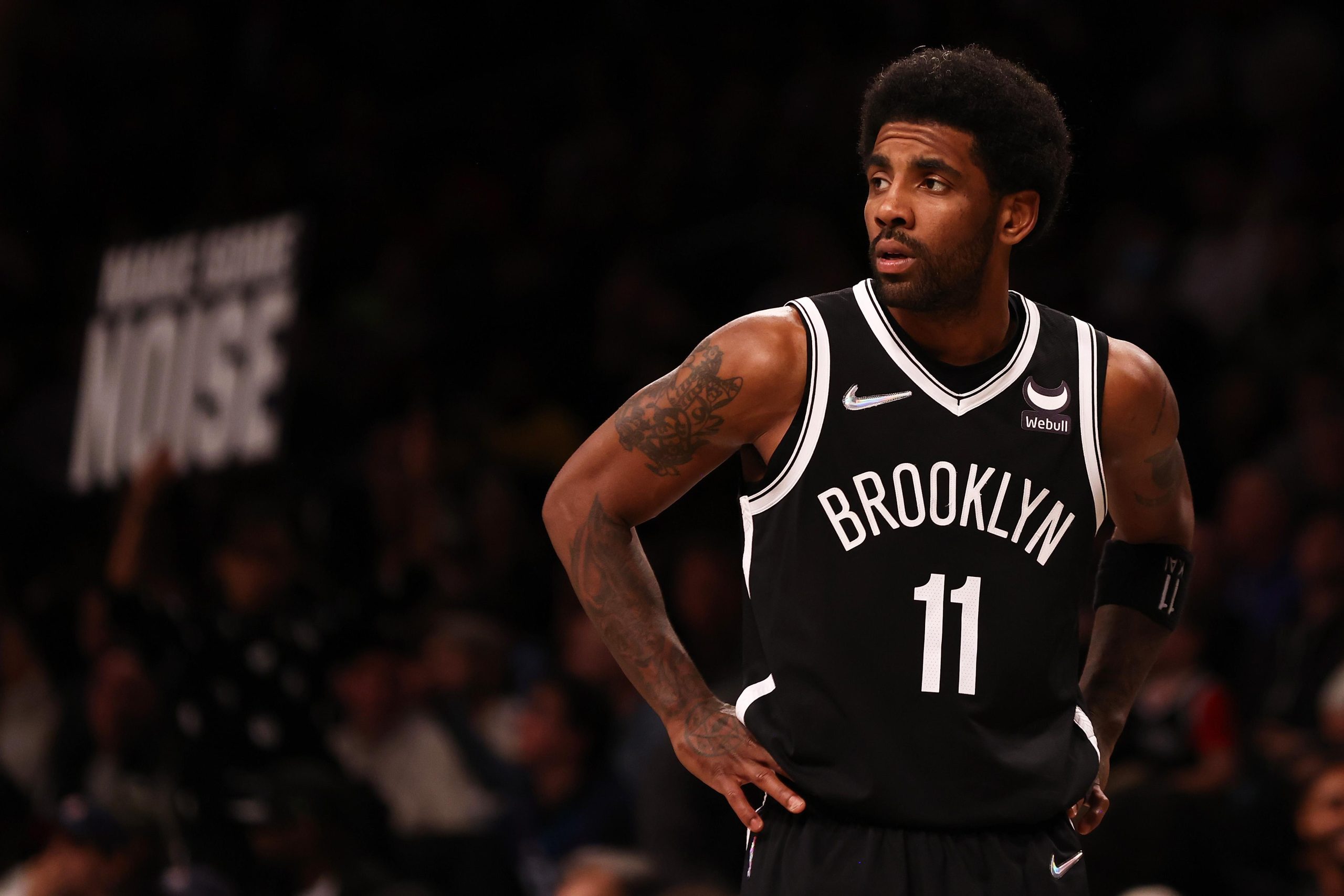
LeBron James’ choice to sign with the Philadelphia 76ers this week closed the book on one of the more persistent storylines of this year’s NBA offseason: the possibility that James could reunite with former teammate Kyrie Irving, potentially reshaping the Dallas Mavericks’ roster in the process. With that scenario now off the table, attention has shifted to what comes next for Irving, Klay Thompson and a Mavericks front office already in the middle of a broader organizational overhaul.
A reunion that never materialized
For weeks, one thread running through James’ prolonged free agency search involved his relationship with Irving, his former Cleveland Cavaliers teammate and 2016 championship co-star. According to ESPN senior writer Vincent Goodwill, James had explored the idea of bringing Irving back to Cleveland as part of his free agency decision. “League sources said James had been angling for former teammate Irving to join him in Cleveland, but the Dallas Mavericks have had no interest in engaging the Cavaliers in a trade, and Irving is believed to be comfortable where he is,” Goodwill reported.
That resistance from Dallas effectively ended any realistic path toward a Irving-James reunion before James ultimately chose Philadelphia over both Cleveland and a possible return to Miami. Fox Sports later characterized the outcome plainly, noting that with LeBron heading to Philadelphia, a Kyrie Irving trade scenario tied to James is now off the board entirely.
Kyrie Irving remains part of Dallas’ plans
Despite persistent trade chatter throughout the summer, multiple reports indicate the Mavericks have consistently kept Irving out of any deal discussions. According to NBA insider Marc Stein, teams calling Dallas about Irving have been told directly that he is not available, a stance that has remained unchanged even as the front office fielded offers on several other veterans. Stein reported that Daniel Gafford, Klay Thompson and P.J. Washington have instead been identified as the Mavericks’ most available players this offseason.
Irving, who is working back from knee surgery in March 2025, remains central to Dallas’ plans heading into the new season, according to ESPN’s Bobby Marks, who described Irving as firmly in the team’s long-term outlook as he continues his recovery. That stands in contrast to the uncertainty surrounding several of his current teammates, whose roles appear more fluid under the franchise’s new leadership.
Klay Thompson’s future in Dallas grows murkier
Thompson, who signed with the Mavericks in 2025 to team up with Irving and Luka Doncic, is now viewed as one of the more likely veterans to be moved before the season begins. According to Stein’s reporting, Dallas would prefer to trade Thompson rather than negotiate a buyout, and the team has been seeking a first-round pick in any deal involving the 36-year-old guard.
Thompson’s production dipped significantly last season, a factor likely influencing his standing on the roster. He averaged 11.7 points, 2.1 rebounds and 1.4 assists in 21.7 minutes across 69 games, all career lows, while shooting 38.3% from three-point range. Despite the decline in output, Thompson passed a notable milestone in January, moving into fourth place on the NBA’s all-time made three-pointers list, a testament to his standing as one of the league’s most accomplished shooters even as his role has diminished.
A franchise in transition
The uncertainty surrounding Thompson, Gafford and Washington comes amid a broader reshaping of the Mavericks’ front office and coaching staff. Dallas hired Masai Ujiri, the executive who built Toronto’s 2019 championship roster, as president of basketball operations earlier this year. Ujiri has since brought in general manager Mike Schmitz, known for his work evaluating draft prospects, and head coach Dusty May, fresh off leading Michigan to an NCAA championship.
According to ESPN’s Bobby Marks, the front office’s priority this offseason has centered on collecting assets and building around reigning Rookie of the Year Cooper Flagg, selected by Dallas in the 2025 draft, along with 2026 first-round pick Morez Johnson Jr. That youth-focused build has put several of the roster’s more veteran, higher-salaried players, including Thompson, in position to be moved as the front office reshapes the roster around its younger core.
What LeBron’s decision changes — and what it doesn’t
With James now set to begin his 24th NBA season in Philadelphia rather than Cleveland, the specific trade pressure that had been tied to a potential Irving reunion is gone. That removes one significant variable from Dallas’ offseason calculus, but it does not resolve the underlying questions facing the roster. Thompson’s trade market, Gafford’s availability, and Washington’s standing remain active storylines independent of anything James decided.
Meanwhile, James himself will begin building chemistry with a new Philadelphia core that includes Joel Embiid, Tyrese Maxey and Jaylen Brown, a roster the 76ers hope can finally deliver a championship after a 43-year title drought for the franchise. Whether Philadelphia’s roster construction shifts further in the coming weeks, potentially involving Dallas veterans in some capacity, remains an open question league-wide as teams continue reshaping their rosters heading into the new season.
For now, the most immediate outcome of James’ decision is clarity rather than upheaval: Irving stays in Dallas, Thompson’s trade market continues independent of any LeBron-driven scenario, and the Mavericks’ rebuild under Ujiri and May proceeds largely as it was already trending before James made his choice public.

SpaceX Starship Aces Test 13. How That Will Help the Stock.
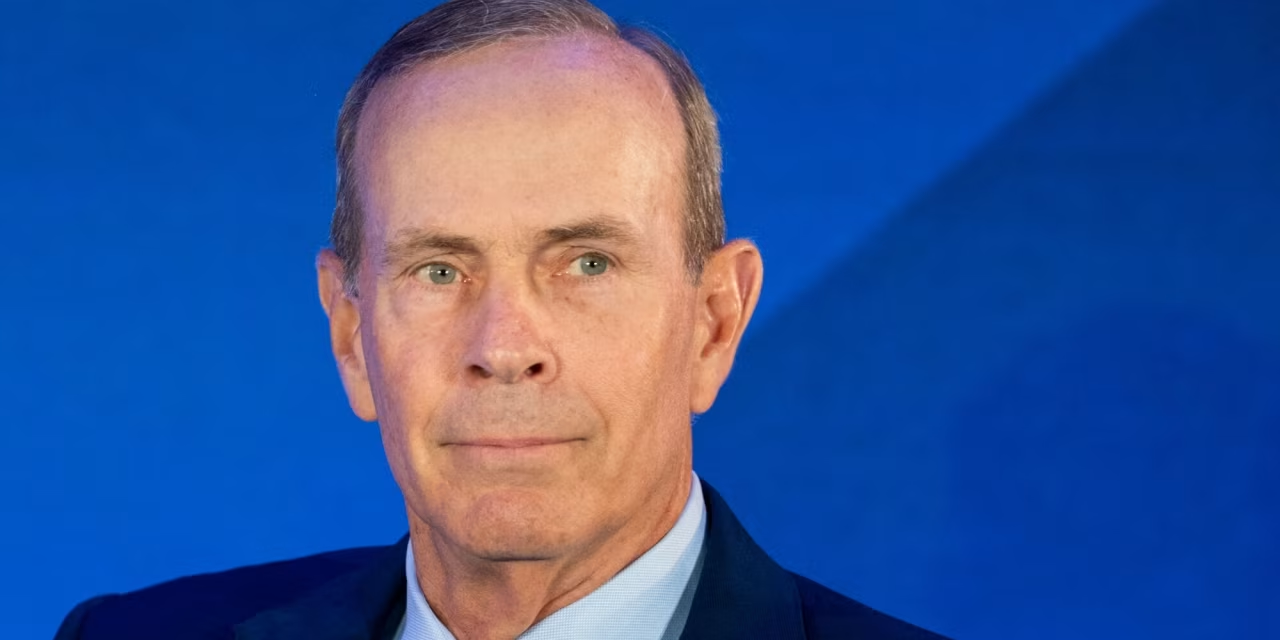
Chevron Chief Executive Mike Wirth spoke with Trump administration officials earlier this week about a pressing matter: how to keep the U.S. oil giant’s massive operations in Kazakhstan from becoming collateral damage in the Ukraine-Russia war.
A recent Ukrainian drone attack hit four tankers, including one chartered by Chevron, in the Black Sea near Novorossiysk. The Russian port is a key oil export hub and the termination point for a pipeline, partly owned by Chevron, that feeds 2% of the world’s daily oil supplies. Crude loadings have since been restricted at the pipeline, forcing Kazakhstan to curb oil production because it has limited storage capacity.
Copyright ©2026 Dow Jones & Company, Inc. All Rights Reserved. 87990cbe856818d5eddac44c7b1cdeb8

US, Japan join Philippines in South China Sea drills

Above The Noise: Look Beyond AI Pullback

DreamScapes A/V Brings a 32,000 Watt Alcons Home Theater to Southwest Audio Fest 2026

The Craziest Financial Audit Situation Ever

Co-op is giving away free groceries to up to 10,000 people


-

 Fashion2 days ago
Weekend Open Thread: Brooks Brothers
-

 Politics7 days ago
Democrats look to World Cup watch parties to register thousands of voters
-

 News Videos7 days ago
Big Money Is Entering XRP
-

 Tech5 days ago
Sail Virtually Aboard The “Itanic” With IA-64 Emulator
-
 Tech5 days ago
Turtle Beach Command Series KB7 review: a nifty screen-equipped gaming keyboard
-

 Crypto World5 days ago
Grayscale Files For Worldcoin ETF, WLD Registers Sharp Rise
-

 NewsBeat6 days ago
Unregistered fitter used Gas Safe logo on business flyers
-
 Business4 days ago
New Jersey voter registration controversy explained: How 6,600 noncitizens got on the rolls, and what happens next
-
 Entertainment5 days ago
Johnny Depp’s R-Rated Gothic Cult Classic Gets New Release Ahead of Sydney Sweeney Remake
-

 Crypto World3 days ago
Ethics, other provisions in crypto Clarity Act to be further discussed
-

 Tech6 days ago
Watch Flock Safety CEO Garrett Langley discuss the future of surveillance at TechCrunch Disrupt 2026
-
 NewsBeat5 days ago
Shanghai science forum photos show China’s AI and robotics advances in rivalry with US
-

 Crypto World6 days ago
Circle’s President Sold Over 360,000 Shares, The Filings Explain Why
-

 Tech6 days ago
Subway Sandwich Computers Get a Second Life as Gaming Machines
-

 Sports2 days ago
2026 3M Open leaderboard: Scottie Scheffler finds putter in Round 1, sits three back
-

 News Videos3 days ago
The Peugeot Family: How 200 Years of an “Old Money” Dynasty Died in A Boardroom
-

 Fashion2 days ago
16 Dresses for the High Summer Event
-

 Tech7 days ago
How To Use Claude’s Reflect Dashboard And Learn When It’s Time To Touch Grass
-

 Tech6 days ago
The 35 Best Board Games for Family Game Night
-

 Entertainment6 days ago
Stephen Colbert Returns to Social Media After Late Show End
You must be logged in to post a comment Login