
Business
Colman’s Mustard brand synonymous with Norwich put up for sale


A famous mustard brand synonymous with Norwich has been put up for sale.
Colman’s Mustard, which had a factory in Norwich for 160 years, has been put on the market ahead of a merger between Unilever and American food giant McCormick in a deal believed to be worth £48bn.
The company has been deeply rooted in Norfolk after it was founded in 1814 by Jeremiah Colman at Stoke Holy Cross before production moved to Carrow in 1858.
A Unilever spokesperson said: “A decision has been taken to market the Colman’s brand and assets to potential buyers in order to proactively seek to address potential competition concerns from the planned combination of Unilever Foods and McCormick.”
Based outside of Norwich, the firm had a cradle-to-grave ethos and provided education, housing, healthcare and leisure for workers and their families.
A school was built on Carrow Hill in 1864 for employees’ children and the firm supplied coffins for workers and their families, and built a series of terrace houses which were believed to have doors painted mustard yellow.



The Sunday Investor is focused exclusively on U.S. Equity ETFs. He has a strong analytical background, has received a Certificate of Advanced Investment Advice from the Canadian Securities Institute, and has completed all the educational requirements for the Chartered Investment Manager designation.Having covered hundreds of ETFs on Seeking Alpha, The Sunday Investor has developed a complex, proprietary ETF Rankings system which he shares on his website, etf-rankings.com. Nearly 1,000 ETFs receive individual factor scores covering costs, liquidity, risk, size, value, dividends, growth, quality, momentum, and sentiment, which feed into an easy-to-understand composite score from 1-10. The Sunday Investor is always active in the comments section in his articles – please don’t hesitate to reach out via comment in any article or by visiting etf-rankings.com. Happy Investing!
Analyst’s Disclosure: I/we have a beneficial long position in the shares of SCHD, SPY either through stock ownership, options, or other derivatives. I wrote this article myself, and it expresses my own opinions. I am not receiving compensation for it (other than from Seeking Alpha). I have no business relationship with any company whose stock is mentioned in this article.
Seeking Alpha’s Disclosure: Past performance is no guarantee of future results. No recommendation or advice is being given as to whether any investment is suitable for a particular investor. Any views or opinions expressed above may not reflect those of Seeking Alpha as a whole. Seeking Alpha is not a licensed securities dealer, broker or US investment adviser or investment bank. Our analysts are third party authors that include both professional investors and individual investors who may not be licensed or certified by any institute or regulatory body.

FCOM: One Of The Most Discounted Sectors Of The Last 30 Years Hides An Accounting Trick
Business
Apple Shares Rise 2 Percent to $321 Ahead of September 9 Event and Foldable iPhone Speculation
CUPERTINO, Calif. — Apple Inc. shares advanced about 2 percent on Friday, trading near $321 as investors looked ahead to a Sept. 9 product event and weighed recent strength in iPhone and Mac demand against a still-premium valuation.
The stock was last around $321.08, up $6.50 from Thursday’s close of $314.58. The move extended a short rebound after Apple pulled back from a late-July peak near $344. The company’s market value remains in the mid-$4 trillion range.
The immediate focus is Apple’s first major hardware launch under incoming chief executive John Ternus, who takes over on Sept. 1. The company has set Sept. 9 for its next iPhone event. Investors expect the iPhone 18 lineup and Apple Watch updates. Industry commentary has also included speculation about a first foldable iPhone, with research firm IDC cited in market reports as projecting more than 10 million foldable iPhone shipments in a first year if the product arrives. Apple has not confirmed a foldable model.
The rally builds on fiscal third-quarter results reported July 30. Apple posted June-quarter revenue of $109.4 billion, up 16 percent from a year earlier, and diluted earnings of $2.02 a share, beating Wall Street’s $1.89 estimate. About 11 cents of EPS came from tariff refunds. iPhone revenue rose 22 percent to $54.3 billion. Mac revenue jumped 29 percent to about $10.4 billion. Services reached $30.7 billion, a June-quarter record.
On the earnings call, then-CEO Tim Cook described “an incredibly strong iPhone and Mac product cycle that has really yielded demand beyond our expectation.” Cook also warned of tight memory and advanced-chip supply, calling the constraints severe and saying there would be a quarter in which Apple would be scrambling on the supply side.
Guidance for the September quarter called for revenue growth of 9 percent to 11 percent, below some analyst forecasts near 12 percent. Management blamed most of the slowdown on foreign-exchange headwinds and worsening shortages of system-on-chip parts across iPhone, Mac and iPad, not on weaker demand. iPhone revenue was still expected to grow at a mid-teens pace.
Separate shipment data have supported the hardware story. Counterpoint Research reported a 13 percent year-over-year increase in global iPhone shipments in the second calendar quarter, with particular strength in China, Europe and South Korea. Analysts said Apple held prices steadier than some Android rivals facing higher component costs, which may have pulled purchases forward ahead of possible autumn price increases.
Apple this week also refreshed Mac mini and Mac Studio models with M6 and M5 Ultra chips aimed at heavier on-device AI workloads. Those systems arrived at higher starting prices than the previous generation. Analysts have framed the machines as a way to sell more high-end Macs to developers and enterprises even if consumer AI features remain a work in progress.
The installed base of more than 2.5 billion active Apple devices continues to underpin Services, which now runs above $30 billion a quarter. Capital returns remain large. The company deployed tens of billions of dollars to shareholders in the latest quarter and has authorized additional buybacks. A dividend was paid in August.
Risks are unchanged. Apple trades at a high-30s trailing price-to-earnings multiple. Questions persist about how quickly on-device AI, including Siri improvements, will change buying behavior. Supply constraints on memory and advanced processors could limit how many devices Apple can ship into the holiday quarter. Vision Pro remains a small, costly product line and has seen staffing reductions.
The stock is up more than 35 percent over the past year and about 16 percent year to date, though it is down from the July high. One-month performance is negative after that post-earnings drop. Friday’s gain put Apple back above $320 and closer to the $330–$340 zone that marked summer resistance.
Ternus inherits a company whose growth is still led by iPhone upgrades and Mac strength rather than a new category. The Sept. 9 event will test whether the next cycle can extend that momentum, whether a foldable device is real, and how Apple prices products amid component inflation. Until then, traders are treating solid recent results, share gains in smartphones, and a clear event date as enough to bid the shares higher for a session.
Broader technology markets were firmer Friday, with large consumer-electronics and software names attracting flows while some semiconductor stocks remained volatile. Apple’s lower direct exposure to massive data-center capital spending has been cited as one reason the shares have been steadier than chipmakers in recent weeks.
For investors, the near-term checklist is simple: confirm demand into the new iPhone cycle, watch supply of key components, and see whether Ternus’s first keynote changes the product mix. The $321 level reflects optimism about that September showcase more than a change in Apple’s long-term financial profile.
Business
Nvidia Shares Fall 3 Percent to $220 as Traders Fade Post-Earnings Rally After Record Quarter
SANTA CLARA, Calif. — Nvidia Corp. shares fell about 3.3 percent on Friday, trading near $220.38, as investors locked in gains a day after the chipmaker’s latest results sent the stock sharply higher.
The decline of roughly $7.60 came after Thursday’s surge, when Nvidia added hundreds of billions of dollars in market value following fiscal second-quarter figures that again beat Wall Street forecasts. The pattern is familiar: the company has topped estimates for several consecutive quarters, yet the stock has often slipped in the sessions around those reports as traders treat even strong numbers as a chance to sell.
For the quarter ended July 26, Nvidia reported revenue of $96.22 billion, more than double the year-earlier total and above consensus estimates near $92 billion. Adjusted earnings were $2.22 a share, versus forecasts around $2.09. GAAP net income was $59.69 billion, or $2.46 a share. Data-center revenue, the core of the business, reached $89 billion, up 117 percent from a year earlier.
Chief Executive Jensen Huang said in a statement: “A.I. has reached its inflection point.” In a longer version of the same message he added that AI is “doing useful work,” that “its tokens are productive and profitable,” and that “now, compute is revenue.”
The company forecast current-quarter revenue of about $108 billion, plus or minus 2 percent, above analyst estimates near $104 billion to $105 billion. That would be Nvidia’s first quarter above $100 billion. Chief Financial Officer Colette Kress said the firm expects about 70 percent revenue growth in fiscal 2028, which runs from February 2027 through January 2028. She said demand is higher than that figure but the company is constrained by how much product it can supply. Huang said demand “is much greater than 70 percent.”
Gross margin was about 75 percent in the quarter. Nvidia also pointed to a broadening customer mix. AI cloud, industrial and enterprise customers accounted for $40.3 billion in sales, up 138 percent year over year. Hyperscale revenue was $49 billion. Management said Vera Rubin chips are in production and expected to contribute a meaningful share of data-center sales in the current quarter.
The report arrived after a seven-session losing streak into the print, Nvidia’s longest such run since 2022. Shares had fallen about 7 percent over that stretch as investors questioned valuations, circular financing with large AI customers, rising memory costs and possible price increases of as much as 15 percent on AI servers next year. Some analysts also flagged custom chips being developed by hyperscalers and model labs as a longer-term competitive risk.
Thursday’s bounce showed that the numbers still matter. Friday’s pullback showed that the bar remains high. At a market value still measured in the trillions, investors have grown used to extraordinary growth and now parse guidance, supply comments and customer concentration as closely as the headline beat.
Kress said that without supply limits, growth could be even faster. Memory shortages are squeezing the entire AI hardware chain, a theme that has also hit other semiconductor names. Nvidia has raised prices in response to component inflation, a move that can protect margins but also underscores how expensive the buildout has become for customers.
The company returned a large sum to shareholders in the period, including tens of billions of dollars in buybacks. GAAP earnings were boosted in part by gains on equity stakes in other firms, a reminder that Nvidia’s results now include investment marks as well as chip sales.
Wall Street remains broadly constructive. Some analysts have argued the stock’s forward multiple looks modest relative to expected growth still above 20 percent in later years. Others say a $5 trillion-class company simply has less room for multiple expansion and that any hint of slower growth or tighter supply will keep triggering sell-the-news reactions.
Friday’s trade left Nvidia well below its May closing high near $236 but above the pre-earnings slide into the low $210s. Year-to-date gains remain in the low double digits, trailing some other semiconductor names that started from smaller bases.
The debate around Nvidia has shifted from whether AI demand is real to how long customers can fund data-center construction, how much of that spend stays on Nvidia silicon, and whether price and supply constraints will cap the next few quarters. Huang’s “inflection point” language was meant to answer the first question. The $108 billion guide and 70 percent longer-term growth comment were meant to answer the second.
Traders on Friday treated those answers as already priced in after Thursday’s jump. That does not erase the scale of the quarter. It does show how quickly the market resets after each Nvidia report: celebrate the beat, then ask what the next one must deliver.
Business
Microsoft Stock Climbs Toward 515 Dollars as Nvidia Fueled Tech Rally Meets Fed Chair Warsh Speech
Shares of Microsoft Corp. climbed further Friday, extending a powerful monthlong rally that has added hundreds of billions of dollars in market value, as investors weighed a continuing surge in technology stocks against Federal Reserve Chair Kevin Warsh’s closely watched speech at the central bank’s annual Jackson Hole symposium.
Microsoft stock traded at 515.30 dollars, up 10.24 dollars, or 2.03%, as of 12:25 p.m. Eastern time on the Nasdaq, according to Google Finance data. The move built on gains from Thursday’s session, when major technology stocks rallied broadly following blowout quarterly results from chipmaker Nvidia that revived optimism around artificial intelligence spending across the sector.
Friday’s trading also unfolded against the backdrop of Warsh’s first major address as Fed chair at the Kansas City Federal Reserve’s Jackson Hole Economic Policy Symposium in Moran, Wyoming. Investors had been looking to the speech for clarity on the central bank’s approach to inflation and interest rates, with major indexes trading choppily through the morning as traders parsed his remarks. The Dow Jones Industrial Average and S&P 500 held modest gains for much of the session, while the Nasdaq Composite fluctuated between small gains and losses.
Microsoft’s advance Friday is part of a much larger rally that began in late July, when the company reported fiscal fourth-quarter results that beat Wall Street expectations across revenue, profit and cloud growth. The stock has climbed roughly 25% to 30% since closing at 390.54 dollars on July 29, the day of the earnings report, according to data compiled by multiple market trackers, with the bulk of the move coming in a single trading session in which shares jumped more than 15%, one of the company’s largest one-day gains in years.
Microsoft reported fiscal fourth-quarter revenue of 90.0 billion dollars, up 18% from a year earlier, with growth driven by strong demand across its Azure cloud platform and the company’s own artificial intelligence applications. Diluted earnings per share came in at 4.81 dollars on a GAAP basis, up 32% year-over-year, while non-GAAP earnings per share of 4.74 dollars beat analyst estimates. For the full fiscal year, Microsoft’s total revenue surpassed 331 billion dollars, up 18%, while its Microsoft Cloud business topped 214 billion dollars in annual revenue, up 27%.
Azure and other cloud services revenue grew 43% year-over-year in the quarter, with the company saying customer demand continued to exceed available capacity. Chief Financial Officer Amy Hood told analysts on the earnings call that Azure growth is expected to accelerate further, guiding to approximately 45% constant-currency growth in the first quarter of fiscal 2027. Commercial remaining performance obligations, a measure of future contracted revenue, rose 84% year-over-year to 678 billion dollars.
“We are advancing the frontier on the cost-to-outcome curve, ensuring every customer can turn tokens into business results,” Microsoft Chairman and Chief Executive Officer Satya Nadella said in the company’s earnings release. “This year, Azure revenue surpassed 100 billion dollars for the first time, and Microsoft 365 Copilot reached over 30 million paid seats, reflecting the confidence customers are placing in us to power their AI transformation.”
Hood also pointed to strong monetization trends tied to the company’s artificial intelligence products. “Demand continues to exceed available supply,” she told analysts on the call, adding that efficiency gains in Microsoft’s data centers were being quickly monetized as they came online.
The company’s Microsoft 365 Copilot product, an AI-powered assistant embedded across its productivity software, saw paid seats more than double sequentially to over 30 million, up from more than 20 million as of April. GitHub Copilot, the company’s AI coding assistant, saw revenue accelerate more than 60% quarter-over-quarter following a shift to usage-based pricing in June, and now counts roughly 50 million users among GitHub’s broader base of 225 million developers.
Analysts have continued to raise their price targets on Microsoft shares in the weeks since the earnings report. According to consensus data compiled by market trackers, the average analyst price target on the stock now sits near 560 dollars, implying additional upside even after the stock’s recent run. Of the more than 45 analysts tracking the company, the large majority maintain buy-equivalent ratings, with none currently recommending investors sell the stock.
Microsoft’s rally has not been without volatility. Shares fell more than 3% in a single session earlier this month amid broader market jitters, before resuming their upward trajectory in recent days alongside renewed strength across the technology sector. The stock’s performance this year has also been shaped by the company’s roughly 3.2 billion dollar gain tied to its investment in artificial intelligence startup Anthropic, which contributed to the earnings beat in the fiscal fourth quarter.
Capital spending has remained a key point of focus for investors evaluating Microsoft’s AI strategy. The company’s capital expenditures, including finance leases, reached 41 billion dollars in the fiscal fourth quarter, up sharply from a year earlier, and Hood has said spending is expected to exceed 50 billion dollars in the current quarter. Microsoft has also extended the estimated useful life of its data centers and office buildings to 25 years, a change that affects how the company accounts for depreciation on its rapidly expanding AI infrastructure.

Operator
Good morning, everyone, and welcome to BBVA Argentina’s Second Quarter 2026 Results Conference Call. Today with us are Mrs. Belén Fourcade, Investor Relations Manager; Diego Cesarini, IRO and Head of Assets and Liability Management; and Carmen Morillo Arroyo, CFO. This presentation and the second quarter 2026 earnings release are available on BBVA Argentina’s Investor Relations website, ir.bbva.com.ar, and will also be available for download in the chat.
First of all, let me point out that some of the statements made during this conference call may be forward-looking statements with the meaning of the safe harbor provision found in Section 27A of the Securities Act of 1933 under U.S. federal securities law. These forward-looking statements are subject to risks and uncertainties that could cause actual results to differ materially from those expressed in the forward-looking statements. Additional information concerning these factors is contained in BBVA Argentina’s annual report on Form 20-F for the fiscal year 2025 filed with the U.S. Securities and Exchange Commission. I will now turn the call over to Belén Fourcade. Please go ahead.
María Belén Fourcade
Investor Relations Officer
Good morning, everyone, and thank you for joining us today for BBVA Argentina’s Second Quarter 2026 Results Conference Call. During the second quarter of 2026, inflation continued to decline, reinforcing expectations that this trend will further consolidate. This environment should support a recovery in credit and consumption together with an

ECB’s Kocher says European economy gaining momentum – Bloomberg
Business
GameStop Stock Holds Near 18 Dollars as Ryan Cohen Reconsiders 56 Billion Dollar eBay Takeover Bid
Shares of GameStop Corp. traded modestly lower Friday, hovering near recent multiyear lows as investors continue to weigh the uncertain fate of Chief Executive Officer Ryan Cohen’s unsolicited 56 billion dollar takeover bid for online marketplace eBay Inc.
GameStop stock traded at 18.04 dollars, down 0.21 dollars, or 1.15%, as of 12:31 p.m. Eastern time on the New York Stock Exchange. The stock has spent much of August trading near its 52-week low, touching as low as 17.79 dollars earlier in the month, as investors have grown increasingly skeptical of the company’s strategic direction under Cohen.
The video game retailer stunned Wall Street in May when it submitted an unsolicited offer to acquire eBay for 56 billion dollars, structured as a cash-and-stock deal valued at 125 dollars per eBay share, split evenly between cash and GameStop common stock. The proposal represented a roughly 20% premium to eBay’s trading price at the time and would have combined a company roughly six times GameStop’s size with the smaller, Grapevine, Texas-based retailer.
eBay’s board rejected the offer within days, calling it “neither credible nor attractive” and raising concerns about the deal’s financing structure, corporate governance in a combined company, and Cohen’s compensation arrangement. GameStop’s financing plan had relied on roughly 9.4 billion dollars in cash reserves along with up to 20 billion dollars in debt backed by a commitment letter from TD Securities.
Despite the rejection, Cohen continued building GameStop’s position in eBay throughout the summer. By mid-July, GameStop had increased its stake in the e-commerce company to roughly 9.75%, making it eBay’s second-largest shareholder behind funds managed by Vanguard Group. In a Bloomberg Television interview that same month, Cohen declined to say whether he planned to raise his offer but said, “we’re coming for eBay one way or another,” adding that he hoped to eventually build the combined company into a 1 trillion dollar business.
The dynamic shifted again earlier this month, when Bloomberg News reported that Cohen was reconsidering the full takeover bid altogether. According to the report, which cited people familiar with the matter, Cohen has been weighing a scaled-back partnership or joint venture that would give eBay access to GameStop’s approximately 1,600 U.S. retail locations, potentially helping both companies expand in higher-margin categories such as trading cards and collectibles. As part of any such arrangement, GameStop would seek seats on eBay’s board rather than pursuing outright ownership of the company. GameStop has not made a final decision, according to the report, and Cohen could still pursue other options.
The market’s reaction to the reported shift has largely mirrored its skepticism toward the original bid. GameStop shares have declined roughly 28% since the takeover offer was first disclosed in May, while eBay’s stock has climbed about 7.6% over the same stretch, a divergence that has left GameStop trading at a market value well below its cash holdings relative to what a full acquisition would have required.
GameStop’s stock has also faced pressure from a separate corporate finance move. In early August, the company announced plans to exchange roughly 1.4 billion dollars of convertible notes for common stock, an effort to reduce its long-term debt load. Shares fell as much as 10% following that announcement amid investor concerns about the resulting dilution to existing shareholders, even as the move strengthened the company’s balance sheet.
The uncertainty surrounding the eBay situation comes even as GameStop’s core business has shown signs of improvement. In its most recent quarterly results, the company reported revenue growth of 14% year-over-year to 835.3 million dollars, while net income surged to 389.6 million dollars from 44.8 million dollars a year earlier. GameStop has said it expects adjusted earnings before interest, taxes, depreciation and amortization to exceed 600 million dollars for the full fiscal year, up from 345.4 million dollars in the prior year. The company has also authorized a 2 billion dollar share repurchase program running through 2029.
Short interest in GameStop shares has remained notable throughout the saga, standing at roughly 13.55% of the stock’s float according to recent data, while institutional ownership has modestly declined. Prominent investor Michael Burry, known for his early bet against the U.S. housing market before the 2008 financial crisis, said he exited his entire GameStop position after the eBay bid was first announced, citing concerns about the debt the company could take on to finance a deal.
For now, investors appear to be treating the eBay saga as an open question rather than a settled matter, with GameStop’s stock price reflecting continued uncertainty about whether Cohen will ultimately pursue a full acquisition, a scaled-back partnership, or abandon the eBay pursuit altogether in favor of other uses for the company’s cash.

Marvell: It's Down 10%, But This May Not Be The Dip To Buy
Business
Yelp Stock Climbs 3 Percent as AI Partnerships With OpenAI Help Offset Local Advertising Weakness

Shares of Yelp Inc. rose more than 3% Friday, continuing a choppy but closely watched stretch for the local-review platform as investors weigh the company’s push into artificial intelligence licensing deals against persistent weakness in its core advertising business.
Yelp stock traded at 23.19 dollars, up 0.68 dollars, or 3.02%, as of 12:34 p.m. Eastern time on the New York Stock Exchange. The gain comes amid a volatile month for the stock, which has fallen roughly 11.7% over the past month and about 28.5% over the past year, according to trading data, even as the company has pointed to its expanding artificial intelligence initiatives as a source of long-term growth.
Much of the recent attention on Yelp has centered on the company’s data-licensing partnership with OpenAI, announced in late July. Under the agreement, OpenAI’s ChatGPT chatbot can surface Yelp’s reviews, ratings, photos and business details when responding to local search queries, with Yelp’s branding and links appearing alongside that content. The deal also includes plans to integrate Yelp’s “Request a Quote” feature, allowing ChatGPT users to contact local service providers directly through the chatbot without leaving the interface. Yelp and OpenAI did not disclose the financial terms of the arrangement, which is non-exclusive, leaving Yelp free to pursue similar deals with other artificial intelligence companies.
Yelp Chief Executive Officer Jeremy Stoppelman, who co-founded the company in 2004, has framed the OpenAI partnership as validation of the value of Yelp’s decades of user-generated review data at a moment when consumers are increasingly turning to AI chatbots instead of traditional search engines. “If you want to answer local queries, you really need Yelp,” Stoppelman told Axios when the deal was announced. He added that distributing Yelp’s content beyond its own platform can still benefit the company directly, saying, “Ultimately, we believe that if we allow our content outside the walls of just Yelp, and we provide it in useful ways to consumers … value does accrue back to Yelp.”
The OpenAI deal followed Yelp’s existing data-licensing relationships with companies including Apple Maps and Amazon’s Alexa, and it has become a central talking point in the company’s broader narrative about adapting to an AI-driven search landscape. On Yelp’s second-quarter earnings call earlier this month, Stoppelman described the ChatGPT integration as still in its early stages. “It’s still kind of the first inning, but you can see ratings, it links back to Yelp. You can see review snippets, and those also can link back to Yelp,” he told analysts, adding that the company had also begun rolling out its Request-a-Quote feature within the chatbot.
Yelp’s second-quarter results, reported Aug. 6, showed the tension between the company’s AI ambitions and ongoing pressure on its core advertising business. Net revenue rose about 1.4% year-over-year to 375.5 million dollars, exceeding the high end of the company’s own guidance range by 8 million dollars. Earnings per share came in at 57 cents, sharply above analyst expectations and a 56% earnings surprise, according to trading data compiled by market trackers. However, net income declined 28% from a year earlier to roughly 32 million dollars, as the company increased spending on product development and its AI initiatives.
The company’s advertising business, historically its primary revenue driver, showed mixed trends. Services advertising revenue, which covers categories such as home repair and professional services, was flat year-over-year at 241 million dollars, while restaurant, retail and other advertising revenue declined 10% to 102 million dollars. Yelp’s newer, AI-oriented revenue streams grew far more quickly by comparison: the company’s “other revenue” category, which includes data licensing, nearly doubled year-over-year to a record 33 million dollars in the quarter.
“At the same time, our trusted content is powering local discovery for ChatGPT and other AI partners,” Stoppelman said in the company’s earnings statement. “While headwinds for local businesses persist, I’m confident we are building a stronger Yelp, transformed with AI, that is well-positioned to drive long-term profitable growth.”
Yelp Chief Financial Officer David Schwarzbach highlighted the same trend in the earnings release, noting that the quarter’s revenue outperformance was driven in part by that acceleration. “In the second quarter, Yelp delivered net revenue of 376 million dollars, 8 million dollars above the high end of our outlook range. Other revenue accelerated from the first quarter, increasing 98% year over year to a record 33 million dollars,” Schwarzbach said.
Looking ahead, Yelp narrowed its full-year 2026 revenue guidance to a range of 1.46 billion dollars to 1.47 billion dollars and projected third-quarter revenue of 365 million dollars to 370 million dollars. The company also said it has paused its share repurchase program to prioritize paying down its revolving credit facility, with plans to resume buybacks in 2027. Yelp had roughly 339 million dollars remaining under its existing repurchase authorization as of the most recent quarter.
Wall Street’s reaction to Yelp’s recent results and AI strategy has been mixed. Several analysts have lowered their price targets on the stock in recent weeks even while maintaining favorable ratings, citing softer 2026 guidance, macroeconomic pressure on advertising budgets, and execution risk tied to the company’s newer revenue initiatives. Baird lowered its price target on Yelp to 27 dollars from 28 dollars earlier this month, while other firms, including Craig-Hallum, have maintained buy ratings on the stock.

The rollercoaster that can give you brain damage: Six Flags is forced to close its X2 ride following a string of injuries – including life-altering disabilities, comas and deaths

PEY: Attractive Value And Growth Setup For Invesco’s High-Yield Dividend Achievers ETF

The Trouble With Trump’s Attempt to Rename Lake Ontario





-

 Crypto World3 days ago
SpaceX stock could rise 75% to $240, JPMorgan says
-

 Crypto World21 hours ago
Bitcoin’s 22% rally now needs real demand to outlast Treasury liquidity boost
-

 Business6 days ago
Musk’s Tesla, SpaceX Confirm $16.8 Billion ‘Terafab’ Chip Plant as World’s Largest Building in Texas
-

 Crypto World7 days ago
anatomy of crypto’s biggest liquidation event since 2021
-

 Crypto World4 days ago
A $30 Billion AI Fund Implodes, Now the SEC Is Investigating Wall Street’s Role
-

 Crypto World2 days ago
Warsh Jackson Hole keynote puts financial innovation first
-

 Politics6 days ago
6 months on, Irish renters crushed by effects of government housing bill
-

 Crypto World3 days ago
Did Trump Just Move SpaceX Stock With One Truth Social Post?
-

 Business19 hours ago
Salesforce Stock Soars 19% as Blowout Earnings and Agentforce AI Growth Silence Software Skeptics
-

 Business5 days ago
Mystery AI Model ‘Ox Alpha’ Draws Developers With Free Access as Chinese Lab Origins Remain Debated
-
 NewsBeat6 days ago
The ‘Lucky Dip Gang’ causing carnage for clicks: After five thugs were killed speeding in the wrong direction on a motorway, GUY ADAMS investigates a sick new trend… and why police aren’t even allowed to pursue them
-
 Crypto World7 days ago
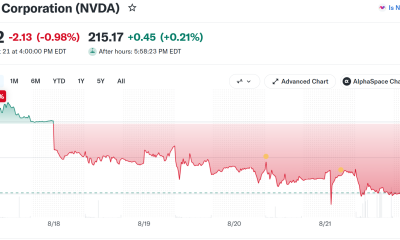
Nvidia Stock Suffers Longest Losing Streak Since 2022: Will Q2 Earnings End It?
-

 Business2 days ago
Walmart takes aim at younger shoppers with new fashion brand
-

 Business4 days ago
Moderna CEO warns China is pouring state money into mRNA technology
-

 Business7 days ago
Will Tesla Stock Be Higher or Lower a Year From Now? Here’s What Wall Street Analysts Are Saying
-

 Business4 days ago
NVIDIA Stock Drops Nearly 2 Percent to $210 on Seventh Losing Day Ahead of Critical AI Earnings
-
 Crypto World5 days ago
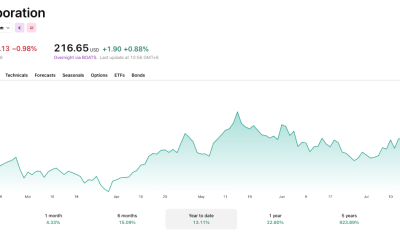
$92 Billion Nvidia Earnings Could Make or Break the AI Trade
-
 NewsBeat2 days ago
Lindsay Clancy jury braces for closing arguments as judge tells court: ‘You’ve heard all the evidence’ – Live updates
-

 Tech7 days ago
Unitree’s New Superman Robot Claims to Outjump and Outrun Every Human, Usain Bolt Included
-

 Business3 days ago
Thailand’s Eastern Economic Corridor Capital City (EECiti): Key Developments and Investment Opportunities
You must be logged in to post a comment Login