Connect with us

Business

Comfortable Design, But Sound Quality Falls Short for the Price You Pay

Published

on

Samsung Galaxy Watch 9

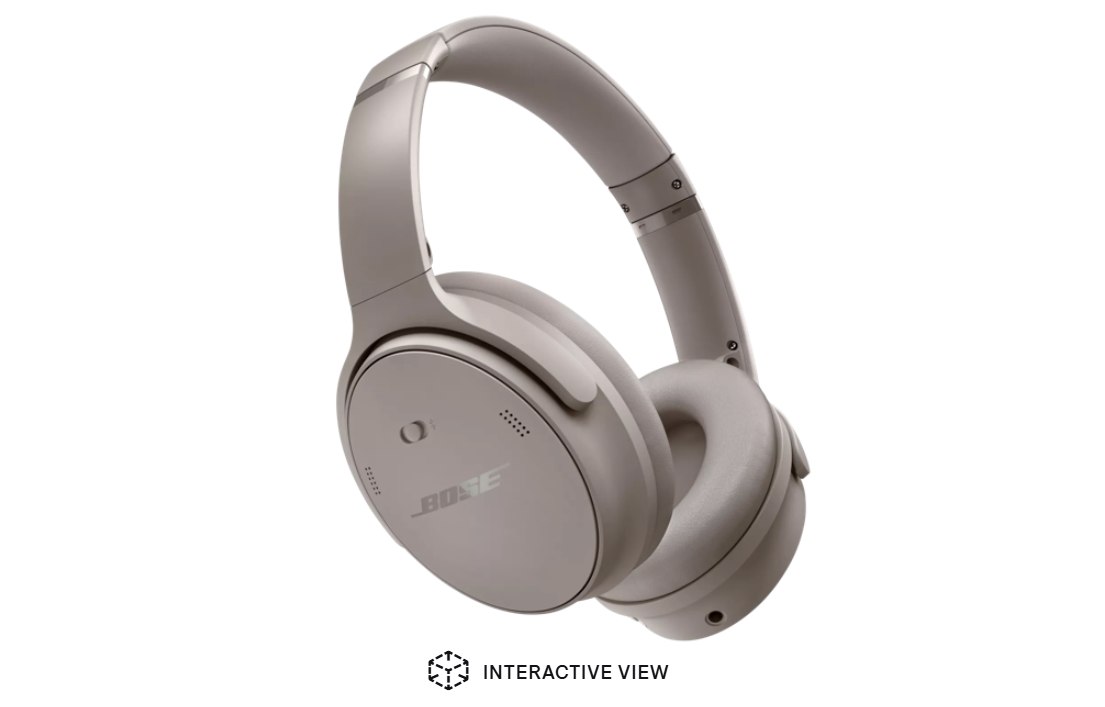
Bose’s QuietComfort Headphones, priced at $349, promise the comfort and noise cancellation the brand has built its reputation on, but a closer look at the over-ear headphones reveals a product that changes little from its predecessor while introducing a sound profile that several reviewers have described as an unwelcome step backward.

Released in 2023 as a replacement for the long-running Bose QuietComfort 45, the QuietComfort Headphones sit as the entry-level model in Bose’s current noise-cancellation lineup, positioned below the pricier QuietComfort Ultra line. According to a detailed review from SoundGuys, which tested the headphones over a two-day period using the stock firmware and version 8.0.5 of the Bose Music app, the new model earned an overall score of 7.5 out of 10, reflecting a headphone that performs competently in several areas while stumbling in others.

Familiar Comfort, Familiar Design

Anyone who has previously worn a pair of Bose QuietComfort headphones will find the new model immediately familiar. According to SoundGuys, the QuietComfort Headphones are nearly indistinguishable from the QuietComfort 45 in terms of materials, microphone placement and button layout, aside from a new olive green color option. The ear cups measure 63 by 40 millimeters, are lightweight, and feature sufficiently soft padding, continuing Bose’s reputation for headphones well-suited to extended listening sessions. In testing, the headphones delivered 27 hours and 14 minutes of continuous music playback, several hours beyond Bose’s own promotional claim of 24 hours, enough for roughly a week’s worth of daily commuting or about three full days of continuous use.

Advertisement

The headphones ship with a compact, fabric-wrapped travel case designed to fit easily into a carry-on bag, along with a 3.5mm to 2.5mm cable, a USB-A to USB-C charging cable, and printed documentation. Notably, the package does not include an airplane headphone adapter, though most airlines have increasingly updated their in-flight entertainment systems to reduce the need for one.

Reliable Physical Controls

Unlike some competing noise-cancelling headphones that rely on touch-sensitive surfaces, the Bose QuietComfort Headphones use physical buttons positioned on the back of each ear cup, a design SoundGuys described as more reliable and easier to operate by feel than touch-based alternatives. The right ear cup houses volume and playback controls, while the left ear cup includes a dedicated action button that can toggle between noise-cancellation modes, mute an active call, or trigger a customizable shortcut, though that shortcut is currently limited to launching Spotify or announcing the current battery level aloud.

Solid, if Unspectacular, Noise Cancellation

Advertisement

The Bose Music app remains necessary to unlock the headphones’ full functionality, including firmware updates and adjustable noise-cancellation modes, a feature that allows users to save up to two custom presets tailored to specific environments. In testing, the active noise cancellation reduced between 10 and 30 decibels of low-frequency noise below 1 kilohertz, a level SoundGuys said was effective at cutting engine and street noise by roughly 50% to 85%. High-pitched noise reduction measured between 20 and 45 decibels, described as respectable though not class-leading given the increasingly high standards set by competing noise-cancelling headphones on the market.

A Sound Profile That Divided Opinion

Where the Bose QuietComfort Headphones drew the most pointed criticism was in their default sound signature. According to lab measurements cited by SoundGuys, the headphones’ sub-bass response is dramatically over-emphasized, creating an impression that the midrange sounds comparatively weak or underpowered by contrast. The review’s author described the overall listening experience as “weird,” pointing specifically to a pronounced peak in the treble range between 6 and 8 kilohertz that can create the sensation of missing detail elsewhere in a song’s higher frequencies. In practical listening tests, the reviewer noted that tracks with busy high-end instrumentation, including hi-hats and cymbals, sounded noticeably different than expected on other headphones, an effect the review compared to listening to band-limited audio through a phone speaker, though less extreme.

Attempts to correct the sound profile using the Bose Music app’s built-in equalizer presets did not meaningfully improve the situation, according to the review. Both the app’s Bass Boost and Treble Boost presets were found to exacerbate existing imbalances rather than resolve them, and manual adjustments using the app’s basic three-band custom equalizer similarly failed to bring the sound closer to a more neutral listening preference. Despite these technical criticisms, the review noted that a broader crowd-pleasing quality score, based on an industry-standard multi-dimensional audio assessment, suggested that many casual listeners, particularly those who enjoy heavier bass, might still find the default sound signature enjoyable.

Advertisement

Calling Performance and Everyday Use

For phone calls, the headphones performed reasonably well handling wind noise, though background noise rejection during calls was flagged as a relative weak point. Connectivity is handled through Bluetooth 5.1 or a standard 3.5mm wired cable, though the headphones support only the SBC and AAC audio codecs and do not offer USB-C audio passthrough, a feature found on some competing 2023-era headphones. The headphones are not waterproof, and while their ear pads can be replaced, the ear cups themselves cannot.

How the Bose QuietComfort Headphones Stack Up

Compared with the Sony WH-1000XM5, a similarly priced competitor, reviewers found Sony’s offering superior in several respects, including sound quality, in-app equalization options and features such as spatial audio, making it difficult to recommend the Bose model over Sony’s alternative except on the basis of price, aesthetics or brand preference. Against the similarly priced Beats Studio Pro, neither model was judged clearly superior, with the Bose headphones offering better comfort but the Beats providing USB-C audio support that Bose lacks.

Advertisement

The Verdict

Ultimately, reviewers have suggested that shoppers considering the Bose QuietComfort Headphones might be better served financially by seeking out the older Bose QuietComfort 45, which offers roughly equivalent noise cancellation, arguably better default sound quality, and is frequently available at a lower price during seasonal sales. For buyers willing to spend closer to $350, alternatives such as the Sennheiser MOMENTUM 4 Wireless or the Shure AONIC 50 Gen 2 were also cited as offering more robust equalization options and additional features, positioning the Bose QuietComfort Headphones as a comfortable but ultimately unremarkable option within an increasingly competitive premium noise-cancelling headphone market.

Continue Reading
Click to comment

You must be logged in to post a comment Login

Leave a Reply

Business

PureField Ingredients doubles down on sustainability

Published

on

PureField Ingredients doubles down on Kansas sustainability

Company opens carbon capture and sequestration facility, plans another expansion.

Continue Reading

Business

Savers Value Village thrift store launches new AI tool to price items

Published

on

Savers Value Village thrift store launches new AI tool to price items

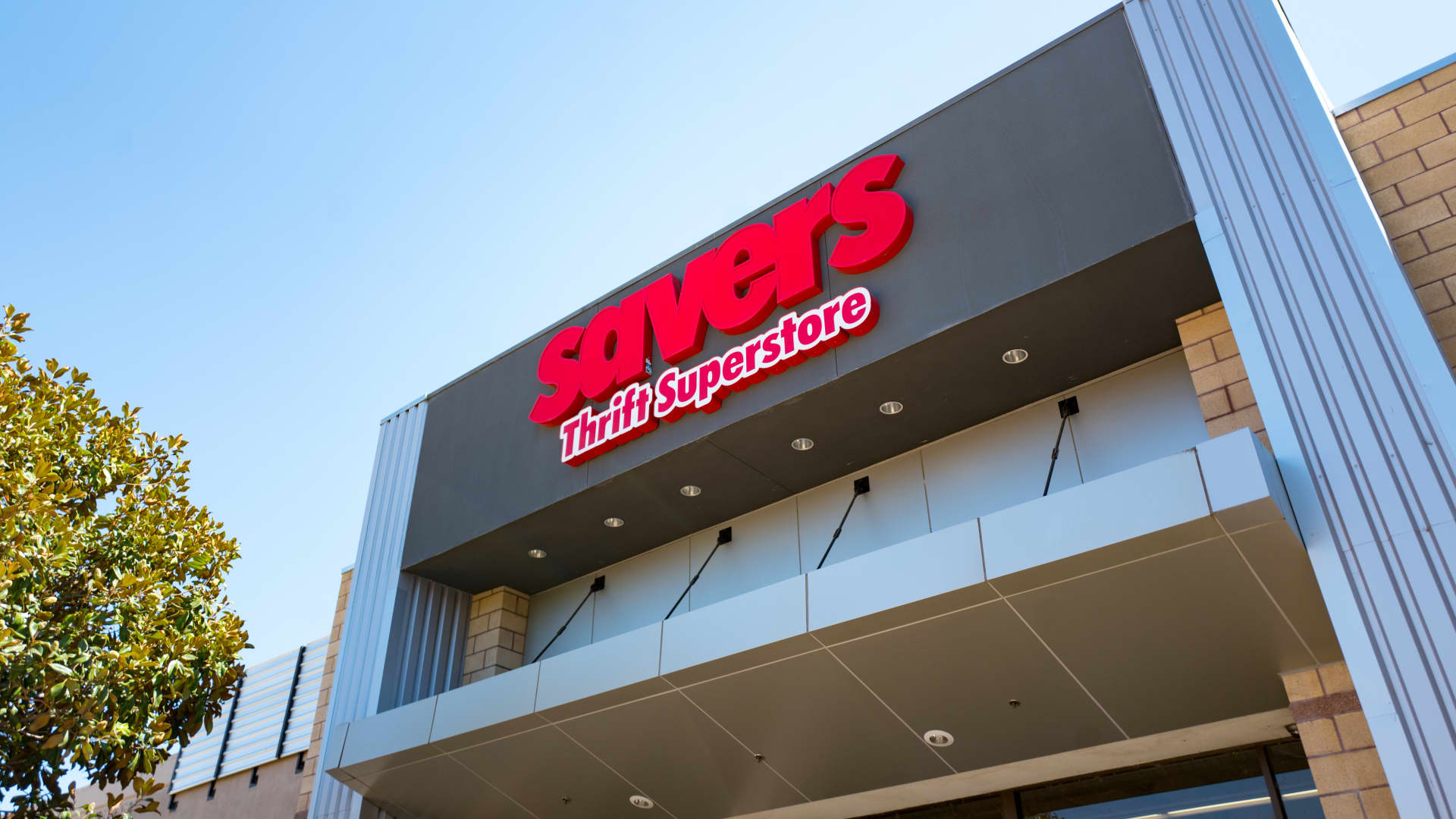
Savers Value Village is launching a new platform leveraging artificial intelligence to help optimize product pricing, the company told CNBC exclusively, as the tricky-to-price thrift segment gains traction around the world.

The new platform, called ThriftIQ, uses AI to reduce the work needed to price items across the men’s and women’s apparel assortment and bring more consistency.

“We’re getting clear sell-throughs, larger baskets, it’s helping our new stores ramp more favorably, and obviously there is the profitability improvements,” CEO Mark Walsh told CNBC.

The tool has already been deployed in 58 pilot stores, according to the company, pricing more than 25 million items. That number is expected to double by the end of the year, Walsh added.

Advertisement

Savers, which had 375 stores at the end of the second quarter, said it processes more than 1 billion pounds of reusable goods every year. ThriftIQ was developed in partnership with data science and technology consulting firm Kaizen Analytix using Savers’ proprietary data sets, which the company has been developing for nearly two years.

“It’s not dynamic pricing, and once those garments are priced and tagged, that tag doesn’t change,” Walsh said.

The company’s goal with the new AI tool is to bring more predictable pricing for customers while also keeping average prices the same or lower, remaining between roughly 40% and 70% below traditional retail prices.

Savers said ThriftIQ marks the latest step in the company’s broader strategy to modernize and enhance its business operations. It will deploy the platform across more of its U.S. and Canadian locations through early 2028.

Advertisement

Walsh said the tool is not meant to get rid of manual labor in stores, but rather make workers more productive.

“Savers is transforming thrift through innovation, and I couldn’t be more excited about the trajectory of the business,” he said.

The tool comes at a time when secondhand retail and thrift are seeing a surge, especially with the macroeconomic backdrop of higher inflation, lower consumer confidence and more price-conscious buyers.

“We are benefiting from some very powerful secular momentum in this space. Thrift has gone, and is continuing to go, mainstream in retail, and so we see that in the younger customers, in the more affluent customers, for example, that are adopting thrift,” Chief Financial Officer Michael Maher told CNBC. “But I think in addition to that, we are bringing investment, technology, innovation and execution to that.”

Advertisement

Savers also reported its second-quarter earnings on Thursday, seeing a 7.4% increase in total net sales, which came in at $448.2 million. Comparable store sales increased 4.4%.

Savers reported net income of $21.6 million, or 14 cents per share, for the quarter, versus $18.9 million, or 12 cents per share, in the prior-year period.

Maher also said the company saw its third consecutive quarter of year-over-year growth in earnings before interest, taxes, depreciation and amortization.

The company incorporated the impact of ThriftIQ into its updated 2026 guidance, saying that it expects to return to a “high-teens adjusted EBITDA margin within the next three years.”

Advertisement

“This is just the latest chapter of transformative innovation,” Maher told CNBC. “It is a core plank of our long-term strategic plan, and yes, we’re constantly looking at innovation.”

Continue Reading

Business

Versant (VSNT) earnings Q2 2026

Published

on

Versant (VSNT) earnings Q1 2026

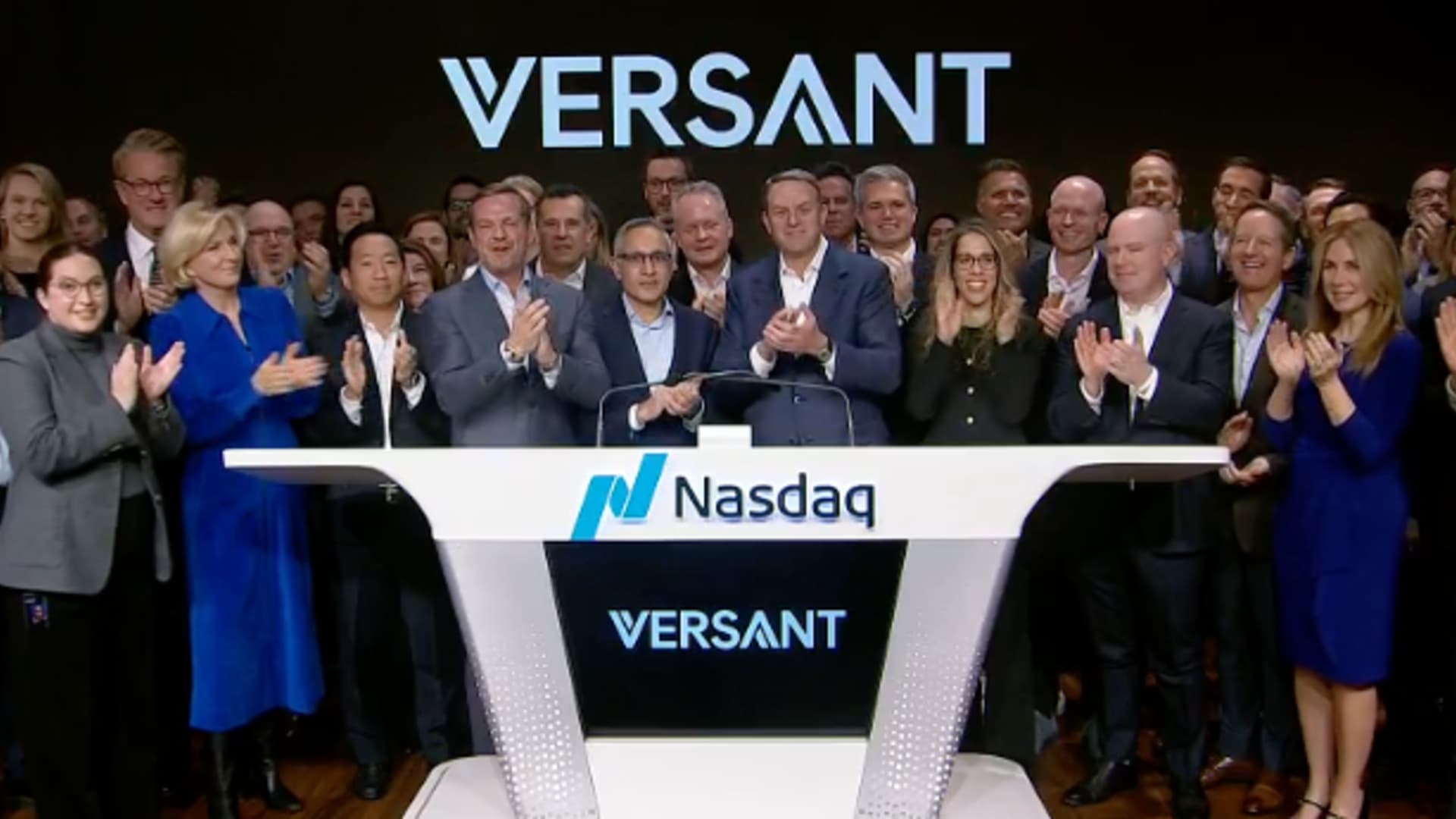
Versant Media Group raised its full-year guidance on Thursday, boosted by momentum in its digital brands like Fandango and GolfNow, as well as what executives referred to as “strength” in its overall business model.

The company now expects total revenue for 2026 of $6.2 billion to $6.45 billion and adjusted earnings before interest, taxes, depreciation and amortization of $1.9 billion to $2.05 billion.

This marks Versant’s third earnings report since it was spun out from Comcast’s NBCUniversal at the start of the year. The company, which includes a portfolio of pay TV networks including CNBC, MS NOW and The Golf Channel began trading as a public company in January.

Versant’s earnings once again showcased that live sports and news grab the most viewers and advertising dollars for traditional TV, despite ongoing pressure on the bundle as it loses customers to streaming alternatives.

Advertisement

The company beat Wall Street expectations on the top and bottom lines. Versant shares were up more than 6% at the close of trading on Thursday.

Here’s how Versant performed for its second quarter, ended June 30, compared with Wall Street’s estimates, according to LSEG:

  • Earnings per share: $1.49 vs. $1.35 expected
  • Revenue: $1.64 billion vs. $1.62 billion expected

Revenue for linear TV, which also includes channels USA Network, Syfy, Oxygen and E!, was down 6.3% during the quarter to $954 million, due to subscriber declines.

CEO Mark Lazarus said in a release on Thursday the company completed carriage agreements “with two large distribution partners, one in the U.S. and one in Canada.” Many of Versant’s distribution deals were locked up when it was still under NBCUniversal’s ownership.

Versant executives have said they aim to diversify the company’s revenue base — with an eye toward achieving a revenue mix of 50% from its digital, platform, subscription, ad supported and transactional businesses. The aim is to be less reliant on the linear TV model. Currently more than 80% of Versant’s revenue stems from the pay TV business.

Advertisement

Versant leadership has also said it would explore acquisitions of nontraditional media businesses to broaden its revenue streams and add growth.

This week the company closed its acquisition of golf simulation company Full Swing. Versant already owns digital media platform GolfPass and tee-time reservation company GolfNow. Earlier this year Versant bought StockStory, an artificial intelligence-powered tech platform that provides financial analysis, market insights and stock recommendations for CNBC.

Advertising revenue for the quarter was down 0.6% to $423 million, an improvement compared with the rate of decline during the same period last year due to higher ratings for its networks, which are heavily centered on news and sports.

Revenue for the platforms segment — which includes Fandango and GolfNow — was up 0.8% to $225 million for the quarter. Excluding the company’s divestiture of SportsEngine, platforms revenue was up 9.3%.

Advertisement

The company attributed that increase in part to higher revenue at Fandango from movie ticket purchases and video-on-demand transactions as well as stronger bookings, payments and subscription revenue for GolfNow.

Versant has launched a free, ad-supported Fandango streaming service in a bid to increase its advertising and users for the platform. Versant’s USA Sports also recently announced a media rights deal with German soccer league Bundesliga, which brings live matches to USA Network and Fandango beginning in August.

Overall, Versant revenue declined 3.8% year over year to $1.64 billion.

Net income attributable to Versant declined 30% to $211 million, or $1.49 per share, from $302 million, or $2.09 per share a year earlier. The company attributed that drop to lower revenue, public company costs, interest expense related to the Comcast separation, and an increased tax expense largely due to the divestiture of SportsEngine.

Advertisement

Adjusted EBITDA decreased 8.9% to $624 million. However, when compared with stand-alone adjusted EBITDA, a metric to more directly compare performance of the pre-spin portfolio companies to current results, adjusted EBITDA was up 3% year over year. Versant said the increase reflected lower programming expenses and reduced costs that offset revenue declines.

The company also declared a quarterly cash dividend for the third quarter in a row, again at 37.5 cents a share. The latest dividend is payable on Oct. 22 to shareholders of record as of the close of business on Oct. 1.

Versant said it completed a previously announced $100 million accelerated share repurchase agreement. The company repurchased nearly 2.4 million shares of Class A common stock with a remaining authorization of roughly $800 million as of June 30.

The company said it plans to enter into a similar stock repurchase agreement on Aug. 7 to repurchase $100 million of Class A stock, which it anticipates will close during the third quarter.

Advertisement

Disclosure: Versant Media Group is the parent company of CNBC.

Continue Reading

Business

US stocks: Dow, S&P slip as investors eye Mideast talks, earnings

Published

on

US stocks: Dow, S&P slip as investors eye Mideast talks, earnings
The Dow and S&P 500 indexes closed lower on Thursday, pausing after a strong start to the week, as investors digested the latest round of corporate earnings and looked for signs of progress toward a peace deal between the U.S. and Iran.

A robust earnings season, which has tempered some concerns about the massive spending by AI-related companies, and growing optimism over ‌the potential end ⁠of hostilities ⁠in the Iran war helped propel both the Dow Industrials and S&P 500 to record highs earlier this week. Oil prices rose, with U.S. crude settling up 2.75% at $77.29 ​a barrel and Brent settling at $82.49 per barrel, up 3.83%. Iran’s semi-official Fars news agency reported that an Iranian parliamentary committee is reviewing a ​preliminary bill that would bar U.S., Israeli and other “hostile” vessels from transiting the Strait of Hormuz.

“You’re seeing perhaps more muted response to macro news than you would otherwise see, probably due to the fact of the summer and a little bit of fatigue, there’s a ​little bit of headline fatigue, specifically around Iran,” said Robert Bernstone, head of trading at ⁠SummitTX Capital in ‌New York.

“Iran is having less of an impact right now, to be clear, I’m not saying it ​has no impact … ​tweets are something, headlines are something, but we really want to see the devil is in the ⁠details.”

Advertisement

According to preliminary data, the S&P 500 lost 13.56 points, or 0.18%, to end ​at 7,709.99 points, while the Nasdaq Composite lost 10.99 points, or 0.04%, to 26,352.45. The Dow ​Jones Industrial Average fell 453.64 points, or 0.83%, to 53,895.48.


The recent indications of movement toward a peace deal helped push crude prices lower earlier in the week and, in turn, eased inflation worries and expectations for a rate hike from the Federal Reserve, which also served to push U.S. Treasury yields lower.
WESTERN DIGITAL, SANDISK DROP Data storage company Western Digital tumbled and memory chip maker Sandisk dropped in the wake of quarterly results. Both companies have surged this year, however, with Sandisk up more than 400% and Western Digital up about ‌160%. AppLovin plunged after the marketing platform missed Wall Street estimates for quarterly revenue, while Datadog plummeted after the cloud security firm said it expects revenue growth to slow in the third quarter. Both stocks were among the biggest ​drags on the ​benchmark S&P index.

Of the 382 companies ⁠in the S&P 500 that have reported earnings through Wednesday morning, 84.8% have topped analyst expectations, according to LSEG data, well above the 68% average beat rate since 1994.

SPACEX LOCKUP PERIOD ENDS

SpaceX shares erased losses from earlier in the session and closed higher, defying expectations that they would be pressured by insider selling, as the lockup period for early investors holding the stock expired. On the data front, the number of Americans filing claims for unemployment benefits increased slightly last week. The report came ahead of closely watched nonfarm payrolls figures for July due on Friday, which will shape expectations for the Fed’s path of interest rates at a time when Chairman Kevin Warsh has scaled back on forward guidance from the central bank.

Advertisement
Continue Reading

Business

LARRY KUDLOW: Democratic Party socialism is unaffordable

Published

on

LARRY KUDLOW: No sock puppet — Kevin Warsh will bring a gust of fresh air to the Federal Reserve

It’s so interesting to me how these socialists who are taking over the Democratic party, are hiding behind the veil of affordability. They don’t want to tell you that their agenda is all about unaffordability, or in short wrecking the whole economy. 

Think of this, they will tax all manner of wealth and income. Indeed, take candidate Abdul El-Sayed and Mayor Zohran Mamdani, who basically want to liquidate any of your gains from successful wealth and work. And they say it all the time. In fact, Mr. Mamdani just yesterday talked about how in New York City apartments, it’s the people who live there who own it, not the owners who own it — that by the way is communism.

Advertisement

And then there’s the Medicare for All idea which is nothing but a euphemism, not simply for the takeover of the healthcare system, but basically for an economy-wide takeover. They want the government to run the economy. Period. Full stop.

Of course they want to defund the police and ICE, and they want open borders, and rampant illegal immigration, and then the even nuttier stuff of abolishing the senate, changing presidential elections. The insanity grows the more you listen.

Back to affordability, though. The socialists had a leg up on their program during the Biden years. Don’t forget the Green New Deal, and the phony Inflation Reduction Act, and Covid spending long after Covid was gone. Their giant spending bills and their attempted regulation of the economy, led to a 9 percent inflation peek, the highest in four years. And overall, the consumer price index cumulatively rose by 21.4 percent. Okay.

Advertisement

So Messrs. El-Sayed and Mamdani and Senators Bernie Sanders and Elizabeth Warren and Congresswoman Alexandria Ocasio-Cortez, they had their chance. They got about half the socialism during the Biden years that they would ever do if they won a national election, and look what they did. Is that affordability? Remember, 21 percent inflation. Real wages fell during their period, actually fell. That’s not affordability. So there’s a lesson to be learned here. 

Their affordability mantra is a coverup for a state-run economy and soaring inflation, which is by the way according to polls, working folks including average minority working folks are not voting for them. They went for Trump in 2024.

So that’s a lesson for the GOP. Hone in on the differences between free enterprise capitalism, which rewards success, and puts more money in your pocket, letting you keep more of what you earn, and that is real affordability. 

Advertisement

By contrast, this new Democratic Party socialism will take money out of your pocket, will lead to rapid inflation from the government’s takeover of the economy, will rob you of your success, and devalue the human dignity of work, enterprise, and initiative.

Think of it this way, socialism is a discouragement to the individual, the economy, and the nation. And antisemitism is perhaps the driving force behind the entire socialist movement. Free market capitalism is an encouragement to the individual, the economy, and the nation. Those are the differences in affordability. Democratic party socialism is unaffordable. And free market capitalism is surely worth fighting for.

Continue Reading

Business

Smith Douglas Homes Corp. (SDHC) Q2 2026 Earnings Call Transcript

Published

on

OneWater Marine Inc. (ONEW) Q1 2026 Earnings Call Transcript