






Connect with us

Business

Complaints to watchdog about water firms soar

Published

on

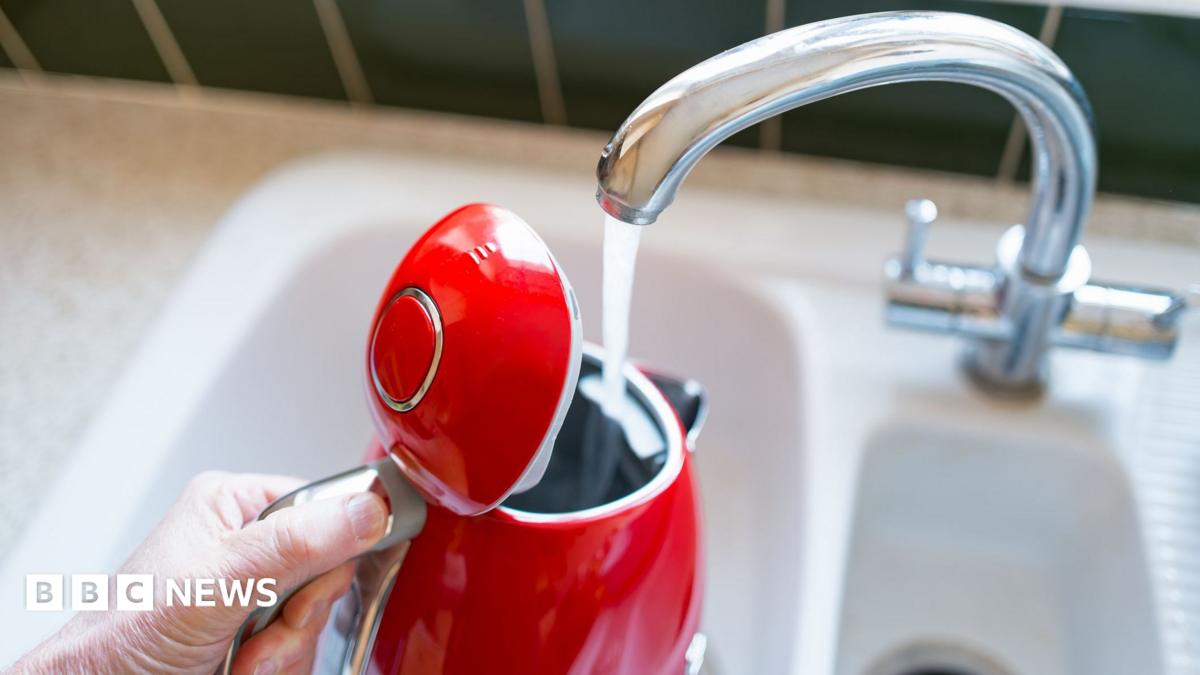
A person filling up a red kettle from the kitchen sink

The number of complaints made by households about water companies to the industry watchdog has risen by a record 84% in a year, driven by customer concern and confusion over rising bills.

The Consumer Council for Water (CCW) said the year-on-year increase was the highest in its 20-year history and showed “just how dissatisfied” many people were.

Water customers in England and Wales have been hit with steep price hikes in recent years. The regulator Ofwat has also allowed firms to put up bills by 36% between 2025 and 2030.

Water UK, which represents firms, said it understood that higher bills was never welcome, but the money was needed “to fund vital upgrades”.

Advertisement

The total number of complaints to the watchdog rose to 15,115 in 2025-26, from 8,235 in the previous year.

Meanwhile, complaints made by households directly to water companies, which is required before complaining to the CCW, rose by 56% to 321,347.

The top three subjects of complaints to the CCW were measured billing, affordability and billing admin.

Mike Keil, the chief executive of the CCW, said the figures “reflect just how dissatisfied many people still are with the state of the water sector”.

Advertisement

He said customers are “impatient to see the benefits” of higher bills.

“Companies need to be clear and open with their customers about how they are investing people’s money to deliver real improvements.”

The CCW assessed each water company’s performance on the number of complaints it received for every 10,000 households it serves, and the amount of effort customers have to put in to get their complaint resolved.

Thames Water and South West Water rated “poor” for both performance measures.

Advertisement

David Bird, retail director at Thames, apologised to customers who “have not received the service they should expect”.

“We know bill clarity has been a particular source of frustration, which is why we have launched a programme to redesign them, so they are easier to understand,” he said.

Bills for the average Thames customer rose by 31% in 2024, but were a lot smaller this year at 3.4%.

South West Water said: “We know there is more to do to improve our customers’ experience. We are taking action by reducing repeat contacts, resolving issues when people contact us for the first time, and ensuring they receive clear, timely communication.”

Advertisement

Portsmouth Water and Bristol Water were the only companies to score “good” in both metrics, retaining their position at the top of the rankings as the sector’s best performers.

Last month, Ofwat approved bill increases for 13 companies to meet increased pressures on infrastructure and the environment.

Five of those companies — Thames, Severn Trent Water, Southern Water, Wessex Water and South East Water — were already permitted to hike bills in 2024.

A spokesperson for industry body Water UK said: “We understand increasing bills is never welcome, but the money is needed to fund vital upgrades to secure our water supplies, support economic growth and end sewage entering our rivers and seas.

Advertisement

The spokesperson said that 94% of complaints are “being dealt with at the earliest possible stage without the need for further involvement from the consumer body”.

“The industry remains committed to improving communication with customers and showing clearly how their money is being used to deliver the improvements they expect,” the spokesperson added.

Continue Reading
Click to comment

You must be logged in to post a comment Login

Leave a Reply

Business

Why is Space Exploration Technologies stock rallying today?

Published

on


Why is Space Exploration Technologies stock rallying today?

Continue Reading

Business

What’s happening to UK interest rates and mortgage deals?

Published

on

A woman with long, blonde hair talks into a microphone

Mortgages

Just under a third of households have a mortgage, according to the government’s English Housing Survey, external.

About 500,000 homeowners have a mortgage that “tracks” the Bank of England’s rate. That means any cut means a reduction in the monthly repayments on their outstanding loan.

An additional 500,000 homeowners on standard variable rates (SVRs) rely on their lender choosing to pass on any Bank rate cut.

Advertisement

But the vast majority of mortgage customers – some 87% – have fixed-rate deals. While their monthly payments aren’t immediately affected by a rate change, their future deals are.

As of 16 September, the average two-year fixed residential mortgage rate was at its highest since 11 May (5.77%), while the average five-year was at its highest since 8 November 2023 (5.83%), according to the financial information service Moneyfacts.

The average two-year tracker rate was 4.54%.

About 800,000 fixed-rate mortgages with an interest rate of 3% or below are expected to expire every year, on average, until the end of 2027. Borrowing costs for customers coming off those deals are likely to rise sharply.

Advertisement

Mortgage calculator

You can see how your mortgage may be affected by future interest rate changes by using our calculator:

Advertisement
Continue Reading

Business

Stock Market Today: Dow Wavers Ahead Of Likely Fed Rate Hike, Warsh Comments; Intel, SK Hynix Jump

Published

on

Fed Chair Warsh Leans Hawkish In Jackson Hole Speech (Live Coverage)

The Dow Jones Industrial Average and the other major stock indexes traded mixed Wednesday as Wall Street braced for a likely Federal Reserve rate hike and Fed Chair Kevin Warsh’s press conference. Meanwhile, Nvidia (NVDA), Intel (INTC) and SK Hynix (SKHY) were early winners on the stock market today Just after Wednesday’s open, the Dow industrials dipped 0.2% as the S&P…

Copyright ©2026 Investor’s Business Daily, LLC. All rights reserved. 87990cbe856818d5eddac44c7b1cdeb8

Continue Reading

Business

CHS to build Wisconsin soybean processing plant

Published

on

CHS to build Wisconsin soybean processing plant

INVER GROVE HEIGHTS, MINN. — CHS plans to construct a $700 million soybean processing facility near Evansville, Wis., significantly expanding the global agribusiness’ ability to meet growing demand for soybean oil and meal.

The facility will have the capacity to process 80 million bus of US-grown soybeans annually, expanding the cooperative’s oilseed processing capabilities and creating new market opportunities for owners, CHS said in its Sept. 14 announcement. With construction slated to begin soon, the plant is targeted for completion for fall 2028.

“Investments like this help CHS create additional value for our owners and customers by expanding market access, strengthening our processing network and creating new demand opportunities for US-grown soybeans,” said John Griffith, executive vice president of agriculture business and CHS Hedging. “Strong demand across food, feed and renewable fuel markets, coupled with policies that encourage domestic processing, manufacturing and energy production, reinforce the need for additional soybean processing capacity in the United States. This facility positions CHS to support farmers and customers for years to come.”

The Evansville facility will increase soybean processing capacity in southern Wisconsin, a region with strong soybean production and significant demand for soybean meal from livestock producers, CHS said.

Advertisement

When operational, the facility is expected to employ about 80 people and produce approximately 1 billion lbs of oil and 2 million tons of meal annually. Evansville’s proximity to soybean production, rail service and major transportation corridors makes it well positioned to support the movement of soybean meal and oil to domestic and global markets.

“For Wisconsin soybean farmers, this investment represents something we have been working toward for years: stronger demand for the crop we grow right here at home,” said Doug Rebout, president of the Wisconsin Soybean Association. “Additional processing capacity gives growers another reliable market close to the farm and helps create long-term opportunities for Wisconsin soybeans in both meal and oil markets.”

CHS said the new facility also will complement the company’s existing oilseed processing operations. In Hallock, Minn., CHS processes 525,000 tonnes of canola seed annually. In Fairmont and Mankato, Minn., CHS processes approximately 119 million bus of soybeans. When the facility becomes operational, the company’s soybean processing capacity will increase by more than two-thirds.

The investment is expected to generate significant economic activity through construction employment, permanent jobs, increased demand for locally produced soybeans and expanded market opportunities for regional farmers.

Advertisement

“CHS is committed to being a long-term partner in the communities where we operate,” Griffith said. “This investment supports rural economic development, creates jobs and strengthens the agricultural supply chain for producers, customers and communities across the region.”

CHS, a global agribusiness and the largest farmer-owned cooperative in the United States, operates diversified agronomy, grains, foods and energy businesses with revenues of $35.5 billion in fiscal year 2025. 

Continue Reading

Business

S&P upgrades Newmark Group rating to BBB- on strong credit

Published

on


S&P upgrades Newmark Group rating to BBB- on strong credit

Continue Reading

Business

Is GameStop Still Chasing eBay? Inside Ryan Cohen’s Wavering $56 Billion Takeover Saga Late This Fall

Published

on

The eBay app is seen on a smartphone in this illustration taken

GameStop’s monthslong pursuit of eBay remains unresolved heading into the fall, with Chief Executive Officer Ryan Cohen appearing to have pulled back from an outright acquisition in favor of a scaled-down partnership, even as the video game retailer continues holding one of the largest outside stakes in the e-commerce company.

The saga began in earnest on May 3, when GameStop submitted a non-binding proposal to acquire 100% of eBay for $125 per share in a combination of cash and stock, valuing the deal at approximately $55.5 billion on an undiluted basis. The offer represented a 46% premium to eBay’s closing price on February 4, the day GameStop began accumulating its stake in the company, and came after GameStop had already built roughly a 5% economic interest in eBay through a mix of derivatives and direct share ownership.

EBay’s board rejected the proposal on May 12, saying in a statement that the offer was “neither credible nor attractive.” Company chairman Paul Pressler expressed confidence in eBay’s existing management and standalone strategy, with the board citing concerns about the deal’s financing structure and its potential impact on eBay’s long-term profitability and growth. GameStop did not immediately abandon the pursuit following that rejection. By June, Cohen had taken the offer directly to eBay shareholders in what amounted to a hostile bid, pairing that move with a separate $2 billion share buyback program for GameStop’s own stock running through June 2029. GameStop further increased its position in July, disclosing a stake of 9.8% in eBay, cementing its status as one of the company’s largest shareholders.

Cohen struck a defiant tone about the pursuit in a Bloomberg Television interview in July, telling the network, “we’re coming for eBay one way or another,” while declining to say whether GameStop intended to raise its offer. Cohen has described his broader ambition as building a combined company worth as much as $1 trillion, citing potential synergies in trading cards and collectibles, plans to develop a digital marketplace for video game items, and the idea of using GameStop’s physical retail locations as authentication hubs for collectible card grading.

Advertisement

That posture shifted by early August. Bloomberg News reported on August 10, citing people familiar with the matter, that Cohen was weighing withdrawal of the full $56 billion takeover bid in favor of a more modest partnership or joint venture arrangement. Under that alternative structure, eBay would be able to leverage GameStop’s approximately 1,600 U.S. retail locations, with the two companies potentially expanding their respective footholds in higher-margin categories such as trading cards and collectibles. As part of any such partnership, GameStop would seek representation on eBay’s board of directors, according to the report. The sources cautioned that GameStop had not made a final decision at the time and that Cohen could still pursue other options.

Market reaction to the reported shift was telling. GameStop shares climbed roughly 1.6% in early trading following the report, while eBay shares fell about 2.2%, a divergence that reflected how differently investors had come to view the original acquisition proposal. Bloomberg noted that GameStop’s stock had fallen 28% since Cohen first floated the takeover bid in May, while eBay’s shares had risen 7.6% over the same period, suggesting the market had grown skeptical that the original deal would ever close and viewed a retreat from it as reducing risk for GameStop specifically.

Financial analysts had raised similar doubts from the outset. Commentary published around the time of the original proposal noted the structural mismatch at the heart of the deal: GameStop, a brick-and-mortar retailer that purchases and resells inventory through its store network, was attempting to acquire a company worth nearly six times its own market value that operates an entirely different business model, an online marketplace earning fees by connecting buyers and sellers. Analysts also flagged the heavy reliance on debt financing and stock issuance embedded in the original proposal’s structure as a key point of skepticism.

GameStop’s most recent financial disclosures show the company has continued adjusting its balance sheet even as the eBay situation remains unsettled. The company reported second-quarter results on September 8, posting adjusted earnings per share of 27 cents, in line with consensus estimates, though quarterly revenue fell to $790.2 million from $972.2 million a year earlier, a decline the company attributed to the absence of a comparable Nintendo Switch 2 launch tailwind from the prior year, ongoing store closures, and other divestitures. As of August 1, GameStop held approximately 43.4 million shares of eBay common stock, with a fair value of roughly $4.9 billion, underscoring the scale of GameStop’s continued financial exposure to eBay even amid the reported reconsideration of its original acquisition plan. Separately, GameStop disclosed on September 3 that it had completed exchanges retiring approximately $1.4 billion in convertible notes, reducing its total long-term debt to approximately $2.8 billion.

Advertisement

As of the most recent public reporting, GameStop has not issued a formal statement confirming either the full withdrawal of its original $56 billion acquisition proposal or the formal launch of an alternative partnership structure with eBay. The company’s substantial remaining equity stake in eBay, combined with Cohen’s continued public interest in the collectibles and e-commerce space, suggests some form of ongoing relationship between the two companies remains likely, even if the original vision of a full corporate takeover appears to have given way to a more measured approach centered on retail partnership and board representation rather than outright ownership.

Continue Reading

Business

FDA Issues Class II Recall on Hand Soap Sold Across 15 States Over Serious Bacterial Contamination Risk

Published

on

Handwashing

The U.S. Food and Drug Administration has formally classified an ongoing hand soap recall as a Class II action, confirming that six products distributed by Intercon Chemical Co. of St. Louis across 15 states may be contaminated with bacteria capable of causing serious infections, including pneumonia, urinary tract infections and bloodstream infections.

The FDA issued its enforcement report on September 11, assigning Class II status to a voluntary recall that Intercon Chemical Co. had first initiated on June 29. A Class II classification indicates that use of or exposure to the affected product could cause temporary or medically reversible health problems, while the probability of more serious adverse health consequences is considered remote, though not eliminated, particularly for vulnerable individuals.

According to the FDA, two of the six recalled soap products tested positive for potential contamination with multiple strains of Pseudomonas and Serratia bacteria, including Pseudomonas aeruginosa and Serratia marcescens. Both species are recognized by the Centers for Disease Control and Prevention as common environmental bacteria typically found in soil and water, but both are also capable of causing significant infections in humans, particularly when they enter the bloodstream or come into contact with compromised tissue. According to the CDC, Pseudomonas aeruginosa is the species most likely among the two to cause bloodstream infections, pneumonia or urinary tract infections, while Serratia marcescens has been linked to a broader range of infections, including those affecting the eyes, stomach, brain, bones and heart, in addition to blood and respiratory infections. Both bacterial species can also exhibit resistance to common antibiotics, complicating treatment in cases where an infection does occur.

The recalled hand soap was distributed to 19 wholesale companies and one retail company spanning California, Georgia, Illinois, Iowa, Maryland, Mississippi, Nebraska, New York, North Carolina, North Dakota, Pennsylvania, South Carolina, Texas, Washington and Wisconsin. While much of the recalled product was distributed for commercial or institutional use in businesses and public facilities, one of the six affected products, sold under the Laura Lynn brand, was shipped directly to retail stores where individual consumers could purchase it.

Advertisement

The six recalled products span five separate brand names. Intercon Foaming Pear Hand Soap With Aloe, sold in 28.7-fluid-ounce containers under UPC 789745002981, was recalled across three lot codes, AF97312, 26-01001 and 26-01803, with 693 cases affected and potential contamination spanning five separate bacterial strains: Pseudomonas aeruginosa, Pseudomonas putida, Pseudomonas monteilii, Serratia marcescens and Serratia nematodiphila. A related product, Clearly Better by Intercon Foaming Pear Hand Soap With Aloe, sold in sizes ranging from 1,000 milliliters to 34 fluid ounces under UPC 789745002615, was recalled across lot codes 26-01001 and 26-01803, affecting 143 cases, with the same five bacterial strains identified as potential contaminants.

Summit 150 Foaming Hand Soap, sold in 28.7-fluid-ounce containers under UPC 810080570030, was recalled across three lot codes, BF97303, BF97304 and BF97305, affecting 1,040 cases, the largest volume among the six recalled products, with the FDA listing potential bacterial contamination generally rather than specifying particular strains for this product. Vestis Foaming Hand Soap in Fresh Pear Scent, sold in 33.8-fluid-ounce containers under UPC 810080570405 and lot code 26-03091, affected 225 cases. Two Laura Lynn-branded products rounded out the recall: Laura Lynn Honey Apple Crisp Liquid Hand Soap, sold in 8-fluid-ounce containers under UPC 086854074305 across lot codes C3576 and 26-01804, affecting 301 cases, and Laura Lynn Foaming Pear Scent Hand Soap with Moisturizers, sold in 7.5-fluid-ounce containers under UPC 08685407408 and lot code 26-01001, affecting 294 cases.

Consumers and businesses in possession of any of the affected products are advised to check the specific UPC codes and lot numbers against the FDA’s published list and to stop using any matching product immediately. Anyone who develops symptoms of infection after using one of the recalled soaps, including fever, unusual redness or swelling, respiratory symptoms, or urinary discomfort, is advised to contact a health care provider promptly, particularly given the elevated risk the bacteria pose to people with weakened immune systems.

The FDA has identified certain populations as facing heightened risk from exposure to either bacterial species. Individuals with compromised immune systems, underlying chronic conditions such as cancer or diabetes, or those who have been on extended courses of antibiotics face a greater likelihood of developing a serious infection if exposed to contaminated product, according to the agency’s guidance accompanying the recall.

Advertisement

The Intercon Chemical Co. recall adds to a broader pattern of FDA enforcement actions targeting consumer and commercial hygiene products in recent months, part of the agency’s ongoing effort to identify and remove potentially contaminated goods from the marketplace before they cause widespread illness. Because several of the recalled products were distributed primarily to commercial and institutional customers rather than directly to consumers, public awareness of the recall may lag behind that of more consumer-facing recalls, increasing the importance of businesses in the affected distribution states checking their own inventory against the FDA’s published product list.

As of the most recent update, the FDA had not reported any confirmed illnesses directly linked to the recalled hand soap products, though the agency’s classification of the recall as Class II reflects its assessment that the contamination poses a genuine, if not severe, health risk to those exposed. Consumers with questions about whether a specific product they possess falls under the recall are advised to consult the FDA’s official enforcement report directly for the complete list of affected UPC codes, lot numbers and best-by dates.

Continue Reading

Business

Cathie Wood Makes SpaceX Prediction, Forecasts $10 Trillion Starship Revenue By 2030

Published

on

Cathie Wood Makes SpaceX Prediction, Forecasts $10 Trillion Starship Revenue By 2030

Cathie Wood continues to be a strong believer in SpaceX’s prospects, as Elon Musk’s rocket and AI company represents a substantial portion of ARK’s stock holdings. Wood late Tuesday made a bold revenue prediction for Starship as SpaceX prepares to launch its 14th flight for the spacecraft next week. SPCX stock ticked higher early Wednesday. “Each Starship launch could generate…

Copyright ©2026 Investor’s Business Daily, LLC. All rights reserved. 87990cbe856818d5eddac44c7b1cdeb8

Continue Reading

Business

UK’s biggest housebuilder Barratt Redrow slows land buying and cuts home sales outlook

Published

on

Business Live

Barratt Redrow said Middle East conflict was affecting consumer confidence

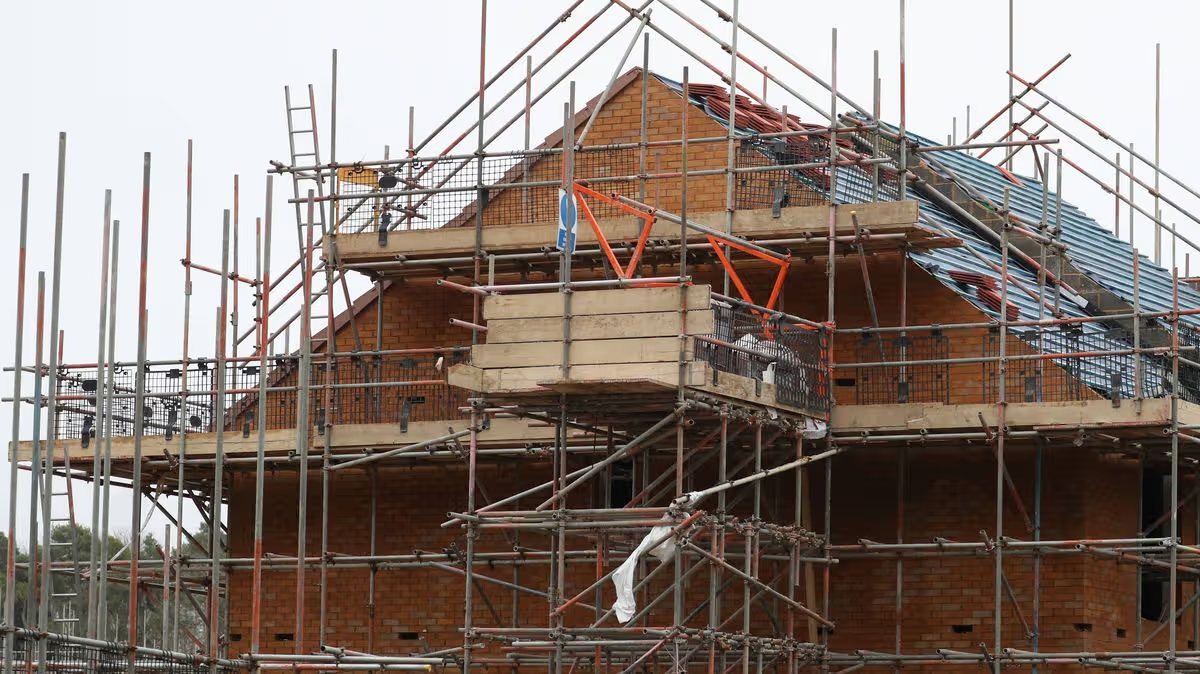
Construction work on a new-build house

Construction work on a new-build house(Image: PA Wire/PA Images)

Barratt Redrow has scaled back land purchases and trimmed its forecast for home sales in the year ahead, while warning the Government that planning reforms were “not enough”.

Advertisement

Britain’s largest housebuilder said the year had started well but that the Iran war had dented consumer confidence.

It nevertheless said that 17,667 home sales had been completed in the year to 28 June, a 5% increase on the previous year.

The firm’s pre-tax profit surged 48% year on year to £363.5 million, driven by higher sales volumes alongside measures to reduce operating costs.

This included a considerable reduction in the pace of new land acquisitions, by making expenditure “targeted and highly selective”, according to the company. Throughout the year, 3,029 plots were approved for purchase across 27 sites, compared with initial expectations of between 10,000 and 12,000 plots, which it noted were set prior to the Iran war.

Advertisement

Barratt Redrow, which is based in Coalville and has a key support office in Flintshire, told investors: “Reflecting both rising build costs in the second half of the year and the uncertainty as to the ultimate impact on homebuying demand of the Middle East conflict, we became more selective in our land buying.”

It nonetheless noted that it had benefited from an already robust land bank.

The company also revised down its home sales outlook based on current market conditions and activity in the financial year to date — now predicting total completions of between 17,500 and 17,900 in the 2027 financial year. This falls short of the previously forecast range of between 17,700 and 18,200 and was attributed to “continued planning delays”, according to the company.

Barratt Redrow said the promising start to 2026 was “sharply reversed” by the outbreak of the US-Israel’s war with Iran at the end of February, which pushed mortgage rates upward and brought the Bank of England’s cycle of interest rate cuts to a halt.

Advertisement

This has been “making homebuyers more cautious and increasing ongoing affordability challenges in the UK housing market”, the housebuilder said.

Barratt Redrow urged the Government to take further steps to make housebuilding more affordable in order to bolster demand, particularly amongst first-time buyers.

Chairwoman Caroline Silver said: “Whilst recent planning reforms should, in time, boost housing delivery, alone they will not be enough.

“It is only by reducing barriers to home ownership and addressing the increasing regulatory and tax burdens that are constraining housebuilding viability across many parts of the country, that the Government will be able to unlock increased levels of housing delivery, including affordable housing, to start to tackle the housing crisis, create jobs and drive economic growth across the country.”

Advertisement

In a further blow to the Government’s ambitions to construct 300,000 new homes annually, Kier Group announced on Tuesday that it would halt any new investment into its property development arm. Meanwhile, housebuilder Berkeley Group called for “urgent reform” of stamp duty to assist first-time buyers and those looking to downsize, in a bid to bolster property demand.

Shares in Barratt Redrow surged by more than 9% on Wednesday, following the announcement that £400 million would be returned to shareholders in the 2027 financial year.

Continue Reading

Business

Sling Therapeutics raises $123m for thyroid eye disease drug trial

Published

on


Sling Therapeutics raises $123m for thyroid eye disease drug trial

Continue Reading

Trending

Copyright © 2025