Connect with us
DAPA Banner

Business

Cornwall shopping centre’s ‘Grenfell-style cladding’ prompts two-year road closure

Published

on

Business Live

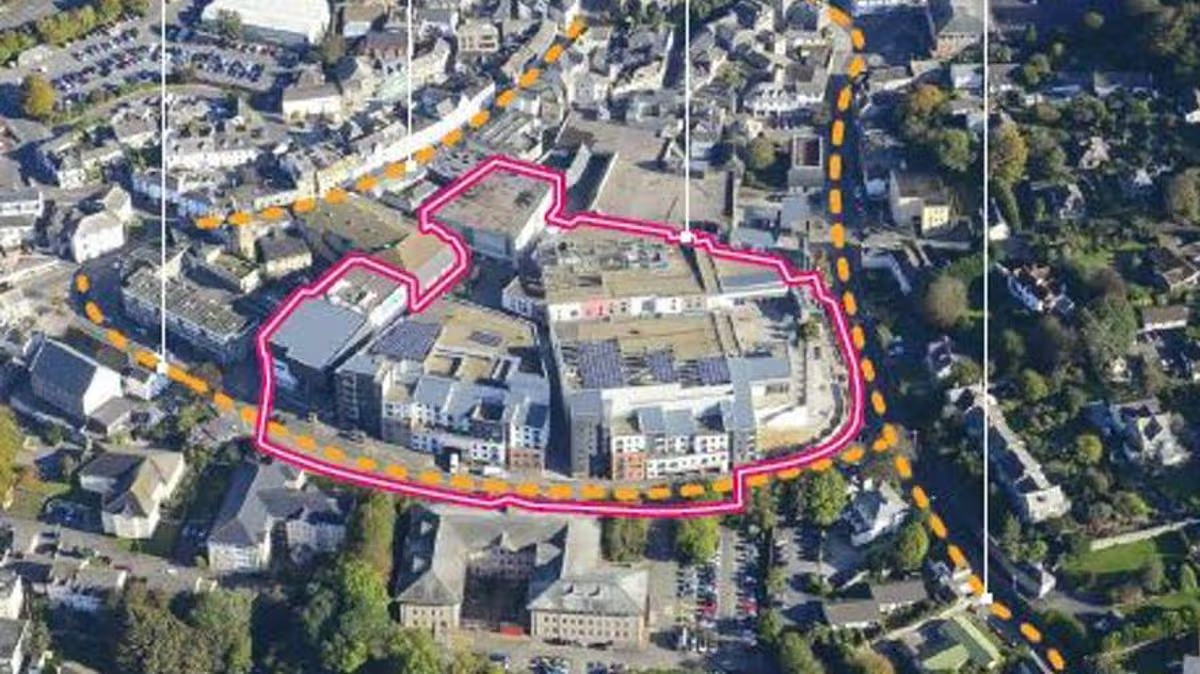
The cladding is similar to Grenfell Tower and is covering White River Place shopping centre

Trinity Street near White River Place will be turned into a one way road during the essential works

Trinity Street near White River Place will be turned into a one way road during the essential works

Hazardous cladding resembling that fitted to Grenfell Tower has been discovered covering a prominent shopping centre in Cornwall, it has emerged. The bustling location is poised to face “significant disruption” as contractors take the next two years to strip away the material.

Trinity Street in St Austell is expected to operate as a one-way thoroughfare from June 22 until April 17, 2028, enabling crucial safety work to proceed at White River Place.

Correspondence obtained by CornwallLive indicates a diversion route will remain in operation for southbound traffic throughout the entire work period, directing vehicles along Truro Road onto the A3058, the A390 and through to South Street.

It’s believed there will be numerous no left/right turn restrictions at junctions and entry points along Trinity Street to maintain single-direction traffic flow, and parking bays on the Trinity Street junction with Truro Road will be suspended to guarantee adequate turning space for HGVs and buses exiting the thoroughfare, reports Cornwall Live.

Advertisement

There are concerns, however, that while the work on White River Place cladding – which has been deemed unsafe – is vital for safety purposes, it will generate substantial disruption to both the immediate vicinity and broader area.

Cllr Jack Yelland, for St Austell Central and Gover, said: “These works do need to go ahead. The safety concerns around the cladding at White River Place are real, and resolving them is firmly in the interests of residents and users of the town alike.

“I am also pleased that the one way system has been chosen instead of the original proposal for 24 hour traffic lights, which would have caused far greater disruption.

“That said, I do have several concerns that I am raising with Cornwall Council and the contractors. The two-year duration feels excessive, so I am arranging meetings with the project team and others to understand the reasoning and to see whether the timeline can be shortened.”

Advertisement

He added: “The safety work has to happen, but two years of disruption is a long time for residents, and I want to make sure every possible step is taken to reduce traffic problems and keep people moving safely.

“I am particularly concerned about the impact on Moorland Road, which already has very limited width due to on street parking and poor visibility around corners. More traffic being pushed through could increase the likelihood of accidents.

“There will also be extra pressure at the Edgcumbe Road and Penwinnick Road junction, and then on the double roundabouts leading to South Street, where queues are already common at peak times.”

Cllr Yelland says he is pushing for “clearer and earlier diversion signage” so that drivers are directed onto more appropriate routes and “are not forced into unsafe turning points”.

Advertisement

Cllr James Mustoe, for Mevagissey and St Austell Bay, voiced similar concerns. He said: “The diversion takes people out of the town centre and then down Truro Road.

“However, I’d imagine a lot of people will try to go up Moorland Road, which is just off South Street, and that will just cause all sorts of issues. It’s going to back right down where the double roundabout is and it’ll just choke up traffic all around.

“I appreciate that the work needs to take place but it is going to be a significant disruption, not just for the commuters, but for the people who live there as well.”

The Grenfell Tower Inquiry, which followed the devastating 2017 disaster, concluded that the aluminium composite material (ACM) cladding fitted to the tower was “the principal reason why the flames spread so rapidly up, down and around the building”. A total of 72 people, including 18 children, died.

Advertisement

The government directed building owners to inspect their properties for unsafe cladding and carry out the necessary remediation work.

Should building owners fail to address defects or unsafe cladding, local fire and rescue services or local authorities hold the power to pursue enforcement action.

Cornwall Council has confirmed it has no involvement in the works being carried out. White River Place has been contacted for comment.


Advertisement
Continue Reading
Click to comment

You must be logged in to post a comment Login

Leave a Reply

Business

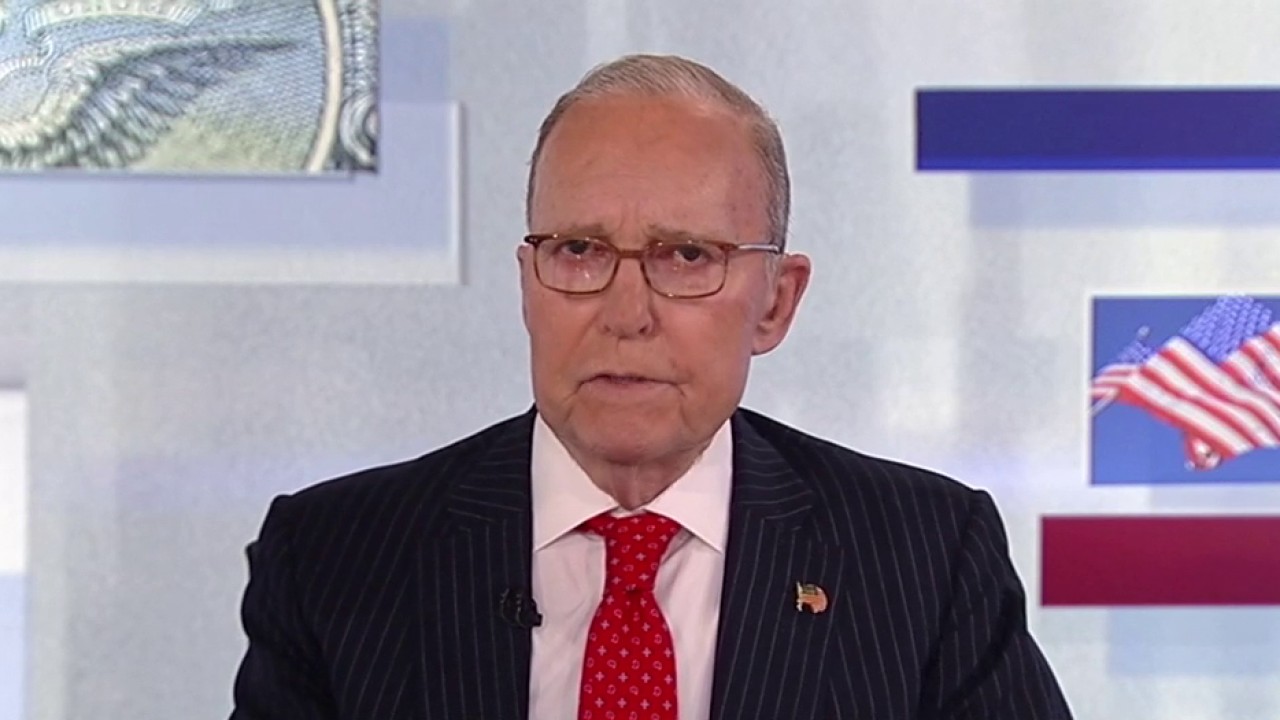
LARRY KUDLOW: Trump gets an A-Plus for grace and courage

Published

on

LARRY KUDLOW: Trump gets an A-Plus for grace and courage

Even President Trump’s toughest critics should acknowledge his grace and courage under fire. He showed it once again in his presser Saturday night after the shooting at the White House Correspondents Association Dinner.

If I can borrow from my friend Miranda Devine, he praised the Chairman of the Correspondents Association, who has been a severe Trump critic. He was magnanimous about the Secret Service, though they’re going to have to answer some tough questions in the weeks ahead. And he was self-effacing about the likelihood that the shooter was gonna go for him. He said: “it’s always shocking when something like this happens. It’s happened to me a little bit. And, that never changes the fact we’re sitting right next to each other.” Mr. Trump added that “if you take presidents, it’s 5.8 percent and about 8 percent are shot at. So nobody told me this was such a dangerous profession.” He concluded: “It’s dangerous. It’s dangerous stuff, whether it’s here or someplace else. No country is immune.” 

Advertisement

That’s grace under fire. Standing in his formal attire, with his bow tie in place, the president holds an extraordinary news conference. Hat tip to my friends at The New York Sun for pointing this out.

It appeared to be the third assassination attempt in two years. No president has faced that. My former boss, President Reagan was nearly killed by an assassin’s bullet in 1981. And far as I know, there have been no other assassination attempts until Butler, Pennsylvania in 2024.

Mr. Trump had a thought on this as well. Take a listen: “Well, you know, I’ve studied assassinations, and I must tell you, the most impactful people, the people that do the most. You take a look at the people. Abraham Lincoln.” Yet, he added, “the people that do the most, the people that make the biggest impact, they’re the ones that they go after.”

Advertisement

Faith Bottum of the Wall Street Journal’s editorial page notes that 8.5 percent of Presidents have died by assassination. Mr. Trump, though, has said time and again, including during his presser Saturday night, that he’s not worried about assassination and in fact wanted the dinner to continue that night before the Secret Service ruled it out. Yet that president has also said many times that he cannot let the criminal class or the political crazies shut down freedom of speech, or any political rallies for that matter. And of course he wanted a redo of the correspondents dinner in 30 days, or whenever it’s possible.

By the way, hat tip to Ms. Bottum for calling Mr. Trump brave and courageous. The Journal’s vaunted editorial page has been especially tough and critical of Mr. Trump. The president called for unity and it’s a great thought, but somehow in this period of our history it just doesn’t seem realistic.

In my lifetime I witnessed the assassination of JFK and then Martin Luther King and then Senator Robert F. Kennedy. These were great national tragedies. There was an assassination attempt against President Ford in 1975. Then the Reagan attempt in 1981 and then the multiple attempts on Mr. Trump. I don’t know what’s happened to the country that I love. I know America can do better. Let us hope that somehow it will.

Advertisement
Continue Reading

Business

Adani Total Gas Q4 Results: Cons PAT grows 9% YoY to Rs 168 crore; revenue up 17%

Published

on

Adani Total Gas Q4 Results: Cons PAT grows 9% YoY to Rs 168 crore; revenue up 17%
Adani Total Gas on Monday reported a consolidated net profit of Rs 168 crore in the March-ended quarter versus Rs 154 crore in the year ago period, implying a 9% YoY uptick. The company posted a 17% growth in its revenue from operations at Rs 1,695 crore compared to Rs 1,453 crore in the corresponding quarter of the last financial year.

The profit after tax (PAT) grew 6% on a sequential basis versus Rs 159 crore posted in Q3FY26 while the topline grew 3.4% quarter-on-quarter against Rs 1,639 crore in the October-December quarter of FY26.

On a standalone basis, PAT grew 4% in the quarter under review to Rs 156 crore versus Rs 149 crore in the year ago period. The standalone revenue in the January-March quarter of FY26 stood at Rs 1,696 crore, recording a 16% growth over Rs 1,457 crore reported in Q4FY25.

The Earnings Before Interest, Taxes, Depreciation and Amortisation (EBITDA) stood at Rs 310 crore in Q4FY26 versus Rs 274 crore in Q4FY25, implying a 13% rise.

Advertisement

The company said the rise in revenue was due to higher volume.


The cost of natural gas increased 18% YoY to Rs 1,199 crore in the quarter under review versus Rs 1,015 in the year ago period as lower allocation of APM gas to CNG segment, higher HH prices, higher spot prices due to geopolitical tension were major culprits.
During the quarter, APM allocation for the CNG segment reduced to 36% from 41% from last quarter, the balance was met with existing contracts and Spot procurement.ATGL said it took a calibrated approach in passing the higher gas cost to ensure volume growth does not get impacted.

The profit before tax (PBT)increased by 8% to Rs 214 crore.

Management commentary

CEO & Executive Director Suresh P. Manglani said ATGL delivered strong double-digit growth in volumes and revenues, supported by steady EBITDA expansion aided by “resilient execution, underpinned by operational excellence and digital enablement”.

“Despite geopolitical disruptions from West Asia, elevated LNG prices, and currency volatility, our nimble and diversified sourcing strategy ensured uninterrupted gas supply. ATGL’s focus remained on system stability, calibrated expansion with financial prudence, and long‑term sustainability, strengthening consumer confidence and ensuring operational excellence. We continued to scale our clean energy infrastructure across CNG, PNG, and e-mobility, with EV charge points crossed the 5,100 mark. During the period, we strengthened our ESG performance through improved sustainability ratings, reinforcing ATGL’s position among leading ESG performers in its peer group,” Manglani said.

Advertisement

(Disclaimer: The recommendations, suggestions, views, and opinions given by the experts are their own. These do not represent the views of The Economic Times.)

Continue Reading

Business

The Engine Behind Asean’s Growth

Published

on

Innovations in Payments and Strengthening Regional Connectivity from Thailand to ASEAN

Malaysian and ASEAN+3 companies should strategically invest across the region to strengthen trade and FDI linkages. Despite global geopolitical risks, the region grew 4.3% in 2025, with ASEAN+3 now accounting for 28% of global final demand, emerging as the world’s largest market.


Key Points

• ASEAN+3 now accounts for 28% of global final demand, surpassing the United States
• Region has evolved beyond manufacturing into a major consumer market
• Supply chains have shifted from China-centric to broader ASEAN+3 collaboration involving Japan and South Korea• ASEAN poised to lead in a emerging multipolar world order
• Securities Commission chairman calls for deeper, agile capital markets aligned with regional sustainability and innovation standards to drive future growth

Strategic Regional Investment and Economic Resilience

Domestic companies must adopt a more deliberate, strategic approach to cross-regional investment. According to Allen Ng of AMRO, when local firms invest in foreign-owned groups, they generate foreign direct investment flows that strengthen trade linkages and deepen regional integration. Ng emphasized that Malaysia is actively developing policies to foster a more integrated capital market. Despite significant geopolitical risks, including conflicts in the Middle East, the Asean+3 region demonstrated resilience, expanding by 4.3% in 2025, with growth forecasted at 4% for both 2026 and 2027, even after absorbing two major economic shocks within 12 months.


Structural Shifts Redefining Asean+3’s Global Role

Asean+3 has undergone transformative structural shifts that have redefined its position in the global economy. Supply chains, once centered predominantly on China, have evolved into a highly integrated network involving China, Japan, and South Korea. More significantly, the Asean region has emerged as a final consumption market, not merely a manufacturing hub. The bloc now accounts for 28% of global final demand, surpassing the United States, signaling a fundamental change in its economic identity. Central banks and policymakers face the critical challenge of managing both supply and demand shocks through carefully targeted fiscal and monetary policies.

Advertisement

Malaysia’s Opportunity in a Multipolar World

Malaysia is well-positioned amid the global shift toward multipolar power dynamics. Deputy Finance Minister Liew Chin Tong highlighted that as US influence declines, Asean nations must unite strategically, noting that “no country is too small when operating within the Asean context.” He suggested Kuala Lumpur could emerge as a major regional hub, drawing parallels to how Petronas was born from the 1974 oil crisis, turning adversity into opportunity. Securities Commission chairman Mohammad Faiz Azmi reinforced this vision, urging capital markets to be deep, agile, and aligned across borders through harmonized sustainability and cross-border standards, ultimately creating a common capital market greater than the sum of its parts.

Continue Reading

Business

Greggs removes cabinets in shoplifting hotspots

Published

on

Greggs removes cabinets in shoplifting hotspots

Greggs is removing display cabinets in London stores that have been most severely hit by shoplifters.

Continue Reading

Business

'My husband might give up work to care for our kids' – nursery bills in Wales highest in Britain

Published

on

'My husband might give up work to care for our kids' - nursery bills in Wales highest in Britain

Parents in Wales say the cost of childcare is one of their biggest worries ahead of the election.

Continue Reading

Business

NSE adds one crore unique investors in 7 months, base crosses 13 crore mark

Published

on

NSE adds one crore unique investors in 7 months, base crosses 13 crore mark
The unique registered investor base on the National Stock Exchange crossed the 13-crore milestone on Monday, just seven months after surpassing 12 crore in September 2025. Meanwhile, the total number of client codes (accounts) stood at 25.7 crore as of April 25, 2026, after breaching the 25-crore mark earlier in February, reflecting continued expansion in retail participation.

It took 14 years for the exchange to reach its first crore of registered investors after commencing operations, and another 11 years to add the next three crore. Since then, growth has accelerated sharply, with an additional crore investors being added every 6–8 months on average. Over the past five years (FY21–FY26), the investor base has expanded at a CAGR of 26.4%, significantly outpacing the 15.2% CAGR recorded in the preceding five-year period (FY16–FY21).

The investor base has expanded at a markedly faster pace in recent years, signalling deeper retail participation in capital markets. This growth has been driven by wider digital access, improving financial awareness, and sustained efforts by regulators, market infrastructure institutions (MIIs), and the government to enhance inclusivity.

Over the five-year period ended April 24, 2026, the benchmark Nifty 50 and Nifty 500 delivered annualised returns of 10.8% and 13.3%, respectively, according to an NSE release. During the same period, the market capitalisation of NSE-listed companies grew at a CAGR of 18% to Rs 460.6 lakh crore.

Advertisement

Individual investors owned 18.6% of the market (NSE listed companies) as of December 31, 2025 directly and indirectly via mutual funds.


The expansion of the investor base has also been geographically broad-based, now extending across 99.85% of pin codes in the country. As of March 31, 2026, three states had more than one crore unique registered investors each, with Maharashtra leading the pack with 2 crore, followed by Uttar
Pradesh at 1.5 crore and Gujarat at 1.1 crore investors.
Investor participation is increasingly spreading beyond traditional hubs, with states outside the top 10 now accounting for 27% of the base. Smaller and northeastern states have seen multi-fold growth since FY21, highlighting deeper penetration into Tier 2–4 cities.
Indirect participation has also surged, with 7.2 crore new SIP accounts added in FY26 and monthly inflows rising eight-fold over the past decade, reflecting strong retail discipline. This broad-based expansion, driven by digital platforms and a younger investor base, has increased the need for financial education, with NSE ramping up awareness programs and strengthening investor protection measures.

NSE’s Chief Business Development Officer Sriram Krishnan said crossing the 13-crore investor mark underscores the strong and resilient participation in Indian capital markets, with one crore investors added in just seven months despite global uncertainties. He attributed this growth to rising mobile-based trading, simplified KYC processes and sustained investor awareness efforts.

He added that participation is expanding beyond metro cities into Tier 2–4 regions, with investors increasingly diversifying across instruments such as equities, ETFs, REITs, InvITs and bonds, reflecting a more inclusive and broad-based market ecosystem.

(Disclaimer: The recommendations, suggestions, views, and opinions given by the experts are their own. These do not represent the views of The Economic Times.)

Advertisement
Continue Reading

Business

Gladstone Land’s 7.2% Yielding Preferreds Benefitting From Buybacks (NASDAQ:LAND)

Published

on

Gladstone Land's 7.2% Yielding Preferreds Benefitting From Buybacks (NASDAQ:LAND)

This article was written by

Trapping Value is a team of analysts with over 40 years of combined experience generating options income while also focusing on capital preservation. They run the investing group Conservative Income Portfolio in partnership with Preferred Stock Trader. The investing group features two income-generating portfolios and a bond ladder.
Trapping Value provides Covered Calls, and Preferred Stock Trader covers Fixed Income. The Covered Calls Portfolio is designed to provide lower volatility income investing with a focus on capital preservation. The fixed income portfolio focuses on buying securities with high income potential and heavy undervaluation relative to comparatives. Learn more.

Analyst’s Disclosure: I/we have a beneficial long position in the shares of LANDP either through stock ownership, options, or other derivatives. I wrote this article myself, and it expresses my own opinions. I am not receiving compensation for it (other than from Seeking Alpha). I have no business relationship with any company whose stock is mentioned in this article.

Seeking Alpha’s Disclosure: Past performance is no guarantee of future results. No recommendation or advice is being given as to whether any investment is suitable for a particular investor. Any views or opinions expressed above may not reflect those of Seeking Alpha as a whole. Seeking Alpha is not a licensed securities dealer, broker or US investment adviser or investment bank. Our analysts are third party authors that include both professional investors and individual investors who may not be licensed or certified by any institute or regulatory body.

Advertisement
Continue Reading

Business

Why Founder Nikesh Panchal Is Scaling Wavee Ai Across Asia Pacific

Published

on

Nikesh Panchal

Expanding a young tech company into a new region is rarely a snap decision. For Nikesh Panchal, founder and chief executive of Wavee Ai, the choice to bet on Asia Pacific as the next chapter for its residential platform has been a slow build rather than a sudden leap.

Wavee Ai, born in London to tidy up chaotic building group chats and parcel rooms, is now preparing to bring its verified, community-first model to cities across the region, from Singapore to Australia. Panchal has already grown Wavee Ai to a £10 million valuation with its continuous push into one of the world’s most dynamic sectors.

After raising more than £1 million to fund international rollout, its expansion is framed as a response to growing demand for safer, more organised digital communities, supported by a strategy that leans on partnerships, localisation, and brand trust.

Lessons From London for a Region on the Move

Alongside running Wavee Ai, Panchal sits on the board of London Tech Equity Ltd, where he has seen early-stage companies stall after chasing quick wins without the proper governance or metrics in place. That experience has reinforced his preference for a founder-led, long-term strategy over rapid, scattershot expansion and informs how he thinks about entering new markets.

Wavee Ai’s story began in London, where Panchal spent time watching the small frictions that define life in managed buildings: missed deliveries, noisy group chats, anonymous neighbours, and concierge desks buried in paper logs. Wavee Ai was built as a direct response to that jumble, replacing scattered tools with a single, verified platform. Residents use one app, concierges work from one portal, and local businesses connect through one controlled channel into a defined community.

Advertisement

Those early years in London gave Panchal lessons he now intends to carry into Asia, while adapting them to local realities. He stresses the importance of staying small in scope even when ambitions are big. Rather than trying to run every aspect of a building’s operations, the platform focuses on a narrow band: communication, community, and local commerce.

It offers a small set of features, such as parcel tracking, visitor management, a private neighbour feed, and curated local offers. That restraint has helped the company avoid being pulled into custom projects that dilute its core product and has become a cornerstone of its quality-over-speed approach.

Those results underpin another lesson: residents will embrace a new app only if it clearly replaces pain points rather than adding to them. In buildings where Wavee Ai was implemented, concierge staff reported time saved on manual logging, and residents valued having one trusted place for updates instead of chasing information across group chats and noticeboards. Local businesses that aligned their offers with building rhythms found steadier engagement.

Panchal says, “London taught us patterns. We know what tends to work for concierges, what residents respond to, and how local businesses like to plug in. But each city and each building has its own personality. Our job in Asia Pacific is to listen first, then apply what we’ve learned.”

Advertisement

A Founder’s Long-View Strategy

The concrete success of Wavee Ai in London is what Panchal plans to bring into the room with Asia-based stakeholders. In practice, that means entering the region through pilot projects and portfolio-level experiments, listening to how each city and building works, then applying London’s patterns in ways that can be localised and refined on the ground. The basic idea remains straightforward: the app connects residents, concierge teams, and local businesses inside a private, building-verified network, where parcel arrivals, visitor notifications, building announcements, and neighbourhood offers land in one feed, and every resident is authenticated through their building rather than signing up anonymously.

This business model is what Panchal now wants to adopt in apartment-heavy markets across Asia Pacific, where dense living, rising rents, and a growing class of professionally managed buildings are pushing community management to the top of the priority list for owners and residents alike.

These conditions, he believes, echo the pressures that helped Wavee Ai gain traction in London, but on a larger, faster-moving scale. He frames Asia Pacific not only as a growth market, but as a proving ground for how verified, community-first platforms can become part of the fabric of urban living.

Panchal also sees the expansion as an opportunity to bring local shops closer to the people who live above and around them, turning independent cafés, gyms, studios, and specialty retailers into trusted, visible partners in residents’ daily routines.

Advertisement

For residents, that means having reliable options for everyday needs and passions without searching across multiple platforms or travelling far—often just by looking at what is available on the ground floor or around the corner. For local businesses, it offers a direct, accountable route into the vertical communities they have always served but rarely reached in such a focused, building-by-building way.

“I see a win-win opportunity,” Panchal mentions. “We designed Wavee Ai to be scalable so that it can adapt to the needs of different residential communities.”

A Founder’s Bet on How Cities Will Feel

The story of Wavee Ai’s Asia Pacific expansion is, at its core, about how one founder imagines cities will feel in the coming decade. Panchal is betting that verified, community-first platforms will become the norm in dense urban living, and that residents from London to Singapore will increasingly expect their buildings to provide safe, organised digital spaces, just as they provide clean lobbies and working lifts.

In his view, the cultural shift toward secure, accountable online communities aligns closely with how many Asian cities already think about shared living, security, and neighbourhood identity.

Advertisement

In the Asia Pacific, where the living sector is attracting serious investment and attention, Wavee Ai’s arrival is another sign of how quickly expectations are changing. Buildings are no longer just assets; they are communities that need tools to match their complexity.

Panchal’s insistence on partnerships, brand trust, and a measured, quality-first rollout reflects a belief that residential technology should behave more like infrastructure than like a passing trend. If the platform can quietly become part of residents’ routines in Sydney, Singapore, or Tokyo the way it has in parts of London, his bet will look less like a gamble and more like a blueprint for how cities everywhere might choose to live together.

Continue Reading

Business

Hamborner REIT: Don't Be Fooled By A High Yield – It Is Not Sustainable

Published

on

Hamborner REIT: Don't Be Fooled By A High Yield - It Is Not Sustainable

Hamborner REIT: Don't Be Fooled By A High Yield – It Is Not Sustainable

Continue Reading

Business

Coal India Q4 Results: Profit rises 12% to Rs 10,908 crore; co declares Rs 5.25 dividend

Published

on

Coal India Q4 Results: Profit rises 12% to Rs 10,908 crore; co declares Rs 5.25 dividend
Coal India reported a steady March quarter performance, with consolidated profit after tax rising 12% YoY to Rs 10,908 crore, while revenue from operations increased 6% to Rs 46,490 crore, supported by improved realizations and higher other income.

Further, the Board has declared final dividend for FY26 at Rs 5.25 per share. Payment of final dividend for FY26 will be made subject to approval of shareholders in the ensuing AGM.

Profit before tax for the quarter stood at Rs 14,627 crore, also up 12% from Rs 13,070 crore a year ago, reflecting stable operating performance despite cost pressures. Total income rose 8% to Rs 51,618 crore during the quarter.

The company’s EBITDA grew 12% to Rs 17,917 crore, with margins expanding to 39% from 36% in the year-ago period, indicating improved operating leverage.

Advertisement

Revenue growth was driven largely by higher realizations, even as overall sales volumes remained largely flat. Average realization per tonne increased 6% year-on-year to Rs 2,290, while total sales volume declined marginally by about 1% to 198.83 million tonnes.



On the operational side, coal production for the quarter rose slightly to 239 million tonnes compared to 238 million tonnes last year, while offtake declined 2% to 199 million tonnes, reflecting softer dispatches. Overburden removal remained largely flat at 577 million cubic metres.
Expenses increased 6% to Rs 37,107 crore during the quarter, driven by a sharp rise in other expenses and finance costs. Other expenses surged 18% YoY due to higher levies, particularly the increase in Jharkhand mineral-bearing land cess, while finance costs jumped 42%, indicating higher borrowing and cost of funds.Segment-wise, performance remained mixed across subsidiaries. Key profit contributors such as Northern Coalfields (NCL) and Mahanadi Coalfields (MCL) delivered strong growth, while Western Coalfields (WCL) and Bharat Coking Coal (BCCL) saw a decline in profitability, highlighting regional variability in operations.

For the full year FY26, Coal India reported a 12% decline in profit after tax to Rs 31,071 crore, even as revenue from operations remained broadly flat at Rs 1.68 lakh crore. The decline in annual profitability was attributed to higher expenses, including a one-time provision related to executive pay revision and increased statutory levies.

Continue Reading

Trending

Copyright © 2025