
Business
CRH: Strong Execution, But Arcosa Raises The Risk For A Hold (NYSE:CRH)


Vishal Jadaun is the founder of Tickzen, a company that develops quantitative research tools, valuation frameworks, and stock analysis models for investors. With a background in computer science and a self-directed approach to investing, he evaluates companies primarily through financial statements, SEC filings, earnings reports, and management disclosures rather than market narratives or third-party opinions.His research on Seeking Alpha focuses on post-earnings and fundamental analysis of industrial, logistics, and technology companies. His process emphasizes separating one-time accounting items from underlying operating performance, assessing balance-sheet strength, and building independent estimates of intrinsic value.
Analyst’s Disclosure: I/we have no stock, option or similar derivative position in any of the companies mentioned, and no plans to initiate any such positions within the next 72 hours. I wrote this article myself, and it expresses my own opinions. I am not receiving compensation for it (other than from Seeking Alpha). I have no business relationship with any company whose stock is mentioned in this article.
Seeking Alpha’s Disclosure: Past performance is no guarantee of future results. No recommendation or advice is being given as to whether any investment is suitable for a particular investor. Any views or opinions expressed above may not reflect those of Seeking Alpha as a whole. Seeking Alpha is not a licensed securities dealer, broker or US investment adviser or investment bank. Our analysts are third party authors that include both professional investors and individual investors who may not be licensed or certified by any institute or regulatory body.

Business
Dividend stocks: Kalyan Jewellers, IREDA among over 150 stocks turning ex-record date this week. Do you own any?

To be eligible for these corporate actions, investors must hold the shares in their demat accounts as of the respective record dates. The list is tentative, as more companies may announce record dates for dividends during the week.
Here is the day-wise list of corporate actions to watch out for this week:
September 7 (Monday)
Texmaco Infrastructure and Holdings will pay a dividend of Rs 0.15 per share to its eligible shareholders, while GeeCee Ventures will pay Rs 2 per share. Transpek Industry meanwhile will pay a final dividend of Rs 20 per share.

September 8 (Tuesday)
At least 11 companies have fixed Tuesday as the record date for their respective dividends. APL Apollo Tubes accounts for the highest dividend payouts among them, as the company is set to pay a dividend of Rs 8.5 per share. KDDL will pay Rs 8 per share, while Globus Spirits will pay a dividend of Rs 6.53 per share.Tinna Rubber and Infrastructure will pay Rs 3.25 per share, while each of Polyplex Corporation and Valplast Technologies will pay Rs 1 per share. Other companies that have fixed Tuesday as the record date for their respective dividends include Bhandari Hosiery Exports (Rs 0.01 per share), BLS E-Services (Rs 0.5 per share), Rushil Decor (Rs 0.05 per share) and Sinclairs Hotels (Rs 0.1 per share).
September 9 (Wednesday)
At least 17 companies have set Wednesday as the record date for their respective dividends. Force Motors accounts for the highest single dividend payout on the day, with the company set to pay a final dividend of Rs 50 per share. Empire Industries will pay a total of Rs 50 per share through a special dividend of Rs 25 per share alongside a final dividend of Rs 25 per share.
Gujarat Narmada Valley Fertilizers & Chemicals (GNFC) will pay a final dividend of Rs 21 per share, while Naperol Investments will pay Rs 16.48 per share. Travel Food Services will issue a dividend of Rs 10.25 per share, followed by Jyoti Resins & Adhesives at Rs 9 per share and Associated Alcohols & Breweries at Rs 2 per share.
Acknit Industries will pay Rs 1.5 per share, while each of Century Plyboards (India), National Fittings, Perfectpac, Shree Digvijay Cement Company, and Worth Peripherals will pay Rs 1 per share. JBM Auto will pay a dividend of Rs 0.85 per share, while Kronox Lab Sciences and WEP Solutions will each pay Rs 0.5 per share. Other companies turning ex-dividend on Wednesday include Aastha Spintex (Rs 0.1 per share).
Also read | Bonus issue alert! Multibagger Titan Biotech announces its maiden 1:4 bonus issue
September 10 (Thursday)
At least 18 companies have designated Thursday as the record date for their respective dividends. TVS Srichakra accounts for the highest payout of the day, as the company will pay a final dividend of Rs 37.8 per share. Ganesha Ecosphere will pay Rs 3.5 per share, followed by Divgi Torqtransfer Systems at Rs 3.27 per share.
Apex Frozen Foods and Radiant Cash Management Services will each pay Rs 2.5 per share, while Elnet Technologies and Zee Entertainment Enterprises will pay Rs 2 per share. Linc, Power Mech Projects, and Valiant Communications will each pay Rs 1.5 per share, while Chemcrux Enterprises, M&B Engineering, and Sicagen India will pay Rs 1 per share.
Other companies turning ex-dividend on Thursday include Indsil Hydro Power and Manganese (Rs 0.6 per share), Grauer & Weil (India) (Rs 0.5 per share), Harshdeep Hortico (Rs 0.25 per share), Indoco Remedies (Rs 0.2 per share), and JMJ Fintech (Rs 0.15 per share).
September 11 (Friday)
More than 100 companies have fixed Friday as the record date for their respective corporate actions and dividends. Apar Industries accounts for the highest single dividend payout of the day, as the company will pay a final dividend of Rs 60 per share. CSL Finance will pay Rs 10 per share, followed by Gujarat Energy at Rs 8.9 per share, Banco Products (India) at Rs 8 per share, Heidelberg Cement India at Rs 7 per share, and Datamatics Global Services and Gujarat State Fertilizers & Chemicals (GSFC) at Rs 5 per share each.
Josts Engineering Company will pay a total of Rs 5 per share through a special dividend of Rs 3.75 per share alongside a final dividend of Rs 1.25 per share. Balmer Lawrie & Company will pay Rs 4.25 per share, DHP India will pay Rs 4 per share, Krishanveer Forge and Mold-Tek Packaging will each pay Rs 3 per share, and Amrutanjan Health Care will pay Rs 2.9 per share.
Finolex Industries will pay a total of Rs 2.75 per share through a special dividend of Rs 0.75 per share alongside a final dividend of Rs 2 per share. Kalyan Jewellers India, CMS Info Systems, NSDL and Metroglobal will each pay Rs 2.5 per share, followed by Astra Microwave Products at Rs 2.40 per share, Balmer Lawrie Investments at Rs 2.27 per share, and Asahi India Glass, Chalet Hotels, Medi Assist Healthcare Services, and Advait Energy Transitions at Rs 1-2 per share each.
Lincoln Pharmaceuticals will pay Rs 1.80 per share, while Abirami Financial Services, Dutron Polymers, Dynemic Products, IRM Energy, and Krystal Integrated Services will each pay Rs 1.5 per share. Blue Jet Healthcare will pay Rs 1.20 per share, while Aarti Industries, Bharat Parenterals, Competent Automobiles, Dynamic Industries, GSP Crop Science, HBL Engineering, and Haryana Leather Chemicals will pay Rs 1 per share each.
Indian Renewable Energy Development Agency (IREDA) and Mangal Credit and Fincorp will pay Rs 0.75 per share, among other stocks.
Also read | Which stocks should you buy ahead of the festive season? Here are Kotak Securities’ top 10 picks
(Disclaimer: Recommendations, suggestions, views and opinions given by the experts are their own. These do not represent the views of The Economic Times)
Business
(VIDEO) Al-Ittihad Fans Taunt Cristiano Ronaldo With Messi Chants As Al-Nassr Suffers First Loss
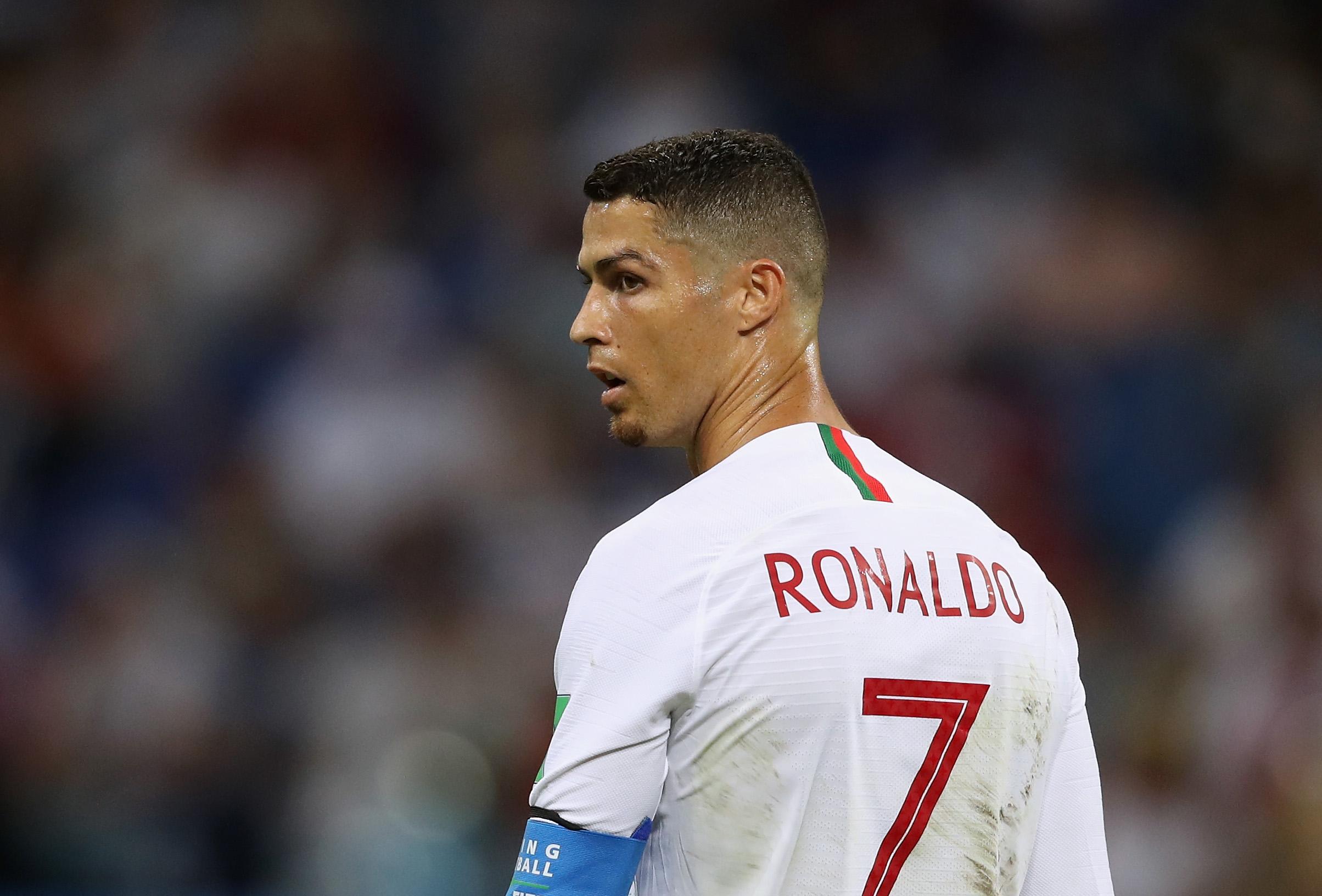
JEDDAH, Saudi Arabia — Cristiano Ronaldo endured a forgettable performance and a chorus of taunts from home supporters Saturday as Al-Nassr suffered its first defeat of the season, falling 2-1 to rival club Al-Ittihad in the Saudi Pro League.
Al-Nassr had won all four of its league matches under new manager Ange Postecoglou before Saturday’s loss to one of its main title rivals. Nigerian striker George Ilenikhena scored twice for Al-Ittihad, while former Chelsea winger Angelo Gabriel provided Al-Nassr’s lone goal. Ronaldo, playing in front of the Al-Ittihad crowd, failed to register a goal or an assist and was taunted by home supporters as the match neared its conclusion.
Al-Ittihad fans repeatedly chanted the name of Lionel Messi, Ronaldo’s longtime rival, during the closing stages of the victory, a jab widely understood to be directed squarely at Ronaldo despite the two players themselves having maintained a relatively cordial relationship off the field over the years.
The chants continued a long-running tradition among Al-Ittihad supporters specifically, and Saudi Pro League crowds more broadly, of invoking Messi’s name whenever Ronaldo’s Al-Nassr faces defeat in the kingdom. Given that Messi has generally been favored in the broader public debate over which of the two players stands as the greatest of all time, fans have frequently reached for his name as a pointed insult toward Ronaldo during difficult moments in his Saudi Arabian career.
Ronaldo did not publicly react to Saturday’s chants, though observers noted he surely would have heard them given their volume and persistence throughout the closing stages of the match. At one point during the game, Ronaldo attempted to read a note passed along by Al-Ittihad’s coaching staff to his former Portugal national team teammate, Danilo Pereira, who now plays for Al-Ittihad, with the two sharing a laugh over the odd moment despite being on opposing sides.
Al-Ittihad’s official English-language social media account took its own direct shot at Ronaldo following the match, posting a message mocking the Portuguese superstar.
“Cheating and still losing!” the club’s account wrote in a post accompanying video from the match, tagging the hashtag associated with the fixture between the two clubs.
Saturday’s defeat marked far from the first time Ronaldo has faced Messi-themed taunts from Al-Ittihad supporters since his move to Saudi Arabia. In a previous meeting between the two clubs in the Saudi Super Cup, Al-Ittihad fans chanted Messi’s name as Ronaldo left the pitch following a 3-1 semifinal defeat for Al-Nassr, in a match during which Ronaldo struggled to make an impact despite playing the full 90 minutes. Al-Ittihad supporters have gone as far as publicly calling on their own club to pursue signing Messi ahead of previous high-profile matchups against Ronaldo’s Al-Nassr, further fueling the rivalry’s Messi-versus-Ronaldo undertone even within a domestic Saudi league context.
The taunts have not been limited to matches against Al-Ittihad specifically. In a separate previous match against Saudi rival Al-Hilal, Ronaldo was similarly taunted by opposing fans waving Messi jerseys as he left the field following a defeat in which he was denied a penalty by video assistant referee review and had a separate goal disallowed for offside.
Ronaldo’s history with Al-Ittihad specifically has included other notably tense moments. In an earlier Saudi Pro League meeting between the two clubs, Ronaldo stormed off the pitch down the tunnel, kicking water bottles out of his path, after a 1-0 defeat marked his second consecutive match without scoring at the time. During that same match, Ronaldo removed his captain’s armband before leaving the field and appeared poised to throw it in frustration before regaining his composure, as Al-Ittihad fans chanted Messi’s name throughout that contest as well.
Saturday’s result leaves Al-Ittihad positioned as one of the leading challengers in this season’s Saudi Pro League title race, having handed Al-Nassr its first loss of the campaign under new manager Postecoglou, the former Tottenham Hotspur and Celtic manager who took charge of the club ahead of the current season. Al-Nassr’s perfect start under Postecoglou through the season’s opening four matches had positioned the club as an early front-runner in the domestic title race before Saturday’s setback against one of its most direct rivals.
Ronaldo, now 41 years old, has continued playing a prominent role for Al-Nassr since his high-profile move to the Saudi Pro League, a transfer that helped accelerate the broader influx of major international stars into Saudi Arabian football in the years since. Despite his advancing age, Ronaldo has remained a productive scorer domestically throughout his time in Saudi Arabia, even as matches against Al-Ittihad in particular have proven to be a recurring source of frustration, both in terms of results and the pointed reception he has repeatedly received from that club’s supporters.
The rivalry between Al-Nassr and Al-Ittihad has emerged as one of the marquee fixtures within the Saudi Pro League in recent seasons, with both clubs investing heavily in international talent as part of the league’s broader push to elevate its global profile and competitiveness. Saturday’s match, sometimes referred to by fans and media as a Saudi “El Clasico” given the stature of both clubs, drew significant attention both for the on-field result and the pointed atmosphere surrounding Ronaldo’s performance.
With the Saudi Pro League season still in its early stages, Saturday’s defeat represents an early setback rather than a decisive blow to Al-Nassr’s title ambitions under Postecoglou. Still, the recurring pattern of Messi-themed taunts directed at Ronaldo during matches against Al-Ittihad specifically underscores how deeply the global rivalry between the two players continues to shape the atmosphere surrounding Saudi Arabian football, even years after both men effectively decamped from Europe’s traditional footballing powerhouses to continue their respective careers in different corners of the world.
Business
Largecaps look better as smallcaps price in strong growth: Franklin Templeton’s Arihant Jain
While mid- and small-cap stocks are factoring in 20% to 30% earnings growth, large-caps are being valued against more modest 10% to 12% expectations. That leaves greater room for earnings upgrades and a valuation re-rating in large-caps, Jain said. Edited excerpts from a chat:
The Sapphire Equity Long-Short SIF can hold 75–100% in long positions and short up to 25%. What is the current long-short positioning, and what specific signals would make you deploy the full shorting limit?
Our asset-allocation model determines our long and short exposure. Leverage is not allowed in India. Globally, long-short strategies often operate on a 150-50 model—150% long and 50% short, resulting in net equity exposure of 100%. In India, we decide how much to be long and short without leverage.
We use a macroeconomic and technical model to assess whether the market is bullish, bearish or volatile. If the market is on a positive trajectory, we may be 100% long. If we see stress or an opportunity in a particular sector, we may take technical short positions. Our net equity exposure can range from 60% to 100%.
Our multi-factor model selects stocks using four factors: quality, valuation, price momentum and earnings momentum. We have developed our own factor definitions on the Mosaic platform, calculate a score for each company and use a portfolio-construction tool to determine sector and market-cap allocation.
Quality is subjective. Our definition differs from the factor indices of NSE, BSE or MSCI because we want to control and continuously upgrade it. One of our quality factors is innovation: we assess spending on research and development and branding because such companies may eventually deliver stronger sales growth.For valuation, we focus more on enterprise value than market capitalisation because enterprise value also captures debt. For momentum, we assess price as well as earnings. Price is historical, while earnings momentum provides information about the future. We look at EPS-revision growth to identify surprises. If a company is growing at 40%, that may already be priced in. But a change from 40% to 42% or 38% is new information, which we try to capture.
The short book uses the same framework to identify the weakest companies.
We were 100% long in July because domestic macroeconomic signals were bullish. Credit growth was above 15% to 20%, and earnings growth was between 10% and 30% across large-, mid- and small-cap companies. We were not seeing negative macro signals. Technically, the market was neutral, so we consciously chose to be 100% long.
Since launching the fund, have you taken any short positions?
Very small ones. Over a five- to seven-year horizon, short positions may not always add value. In a bull market, a stock that merely underperforms the benchmark may not generate a short-side return. The stock needs to deliver an absolute negative return
The universe available for shorting is also relatively small. Futures and options are available in around 200 stocks, although these represent roughly 80% to 85% of the market by capitalisation. Having all 500 stocks available for shorting would help, but that is not the current situation.
The strategy is not designed to maintain short positions at all times. In a stressed or bearish market, or during periods of high volatility, we can increase short exposure to protect the downside. The upside will primarily come from equity exposure.
The market has been broadly range-bound for two years. While domestic flows have protected the downside and new supply has restricted the upside. With foreign investors returning and a large IPO pipeline absorbing capital, is it becoming harder to generate alpha?
Arihant Jain: It depends on where a fund is positioned. The market was broadly flat in 2018-19, but that did not prevent every fund manager from generating alpha. Over a five- to seven-year period, there may be two or three flat years. That does not mean the market will remain flat going forward.
We are positive on earnings growth. We expect the second quarter to be strong, with analysts projecting 20% to 30% growth in mid- and small-caps. If earnings growth remains strong, market capitalisation will eventually move in the same direction. Ultimately, the market is driven by earnings growth.
What is your market outlook? Will the market return to record highs, or will small- and mid-caps continue to lead?
Arihant Jain: It depends on earnings growth and the multiples available for that growth. Mid- and small-caps are already pricing in 20% to 30% earnings growth. Unless there is a positive surprise, much of that expectation is reflected in prices.
In large-caps, investors are expecting nominal earnings growth of around 10% to 12%. That leaves room for earnings estimates to be revised upwards and for valuation multiples to expand. I am not saying small- and mid-caps will necessarily de-rate, but on a risk-adjusted basis, large-caps may look better going forward.
Your multi-factor fund has around 80% exposure to large-caps. Is that a deliberate choice?
Arihant Jain: It is also a result of portfolio construction. The fund’s benchmark is the BSE 200, which is predominantly represented by large- and mid-cap stocks. We are generally comfortable holding 70 to 90 stocks; the fund currently has around 80.
What makes a multi-factor fund different from single-factor value or momentum funds?
Arihant Jain: Single-factor strategies carry higher drawdown risk. If a factor goes out of favour, the underperformance can be significant. We have seen a single factor underperform the benchmark by as much as 70 percentage points over four years—for example, while the Nifty 200 rose 72%, a single-factor strategy gained only 1%.
We use multi-factor investing as a core allocation. We assess a company from a 360-degree perspective, looking at its quality, valuation and momentum. We assign strategic weights to the factors and maintain exposure to all of them. We may take small tactical positions, but it is almost impossible to time when a factor will perform or crash.
Our approach is “and”, not “or”. We look for a company with good quality, reasonable valuation and momentum. Selecting the top companies separately on quality, valuation and momentum and then combining them may create a portfolio that appears diversified but is actually a combination of three correlated factor portfolios.
Which sectors look attractive to you at this stage?
Arihant Jain: Private banks could be an opportunity given their valuations and the credit environment. Metals may also be interesting, depending on how the current cycle develops.
How is a quantitative model different from an AI-driven model?
Arihant Jain: A quantitative model is algorithm-based. The efficiency of the algorithm and the experience of the team are important. Our team has been running quantitative strategies globally for more than 20 years, so we understand the risks, how to control them and how to upgrade the model.
You can broadly compare it with AI because both involve machine learning. However, we control both the inputs and the underlying algorithm. With a third-party AI system, you may control the inputs but not the algorithm.
If we have a sector view, we generally let the model drive 80% to 90% of the portfolio and take an active call on the remaining 10% to 20%. For example, if a corporate governance issue may take time for the model to capture, our experience can help us react earlier. This makes the strategy something between a passive fund and a pure active fund.
The model is continuously upgraded. Stock selection is important, but position sizing can sometimes be even more important. We focus on both.
Help us understand how your quant model works and how many factors you consider?
Arihant Jain: Globally, the team has more than 100 people. We also have a dedicated 15-member technology team maintaining the Mosaic platform. The models are refreshed daily, although the portfolio is generally rebalanced monthly.
In the multi-factor fund, we use more than 35 sub-factors. Quality, for example, contains more than 12 sub-factors, which are combined into a single quality score. The same applies to valuation, price momentum and earnings momentum.
We use macroeconomic data to help determine long and short exposure. I am evaluating alternative, higher-frequency data such as short-interest data and the put-call ratio, although nothing concrete has been added in the last year.
What is the typical churn ratio?
Arihant Jain: It is typically around 70% to 90% for our quantitative funds. Since we use a core approach based on quality, value and sentiment, a stock tends to remain unless something materially changes. The multi-factor approach generally results in more stable positions than a single-factor strategy.
How do you see the SIF category developing?
Arihant Jain: There is a structural gap between what regulations allow and the tools available to fund managers. Mutual funds can take positive positions, but they have limited tools when they are neutral or negative. An SIF provides another potential source of alpha and drawdown protection, thereby adding diversification.
The ability to take active short positions is a key differentiator. Mutual funds cannot undertake naked shorting. If we are negative about a theme or stock, we may hedge or avoid it, but we cannot take an active short position at scale. An SIF provides that additional tool and a potentially different source of returns.
Taxation is another advantage because it is similar to mutual-fund taxation. Derivatives have traditionally been treated as business income, which can attract a much higher tax rate.

It's Not Worth Buying VOO Or QQQ Anymore
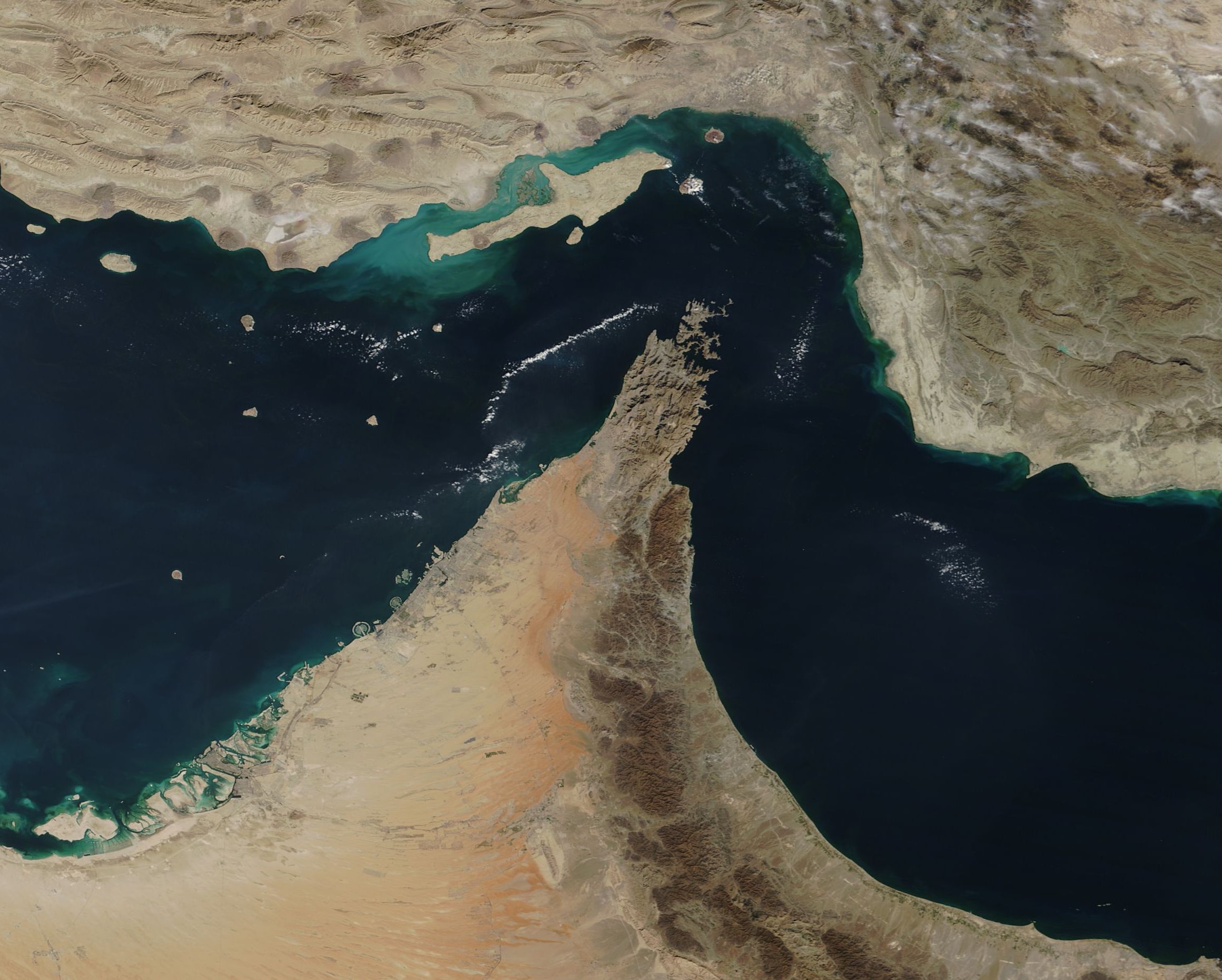
WASHINGTON — More than six months into the war between the United States, Israel and Iran, the Strait of Hormuz remains locked in what analysts describe as a lethal stalemate, with the U.S. military continuing to escort oil tankers through the vital waterway even as Iranian attacks continue killing sailors and deterring shipping companies from the route.
The U.S. military has spent months working to protect tankers carrying Persian Gulf oil through the strait from Iranian attacks. But last week, a Saudi vessel attempting to transit the strait was struck near Oman’s coast, killing two crew members, according to The New York Times. Two other sailors died in separate attacks during August, making it the deadliest month for merchant seamen in the strait since March. At least 23 ships were struck in the waterway across July and August combined.
On Saturday, the United States struck three Iranian oil tankers in retaliation for what American officials described as unprovoked attempts by Iran to attack two U.S. warships.
Eugene Gholz, an associate professor of political science at the University of Notre Dame and an expert on conflict in the strait, said the current standoff reflects a rough balance of power between the two sides, neither of which has been able to fully impose its will on the waterway.
“The strait is neither fully closed nor fully opened,” Gholz said. “Iran can’t close it completely, and the U.S. can’t open it completely.”
The U.S. tanker protection effort, which involves intercepting Iranian drones and missiles before they reach commercial vessels, has helped move millions of barrels of oil out of the Persian Gulf each day, offering some measure of relief to global oil markets. Despite that protection, however, continued Iranian attacks have deterred many shipping operators from sending vessels through the strait at all. According to a New York Times analysis of public attack records, Iran struck 12 ships in August, up slightly from 11 in July, indicating the country has managed to sustain its attack tempo even as U.S. forces have worked to intercept incoming threats. Overall volumes of oil moving through the waterway remain significantly below prewar levels, according to analysts.
The current crisis traces back to Feb. 28, 2026, when the United States and Israel launched a joint military campaign against Iran, prompting Tehran’s Islamic Revolutionary Guard Corps to declare the strait closed to shipping linked to the U.S., Israel or their allies, and to begin attacking merchant vessels and laying naval mines throughout the waterway. According to tracking compiled on the broader crisis, the conflict has resulted in the deaths of at least 20 seafarers and one port worker, with 35 additional people injured and one person still listed as missing.
The United States has cycled through several distinct phases of military and naval response since the war began. From April 13 to May 29, American forces maintained a naval blockade of Iranian ports, a measure that was briefly lifted before being reinstated on July 14 following renewed attacks on commercial shipping. On Aug. 25, U.S. officials confirmed President Trump’s claim that the Navy had cleared mines from the Strait of Hormuz Traffic Separation Scheme, saying underwater drones had identified more than 100 suspected mines in recent months, which private contractors subsequently dealt with. Trump has said the U.S. will continue to destroy any Iranian vessels found laying additional mines in the strait.
Earlier in the conflict, in March, the U.S. military said it had destroyed 16 Iranian boats believed to be involved in laying naval mines in the strait, part of a broader escalation that saw the Iranian Revolutionary Guard Corps formally declare that any vessel belonging to the United States, Israel or an allied nation passing through the strait would be considered a “legitimate target.” U.S. Defense Secretary Pete Hegseth described some of the military operations during that period as among the most intense rounds of strikes conducted since the war began, targeting Iranian ballistic missile infrastructure and drone production facilities.
The economic toll of the extended disruption has been significant. Shipping through the strait, which normally carries roughly a fifth of the world’s oil and about 20% of global liquefied natural gas shipments, came to a near-standstill in the opening weeks of the conflict, sending global oil prices surging to levels not seen since 2022. At one point in March, Brent crude climbed back above $100 a barrel, with the International Energy Agency describing the disruption at the time as the largest supply shock in the history of the global oil market.
President Trump has repeatedly called on other nations with a stake in Gulf shipping to contribute their own naval assets to help secure the strait. In one Truth Social post issued in March, Trump urged countries including China, France, Japan, South Korea and the United Kingdom to send ships to help secure the waterway, while asserting that the U.S. would continue bombing Iran’s coastline and targeting Iranian vessels directly. That same month, Trump announced that the U.S. Navy would begin formally escorting tankers through the strait, a commitment that has continued in various forms through the present, even as the underlying attacks on shipping have persisted.
Some analysts have suggested that fully reopening the strait to normal commercial traffic may ultimately require an even more dramatic military escalation, including a potential ground operation targeting the stretch of Iranian coastline directly adjacent to the waterway, though no such operation has been publicly confirmed or announced by U.S. officials to date.
With the conflict now well into its seventh month and continuing to produce a steady drumbeat of attacks on commercial shipping despite sustained American naval protection efforts, the Strait of Hormuz appears likely to remain in the kind of unresolved, partially functional state Gholz and other analysts have described, one in which neither Iran’s efforts to close the waterway nor the United States’ efforts to fully secure it have proven decisive. For shipping companies and the sailors who continue to crew the tankers still willing to attempt the transit, that stalemate has translated directly into continued danger, even as the broader flow of Persian Gulf oil, though diminished, has not been entirely severed.

The AI Economy: Why cheaper tokens still lead to bigger bills

Italy could grow by up to 1% this year, minister says
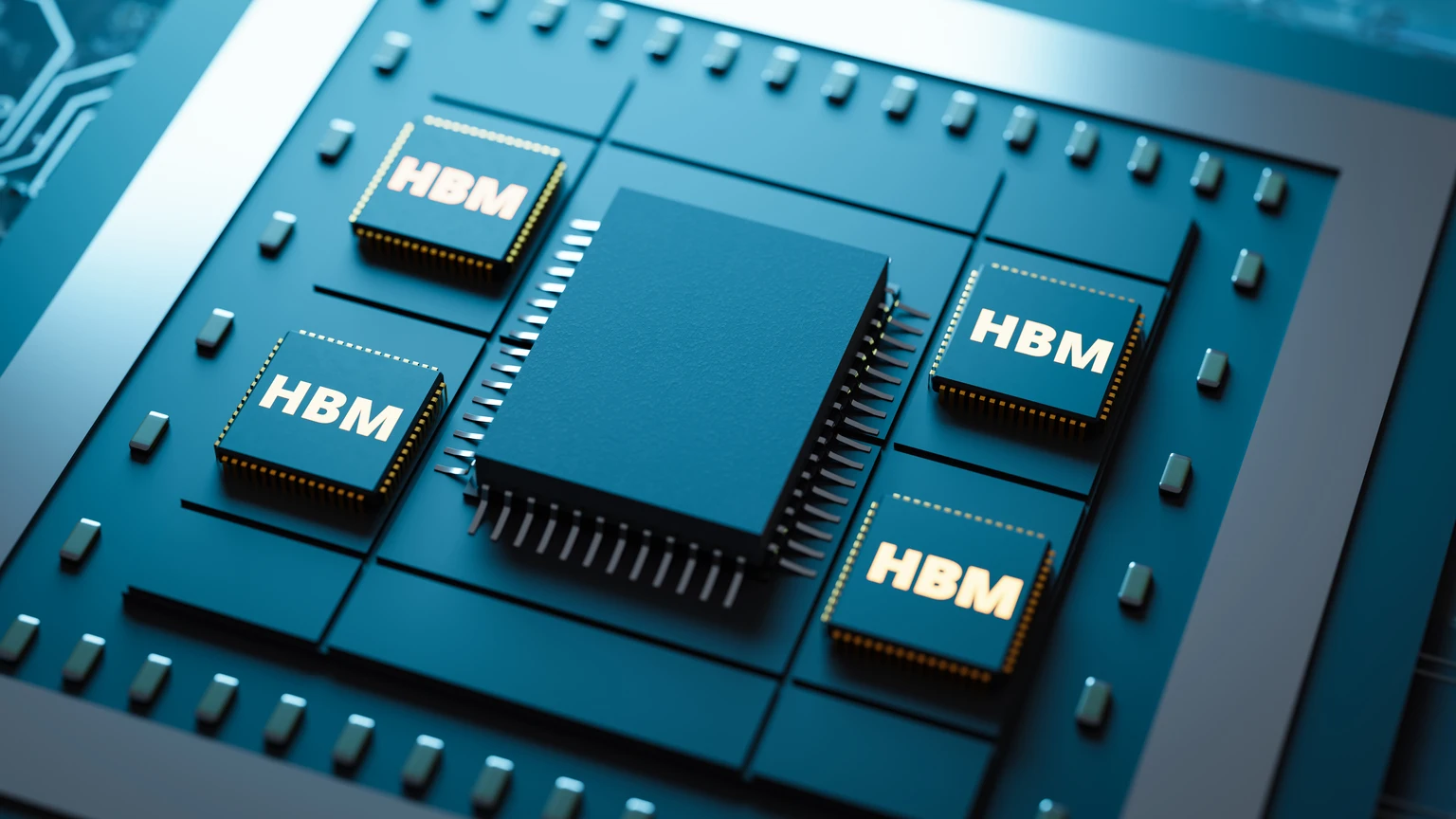
DRAM: We May Be At The Start Of The Second Memory Rally
Business
AI Pioneer Ray Kurzweil Joins Startup Building Brain Interface You Access By Snorting Nanoparticles Instead
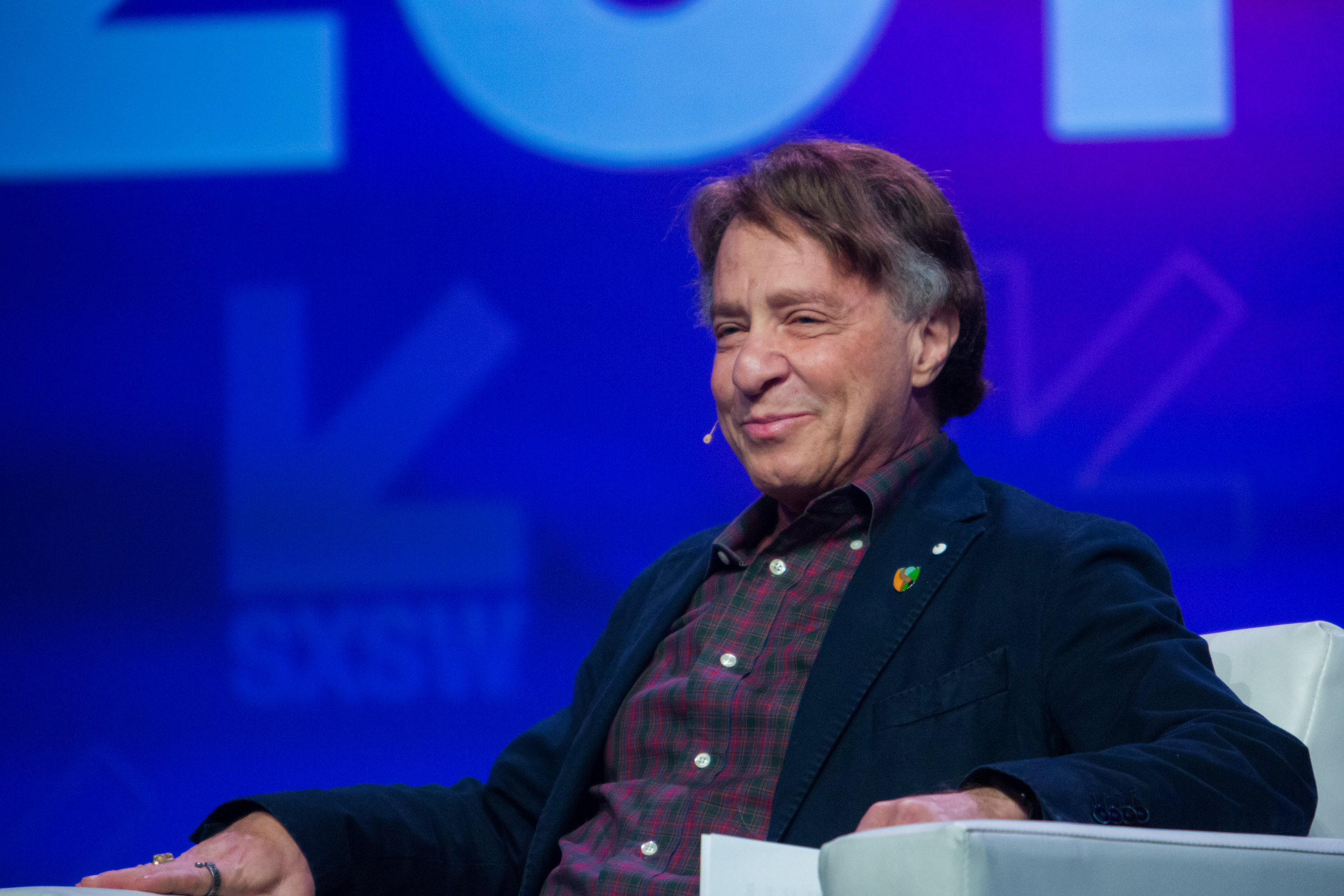
PALO ALTO, Calif. — Ray Kurzweil, the pioneering AI scientist and longtime Google researcher known for predicting a future merger between humans and machines, has joined Subsense, a Silicon Valley startup developing a non-surgical brain-computer interface that works by having users snort specially engineered nanoparticles.
Subsense, a four-year-old company based in Palo Alto, announced Kurzweil’s addition as a product and vision advisor at an event held at its headquarters Wednesday evening, called The Subsense Annual Forum, which brought together leaders across artificial intelligence, neuroscience, brain-computer interfaces and investing to discuss the direction of the field.
“Ultimately, we want to merge the smartphone with the brain,” Kurzweil said at the event, describing external devices like smartphones as a barrier that currently slows down humans’ ability to access the full power of artificial intelligence.
Kurzweil framed the effort in terms consistent with the broader technological philosophy he has articulated for decades.
“The whole point of humans is to go to greater frontiers, expand who we are,” Kurzweil said.
Subsense is one of a growing number of neurotechnology companies working to develop brain-computer interfaces, a field in which Elon Musk’s Neuralink remains the most prominent and well-funded player. Neuralink has implanted wireless chips in the brains of roughly a dozen people to date, enabling patients paralyzed by spinal cord injuries to control computers using only their thoughts. That approach, however, requires drilling through the skull to surgically implant electrodes directly into brain tissue.
Subsense is pursuing a fundamentally different, nonsurgical approach, though one still considered quite invasive. The company’s technology involves introducing charged nanoparticles into the brain intranasally, a process the company has compared to inhaling allergy medication through a nasal spray. Once inside the brain, the nanoparticles would be controlled through a specialized cap or headset containing magnetic coils, allowing the system to either stimulate neurons in specific brain regions or read neural activity directly. At Wednesday’s event, Subsense displayed a nonfunctional mock-up of the proposed headset, which the company described as resembling a cross between a baseball cap and a bicycle helmet.
Subsense chief executive Tetiana Aleksandrova described the company’s long-term ambition for the technology in sweeping terms.
“I believe the brain-computer interface eventually may become one of the most intimate technologies that human beings ever created,” Aleksandrova said at the event.
In a separate statement announcing Kurzweil’s involvement, Kurzweil elaborated on why he chose to align himself with Subsense specifically, rather than one of the field’s other, more heavily funded competitors.
“For years, I have believed that the convergence of AI, nanotechnology and neuroscience could fundamentally change how humans interact with technology,” Kurzweil said. “Subsense is pursuing an approach that brings those fields together in a particularly compelling way, with the potential to move brain-computer interfaces beyond today’s surgical constraints and, over time, toward much broader applications.”
Aleksandrova, addressing Kurzweil’s specific role at the company, suggested his contributions would extend beyond the company’s current technical roadmap into more speculative, longer-term territory.
“Some of the ideas Ray has spent his career thinking about still belong to the future,” Aleksandrova said.
As a product and vision advisor, Kurzweil’s formal responsibilities at Subsense will center on providing perspective on the company’s long-term technology roadmap and on how the broader convergence of artificial intelligence and neural interface technology could reshape human-computer interaction over time, according to the company.
Kurzweil, 78, has worked as a principal AI researcher at Google since 2012 and remains one of the most influential and widely cited thinkers in the artificial intelligence field. He is a recipient of the National Medal of Technology and Innovation, and his books, including “The Age of Intelligent Machines” and “The Singularity Is Near,” have accurately predicted numerous technological developments well ahead of their eventual arrival. His central theory, often referred to as the technological singularity, holds that artificial intelligence will reach human-level intelligence by 2029, before humans begin merging with machines around 2045, ultimately triggering a runaway acceleration of intelligence.
Subsense’s underlying technology, which the company calls NanoBCI, is still in a relatively early stage of development. According to the company, its immediate clinical focus is on treating neurological disorders, with Parkinson’s disease and epilepsy identified as the top potential initial applications for the nanoparticle-based interface, working in conjunction with a wearable headset capable of both reading and stimulating neural activity.
Subsense has raised $27 million in seed funding to date, a relatively modest sum compared with rivals in the broader brain-computer interface space; Neuralink has raised hundreds of millions of dollars, while competitor Synchron has raised more than $100 million. Subsense is currently focused on preclinical work, conducting experiments on various elements of the underlying technology, including tests involving mice, as it works toward eventually pursuing human clinical trials, which the company has said it hopes to begin as soon as 2027.
The company’s stated long-term ambition extends well beyond its initial medical applications. Subsense has said it eventually hopes to move the underlying nanoparticle-based interface technology from a medical treatment tool into a broader consumer product, following a trajectory similar to the one Neuralink has pursued in publicly discussing its own eventual consumer ambitions beyond its current focus on patients with severe paralysis.
Despite the significant attention Kurzweil’s involvement has generated for the relatively small startup, some industry commentary has noted that his role as a “product and vision advisor” is a notably broad title, and that Kurzweil himself is not directly serving as an engineer on the underlying technical development of the nanoparticle system. Observers have suggested that beyond any specific technical contributions, Kurzweil’s participation offers Subsense substantial name recognition and credibility within a field that much of the general public still primarily associates with speculative science fiction rather than active laboratory research.
Founded around 2021 or 2022 by Aleksandrova and co-founder Artem Sokolov, Subsense remains years away, at minimum, from bringing its nanoparticle-based brain-computer interface to market for any application, whether medical or consumer-facing, with the technology still requiring substantial additional preclinical validation before it can advance toward human trials. Even so, Kurzweil’s decision to formally align himself with the company adds a prominent, widely recognized voice to a rapidly growing field of companies racing to develop increasingly direct and intimate connections between human brains and computing systems.
RBC Bearings Has Fallen Enough To Shift Gears (Rating Upgrade)

We are going to witness beautiful football

How To Check Your PC’s Hard-Drive Health
Dividend stocks: Kalyan Jewellers, IREDA among over 150 stocks turning ex-record date this week. Do you own any?





-

 Fashion2 days ago
Weekend Open Thread: Beyond Yoga
-
 Crypto World2 days ago
Bitcoin price stalls near $82K as key resistance holds
-
 Politics2 days ago
Best Gaming Laptops, CPUs, TVs, And Keyboards To Upgrade Your Set Up For GTA VI
-

 Tech2 days ago
The Birds Outside, Drawn For You Automatically
-

 Crypto World2 days ago
IMF Says El Salvador’s Post-Review Bitcoin Purchases Used No Public Funds
-
 Crypto World2 days ago
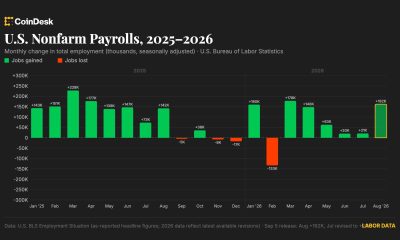
U.S. added stronger than expected 162,000 jobs in August as labor market bounced back
-
 Sports2 days ago
Alexandre Pato consortium’s Northampton Town investment approved
-
 Sports2 days ago
Commanders’ Chig Okonkwo is a top breakout fantasy football candidate
-

 Sports2 days ago
Golden Eaglets Drawn in Group B for 2026 WAFU B U17 Championship
-
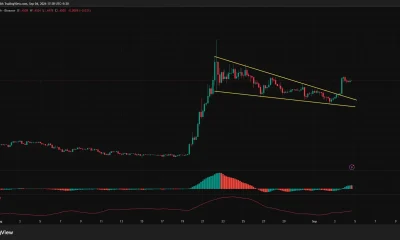
 Crypto World2 days ago
XRP price breaks falling channel as bulls target $1.53
-

 Politics2 days ago
A new European chapter for Gibraltar
-

 Politics2 days ago
How To Avoid Winter Colds: 4 Everyday Habits That Spread Germs, Says Pharmacist
-
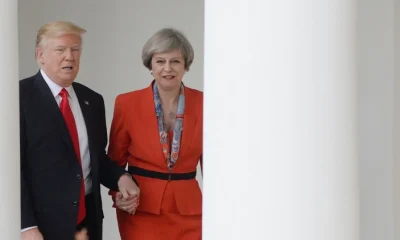
 Politics2 days ago
The House | Bin the lectures, bring gossip and be ready to banter: how the new PM should prepare for his Trump encounter
-
 Crypto World2 days ago
From warning to listing: UK’s largest retail investment platform opens access to crypto ETNs
-

 Crypto World2 days ago
FinCEN flags $12.7B tied to Southeast Asia crypto investment scams
-

 Tech2 days ago
A Worthy Android Ereader, With Some Tradeoffs
-

 Crypto World2 days ago
Trezor Data Breach Impacts 67,000 More US Customers
-
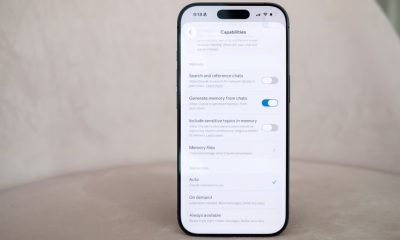
 Tech2 days ago
How To Edit Claude’s Memory
-

 Politics2 days ago
33 Cosy Autumn Home Decor Ideas: Blankets, Pumpkin Decorations, And Candles
-
 Tech2 days ago
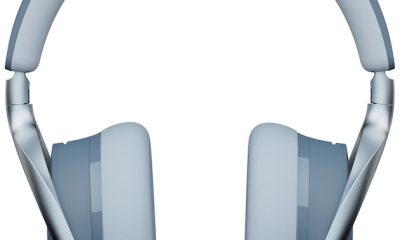
beyerdynamic AVENTHO Y Debuts at IFA 2026 and Makes Wireless Headphones Less Disposable
You must be logged in to post a comment Login