
Business
CYCN Stock Explodes 313% on April 1 After Cyclerion-Korsana Merger Deal for Alzheimer’s Pipeline


Shares of Cyclerion Therapeutics Inc. skyrocketed more than 313% Wednesday, surging from around $1.55 at Tuesday’s close to trade near $6.47 midday as the micro-cap biotech announced a transformative all-stock merger with privately held Korsana Biosciences Inc.

The explosive move came after Cyclerion and Korsana revealed a definitive merger agreement early Wednesday morning, alongside Korsana’s concurrent $380 million oversubscribed private financing. The deal positions the combined company — to be renamed Korsana Biosciences and trade under the ticker “KRSA” — to advance a promising pipeline of next-generation therapies for neurodegenerative diseases, starting with Alzheimer’s.
Volume exploded to more than 213 million shares by midday, dwarfing the company’s typical trading activity and reflecting intense retail and institutional interest in the rare biotech reversal story. Pre-merger Cyclerion shareholders are expected to own roughly 1.5% of the post-deal entity, with Korsana stakeholders (including new financing participants) claiming about 98.5%, subject to net cash adjustments.
“This transaction represents the best path forward for Cyclerion following a comprehensive strategic review,” said Regina Graul, Ph.D., president and CEO of Cyclerion. “Korsana’s promising and innovative pipeline targeting neurodegenerative disorders, beginning with Alzheimer’s disease, provides the potential for significant value creation for Cyclerion’s shareholders.”
Korsana’s lead program, KRSA-028, is a next-generation shuttled monoclonal antibody targeting amyloid beta for Alzheimer’s. It leverages the proprietary Therapeutic Targeting (THETA™) platform, designed to achieve higher brain concentrations while reducing risks such as amyloid-related imaging abnormalities (ARIA) and enabling convenient low-volume subcutaneous dosing.
Deal Details and Strategic Shift
The all-stock merger, approved by both boards, is expected to close in the third quarter of 2026. It remains subject to stockholder approvals, SEC registration effectiveness, Hart-Scott-Rodino antitrust clearance and other customary conditions.
Upon closing, the combined company will operate as Korsana Biosciences Inc., led by Jonathan Violin, Ph.D., as CEO. The board will be chaired by Tomas Kiselak of Fairmount, with directors including representatives from Venrock, Wellington Management and others.
Korsana, which emerged from stealth in February 2026 after raising $175 million in prior rounds (seed from Fairmount and Venrock, plus a $150 million Series A), brings substantial backing from top-tier investors. The new $380 million private placement, led by Fairmount and Venrock Healthcare Capital Partners with participation from General Atlantic, TCGX, Forbion, Wellington, RA Capital, RTW, Vivo, Janus Henderson, Foresite, J.P. Morgan Life Sciences, Sanofi Ventures and others, is expected to extend the combined company’s cash runway into 2029.
Proceeds will fund advancement of KRSA-028, with Phase 1 healthy volunteer data anticipated in mid-2027 and interim proof-of-concept data for amyloid plaque clearance in Alzheimer’s patients by the end of 2027.
Korsana, the seventh company launched from assets developed by Paragon Therapeutics, also maintains a broader pipeline using the THETA™ platform for other undisclosed neurodegenerative conditions with high unmet need.
For Cyclerion, the move marks a sharp pivot. The Cambridge, Massachusetts-based company had been focused on neuropsychiatric therapies, particularly CYC-126 — an anesthetic-based, EEG-guided treatment for treatment-resistant depression (TRD). Recent milestones included positive FDA feedback in February 2026 on its Phase 2 proof-of-concept study plans and a strategic collaboration with Medsteer for closed-loop delivery technology.
Cyclerion had also been monetizing legacy soluble guanylate cyclase (sGC) assets, including out-licenses generating milestone payments. However, with a tiny market capitalization and going-concern warnings in recent filings, the merger with a well-capitalized private player offered a lifeline and potential upside for remaining shareholders despite heavy dilution.
Market Reaction and Investor Sentiment
The 313% surge turned Cyclerion into one of the market’s biggest percentage gainers on April 1, drawing comparisons to other reverse-merger or SPAC-like biotech deals that have delivered quick pops followed by volatility.
Trading forums and social media buzzed with commentary ranging from excitement over the Alzheimer’s angle — amid ongoing interest in amyloid-targeting therapies post-approvals of drugs like Leqembi and Kisunla — to caution about the extreme dilution and execution risks ahead.
Analysts noted that while the deal brings fresh capital and a more advanced pipeline, Cyclerion’s pre-deal shareholders face significant ownership dilution. The stock’s micro-cap status and history of volatility (it has traded as low as around $1 in recent months after earlier surges tied to the TRD pivot) underscore the high-risk nature of the name.
Alzheimer’s Landscape and Korsana’s Differentiation
Korsana enters a competitive but rapidly evolving Alzheimer’s field. Existing anti-amyloid antibodies have shown plaque-clearing benefits but face challenges with safety (ARIA-related brain swelling or microbleeds) and administration (often requiring intravenous infusions).
KRSA-028 aims to stand out through THETA™ technology, which combines transferrin receptor (TfR1) shuttling with Fc engineering for better blood-brain barrier penetration, potentially lower side effects and subcutaneous convenience. Korsana executives believe this could translate to a best-in-class profile.
“Patients deserve better options than what is currently available, and we believe our lead program KRSA-028 can deliver a best-in-class product to treat Alzheimer’s disease,” Violin said. “We are also building a broader pipeline leveraging our proprietary platform to target other devastating neurodegenerative disorders.”
The broader neurodegenerative space remains one of biotech’s highest unmet needs, with aging populations driving demand and investors rewarding companies that can demonstrate differentiated mechanisms or improved safety.
What’s Next for the Combined Company
A conference call was scheduled for Wednesday morning to discuss the transaction. Investors will watch for updates on integration, detailed clinical timelines and any adjustments to ownership percentages based on Cyclerion’s net cash position.
Closing in Q3 2026 would allow the new entity to focus fully on Korsana’s pipeline while maintaining Nasdaq listing continuity under the new ticker.
Risks remain substantial. Clinical development in Alzheimer’s is notoriously challenging, with many programs failing despite promising preclinical data. Regulatory hurdles, competition from larger players and potential integration issues could pressure the stock post-deal.
Cyclerion’s legacy TRD assets and sGC portfolio may be evaluated for further monetization or out-licensing as the company shifts focus.
Broader Context in Biotech M&A
The deal fits a pattern of cash-strapped public biotechs merging with well-funded private innovators to access capital markets and extend runways without traditional IPOs in a selective funding environment. Such reverse mergers can provide liquidity events for private investors while offering public shareholders a reset — albeit often at the cost of heavy dilution.
For retail traders, names like CYCN have occasionally delivered dramatic short-term moves on catalyst-driven days, though sustainability depends on clinical execution.
As of midday Wednesday, the surge showed signs of volatility typical of low-float, high-volume sessions. Longer-term performance will hinge on milestones for KRSA-028 and the strength of the THETA™ platform.
Cyclerion, originally spun out of Ironwood Pharmaceuticals in 2019, has navigated multiple strategic shifts over the years. Wednesday’s announcement could mark its most significant transformation yet.
Investors should monitor official filings, the upcoming registration statement and any post-merger updates from the combined leadership team.
While the April 1 surge provided a dramatic headline, the real test for value creation lies in the clinic and the ability to deliver meaningful advances against neurodegenerative diseases that affect millions worldwide.


“Estate agents are having to employ fewer people because they can’t afford them alongside their fees to Rightmove,” said Newman, who is also a former Competition and Markets Authority (CMA) panel member. “As a result, their services can’t be as effective.”

The Guildford Hotel has changed hands after 20 years, purchased by Western Australian billionaire Leonie Baldock for $17.1 million.

Gatestone Institute senior fellow Gordon Chang joins ‘Mornings with Maria’ to warn China’s support for Iran could escalate the conflict and raise risks of a broader global war ahead of President Donald Trump’s Beijing trip.
A new investigation by Congress detailed how China is buying sanctioned oil from rogue regimes around the world at a discount.
The House Select Committee on China released its report on how China is evading sanctions to purchase tens of millions of barrels of oil from countries like Iran, Russia and Venezuela that are the subject of U.S. sanctions, using a “shadow fleet” of tankers to transport sanctioned oil.
It found that sanctioned oil accounted for one-fifth of China’s total oil imports after the country became the buyer of last resort for those rogue regimes, which allowed it to stockpile a large strategic reserve of oil while buying at below market rates.
CHINA-RUSSIA’S COOPERATION HANDS THE US A ‘GRIEVOUS LOSS’ AS IRAN CONFLICT ESCALATES, EXPERT WARNS
Selling oil is a key component of the economies of Iran, Russia and Venezuela, and the report noted that energy exports yielded roughly $120 billion in revenue for Russia in 2024, about 30% of its total revenue.
Iran’s oil revenue is projected at more than $50 billion in 2025, which represents about 35% of its budget. Similarly, crude oil sales were Venezuela’s main source of hard currency.

China has been a key consumer of sanctioned oil from countries like Iran, Russia and Venezuela. (Reuters)
“From this sanctioned crude, China assembled a massive strategic petroleum reserve – roughly 1.2 billion barrels by early 2026, equal to approximately 109 days of seaborne import cover – at well below market cost from the very barrels Western sanctions were designed to strand,” the committee wrote.
The select committee said China relies on foreign suppliers for about 70% of its oil, much of which is delivered by sea routes that could be blockaded by U.S. and allied naval forces during a crisis, such as one stemming from a Taiwan contingency. That vulnerability prompted Chinese leaders to declare energy security an “urgent requirement in great-power competition” and build its massive reserve.
The report detailed how China uses a shadow fleet of tankers, which are generally older tankers that operate through opaque ownership structures under foreign flags with non-Western insurance that allow them to avoid complying with Western maritime laws.
MULTIPLE CHINESE VESSELS RETREAT AT STRAIT OF HORMUZ AFTER IRAN WARNINGS IN RARE ALLY MOVE

China has built a substantial oil reserve in part through shipments conveyed by shadow fleet tankers. (Stefan Sauer/picture alliance via Getty Images)
The panel cited data from commodity data and analytics firm Kpler, which tracks vessel movements and trade patterns using satellite imagery, that found shadow fleet and sanctioned tankers moved about 10.3 million barrels of crude oil per day last year, with about one-third going to China.
Additionally, it moved 2.2 million barrels per day of heavy refined products like fuel oil and crude residuals, with China receiving about 10.3%; while China also received about 45.8% of the shadow fleet’s chemical and biological cargo.
“China is the buyer of oil from desperate, rogue regimes through illicit, hard-to-track channels involving shell companies, Chinese refineries and a shadow fleet of oil tankers,” said Select Committee on China Chairman John Moolenaar, R-Mich.
“This investigation brings to light key information on how the Chinese Communist Party keeps the economies of Iran and Russia afloat while fueling its own authoritarian agenda.”
US WEIGHS ASKING CHINA TO CURB RUSSIAN, IRANIAN OIL PURCHASES
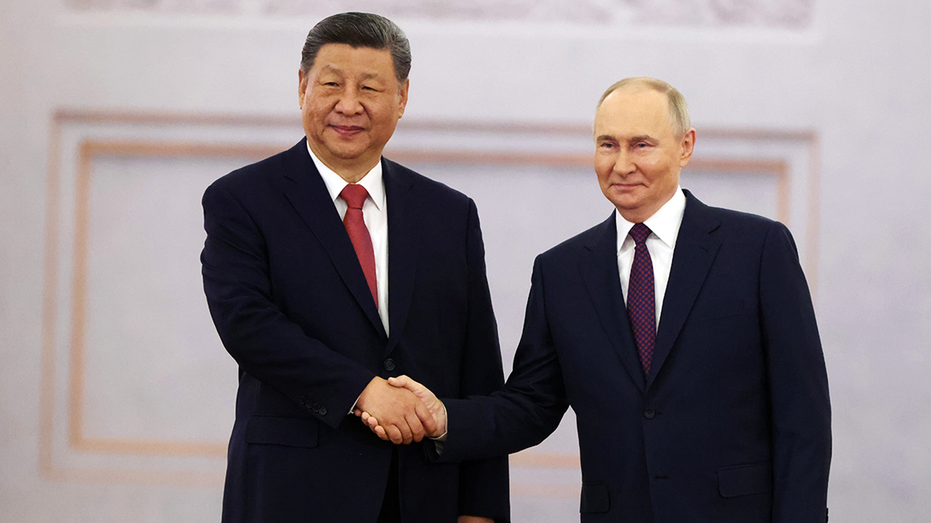
Chinese President Xi Jinping and Russian President Vladimir Putin have deepened the relationship between the two countries, with the energy trade a key component of their partnership. (Contributor/Getty Images)
China’s oil sources have been under pressure after U.S. action to detain Venezuelan leader Nicolás Maduro and enforcement activities targeting Venezuelan oil, as well as the war in Iran, which has slowed the flow of oil tankers through the Strait of Hormuz.
Before the war, China imported 3.4 million barrels per day of oil from Gulf producers via the Strait. While Iran’s shadow fleet continues to make deliveries at near pre-war levels, shipments from other countries in the region have slowed to a halt, prompting China to ban fuel exports and raise retail prices to mitigate the impact of the oil disruption.
The committee’s investigation led to several policy recommendations for lawmakers to consider as they look to counter the flow of sanctioned oil that benefits rogue regimes.
Those suggestions include authorizing sanctions on ports, terminal operators and similar businesses that receive cargo transported by shadow fleet vessels and establishing a whistleblower reward program for reporting sanctions evasion – particularly in transshipment hubs like Singapore, Hong Kong, Malaysia and Dubai.
GET FOX BUSINESS ON THE GO BY CLICKING HERE
They also include having financial regulators probe potential commodity market manipulation and transactions by entities involved in systematically purchasing and routing steeply discounted Russian crude by foreign refiners.
The panel also called for creating a contingency framework with major oil producers like Saudi Arabia, the UAE and Iraq to expand supply because sustained lower prices would reduce the discount available on sanctioned crude oil from Iran and Russia.

European stock markets opened higher after the US president said the conflict would “end very soon”.

SlateStone Wealth Chief Market Strategist Kenny Polcari analyzes the upward trend in the markets amid developments in the conflict with Iran on ‘Varney & Co.’
Apple is scrapping its high-end Mac Pro desktop after two decades, signaling a shift in how the tech giant targets professional users, according to reports.
The company has quietly removed the Mac Pro from its website, according to Bloomberg and 9to5Mac, marking the end of a product line that once served as a “halo” device for video editors and developers. The machine, known for its modularity and “cheese grater” design, carried a starting price of $6,999.
The move underscores Apple’s pivot toward more scalable devices powered by its proprietary silicon. By streamlining its lineup, Apple is prioritizing higher-margin, integrated hardware like the Mac Studio – a compact desktop that offers comparable performance to the Mac Pro at a significantly lower entry cost.
SONY TO RAISE PLAYSTATION 5 PRICES AMID SURGE IN MEMORY CHIP COSTS
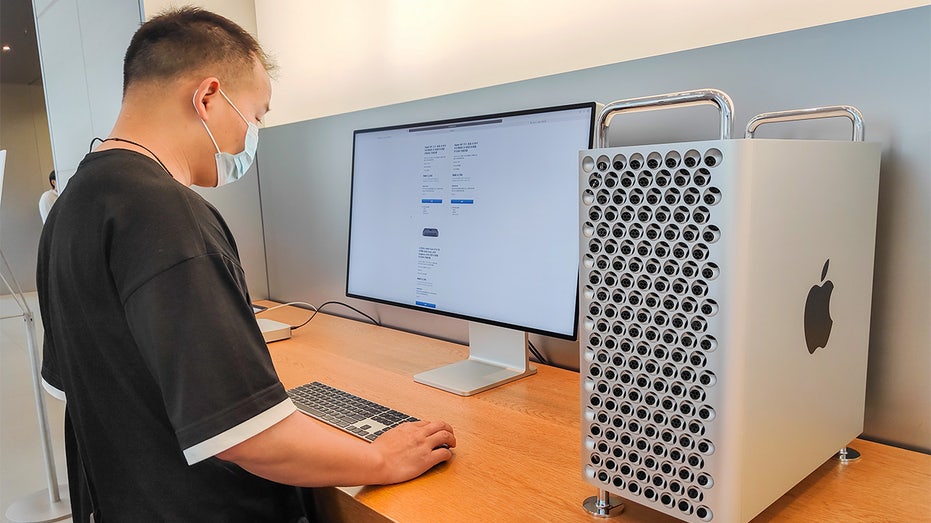
A customer looks at a Mac Pro workstation at Apple’s flagship store on Nanjing Road in Shanghai, China, June 2, 2021. (Costfoto/Future Publishing via Getty Images)
The decision comes as Apple marks its 50th anniversary, highlighting its evolution from a niche enthusiast hardware maker into a global company built on mass-market, tightly integrated ecosystems.

Apple employees help customers at the Fifth Avenue Apple Store on new product launch day on Sept. 19, 2025 in New York City. (Michael M. Santiago/Getty Images)
APPLE CO-FOUNDER STEVE WOZNIAK SAYS HE’S ‘NOT A FAN’ OF AI
Apple has been selling through remaining inventory in retail stores. The company confirmed to 9to5Mac that it has no plans for future updates to the Mac Pro line, effectively ending the era of the internally expandable Apple desktop.

Apple’s new Mac Pro sits on display in the showroom during Apple’s Worldwide Developer Conference (WWDC) in San Jose, California on June 3, 2019. (Brittany Hosea-Small /AFP via Getty Images)
APPLE UNVEILS LOWER COST IPHONE 17E, RAISES PRICES ON MACBOOKS
The shift reflects Apple’s broader strategy to consolidate its desktop lineup around fewer, more scalable products aligned with its in-house chip roadmap.
Apple shares are up fractionally in afternoon trade and are down about 6.2% year to date.
| Ticker | Security | Last | Change | Change % |
|---|---|---|---|---|
| AAPL | APPLE INC. | 255.27 | +1.48 | +0.58% |
FOX Business has reached out to Apple for further comment.
FOX Business correspondent Jeff Flock joins ‘Varney & Co.’ to break down the surge in SUV and truck sales, the slowdown in electric vehicle demand and how billions in tariffs are reshaping the auto industry.
A shift in the auto market is becoming harder to ignore as consumer demand tilts back toward larger, gas-powered vehicles, even as electric vehicles struggle to maintain momentum.
STELLANTIS TAKES MASSIVE $26B HIT AFTER MOVING AWAY FROM EVS
FOX Business correspondent Jeff Flock joined FOX Business’ Stuart Varney on “Varney & Co.” to report from the New York Auto Show, where automakers are leaning into SUVs and trucks amid changing buyer preferences.
Nissan Americas Chairman Christian Meunier discusses the debut of the 2027 Z Nismo at the New York Auto Show, highlighting performance upgrades and the brand’s next-generation sports car vision on ‘Mornings with Maria.’
Recent sales data underscores that pivot. Midsize SUVs and trucks are seeing notable gains, while smaller cars and electric vehicles are losing ground, highlighting a widening gap between industry ambitions and what consumers are actually buying.
According to Cox Automotive and Kelley Blue Book, midsize SUV sales are up 15%, midsize truck sales are up 14%, while compact car sales are down 8% and EVs are down 26% in February compared to the same time last year. EV momentum has become increasingly uneven. Electric vehicles reached 10.5% of U.S. new-vehicle sales in the third quarter of 2025 but fell to 5.8% in the fourth quarter as incentives faded, highlighting a sharp pullback after earlier gains.
HONDA CANCELS 3 PLANNED EV MODELS FOR US
Nissan Americas Chairman Christian Meunier pointed to another pressure shaping the market: tariffs. Automakers and suppliers have absorbed billions of dollars in added costs, limiting their ability to pass those expenses on to buyers.
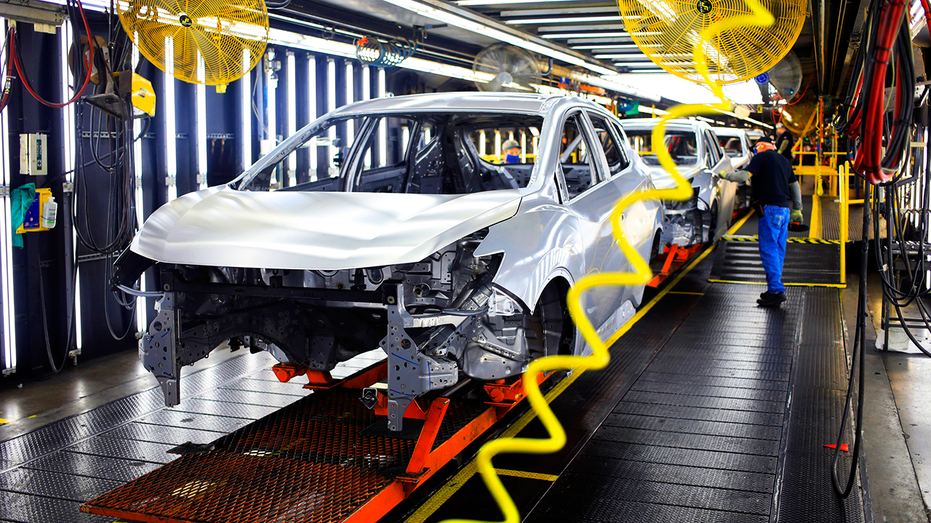
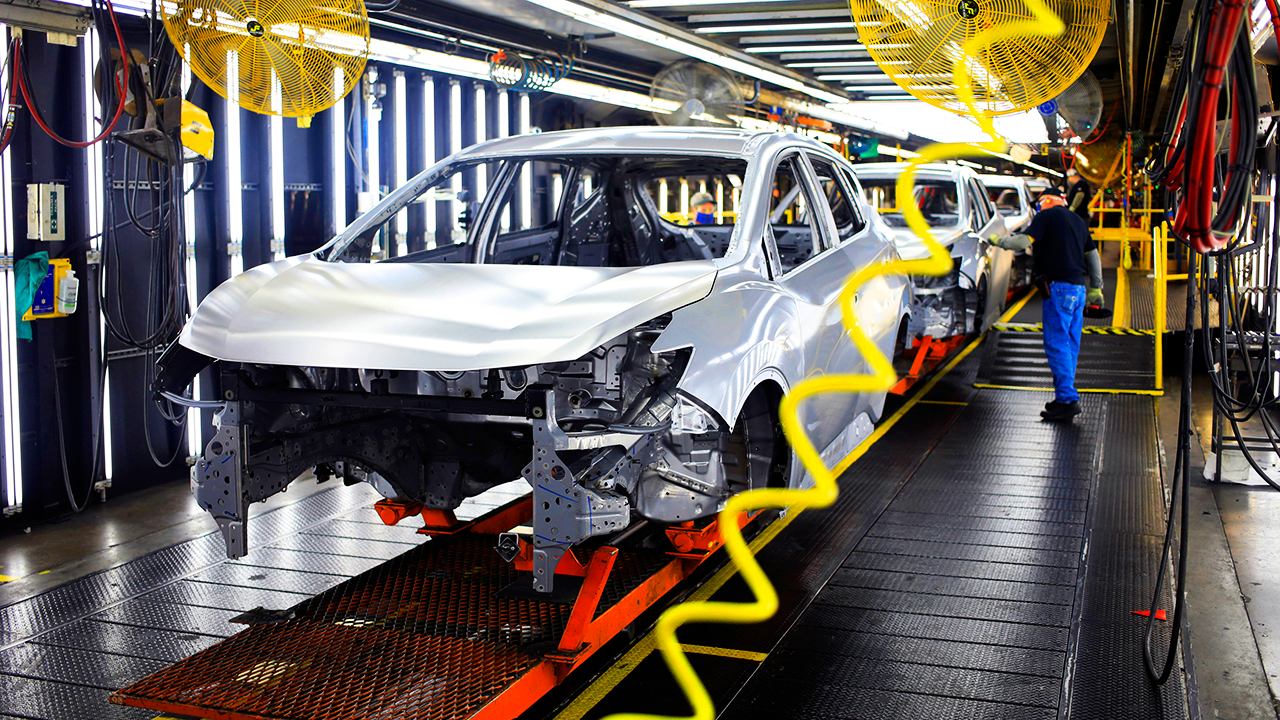
A vehicle frame moves down the assembly line at the Nissan Motor Co. manufacturing facility in Tennessee. (Luke Sharrett/Bloomberg / Getty Images)
“It’s a lot of money, but it’s a lot less than the exposure we had a year ago when it was implemented,” Meunier said.
AMERICANS ARE PUMPING THE BRAKES ON ELECTRIC VEHICLE ADOPTION: ‘AFFORDABILITY IS A BIG ISSUE’
He added that the company has worked to reduce that burden while increasing domestic production.
Interior Secretary Doug Burgum commends President Donald Trump’s economic agenda on ‘The Evening Edit.’
“At the very beginning, we had an exposure of $4 billion. We took it down to $1.5 billion in 25, and we’re going to get it down to zero. That’s our mission to build as many cars in the U.S. as we can,” Meunier said.

IndiGo, India’s largest airline by fleet size, has named the head of the International Air Transport Association as its new chief executive, as it emerges from a turbulent period of flight disruptions that shaved billions off its market value.
The board of IndiGo, which trades as InterGlobe Aviation 539448 6.01%increase; green up pointing triangle, said William Walsh is set to come on board as CEO by Aug. 3 after his tenure as director-general of the aviation industry body comes to an end.
Copyright ©2026 Dow Jones & Company, Inc. All Rights Reserved. 87990cbe856818d5eddac44c7b1cdeb8


Andrew Hecht is a 35-year Wall Street veteran covering commodities and precious metals.
He runs the investing group The Hecht Commodity Report, one of the most comprehensive commodities services available. It covers the market movements of 20 different commodities and provides bullish, bearish and neutral calls; directional trading recommendations, and actionable ideas for traders. Learn more.
Analyst’s Disclosure: I/we have no stock, option or similar derivative position in any of the companies mentioned, and no plans to initiate any such positions within the next 72 hours. I wrote this article myself, and it expresses my own opinions. I am not receiving compensation for it (other than from Seeking Alpha). I have no business relationship with any company whose stock is mentioned in this article.
The author always has positions in commodities markets in futures, options, ETF/ETN products, and commodity equities. These long and short positions tend to change on an intraday basis.
Seeking Alpha’s Disclosure: Past performance is no guarantee of future results. No recommendation or advice is being given as to whether any investment is suitable for a particular investor. Any views or opinions expressed above may not reflect those of Seeking Alpha as a whole. Seeking Alpha is not a licensed securities dealer, broker or US investment adviser or investment bank. Our analysts are third party authors that include both professional investors and individual investors who may not be licensed or certified by any institute or regulatory body.
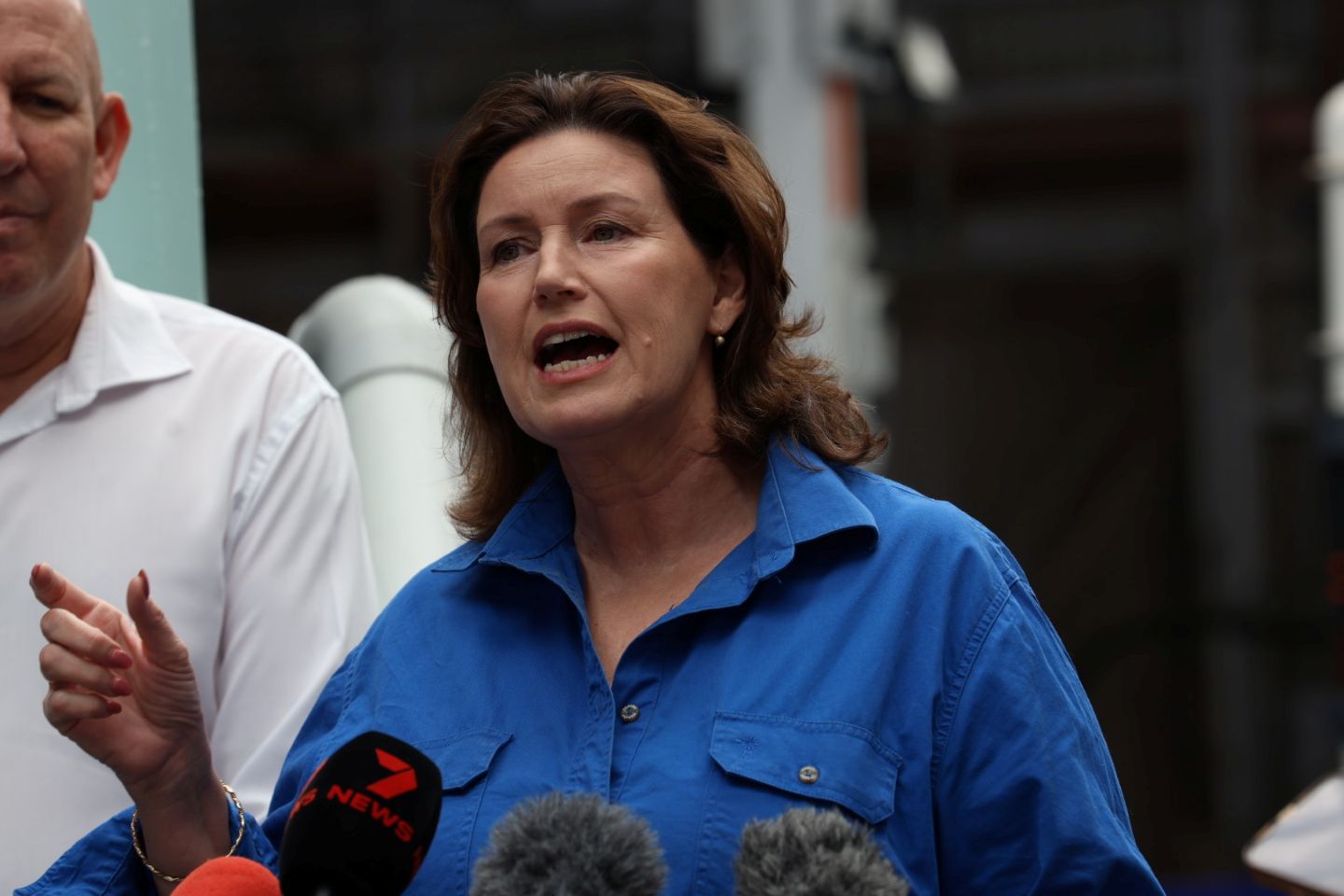
Sea Harvest has accused Fisheries Minister Jackie Jarvis of giving in to political pressure over the demersal fish ban, during a trial held at the state’s highest court.

JPMorgan to Hire 1,000 Bankers, Boost Lending in Small Business Push

One person airlifted to hospital as 100 firefighters attend ‘dust explosion’ fire in Omagh

Estate agents accuse Rightmove of charging excessive fees
BitMine Stock Gets a Bullish Upgrade, but a 4-Month Trap Still Holds


-

 News Videos7 days ago
Parliament publishes latest register of MPs’ financial interests
-

 Business6 days ago
Instagram, YouTube Found Responsible for Teen’s Mental Health Struggle in Historic Ruling
-
 Tech6 days ago
Intercom’s new post-trained Fin Apex 1.0 beats GPT-5.4 and Claude Sonnet 4.6 at customer service resolutions
-

 NewsBeat5 days ago
The Story hosts event on Durham’s historic registers
-

 Sports5 days ago
Sweet Sixteen Game Thread: Tide vs Michigan
-
Entertainment2 days ago
Fans slam 'heartbreaking' Barbie Dream Fest convention debacle with 'cardboard cutout' experience
-
 Entertainment4 days ago
Lana Del Rey Celebrates Her Husband’s 51st Birthday In New Post
-
Crypto World1 day ago
Dems press CFTC, ethics board on prediction-market insider trades
-

 Sports1 day ago
Tallest college basketball player ever, standing at 7-foot-9, entering transfer portal
-

 Tech3 days ago
The Pixel 10a doesn’t have a camera bump, and it’s great
-

 Entertainment7 days ago
HBO’s Harry Potter Series Will Definitely Fail For One Big Reason, And It’s Not J.K. Rowling Or Snape
-

 Tech1 day ago
EE TV is using AI to help you find something to watch
-

 Crypto World2 days ago
U.S. rule change may open trillions in 401(k) funds to crypto
-

 Tech1 day ago
How to back up your iPhone & iPad to your Mac before something goes wrong
-

 Fashion6 days ago
En Vogue in Brown Leather and Tailored Neutrals by Atelier Savoir, Styled by J Bolin
-

 Politics2 days ago
Should Trump Be Scared Strait?
-

 Tech2 days ago
Flipsnack and the shift toward motion-first business content with living visuals
-

 Fashion6 days ago
What Are Your Favorite T-Shirts for the Weekend?
-

 Fashion5 days ago
Weekly News Update, 3.27.26 – Corporette.com
-

 Tech2 days ago
Apple will hide your email address from apps and websites, but not cops
You must be logged in to post a comment Login