

Sports
NCAA imposes steep penalties for ‘ghost’ transfers, but many doubt they will stick

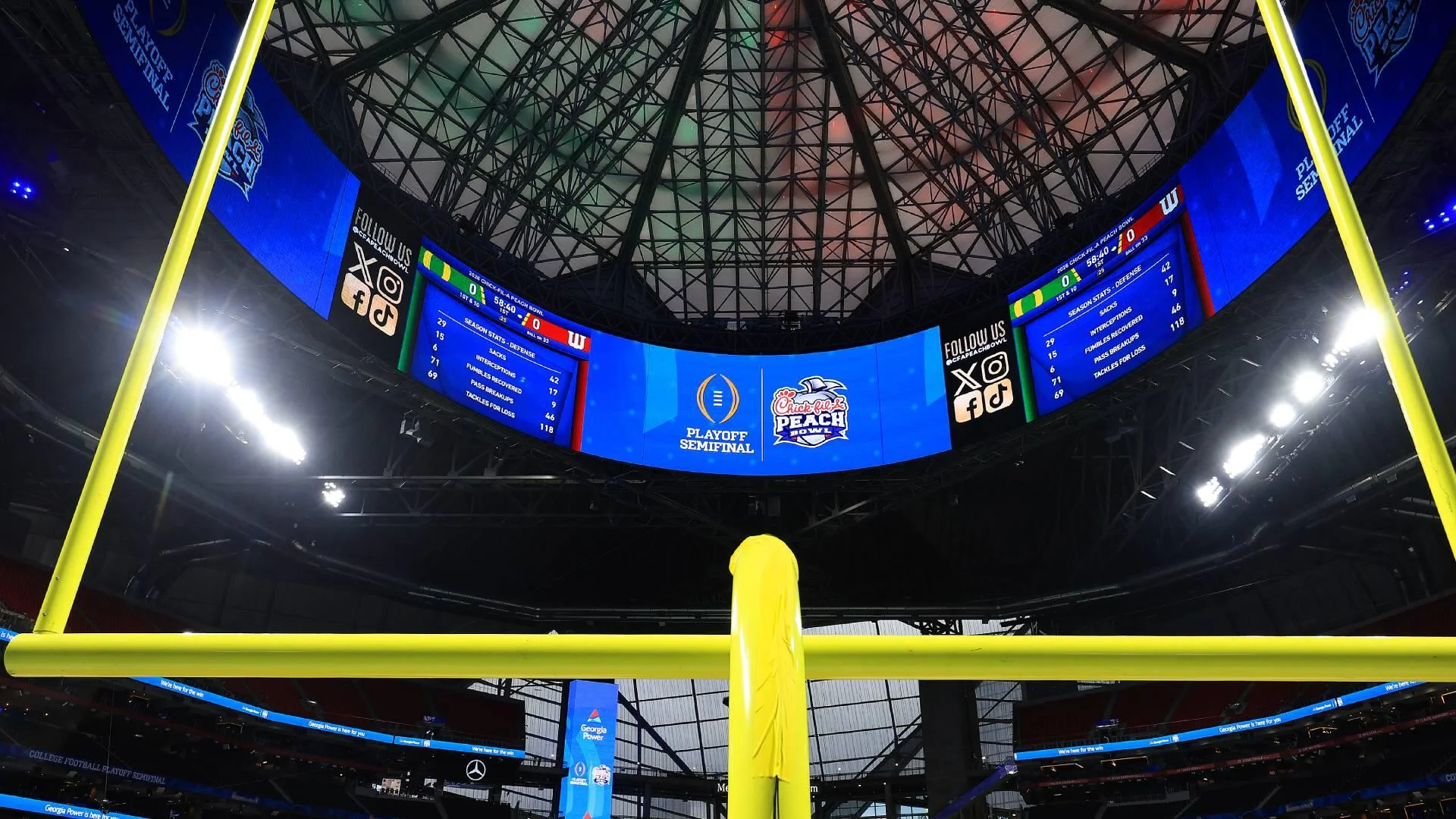
The NCAA Division I Cabinet approved emergency legislation Wednesday designed to stop programs from signing players who circumvent the transfer portal, but the coaches, general managers and attorneys who know the issue best are divided on whether the rules will hold.
As with most issues regarding player eligibility and movement in college sports, challenges may loom in the courtroom next fall.
The legislation approved Wednesday imposes severe penalties on programs that accept players who transfer without entering the portal: a half-season suspension for the head coach from all coaching, recruiting and administrative duties, and a fine equal to 20% of the school’s football budget.
“I am grateful the DI Cabinet approved the FBS Oversight Committee’s recommendation to impose significant penalties on head coaches and programs who circumvent transfer rules, along with immediate accountability,” Vanderbilt coach Clark said in a statement released by the NCAA. “This is a necessary step to address a critical roster management issue facing our sport and to protect the integrity of football’s transfer window.”
The idea behind the emergency legislation stemmed from the elimination of a second portal window in April, and rising fear that players would ignore the rules, unenroll from schools and go elsewhere after spring practices.
“It’s going to add legal chaos,” an AAC head coach told CBS Sports, “But it will keep rosters mostly intact — until one player wins a lawsuit.”
Eroding NCAA authority
That fear is grounded in reality. The courts have not been kind to the NCAA in recent years. Athletes have filed a wave of legal challenges at nearly every corner of the organization’s authority. Since the $2.8 billion House v. NCAA resolution, individual players have won injunctions forcing the NCAA to grant extra eligibility. The NCAA has won some of those cases, but the uncertainty alone carries enormous consequences about whether Wednesday’s legislation survives a court challenge.
Still, others believe the severity of the penalties is enough to change behavior.
“If they actually do it to somebody who violates it, absolutely, it’ll work,” one ACC head coach said.
Coaches doubt the rule will have teeth
However, cynicism and skepticism have seeped into the system following years of rulebreakers going unpunished and legal filings that have rendered the NCAA impotent in certain areas.
“There’s no way in hell any of this shit holds up,” an SEC head coach told CBS Sports. “If a kid gets kicked off a team, he can’t join another team?”
Indeed, such circumstances have already occurred in college football, and it’s believed those examples prompted the FBS Oversight Committee to implement new rules to slow coaches’ tampering within the system and to prevent players from attempting to circumvent the portal. Illinois‘ Bret Bielema Lea were the primary sponsors of the legislation, sources told CBS Sports.
Two high-profile moves outside the portal window last year exposed the NCAA’s structural gap, thereby helping two playoff-contending programs. Wisconsin defensive back Xavier Lucas was denied entry into the transfer portal and opted to unenroll from school before choosing to play for MIami. The Badgers sued the Hurricanes for tampering, arguing Lucas was under contract. Miami played him anyway, and the Hurricanes ran to the College Football Playoff national championship.
Last spring, BYU quarterback Jake Retzlaff faced a seven-game suspension for an honor code violation after both portal windows had already closed, so he unenrolled from BYU, enrolled at Tulane as a walk-on and was eventually put on scholarship. He started for the Green Wave, throwing for 3,168 yards and 15 touchdowns while leading the program into the College Football Playoff. BYU had no recourse.
If both moves happened now, those schools would face significant penalties.
One Big Ten general manager still has doubts the NCAA’s new penalties will curb the behavior.
“Nothing even came of Xavier Lucas leaving for Miami last year — other than the fact he played for a national title,” he said. “There are no teeth right now. Until someone really gets hammered for something, no one is scared. If I’m a blue-blood program, what is there to be scared of? The NCAA is going to go for the low-hanging fruit and not the big boys.”
An SEC general manager echoed the concerns, pointing to staffing and logistical challenges at schools and within the NCAA’s enforcement unit.
“Legal chaos,” he said. “None of these rules hold any weight and are hard to enforce without constant audits, which nobody has the manpower to do effectively.”
Darren Heitner, the attorney who represented Lucas, believes court cases are on the horizon if the NCAA enforces penalties. Courts have repeatedly constrained the organization’s ability to restrict athlete movement and compensation. Most recently, Ole Miss quarterback Trinidad Chambliss was granted a sixth year of eligibility in a Mississippi court. Virginia quarterback Chandler Morris is seeking similar relief.
Heitner believes the NCAA’s attempt to model roster control on NFL structures is misguided because the NFL’s legal protection flows from collective bargaining — a mechanism the NCAA has long resisted and lacks. The legislation, Heitner wrote in his newsletter last week, might buy the NCAA a few months of order as it heads into fall camp.
“But the moment a coach gets suspended or a school gets fined, expect the courtroom filings to begin,” he said. “And given the current judicial climate around college sports, I would not bet on the NCAA successfully defending these rules, at least not in their current form.”
What a court case might look like is also a fascinating question.
“The one thing I’m really interested in is who are they suing?” a Big 12 head coach said. “The whole deal is the penalty is not on the kid, the penalty is on the coach and the school. That’s what’s going to be really interesting.”
On paper, the legislation makes it catastrophically expensive for a program to use him, but it does not make the math impossible. Whether a program — particularly a blue-blood with resources and lawyers — decides those penalties are worth absorbing, and whether the NCAA has the will and manpower to catch them if they do, remains the central unanswered question.
The ‘tampering’ problem
The NCAA has yet to punish a power program on tampering allegations, even as coaches continue to point fingers and make accusations. Clemson‘s Dabo Swinney made the biggest swing this offseason, accusing Ole Miss coach Pete Golding of tampering with linebacker Luke Ferrelli, a former Cal player who enrolled at Clemson in January only to leave the program for Ole Miss days after the portal closed.
Swinney alleged Golding texted Ferrelli while he was sitting in an 8 a.m. class, asking about his buyout and sending a photo of a $1 million contract offer. Swinney submitted documentation to the NCAA and went public with the allegations in a 25-minute press conference. Golding has denied the characterization of events, saying the recruitment began before Ferrelli ever arrived in Clemson. The NCAA has not weighed in publicly.
The Big Ten sent a letter to the NCAA last month arguing that existing tampering rules “cannot be credibly or equitably enforced” and called for a moratorium on investigations while new rules are written.
“These rules were not designed for a world in which student-athletes are compensated market participants making annual decisions with significant economic consequences,” the conference’s letter read, according to ESPN. “The collision between the old rules and new reality is producing outcomes that harm the population that the rules were designed to protect.”
It’s going to take an act of Congress
Meanwhile, legislation that would fundamentally change college sports and rules enforcement — and potentially provide the NCAA and its membership legal protections ––was given a second wind last month in Washington, D.C. President Trump formed five committees last week, with dozens of collegiate and professional sports leaders tasked with providing suggestions to the President as Republicans continue to push the SCORE Act through Congress.
Wednesday’s vote to curb blind transfers is a narrow answer to a larger problem, and like so many NCAA rules before it, may ultimately be decided in a courtroom.
The Big Ten, in its letter to the NCAA last month, encapsulated the severity of the unknowns facing college sports.
“The system of college sports is under tremendous stress, both internally and externally,” the conference warned. “Systems adapt or they break.”

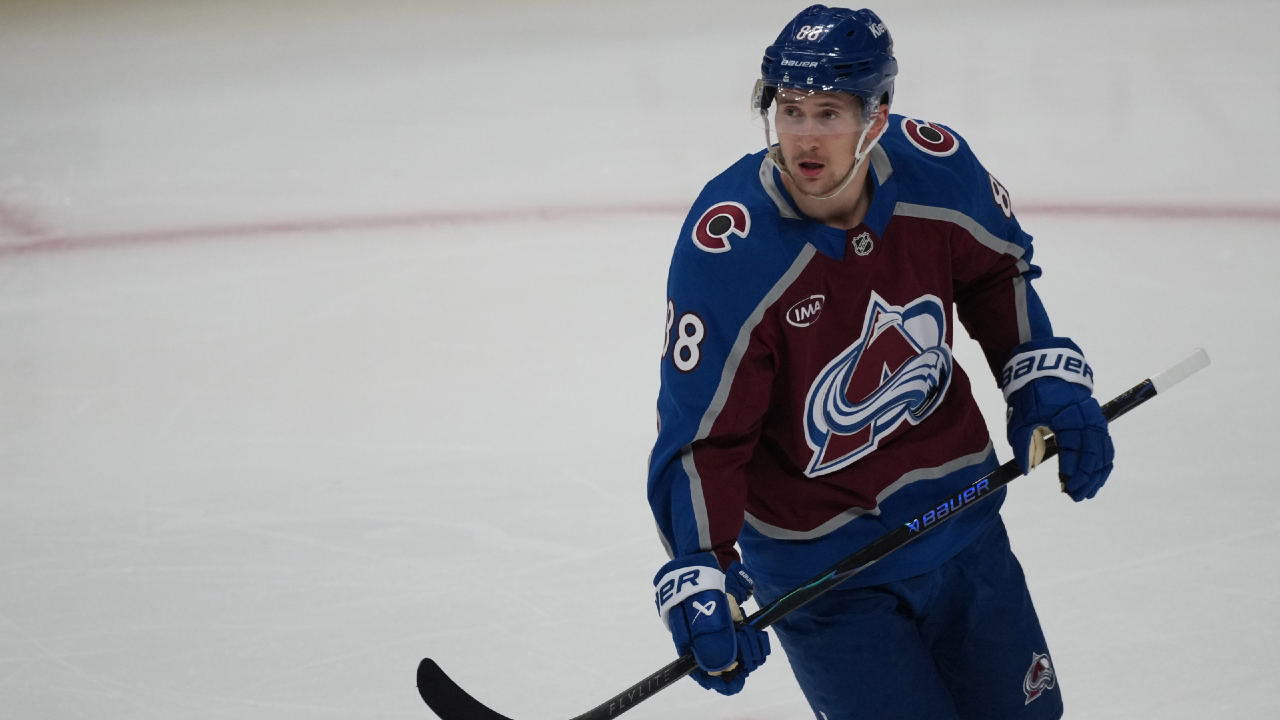
As usual, he looked dangerous with the puck, playing with pace and confidence. He was effective offensively, which wasn’t always the case in the playoffs during the talented winger’s five playoff runs with the Carolina Hurricanes. Necas set up Nazem Kadri’s power-play goal.
But his most revealing shift was in the final minute. With the Wild desperately pushing for a tying goal they probably needed to maintain a chance at winning this second-round series, Necas was on the ice for coach Jared Bednar, defending Colorado’s 3-2 lead. He read a rim-around in the defensive zone and beat Quinn Hughes to the puck inside the blue line, sidestepped the Minnesota star and passed to Avalanche linemate Nathan MacKinnon for an empty-net goal.
The move from Carolina at last season’s trade deadline has allowed Necas to grow (and get rich) and improve his reputation as a playoff performer — someone whose offensive game doesn’t shrivel when checking and intensity ramp up, someone who can be trusted defensively.
If the Avalanche eliminate the Wild in Game 5 here Wednesday, they will be halfway to the Stanley Cup. Maybe they’ll meet the Hurricanes in the final, which would be a pretty fabulous matchup.
“I feel like it’s just different now,” Necas, 27, told Sportsnet before the series shifted to Minnesota for the weekend. “Obviously, we created some chemistry here with Nate. Last year was hard, but this year it’s different. Compared to Carolina, here I’ve got way more room to shine. Obviously, Carolina had their guys and, like, I’m not saying I wasn’t one of them. But here, I’m playing on the first line, so it’s a little different.
“Everybody looks at the (points) producing side, right? That’s what everybody looks at, but I’m feeling comfortable here. I love the big-time games. It’s the same thing that you guys were asking about for the Olympics; I was excited because I love those kind of moments and games. And I think that the playoffs, it’s the same. And as the rounds go longer and longer, I like it more.”
Necas finished fourth in scoring at the Olympics in February, leading Czechia with three goals and eight points in five games.
At mid-career, Necas has been a development story for the Avalanche.
He had a breakthrough, 100-point season playing with MacKinnon and, mostly, winger Artturi Lehkonen. Gabriel Landeskog replaced the injured Lehkonen on the top line for Game 4.
Necas’ 38-goal season came after he signed an eight-year, $92-million contract extension in October. His previous highs were 28 goals and 83 points.
“Listen, some of the criticisms on Marty from his younger years prior to being here, they may have been valid,” Colorado coach Jared Bednar told reporters after Game 2 a week ago. “Marty and I talked about this. Just because something’s true one day doesn’t make it true the next, especially over time.
“Marty put in a lot of hard work to be a trusted player on our team defensively. It’s one of the talks we had when he got here, and a handful of times after that: if you’re going to play with Nate and play against the opposition’s best guys every night, I’ve got to be able to trust you. You can’t play there (just for) how good you are offensively, right? So he buys into that. The style of the players he plays with, it’s important that he’s on that line because he helps them a lot, and his game has grown. So, I think those criticisms now are invalid.”
Through eight playoff games, Necas has one goal and nine points, and an 11-3 goal differential at even strength.
In Carolina, his points production during the playoffs fell to 0.51 points per game from 0.73 in the regular season. And although Necas rode the Hurricanes’ high tide on puck possession and was never a glaring liability defensively, his shots-for percentage relative to teammates was modest, and overall, he was a minus player in the playoffs.
“Absolutely, I think he’s definitely gotten more aware of what the moment calls for when you don’t have the puck,” Landeskog, the Colorado captain, said after Monday’s morning skate. “His defensive systems and just his checking ability has gotten better and better every month, really, throughout the season. So yeah, he’s definitely becoming a trustworthy player.
“I think he’s always been, obviously, a very talented player and super gifted. The way he thinks the game, and he’s able to execute at such a high speed, not everybody can do that. But now he’s adding kind of the checking mentality to it, and that checking mindset is what you need (in the playoffs) because the margin for error is so small this time of year. He’s done a great job, and continues to be a big factor for us.”
Necas was unaware of what Bednar said about him earning trust — and dispelling the earlier knocks against him — until we told him.
“I agree with Bedsy; he helped me a lot in terms of defence,” he said. “You know, I’m going to be here for a long time, and I know that I want to play in all those situations. Obviously, I’m out there if we’re losing. But he’s been putting me out there when we’re winning, too, you know, when we’re trying to defend the lead. And obviously he has to have the trust in me to do that. So I’ve been trying to play better D. The whole coaching staff helped me a lot with it.
“It’s been cool, like, being the guy.”
Necas is one of them, for sure.
• Tuesday was a travel day for the teams, which did not practise … After getting hit in the face by teammate Devon Toews’ clearance near the end of the second period on Monday, MacKinnon returned for the third period but declined to do interviews after the game. He did tell a couple of reporters, “I got lucky,” that it was the flat side of the puck that hit him on the nose and mouth. He did not require stitches.
“If he was going to be able to get out there, he was going to be out there,” Bednar said post-game of his superstar’s return. “I don’t think that was ever in doubt. I just felt for him because I just went through that. It doesn’t feel very good, so you’re just hoping that the guy’s OK. That’s the main thing, and then you feel for him because it sucks.”
Bednar missed two games behind the Avalanche bench in April after getting hit in the face by a deflected puck during a game against the Vegas Golden Knights.
The PWHL is heading to Sin City.
Las Vegas will join the league in time for next season, The Athletic‘s Hailey Salvian reported on Tuesday.
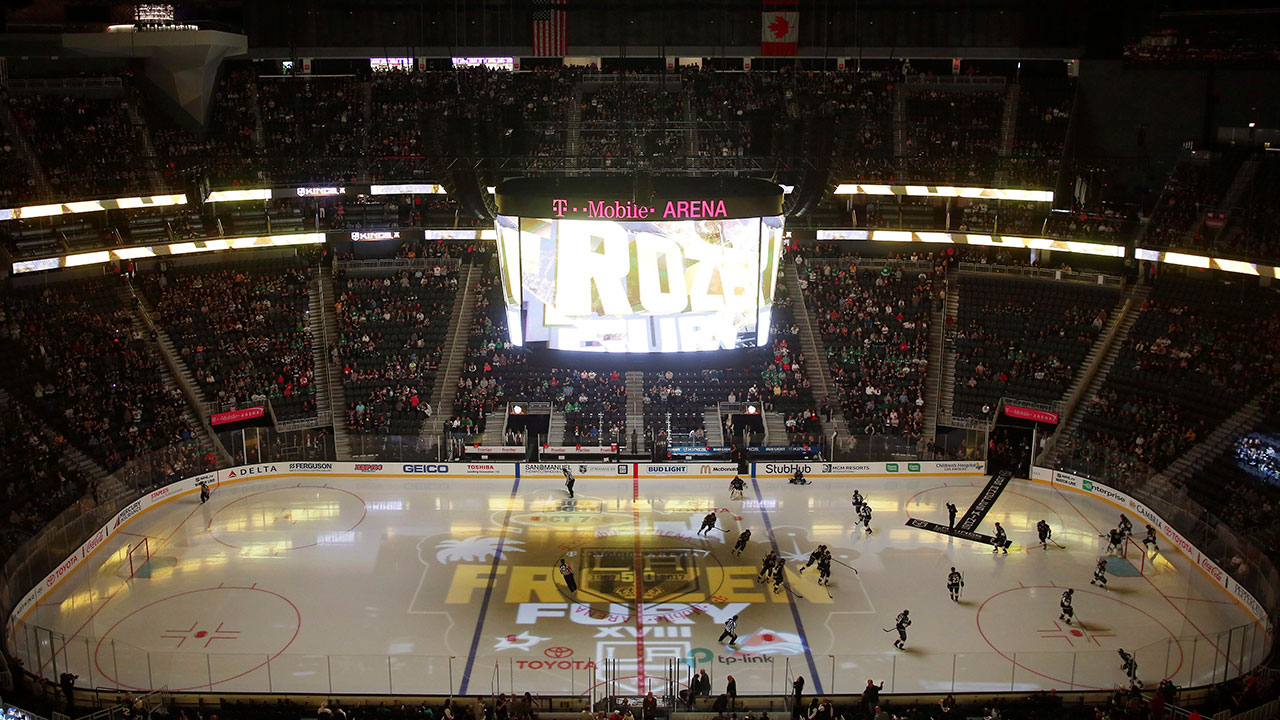
An announcement is expected Wednesday with youth hockey teams already invited to an event that day, per Salvian. The team would likely play at T-Mobile Arena, which hosts the NHL’s Golden Knights.
Earlier Tuesday, The Hamilton Spectator reported that Hamilton, Ont., would also be getting a team.
The additions would put the league at 11 teams for next season after it announced expansion to Detroit earlier this month.
One more franchise could be added as well, per Salvian.
Vancouver and Seattle joined the league before this season, but both missed the playoffs.
The original six teams are in Toronto, Boston, Montreal, New York, Boston and Minnesota.
In addition to the Golden Knights, Vegas is home to the WNBA’s Aces and NFL’s Raiders.

The 2026 WNBA season got underway on Friday, and all 15 teams have taken the court at least once. The New York Liberty and Golden State Valkyries are tied for first place after their 2-0 starts, while the rebuilding Connecticut Sun are in last as the lone team with two defeats.
Indiana Fever star Kelsey Mitchell is leading the league in scoring at 30 points per game, No. 1 overall pick Azzi Fudd isn’t a starter and a number of big names, including Napheesa Collier, Sabrina Ionescu, Satou Sabally and Brionna Jones, are sidelined due to injuries.
A lot will change over the next four months as the regular season plays out, but why wait that long to (over)react? Before the first full week of the new season begins, here are some opening weekend overreactions.

The Sparks will miss the playoffs
The Los Angeles Sparks were the final team to make their 2026 season debut, and the league was not saving the best for last. Late on Sunday afternoon, the new-look Sparks were run out of the gym by the reigning champion Las Vegas Aces at Crypto.com Arena, falling by 27 in the worst season-opening loss in franchise history.
It’s one thing to lose to the champs; it’s another to get embarrassed after going all in over the offseason. The Sparks haven’t made the playoffs since the bubble season in 2020, which is not only the longest playoff drought in franchise history, but the longest active one in the league. After Sunday’s showing, it doesn’t look like Nneka Ogwumike, Ariel Atkins and Erica Wheeler will be enough to bring playoff basketball back to Los Angeles.
There were no positive takeaways for the Sparks after their opener, only concerns that their shortsighted moves would backfire. They’ve given away Rickea Jackson and Dominique Malonga in recent years for Atkins and Kelsey Plum, and the one lottery pick they’ve kept — Cameron Brink — can’t crack the starting lineup or stay on the court. In eight scoreless minutes against the Aces, Brink had three fouls and three turnovers, and coach Lynne Roberts said afterward that “we need Cam to produce.”
Brink wasn’t the only bench player who was of no help Sunday. Amid all of their big moves in the offseason, the Sparks forgot to address their depth. They got seven points, six rebounds, two assists and six turnovers from their bench on 3 of 16 shooting, and five of those points came on meaningless baskets in the final minute.
The Sparks blew up their future for an aging squad — the 29-year-old Atkins is the only member of their core not in their 30s — that won’t end their postseason drought, let alone contend. — Jack Maloney

The Liberty don’t miss Ionescu
In the New York Liberty’s final preseason game against the Connecticut Sun, All-Star guard Sabrina Ionescu rolled her left ankle. An MRI revealed no serious damage to her left foot or ankle, but the team said that she would be out for at least two weeks — a timeline that will sideline her for the team’s first four games at a minimum, including their lone road trip to Portland for a two-game set this week. (Ionescu played her college ball at Oregon.)
Even though Ionescu’s ankle issue is not serious, it was a frustrating blow for a team that was snakebit by injuries last season and is also without key free-agent signing Satou Sabally (cyst) and starting forward Leonie Fiebich (overseas commitments) to start the season. As it turns out, the Liberty don’t even miss Ionescu.
They’ve started 2-0 for the third season in a row, thanks in large part to their European backcourt starring Marine Johannes, Pauline Astier and Julie Vanloo. Let’s take a look at their respective numbers after the Liberty’s wins over the Sun and Washington Mystics.
- Johannès: 21 points, three rebounds, 2.5 assists and 2.5 steals on 50/50/60 shooting splits
- Astier: 11.5 points, 3.5 rebounds, 5.5 assists and 1.5 steals on 57.1/0/70 shooting splits
- Vanloo: 7.5 points, four rebounds, 6.5 assists and 0.5 steals on 57.1/50/100 shooting splits
Johannès, who re-signed in free agency, had a career-high 25 points in their win over the Mystics and is leading the league in 3-point makes and attempts. Astier, who had a breakout campaign overseas and chose the Liberty in free agency over a number of suitors, has had no trouble adjusting to the WNBA and notably has just two turnovers in 55 minutes. The veteran Vanloo, meanwhile, is in New York on a hardship contract and has made a case to stick around long-term.
Ionescu shot 40.1% from the field overall last season, including 29.9% from 3-point range, and was one of the league leaders in turnovers. The Liberty’s backcourt looks just fine without her inefficient scoring, and her absence has allowed Johannès and Astier, in particular, to spread their wings. — Jack Maloney

Jovana Nogić will win Rookie of the Year
Last week, I wrote that the Rookie of the Year race is wide open, and noted that it was possible the winner wouldn’t come from the 2026 Draft class. I have to confess that I did not have Phoenix Mercury guard Jovana Nogic on my short list of candidates, but her performance in the first two games has me on high alert.
In the season opener, Nogić was a big reason why the Mercury were able to stun the Las Vegas Aces 99-66 and spoil ring night for the defending champions. She was 5 of 8 from the field and 4 of 5 from outside for 19 points, four assists and two steals. She had 13 of her points in the second quarter to help the Mercury put the game away by halftime.
In the second game, a 95-79 loss to Golden State in the Valkyries’ home opener, she was a bright spot in an otherwise rough night for the Mercury, going 5 of 6 from the field and 4 of 5 from beyond the arc for 16 points. She was the only player on the roster with a positive plus-minus.
Now, Nogić is not your typical rookie. She is a 28-year-old from Serbia who played four seasons at Providence College from 2015-2019 and has spent the last six years playing for the Serbian national team and professionally in Spain, Turkey and Russia. But she’s eligible for the award because this is her first WNBA season. Mercury head coach Nate Tibbetts said that team scouts have had their eyes on her for a couple of years, but that increased salaries, thanks to the new CBA, made it more tenable for her to come to the league this summer.
The Mercury are having injury struggles early this season, so Nogić should get enough minutes to be in contention for the honor. Meanwhile, both Azzi Fudd and Lauren Betts are coming off the bench and Awa Fam won’t be joining the Seattle Storm for a couple more weeks due to overseas commitments. Olivia Miles did have an impressive debut with the Minnesota Lynx, with 21 points, eight assists and three boards, so she’s still the frontrunner. But after this weekend, I think Nogić will give her a run for her money. — Lindsay Gibbs

The Golden State Valkyries will win a playoff series
Before the season, I picked the Golden State Valkyries to finish 12th and not just miss the playoffs, but miss them handily. But I have already seen the error of my ways. Not only do I think they will make the playoffs, but the Valkyries will win at least one playoff series and make it to the WNBA semifinals.
In their first two games, the Valkyries defeated the Seattle Storm 91-80 on the road and took down the Phoenix Mercury in the Ballhalla opener, 95-79. The only other 2-0 team is the New York Liberty, and the Valkyries have played tougher opponents — the Valkyries have the fourth-hardest strength of schedule through the first quarter of the season, while the Liberty have the easiest, according to ESPN.
But it’s not just the win-loss record that impresses; it’s how they are doing it. They’re continuing their formula from last season, with tough defense and a lot of three-point shooting, but with more talent and experience on the roster. The Valkyries have attempted a league-high 35 three-pointers per game and made 40% of them, for a league-leading 14 three-pointers per game. They’re third in the league in assists, with 23.5 per game, and have the third-fewest turnovers per game, with just nine. Their defense is holding opponents to 79.5 points per game, second in the league behind the Toronto Tempo, who have only played one game.
Janelle Salaun started for the Valkyries most of last year, but is coming off the bench early in the season and absolutely thriving, averaging 20.5 points per game. Salaun is especially hot from beyond the arc, averaging 4.5 three-pointers made per game on 56.3% shooting. Kayla Thornton is picking up right where she left off before her injury last season, Veronica Burton is continuing to shine and Gabby Williams was just an absolutely perfect addition to this core during free agency. The front-office moves and messaging have been confounding the past few weeks, but on the court, the Valkyries look ready to build on their successful debut season. — Lindsay Gibbs
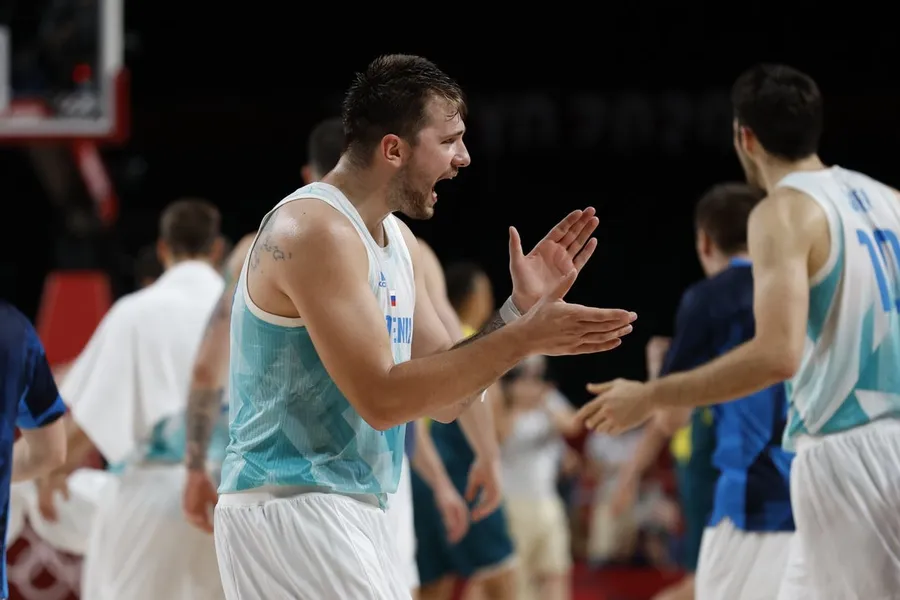
 Aug 7, 2021; Saitama, Japan; Team Slovenia point guard Luka Doncic (77) reacts on the court during the fourth quarter against Australia during the Tokyo 2020 Olympic Summer Games at Saitama Super Arena. Mandatory Credit: Geoff Burke-Imagn Images
 Los Angeles Lakers star Luke Doncic will not play for the Slovenian national team this summer, instead prioritizing his daughters.
Doncic is the father of 3-year-old Gabriela and 5-month-old Olivia. Their mother is his ex-fiancee, Anamaria Goltes, with whom he is fighting over custody of the girls. Doncic announced their split in March.
He announced his summer plans via Instagram after the Lakers’ season ended Monday night with a playoff loss to the Oklahoma City Thunder.
“I love my daughters more than anything, and they will always come first in my life. As I continue working toward joint custody of my daughters, I have been forced to make a difficult decision between traveling and playing for the Slovenian national team and being with my daughters this summer.
“Unfortunately, it has been made extremely difficult for me to see them over the past eight months.”
Goltes lives in Europe. Still, she filed a petition for child support and attorney’s fees in Los Angeles, and Slovenian courts also are expected to be involved.
Now 27, Doncic has played for his national team since age 16. He led Slovenia in the 2020 Olympics with 28.3 points, 10.7 rebounds and 7.0 assists. The team did not advance out of pool play.
In the NBA, the Lakers were swept in the Western Conference semifinals by the Thunder. They defeated the Houston Rockets in the opening round.
Doncic missed both series after suffering a serious left-hamstring strain on April 2. He led the NBA in scoring this season with 33.5 points per game and shot 36.6% from long range. Injuries limited him to 64 games.
–Field Level Media
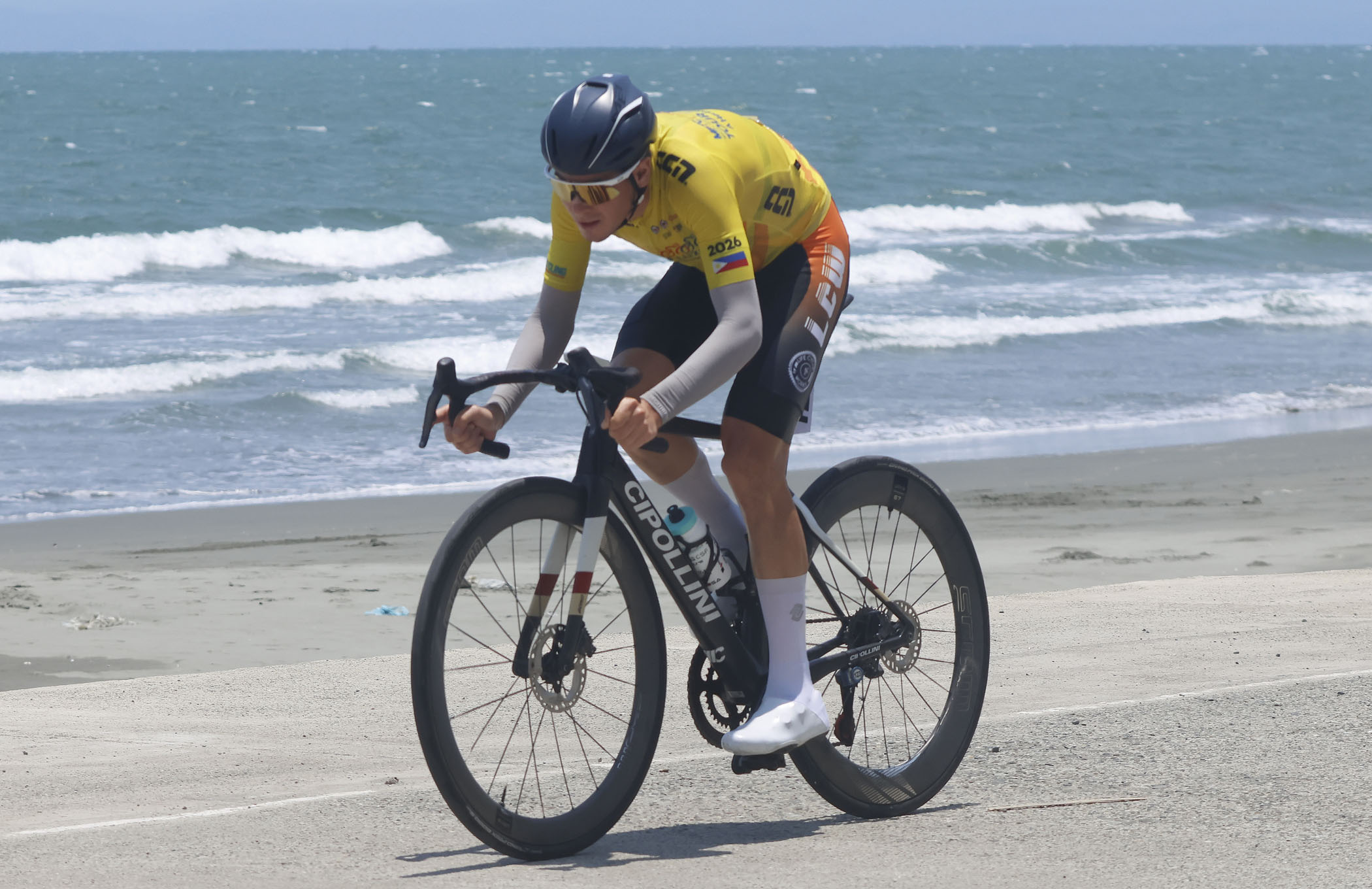

Nikita Shulchenco of LCW UAECycling Team in action during the Tour of Luzon. –HANDOUT PHOTO
LINGAYEN, Pangasinan—Nikita Shulchenko closed in on the MPTC Tour of Luzon title after finishing second in the individual time trial of the penultimate stage won by Kyeong Ho Min.
Min captured his second stage win after ruling the 20-kilometer race-against-time event in 25 minutes and 39 seconds, with Shulchenko 22 seconds behind.
Coupled with Antoine Huby placing 13th overall, Shulchenko was able to stretch his hold on the yellow jersey going into the final stage of the derby wheels going to Baguio from here via Kennon Road.
Nikita Shulchenko’s lap time of 26 minutes and one second was only good for second, 22 seconds behind, but it was good enough for him to extend his lead over Antoine Huby in the general classification. #TourOfLuzon2026 | @jonasterradoINQ pic.twitter.com/xLHwsQSymV
— INQUIRER Sports (@inquirersports) May 12, 2026
Shulchenko, the Russian ace of the Filipino-owned, Dubai-based LCW UAE Cycle, now has a total time of 36:42:22, ahead by 3:50 over Huby of 7-Eleven Roadbike Philippines.
The French rider finished the ITT in 27:17, a day after jumping to second overall with his win in the Stage 12 climb towards Daang Kalikasan in Mangatarem.
Huby entered the ITT trailing Shulchenko in the overall standings by 2:30.
Joseph Javiniar of Excellent Noodles finished third in the ITT in 26:09 while Nash Lim of MPT DriveHub clocked 26:33 to become the best Filipino cyclist entering the final lap of the 14-stage cycling odyssey.
Lim jumped to fourth, 8:05 adrift, but is way behind third-running Ibrahiem Alrefai, who trails teammate Shulchenko by 5:37.
7-Eleven’s Mervin Corpuz is fifth by 8:54, while the rest of the top is composed of Malaysia’s Muhammad Mazlin (+9:26), 7-Eleven’s Ronnilan Quita (+9:46), MPT’s Rustom Lim (+12:19), Seoul’s Jung Woo Ho (+13:30) and Go for Gold Philippines’ Rench Michael Bondoc (+13:54).

The Minnesota Vikings held rookie minicamp last week, and in addition to signing DT-OLB Smith Vilbert, the club inked linebacker Bangally Kamara.
Two tryout players earned contracts. Now comes the real roster climb.
Kamara enters the mix for Minnesota at the bottom of the 90-man roster, hoping to do enough at training camp and in the preseason to stick around for the 53-man depth chart in September or snag a practice squad invitation.
Minnesota Adds More Depth to Brian Flores’s Defense
Get to know Kamara, the newest Viking.
Kamara to MIN
The rookies keep on coming for Minnesota. KU Sports‘ Henry Greenstein wrote Monday, “Former Kansas linebacker Bangally Kamara has signed with the Minnesota Vikings, the team announced on Monday. Kamara went unselected in the 2026 NFL Draft but apparently made enough of an impression at the Vikings’ minicamp to earn a roster spot based on his tryout performance. Minnesota signed him alongside former Penn State lineman Smith Vilbert.”
“Kamara spent one year as a Jayhawk, the first piece in KU’s 2025 expansive transfer class, after four seasons at Pitt and a short stint at South Carolina. He served as KU’s starting weak-side linebacker and was an all-conference honorable mention at the conclusion of a year in which he recorded 56 tackles, including 9.5 for loss, while starting nine of the 11 games he played.”
Kamara, listed between 6’1″ and 6’2″ and 220-230 pounds, is a bit small for an inside linebacker, but he’ll battle for a roster spot nevertheless.
The Background
Kamara stands out as a versatile linebacker prospect. At the aforementioned height and weight, he’s a bit undersized but demonstrates the flexibility to play dedense and on special teams — a critical asset for making an NFL roster. His collegiate path, however, was not straightforward.
He transferred collegiately twice, moving from Pittsburgh to South Carolina before landing at Kansas. Despite this winding route, his production finally materialized in 2025, recording 56 tackles, 9.5 tackles for loss, 1.5 sacks, 4 pass breakups, and a forced fumble in 11 games.
His appeal stems from his movement, range, and utility in sub-packages. Possessing 4.69 speed, a 10-foot-1 broad jump, and 32 1/8-inch arms, he has the athletic tools necessary to operate effectively in space. The primary question mark surrounding Kamara is his definitive NFL role: he’s likely too light for full-time EDGE work and will need to carve out a specific niche. He projects as a developmental linebacker and special teams ace.
Our Kyle Joudry on Kamara: “Per PFF, Kamara had a reasonably humdrum season, finishing off with a 63.4 grade. Most promising was his 79.3 pass rush score, further corroborating the notion that Kamara is at his best when he’s allowed to move forward. His snap allotment shows 309 snaps in the box, 156 snaps along the defensive line, 59 snaps as a slot corner, and 5 snaps as a wide corner.”
“Kamara now has that chance given that he turned his tryout (the initial chance) into an undrafted contract, which will span three seasons while coming in a hair below $900,000 for his 2026 cap charge. Expect the guaranteed money to be low, if not outright non-existent.”
The Revised ILB Group
When the offseason began, off-ball linebacker represented a huge question mark for the Vikings. Wilson and Pace Jr. were free agents, and rookie Jake Golday had not entered the picture yet. Fast forward to May, and both Wilson and Pace Jr. are back, while Minnesota tabbed Golday as its 2nd-Round pick.
Here’s the updated lay of the land at inside linebacker:
- Blake Cashman
- Eric Wilson
- Ivan Pace Jr.
- Jake Golday
- Jacob Roberts
- Scooby Williams
- Josh Ross
- Keli Lawson
- Bangally Kamara
It might be the Vikings’ deepest roster spot.
The Other Guy — Vilbert
Vilbert is a defensive lineman who can be used on the line interior or the edges, depending on Flores’s mood. He’s 6’6 and 290 pounds with 34-inch arms.
Minnesota’s defensive scheme prioritizes versatility, expecting its front-seven players to move around, show different looks, and take on various assignments. This makes Vilbert’s build intriguing, as he could potentially play as a five-technique, an interior backup, or even a big edge rusher.
However, his path forward is undeniably steep. Older than most rookies, Vilbert’s college career at Penn State and North Carolina showed flashes of talent rather than consistent dominance. While his physical tools are legitimate, he remains a project, which explains why he went undrafted.
Vilbert represents a classic Vikings lottery ticket: a big, experienced, and coachable player facing a tough battle for a spot on the 53-man roster.
The Vikings’ defense ranked third-best leaguewide in 2025 per EPA/Play and DVOA.


Ross Blacklock surfaced in December for a tryout with the Green Bay Packers, though a contract never materialized. Five months later, the former Minnesota Vikings defensive tackle is the newest member of the Atlanta Falcons.
Blacklock is back in the NFC, trying to turn a camp opportunity into staying power.
Blacklock’s career has stalled compared to his once-promising 2nd-Round draft stock six years ago, but he’ll hope to rekindle his career on Kevin Stefanski’s team.
Atlanta Adds More Depth to Its Defensive Line
A short-timer for the Vikings, Blacklock eyes a roster spot in Atlanta.
ATL Signs Blacklock
Make it seven NFL teams in seven seasons for Blacklock. SI.com‘s Garrett Chapman wrote Monday, “The Atlanta Falcons have announced a flurry of roster moves after the conclusion of rookie minicamp last weekend. It was reported on Monday morning that they would sign offensive lineman Layden Robinson, but an additional slew of moves was made, according to Tori McElhaney.”
“The Falcons welcomed 46 players to Flowery Branch over the weekend, including six drafted players, 14 undrafted free agents, and 24 players auditioning for roster spots. Of those auditioning players, four, including Robinson, were signed. The others include defensive lineman Ross Blacklock, offensive tackle Brandon Walton, and linebacker Daveren Rayner.”
Blacklock last lived on the New York Giants’ practice squad in 2024.
Blacklock’s Background
The aforementioned Giants signed Blacklock to their practice squad in mid-December 2024. Although a futures contract typically implies an opportunity to compete for a spot on the 2025 summer roster, his tenure was brief, as he was released before the offseason concluded.
The 27-year-old defensive lineman has played in 44 NFL games, starting three and accumulating 40 total tackles, 9 quarterback hits, 5 tackles for loss, and 3 sacks. A 2nd-Round pick by the Houston Texans in the 2020 NFL Draft, Blacklock saw his most extensive action with them in 2022, playing 455 defensive snaps.
About four years ago, the Vikings acquired Blacklock and a 7th-Round pick from Houston in exchange for a 6th-Round pick. However, the TCU product struggled to establish himself in Minnesota, playing just 139 defensive snaps before his release in the summer of 2023, following the emergence of Jonathan Bullard and Jaquelin Roy. Blacklock was notably one of Kwesi Adofo-Mensah’s initial trade acquisitions.
Since his release from Minnesota, Blacklock has moved between five different teams without securing a permanent role, suggesting a career on a downward trajectory. Nevertheless, a recent contract with the Falcons offers him at least one more opportunity.
This is his full resume:
- Houston Texans (2020–2021)
- Minnesota Vikings (2022)
- Jacksonville Jaguars (2023)
- Indianapolis Colts (2023)
- Tennessee Titans (2023)
- New York Giants (2024)
- Atlanta Falcons (2026–now)
The DT Unit in Atlanta
Here’s the revised list of defensive tackles for the Falcons after Blacklock’s contract:
- Zach Harrison
- Maason Smith
- Brandon Dorlus
- Da’Shawn Hand
- LaCale London
- Chris Williams
- Elijah Garcia
- Carlos Allen Jr.
- Anterio Thompson
- Ben Stille
- Ross Blacklock
Blacklock hopes to climb the pecking order a few spots to make the September roster.
The New Faces for Falcons
Atlanta was one of the league’s busier teams during free agency, adding these men in the last two months:
- Jake Bailey | P (MIA → ATL)
- Samson Ebukam | ED (IND → ATL)
- Nick Folk | K (NYJ → ATL)
- Tyler Goodson | RB (IND → ATL)
- Darren Hall | CB (ARI → ATL)
- Da’Shawn Hand | DL (LAC → ATL)
- Christian Harris | LB (HOU → ATL)
- Darnay Holmes | CB (LV → ATL)
- Austin Hooper | TE (NE → ATL)
- Corey Levin | C (TEN → ATL)
- Azeez Ojulari | ED (PHI → ATL)
- Brian Robinson | RB (NYJ → ATL)
- Trevor Siemian | QB (TEN → ATL)
- Tua Tagovailoa | QB (MIA → ATL)
- Jawaan Taylor | RT (KC → ATL)
- Cam Thomas | ED (CLE → ATL)
- Channing Tindall | LB (ARI → ATL)
- Chris Williams | DL (CHI → ATL)
- Olamide Zaccheaus | WR (CHI → ATL)
And from the draft, the Falcons onboarded this class:
- Round 2 — Avieon Terrell (Clemson | CB)
- Round 3 — Zachariah Branch (Georgia | WR)
- Round 4 — Kendal Daniels (Oklahoma | LB)
- Round 6 — Anterio Thompson (Washington | DT)
- Round 6 — Harold Perkins Jr. (LSU | LB)
- Round 7 — Ethan Oniwanwa (Ohio St. | G)
Bleacher Report‘s Brent Sobleski graded the Falcons’ offseason with a C+ grade this week, noting, “The hiring of a two-time NFL head coach of the Year in Kevin Stefanski, who serves as his own offensive play-caller, and offensive line coach Bill Callahan should help maximize this group. The biggest issue remains the uncertainty around last year’s rookie standout James Pearce Jr.”
“The 2025 first-round pick agreed to enter an intervention program, which allowed him to avoid trial on felony domestic violence charges. Significant talent can be found on Atlanta’s roster. The group needs to come together under its new leadership so the Falcons can finally take over the NFC South.”
Blacklock will turn 28 this summer.
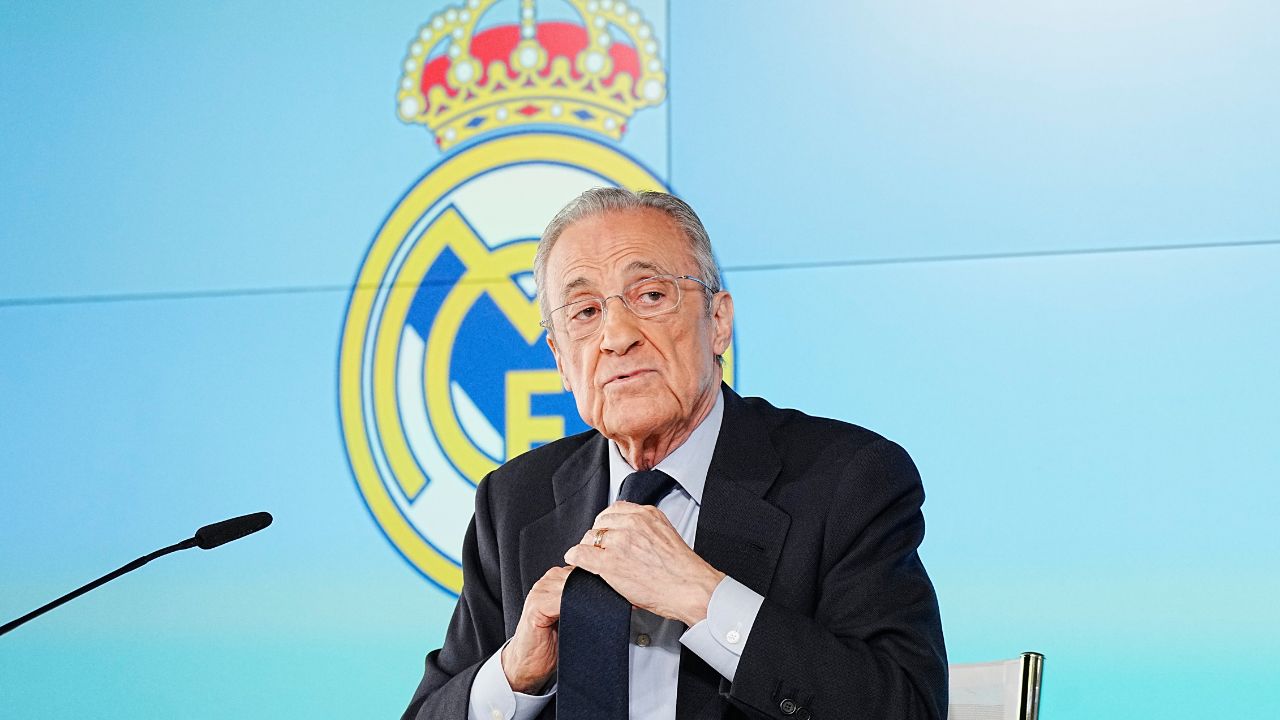
MADRID — Real Madrid president Florentino Pérez has called for new elections at Real Madrid and says he will seek another term after claiming he is the victim of a campaign to unseat him.
He dismissed rumours that he was tired of the job or sick, saying these had been spread by opponents.
The president spoke Tuesday after a meeting of the club’s board of directors, two days after Madrid lost 2-0 at Barcelona and saw the Catalan rival clinch its second straight Spanish league title.
That meant Madrid has endured a second consecutive season without a major trophy, despite having France star Kylian Mbappé on the squad.
Sports
‘I don’t normally like this’: Barcelona coach reacts to Lamine Yamal waving Palestine flag | Football News


FC Barcelona star Lamine Yamal once again found himself at the centre of attention during the club’s La Liga title celebrations after waving a Palestinian flag during the team’s open-top bus parade through the streets of Barcelona. The 18-year-old winger, regarded as one of football’s brightest young talents, was seen holding the Palestinian flag while celebrating Barcelona’s league triumph alongside teammates on Monday. Yamal later shared pictures of the moment on his Instagram account as thousands of supporters packed the streets to celebrate the title-winning campaign. According to reports, nearly 750,000 fans turned up for the celebrations as Barcelona marked another domestic triumph. Yamal’s gesture quickly drew global attention amid the ongoing humanitarian crisis in Gaza and the wider international reaction surrounding the conflict. Barcelona manager Hansi Flick was asked about the incident during a press conference on Tuesday. While the German coach admitted he generally prefers to avoid such situations, he also made it clear that Yamal is mature enough to make his own choices. “This I don’t normally like,” Flick said. “I spoke with him. I said if he wants this, it is his decision. He is old enough. He’s 18 years old.” There has been growing backlash across the world against Israel over the humanitarian impact of the war in Gaza, with demonstrations and protests appearing across several sports and cultural events, including football, cycling and basketball. Spain has also been among the countries protesting Israel’s inclusion in this year’s Eurovision Song Contest. Yamal, whose father is Moroccan and who is openly Muslim, appeared to express support for Palestinians through the gesture during the celebrations. Despite the controversy, Flick insisted his focus remained on the connection between the club and its supporters following the title-winning season. “We are playing football and you can see what the people expect from us,” Flick added. “We are playing football to make the people happy. This is for me the first thing we have to do.” Yamal continues to rise rapidly in world football and is widely viewed as one of the leading candidates to become the sport’s next global superstar after Lionel Messi and Cristiano Ronaldo. The Spain international is also expected to be one of the standout names at the 2026 FIFA World Cup in the United States, Canada and Mexico.
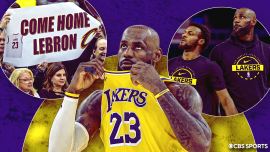
The 2025-26 Los Angeles Lakers, all things considered, probably outperformed expectations. They beat their projected win total by 6.5 games. They solved the fit issues between Luka Dončić, Austin Reaves and LeBron James in a blistering 16-2 March. They won a playoff series that Dončić missed and Reaves didn’t join until Game 5. Purely on paper, the season was a success.
In reality, very little was actually accomplished. This season, more than anything, was about buying time. Time for James’ max contract to expire and create cap space. Time to gain further access to their own draft capital for trade purposes. Time to evaluate what they had so they’d know what they need. The last season and a half was an uncomfortable collision between the end of the last era and the beginning of the next. Starting this summer, the real work of building the Luka Dončić Lakers begins.
The end goal of that effort, functionally, is building a team that can compete with the Oklahoma City Thunder. They’re the bar, at least alongside the San Antonio Spurs. Those are the teams the Lakers are going to have to beat to win a championship, and they’re what make this season, on some level, a disappointment.
The Lakers acquired Dončić in February 2025. It’s been a season and a half. They have not yet acquired a single player who appears poised to be a central part of their strategy against the Thunder moving forward. They just played Oklahoma City in a series that the Thunder frankly slept through. The first halves were competitive. The second halves, when the Thunder woke up, were not. Oklahoma City became the first team in 26 years to win the first three games of a series by more than 16 points.
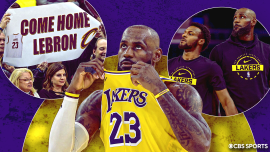
Dončić’s absence makes proper evaluation difficult, of course. Everyone was overburdened without him. But Deandre Ayton was a mess and called out for his effort on the Game 3 broadcast. Jake LaRavia was borderline unplayable. Marcus Smart and Luke Kennard had their moments, but Smart is 32 and injury-prone, while Kennard’s offense came and went throughout the postseason. Both can become free agents this offseason. Reaves, though injured, played most of the series with a target on his back defensively. The only Lakers who consistently held up were the 41-year-old James, whose future is uncertain, and Rui Hachimura, also an impending free agent with serious defensive question marks.
The Lakers are almost starting from scratch here. They have Dončić. They’ll probably have Reaves. JJ Redick will be their coach, and this year’s over-performance suggests he’s a keeper. And they’ll need basically everything else: at least one center better than anyone they currently have, multiple wing defenders who can shoot and another ball-handler to replace James, whether he leaves now or in a year. We can say very little with confidence about who will be playing for the 2027-28 Lakers, when Dončić will be in the final year of his contract and presumably expecting to seriously contend.
That’s what this offseason is about. Beating modest Vegas expectations and knocking out dysfunctional opponents is no longer relevant. The entire goal is to find the players who will surround Dončić during the prime of his Lakers tenure. Who those players might be and how the Lakers can try to get them are what we’ll try to figure out today.
The short-term financial outlook
The projected salary cap for the 2026-27 NBA season is $165 million. The Lakers currently owe roughly $92.6 million to nine players, and their No. 25 overall pick will cost about $3.2 million. Factor in a $20.9 million cap hold for Reaves, allowing them to go over the cap to re-sign him, and you’re looking at roughly $116.7 million in obligations, giving the Lakers a bit more than $48 million in projected cap space.
That figure is not set in stone. It assumes that Ayton and Smart will both pick up their player options. Either of them could decline, which would give the Lakers more space — Ayton’s option is for $8.1 million, and Smart’s is for $5.4 million — but it would mean either replacing them or re-signing them.
At this stage, Ayton is probably slightly more likely than not to pick up his option. He and Dončić share an agent, Bill Duffy, who helped set Ayton up to join the Lakers, and given his roller-coaster performance, his market will likely be soft. Smart, who had a great year for what he was paid, will probably opt out and seek a bigger payday. If he does, the Lakers can give him a 20% raise if they operate above the salary cap, they can re-sign him using cap space, or they can re-sign him using the cap room mid-level exception projected at $9.4 million.
So, what does a projected $48 million in cap space actually mean? It means that if the Lakers want to either absorb outside players through trade without sending money back or pursue external free agents, they have $48 million to do that with. After that $48 million is spent, they’d have that cap room mid-level exception, and beyond that, only minimum salaries. Creating that $48 million in cap space means renouncing their rights to all of their free agents. Most notably, that would be James, but it would also include Hachimura, Kennard and Jaxson Hayes.
If the Lakers want to retain some of their own free agents, they are free to do so. Say James is willing to come back for $20 million. The Lakers could simply pay him that much and then still have $28 million to spend. If they want to bring back all of their free agents, they would opt to operate above the salary cap. That would mean retaining their rights to everyone, bringing them back, and hoping to use the non-taxpayer mid-level exception projected at $15 million to add one impact free agent.
If the Lakers are pursuing any big-name, external free agents or well-paid veterans through trades, they’re probably operating below the cap and will have to pay what it takes to get their targets. If they’re operating above the cap and running it back, the idea will probably be to overpay everyone on bloated, one-year contracts. This will allow them to kick the cap space can down the road to 2027, when the free-agent class is stronger, and give themselves a lot of tradable salary to work with during the season. We’ll cover every scenario below.
What do the Lakers have to trade?
Part of the reason the Lakers hesitated to make a major trade at this year’s deadline was that they had only one pick to trade, their 2031 selection. By waiting until this summer, that number ballooned to three. Teams can trade picks seven years out, so when the league calendar flips, their 2033 pick is in play, and once the Lakers actually use their 2026 pick, the Stepien Rule restrictions preventing them from going multiple years without a pick (since they owe Memphis their 2027 choice) expire.
In addition to those three outright first-round picks, the Lakers can trade first-round swaps in three more drafts: 2028, 2030 and 2032. Don’t sleep on the value of those swaps. In a flattened lottery environment, they’re more valuable than they’ve ever been. The Thunder have even traded outright picks for swaps in the past. That might seem counterintuitive, but it makes sense when you’re as asset-rich as they are. Oklahoma City doesn’t have enough roster spots for all of its picks. They don’t want volume. They want upside. The Spurs have targeted swaps for the same reason. There will probably be a number of teams looking to turn swaps into lower-upside outright picks this offseason. The Lakers could be one of them.
If the Lakers are using their cap space in the trade market, well, that’s straightforward. Being able to absorb $48 million in salary without sending any back is enormously valuable and would allow the Lakers to sign any player in the NBA except the league’s 25 highest-paid stars. However, given the limitations that would impose on the Lakers in free agency and in retaining their own players, they’d likely only use cap space in a big trade if it were for a true star.
More likely, the Lakers will try to match money in the trade market and keep their cap space separate. The two likeliest Lakers to move in this scenario would be Jarred Vanderbilt, who makes around $12.4 million, and Dalton Knecht, who makes around $4.2 million. Neither is a desirable contract, but if the Lakers are sending out draft picks, taking them is probably the cost of doing business for the acquiring team. If either Smart or Ayton picks up their options, they could be used as a matching salary as well.
The Lakers could also sign-and-trade their own free agents to create more matching money if needed, but that’s a complicated process that requires cooperation from the player, interest from the team, and the navigation of some complex CBA mechanics like base-year compensation. As it’s unlikely outside a few niche cases, it’s not worth covering for now. Where it might come up, we will address it.
LeBron James may be at retirement age, but everything else tells us he’s not done yet
John Gonzalez
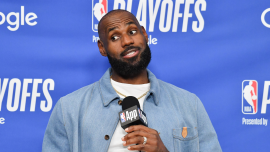
What to do with LeBron James?
In January, James leaving the Lakers, either through free agency or retirement, felt inevitable. March and April were far better. He figured out how to function as a No. 3 option. He’s comfortable in Los Angeles. The chemistry felt real. It’s hard to imagine he’d find a better chance at contending than the version of the Lakers that dominated the league before Dončić and Reaves got hurt. It makes sense to bring him back, but only under the right circumstances.
If he’s willing to return for the minimum or even the cap room mid-level exception? Awesome. Take him. Even now, he generates massive surplus value at that price point. Signing him at this price does nothing to interrupt any other plans the Lakers might have. They could still use the full $48 million to improve. If James is willing to take this sort of discount, it’s probably with an understanding that the Lakers are using their resources, both the money and the picks, to actually do so. It would be a joint effort to push for the 2027 title.
If the Lakers determine their best course is preserving their cap space for the 2027 offseason, re-signing James to a hefty one-year deal would also be fine. In this scenario, they’d mostly be running back this year’s roster on short-term deals. Maybe they’d use those big expiring contracts to make an in-season trade. More likely, winning it all next year isn’t the plan, and James is returning mostly for the money. With full Bird Rights, the Lakers could pay him anything up to the max.
Where the decision gets harder is when keeping James impedes their ability to add players they’d view as long-term fits. If the Lakers plan their offseason around pursuing younger 2026 free agents on multi-year deals or acquiring such players through trade, paying James more than the cap room mid-level exception would become counterproductive. There is no point in doing free agency halfway. They have Reaves’ artificially deflated cap hold here and now. Next year, he’ll simply be making market value, so their path to cap space will basically mean clearing everyone else off the roster. So they’re either building their team in full now, or they’re waiting to do so in a year. Splitting your space between James and some free agent accomplishes little.
So James’ Lakers fate hinges on the big-picture plan, and on his demands. A return of some sort seems likelier than, say, retiring or departing for another team, but it is far from a certainty.
What to do with Austin Reaves?
The Reaves situation, in the short term, is probably far simpler. Dončić wants him around and considers him “a long-term piece” on the roster, according to The Athletic. The Lakers are almost certainly going to keep him on a contract close to his max, which is fortunately only 25% of the cap since he’s just a five-year veteran.
Armchair general managers have been skeptical of this plan. Can you build a viable defense with both Dončić and Reaves? Does paying them both hamstring the Lakers’ pursuit of other players? Can he score enough in a playoff setting? These are reasonable questions. They just ignore the reality of the situation. Reaves is an unrestricted free agent and if the Lakers don’t pay him, someone else will. This is not a team so loaded with assets that it can afford to lose an All-Star-caliber player for nothing. You might argue that the Lakers should consider a sign-and-trade for Reaves. Well, Reaves would have to sign off on that. How do you think he’d respond if the Lakers approached him and told him they’d like to trade him? That might be the sort of thing that spooks him enough to consider offers from other teams.
If they approach him with a sign-and-trade, it has to be one desirable enough that he’d reasonably consider it. I’m sorry to any Laker fans who want Giannis Antetokounmpo. It’s just hard to imagine Reaves signing up to join the Bucks when he could simply walk into Brooklyn or Chicago’s cap space. Purely from an asset management perspective, the Lakers probably have to just re-sign Reaves while they can.
That doesn’t mean they can’t consider trades later. They’d probably like to actually see how the Dončić-Reaves pairing fares in another postseason first. If they move him any sooner, it’s probably because they have a path to a superstar. For now, one isn’t visible, though we’ll address a few broader concepts down the line.
Which 2026 unrestricted free agents make sense?
Pickings are remarkably slim when it comes to unrestricted free agents in areas of need for the Lakers. Ideally, they’d have plenty of centers and 3-and-D wings to choose from.
The center market is just too risky for them. While there are starting-caliber players available, all of them — Kristaps Porziņģis, Mitchell Robinson, Robert Williams III — carry medical red flags that prevent them from actually playing a starter’s typical minutes load. They are better suited to time shares. Ayton’s durability could make that viable, but the Lakers just aren’t secure enough in their overall roster construction to take serious health risks. If they’re using cap space and letting productive players leave in order to do so, they need more certainty.
The three-and-D side of the equation is a bit better, though by no means perfect. Quentin Grimes is probably the best the market has to offer, and he’s enough of a ball-handler to potentially help pick up some of the duties James would cede upon his eventual exit. He’s probably gettable for slightly above the mid-level exception. The 76ers tend to prefer ducking the tax, and such a deal would take them above the line even before considering a new deal for Kelly Oubre Jr. However, Grimes is only a decent defender, far from a great one. He’d fit, but he’s not exactly the stopper the Lakers will eventually need to acquire.
That sort of player doesn’t really exist on the market. Keon Ellis is too small, and he hasn’t held up in the postseason for Cleveland. Matisse Thybulle is another major injury risk, and his offense is a big negative anyway. The same applies to Dean Wade. The Lakers had Jordan Goodwin in the building and let him go. Besides, he’s more of an energy player than a real impact defender. Ayo Dosunmu leans much more on the offensive end of that spectrum, and while the transition offense he’d bring would be welcome on a slower, Dončić-led team, the Timberwolves aren’t letting him go cheap.
The Lakers should absolutely take swings on the fringes. If there’s a two-way player who’s impressed them elsewhere or a low-end free agent with upside, go for it. Players like Grimes, Dosunmu or Ellis could make sense situationally, and the Lakers could perhaps add two of them. But they should probably aim a bit higher.
Which 2026 restricted free agents make sense?
The real targets of 2026 free agency are in the restricted class. The two younger players the Lakers have most frequently been linked to are Tari Eason and Peyton Watson, two high-end athletes who can defend multiple positions and have at least grown into nominal 3-point threats.
The danger of restricted free agency isn’t just that the original team can match the offer. It’s that they have two days to do so. That’s two days of sitting on your hands, watching the market dry up as players sign elsewhere. Sign an offer sheet that gets matched and you’ve functionally sat out of the productive portion of free agency. There’s not even a guarantee that your own free agents will wait for a resolution.
Houston has around $13 million in room below the tax, but no great reason to avoid paying it. If they let Eason go, it’s because they simply don’t think he’s a good value on the offer sheet he signs. Watson is a trickier case. The Nuggets are already pressed against the second apron before factoring in his deal. They are expected to try to shed money to keep him, but we don’t yet know how successful they’ll be on that front. Put a $25 million-per-year offer in front of him and the Nuggets may be staring down a nine-figure tax bill.
Restricted free agency is a game of chicken. Suitors are so afraid of the match period that they often don’t bother with offer sheets. That allows teams to keep their players at well below market prices. However, once an offer sheet is signed, it’s usually well above market rate to try to scare off the incumbent. Teams can sidestep this through sign-and-trades. Maybe that’s the solution. The Lakers could dangle a first-round pick to the Nuggets or Rockets while using the threat of a big offer sheet to try to scare them into accepting. Until we know what these teams are planning, there’s no way to predict how such a pursuit would play out.
There’s another big name worth mentioning, though, and it’s someone we largely assumed wouldn’t be gettable until now: Jalen Duren. He’s probably about to make an All-NBA team, making him eligible for up to 30% of the cap. He is also in the middle of a very disappointing playoff run. With Ausar Thompson eligible for a rookie extension that will surely be expensive and the two posing serious offensive compatibility questions, could Duren be gettable? If it’s at all possible, it probably needs to be for the max. The Pistons, like the Lakers with Reaves, won’t be eager to lose their asset for nothing. They’d have to be so scared off by the offer that they’d have no choice.
Speaking of Reaves, this is the one somewhat feasible sign-and-trade scenario for him, at least for now. The Lakers need size. The Pistons need scoring. Detroit wanted to draft Reaves in the second round back in 2021. He talked them out of it because he wanted to sign with the Lakers as an undrafted free agent. Maybe there’s a workable framework here. Detroit, unlike Los Angeles, is brimming with the sort of athletic defenders it would take to hide Reaves on his weaker end of the floor. Duren has struggled with the cramped paint that Detroit’s weak offense creates. Ask Dereck Lively and Daniel Gafford what Dončić can do for the right center. Teams tend to err on the side of caution when it comes to retaining key, young players. Detroit is probably going to wind up keeping Duren. This postseason has just cracked that door an inch.
Who’s looming in 2027, and is it worth waiting for them?
The 2026 free agent class is relatively weak. Things look better, at least for now, in 2027, when Nikola Jokić, Giannis Antetokounmpo and Donovan Mitchell headline a potentially loaded class.
I use the word “potentially” very loosely there because players of that caliber almost never reach free agency anymore. They either sign contract extensions or use the looming threat of free agency to force trades to preferred destinations. The Lakers are helpful in that respect. They’re such a terrifying boogeyman that teams are going to acquiesce to whatever trade demands are made this offseason. Even with Reaves, the Lakers have paths to max space next offseason, provided they’re prudent everywhere else.
Fans have fantasized about a Dončić-Jokić partnership for years. The two are friends. But Jokić has indicated at every turn that he plans to remain in Denver. He is eligible to extend this offseason. He was eligible last year, too, and while there were financial reasons for him to wait, the fact that he didn’t sign did power the rumor mill briefly. If, for whatever reason, he elects not to extend this offseason, the Lakers drop everything and prepare for max space next summer. Who cares if such a pairing couldn’t stop anyone? It’s two of the best five players in the league.
Antetokounmpo is all but assuredly going to be settled via trade this offseason. The Bucks are open for business. There’s less clarity on the Mitchell front. The Cavaliers are still playing, after all. If he plays out next year on an expiring deal, he’s worth pursuing in 2027. He’s redundant with Reaves, but he’d cost no assets. Sign him, trade Reaves and picks for defensive-minded role players afterward. Dončić and Mitchell would lay the foundation for the NBA’s best offense.
The role player class is deeper on paper in 2027 than it is in 2026. It rarely works out that way. The last few CBAs have pushed players towards signing extensions. There will be a handful of capable starters, but it’s unclear who or at what position. If the Lakers are waiting for 2027, it’s for one of two reasons: either they believe they can benefit from the star upheaval in some way, or because, frankly, no better pathways presented themselves in 2026.
Who should the Lakers target in trades this offseason?
The short answer here is almost any non-star. That’s what nearly $50 million in cap space and three first-round picks buys you. If the Lakers are meaningfully dipping into that pool, though, they have to make it count. So, which starting-level players make any sense? A handful come to mind.
- How badly do the Magic want to save money? They’re pressed up against the second apron and have Anthony Black‘s rookie extension looming. If the Lakers wanted to take on the descending annual salary contract of defensive star Jalen Suggs, they could probably do so. His injury issues and offensive weaknesses likely make that a non-starter, though.
- Herb Jones has been a popular target for some time. The Pelicans have always resisted overtures, but he’s coming off a down year in which he shot below 31% from deep. That’s the question. His shooting has come and gone, and if he’s not getting guarded, that makes life much harder for Dončić offensively. One first-round pick probably doesn’t get it done. Maybe two could. That’s a bit steep for an arguably one-way player. If the Lakers could get the Pelicans to take on Vanderbilt’s contract, maybe it’s a conversation.
- The Mavericks have an entirely new front office. How attached are they to either of Dončić’s former centers, Gafford or Lively? Would ownership allow another trade with the Lakers? It’s worth the call, but it’s hard to imagine these teams working together again.
- If the Bucks trade Antetokounmpo, they probably wouldn’t mind getting out of Myles Turner‘s contract. The Lakers have been interested in him for years. He’s slipped defensively, but he’d be a monster on offense with Dončić both setting him up for lobs and benefitting from his spacing. The price would likely be relatively low.
- The Thunder have team options on both Isaiah Hartenstein and Lu Dort, along with pressing tax and apron concerns. Dort is probably more gettable than Hartenstein, but given how rare 3-and-D players are, Dort will likely get first-round offers from other teams. Besides, the “3” side of the equation hasn’t been great for some time now. Hartenstein is the better player, but he’s not the lob threat Dončić prefers at center, and the Thunder may look to keep him until they know Thomas Sorber is up to speed.
- Here’s an unlikely scenario: LeBron James wants to return to Cleveland, but he wants to get paid handsomely to do it. In this world, perhaps there’s a sign-and-trade possibility for Cavaliers center Jarrett Allen. Doing this probably means dipping into cap space. Cleveland isn’t going to have the flexibility to take on a contract like Vanderbilt’s and, because of base-year compensation, James would only count for half of his new salary in terms of outgoing money for the Lakers. Still, Allen is probably the best center the Lakers could access without using picks as bait… if the Cavaliers need him to pursue LeBron. He’s about to start a three-year, $90 million contract, though, so the Lakers would have to feel comfortable paying him through his age-30 season.
These are the obvious names. Others will come up. That’s what happens with blank slate rosters like the Lakers’. They have one mega star in Dončić. They’ll likely have another All-Star-adjacent player in Reaves. But no other slot on the roster is secure. The Lakers will cast a wide net in building around their new franchise player. This offseason, they’ll finally have the tools to do so.

DTCC Expands Collateral Platform With Chainlink

The Wild Horror Thriller On Netflix With A Twist You Won’t See Coming

Johnny Logan Supports Ireland’s Eurovision 2026 Boycott Over Israel

Manchester United reach agreement with Casemiro over contract clause amid transfer speculation

US brings back mandatory military draft registration

Steven Gerrard disagrees with Gary Neville over ‘shock’ Chelsea and Arsenal claim | Football


-
 Crypto World4 days ago
HarrisX Poll Found 52% of Registered Voters Support the CLARITY Act
-

 Fashion4 days ago
Weekend Open Thread: Marianne Dress
-

 Crypto World5 days ago
Upbit adds B3 Korean won pair as Base token gains Korea access
-
 NewsBeat5 days ago
NCP car park operator enters administration putting 340 UK sites at risk of closure
-

 Fashion1 day ago
Coffee Break: Travel Steam Iron
-

 Fashion2 days ago
What to Know Before Buying a Curling Wand or Curling Iron
-

 Tech3 days ago
Auto Enthusiast Carves Functional Two-Stroke Engine from Solid Metal
-

 Politics20 hours ago
What to expect when you’re expecting a budget
-

 Politics3 days ago
Politics Home Article | Starmer Enters The Danger Zone
-
 Business3 days ago
Ignore market noise, India’s long-term story intact, say D-Street bulls Ramesh Damani and Sunil Singhania
-

 Tech1 day ago
GM Agrees To Pay $12.75 Million To Settle California Lawsuit Over Misuse Of Customers’ Driving Data
-

 Crypto World6 days ago
BlackRock CEO Larry Fink Discusses a New Asset Class
-

 Entertainment6 days ago
Sarah Paulson Called Out For Met Gala ‘Hypocrisy’
-

 Entertainment5 days ago
General Hospital: Ric & Ava Bombshell – Ric’s Massive Secret Exposed!
-
 Sports6 days ago
NBA playoff winners and losers: Austin Reaves is not loving Lakers vs. Thunder matchup, but Chet Holmgren is
-

 Entertainment6 days ago
Bold and Beautiful Early Spoilers May 11-15: Steffy Revolted & Liam Overjoyed!
-
 Politics5 days ago
Simon Cowell Says He Was ‘Horrible’ To Susan Boyle During BGT Audition
-
 Sports5 days ago
UEFA Champions League final schedule, teams, venue, live time and streaming | Football News
-

 Crypto World6 days ago
Robinhood says Wall Street is building onchain
-

 Tech7 days ago
Apple and Samsung are dominating smartphone sales so thoroughly that only one other company makes the top 10
You must be logged in to post a comment Login