
Business
D.R. Horton Vs. Lennar: Homebuilder Showdown As Mortgage Rates Jump



Business
Fastenal Stock Plunges 7% to $45.77 After Q1 Earnings Despite 12.4% Sales Jump and In-Line Results
WINONA, Minn. — Shares of Fastenal Co. tumbled more than 6% Monday to $45.77 after the industrial distributor posted first-quarter results that largely met Wall Street expectations but failed to excite investors amid concerns over margin trends, pricing contributions and a cautious outlook in a mixed manufacturing environment.

The company, a leading supplier of fasteners, tools and industrial supplies, reported net sales of $2.2017 billion for the quarter ended March 31, up 12.4% from $1.9594 billion a year earlier. Daily sales rose 12.4% on the same number of business days, driven by market share gains, improved customer contract signings and broad-based demand across core end markets including manufacturing and construction.
Earnings per share came in at $0.30, matching analyst consensus estimates exactly and up from $0.26 in the prior-year period. Net income climbed 13.8% to $339.8 million. Operating income reached $447.6 million, yielding an operating margin of 20.3%, a 20-basis-point improvement year-over-year.
Despite the solid top-line growth and slight margin expansion, shares opened sharply lower and remained under pressure throughout the session. Some analysts and investors appeared disappointed that a portion of the sales increase — about 350 basis points — stemmed from pricing actions rather than pure volume growth, which rose an estimated 5.9%. Foreign exchange contributed a modest 60-basis-point tailwind.
Fastenal’s results reflect resilience in U.S. industrial activity even as broader economic signals remain mixed. Management highlighted continued strength in vending and other on-site customer solutions, which help lock in long-term relationships and improve supply chain efficiency for buyers.
“We delivered strong double-digit daily sales growth in the first quarter, reflecting share gains and broad-based demand,” said Fastenal CEO Dan Florness in prepared remarks accompanying the release. The company noted slight improvement in industrial production indices during the period.
Operating cash flow surged 44.3% to $378.4 million, representing 111.4% of net income and underscoring strong working capital management, including inventory optimization. The company returned $295.7 million to shareholders through $275.6 million in dividends and $20.1 million in share repurchases during the quarter.
Fastenal maintained a fortress-like balance sheet with total debt of just $125 million and significant cash generation capacity. For the full year 2026, the company guided for capital expenditures net of proceeds between $310 million and $330 million, up from $230.6 million in 2025. The increase supports replacement of the Atlanta hub facility, network efficiency upgrades, higher trucking investments and delayed IT projects now rolling into 2026.
The effective tax rate for the quarter stood at 24.2%, with management projecting an ongoing rate around 24.6% absent discrete items.
Analysts had entered the report expecting revenue near $2.19 billion and EPS of $0.30. The slight revenue beat of about $12 million provided little catalyst as the market appeared to price in higher expectations for volume-driven growth and sustained margin improvement.
The stock’s decline comes after a period of relative strength, with shares having traded near 52-week highs around $50.63 earlier in 2026. Monday’s drop pushed the market capitalization to roughly $52-53 billion, with a forward price-to-earnings multiple still elevated given the company’s consistent execution.
Fastenal’s business model — centered on thousands of branches, vending machines and sophisticated supply chain services — has long been viewed as defensive in industrial cycles. The company has expanded its addressable market through e-commerce, direct imports and value-added services that go beyond basic product distribution.
Yet investors remain sensitive to any signs of softening in manufacturing. While Q1 showed improvement, forward-looking commentary on the earnings call focused on steady but not explosive demand, with some end markets still navigating inventory adjustments and tariff-related uncertainties.
Pricing contributed meaningfully to the sales increase, a factor that may prove less sustainable if raw material costs stabilize or competitive pressures intensify. Gross margins held steady as the company balanced cost management with selective price adjustments.
The industrial distributor has benefited from onshoring trends and companies seeking more reliable domestic supply chains. Fastenal’s ability to deliver products quickly through its extensive network has been a competitive advantage, particularly for maintenance, repair and operations spending.
Broader sector dynamics include potential impacts from trade policies, infrastructure spending and capital investment cycles in heavy industry. Fastenal serves a diverse customer base spanning small machine shops to large manufacturers, giving it a real-time pulse on economic activity.
Wall Street’s consensus rating remains a cautious Hold, with an average 12-month price target around $48-49, implying modest upside from current levels. Some firms have highlighted the stock’s premium valuation relative to peers, while others cite Fastenal’s superior return on capital and consistent cash returns as justification for a higher multiple.
The company has increased its dividend for decades, making it a favorite among income-oriented investors. The quarterly payout remains reliable, with the most recent declaration underscoring management’s confidence in long-term cash generation.
Looking ahead, investors will monitor monthly sales updates for signs of sustained momentum. Fastenal typically provides preliminary daily sales figures early in the following month, offering frequent transparency into trends.
Risks include cyclical exposure to manufacturing slowdowns, commodity price volatility affecting both costs and pricing power, and potential margin compression if pricing tailwinds fade. Competition from other distributors and direct manufacturers also remains a factor, though Fastenal’s scale and service model provide differentiation.
The stock carries a beta below 1.0, reflecting its relative stability, though earnings reactions can still produce sharp moves when growth or margin narratives shift.
Fastenal’s long-term track record of profitable growth, high returns and shareholder-friendly capital allocation has built a loyal following. Monday’s sell-off appears more a case of “sell the news” after in-line results rather than fundamental disappointment.
With U.S. manufacturing showing pockets of strength and the company continuing to gain share through technology-enabled services, Fastenal remains well-positioned for the remainder of 2026. Whether the market rewards the execution or continues to demand faster volume acceleration will shape the stock’s trajectory in coming months.
As of mid-April 2026, the industrial bellwether trades at levels that some value investors may view as more attractive following the post-earnings pullback, while growth-oriented holders await clearer signals of accelerating end-market demand.
The earnings call, held Monday morning, provided additional color on regional trends, category performance and strategic initiatives around digital tools and supply chain optimization. Management emphasized disciplined execution amid an environment that remains constructive but not euphoric.
Fastenal’s ability to compound earnings through cycles has been a hallmark of its business. The Q1 print, while not a blowout, demonstrated that the company continues to navigate macro crosscurrents effectively while investing for future efficiency gains.
For a stock often described as a proxy for U.S. industrial health, Monday’s reaction underscores how even solid results can disappoint when expectations have been elevated by prior momentum. The coming weeks of monthly sales data will likely set the tone for investor sentiment heading into the second quarter.

Bill Sweeney, AARP’s senior vice president for government affairs, urges eligible families to consider opening the new “Trump Accounts,” a savings program aimed at helping children start building wealth early.
With an eye on the next generation, a new Trump Accounts proposal aims to turn tax season into more than a yearly chore – recasting it as a first step toward building lasting wealth.
Tucked inside President Donald Trump’s sweeping One Big Beautiful Bill Act, the plan would create government-backed investment accounts for children, designed to grow over time.
The accounts would function much like traditional long-term investment vehicles, but with rules tailored to protect young savers.
Available only to those under 18, they would be funded through federal seed money, private contributions from families and, in some cases, supplemental deposits from employers or nonprofit organizations.
TRUMP ACCOUNTS, EXPLAINED: WHO QUALIFIES, HOW THEY WORK AND WHEN YOU CAN CLAIM

Trump Accounts are tucked inside President Donald Trump’s sweeping One Big Beautiful Bill Act. (Tim Clayton/Corbis/Getty Images)
To kick-start the nest egg, the federal government will deposit an initial $1,000 into each new account.
“If the government is going to give you $1,000, you should definitely take it,” Bill Sweeney, AARP’s senior vice president of government affairs, told Fox News Digital.
“This is a great opportunity, from our perspective at AARP, for grandparents to help make sure that their grandkids are set on a good financial path and put a little bit of extra money away for their future,” he added.
Sweeney said anyone can apply for the accounts for a child born between 2025 and 2028.
“It’s a simple one-page form included with your tax return to open the account,” he added.
MICHAEL AND SUSAN DELL DONATE $6.25B TO FUND TRUMP ACCOUNTS

A blank 1040 tax return form from the IRS. (iStock)
Supporters say the accounts are designed to harness the power of long-term investing to build wealth early.
“One of the most important parts of wealth creation is what we in finance call compound interest,” said Michael Faulkender, co-chair of the America First Policy Institute’s Center for American Prosperity.
“If you put money into an account and leave it untouched, that initial investment – and the interest it earns – can grow into a significant amount over time.”
GET FOX BUSINESS ON THE GO BY CLICKING HERE

Anyone can start a Trump Account for a child born between 2025 and 2028. (Getty Images)
“Having an ownership stake in the economy is a more durable way to build wealth and become self-sufficient,” Faulkender said.
“It allows families and their children to benefit directly from economic growth.”
So far, more than 4 million Trump Accounts have been opened this tax season, according to the Treasury Department.
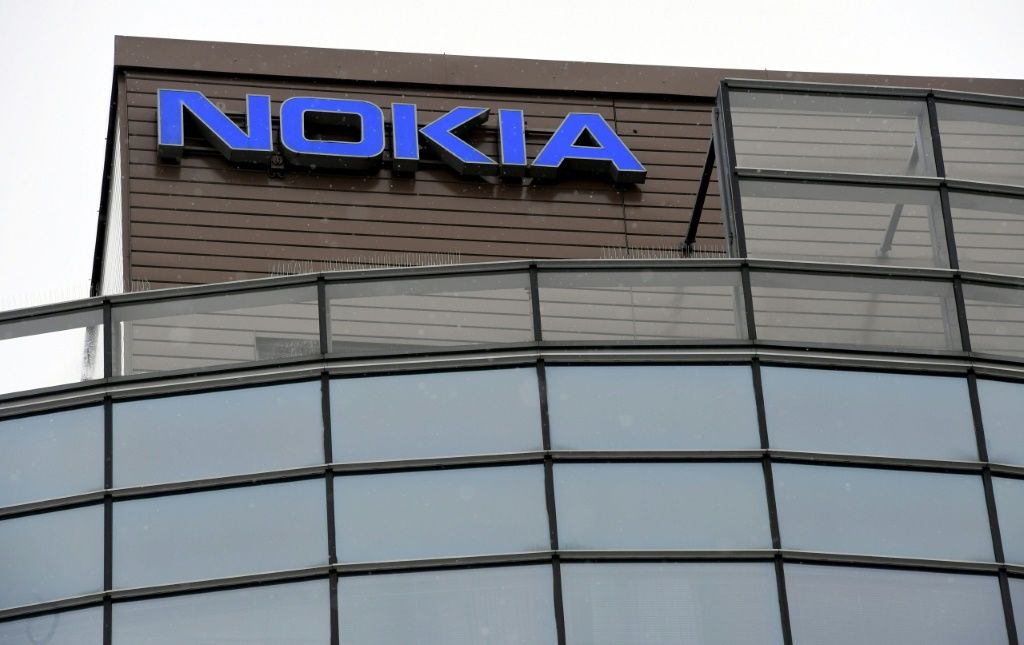
ESPOO, Finland — Nokia Oyj shares skyrocketed nearly 9% Monday in Helsinki trading to €8.74 as investors piled into the Finnish telecom equipment maker ahead of its first-quarter earnings, following a bullish upgrade from Bank of America that highlighted strong growth potential in optical networks fueled by exploding AI data traffic and hyperscaler spending.
Lehtikuva / Heikki Saukkomaa
The surge marked one of Nokia’s strongest single-day gains in recent months and pushed the stock to levels not consistently seen since 2011, continuing a remarkable recovery that has seen shares more than double from lows in 2025. Trading volume spiked as optimism spread that Nokia is well-positioned to capitalize on the infrastructure demands of artificial intelligence, 5G-Advanced and eventual 6G deployments.
Bank of America upgraded Nokia to a Buy rating from Neutral, citing accelerating demand for high-capacity optical and IP networking gear as cloud providers and telecom operators build out AI-ready infrastructure. The firm raised its price target significantly, reflecting confidence that Nokia’s technology portfolio — particularly in optical transport and routing — can capture a larger share of the multi-billion-dollar wave of spending driven by generative AI workloads.
Nokia has aggressively positioned itself in the AI infrastructure narrative. Its solutions for high-speed, low-latency optical networks are increasingly critical for moving massive datasets between data centers and supporting the training and inference of large language models. Executives have emphasized “AI-native” networks that integrate intelligence directly into the infrastructure, a theme that resonated with investors after recent demonstrations at industry events including Mobile World Congress.
The upgrade comes at a pivotal moment. Nokia’s first-quarter 2026 interim report is scheduled for release on April 23, with analysts expecting updates on order intake, margin trends and progress in its restructured business segments. The company shifted to a new reporting structure at the start of 2026, providing more granular visibility into areas such as Network Infrastructure, which includes optical and IP routing — segments now seen as primary growth engines amid AI tailwinds.
Nokia has faced challenges in recent years, including intense competition from Ericsson and Huawei, margin pressure in mobile networks and a multi-year cost-cutting program that included significant job reductions. The company has been trimming its global workforce, aiming to reduce annual costs substantially while refocusing on higher-margin software, enterprise and optical businesses.
Despite those headwinds, recent momentum has been building. Nokia secured key 5G contracts, including a multi-year deal with Virgin Media O2 in the U.K. for AirScale radio access network equipment featuring Massive MIMO and AI-enabled capabilities. Partnerships and product launches in private wireless, enterprise solutions and defense-related technologies have also broadened its revenue base.
The stock’s rally reflects a broader re-rating of telecom equipment suppliers as AI spending shifts from pure hyperscaler GPU clusters to the underlying networking fabric that connects them. Optical networking, in particular, has become a hot area as data center interconnect demands soar. Nokia’s technology in coherent optics and high-capacity routing positions it to benefit alongside peers, though analysts note execution and competitive dynamics will determine market share gains.
Chief Executive Justin Hotard, who took the helm in 2025, has emphasized operational discipline, innovation in AI-driven networks and selective growth in attractive segments. The company continues to invest in research and development through Nokia Bell Labs, with recent emphasis on AI integration across its portfolio.
Monday’s sharp move also coincided with generally positive sentiment in European tech stocks and easing geopolitical concerns that had weighed on risk assets earlier in the month. Nokia’s dual listing in Helsinki and as an American Depositary Receipt on the New York Stock Exchange (NOK) saw sympathetic buying interest in U.S. trading hours.
Valuation metrics have expanded with the rally. While still viewed as reasonable by some compared with historical averages, the stock trades at a premium to recent troughs, prompting debate over whether the current enthusiasm is sustainable or risks a pullback if upcoming earnings disappoint. Analysts’ consensus price targets have risen but remain mixed, with some calling for further upside while others caution about near-term margin visibility.
Nokia’s dividend policy remains shareholder-friendly. The board has proposed flexible distributions up to €0.14 per share in installments rather than a single payout, providing flexibility amid ongoing restructuring. The Annual General Meeting held earlier in April approved board changes, including the planned succession of Board Chair Sari Baldauf by Timo Ihamuotila.
Longer-term opportunities include the transition toward 6G, where Nokia aims to play a leading role through standards development and early technology trials. The company’s strong patent portfolio in wireless technologies continues to generate licensing revenue, offering a relatively stable income stream.
Challenges persist. Mobile networks margins have been under pressure, and large-scale 5G deployments in some markets have slowed. Geopolitical tensions, supply chain issues and currency fluctuations also affect results, given Nokia’s global footprint.
For investors, Nokia represents a play on both traditional telecom infrastructure renewal and the newer AI networking boom. The stock’s volatility reflects shifting narratives — from a legacy handset maker to a diversified networking and technology leader — with AI providing fresh optimism after years of stagnation.
As the April 23 earnings approach, focus will center on order backlog trends, particularly in optical and enterprise segments, cost-saving progress and any updated full-year guidance. Positive surprises on AI-related demand could fuel further gains, while any softness in core mobile infrastructure might temper enthusiasm.
Monday’s 8.74% jump underscored how quickly sentiment can shift in the sector when analyst upgrades align with macro tailwinds and thematic interest in AI infrastructure. Nokia, once considered a fading giant, is once again drawing attention as a potential beneficiary of the massive capital expenditure cycle unfolding in data centers and carrier networks worldwide.
Whether this momentum sustains through earnings season will depend on concrete evidence that the optical and AI narratives are translating into revenue acceleration and margin expansion. For now, investors appear willing to give Nokia the benefit of the doubt as it navigates its transformation in an increasingly AI-driven telecom landscape.
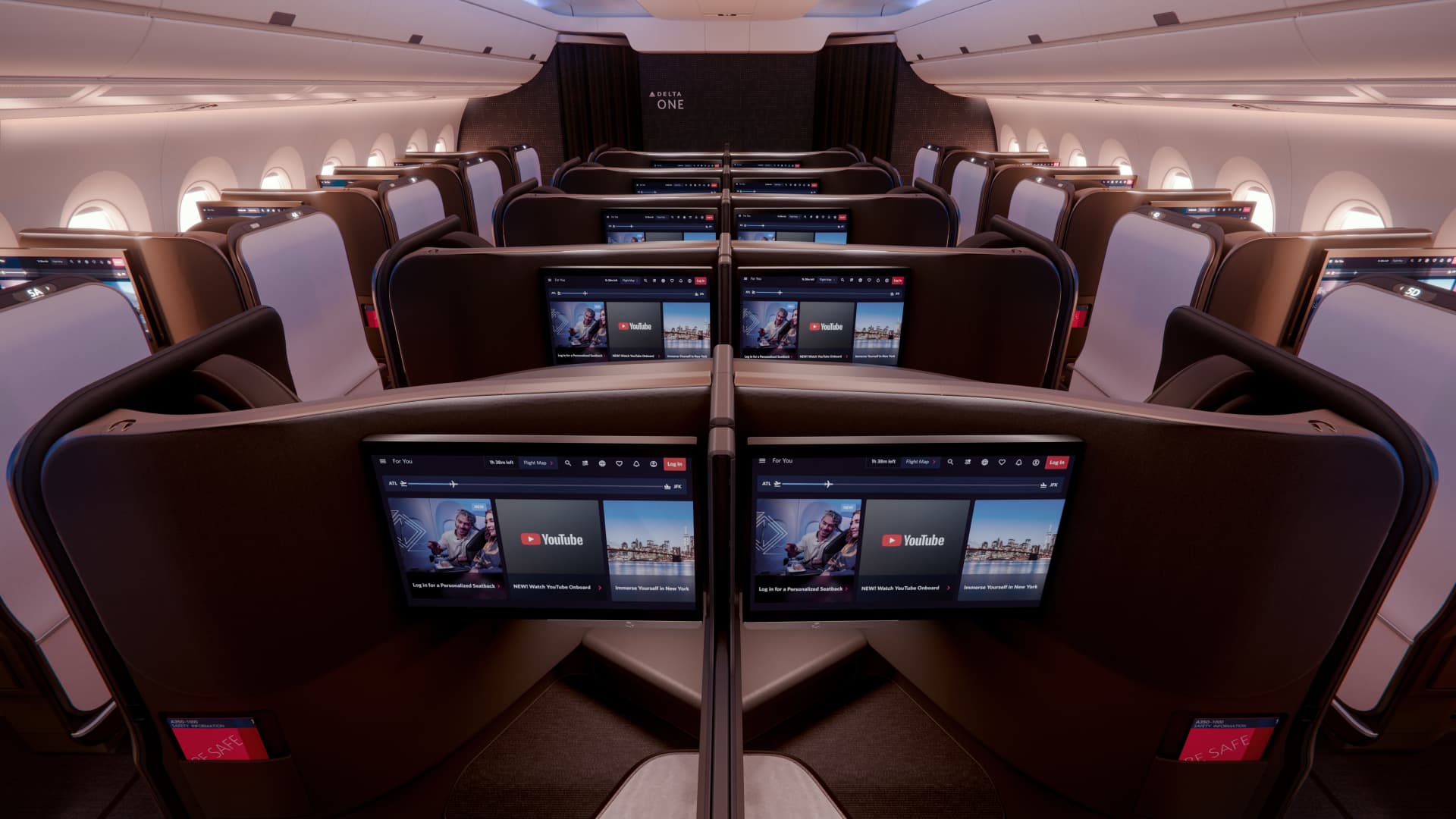
Delta A350 fleet renderings with the next-generation Delta One suite cabin.
Courtesy: Delta
Delta Air Lines on Monday unveiled an updated Delta One suite for some of its longest-haul planes, marking its first refresh of the top-tier seat in a decade as airline competition for well-heeled travelers ramps up.
The new suites, which Delta said will debut on its Airbus A350-1000 aircraft in 2027, will include beds that are three inches longer than the older suites and a new pillow-top cushion. The new design will give travelers more leg and knee room, said Mauricio Parise, Delta’s vice president of brand experience.
“Most customers are side sleepers,” and the new designs could accommodate them, he said.
Delta had customers test the new suites out for “hours” at the company’s headquarters, Parise said.
Delta A350 fleet renderings with the next-generation Delta One suite cabin.
Courtesy: Delta
The airline’s Delta One business class cabin debuted nearly a decade ago on the A350s, featuring lie-flat beds, doors and a “do not disturb” button.
“We were a first mover, [and] started flying with doors in 2017,” Parise said. “There is an element of improvement.”
The A350-1000s, which are dedicated to long-haul flights, will have 50 of the suites.
The changes come as industry profit leader Delta and other airlines are refreshing their cabins, adding more expensive — and profitable — premium seats as wealthier customers continue to drive results.
The company said that premium ticket revenue, from first class and other more expensive options compared with coach, was up 14% in the first quarter over last year. Main cabin revenue, meanwhile, increased for the first time since late 2024.
Delta’s rival, United Airlines, showed off its new long-haul Polaris suite at the carrier’s hangar at Los Angeles International Airport last month, along with a slew of other products aimed at giving travelers more chances to pay up for additional space, ranging from a three-seat coach row that converts into a bed to both lie-flat and premium economy seats on narrow-body Airbus jets.

Pancreatic cancer, illustration
Nemes Laszl | Science Photo Library | Getty Images
Revolution Medicines‘ drug for pancreatic cancer succeeded in a highly anticipated Phase 3 trial, almost doubling the typical length of survival and slashing the risk of death by 60% versus chemotherapy, the company said Monday.
RevMed said its daily pill, daraxonrasib, met all primary and secondary endpoints in a trial of people whose cancer had already progressed on another treatment. People who took daraxonrasib typically lived for 13.2 months versus 6.7 months for people who took chemotherapy, an increase of 6.5 months, RevMed said in a press release.
“These are dramatic, practice-changing outcomes, and our focus now is moving quickly to bring this potential new treatment option to patients who urgently need new treatment,” RevMed CEO Mark Goldsmith said in an interview.
Goldsmith called the results “unprecedented,” saying no drug has shown an overall survival benefit greater than one year in a Phase 3 trial for pancreatic cancer. The company plans to soon seek Food and Drug Administration approval using a Commissioner’s National Priority Voucher, which grants a review within a matter of months.
RevMed’s pill could bring a new option for people with pancreatic cancer, an aggressive disease that has the lowest five-year survival rate of any major cancer, at 13%. Daraxonrasib broadly targets RAS mutations, which drive tumor growth and are found in about 90% of pancreatic cancer cases.
“These results usher in a new era of RAS-targeted medicines for pancreatic cancer, which has been exclusively treated with cytotoxic intravenous chemotherapy,” Goldsmith said.
The company’s shares jumped more than 30% following release of the results Monday.
RevMed said the drug showed a manageable safety profile and that no new concerns were observed. The drug can produce rash, a side effect highlighted last week by former Republican Sen. Ben Sasse, who shared his experience taking the drug in an interview with The New York Times. Goldsmith said the company can’t comment on any individual patient, but that a rash is a known side effect and one that’s generally manageable.
The company will seek approval for second-line treatment, or in patients whose cancer has already spread while taking another drug. It’s conducting a Phase 3 trial for newly diagnosed patients.


Seeking Alpha’s transcripts team is responsible for the development of all of our transcript-related projects. We currently publish thousands of quarterly earnings calls per quarter on our site and are continuing to grow and expand our coverage. The purpose of this profile is to allow us to share with our readers new transcript-related developments. Thanks, SA Transcripts Team
BOSTON — Fidelity Investments faced a wave of customer complaints Monday as users reported widespread issues accessing the brokerage’s mobile app and website, preventing many from viewing accounts, executing trades or monitoring portfolios during a busy trading session marked by swings in major indices.
Downdetector and social media platforms lit up with reports starting around 9:43 a.m. EDT, with hundreds of users describing login failures, error messages such as “Sorry, we can’t complete this action right now,” and complete unavailability of the Fidelity app. Problems appeared concentrated on the mobile platform, which accounted for roughly two-thirds of complaints, followed by website access and trading functions.
The timing amplified frustration: the outage coincided with active market hours as investors reacted to corporate earnings, cryptocurrency movements and broader economic signals. Some users claimed they missed opportunities or incurred losses because they could not adjust positions in real time. One poster on X wrote, “@Fidelity your app is down and it’s causing me to lose money smh,” while another said the disruption made them “look absolutely retarded” while trying to demonstrate the app to family members.
Fidelity has not issued an official public statement as of mid-afternoon Monday, though the company has responded to similar incidents in the past via its Reddit community forum with acknowledgments and apologies. In previous outages, including one on April 9, Fidelity told affected customers the issues were resolved and expressed regret for the inconvenience.
This is not the first time Fidelity customers have encountered technical difficulties in 2026. Outages were reported on April 1, April 9 and April 10, often involving login problems or temporary unavailability of the website and app. Downdetector data showed spikes in reports during those episodes, sometimes reaching thousands of complaints within hours. The pattern has raised questions about the platform’s capacity to handle peak demand, especially as more investors shift to mobile trading and rely on real-time data during volatile periods.
Fidelity Investments, one of the nation’s largest brokerage firms with trillions in customer assets, serves millions of retail and institutional clients. Its platforms handle everything from mutual funds and ETFs to active trading, retirement accounts and wealth management services. The company has invested heavily in digital tools in recent years, but critics say recurring outages highlight vulnerabilities in an industry where milliseconds can matter during market moves.
Monday’s disruption occurred against a backdrop of heightened market activity. Bitcoin traded above $71,000, Oracle shares rose on AI-related news, Goldman Sachs reported earnings, and Revolution Medicines stock surged on positive clinical trial data. Such days typically see elevated trading volumes as investors reposition portfolios.
Outage tracking sites presented a mixed picture. While some monitors like IsItDownRightNow and DownForEveryoneOrJustMe reported Fidelity.com as reachable with normal response times, user-generated reports on Downdetector told a different story, indicating localized or intermittent problems that may not affect all users equally. Issues often stem from server overload, authentication glitches or backend maintenance that surfaces during high-traffic periods.
Industry experts note that brokerage outages have become more visible — and more costly to reputation — as trading democratizes and customers expect 24/7 seamless access. Similar problems have hit competitors including Charles Schwab in past years, particularly during sharp market sell-offs or rallies when traffic surges.
For affected customers, workarounds included attempting desktop access via fidelity.com, using the Active Trader Pro desktop platform (when available), or contacting customer service by phone. However, many reported long wait times or automated systems unable to resolve digital access issues quickly. Fidelity’s customer service lines generally remained operational even when digital channels faltered.
The incident underscores broader challenges for fintech and traditional finance firms balancing innovation with reliability. As artificial intelligence, real-time analytics and mobile-first experiences become standard, the underlying infrastructure must scale without compromising uptime. Fidelity has rolled out features like enhanced AI-driven insights and improved app interfaces in recent quarters, but technical hiccups continue to draw scrutiny.
Investors expressed a mix of annoyance and resignation on social platforms. Some viewed the outage as minor and temporary, while others called for greater transparency or regulatory oversight of brokerage platform reliability. “How is the app down?” one user asked simply, capturing widespread bewilderment during what should be routine access.
Fidelity’s scale makes it a bellwether for the industry. With robust security protocols, including multi-factor authentication, the company prioritizes protecting customer data — sometimes at the expense of speed during peak loads or when systems undergo updates. Past outages have typically resolved within one to two hours, though Monday’s reports persisted into the early afternoon for some users.
No widespread security breach or data compromise has been linked to the current issues. Complaints centered on access rather than lost funds or unauthorized activity. Fidelity maintains strong cybersecurity standards and regularly updates its platforms to address emerging threats.
For long-term clients, the disruption served as a reminder to maintain alternative access methods, such as backup devices, desktop logins or diversified brokerage relationships. Financial advisers often recommend having contingency plans, especially for those managing retirement accounts or executing time-sensitive trades.
As markets continued trading Monday, the broader financial ecosystem showed resilience. Major indices moved modestly, with tech and biotech names drawing attention following earnings and clinical news. Cryptocurrency enthusiasts monitored Bitcoin’s consolidation near recent highs, while traditional investors eyed upcoming economic indicators.
Fidelity has not commented on potential root causes. In earlier episodes, the firm attributed problems to “technical issues” without providing detailed post-mortems. Customers have occasionally called for more proactive communication, including real-time status updates on the company’s official channels.
The episode also highlights growing reliance on digital brokerage platforms. Millions of Americans now manage investments primarily through apps, making even brief downtime a significant inconvenience. Regulators have occasionally examined brokerage reliability following high-profile outages, though no major enforcement actions have targeted Fidelity specifically in recent years.
Looking ahead, Fidelity is expected to continue enhancing its digital offerings, including deeper integration of AI tools for personalized advice and streamlined trading experiences. Whether Monday’s outage prompts accelerated investments in redundancy or capacity remains to be seen.
For now, many users simply want confirmation that their accounts and orders are secure once access resumes. Most reported that once logged in after previous outages, portfolios appeared intact with no erroneous transactions.
The situation serves as a timely case study in the tension between rapid technological adoption and operational stability in consumer finance. As more capital flows into self-directed investing, platforms like Fidelity must deliver not only competitive features and low costs but also unwavering reliability.
Customers experiencing ongoing issues are advised to try clearing browser caches, updating the app, switching networks or using alternative devices. Fidelity’s phone support remains a reliable fallback, though volume may be elevated during outages.
As the trading day progressed, reports on social media suggested gradual resolution for some users, though others continued posting about persistent problems. The full scope of impact — including any delayed trades or missed opportunities — may not be clear until after markets close.
Fidelity’s long history as a trusted name in investing rests on its customer-first approach and vast product lineup. Occasional technical glitches test that reputation, reminding both the firm and its clients of the high expectations in today’s always-on digital economy.
REDWOOD CITY, Calif. — Revolution Medicines Inc. shares skyrocketed nearly 39% Monday to $134.18, the biotech company’s biggest one-day surge in years, after it announced that its lead drug daraxonrasib achieved an unprecedented overall survival benefit in a pivotal Phase 3 trial for patients with metastatic pancreatic cancer, a notoriously hard-to-treat disease with limited options.

The stock jumped as much as $39 or more in early trading on the Nasdaq, with volume surging far above average as investors piled into the precision oncology developer. At one point shares touched an intraday high near $135.81, reflecting Wall Street’s enthusiasm for what analysts called potentially practice-changing data in second-line metastatic pancreatic ductal adenocarcinoma (PDAC).
Revolution Medicines said daraxonrasib, a RAS(ON) G12D-selective inhibitor, met all primary and key secondary endpoints in the global RASolute 302 trial, including statistically significant improvements in progression-free survival and overall survival. The company described the survival benefit as “unprecedented” for this patient population and signaled plans to include the results in a future New Drug Application submission to the U.S. Food and Drug Administration.
Pancreatic cancer remains one of oncology’s toughest challenges, with five-year survival rates below 10% and few effective therapies once the disease has spread. RAS mutations, particularly G12D, drive a large portion of cases, making Revolution Medicines’ tri-complex inhibitor approach a focal point for investors betting on targeted therapies that directly attack the “undruggable” RAS protein.
“Today’s results represent a major milestone not only for daraxonrasib but for patients with RAS-addicted cancers and for our broader RAS(ON) platform,” said Mark Goldsmith, M.D., Ph.D., Revolution Medicines’ chief executive officer and chairman, in a statement accompanying the data release.
The positive readout comes as the company advances a deep pipeline of RAS(ON) inhibitors designed to toggle the protein into its active “ON” state, a novel strategy compared with earlier generations of RAS inhibitors that targeted the inactive “OFF” form. Daraxonrasib is the most advanced candidate, with ongoing or planned Phase 3 trials in both second-line and first-line metastatic PDAC as well as other tumor types.
Revolution Medicines has three RAS(ON) inhibitors with FDA Breakthrough Therapy Designation: daraxonrasib (G12D), zoldonrasib (G12D) and elironrasib (another mutant-selective agent). The designations underscore regulatory confidence in the platform’s potential to address significant unmet needs in lung, pancreatic and other RAS-mutant cancers.
Analysts reacted swiftly. Several firms raised price targets, with some projecting peak sales for daraxonrasib alone in the billions if approved across multiple indications. The strong data could also boost partnering interest or position the company as an acquisition target in a sector hungry for late-stage oncology assets with clear paths to market.
The stock’s dramatic move Monday reversed recent consolidation after the shares had traded around $95-$100 in the days leading up to the announcement. Year-to-date, RVMD had already shown strength on pipeline progress, but the Phase 3 success triggered fresh buying from both retail and institutional investors.
Revolution Medicines ended 2025 with approximately $2 billion in cash, bolstered by a $250 million royalty tranche and additional committed funding, providing a substantial runway to support its ambitious clinical program. The company guided to 2026 operating expenses of $1.6 billion to $1.7 billion as it ramps multiple registrational trials, including RASolute 303 in first-line PDAC and studies in non-small cell lung cancer (NSCLC).
Earlier this year, the FDA granted Breakthrough Therapy Designation to zoldonrasib for previously treated KRAS G12D-mutated locally advanced or metastatic NSCLC based on encouraging Phase 1 data showing robust antitumor activity and manageable safety. The company is also advancing RMC-5127, a G12V-selective inhibitor, with dosing underway in early 2026.
Monday’s news arrives ahead of the American Association for Cancer Research (AACR) annual meeting, where Revolution Medicines plans multiple presentations showcasing progress across its RAS(ON) pipeline. Investors will watch for updated durability data and combination results that could further validate the platform.
Wall Street’s consensus on Revolution Medicines has been strongly bullish, with an average price target around $120-$140 before the surge, implying continued upside even at elevated levels. The company carries a “Strong Buy” rating from covering analysts, who cite the differentiated science, broad pipeline and cash position as key strengths.
Yet risks remain typical for clinical-stage biotech. Pancreatic cancer trials can be unpredictable, and competition in the RAS space is intensifying from players like Amgen, Bristol Myers Squibb and smaller innovators. Regulatory review, manufacturing scale-up and eventual commercialization will require significant additional capital, though the current cash balance offers breathing room.
The broader oncology sector has seen renewed interest in targeted therapies amid a wave of precision medicine advances. Revolution Medicines’ focus on RAS — long considered one of the most important yet elusive targets in cancer — positions it at the forefront of that trend. Roughly 30% of all human cancers harbor RAS mutations, with particularly high prevalence in pancreatic, lung and colorectal tumors.
For patients, the potential approval of daraxonrasib could represent the first major targeted advance in second-line metastatic PDAC in years. Current standard-of-care options offer modest survival extensions, leaving many patients with rapidly progressing disease and limited hope.
Revolution Medicines was founded to tackle RAS-driven cancers through innovative small-molecule chemistry. Its platform aims to overcome historical challenges in drugging the protein by stabilizing it in the active state and disrupting downstream signaling more effectively.
Monday’s trading frenzy highlighted the high-stakes nature of biotech investing. While the data appear transformative, full details — including exact hazard ratios, median survival figures and subgroup analyses — will be scrutinized when presented at a medical meeting or in a peer-reviewed publication. The company said it intends to share more comprehensive results soon.
Shares of other RAS-focused companies saw sympathetic moves, though none matched RVMD’s percentage gain. The Nasdaq Biotechnology Index traded mixed amid the broader market’s attention on individual catalysts.
Looking ahead, key milestones include the first-half 2026 readout from RASolute 302 (already delivered positively), initiation and progress on additional Phase 3 studies, and potential regulatory filings. Success could transform Revolution Medicines from a clinical developer into a commercial-stage oncology player with multiple shots on goal.
For now, investors are celebrating what appears to be a rare win in a field littered with setbacks. Pancreatic cancer has frustrated drug developers for decades; any meaningful survival improvement draws intense scrutiny and enthusiasm.
As trading continued Monday, Revolution Medicines’ market capitalization climbed toward $20 billion territory, reflecting the premium the market places on late-stage assets with strong efficacy signals in difficult indications.
The company’s journey underscores both the promise and volatility of biotech. From earlier pipeline setbacks and wider-than-expected losses in 2025 to today’s breakout, RVMD has rewarded patient shareholders while testing others. With a robust cash position, multiple clinical shots and now compelling Phase 3 data, the firm enters a pivotal phase that could define its future and bring new hope to cancer patients worldwide.
Business
Super Mario Galaxy Movie Rockets to $629 Million Worldwide as Sequel Soars Past Domestic $300 Million

LOS ANGELES — “The Super Mario Galaxy Movie” blasted past $629 million in global ticket sales Monday, cementing its status as Hollywood’s highest-grossing release of 2026 so far and proving that families still flock to theaters for colorful Nintendo adventures despite mixed critical reviews.

The animated sequel from Universal Pictures and Illumination added an estimated $69 million in its second weekend from 4,284 North American theaters, bringing its domestic total to $308.1 million. International markets contributed roughly $84 million over the weekend, pushing the worldwide cumulative to $629 million after just 12 days in release, according to studio estimates Sunday.
Produced on a budget of about $110 million, the film has already become the second-highest grossing movie of the year behind China’s “Pegasus 3” and the top animated title of 2026. It ranks as the ninth-highest grossing Illumination film ever and the third-biggest video game adaptation worldwide, trailing only “The Super Mario Bros. Movie” ($1.36 billion) and “A Minecraft Movie.”
Directed by Aaron Horvath and Michael Jelenic with a screenplay by Matthew Fogel, the movie expands the Mushroom Kingdom into cosmic territory inspired by Nintendo’s 2007 “Super Mario Galaxy” game. Chris Pratt reprises his role as Mario, joined by Anya Taylor-Joy as Princess Peach, Charlie Day as Luigi, Jack Black as Bowser and Keegan-Michael Key as Toad. New voices include Brie Larson as Rosalina, Donald Glover as Yoshi, Benny Safdie as Bowser Jr. and Glen Powell as Fox McCloud from the “Star Fox” series.
The story follows Mario and friends as they venture through gravity-defying planets, battling Bowser’s latest scheme with help from cosmic allies and plenty of power-ups. Reviewers noted the film’s dazzling visuals, faithful Nintendo Easter eggs and breakneck pace, though some criticized a thin plot and reliance on nostalgia. Audience scores proved far stronger: families gave it perfect marks on PostTrak exit polls, while general viewers awarded an A- CinemaScore.
The film launched with explosive force over the Easter holiday. It earned $131.7 million over its three-day opening weekend and $190.8 million in five days domestically — the biggest opening of 2026 and the fourth-largest five-day debut ever in the U.S. and Canada. Globally, it opened to an estimated $372.5 million across 80-plus markets, setting records as the largest MPA animated opening since the first Mario movie and the only animated franchise with two films debuting above $350 million worldwide.
Mexico led international markets with $29.1 million, followed by the U.K. and Ireland. Strong turnout came from families taking advantage of spring break, with heavy play in premium large formats and IMAX screens that generated $15 million domestically in the opening frame alone.
In its second weekend, the movie held remarkably well with a 48% domestic drop — solid for a family film facing no major new competition. Overseas it added another $83 million to $84 million, showing resilience in key territories. Analysts project the film will comfortably surpass $700 million globally next weekend and could approach or exceed $1 billion with strong legs through the summer, especially as it rolls into Japan on April 24 and South Korea on April 29.
The success underscores Nintendo’s growing clout in Hollywood following the record-breaking 2023 original. That film, also from Illumination, became one of the highest-grossing animated features ever and helped fuel expansion of Super Nintendo World attractions at Universal theme parks in Hollywood and Orlando. Universal Products & Experiences launched fresh merchandise tied to “Galaxy,” while parks offered limited-time experiences including Yoshi meet-and-greets and themed food through mid-April.
Illumination CEO Chris Meledandri, who has overseen 16 consecutive hits for the studio, called the performance “extraordinary” in early comments. The company’s partnership with Nintendo continues to deliver crowd-pleasing spectacles that translate game worlds into cinematic joyrides.
Industry observers noted the film’s broad appeal. While critics landed at around 40% on Rotten Tomatoes, ticket buyers — especially parents with young children — embraced the colorful spectacle. The audience skewed 61% male overall but families showed near-even splits between moms and dads. Strong word-of-mouth and repeat viewings from kids powered the second-weekend hold.
Competitors felt the gravitational pull. Ryan Gosling’s sci-fi drama “Project Hail Mary” held second place with about $24.6 million in its third weekend, pushing its worldwide total above $500 million. A24’s “The Drama,” starring Zendaya and Robert Pattinson, opened in third with roughly $8.7 million to $14 million depending on final tallies.
The box office dominance arrives amid a strong 2026 start for theaters, up significantly from the same period last year. “The Super Mario Galaxy Movie” has provided a much-needed tentpole in early April, traditionally a softer month before summer blockbusters arrive.
Analysts credit several factors for the haul. Nostalgia for the Mario franchise remains potent, especially among millennials now raising families. The film’s PG rating and family-friendly tone make it an easy choice for group outings. Vibrant animation, catchy score by Brian Tyler and imaginative set pieces — including gravity-flipping planets and orchestral remixes of classic Mario tunes — deliver the spectacle audiences expect from Illumination.
Yet challenges loom for long-term legs. The second-weekend multiplier trails the original Mario movie, which benefited from fresher franchise novelty and stronger reviews. Some parents noted the story felt more like a greatest-hits compilation than a tightly plotted adventure. Still, the film’s modest budget relative to its earnings ensures robust profitability even if it falls short of the first film’s $1.36 billion benchmark.
Nintendo and Universal have signaled confidence in the franchise’s future. Shigeru Miyamoto, the legendary creator of Mario, remains closely involved as a producer. Plans for additional sequels or spin-offs could follow if “Galaxy” maintains momentum.
For theater chains, the movie provided a welcome boost. AMC Theatres CEO Adam Aron praised it as the “kind of broad, crowd-pleasing release that brings people into theatres.” Chains reported healthy concession sales tied to Mario-themed promotions.
Internationally, performance has been uneven but generally solid. Strong openings in Latin America contrast with more modest results in parts of Asia ahead of key market debuts. Japan, home to Nintendo’s headquarters, is expected to deliver a major surge later this month during Golden Week holidays.
As “The Super Mario Galaxy Movie” continues its theatrical run, it faces upcoming competition from tentpoles including “Spider-Man: Brand New Day,” Christopher Nolan’s “The Odyssey,” “Toy Story 5” and “Avengers: Doomsday.” Whether it can hold the crown as 2026’s top Hollywood earner will depend on sustained family turnout through May and June.
For now, the plumbers’ cosmic journey has delivered another financial supernova. What began as a beloved 2007 Wii game has become a box-office force that continues to defy gravity, pulling in audiences worldwide with its signature blend of whimsy, music and Italian-accented heroism.
The film’s rapid climb to $629 million in under two weeks reaffirms animation’s enduring power at the multiplex and Nintendo’s knack for turning pixels into profits. In an era of streaming fragmentation and superhero fatigue, simple joys — jumping on Goombas, collecting stars and saving the galaxy — still pack theaters.
With more markets yet to open and strong audience scores fueling repeat business, “The Super Mario Galaxy Movie” appears headed for a lengthy orbit. It’s-a me, Mario — and it’s-a big hit once again.

Airlines warn of further disruption due to the introduction of a new EU digital border control system.

Iran Lego channel banned as US losing propaganda war

NBA roundup: Raptors top Nets to earn first postseason spot since 2022

STAR X new updates… #interlink #crypto #interlinknetwork #cryptocurrency #interlinklabs #bitcoin

Why Israel is blocking foreign journalists from entering

Bitcoin: We’re Entering The Most Dangerous Phase

Alan Cumming Brands Baftas Ceremony A ‘Triggering S**tshow’
STAR X new updates… #interlink #crypto #interlinknetwork #cryptocurrency #interlinklabs #bitcoin

Financial Year 2026-2027 Money Reality: Income Hai Phir Bhi Savings Kyun Nahi? Aditya Kundli

10K se CROREPATI banne main Kitna TIME lagega?! | Ankur Warikoo #shorts
-

 Politics3 days ago
US brings back mandatory military draft registration
-

 Fashion3 days ago
Weekend Open Thread: Veronica Beard
-
 Sports3 days ago
Man United discover Nico Schlotterbeck transfer fee as defender reaches Dortmund agreement
-

 Tech6 days ago
How Long Can You Drive With Expired Registration? What Florida Law Says
-

 Politics1 day ago
World Cup exit makes Italy enter crisis mode
-

 Crypto World4 days ago
Canary Capital Files SEC Registration for PEPE ETF
-

 Business3 days ago
Tesla Model Y Tops China Auto Sales in March 2026 With 39,827 Registrations, Beating Cheaper EVs and Gas Cars
-

 Politics3 days ago
Malcolm In The Middle OG Turned Down ‘Buckets Of Money’ To Appear In Reboot
-

 Crypto World5 days ago
Bitcoin recovers as US and Iran Agree a Ceasefire Deal
-

 Fashion6 days ago
Let’s Discuss: DEI in 2026
-
 NewsBeat17 hours ago
Pep Guardiola and Gary Neville agree over Arsenal title problem that benefits Man City
-

 Business3 days ago
OpenAI Halts Stargate UK Data Centre Project Over Energy Costs and Copyright Row
-

 Business2 days ago
Ireland Fuel Protests Enter Day 5 as Blockades Spark Shortages and Government Prepares Support Package
-

 Politics3 days ago
LBC Presenter Mocks Trump Over Iran War Failures
-

 Crypto World3 days ago
Federal judge blocks Arizona from bringing criminal charges against Kalshi
-

 Tech4 days ago
A version of Windows 10 released a decade ago is now eligible for additional security patches
-
 NewsBeat1 day ago
JD Vance announces ‘no agreement’ with Iran over nuclear weapons fear
-
 Entertainment5 days ago
Alfred Hitchcock’s 10 Most Suspenseful Masterpieces, Ranked
-
 Entertainment3 days ago
A ‘Bridgerton’ Star’s New Survival Thriller Is a Must-Watch on Netflix This Weekend
-

 Business3 days ago
IMF retains floor for precautionary balances at SDR 20 billion
You must be logged in to post a comment Login