

Business
Daylight Saving Time Begins March 8, 2026, Amid Ongoing Debate Over Permanent Change

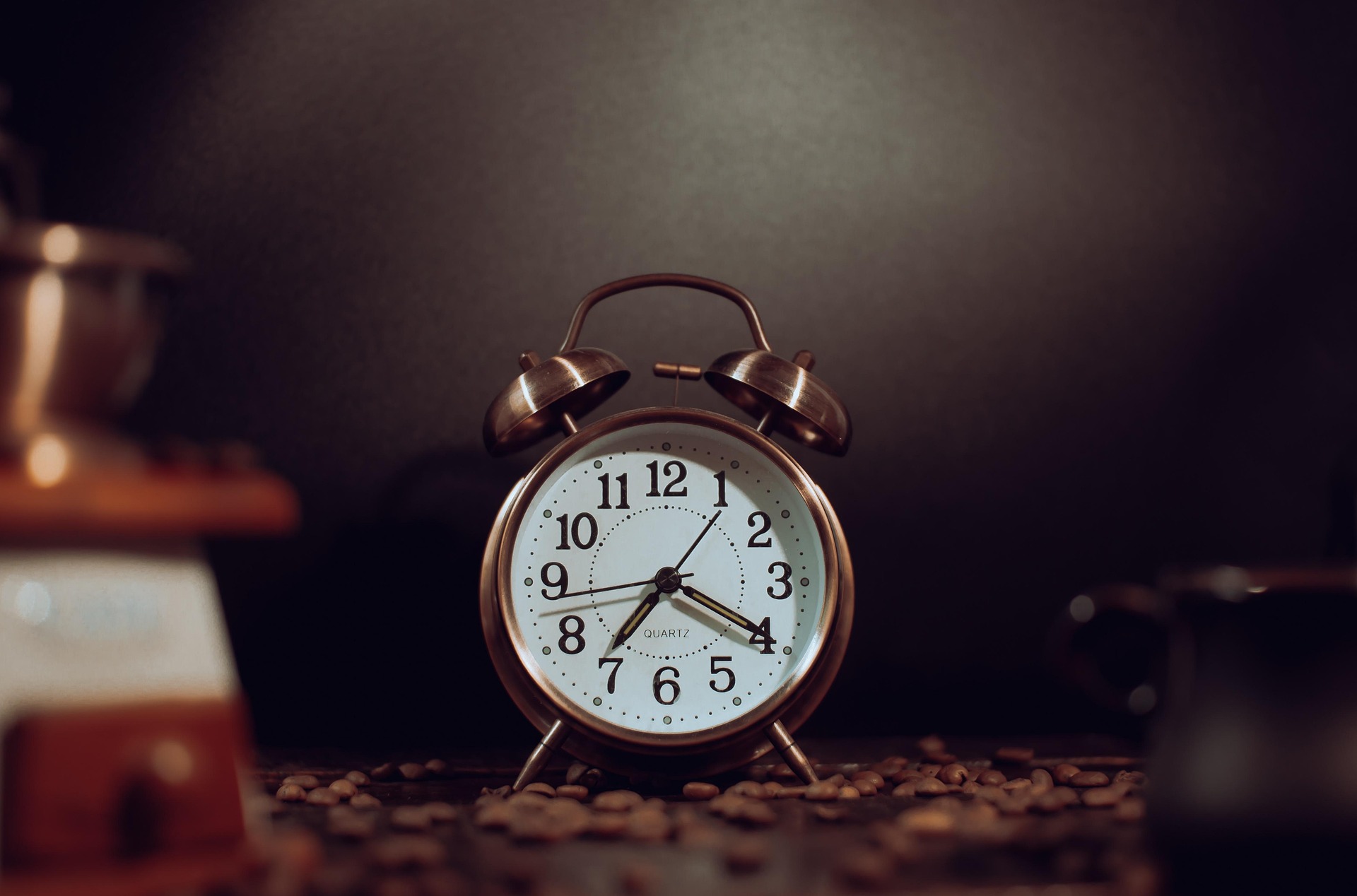
Most Americans will lose an hour of sleep this weekend as daylight saving time begins Sunday, March 8, 2026, at 2 a.m. local time, when clocks “spring forward” one hour to 3 a.m., extending evening daylight as spring approaches.

The biannual ritual, observed in the majority of U.S. states and territories, follows the schedule set by federal law since 2007: starting on the second Sunday in March and ending on the first Sunday in November. This year, daylight saving time will run until Nov. 1, when clocks “fall back” one hour at 2 a.m., returning to standard time.
The change, regulated by the U.S. Department of Transportation and tracked by the National Institute of Standards and Technology, aims to make better use of natural daylight during warmer months. Proponents argue it promotes energy conservation, outdoor activity, and economic benefits from extended evening light. Critics, however, point to disruptions in sleep patterns, increased accident risks in the days following the shift, and questionable energy savings in modern contexts dominated by LED lighting and electronics.
In practice, at 2 a.m. on March 8, clocks in participating areas jump ahead, meaning sunrise and sunset occur about an hour later than the day before. For example, in many northern cities, morning light will feel delayed, while evenings gain brightness well into summer. The shift lasts roughly eight months, covering about 65% of the year.
Not all areas observe the change. Hawaii and most of Arizona—including the Navajo Nation in Arizona—remain on permanent standard time. U.S. territories such as Puerto Rico, Guam, American Samoa, the U.S. Virgin Islands, and the Northern Mariana Islands also do not participate. Residents in these locations experience no clock adjustment.
Internationally, patterns vary. Canada generally aligns with U.S. dates for most provinces, though some regions differ. In Europe, daylight saving time—known as summer time—begins later, on the last Sunday in March (March 29 in 2026), with clocks advancing at 1 a.m. UTC, and ends on the last Sunday in October (Oct. 25). This creates a temporary three-week difference in time zones between North America and much of Europe after the U.S. shift.
The practice traces back to World War I, when Germany introduced it in 1916 to conserve coal. The United States followed in 1918, though it was repealed post-war before returning during World War II and later standardized under the Uniform Time Act of 1966. Extensions in 1986 and 2007 lengthened the period to its current span.
Public frustration has grown in recent years. Polls consistently show many Americans oppose the twice-yearly changes, citing health impacts like disrupted circadian rhythms, elevated heart attack and stroke risks in the spring transition, and safety concerns from drowsy drivers. Sleep experts often favor permanent standard time for better alignment with natural light cycles, while others prefer year-round daylight saving for brighter evenings.
Legislative momentum reflects this divide. The Sunshine Protection Act, reintroduced in the 119th Congress as S.29 in January 2025, seeks to make daylight saving time permanent nationwide, eliminating annual adjustments. The bill, which would advance clocks one hour from current standard time year-round, allows opt-outs for areas currently exempt. It passed the Senate unanimously in 2022 but stalled in the House.
A new proposal, the Daylight Act of 2026 (H.R. 7378), introduced in February, offers a compromise: shifting clocks forward a permanent half-hour from standard time, ending biannual changes altogether. Sponsors argue it balances morning light needs with evening benefits.
State-level action has accelerated. As of early 2026, at least 18 to 20 states have passed resolutions or laws favoring permanent daylight saving time, contingent on federal approval. Others pursue permanent standard time. In 2026 alone, 16 states introduced more than 20 related bills, ranging from full adoption of one system to pacts with neighboring states. British Columbia in Canada announced it will make March 8, 2026, its final clock change, adopting permanent daylight saving time thereafter.
Federal approval remains the hurdle. States can opt out of daylight saving time entirely—like Hawaii and Arizona—but adopting permanent daylight saving requires congressional action under the Uniform Time Act. Without it, states risk misalignment with federal standards.
Health organizations, including the American Academy of Sleep Medicine, advocate ending changes in favor of permanent standard time. Transportation and retail groups often support permanent daylight saving for perceived safety and commerce gains.
As the March 8 deadline nears, experts advise preparation: set clocks ahead Saturday night to avoid confusion Sunday morning. Smartphones and many devices update automatically, but manual checks for ovens, microwaves, and cars remain wise. Travelers crossing time zones or regions with different rules should verify schedules.
The weekend shift coincides with early spring preparations for many, from gardening to outdoor events. While the extra evening light promises more time for recreation, the immediate cost—an hour less sleep—fuels perennial calls for reform.
For now, the familiar pattern persists: spring forward March 8, fall back Nov. 1. Whether 2026 marks the last such change depends on congressional action amid growing state and public pressure.



Exclusive-Saudi has told Iran not to attack it, warns of possible retaliation, sources say

What $100/bbl oil could mean for China


Russia hits Ukraine with drones, missiles, killing at least 10 in Kharkiv

Over 30 hurt in Peru after nightclub explosion causes chaos
Business
Exclusive-US pressing Sri Lanka not to repatriate Iranian crew and survivors from sunken ship, memo says


Exclusive-US pressing Sri Lanka not to repatriate Iranian crew and survivors from sunken ship, memo says


Cracks emerge in Iran’s leadership as it reels under bombardment


As Iran’s retaliation began, US officials scrambled to arrange evacuations


Venezuela’s Rodriguez commits to dialogue in message to Trump

Stressing that the $30 trillion US economy is the world’s largest and one that can’t be ignored, Goyal said, “It has been a fantastic journey.”
“We have the best of relations. You would have observed that through the last year, President Donald Trump has always had the best of things to say about India as a country, and about Prime Minister (Narendra) Modi. We have fantastic relations with our counterparts there,” he said.
Addressing the Raisina Dialogue 2026, Goyal also said that “ultimately, a trade deal is about preference over your competition”.
“Even within your family, sometimes you can have one or two misunderstandings,” he said. “It’s a part of the course. I think it’s a very, very powerful relationship that the US and India share. And we got the best deal amongst all the nations with whom we compete,” said Goyal when asked about India’s trade ties with the US.

He added that both countries are strategic partners and the largest democracies in the world.
“We have a large responsibility cast on both our nations,” said Goyal. “They are the world’s largest economy, $30 trillion economy, nobody can wish them away,” he said, adding that ultimately a trade deal is about preference over competitors. Insisting that India got the “best deal amongst all of the competitors” in the Asian region, Goyal said, “What’s a trade deal? You are trying to get a preference or a preferential access for yourself, your goods, your services, compared to your competitor.


Iran war threatens prolonged hit to global energy markets

Exclusive-Saudi has told Iran not to attack it, warns of possible retaliation, sources say

Coinbase (COIN) says new U.S. tax-reporting rules for crypto are cluttered, confusing

Ryan Garcia ‘makes it clear’ who he now wants to fight next


-

 Politics5 days ago
Alan Cumming Brands Baftas Ceremony A ‘Triggering S**tshow’
-
Business1 day ago
Form 8K Entergy Mississippi LLC For: 6 March
-

 Tech7 days ago
Unihertz’s Titan 2 Elite Arrives Just as Physical Keyboards Refuse to Fade Away
-

 NewsBeat7 days ago
Abusive parents will now be treated like sex offenders and placed on a ‘child cruelty register’ | News UK
-

 Fashion1 day ago
Weekend Open Thread: Ann Taylor
-

 NewsBeat6 days ago
‘Significant’ damage to boarded-up Horden house after fire
-

 Tech3 days ago
Bitwarden adds support for passkey login on Windows 11
-

 Entertainment6 days ago
Baby Gear Guide: Strollers, Car Seats
-
 Sports2 days ago
499 runs and 34 sixes later, India beat England to enter T20 World Cup final | Cricket News
-
 NewsBeat6 days ago
Emirates confirms when flights will resume amid Dubai airport chaos
-
Politics7 days ago
FIFA hypocrisy after Israel murder over 400 Palestinian footballers
-

 NewsBeat5 days ago
Is it acceptable to comment on the appearance of strangers in public? Readers discuss
-

 Tech7 days ago
Viral ad shows aged Musk, Altman, and Bezos using jobless humans to power AI
-

 Video5 days ago
How to Build Finance Dashboards With AI in Minutes
-

 Fashion6 days ago
On the Scene at the 57th Annual NAACP Image Awards: Teyana Taylor in Black Ashi Studio, Colman Domingo in Yellow Sergio Hudson, Chloe Bailey in Christian Siriano, and More!
-

 Sports55 minutes ago
Three share 2-shot lead entering final round in Hong Kong
-

 Business4 days ago
Guthrie Disappearance Enters Fifth Week as Family Visits Memorial
-
 NewsBeat6 days ago
Ukraine-Russia war latest: Belgium releases video showing forces boarding Russian shadow fleet oil tanker
-
 Crypto World7 days ago
US Judge Lets Binance Unregistered Token Class Action Proceed
-

 Crypto World5 days ago
Why Nexo Is Reentering the US After the 2023 Crypto Lending Crackdown