

Business
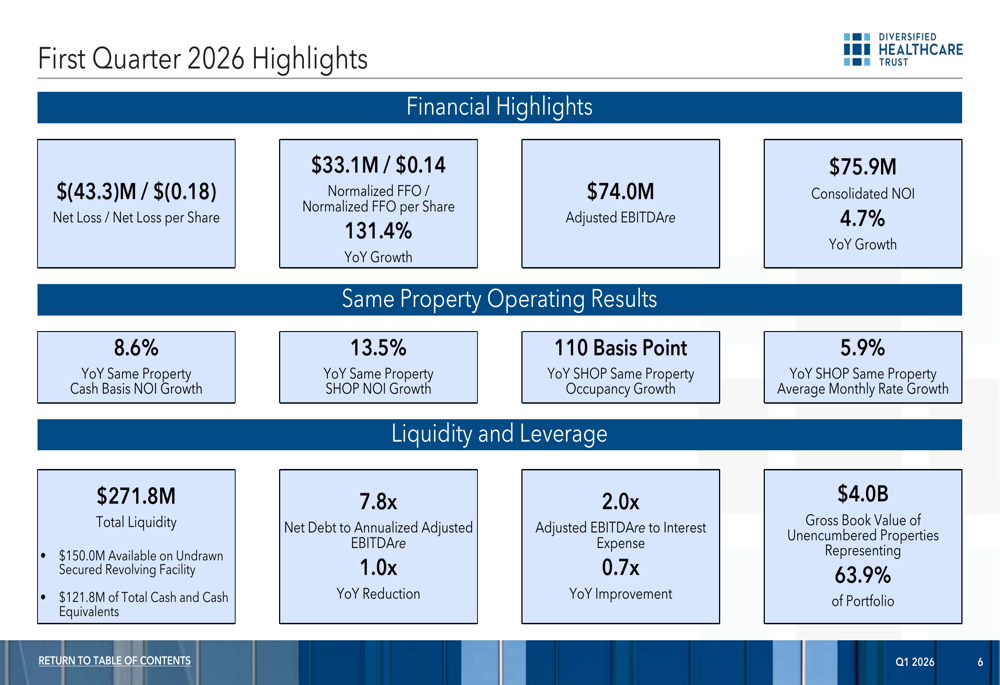
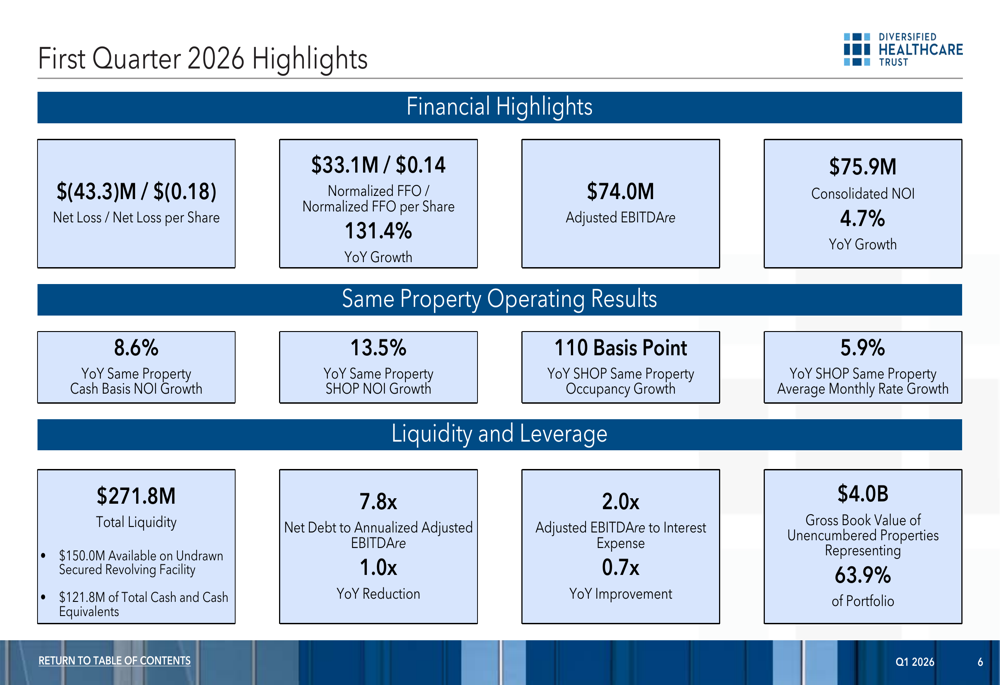
DHC Q1 2026 slides: SHOP margins expand despite revenue miss


Business
The Kraft Heinz Company 2026 Q1 – Results – Earnings Call Presentation (NASDAQ:KHC) 2026-05-09

Q1: 2026-05-06 Earnings Summary
EPS of $0.58 beats by $0.08
| Revenue of $6.05B (0.80% Y/Y) beats by $167.59M

Seeking Alpha’s transcripts team is responsible for the development of all of our transcript-related projects. We currently publish thousands of quarterly earnings calls per quarter on our site and are continuing to grow and expand our coverage. The purpose of this profile is to allow us to share with our readers new transcript-related developments. Thanks, SA Transcripts Team

Bernstein SocGen raises Sony stock price target on profitability focus
Target Hospitality delivers 63% return after Fair Value call


Author of The Macro Obsession | Investment Advisor | Economics Wonk | Top 5% on TipRanks | Long Signal, Short Noise. The Macro Obsession is my weekly newsletter on what’s actually moving finance, tech, and the real economy. My work is built around a single pursuit: catching narrative shifts before mainstream financial media catches up. I call it the hunt for information alpha. The approach is chart-heavy, macro-oriented, and data-driven. I invest across securities and asset classes, with a focus on ETFs, and I’m best known as a macro analyst. I also cover individual names I’m trading or considering—typically technology, next-gen energy, and large caps with a story worth telling. Off page, I’m a financial planner and investment advisor at Fintent Invest Inc., a Monrovia,CA-based RIA.”Successful investing requires holding uncomfortably idiosyncratic positions.” — Howard Marks, paraphrasing David Swensen “History does not repeat, it instructs.” — Timothy Snyder, On Tyranny
Analyst’s Disclosure: I/we have a beneficial long position in the shares of XYZ either through stock ownership, options, or other derivatives. I wrote this article myself, and it expresses my own opinions. I am not receiving compensation for it (other than from Seeking Alpha). I have no business relationship with any company whose stock is mentioned in this article.
Seeking Alpha’s Disclosure: Past performance is no guarantee of future results. No recommendation or advice is being given as to whether any investment is suitable for a particular investor. Any views or opinions expressed above may not reflect those of Seeking Alpha as a whole. Seeking Alpha is not a licensed securities dealer, broker or US investment adviser or investment bank. Our analysts are third party authors that include both professional investors and individual investors who may not be licensed or certified by any institute or regulatory body.
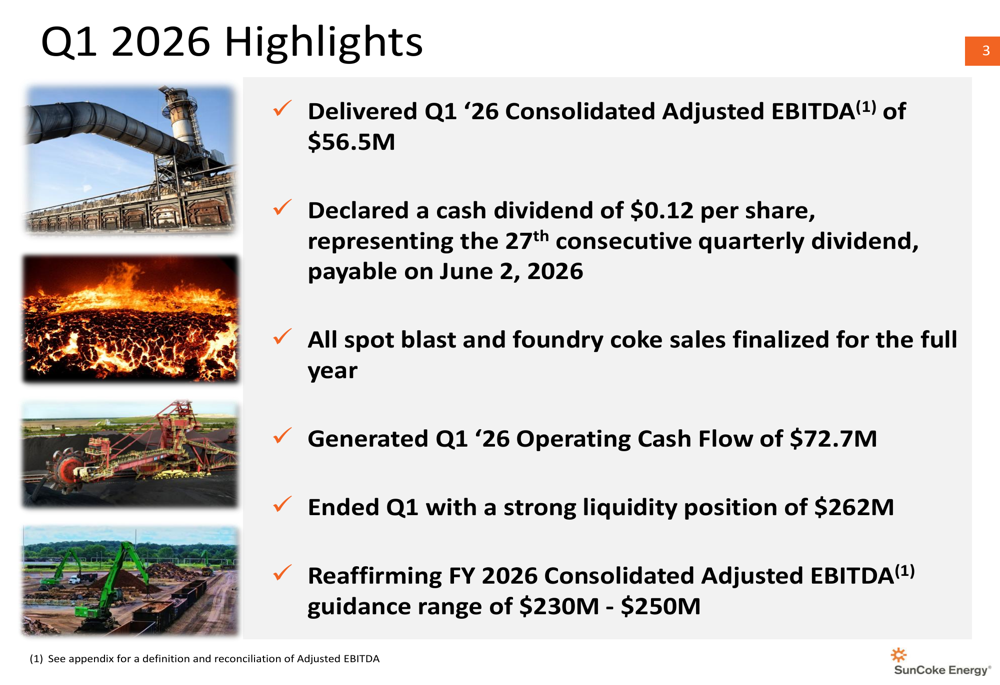
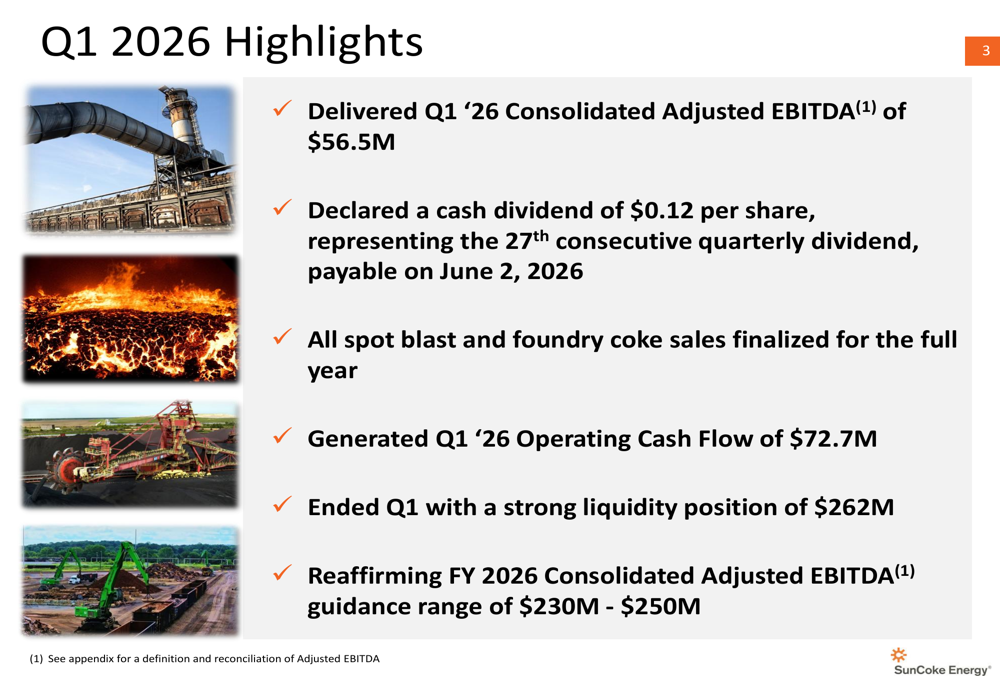
SunCoke Energy Q1 2026 slides: EBITDA dips as weather, turbine hit coke
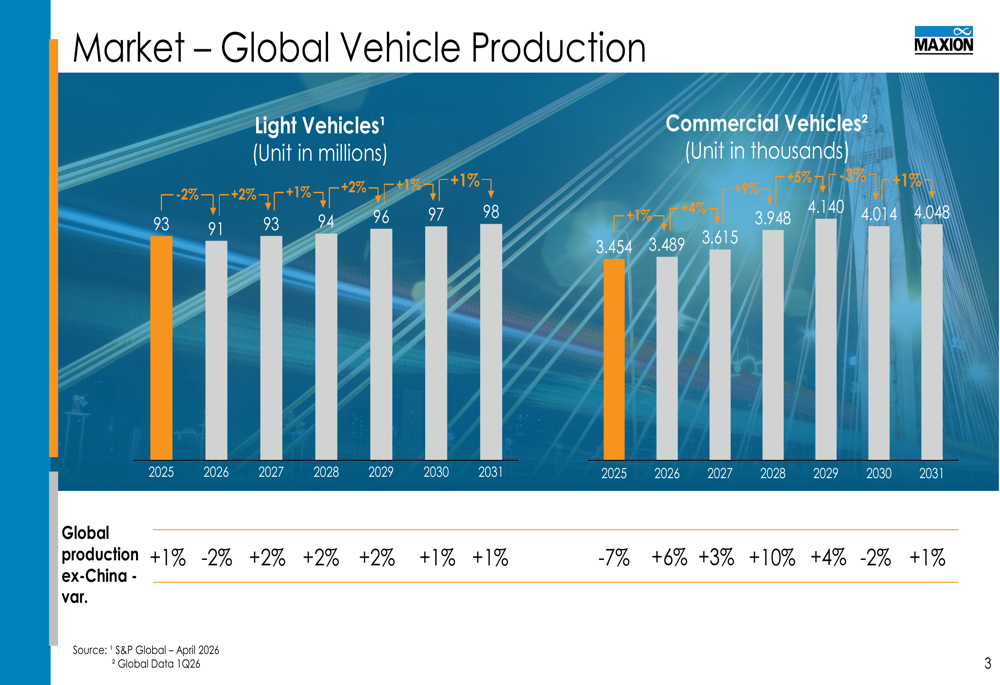
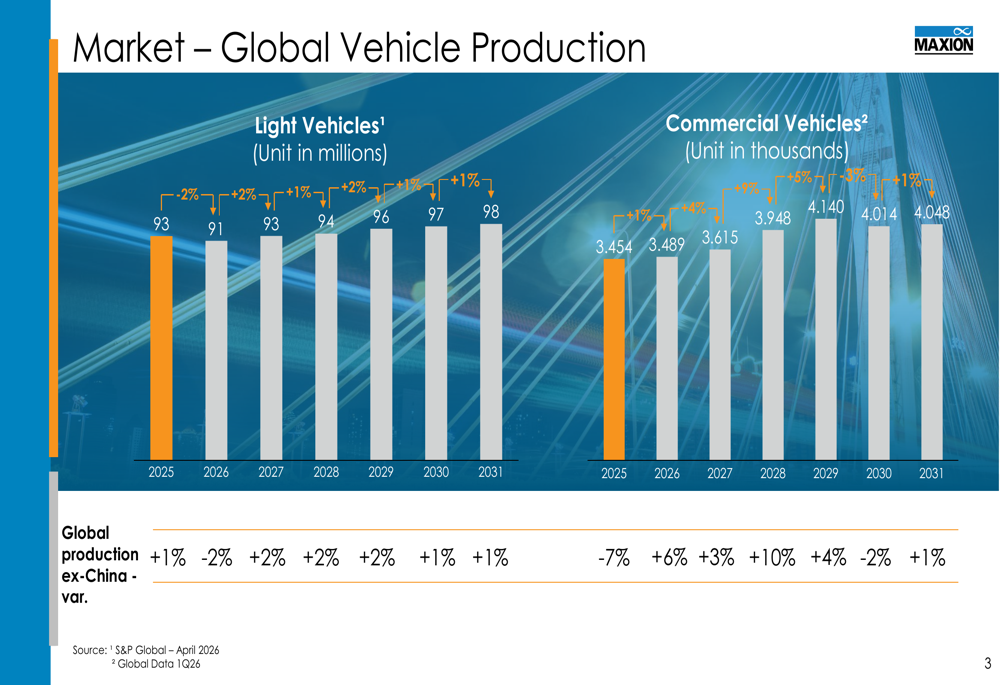
Iochpe-Maxion Q1 2026 slides: margins expand despite revenue miss

On Friday, FIIs sold domestic shares to the tune of Rs 4,110.60 crore while domestic institutional investors (DIIs) were net buyers at Rs 6,748.13 crore.
Despite DIIs throwing around their weight, benchmark indices ended with sharp cuts on Friday, recording their second successive decline amid significant selling in the financial stocks. While Nifty plunged 150.50 points or 0.62% to close at 24,176.15, the BSE Sensex settled at 77,328.19, down 516.33 points or 0.66%.
Commenting on the current trends, N. ArunaGiri, CEO at TrustLine Holdings said domestic markets continue to see FII selling despite a nearly $50 billion sell-off since September 2024 at a time when South Korea received nearly $4 billion and Taiwan around $5.5 billion in flows.
“India is still not getting its due share of emerging market allocations. This clearly indicates that FIIs currently do not find India as attractive from an allocation perspective. As a result, large caps have relatively underperformed, while strong domestic flows have continued to support the SMID segment. As long as FIIs do not meaningfully increase India allocations, the market is likely to remain highly stock-specific, driven by earnings visibility and bottom-up opportunities rather than momentum rally led by large caps,” ArunaGiri said.

Outlook
Bajaj Broking said institutional activity is expected to be largely driven by global developments, going forward. The progress or deterioration of the U.S.–Iran negotiations will remain a key factor to monitor, he said, outlining significant implications for geopolitical stability and the potential impact on crude oil price volatility.
FIIs in 2026
War-induced sell-off in March made it the worst month this year, witnessing an exodus worth Rs 1,17,775 crore. April was not kind too, with outflows of Rs 60,847 crore. Foreign investors turned net buyers in February, buying shares worth Rs 22,615 crore in the domestic markets so far. In January, they sold Rs 35,962 crore worth of shares.
In 2025, the FIIs buying trends remained patchy, but the overall trend was bearish. They took Rs 1,66,286 crore from Indian markets as trade deal delay and premium valuations weighed on the sentiments.
Also read: FII ownership hits 14-year low to 14.7%; DII cushions Indian markets with 18.9% rise: Report
(Disclaimer: Recommendations, suggestions, views and opinions given by the experts are their own. These do not represent the views of Economic Times)

CoreWeave: Lagging Margins Create An Uncertain Picture
Business
F&O Talk: Nifty bulls indecisive but opportunities in broader markets. Sudeep Shah’s strategy on Voltas, Tejas and 4 more stocks

Meanwhile, the volatility gauge India VIX ended at 16.84, down by 1.32% from the last closing.
Analyst Sudeep Shah, Vice President and Head of Technical & Derivatives Research at SBI Securities, interacted with ETMarkets regarding the outlook for the Nifty and Bank Nifty, as well as an index strategy for the upcoming week. The following are the edited excerpts from his chat:
Q: What does the Nifty chart suggest for next week’s trade following an otherwise calm week with the index settling with WoW gains of 0.7% in the absence of any big surprise?
For the second consecutive week, the benchmark index Nifty continued to trade within a narrow range, forming another indecisive candle on the weekly chart. Over the last 11 trading sessions, the index has largely oscillated within the 24516–23797 zone, reflecting a lack of clear directional bias. The underperformance of heavyweight sectors such as IT and Banking, coupled with uncertainty surrounding the US-Iran conflict and persistent volatility in crude oil prices, has kept market participants cautious and indecisive. However, beneath this quiet index movement, a completely different trend is unfolding in the broader market.
The broader market continues to remain vibrant. Both midcap and smallcap indices are significantly outperforming the benchmark index. Most notably, the Nifty Midcap 100 touched a fresh all-time high on Friday, while the benchmark Nifty still trades nearly 8% below its record peak. Meanwhile, the Nifty Smallcap 100 index has climbed to a 10-month high. However, after the sharp outperformance witnessed in the broader market, we believe these segments could enter a phase of consolidation before resuming the next leg of the upward move. At the same time, the technical structure of Nifty itself is hinting that a major move may not be too far away.
The Nifty index continues to display signs of indecision on the technical charts. One of the key observations on the daily timeframe is the visible Bollinger Band squeeze, indicating a sharp contraction in volatility. The Bollinger Band squeeze typically occurs when volatility declines and the bands narrow, often preceding a strong directional move on either side. Adding to this, most of the crucial moving averages are currently flattening out, while momentum indicators are also signaling a sideways trend. The only question now is — which side will break first, and where should traders keep a close watch?
On the upside, the 24,450–24,500 zone is expected to act as an immediate hurdle for the index. On the downside, the 23850–23800 zone remains a crucial support area. The next breakout from this tightening range could potentially decide the market’s near-term direction.
Q: While India VIX fell over 7% during the week, it is still hovering around the 17 mark. What levels will make you comfortable to plan your trades?
India VIX has corrected sharply after touching the 28.90 mark and is now trading below its 20-day and 50-day EMAs, indicating a cooling-off in volatility. The current chart structure suggests that the market is not anticipating any major surge in volatility over the next few trading sessions, especially in the absence of fresh geopolitical triggers.
In the near term, the bias is likely to remain subdued; however, the 18.80–19 zone will act as a crucial threshold. A sustained move above this level would signal a potential spike in volatility, which could make the market more uncertain. From a trading perspective, lower VIX levels provide a relatively comfortable environment for planning trades, whereas a breakout above 19 would warrant caution due to the likelihood of increased market swings.
Q: Nifty Bank has been a cause of concern as far as the market sentiments are concerned and is down nearly 8% in three months. What is the outlook considering even earnings have failed to boost investor confidence?
The banking benchmark index has continued to underperform relative to the broader market. Although it witnessed a rebound on Wednesday, the index failed to sustain at higher levels, indicating selling pressure on rallies. On the weekly chart, it has formed a small-bodied candle with shadows on both sides, reflecting indecisiveness and a lack of clear direction.
Currently, the index is trading below all its key moving averages, which are themselves moving in a flat trajectory, suggesting a consolidation phase. The daily RSI has also been oscillating in a sideways range over the past 22 trading sessions, further highlighting the absence of strong momentum.
Going ahead, the 54,300–54,200 zone is expected to act as an important support. A decisive and sustained move below 54,200 could trigger further downside towards 53,500, followed by 53,000.
On the upside, the 50-day EMA zone of 56,000–56,100 will act as an immediate resistance. A sustained breakout above 56,100 may lead to a sharp upward move towards 56,600, and subsequently 57,200 in the short term.
Q: What is happening with two biggest stakeholders – HDFC Bank and ICICI Bank and do you see any pullback in them?
Both HDFC Bank and ICICI Bank continue to exhibit signs of technical weakness and remain under pressure. HDFC Bank has struggled to decisively move past its 20-day EMA, which continues to act as a dynamic resistance zone. Meanwhile, ICICI Bank has corrected nearly 9% after closing strongly above its 200-day EMA on April 21, indicating sustained profit booking at higher levels.
In addition, the private banking pack remains in the lagging quadrant on the Relative Rotation Graph (RRG), reflecting weak relative strength and deteriorating momentum compared to the broader market. The MACD line for both stocks is also placed well below the zero line, reinforcing the prevailing bearish bias.
From a technical standpoint, the 800–810 zone is likely to act as a strong resistance for HDFC Bank, while 1300–1310 remains a key hurdle for ICICI Bank. Unless these resistance zones are decisively breached with a visible improvement in relative strength and momentum, the probability of a meaningful pullback remains low.
Q: Auto was the outright performer this week as earnings have been supportive. What is your view of the sector and do have your favourites?
Nifty Auto had been consolidating within the 26,746–25,296 range since April 8 on the daily chart. The index witnessed a breakout on May 6, which was supported by a healthy follow-through move. The RSI is in a rising mode, indicating that momentum remains on the bullish side. Additionally, the rising MACD histogram bars, along with the MACD line sustaining above the zero line, further reinforce the positive bias.
On the Relative Rotation Graph (RRG), Nifty Auto has moved from the weakening quadrant to the leading quadrant, signalling that both relative strength and momentum have returned in favour of the index.
Among the stocks, Motherson, Bajaj Auto, Bharat Forge, and Mahindra & Mahindra are displaying positive price action setups and are likely to perform well in the short term.
Q: Realty stocks have also show a strong rebound for the past one month and it was among the top performing sector this week. What does the chart suggest about the outlook?
The Nifty Realty Index has witnessed a strong pullback of nearly 30% since its low of 639 recorded on April 2. Despite the momentum not being exceptionally strong, the index has managed to steadily inch higher, reflecting sustained buying interest at lower levels. The index is currently trading around 1% below its 200-day EMA.
On the Relative Rotation Graph (RRG), the index is placed in the leading quadrant. However, momentum appears to be concentrated in select stocks rather than across the broader realty pack.
From a technical standpoint, the 800–795 zone, which coincides with the 100-day EMA, is likely to act as a key support area. As long as the index sustains above this zone, the ongoing up move is likely to extend further.
Q: Firstsource, Godrej Industries and Tejas Networks were among top gainers this week, while Sapphire Foods, Oil India and Voltas have been big losers. What should investors do with them?
FSL had largely been consolidating within the 255–202 range on the daily chart since March 2. The stock witnessed a breakout on Friday, supported by a strong rise in volumes. The RSI has inched above the 60 mark, indicating healthy bullish momentum. As long as the stock sustains above the 255–250 zone, the pullback is likely to extend further.
GODREJIND has given a breakout from a downward-sloping trendline on the daily chart. The rising ADX indicates strengthening bullish trend momentum. Additionally, the DI lines have widened, with DI+ placed comfortably above DI- on the ADX indicator, signalling firm bullish control. As long as the stock trades above the 1075–1070 zone, the up move is likely to extend further.
TEJASNET has witnessed a strong pullback of nearly 28.5% since the low of 396 recorded on April 24. The rebound has been supported by a sharp rise in volumes. The stock has also closed above its 200-day EMA placed around 508, and sustaining above this level will be crucial for continuation of the pullback.
SAPPHIRE failed to sustain above its 100-day EMA and has witnessed selling pressure over the last five trading sessions. The RSI has slipped below the 60 mark, indicating weakening momentum. The stock has been in a prolonged downtrend and is likely to remain sideways to bearish as long as it trades below 215.
OIL has closed below the previous swing low of 456 on the daily chart and is now trading close to its 200-day EMA. The RSI is hovering near the 40 mark, indicating bearish momentum. Additionally, the MACD line remains below the zero line, further reinforcing the negative bias. As long as the stock trades below 470, the trend is likely to remain bearish.
Voltas has witnessed a correction of nearly 14% since the high of 1538 recorded on April 29. The RSI is in a falling mode, indicating weakening momentum, while DI- remains above DI+ on the ADX indicator, signalling sellers’ dominance. As long as the stock trades below the 1410–1415 zone, the trend is likely to remain bearish.
(Disclaimer: The recommendations, suggestions, views, and opinions given by the experts are their own. These do not represent the views of The Economic Times.)
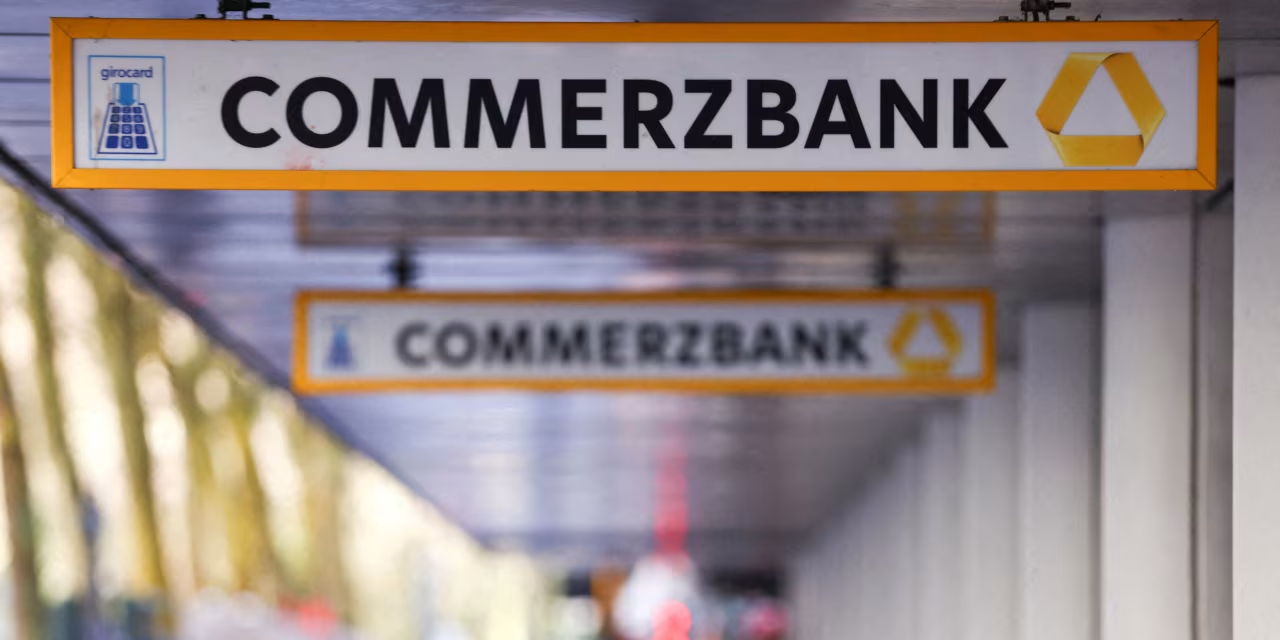
Commerzbank CBK -3.93%decrease; red down pointing triangle said it would cut as many as 3,000 roles and lifted financial targets, as the bank resists a takeover from Italian rival UniCredit UCG -1.26%decrease; red down pointing triangle.
The lender on Friday raised its expectations for 2028 and set new goals in a plan for 2030 that targets higher revenue and profit. It aims to further integrate artificial intelligence into its planning, countering a strategy from aspiring acquirer UniCredit to revamp the bank.
Copyright ©2026 Dow Jones & Company, Inc. All Rights Reserved. 87990cbe856818d5eddac44c7b1cdeb8

Netflix’s 3-Part Crime Thriller Is So Addictive, You’ll Lose an Entire Weekend to It

Fire at Knavesmire Wood in York believed to been deliberate

The Kraft Heinz Company 2026 Q1 – Results – Earnings Call Presentation (NASDAQ:KHC) 2026-05-09

Manchester United reach agreement with Casemiro over contract clause amid transfer speculation

US brings back mandatory military draft registration

Steven Gerrard disagrees with Gary Neville over ‘shock’ Chelsea and Arsenal claim | Football


-
 Crypto World1 day ago
HarrisX Poll Found 52% of Registered Voters Support the CLARITY Act
-

 NewsBeat6 days ago
Channel 5 – All Creatures Great and Small series 7 new post
-

 Crypto World2 days ago
Upbit adds B3 Korean won pair as Base token gains Korea access
-

 Tech5 days ago
Image AI models now drive app growth, beating chatbot upgrades
-

 News Videos6 days ago
AP Dhillon – Old Money (Official Audio)
-
 NewsBeat2 days ago
NCP car park operator enters administration putting 340 UK sites at risk of closure
-

 Fashion18 hours ago
Weekend Open Thread: Marianne Dress
-

 Sports6 days ago
Five killed in Texas plane crash identified as Amarillo pickleball players
-
Entertainment7 days ago
New Netflix Movies in May 2026 — My Top 3 Picks to Stream
-
 Crypto World7 days ago
Pi Network Mandates Protocol 23 Upgrade for All Mainnet Nodes Before May 15 Deadline
-
Entertainment6 days ago
Anna Nicole Smith’s Daughter Attends 2026 Kentucky Derby
-

 Crypto World6 days ago
Bitcoin mining equities rise in 2026 as BTC lags behind
-

 Entertainment6 days ago
Melissa Joan Hart and More Stars Attend 2026 Kentucky Derby
-
Entertainment6 days ago
Venus Williams’ Best Met Gala Looks Over the Years
-

 Business6 days ago
Luka Doncic Injury Update: Doncic’s Hamstring Recovery Slows Lakers’ Hopes Against Thunder: Can He Run Yet?
-
Entertainment6 days ago
“Storage Wars” star Darrell Sheets' ex-wife breaks silence on his death
-

 Sports6 days ago
Is Man United v Liverpool on TV? Channel, streaming and how to watch Premier League fixture
-

 Business7 days ago
Kuwait International Airport Resumes Operations After Closure as Regional Tensions Ease in 2026
-
 Entertainment6 days ago
Netflix’s 10-Part Miniseries Based on a True Story Is a Perfect Weekend Binge
-
Crypto World7 days ago
Q1 2026 Tech Layoffs AI Wave Hits 81,747 as Firms Shift to AI Infrastructure
You must be logged in to post a comment Login