Connect with us
DAPA Banner

Business

DICK’S Sporting Goods, Inc. (DKS) Presents at J.P. Morgan Retail Round Up Forum 2026 Transcript

Published

on

OneWater Marine Inc. (ONEW) Q1 2026 Earnings Call Transcript

DICK’S Sporting Goods, Inc. (DKS) J.P. Morgan Retail Round Up Forum 2026 April 8, 2026 10:00 AM EDT

Company Participants

Edward Stack – Executive Chairman
Lauren Hobart – President, CEO & Director
Navdeep Gupta – Executive VP & CFO

Conference Call Participants

Advertisement

Christopher Horvers – JPMorgan Chase & Co, Research Division

Presentation

Christopher Horvers
JPMorgan Chase & Co, Research Division

Advertisement

Well, great. Good morning, everyone, and allow me to welcome you to JPMorgan’s 12th Annual Retail Roundup. It’s our pleasure to host the event inside JPMorgan’s new global headquarters here. I hope you’re enjoying the building and don’t miss the flag in the lobby waving 24 hours a day.

Our fireside chat today is with DICK’S Sporting Goods, and it’s my distinct pleasure to welcome the management team, including an absolute legend of retail, Mr. Ed Stack, Executive Chairman; as well as CEO, Lauren Hobart; and CFO, Navdeep Gupta. Team, DICK’S thank you for your time, and thanks for joining us today.

Edward Stack
Executive Chairman

Advertisement

Happy to be here. And by the way, that lobby is pretty awesome.

Christopher Horvers
JPMorgan Chase & Co, Research Division

Jamie is a Patriot. Jamie is a Patriot.

Advertisement

Edward Stack
Executive Chairman

Pretty awesome.

Advertisement

Question-and-Answer Session

Christopher Horvers
JPMorgan Chase & Co, Research Division

And for anyone who’s around tomorrow, Matt and I will be in this room. In terms of format, I have a series of questions that I’ll cover, and I’ll open up towards the end for questions for those of you in the room. In terms of — we’re going to kick it off and talk a little bit about Foot Locker. We’ve looked at the Foot Locker acquisition as in terms of like playing long ball in terms of balancing the power between you and the vendors at times in the past, vendors have been irrational at times.

Advertisement
Continue Reading
Click to comment

You must be logged in to post a comment Login

Leave a Reply

Business

UAE’s OPEC+ exit signals structural fractures, but near-term oil impact limited: Matt Orton

Published

on

UAE’s OPEC+ exit signals structural fractures, but near-term oil impact limited: Matt Orton
The recent development around the UAE stepping aside from OPEC+ coordination may have stirred headlines, but market strategist Matt Orton from Raymond James Investment believes its immediate impact on oil dynamics remains limited, even as it raises longer-term questions about the cohesion of the producer alliance.

Speaking to ET Now, Orton emphasized that the current geopolitical backdrop, particularly tensions around the Strait of Hormuz, continues to dominate oil fundamentals far more than internal OPEC politics.

UAE move: Long-term signal, limited near-term disruption
On the UAE’s stance and its implications for global crude supply, Orton said: “Right now for the shorter term, it really does not mean anything because while longer term it just means more supply is likely to come online but we are not in a normal situation anymore because of the blockade of the Strait of Hormuz. So really until there is clarity with respect to what is going to happen between the US and Iran and until we start to see an easing of the blockade in the strait, there is going to be constraints for oil and there is only so much that the UAE can pump to begin with.””So, this does not come as that much of a surprise because frankly the UAE has really been trying to push more production over the past few years. They have always been upset and violated some of the curbs that they have had put in place. But if anything, it signals that there is fractures within OPEC as well. And so, it kind of questions what the future of OPEC is going to look like, what its efficacy could look like, and all of that longer term probably means that we will be well supplied in the longer term once we have a resolution and get back to some sort of normalcy, but that is going to take a lot of time,” he added.

While acknowledging the symbolic significance of the UAE’s position, Orton suggested the real constraint on supply remains geopolitical, not institutional.Markets after a 10% rally: Selectivity becomes key
With global equities already up nearly 10% from March lows, Orton cautioned that the “easy money” phase may be behind investors, even though fundamentals remain solid.“Markets have moved up at least about 10% including India at an index level, but what next really?” ET Now asked.

Orton responded: “These gains have been encouraging and I would argue that they are backed by solid fundamentals particularly in the US equity market where you have had resiliency on the overall economy and the consumer despite increased inflation and energy prices and corporate earnings have been incredibly strong. We are looking at record profit margins on the S&P 500. You are seeing smallcap earnings tick up. You have seen strong bank earnings. We are getting strong earnings from semiconductor companies, from industrials. So, the backdrop is very-very positive.”

Advertisement

However, he stressed that the next phase will be driven less by broad market beta and more by stock selection.

“The key going forward is going to be selectivity and really leaning into bifurcations that we are seeing take place,” he said.

He highlighted growing divergence across sectors:

“Because of the disruptions that have happened in the Middle East, there is going to be winners and losers with respect to those who are the energy haves and the have nots versus those who have pricing power versus those who do not have pricing power.”

Advertisement

Orton also pointed to a shift in diversification thinking:

“There is going to be increased correlation between fixed income and equities making it a little bit harder to get that traditional stock bond diversification.”

His preferred strategy: diversification within equities rather than across asset classes.

He added: “I think that means that you want to continue to lean a little bit more heavily into the AI capex beneficiary complex. I am incredibly convicted based on earnings and conversations I have had with management teams that this trade is here to stay.”

Advertisement

He also recommended selective exposure to energy and healthcare:

“Buying energy on dips makes sense especially for higher quality low leverage energy companies and then also looking to say biotechnology which is an area within healthcare that has underperformed the overall markets really from a global perspective and trying to invest in places where there is going to be more M&A activity going forward.”

Fed outlook: No major shift expected despite leadership change
With an FOMC meeting underway and speculation around a leadership transition at the Federal Reserve, Orton downplayed expectations of an immediate policy pivot.

“I do not think we are going to see a policy shift. Inflation is really going to handcuff Warsh when he comes in because the economy like I have mentioned before has been incredibly resilient,” he said.

Advertisement

He added that persistent inflation limits the scope for near-term easing:

“When you have increased inflationary pressures without an end in sight with respect to what is causing those inflationary pressures, it is really hard to convince a broader committee who is already biased to hold to move towards easing.”

However, he left room for medium-term easing possibilities:

“I do think there will be potential to ease later and based on Warsh’s congressional testimony, some of the moves he will make over the medium to long term will be a little bit more dovish for the markets rather than hawkish.”

Advertisement

For markets, the key takeaway from the current Fed meeting is signalling rather than action.

“To me the meeting that we have later on today your time is going to be more signalling, seeing if Powell reiterates a lot of what he talked about during the last meeting and really get a better sense for how the broader committee is thinking about things,” Orton said.

Markets: Earnings over geopolitics—but risks remain
On whether markets are now more focused on earnings than geopolitical shocks such as OPEC-related developments, Orton struck a balanced tone.

“The markets want to get past geopolitical events. I am not so sure they can fully get past geopolitical events because there is going to be continued upward pressure on oil prices until there is a resolution,” he said.

Advertisement

He noted that futures pricing already reflects prolonged uncertainty:

“When you look at back-end futures as well, they have continued to rise which really signals that there is a protracted evolution to this being baked in by the market.”

At the same time, micro-level drivers are increasingly dominant:

“Beneath the surface there was a massive move in semiconductor stocks and anything related to AI because of a story around OpenAI and questioning whether they could fulfil all of the promises that they made with respect to spending and data centre spending.”

Advertisement

Looking ahead, earnings will remain a major catalyst:

“We have 11 trillion plus dollars of market capitalisation reporting earnings results just tomorrow evening, that is going to be a significant event for the market. So, earnings are going to be in focus, but there is always the risk that no matter how good earnings are, what happens in the Middle East could derail some of that simply because of the unknown factor of just how volatile things are.”

Continue Reading

Business

Global oil dynamics enter volatile phase after UAE decision: Peter McGuire

Published

on

Global oil dynamics enter volatile phase after UAE decision: Peter McGuire
The UAE’s surprise move to step away from OPEC+ has stirred global energy markets, raising concerns over oil supply discipline and the future stability of the producer alliance. With crude prices already sensitive to geopolitical risks, the development has added fresh uncertainty for importing nations such as India.

Speaking to ET Now, Peter McGuire, CEO, Australia-Trading.com said the decision has come at a critical moment for the market, noting, “These are early hours on this decision. We understand the significance 12% of production… it blindsided OPEC.”

He also highlighted the speed of the move, adding, “It is a quick decision… they are waiting 48 hours sort of thing,” while pointing out that “prices are up from here I would say.”

On the broader oil outlook, McGuire linked price direction to ongoing geopolitical tensions, asking, “How long is this situation going to run for?” He suggested that if tensions persist, “you are going to see prices move up from here.” Referring to current levels, he noted, “You have got WTI just on 100. I am expecting prices to continue uptick,” and further warned that “120 is going to be a… and it could be there sooner than later.”


Advertisement

On the question of whether the UAE’s exit could weaken OPEC+ cohesion, McGuire said, “It is not going to galvanise the strength of it,” adding that “it is going to put a chink in armour” and raising uncertainty over “who is going to be next.”


He also emphasized the UAE’s strategic focus on domestic priorities, stating, “UAE to focus on national interest,” and added, “They need income and they need to ratchet that up.” He further pointed to infrastructure advantages, mentioning “the opportunity for buyers using Fujairah as a hub.”
Overall, market participants remain cautious as the oil landscape adjusts to both geopolitical risks and shifting producer dynamics, with the UAE’s move adding another layer of uncertainty to an already volatile environment.

Continue Reading

Business

Quantum Data Energy auditor resigns day before reporting deadline

Published

on


Quantum Data Energy auditor resigns day before reporting deadline

Continue Reading

Business

Erie Indemnity Stock: Quality Remains, But Growth Is Slowing (NASDAQ:ERIE)

Published

on

Erie Indemnity Stock: Quality Remains, But Growth Is Slowing (NASDAQ:ERIE)

This article was written by

I am an independent trader and analyst specializing in the micro-cap market. My strategy combines technical analysis with the CAN SLIM method, developed by William O’Neil, to identify high-growth, underanalyzed companies. I focus on financial trends, profit growth, and institutional capital accumulation to uncover stocks with significant upside potential. In addition to equities, I have experience in Forex trading, which has helped me better understand price movements, market volatility, and sentiment-driven trends. My research approach integrates both fundamental and technical analysis, allowing me to identify strong growth stocks before they gain widespread attention. Key indicators I prioritize include relative strength, trading volume shifts, and accelerating profit growth—all of which help pinpoint stocks with the highest potential. Writing for Seeking Alpha is an integral part of my investment process, enabling me to refine my strategies, test investment theses, and engage with the investor community. In my articles, I aim to deliver in-depth company analyses, focusing on stocks with strong growth trends, improving fundamentals, and technical setups that signal potential breakouts. Through structured research, I strive to enhance market understanding and provide actionable investment insights.

Analyst’s Disclosure: I/we have no stock, option or similar derivative position in any of the companies mentioned, and no plans to initiate any such positions within the next 72 hours. I wrote this article myself, and it expresses my own opinions. I am not receiving compensation for it (other than from Seeking Alpha). I have no business relationship with any company whose stock is mentioned in this article.

Seeking Alpha’s Disclosure: Past performance is no guarantee of future results. No recommendation or advice is being given as to whether any investment is suitable for a particular investor. Any views or opinions expressed above may not reflect those of Seeking Alpha as a whole. Seeking Alpha is not a licensed securities dealer, broker or US investment adviser or investment bank. Our analysts are third party authors that include both professional investors and individual investors who may not be licensed or certified by any institute or regulatory body.

Advertisement
Continue Reading

Business

Mag 7 Stocks Are Boosting the S&P 500 Ahead of Earnings

Published

on

Stocks Little Changed After Fed Decision

Mag 7 Stocks Are Boosting the S&P 500 Ahead of Earnings

Continue Reading

Business

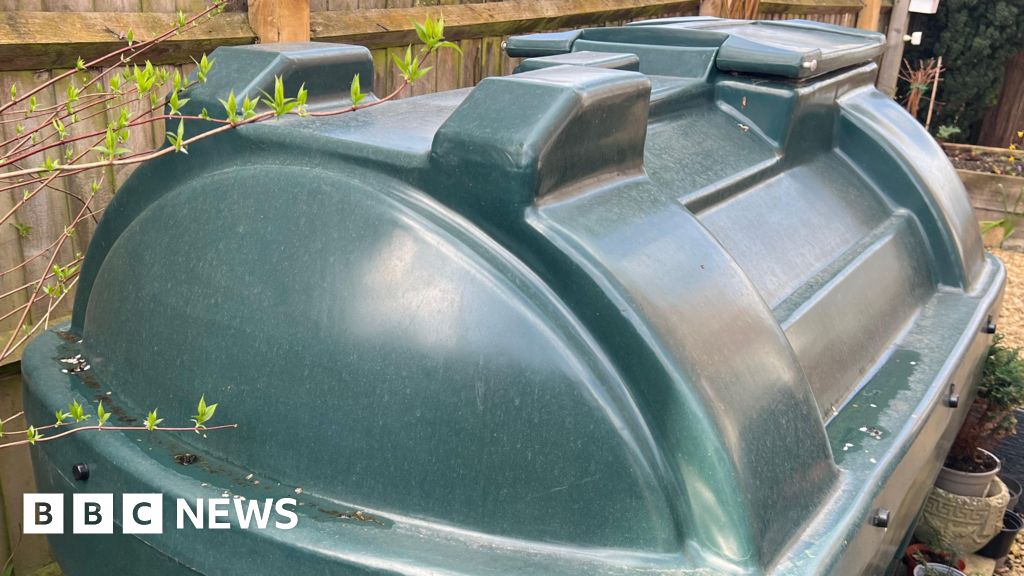
Struggling families offered heating oil vouchers

Published

on

Struggling families offered heating oil vouchers

People can apply for a £150 grant if they are running out of heating oil, a council says.

Continue Reading

Business

Vedanta demerger explained: Record date, how much money can you make and should you invest in buy 1, get 4 offer?

Published

on

Vedanta demerger explained: Record date, how much money can you make and should you invest in buy 1, get 4 offer?
Vedanta is all set to undergo its much-awaited demerger, which would see four of the Anil Agarwal-led conglomerate’s existing businesses operate as separate listed companies, with today effectively being the last date to buy Vedanta shares in order to be eligible to receive the four new shares, as the actual record date of May 1 falls on a market holiday.

In an exchange filing released on April 20, Vedanta announced that each of its eligible shareholders will get one share of Vedanta Aluminium Metal (VAML), one share of Talwandi Sabo Power (TSPL), one share of Malco Energy and one share of Vedanta Iron and Steel for every share held in Vedanta. This marks one of the biggest corporate restructurings in India’s metals and mining space, allowing shareholders to hold a direct stake in distinct sector-specific firms rather than a diversified conglomerate structure.

Vedanta demerger record date

Since May 1 is a market holiday due to Maharashtra Day, April 30 will be the effective ex-record date for the demerger. This means that shareholders who buy the company’s shares on Thursday, a day before the actual record date, will not be eligible, as shares will not be credited by the end of that trading day.

Advertisement

Hence, April 29 is likely to be the last date for interested investors to buy Vedanta shares, so that the shares are credited to their demat accounts by April 30, as per the T+1 settlement rule, making them eligible to receive shares of the four new companies emerging from the demerger.

How will Vedanta shares adjust to demerger?

Vedanta shares will undergo a special pre-open session on April 30 to discover the share price after excluding the value of the four demerged entities, which will be listed later. Post demerger, Nuvama Institutional Equities expects Vedanta to have a market capitalisation of nearly Rs 1.14 lakh crore. Notably, Vedanta currently has a market capitalisation of more than Rs 2.9 lakh crore.


“Based on our market-cap estimates, Vedanta and Vedanta Aluminium are expected to be classified as large caps, while Vedanta Power, Vedanta Oil & Gas, and Vedanta Steel & Iron Ore fall under small cap,” it added.
Vedanta shares are currently part of the Nifty Next 50 index. On the global front, it is part of the MSCI Emerging Markets Index as well as FTSE indices. Nuvama said Vedanta will continue to be part of Nifty Next 50, while the other demerged entities (Aluminium, Power, Oil & Gas, Steel) will be reflected as dummy constituents until listing. It added that Vedanta’s weight will be auto-adjusted on MSCI and FTSE indices.

When will the four new Vedanta Group companies be listed on BSE and NSE?

While the record date for the demerger has been announced, the dates when the four new companies will be listed on stock exchanges BSE and NSE have not yet been disclosed. It is important to note that the shares of Vedanta currently represent the combined value of all five companies. However, from May 1 onwards, the share price will represent the value of Vedanta excluding the four new companies.

Advertisement

Should you invest in Vedanta shares for demerger benefits?

Vedanta’s demerger is a well-structured move that should unlock shareholder value over time, said Raj Gaikar, Research Analyst at SAMCO Securities. When businesses like aluminium, zinc and oil & gas trade independently, markets tend to value them more fairly than when they are bundled together in a single conglomerate, he added.

“That said, investors considering buying ahead of the demerger should be careful, the stock has already rallied more than 25% in just the past month, meaning a part of the excitement is already reflected in the price,” Gaikar further said.

If you are a long-term investor with a 12 to 18-month horizon and comfort with commodity price swings, the analyst said this restructuring makes sense. But chasing it purely for a quick pre-demerger gain at current levels carries meaningful short-term risk.

All about Vedanta demerger

Vedanta’s long-awaited demerger plan received approval from the National Company Law Tribunal (NCLT) in December last year. When Vedanta first announced its demerger plan in 2023, it had proposed splitting its Indian operations into six separately listed companies, including a standalone base metals entity. Over time, the structure was revised. Under the approved scheme, the base metals business will remain within a restructured Vedanta, while four new listed companies will be carved out. The restructured Vedanta will continue to house the zinc and silver businesses through Hindustan Zinc and is envisaged as an incubator for future ventures. The demerger has seen significant delays, largely due to objections raised by the government.

Advertisement

Earlier last month, Vedanta Chairman Anil Agarwal told the Financial Times that the long-delayed restructuring could create “phenomenal shareholder value”. Agarwal told the FT that the new entities emerging from the conglomerate will have a free hand to grow. A privately held parent company controlled by Agarwal will retain roughly half the shareholding in each of the demerged entities, he added.

Vedanta share price

Vedanta shares have fallen more than 3% in one week, but gained over 14% in one month. The stock is up 23% in 2026 so far, after gaining 78% in one year. In the longer term, the shares of the company have rallied around 166% in three years and 204% in five years.

The company currently has a market capitalisation of more than Rs 2.90 lakh crore.

(Disclaimer: Recommendations, suggestions, views and opinions given by the experts are their own. These do not represent the views of The Economic Times)

Advertisement

Continue Reading

Business

Sensata Technologies Holding plc (ST) Q1 2026 Earnings Call Transcript

Published

on

OneWater Marine Inc. (ONEW) Q1 2026 Earnings Call Transcript

Q1: 2026-04-28 Earnings Summary

EPS of $0.86 beats by $0.02

 | Revenue of $934.80M (2.58% Y/Y) beats by $5.36M

Sensata Technologies Holding plc (ST) Q1 2026 Earnings Call April 28, 2026 5:00 PM EDT

Company Participants

James Entwistle – Senior Director of Investor Relations
Stephan Von Schuckmann – CEO & Director
Andrew Lynch – CFO & Executive VP

Advertisement

Conference Call Participants

Ryan Choi
Mark Delaney – Goldman Sachs Group, Inc., Research Division
Christopher Glynn – Oppenheimer & Co. Inc., Research Division
Joseph Giordano – TD Cowen, Research Division
Guy Drummond Hardwick – Barclays Bank PLC, Research Division
Jyhhaw Liu – Evercore ISI Institutional Equities, Research Division
Joseph Spak – UBS Investment Bank, Research Division
Konstandinos Tasoulis – Wells Fargo Securities, LLC, Research Division
Luke Junk – Robert W. Baird & Co. Incorporated, Research Division
Shreyas Patil – Wolfe Research, LLC

Advertisement

Presentation

Operator

Good afternoon, everyone, and welcome to the Sensata Technologies Q1 2026 Earnings Call. [Operator Instructions] Please also note, today’s event is being recorded. I would now like to turn the conference call over to Mr. James Entwistle, Senior Director of Investor Relations. Please go ahead.

Advertisement

James Entwistle
Senior Director of Investor Relations

Thank you, operator, and good afternoon, everyone. I’m James Entwistle, Senior Director of Investor Relations for Sensata, and I’d like to welcome you to Sensata’s First Quarter 2026 Earnings Conference Call. Joining me on today’s call are Stephan Von Schuckmann, Sensata’s Chief Executive Officer; and Andrew Lynch, Sensata’s Chief Financial Officer. In addition to the financial results press release we issued earlier today, we will be referencing a slide presentation during today’s conference call. A PDF of this presentation can be downloaded from Sensata’s Investor Relations website. This conference call is being recorded, and we will post a replay on our Investor Relations website shortly after the conclusion of today’s call.

As we begin, I would like to reference Sensata’s Safe Harbor statement on Slide 2. During this conference call, we will make forward-looking statements regarding future

Advertisement
Continue Reading

Business

Ares Capital: No Evidence Of SaaS Pain

Published

on

Ares Capital: No Evidence Of SaaS Pain

Ares Capital: No Evidence Of SaaS Pain

Continue Reading

Business

Wacker Chemie beats estimates on cost cuts and order shifts

Published

on


Wacker Chemie beats estimates on cost cuts and order shifts

Continue Reading

Trending

Copyright © 2025