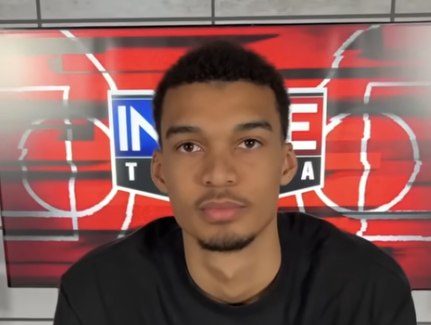
SAN ANTONIO — Victor Wembanyama has started light training and individual on-court work as he progresses through the NBA’s concussion protocol, offering cautious optimism for the San Antonio Spurs as they navigate their first-round playoff series against the Portland Trail Blazers without their franchise cornerstone.
Victor Wembanyama
The 22-year-old phenom, who suffered a concussion after a hard face-first fall in Game 2 on April 21, participated in limited non-contact activities on Thursday, including light shooting, ball-handling drills and stationary movement exercises. Spurs coach Mitch Johnson confirmed the positive development but emphasized that Wembanyama remains in the protocol and has not yet been cleared for full team practice or contact work.
“Wemby did some light work today,” Johnson said after Thursday’s practice. “He’s feeling better, but we’re taking it step by step. The protocol is there for a reason, and we’re going to follow it exactly. His health is the most important thing.”
Under NBA concussion guidelines, Wembanyama must complete a graduated return-to-play process that includes rest, light aerobic exercise, sport-specific training, non-contact drills, full-contact practice and finally medical clearance. He has already passed initial symptom assessments and cognitive testing, allowing him to begin the early active stages of recovery.
The injury occurred at the 8:57 mark of the second quarter in Game 2 when Wembanyama lost balance after contact with Portland’s Jrue Holiday and slammed face-first into the hardwood. He was immediately removed from the game and did not return as the Blazers evened the series at 1-1 with a 106-103 victory.
Advertisement
Medical experts note that Wembanyama’s height and long limbs may have contributed to the severity of the fall, generating significant force upon impact. However, early signs suggest the concussion is on the milder side, with no reported loss of consciousness or prolonged neurological symptoms. The Spurs have been deliberately cautious, limiting his activity to controlled environments with close medical supervision.
Wembanyama’s full injury history adds context to the team’s conservative approach. The young star has dealt with ankle sprains, plantar fasciitis, a hip pointer, knee contusion, shoulder soreness and a rib contusion in his first three seasons. While none have been long-term, the frequency has prompted the organization to prioritize long-term durability for their generational talent.
For now, the Spurs are without their Defensive Player of the Year candidate as the series shifts to Portland for Game 3 on Friday. Luke Kornet has started at center in Wembanyama’s absence, providing solid minutes, but the drop-off in rim protection and defensive versatility has been noticeable. San Antonio’s young supporting cast, including Stephon Castle and other rising pieces, has shown promise but lacks the anchor Wembanyama provides.
Johnson has not set a firm timeline for Wembanyama’s return. Game 4 on Sunday or Game 5 back in San Antonio remain the most realistic targets if he continues progressing without setbacks. A return for Game 3 is considered highly unlikely given the protocol’s minimum timelines and the need to ensure full symptom resolution.
Advertisement
The Spurs finished the regular season with one of the strongest records in the Western Conference largely due to Wembanyama’s transformative impact. His playoff debut in Game 1 was electric, with 35 points, five rebounds and two blocks in a 111-98 victory. His absence has forced tactical adjustments, with increased reliance on perimeter defense and collective effort on the glass.
Fan reaction has been supportive but anxious. Social media has been filled with well-wishes for Wembanyama’s recovery alongside calls for patience from the organization. Many point to the long-term benefits of a measured approach, especially given his youth and massive physical frame.
Wembanyama has handled the situation with characteristic maturity. In brief comments to reporters earlier this week, he expressed appreciation for the medical staff and excitement to return when cleared. His focus on proper recovery aligns with modern NBA thinking around head injuries and player longevity.
If Wembanyama is cleared in time for later games in the series, his return could dramatically shift momentum. His presence transforms the Spurs from a promising young team into a dangerous postseason threat capable of exploiting Portland’s interior weaknesses. However, rushing back risks prolonging symptoms or causing secondary issues, a scenario the organization is determined to avoid.
Advertisement
The broader narrative around player health in the playoffs has gained attention. Concussions remain a serious concern across sports, with improved protocols helping protect athletes while sometimes frustrating fans eager for star players to return. Wembanyama’s case highlights the balance teams must strike between competitiveness and caution.
As the series continues without him, the Spurs must prove their depth and resilience. Portland has seized the opportunity, playing with confidence and capitalizing on San Antonio’s temporary frontcourt vulnerabilities. Game 3 in Portland’s Moda Center will test the Spurs’ ability to compete on the road in a hostile environment.
Looking further ahead, Wembanyama’s recovery timeline could influence not only this series but the team’s longer postseason aspirations. A healthy Wembanyama gives San Antonio a genuine chance to make noise beyond the first round. Without him for an extended period, the path becomes significantly steeper.
For now, the focus remains on daily evaluations and gradual progression. Light training is an encouraging first step, but full clearance requires consistent symptom-free performance through increasingly demanding activities. The Spurs will continue monitoring closely while preparing their roster for the immediate challenges ahead.
Advertisement
Wembanyama’s rapid rise has already rewritten expectations in San Antonio. How he navigates this latest health challenge will add another layer to his story as one of the league’s brightest young stars. With the organization committed to a careful process, fans can expect updates in the coming days as he works toward a safe return to the court.
The basketball world continues to watch closely. Whether Wembanyama rejoins the lineup in this series or later, his presence remains central to the Spurs’ hopes in what has already been a breakthrough season for the franchise.
Rory Boland, travel editor at consumer publication Which?, says overall cancellations will be a very small proportion of the millions of flights in and out of the UK, and the changes will be targeted on routes where there are multiple flights a day so that passengers can be rebooked on to an earlier or later flight.
Bosses also blasted a “ridiculous tax” levied on the industry
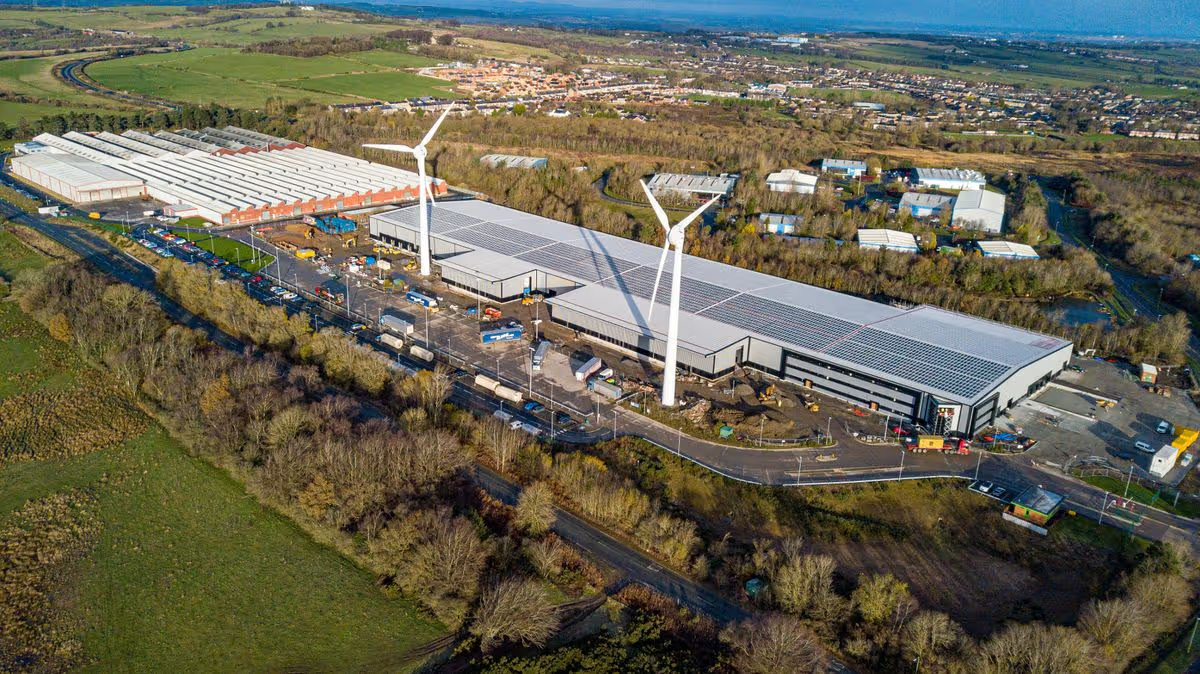
The Greencroft Two site by Lanchester Group of Companies is now taking shape(Image: Lanchester Group)
Wine bottling firm Greencroft Bottling has blamed disruption in the Suez Canal for marring what would have been an exceptional year.
The County Durham-based business, which claims to be one of the most sustainable large contract firms of its type “on the planet” said temporary closure of the key waterway in 2024 impacted otherwise brilliant results. Attacks by Houthi Rebels on shipping in the Red Sea caused a drastic reduction in traffic through the canal, which Greencroft says caused “havoc” – leading to millions of pounds of penalties and other costs as huge volumes of wine hit North East ports over a two week period.
Despite the challenges, Greencroft, which is part of the Lanchester Group, managed to increase operating profits from £1.56m to £2.78m in the year to the end of June, 2025. Newly published documents also show turnover at the 300-strong firm increased from £62.5m to £86m.
With a £20m new production facility called Greencroft 2 now completed at its Annfield Plain base, and significant investments in sustainability measures, the firm is now looking ahead to what it expects to be its best ever year. Together with a new semi-automated warehouse, the new production facility – with the potential for 400million litres of capacity annually – is expected to make the company the “most efficient wine bottling and storage operation certainly in the UK if not in Europe”.
Advertisement
Bosses also looked forward to the benefits of bulk wine shipping, which is said to be better for the product and give the business high volumes. The new premises, powered by wind and solar energy, has the potential to handle the equivalent of 28% of all wine sold in the UK.
Writing in the Greencroft Bottling Company Limited accounts, managing director Mark Satchwell said: “Greencroft Bottling Company has had an excellent year with volume increasing by well over 20% which is amazing considering we have had such a turbulent year here in the UK, the new 18,000 an hour filling line in Greencroft 2 has been integrated into the business and working well and we have invested in more automation in our tank facility increasing our efficiency more than 40%.
“We continue to invest in the business with more automation to keep our cost base as low as possible the new Labour Government increased wine duty massively again this year after to huge 20% rise just 12 months ago, this is really harming the whole industry with duty alone moving up by nearly 40% over the last 15 months.
“And we have Extended Producer Responsibility (EPR) to contend with yet another ridiculous tax on all businesses, but the liquor and hospitality industries have been the hardest hit it seems and not surprisingly there is at least one pub a day closing which is really harming the local communities.”
A version of this article first appeared in CNBC’s Inside Wealth newsletter with Robert Frank, a weekly guide to the high-net-worth investor and consumer. Sign up to receive future editions, straight to your inbox.
Kevin Warsh can credit more than $100 million of his vast fortune to a lucrative regulatory carveout that favors family office executives and investment professionals, family office attorneys told Inside Wealth.
While single-family offices are widely understood to only manage family members’ assets, a little-known exception allows certainemployees to invest with the ultra-wealthy families they work for.
Warsh’s recent financial disclosures are putting the carveout on display.
Advertisement
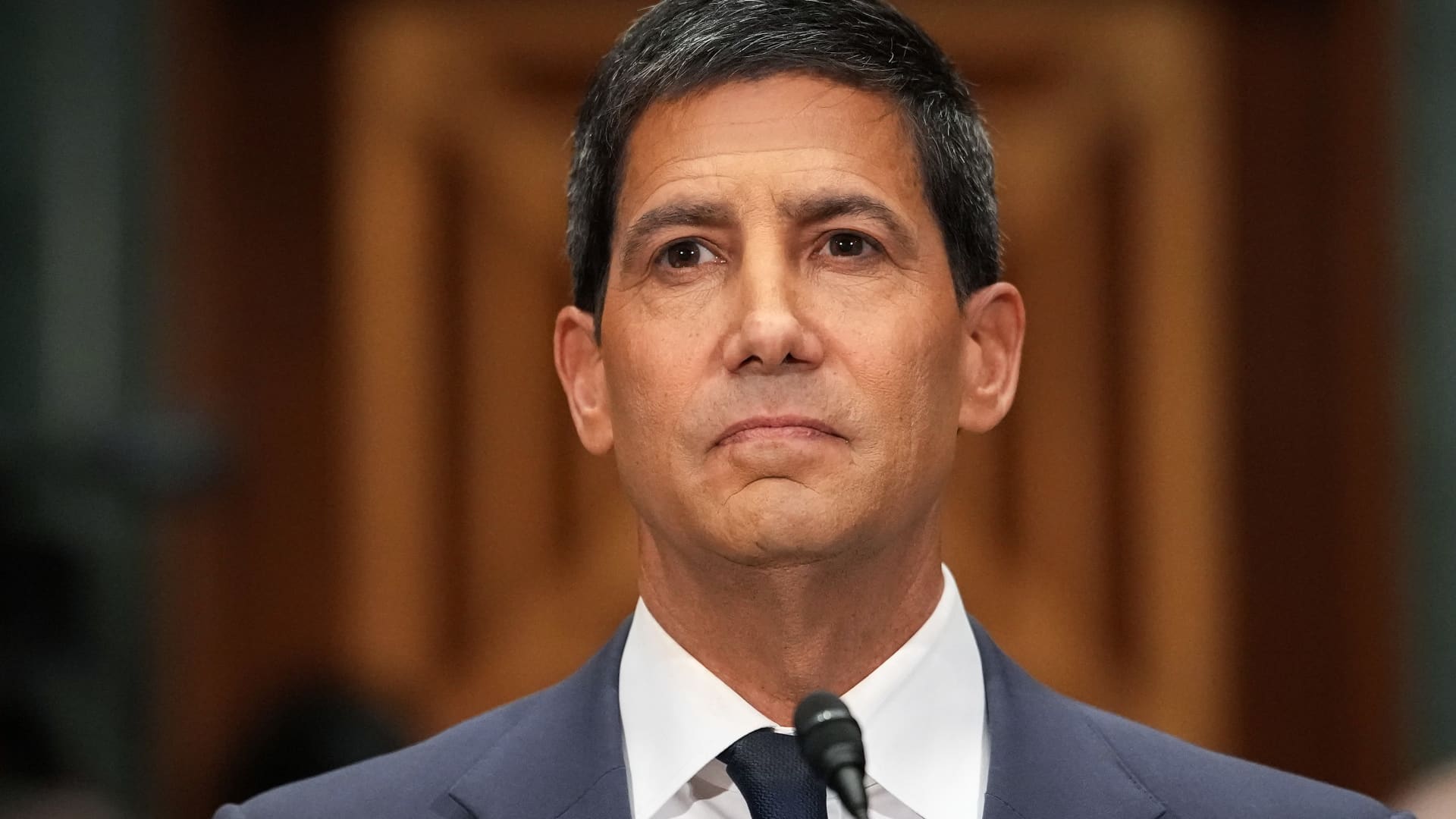
The Federal Reserve chair nominee has two stakes worth at least $50 million each in a vehicle called the Juggernaut Fund, according to the filings. The fund is managed by Duquesne Family Office, the personal investment firm of billionaire hedge fund manager Stanley Druckenmiller.
Warsh joined Duquesne as a partner and advisor after leaving the Fed in 2011 and has interests in dozens of other Duquesne entities. The underlying assets in the Juggernaut Fund are not detailed, citing Warsh’s “pre-existing confidentiality agreements” with the firm.
An attorney who has advised family offices for 30 years told CNBC it’s increasingly common for family offices to structure compensation for their key employees in a similar manner to private equity firms. That could include incentive fees from investments or opportunities to co-invest capital, said the lawyer, who spoke on the condition of anonymity in order to speak freely.
Family offices often lend money to these employees in order to fund their capital commitments and forgive them over time or apply future bonuses toward the debt, the lawyer said.
Advertisement
Single-family offices can allow employees to co-invest thanks to a family office rule issued by the Securities and Exchange Commission in 2011. Under that rule, family offices do not have to register as investment advisors so long as they only advise or manage assets for family clients, a category that includes key employees along with family members of the firm founder.
To qualify, key employees must occupy a senior position like director or a executive officer or be involved in the firm’s investment activity, according to the SEC. Investment professionals must have held these duties at the family office or another company for at least 12 months, per the SEC.
“I think the SEC staff at the time was sympathetic to the family office community’s concerns about making investment opportunities and in-house investment staff as robust as possible,” said a lawyer at a New York City firm, who asked to remain anonymous to speak about the matter. “They recognized that attracting and retaining that type of talent required providing executives that level of compensation.”
Lawyers told Inside Wealth that Warsh likely falls under the key employee exception. Duquesne and a representative of Warsh did not respond to requests for comment.
Advertisement
Evan Hall, partner at investment management practice group at Haynes Boone, said the “key employee” category is somewhat flexible, however.
“If you’re an employee of the firm who participates in investment decisions, it doesn’t have to be allinvestment decisions for the family office,” Hall said. “People can game it a little bit. Can a consultant fit in the key-employee definition? It really seems kind of murky, but that’s a line we see a lot.”
Get Inside Wealth directly to your inbox
Warsh has promised to divest his Duquesne-affiliated investments if he’s confirmed as Fed chair, but he has not disclosed how he would do so.
Lawyers who spoke with Inside Wealth said Warsh would have to sell them to the Druckenmiller family or another family client in order for Duquesne to comply with the family office rule.
Advertisement
“I will say that if he doesn’t have friendly partners willing to buy him out, getting out of underlying investments tends to be very difficult,” said another New York lawyer, who similarly requested to remain anonymous to speak candidly. “Otherwise it’s very difficult to get out of private investments.”
At Tuesday’s Senate Banking Committee confirmation hearing, Sen. Elizabeth Warren, D.-Mass, asked Warsh if he would sell those interests back to Druckenmiller.
“Will you disclose how you divest those assets? Or will you just collect a check for $100 million from someone whose whole business is betting on what the Fed will do?” Warren said.
Warsh said he had come to an agreement with the Office of Government Ethics, but did not give specific details about that.
Advertisement
Although Warsh’s nomination and wealth have cast attention on how family offices compensate their employees, lawyer Michael Schwamm, a partner at Duane Morris, said it’s unlikely that it will invite regulatory scrutiny on how key employees are defined or how many can co-invest.
He said the SEC would probably only act if an investment went bad and an employee lost their life savings and came after the firm in a public way.
“I would not be surprised if there are family officers that have tripped the line, but is this something that the SEC is actively gonna go after?” he said. “Not until something happens.”

















































You must be logged in to post a comment Login