

Business
DNB Bank ASA 2026 Q2 – Results – Earnings Call Presentation (OTCMKTS:DNBBY) 2026-07-17



Seeking Alpha’s transcripts team is responsible for the development of all of our transcript-related projects. We currently publish thousands of quarterly earnings calls per quarter on our site and are continuing to grow and expand our coverage. The purpose of this profile is to allow us to share with our readers new transcript-related developments. Thanks, SA Transcripts Team


Form 4 MannKind Corp For: 17 July
Form 4 BJs Restaurants Inc For: 17 July

GEO Group worker arrested in shooting of protester at Colorado ICE facility
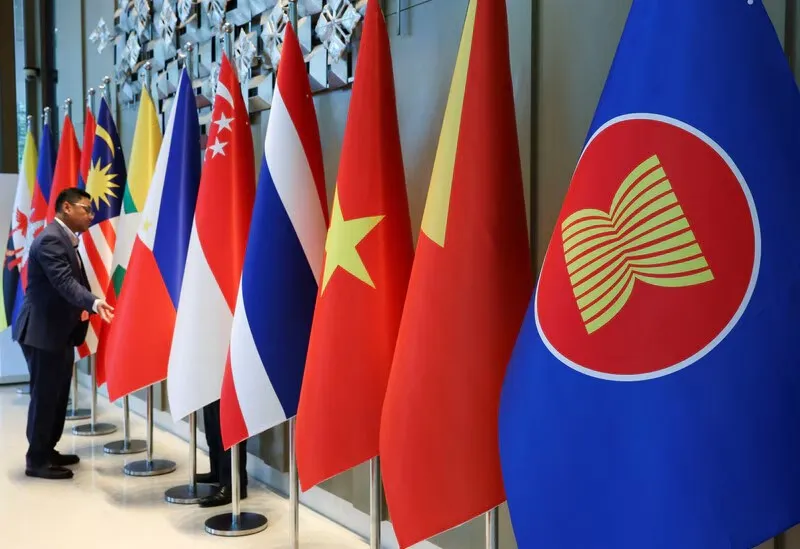
Timor-Leste, ASEAN’s newest member since 2025, is diversifying beyond oil dependence through tourism, agriculture, and foreign investment. With Malaysia as a key partner, the young nation targets ASEAN chairmanship in 2029 while implementing reforms to modernize its economy and institutions.
Key Points
• Timor-Leste, one of the world’s youngest nations, joined ASEAN in 2025 after a 14-year application process, with Malaysia playing a key role through political support, technical assistance, and Prime Minister Anwar Ibrahim’s lobbying efforts, while bilateral ties have deepened across trade, education, and healthcare.
• The country is diversifying beyond oil dependency by developing tourism, agriculture, fisheries, and digital services, offering foreign investors greenfield opportunities, tax incentives, and preferential market access as a least-developed nation.
• Targeting ASEAN chairmanship in 2029, Timor-Leste is modernising infrastructure, strengthening institutions, and welcoming Malaysian investment in construction, TVET, healthcare, and energy, while improving regional connectivity through new direct flights between Dili and Kuala Lumpur.
Timor-Leste’s Rise: From Independence to ASEAN Integration
Timor-Leste, one of the world’s youngest nations, is rapidly emerging as Southeast Asia’s next growth story. Independent since 2002 following decades of conflict, the country of 1.4 million people has traditionally depended on petroleum revenues. However, a defining shift is underway. Following admission into ASEAN in 2025 after a 14-year application process, Timor-Leste is actively diversifying its economy, modernising institutions, and attracting foreign investment. With a potential ASEAN chairmanship in 2029, the country is leveraging regional integration as a powerful catalyst for national transformation and long-term sustainable development.
Malaysia and Timor-Leste: A Partnership Built on Trust
The bilateral relationship between Malaysia and Timor-Leste was forged during Timor-Leste’s most challenging moments, including the 1999 referendum and the 2006 internal crisis. Malaysia provided critical support, including hosting Timor-Leste’s embassy and maintaining essential air connectivity during the Covid-19 pandemic. More recently, Prime Minister Anwar Ibrahim played an instrumental role in securing Timor-Leste’s ASEAN membership by personally lobbying regional member states. Malaysia also provided technical training, institutional support, and funding for Timor-Leste’s ASEAN coordination unit, helping the nation navigate the complex logistical and policy dimensions of regional diplomacy.
Economic Potential: Opportunities for Investment and Growth
Timor-Leste is actively diversifying beyond oil and gas, targeting sectors including tourism, agriculture, fisheries, infrastructure, and digital services. The country offers compelling incentives for investors, including tax and customs duty exemptions, alongside preferential market access as a least-developed nation in markets such as the EU, Australia, and India. Malaysian companies are particularly well-positioned to contribute in areas such as TVET, infrastructure, healthcare, and fintech. A recently signed MOU with Petronas signals growing energy collaboration. With improved air connectivity through Batik Air and AeroDili, and unique assets like world-class diving and specialty coffee, Timor-Leste presents a genuine greenfield investment opportunity.
Other People are Reading


Justin Law has a Ph.D in Chemistry from Rice University and has earned the CFA Institute Investment Foundations certificate. He applies his knowledge to deep value and dividend paying stocks.Justin is a contributor to the investing group The Dividend Kings where he curates the Dividend Champions list, a monthly publication of companies with a history of consistently increasing their dividends. The Dividend Kings is a group of analysts teaching individuals how to invest more wisely in dividend stocks. Learn More.
Analyst’s Disclosure: I/we have a beneficial long position in the shares of PFE, CMCSA, SYY either through stock ownership, options, or other derivatives. I wrote this article myself, and it expresses my own opinions. I am not receiving compensation for it (other than from Seeking Alpha). I have no business relationship with any company whose stock is mentioned in this article.
Seeking Alpha’s Disclosure: Past performance is no guarantee of future results. No recommendation or advice is being given as to whether any investment is suitable for a particular investor. Any views or opinions expressed above may not reflect those of Seeking Alpha as a whole. Seeking Alpha is not a licensed securities dealer, broker or US investment adviser or investment bank. Our analysts are third party authors that include both professional investors and individual investors who may not be licensed or certified by any institute or regulatory body.


I am a full-time analyst interested in a wide range of stocks. With my unique insights and knowledge, I hope to provide other investors with a contrasting view of my portfolio, given my particular background.If you have any questions, feel free to reach out to me via a direct message on Seeking Alpha or leave a comment on one of my articles.
Analyst’s Disclosure: I/we have no stock, option or similar derivative position in any of the companies mentioned, and no plans to initiate any such positions within the next 72 hours. I wrote this article myself, and it expresses my own opinions. I am not receiving compensation for it (other than from Seeking Alpha). I have no business relationship with any company whose stock is mentioned in this article.
The analysis is provided exclusively for informational purposes and should not be considered professional investment advice. Before investing, please conduct personal in-depth research and utmost due diligence, as there are many risks associated with the trade, including capital loss.
Seeking Alpha’s Disclosure: Past performance is no guarantee of future results. No recommendation or advice is being given as to whether any investment is suitable for a particular investor. Any views or opinions expressed above may not reflect those of Seeking Alpha as a whole. Seeking Alpha is not a licensed securities dealer, broker or US investment adviser or investment bank. Our analysts are third party authors that include both professional investors and individual investors who may not be licensed or certified by any institute or regulatory body.
Prosecutors file attempted aggravated murder charges in stabbing of Muslim man in Utah
Business
US military says it completed latest strikes on Iran, marking 7th consecutive night of attacks
US military says it completed latest strikes on Iran, marking 7th consecutive night of attacks
Business
South Korea’s KOSPI and KOSDAQ Markets Are Closed Friday for Newly Reinstated Constitution Day Holiday
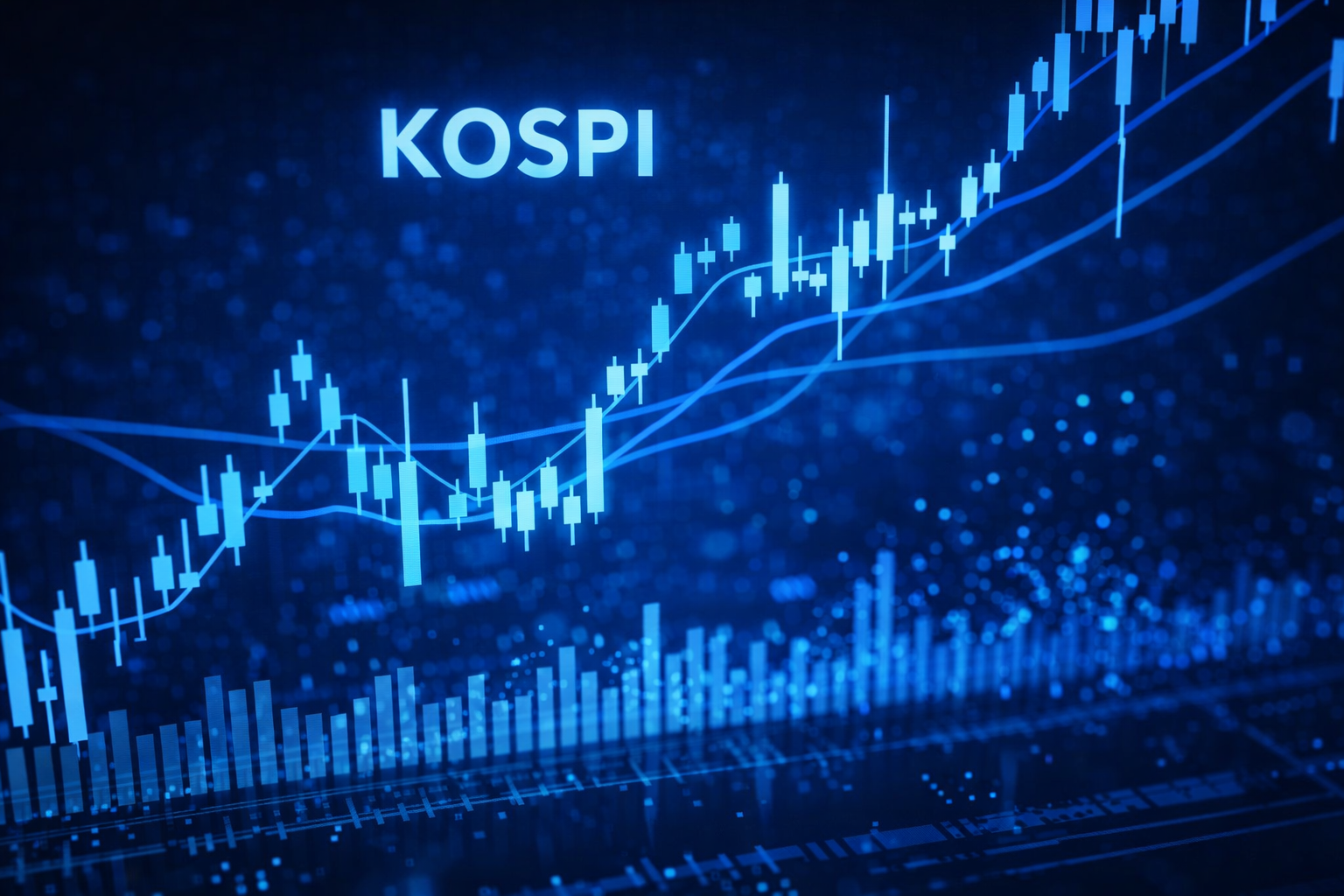
KOSPI is closed today. South Korea’s benchmark stock index, along with the broader KOSDAQ and KONEX markets, is shut for trading on Friday, July 17, 2026, in observance of Constitution Day, a public holiday that was reinstated on the national calendar this year after previously being dropped from South Korea’s list of official days off.
The Korea Exchange, which operates the country’s securities markets, confirmed the closure in an announcement made on May 19. The exchange said the shutdown affects the KOSPI, KOSDAQ and KONEX equity markets, along with exchange-traded funds, exchange-traded notes and equity-linked warrants trading on those platforms. The closure also extends to South Korea’s bond and repo markets, the KRX Startup Market, and derivatives markets tied to both equities and bonds. Beyond securities, the shutdown reaches into general commodities trading as well, including markets for oil, gold and carbon emission allowances that operate under the Korea Exchange’s oversight.
Constitution Day’s return to the exchange’s regular holiday schedule reflects a broader change in its status as a national holiday. The day marks the anniversary of the promulgation of South Korea’s constitution in 1948 and had previously been observed as a public holiday for decades before it was removed from the country’s official list of paid holidays in 2008 as part of a broader effort to reduce the number of non-working days on the calendar. This year’s reinstatement restores its status as a recognized public holiday, and the Korea Exchange has adjusted its own trading calendar accordingly, marking July 17 as a newly added closure date alongside a separate market shutdown that took place on June 3 for South Korea’s local elections.
Trading activity tied to the closure follows a broader pattern the exchange typically observes on holiday closures. After-hours trading, which normally allows investors to continue trading Korean securities beyond the standard market session, will also be suspended for the day. However, the exchange noted that overnight trading sessions on the preceding trading day operated normally, meaning investors had a final opportunity to adjust positions before the extended closure took effect. Over-the-counter derivatives clearing operations and the Korea Exchange’s trade repository, which handles regulatory reporting for derivatives transactions, are also shut down for the holiday.
Under normal circumstances, the Korea Exchange operates on a Monday-through-Friday schedule, with regular trading hours running from 9 a.m. to 3:30 p.m. local time, Korean Standard Time, which does not observe daylight saving time and remains fixed at nine hours ahead of Greenwich Mean Time year-round. Unlike some other major Asian exchanges, including those in Tokyo, Shanghai, Hong Kong and Singapore, the Korea Exchange does not build a midday lunch break into its trading schedule, running continuously through its full session much like the exchanges in Sydney.
Friday’s closure means investors and traders tracking Korean equities, including the many international investors who follow the KOSPI as a bellwether for global semiconductor and memory chip sentiment given the outsized weighting of companies like Samsung Electronics and SK Hynix on the index, will need to wait until the market reopens to react to any news or data released during the holiday. The closure comes at a notable moment for the index, which has experienced an unusually volatile stretch in recent weeks, including sharp single-day swings tied to swings in global chip stock sentiment and a trading halt triggered by a steep selloff earlier this week.
Looking ahead on the Korean market calendar, the next scheduled holiday closure after Friday’s Constitution Day observance is set for August 17, a Monday, when the exchange will close in observance of Liberation Day, according to holiday calendars maintained by financial data providers tracking the Korea Exchange’s 2026 schedule. Liberation Day marks the anniversary of Korea’s independence from Japanese colonial rule in 1945 and is among the country’s most widely observed public holidays each year. Beyond that, South Korea’s holiday calendar also includes the Chuseok harvest festival later in the fall, a multi-day observance that typically results in an extended market closure spanning several consecutive trading days.
For global investors and traders who rely on Korean market activity as a signal for broader Asian trading sentiment, particularly around technology and semiconductor stocks, holiday closures like Friday’s can sometimes be easy to overlook if they are primarily tracking market calendars centered on the United States or Europe. Financial data platforms that track exchange operating hours have noted that Korea’s holiday schedule follows its own distinct rhythm separate from other major markets in the region, making it useful for traders focused on Korean equities or exchange-traded funds tied to the KOSPI to monitor the exchange’s calendar directly rather than assuming alignment with holiday schedules elsewhere in Asia or in Western markets.
The Korea Exchange’s total market capitalization across all securities traded on the platform stands at roughly $3.98 trillion, according to data compiled by market infrastructure trackers, underscoring the scale of trading activity that pauses during scheduled closures like Friday’s holiday. The exchange, headquartered in Busan, remains the sole operator of securities markets in South Korea, serving as the primary venue for price discovery across the country’s equity, bond, derivatives and general commodities markets.
Trading is expected to resume as normal when the Korea Exchange reopens for its next scheduled session, with investors likely to closely track any overnight developments in U.S. and other global markets during the holiday closure that could influence Korean equities once trading resumes. Given the recent volatility affecting technology and memory chip stocks on the KOSPI, market participants may be watching particularly closely for how the index responds when it reopens following the extended break tied to this year’s reinstated Constitution Day holiday.
Business
Hacked Suno Source Code Reveals AI Music Startup Scraped YouTube and Deezer, Bolstering Labels’ Case
Hacked source code from AI music company Suno lists YouTube Music, Deezer and Genius among the platforms it scraped to build its artificial intelligence models, according to a report published Wednesday by 404 Media, adding new detail to allegations at the center of an ongoing copyright lawsuit brought by two of the world’s largest record labels.
The code was obtained by a hacker who breached Suno’s systems and shared the material with the publication. According to the report, the same hacker also accessed information on hundreds of thousands of Suno customers, including email addresses, phone numbers and Stripe payment details tied to their accounts.
The hacked material corroborates allegations made by Universal Music Group and Sony Music Entertainment, who are suing Suno for copyright infringement in a case coordinated by the Recording Industry Association of America. Suno has already acknowledged in a court filing that its training data was drawn from music available across the open internet, and the company has argued that training its AI models on copyrighted material qualifies as protected fair use under copyright law. In that filing, Suno described its training data as encompassing nearly all music files of reasonable quality accessible on the open internet, while claiming it respected paywalls and password protections in the process.
According to 404 Media, the hacked code names the specific sources Suno drew from and logs the volume of material collected from each. Internal comments in one file referenced pulling from platforms including Genius, YouTube Music, Freesound, Jamendo and Deezer, with a note indicating that non-music content would be filtered out of the resulting dataset. A file labeled “youtube_music” recorded that the system had ingested more than 2 million individual music clips.
The scale of material logged in the code was substantial. According to the report, Suno’s datasets included more than 113,000 hours of audio logged under the YouTube Music label, plus an additional 152,000 hours logged separately as tagged YouTube Music content. The code also referenced more than 62,000 hours pulled from the stock media library Pond5, nearly 19,500 hours from the International Music Score Library Project, more than 17,600 hours from Genius, and over 12,000 hours from Deezer. In total, 404 Media reported the material amounted to at least several decades’ worth of audio.
Other portions of the code reviewed by 404 Media showed Suno searching specifically for a cappella versions of songs on YouTube, an approach the publication said appeared designed to help isolate vocal tracks for training purposes. The code also indicated Suno used proxy infrastructure from a company called Bright Data to carry out the scraping of YouTube content, and separately used a service called PodcastIndex to compile roughly 420,000 podcasts, each with a minimum of five half-hour episodes, in an apparent effort to download close to a million hours of spoken-word audio. The publication said it remained unclear from the files exactly how Suno had gathered material from some of the other platforms named in the code.
The revelations add specificity to claims already at the heart of the record industry’s lawsuit. In an amended complaint filed in September 2025, the RIAA accused Suno of stream-ripping recordings directly from YouTube and circumventing the platform’s rolling cipher encryption, a technical safeguard designed to prevent unauthorized downloading of streamed content. According to 404 Media, the hacked data appears to confirm that specific allegation. The labels have argued that circumventing YouTube’s protective measures constitutes a separate violation of the anti-circumvention provisions of the Copyright Act, distinct from Suno’s fair-use defense, which applies specifically to the act of copying the material itself rather than to bypassing the platform’s access controls.
The financial stakes in the case are considerable. The labels are seeking statutory damages of up to $150,000 per infringed work, in addition to penalties of up to $2,500 for each act of circumvention. In May, Universal Music Group and Sony asked the court to expand the scope of the case from 560 identified works to more than 61,000 works the labels say they identified within Suno’s training data through audio fingerprinting technology, a change that would raise the theoretical maximum in statutory damages from roughly $84 million to more than $9 billion. The presiding judge has not yet ruled on that request.
In response to the report, a Suno spokesperson told 404 Media that the company’s AI models had been trained on publicly available music files and related metadata accessible through third-party websites on the open internet. The spokesperson said Suno determined in November 2025 that it had experienced what it described as a limited security incident that was quickly contained, and that an internal investigation found the exposure primarily involved outdated source code no longer in active use at the company. The spokesperson added that no sensitive personal information had been compromised and that Suno does not have access to customers’ full credit card numbers through its payment processor, Stripe. The company said it had determined that individual breach notifications were not required under applicable privacy laws, and that it had separately filed a training-data disclosure mandated under California law.
The hacker, who identified themselves to 404 Media using the name ellie.191, said they gained access by targeting a Suno employee with a supply-chain worm known as Shai-Hulud, which is designed to harvest credentials for GitHub and other cloud-service accounts. The hacker told the publication they had no specific motivation behind the breach, saying only that they enjoy hacking a wide range of targets.
The case against Suno has drawn in other parties beyond Universal and Sony. Jamendo, a Luxembourg-based music licensing platform named in the hacked code, filed its own copyright infringement claim against Suno on June 29 in the same Massachusetts court, alleging the company trained on a roughly 55,600-track dataset that was licensed only for non-commercial academic use, without securing a commercial license. Jamendo is seeking at least €17.8 million, or roughly $20 million, in damages. Warner Music Group, originally a co-plaintiff in the broader industry lawsuit, exited the case after reaching a settlement with Suno in November 2025 that included a licensing partnership and Suno’s acquisition of the concert-discovery platform Songkick.
Suno, which raised more than $400 million in funding in June, has said it builds its AI models around a philosophy the company calls “Original Creation, By Design” and does not use artist names as a category of training metadata. A company spokesperson said Suno believes artists deserve both new opportunities and strong protections. The case remains ongoing as the court weighs the labels’ request to significantly expand the scope of works at issue in the lawsuit.
Form 4 MannKind Corp For: 17 July
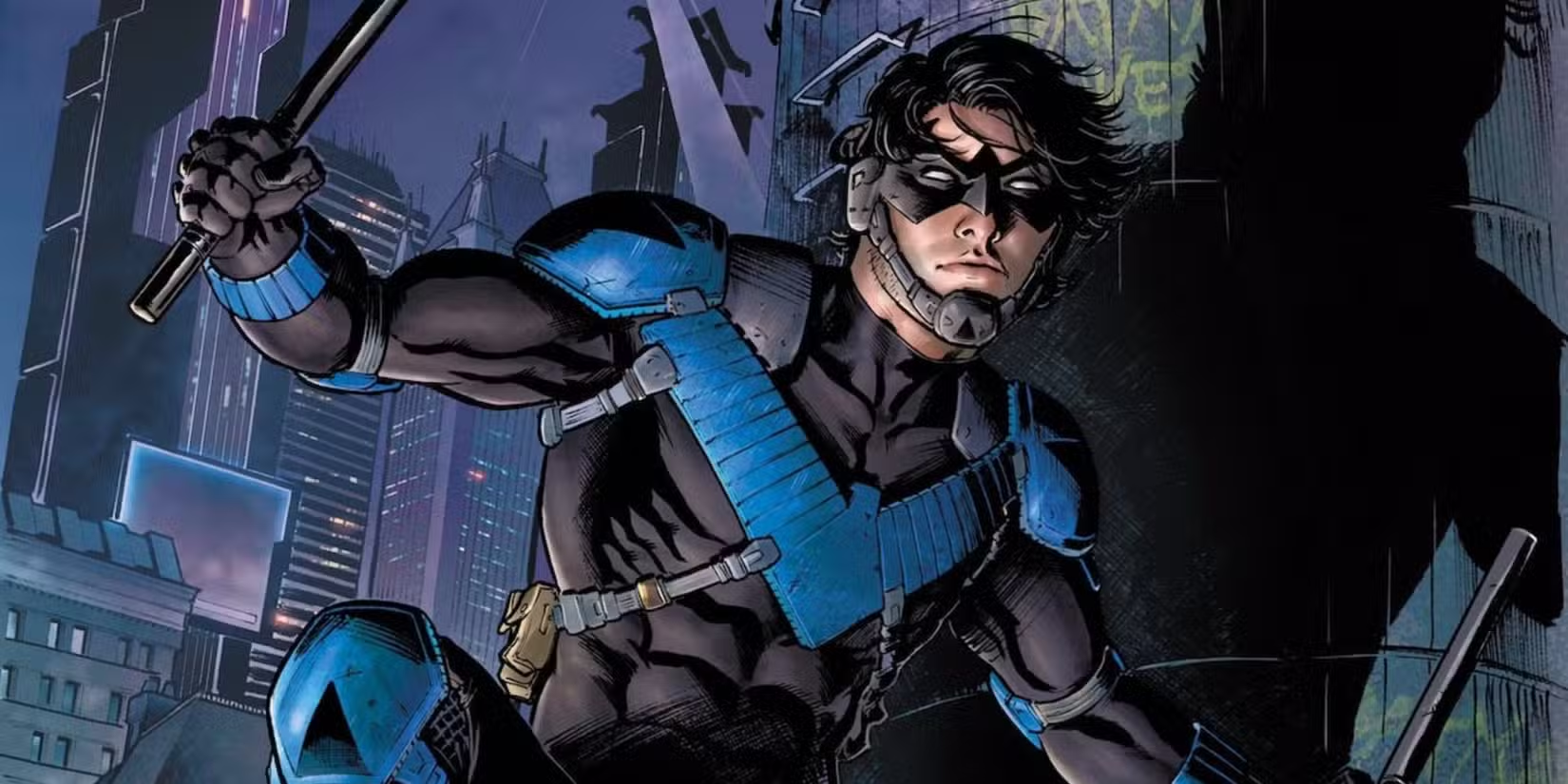
Forget Batman and Superman, This Fan-Favorite Hero Is DC’s Greatest Character
Form 4 BJs Restaurants Inc For: 17 July


-
 NewsBeat2 days ago
London Mayor Sadiq Khan handed a peerage by Keir Starmer alongside 15 other Labour figures… just days before the PM leaves No10
-

 Fashion10 hours ago
Weekend Open Thread – Corporette.com
-

 Politics3 days ago
Young campaigners urge incoming PM to act on outdoor junk food ads
-

 Crypto World2 days ago
CFTC blocks Kalshi from unwinding Michigan trades after court order
-

 Business2 days ago
Nvidia Stock Slips After Big Tuesday Rally as Huang Confirms Vera Rubin Chip Is Now in Production Today
-
 Entertainment2 days ago
Disney’s Most Ambitious Failed Star Wars Attraction Is Coming to SDCC
-

 Crypto World6 hours ago
Ripple wins EU-wide access as ESMA adds it to MiCA register
-

 News Videos3 days ago
XRP BOMBSHELL… XRP OMBOARDED FOR TRANSACTIONS!!!
-

 Crypto World1 day ago
Injective Submits SEC Transfer-Agent Registration to Onchain Ownership Records
-

 Tech4 days ago
Get Your ESP32 Sunny Side Up With This Solar Dev Board
-

 NewsBeat16 hours ago
Registration is now open for March for Men with Kev 2026
-

 Business2 days ago
Palantir Shares Rise After Expanded Nvidia Partnership and Fresh Analyst Upgrades Ahead of Earnings Day
-

 Tech3 days ago
Dark Secrets Emerge When Jailbreaking LLMs
-

 News Videos21 hours ago
Money | Class 12 Economics | CBSE Board Exam 2026-27
-
 Sports2 days ago
New Cornerback Enters Vikings Trade Rumor Mill
-

 Business1 day ago
Banco Bilbao Vizcaya Argentaria, S.A. (BBVA) Discusses Global Macro Environment and Economic Outlook for Core Markets Transcript
-
 Tech4 days ago
Cloudflare Precursor Watches Your Mouse and Keyboard To Decide If You Are Human
-

 Business9 hours ago
Airlines warn Sunshine Protection Act could disrupt flight scheduling
-

 News Videos5 days ago
how to make coin bank box with cardboard #scienceproject #money #diy #shorts
-
 Entertainment2 days ago
Vicki Gunvalson Defends Discussing Heather Dubrow’s Money
You must be logged in to post a comment Login