

Business
Dow Rebounds 261 Points as Intel-Apple Chip Deal and Iran Peace Accord Lift Wall Street


Wall Street bounced back Thursday, with the Dow Jones Industrial Average climbing 261 points as investors shook off the previous session’s hawkish Federal Reserve shock and rallied behind a surprise announcement that Intel and Apple would partner to design and manufacture semiconductors on American soil — a development that sent chip stocks surging across the board and renewed confidence in the domestic technology sector.
The Dow closed at 51,753.90, a gain of 261.35 points, or roughly 0.51%, recovering a portion of the steep losses from Wednesday when the 30-stock index had shed more than 507 points after the Fed’s updated projections rattled markets. The S&P 500 gained 1.15% while the Nasdaq surged 1.5%, as investors focused on the Fed’s latest interest-rate decision and the signing of the interim U.S.-Iran peace deal. The Russell 2000 small-cap index, however, lagged the broader rally, losing 0.72%.
The Intel-Apple Announcement
The single biggest catalyst driving Thursday’s gains was a post on Truth Social by President Donald Trump, who announced that Intel had agreed to partner with Apple to design and build chips in the United States — a development framed by the White House as a victory for domestic manufacturing policy.
Intel’s stock rose 9% in premarket trading after Trump said the semiconductor company had agreed to a deal with Apple to design and build chips in the U.S. “Stupid Presidents took our Economy for granted, and let Taiwan and others steal our Semiconductor Factories,” Trump said in a post on Truth Social. “Apple has agreed to work with Intel to design and build its Chips in America.”
Intel’s stock has seen significant gains recently after struggling for years, having relinquished its dominant market position. The stock has surged 464% in the past 12 months, with the company hitting a market cap of $608.7 billion.
The announcement rippled through the semiconductor sector. Chip stocks surged in premarket trading, led by Intel, which rose 9.8%, while Micron Technology gained 4.8%, Advanced Micro Devices rose 3.9%, and Broadcom advanced 3%. The iShares Semiconductor ETF rose 4.6%.
Iran Peace Deal Adds Tailwind
Adding to the bullish mood was the formalization of a U.S.-Iran interim peace agreement that investors had been tracking anxiously for weeks. The U.S. and Iran signed a 14-point memorandum of understanding to extend the ceasefire, including in Lebanon, and reopen the strategically vital Strait of Hormuz. The agreement calls for both sides to continue talks toward a final deal over the next 60 days and includes a $300 billion reconstruction plan for Iran, as well as the removal of all types of U.S. sanctions against the Islamic Republic.
President Trump defended the agreement against critics on Thursday. “These fools, who think I haven’t been tough enough on Iran, when the stock market just hit a record high and oil prices are ‘tumbling’ down, are either jealous, bad people, or stupid,” Trump said Thursday on Truth Social.
The reopening of the Strait of Hormuz — a critical chokepoint for global oil shipments — pushed crude prices lower and eased inflation fears that had been a central driver of market volatility in recent weeks. Lower oil prices reduce cost pressures throughout the economy and can lessen the urgency for the Federal Reserve to pursue rate hikes.
Wednesday’s Fed Shock Still Echoing
Thursday’s gains came against the backdrop of significant unease generated just 24 hours earlier. Stocks fell on Wednesday, while Treasury yields surged, as investors grew uncertain over the path of monetary policy after several Federal Reserve officials indicated there could be a rate hike this year to tamp down on inflation.
At the conclusion of the Fed’s two-day meeting, the first under new Chairman Kevin Warsh, the central bank left interest rates unchanged at a target range of 3.5% to 3.75%. A number of Fed officials see rates increasing in 2026, according to the summary of economic projections. The fed funds rate’s median estimate for year-end now stands at 3.8%, an increase from 3.4% in the prior projections from March, which suggests that the committee sees at least one rate hike as necessary in 2026. Warsh revealed he abstained from submitting a projection himself, further complicating the outlook.
“The market reaction at this point is largely to the dot plot being much more hawkish,” said Claudia Sahm, chief economist at New Century Advisors. “The wind has changed a lot in terms of the inflation picture.”
The previous dot plot, in March, showed a rate cut expected sometime this year, a projection that the Fed’s latest guidance effectively discarded. The shift caught many equity investors off guard and triggered broad selling across technology and growth stocks.
A Market Navigating Multiple Crosscurrents
Thursday’s rebound illustrated the degree to which Wall Street is simultaneously processing several major macro forces — geopolitics, monetary policy, and a technology sector in the midst of a historic AI-driven reshaping.
Retail sales surged in May despite the war, up 0.9% from April versus expectations of 0.5%, reinforcing impressions of a solid economy. That data, released Wednesday, was interpreted as a double-edged signal: strong consumer spending is positive for corporate earnings but also gives the Fed more justification for tighter monetary policy.
The Roundhill Magnificent Seven ETF, which tracks an equal-weight basket of mega-cap technology stocks including Alphabet, Amazon, Apple, Meta Platforms, Microsoft, Nvidia, and Tesla, gained 0.43% to $64.86 in premarket trading.
The broader semiconductor rally on Thursday also represented a partial recovery from one of the sector’s most painful stretches of the year. Earlier this month, a weaker-than-expected AI chip outlook from Broadcom triggered a chain reaction that dragged down Micron, AMD, and Intel and contributed to a broader tech selloff. The Nasdaq Composite fell 4.18% on June 5 in its worst single-day decline since April 2025, while the S&P 500 snapped a nine-week winning streak.
Looking Ahead
The question now facing investors is whether Thursday’s rebound represents a durable shift in sentiment or a relief rally built on headlines. The Iran peace deal, while officially signed, remains conditional — with both sides committed to 60 days of further negotiations toward a permanent agreement. Any breakdown in those talks could quickly reverse the oil price declines that helped fuel Thursday’s optimism.
On the monetary policy front, the Fed’s hawkish dot plot has now recalibrated market expectations for the remainder of 2026. Traders are now fully pricing in a rate hike from the central bank by the end of the year, even as President Trump continues to call for cuts as Kevin Warsh, his appointee to chair the Fed, takes the helm.
For now, the combination of a landmark domestic chip manufacturing deal, declining oil prices, and a formalized Middle East ceasefire gave markets enough of a foundation to stage a meaningful recovery — and push the Dow back above 51,700 for the first time since the Fed’s warning rippled through trading floors on Wednesday afternoon.

Accenture: The Market Is Pricing-In An Existential Crisis

As operators ridicule the Chancellor’s giveaway, one Kensington venue is touting a £25 “kids” menu of burgundy snails and anchovy butter toast
Pubs and restaurants are expected to dream up increasingly inventive ways to milk a tax break on meals for under-18s, after a London venue unveiled a “children’s” menu featuring wild burgundy snail salad and anchovy butter toast.
Rachel Reeves last month announced a temporary cut in VAT on children’s meals, from 20 per cent to 5 per cent, running between 25 June and 1 September. The reduction forms part of a “Great British summer savings scheme” pitched as relief for hard-pressed venues and a sweetener for families. – Business Matters has explained how the Great British summer savings scheme works here.
The Chancellor flagged the policy in a video address to last week’s UKHospitality trade conference, where it landed to a notably muted reception.
Afterwards, senior figures across the trade added their voices to a growing chorus of derision, branding the scheme “laughable” and contrasting it with the roughly £5bn in extra costs piled onto pubs, bars, hotels and restaurants since Labour returned to power in 2024.
Chris Jowsey, chief executive of the 1,300-strong pub group Admiral Taverns, called the measure a “joke”, arguing that the resulting discount was “so small it’s embarrassing” and would do nothing for pubs that do not serve food.
He likened the VAT cut to the pandemic-era rules that, at one point, effectively allowed venues to serve alcohol only if it arrived alongside a scotch egg. “I suspect you’ll get some enterprising interpretations of children’s menus,” he said.
One restaurant in Kensington, in affluent west London, has already worked out how to wring maximum value from the policy.
The Blue Stoops has launched a £25 menu aimed at any “children” with an appetite for wild burgundy snails with bacon, anchovy butter toast, and beef and oyster pie. The line-up includes a pudding christened The Tax Break Tart. A non-alcoholic beer is bundled in, meaning the entire package qualifies for the summer reduction from 20 per cent to 5 per cent.
“We’re not expecting queues of children demanding snails and anchovy toast, but it has started the right conversations in the pub about why VAT support for hospitality needs to go much further,” the venue said.
Crucially, restaurants and pubs are under no obligation to verify that anyone ordering a discounted children’s meal is in fact a minor.
Clement Ogbonnaya, who owns the Prince of Peckham in south London, dismissed the discount as a “token gesture” that would achieve little without a permanent cut to the headline rate. “We’re all going to be faking our IDs to show we’re under 18,” he joked.
At the UKHospitality conference, operators lined up behind a call to slash VAT on hospitality from 20 per cent to 10 per cent. A parliamentary petition backing the move has already gathered more than 200,000 signatures, and can be found on the UK government petitions site. The campaign is supported by celebrity chefs including Tom Kerridge and Yotam Ottolenghi, and by the potential Labour leadership contender Andy Burnham, who has thrown his weight behind a hospitality VAT cut. Estimates of the annual cost to the Treasury range from about £10.5bn to £13bn.
The case rests partly on international comparison. While the UK rate sits at 20 per cent, the European average is 12.8 per cent. France, Spain and Italy all levy 10 per cent, and Germany charges 7 per cent. UKHospitality, which is co-ordinating the campaign, argues the gap leaves British venues at a structural disadvantage.
In her video message, Reeves insisted the government was backing the industry. The reception on the conference floor suggested otherwise. The hospitality investor and former Dragons’ Den panellist Sarah Willingham told delegates that when the Chancellor described Labour as pro-growth, she “nearly spat out my water”. The chief executive of Nightcap, owner of the Dirty Martini and Piano Works chains, described the UK investment climate as a “shitshow”.
Operators, grappling with soaring energy bills in the fallout from the Iran war, have rounded on a string of Labour measures, among them the higher national minimum wage, increased national insurance contributions and changes to business rates. The squeeze is already showing in the closure data, with three pubs and restaurants now shutting every day as costs and tax rises bite.
“They say they’re doing it for workers, but what they’re doing is making it impossible to employ workers because it’s so expensive,” said Matt Francis, owner of the Planet of the Grapes wine bar chain in London. “They think all people who own a business are driving around in a Ferrari with wedges of cash in our pocket.”
Francis added that he had only just repaid a government loan taken out when he was forced to close during the pandemic. “My reward is to pay even more tax. I will never vote for them again.” Of the summer discount, he was blunt: “We’ve got to the point where it’s laughable, not funny. And there’s a big difference.”
A government spokesperson said: “Businesses across the country have welcomed the Great British summer savings scheme, which will slash VAT from 20 per cent to 5 per cent on children’s meals, cinema and theatre tickets, and family attractions this summer. This will help families enjoy days out for less while boosting footfall for businesses across the hospitality and leisure sector.
“We’re also backing hospitality by reforming business rates, including a £4.3bn support package to limit bill rises, capping corporation tax at 25 per cent, cutting red tape and taking action on the cost of living. We have the right plan to grow the economy and support families and businesses with rising costs.”

Jamie Young
Jamie is Senior Reporter at Business Matters, bringing over a decade of experience in UK SME business reporting.
Jamie holds a degree in Business Administration and regularly participates in industry conferences and workshops.
When not reporting on the latest business developments, Jamie is passionate about mentoring up-and-coming journalists and entrepreneurs to inspire the next generation of business leaders.


The company announced the first deployment of 100% biodiesel-fueled trucks in the US livestock sector.

Dollar hits one-year high on Fed hike bets; Japan warns on yen

SlateStone Wealth chief market strategist Kenny Polcari discusses whether investors are too dependent on AI, Space X’s IPO and his outlook for the markets on ‘Varney & Co.’
Government regulations now add roughly $132,000 to the cost of a typical newly built home, according to a new study from the National Association of Home Builders (NAHB), as industry leaders warn that mounting costs are worsening the nation’s housing affordability challenges.
The NAHB study found that regulations imposed by federal, state and local governments account for 26.4% of the final price of a new single-family home. Applied to the average sales price of a new home in January, the regulatory burden totals approximately $131,734 per house.
The estimate is based on Census Bureau data showing the average sales price of a newly built home sold in January was $499,500.
The report comes as housing affordability remains a challenge for many Americans amid elevated mortgage rates and persistently high home prices.

The NAHB study found that regulations imposed by federal, state and local governments account for 26.4% of the final price of a new single-family home. (I RYU/VCG via Getty Images)
NAHB’s analysis found regulatory costs have increased sharply in recent years. The group estimated that regulations added $93,870 to the cost of a new home in 2021, compared with $131,734 today – an increase of roughly 40% over five years.
Among the various regulatory costs examined in the report, changes to building codes over the past decade represented the largest burden. NAHB estimated those changes add approximately $40,288 to the cost of a typical newly built home.
OIL PRICES PLUNGE TO LOWEST LEVELS SINCE EARLY MARCH AFTER TRUMP SIGNS IRAN DEAL
The study also found that builders face costs associated with zoning approvals, permit and inspection fees, environmental and traffic studies, land-use requirements, labor regulations and delays in obtaining approvals.
“Costly and inefficient regulatory policy is clearly impeding the ability of builders to increase the housing supply,” NAHB Chief Economist Robert Dietz said in a statement. “According to a new NAHB study, government regulation, taxes, fees and other costs add more than 26% to the price of an average single-family home. Easing permitting bottlenecks, density limits and inefficient zoning rules would help reduce costs and support the housing growth the nation needs.”

NAHB’s analysis found regulatory costs have increased sharply in recent years. (Lindsey Nicholson/UCG/Universal Images Group via Getty Images)
According to the report, 94.2% of developers surveyed said regulations typically cause project delays, while 88.2% reported facing development standards that go beyond what they would ordinarily build.
NAHB Chairman Bill Owens said the nation remains short roughly 1.2 million homes and argued that reducing barriers to construction could help boost housing supply.
“With the nation short about 1.2 million homes, builder sentiment will remain soft until barriers are eased and conditions improve for home building,” Owens said in a statement released alongside the latest NAHB/Wells Fargo Housing Market Index.
Builder confidence remains subdued. The latest NAHB/Wells Fargo Housing Market Index showed builder sentiment fell to 35 in June, marking the 14th consecutive month below 40. The survey also found that 35% of builders cut prices in June, while 62% offered sales incentives to attract buyers.
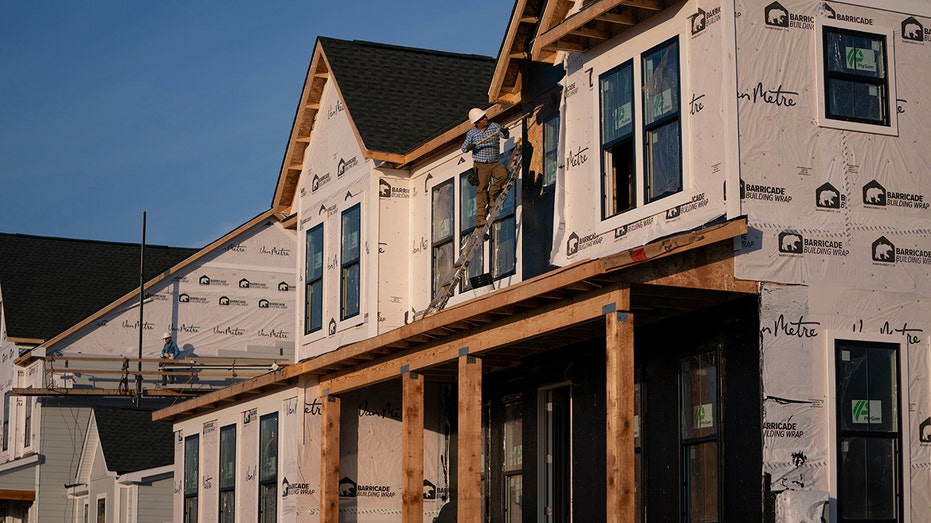
The NAHB estimated that regulations added $93,870 to the cost of a new home in 2021, compared with $131,734 today. (Nathan Howard/Bloomberg via Getty Images)
The NAHB study was based on surveys of 54 land developers and 337 single-family builders conducted in March. Researchers combined the survey responses with Census Bureau housing data and other industry cost assumptions to estimate the aggregate impact of regulations on home prices.
CLICK HERE TO GET FOX BUSINESS ON THE GO
The report noted that it does not argue all regulations should be eliminated, but said quantifying their cost is important as policymakers consider ways to improve housing affordability and increase homebuilding nationwide.

Bayer appoints Kacy Perry to lead Crop Science Canada unit

The Federal Reserve’s policy decision at could test the dollar’s resilience to lower oil prices after the U.S. and Iran agreed an interim peace deal, ING’s Francesco Pesole said in a note.
The dollar needs confirmation that policymakers, especially new Fed Chairman Kevin Warsh, are open to raising rates in future even if rates are held steady Wednesday, he said.
“If Warsh or the broader Federal Open Market Committee signal a stance that is clearly at odds with market pricing, the dollar would sell off sharply.” However, removing the policy easing bias should be enough to support the currency, he said.
Infrastructure & Economic Development
Land Bridge Project Revival
Thailand has revived its ambitious $30 billion coast-to-coast land bridge project, positioning it as a strategic alternative to the heavily congested Strait of Malacca. The proposed corridor would connect the Gulf of Thailand to the Andaman Sea, potentially reshaping regional trade routes and reducing shipping distances significantly. Reuters | Container News
The project has attracted considerable international attention, with analysts noting its potential to redirect global shipping traffic worth trillions of dollars annually. Despite enthusiasm, critics highlight concerns over the enormous cost and complex logistics involved in execution. IndexBox | Port Technology
Tourism & Travel
Tourism Growth and Challenges
Thailand’s tourism sector is experiencing mixed signals in 2026. While China has overtaken Malaysia, Vietnam, and several other nations in driving Thailand’s tourism growth, the country has recorded a 25% drop in visitors from the Middle East, attributed to rising airfares, regional instability, and aviation disruptions affecting Bangkok and Phuket. Nikkei Asia | Travel and Tour World
Vietnam is emerging as a serious competitor, becoming Southeast Asia’s hottest tourist destination while actively learning from Thailand’s past tourism management mistakes. Thailand is responding by cracking down on safety concerns in key destinations such as Koh Samui and reassessing its long-haul tourism forecasts. Fortune | Nation Thailand
Visa and Travel Policy Updates
Thailand recently slashed visa durations for 93 countries following controversy over tourist behaviour, signalling a tougher stance on visitor management. Authorities are also considering introducing mandatory travel insurance for overseas visitors amid rising healthcare costs and broader sustainable tourism goals. The Independent | Travel and Tour World
Geopolitics & Regional Affairs
Thailand-Cambodia Maritime Dispute
Thailand and Cambodia are engaged in an active maritime boundary dispute, with Cambodia launching a UN-backed arbitration process. Thailand has agreed to join the UN maritime arbitration while halting other bilateral talks, with both sides appointing conciliators to manage the process. Analysts caution that even a formal peace deal is unlikely to fully resolve the deeper humanitarian and political tensions between the two neighbours. Reuters | Asia Times
OECD Membership Ambitions
Thailand is actively pursuing OECD membership, motivated by a fear of being left behind economically as regional competitor Indonesia advances its own bid. However, assessments indicate Thailand lags behind on digital government implementation, a key criterion for membership consideration. CNA | Thai PBS World
Technology & Innovation
AI and Quantum Computing
Thailand is positioning itself as a regional technology leader, with True Corp launching a project aimed at making Thailand Southeast Asia’s quantum computing hub. Microsoft has also brought its AI Tour to Bangkok, targeting accelerated digital transformation across Thai industries, including a focus on AI-powered data centre design and liquid cooling technology. Developing Telecoms | Yahoo Finance
Trade & Agriculture
Rice and Rubber Markets
A significant price gap between Thai and Indian rice is redirecting Nigerian demand toward Indian parboiled rice, placing pressure on Thailand’s agricultural export competitiveness. Separately, small-scale rubber farmers in Thailand face growing pressure from the EU Deforestation Regulation (EUDR), prompting private-sector initiatives to provide targeted assistance to affected producers. S&P Global | Mongabay
Society & Culture
Crime, Justice & Social Issues
Thailand is intensifying its crackdown on foreign-linked criminal networks, including raids on an alleged Forex fraud network and deportation of individuals connected to overseas crime syndicates. The country is also issuing ID cards for Myanmar conflict refugees, reflecting growing humanitarian responsibilities along its borders. Nation Thailand | Khaosod English
Source : Google News – Search
Other People are Reading
Form 8K PROVECTUS
BIOPHARMACEUTICALS For: 18 June
Business
St. James’s Place plc (STJPF) Discusses New Simplified Framework for Reporting Financial Performance Transcript

Operator
Good afternoon, and welcome to the St. James’s Place Q&A call on the new framework for reporting financial performance. [Operator Instructions]
I’d now like to hand over to Caroline Waddington, Chief Financial Officer, for opening comments.
Caroline Waddington
CFO & Director
Thank you. Good afternoon, everyone, and thank you for joining the call. And I’m here today with Sophia Johnson from our Investor Relations team. Before I open the floor to questions, I want to spend a couple of minutes reiterating the key points about the new simplified framework for reporting financial performance that I’m very pleased to have announced today.
Importantly, nothing about our profitability changing. There is no change to our financial business model, anticipated profitability, financial ambitions or shareholder returns guidance. The new framework is purely a change in how we present our results with the aim of making them easier to understand and better aligned with our financial business model, charging structure and statutory IFRS reporting.
Our key profit metric is being renamed from the underlying cash result to adjusted IFRS profit after tax. This is the same number, just under a new label. As a result, we expect no material change to consensus profit expectations when you refresh your models to accommodate our new framework and associated guidance. Whilst the bottom line number isn’t changing, the way we present financial performance to get to

Ben Stokes close to England return in third Test against New Zealand

Rivian Faces A Class Action Lawsuit Over Self-Driving In Its Early Vehicles

XRP Holders: XLM Just Gave the Signal


-

 Business4 days ago
No Jackpot Winner as $257 Million Prize Rolls Over to $269 Million Monday Draw
-

 Fashion6 days ago
Weekend Open Thread: Tuckernuck – Corporette.com
-
 Crypto World4 days ago
Zimbabwe Requires Crypto Businesses to Register Annually Under New FIU Regulations
-

 Crypto World6 days ago
Bitget enters Argentina’s regulated crypto market through PSAV registration
-

 Tech6 days ago
NanoClaw integrates JFrog registries to secure AI agent downloads
-

 Tech6 days ago
This Week In Security: Microsoft On Microsoft, Register Your Domains, Linux On ARM, And FreeBSD Joins The File Cache Club
-

 NewsBeat7 days ago
El Nino has formed in the Pacific and could set records, forecasters say
-

 NewsBeat6 days ago
FBI searches office of Ohio voter registration group
-
 Tech7 days ago
Anthropic is spending $150M to embed 1,000 AI fellows inside nonprofits. No degree required.
-
 Entertainment7 days ago
‘The Pitt’s Fan-Favorite Doctor Confirms Noah Wyle Gave His Blessing to Return [Exclusive]
-

 Tech7 days ago
Former AWS CEO Adam Selipsky to lead new $10B AI data center venture
-
 Crypto World7 days ago
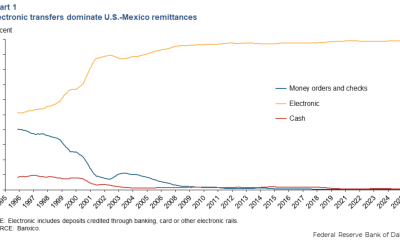
Ripple and Bitso Bring MXNB Stablecoin to XRP Ledger
-
 Entertainment4 days ago
Matt Damon’s Viral Sci-Fi Thriller Has Taken Over HBO Max
-

 Business4 days ago
Anthropic staff to meet White House officials next week, Axios reports
-

 Tech4 days ago
As AI companies race to go public, who else is along for the ride?
-

 Business7 days ago
Justin Bieber Prepares for 2026 Tour Return with New Music and Promoter Talks
-
 Crypto World4 days ago
Bitcoin could crash to $48,000, if this historical pattern is triggered
-

 Politics4 days ago
“Israel’s” ban on ICRC visits ruled illegal, but Knesset moves to stop them permanently
-
 Tech7 days ago
Euro-Office 1.0 Arrives To Open-Source Infighting: ‘Compatibility Is Not Sovereignty’
-
Entertainment7 days ago
Ana Navarro unleashes explosive tirade on ex-Trump aide, Disney Channel star in epic on-air fight: 'Have you no shame?'
You must be logged in to post a comment Login