
Business
Earnings call transcript: EverQuote Q4 2025 beats EPS forecast significantly



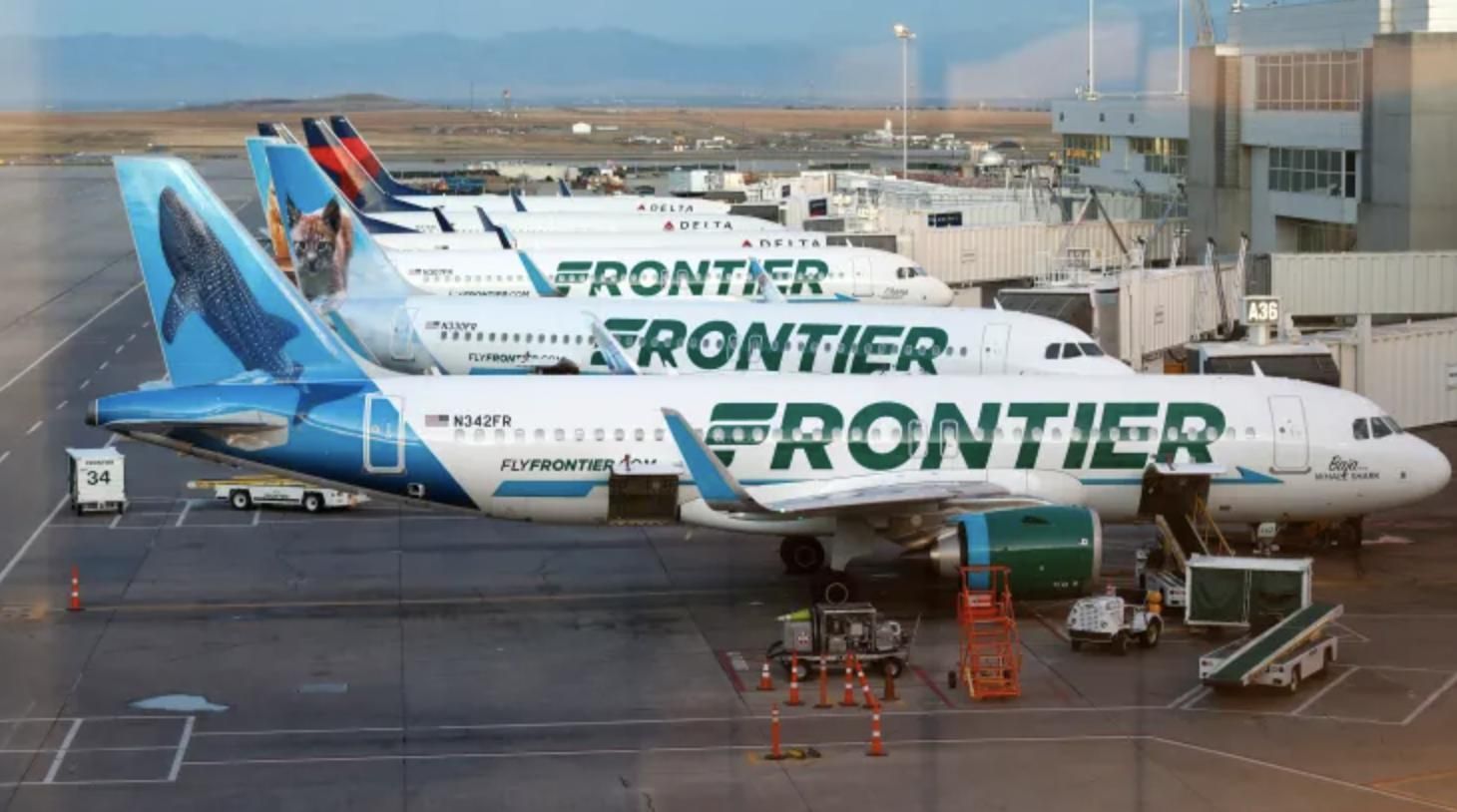
DENVER — Travelers at Denver International Airport faced manageable security wait times Friday as the busy spring travel period tapered off, with standard TSA lines averaging 10 to 17 minutes across the facility’s East and West checkpoints amid moderate passenger volume on April 10, 2026.

According to real-time data from the airport’s official website, East Security showed standard lane estimates of 13-17 minutes and TSA PreCheck lanes at 4-8 minutes. West Security reported lighter conditions with standard waits of 10-14 minutes and PreCheck as quick as 1-5 minutes. Both checkpoints remained open from 3 a.m. to 1 a.m., with PreCheck available through late evening hours.
The relatively short lines offered relief after a spring break season that saw more than 1.3 million passengers screened at DEN between mid-March and late March, with some peak mornings pushing waits higher. Airport officials continue to recommend arriving at least two hours before domestic flights to account for check-in, baggage and potential fluctuations in security processing.
Denver International, one of the nation’s busiest hubs and a major gateway for United Airlines and Southwest Airlines, handled steady Friday traffic typical of a post-holiday weekend. While early April brought scattered flight delays due to weather and national airspace issues, security operations appeared efficient thanks to recent checkpoint upgrades that nearly doubled screening capacity in some lanes.
Real-Time Conditions and Peak Patterns
As of mid-morning Friday, conditions stayed well below the 30-minute mark that can occur during heavy rushes. Historical patterns at DEN show peak congestion often hits between 3-4:30 a.m., 8-10 a.m. and 3-5 p.m., when departure banks overlap with business and leisure travelers. On April 10, afternoon and evening projections suggested waits could remain in the low teens for standard screening.
The airport’s two main security checkpoints in the Jeppesen Terminal — East on the east side of the Great Hall and West on the opposite side — serve all passengers. CLEAR biometric expedited lanes are available at both, further shortening times for enrolled members. TSA PreCheck, now used by millions nationwide, continued to deliver the fastest throughput.
Travelers without trusted traveler programs can still speed things up through the free DEN Reserve system, which allows booking a dedicated security time slot up to 14 days in advance for flights departing between 6 a.m. and 9 p.m. Slots are limited and tend to fill quickly during busier periods.
Airport spokespeople emphasized that wait times can shift rapidly based on passenger volume, staffing and random secondary screenings. Officials urged checking flydenver.com/security or the MyTSA app before heading to the airport for the latest estimates.
Spring Break Aftermath and Operational Improvements
The just-concluded spring break window tested DEN’s infrastructure, with TSA forecasting heavy volume through late March. While some mornings saw lines stretching longer — including isolated reports of over an hour during the height of the rush — overall waits at Denver remained shorter than at many peer airports facing similar pressures.
Recent multimillion-dollar upgrades to the security checkpoints have helped. Newer lanes can process nearly twice as many passengers per hour, contributing to smoother flow even when volumes spike. These enhancements came online in recent years as part of broader terminal modernization efforts at the sprawling facility, known for its tent-like roof and underground train system connecting concourses.
Friday’s lighter conditions aligned with national TSA checkpoint data showing typical mid-spring passenger numbers after the March surge. Broader U.S. air travel has seen occasional disruptions from weather, but Denver’s security lines have largely avoided the multi-hour nightmares reported elsewhere during peak periods.
Tips for Smoother Travel Through DEN
Airport officials offered standard advice for minimizing stress:
- Arrive early: Two hours for domestic flights, three for international.
- Pack smart: Follow the 3-1-1 liquids rule and remove laptops, liquids and large electronics early.
- Enroll in expedited programs: TSA PreCheck, CLEAR and Global Entry can cut wait times dramatically.
- Use DEN Reserve: Book a free timed slot online to guarantee a dedicated lane.
- Monitor in real time: Bookmark the airport’s security page or use flight apps that integrate wait time data.
Passengers with mobility needs or traveling with young children can request assistance through airline staff or airport customer service. Families should factor in extra time for strollers, car seats and the playful public art installations that can distract little ones while waiting.
DEN’s single terminal design funnels all passengers through the central Great Hall before security, with easy access to dining, shopping and the signature blue mustang statue outside. Once through screening, the underground train whisks travelers to Concourses A, B and C, home to dozens of gates and amenities.
Broader Context for Spring 2026 Travel
Denver International continues to rank among the top 20 busiest U.S. airports by passenger volume. Its central location makes it a critical hub for connecting flights across the Mountain West and beyond. While security remains the most visible choke point for many travelers, other factors like baggage handling, gate availability and air traffic control also influence the overall experience.
Early April brought some operational hiccups, with hundreds of delays logged across the first week due to weather systems moving through Colorado and national airspace constraints. Travelers on Friday were advised to check flight status directly with their airline in addition to monitoring security lines.
Looking ahead, summer travel season will likely bring renewed pressure as families plan vacations and business travel rebounds. Airport leaders have signaled ongoing investment in technology and staffing coordination to keep wait times predictable.
For now, Friday’s moderate lines offered a welcome breather. Passengers moving through East and West Security reported efficient processing, with many clearing checkpoints in well under 20 minutes even without expedited options.
Whether catching a quick domestic hop or embarking on a longer journey, DEN travelers on April 10 benefited from lighter post-spring break traffic and proven operational improvements. As always in air travel, checking real-time data remains the best defense against surprises at one of America’s most distinctive airports.
Marching Through Iran – A First Quarter 2026 Review

A Subiaco-based architecture firm has been accused of breaching a contract over a high-end apartment complex in Burswood.
TAIPEI, Taiwan — Taiwan Semiconductor Manufacturing Co. shares rocketed to a fresh intraday high of 2,000 Taiwan dollars Friday, jumping 2.30% as investors cheered the world’s largest contract chipmaker’s explosive growth fueled by insatiable demand for artificial intelligence processors.

AFP
The stock closed at exactly 2,000 TWD, up 45 TWD from Thursday’s close, on heavy volume exceeding 32 million shares by mid-afternoon trading on the Taiwan Stock Exchange. The move pushed TSMC’s market value deeper into record territory and underscored its central role in the global AI boom, even as broader market concerns linger over potential supply constraints and geopolitical risks.
TSMC, known simply as TSMC, reported a stunning 35% year-over-year revenue jump to $35.7 billion for the first quarter of 2026, smashing expectations and setting a new quarterly record. The surge was driven overwhelmingly by high-performance computing chips, particularly those powering AI data centers from clients like Nvidia, Broadcom and hyperscale cloud providers.
“AI is the mega trend, and our customers and their customers are giving us very strong signals for capacity,” TSMC executives have repeatedly emphasized in recent months. The company’s advanced 3-nanometer and 5-nanometer process technologies — critical for energy-efficient AI accelerators — accounted for a growing share of wafer revenue, with gross margins expanding thanks to premium pricing on cutting-edge nodes.
Friday’s stock pop came just days before TSMC’s scheduled first-quarter earnings conference on April 16, where analysts widely expect the company to reaffirm or even raise its full-year guidance for nearly 30% revenue growth in 2026. Wall Street has grown increasingly bullish, with several firms lifting price targets amid signs that AI infrastructure spending shows no signs of slowing.
Explosive Growth Amid Capacity Crunch
TSMC’s January-through-February 2026 revenue already climbed nearly 30% from the same period a year earlier, with March figures released earlier this month continuing the momentum. The foundry giant has guided for Q1 revenue between $34.6 billion and $35.8 billion, a forecast it appears on track to meet or exceed based on preliminary data.
Much of the optimism stems from TSMC’s near-monopoly on advanced chip manufacturing. The company holds roughly 60% of the global foundry market and an even higher share in leading-edge nodes below 7 nanometers. AI accelerators, which rely heavily on TSMC’s most sophisticated processes and its proprietary CoWoS advanced packaging technology, have become the fastest-growing segment.
Nvidia alone is said to have booked a majority of TSMC’s CoWoS capacity through 2027, creating a bottleneck that has competitors scrambling. TSMC plans to quadruple CoWoS output to around 130,000 wafers per month by late 2026, with major expansions in Chiayi, Taiwan, turning the area into a global packaging powerhouse.
Yet capacity remains tight. Broadcom executives recently flagged TSMC production limits as a supply chain choke point for 2026, even as the foundry ramps new fabs. Industry analysts warn that while TSMC is investing aggressively, demand for AI silicon could outstrip supply well into 2027.
To meet that demand, TSMC has hiked its 2026 capital expenditure plan to between $52 billion and $56 billion — a 27% to 37% increase from 2025. The bulk of that spending targets advanced process technologies and packaging infrastructure, with additional funds earmarked for global expansion.
Global Footprint Expansion Accelerates
TSMC is not putting all its eggs in Taiwan. The company continues aggressive overseas investments to mitigate geopolitical risks and meet “friendshoring” demands from Western clients.
In Arizona, TSMC’s Fab 21 has reached Taiwan-level yields on 4-nanometer production, with Phase 2 (3nm) tool installation slated for later in 2026. Rumors suggest even bolder plans: up to 12 fabs and four advanced packaging facilities in the state as part of broader U.S.-Taiwan semiconductor cooperation. The company is also repurposing land for dedicated CoWoS packaging in the U.S. to reduce reliance on trans-Pacific shipping for finished AI chips.
In Japan, TSMC plans to begin mass production of 3-nanometer chips at its second Kumamoto fab in 2028, with an investment reportedly reaching $17 billion. The move expands TSMC’s presence in a key ally and diversifies its manufacturing base.
These international pushes come amid ongoing tensions across the Taiwan Strait. While analysts note that direct military conflict remains a low-probability tail risk, any disruption to TSMC’s Taiwan operations would send shockwaves through the global economy, given the company’s irreplaceable role in supplying chips for everything from smartphones to servers to autonomous vehicles.
Stronger Margins, Bullish Outlook
TSMC’s Q1 performance highlights improving profitability. Guidance called for gross margins of 63% to 65%, up significantly from prior periods, thanks to a richer product mix skewed toward high-margin AI chips and better utilization rates across its fabs.
For the full year, TSMC continues to project revenue growth near 30% in U.S. dollar terms, outpacing the broader semiconductor industry. AI-related revenue, which already represented a high-teens percentage of total sales in 2025, is expected to climb further as hyperscalers pour hundreds of billions into data center buildouts.
“TSMC sits at the heart of the AI buildout,” one analyst noted. “Every dollar spent on AI hardware flows through its fabs.”
The stock’s recent performance reflects that centrality. TSMC shares have climbed steadily in 2026, trading well above their 52-week low of around 780 TWD and approaching the February peak near 2,025 TWD. The ADR version traded on the New York Stock Exchange (ticker: TSM) has similarly benefited, with investors viewing it as a purer play on AI growth than many U.S. tech names.
Risks on the Horizon
Despite the euphoria, challenges remain. Geopolitical tensions could escalate. U.S. export controls on advanced chips to certain markets add complexity, though TSMC has largely navigated compliance.
Capacity constraints may force TSMC to be more selective with customers, potentially capping near-term growth. Some skeptics question whether the AI spending cycle could moderate if economic headwinds hit or if returns on massive data center investments disappoint.
TSMC executives have acknowledged these dynamics but remain confident. “We see very strong demand signals across advanced technologies,” they have said, pointing to multi-year commitments from key clients.
Taiwan’s own economy is riding the TSMC wave. The government recently revised its 2026 growth forecast upward to 7.7%, citing AI-driven semiconductor strength. Local fund assets are projected to swell on the back of ETF inflows into TSMC-heavy portfolios.
What Investors Are Watching
As markets await the April 16 earnings call, focus will be on several key metrics: updated full-year guidance, details on CoWoS capacity ramp timelines, margin trends, and any color on regional demand splits.
Analysts largely maintain “buy” ratings on TSMC, citing its technological lead, pricing power and structural position in the AI supply chain. Some see potential for the stock to test new highs if Q1 results confirm sustained momentum.
For now, Friday’s trading action — with the stock breaking the psychologically important 2,000 TWD level — signals robust confidence. In a world racing toward artificial intelligence, TSMC remains the indispensable foundry powering the revolution.


I hold an MBA and I am an ex-management consultant and corporate manager turned family office investment manager, blending entrepreneurial drive, advisory insight, and executive management to grow and protect family wealth. My objective is to buy high-quality companies with great growth potential at an attractive price. They can be large, medium or small caps and operating in different industries and/or geographies. I employ a bottom-up approach combining both deep fundamental and technical analysis. Outstanding returns can be achieved especially at the beginning of a bull market, by identifying the leading sectors, focusing on the leading stocks within those sectors and let the market do the heavy lifting.Since my focus is on capital appreciation, I prefer growth stocks and dividend growth stocks, whilst I tend to avoid pure high-yield dividend stocks and deep value stocks.I like to manage a portfolio with only long positions, avoiding extra risks for a better protection of the capital. No margins, no shorting, no derivatives. I can sometimes use options, mainly cash secured puts and covered calls, but only when and if functional for the overall return of the portfolio. The best opportunities deserve a “buy and hold” strategy, with only few “asset plays” that can be traded within a shorter time horizon for a quick gain, whenever an opportunity arises. I aim to hold a maximum of 15 to 20 stocks – this number seems to provide enough room for only the best ideas, a good return and an acceptable volatility.
Analyst’s Disclosure: I/we have a beneficial long position in the shares of IBKR either through stock ownership, options, or other derivatives. I wrote this article myself, and it expresses my own opinions. I am not receiving compensation for it (other than from Seeking Alpha). I have no business relationship with any company whose stock is mentioned in this article.
Seeking Alpha’s Disclosure: Past performance is no guarantee of future results. No recommendation or advice is being given as to whether any investment is suitable for a particular investor. Any views or opinions expressed above may not reflect those of Seeking Alpha as a whole. Seeking Alpha is not a licensed securities dealer, broker or US investment adviser or investment bank. Our analysts are third party authors that include both professional investors and individual investors who may not be licensed or certified by any institute or regulatory body.

Jennifer Lawrence stepped out for a casual morning coffee run in New York City on April 6, looking every bit the relaxed mother of two while channeling bold primary colors straight from the fall 2026 runways. The 35-year-old Oscar winner, dressed in a butter yellow “Strawberry Fields Forever” Beatles T-shirt layered under a vibrant red cardigan and paired with blue jeans and cherry red sneakers, juggled her caffeine fix and neighborhood stroll amid sunny spring weather.

The low-key outing, captured by photographers, came just days after Easter as Lawrence accompanied her young son Cy to a nearby park earlier in the week. It marked a breezy return to public view following a busy awards season and intense filming commitments, highlighting the actress’s effortless blend of Hollywood glamour and grounded family priorities.
Lawrence, who shares son Cy, now 4, and a second son born in early 2025 with husband Cooke Maroney, has spoken openly about embracing a “stay-at-home mom” identity alongside her career. In a January appearance on the “SmartLess” podcast, she credited Maroney’s organizational skills for helping balance their growing family while she navigates high-profile projects. The couple, married since 2019, has largely shielded their children from the spotlight, with Lawrence frequently emphasizing the joys and challenges of parenthood in rare interviews.
Yet 2026 has already proven anything but quiet for the “Hunger Games” star. Lawrence kicked off the year with a daring red-carpet moment at the Golden Globes in January, where she was nominated for Best Performance by a Female Actor in a Motion Picture – Drama for her raw, unhinged portrayal in the 2025 psychological drama “Die, My Love.” She turned heads in a sheer, floral-embroidered Givenchy gown that sparked global fashion buzz and reaffirmed her status as a red-carpet force.
Directed by Lynne Ramsay and co-starring Robert Pattinson, “Die, My Love” — an adaptation of Ariana Harwicz’s novel — follows a young mother grappling with postpartum psychosis in rural isolation. Critics hailed Lawrence’s fearless, career-defining performance as visceral and immersive, with some calling it among her most powerful roles since her Oscar-winning turn in “Silver Linings Playbook.” The film, which hit theaters in November 2025 and later streamed, earned praise for its bold exploration of motherhood’s darker edges, though its stylized intensity divided some audiences.
Lawrence skipped the 2026 Oscars in March, a decision sources attributed to her focus on family and upcoming work rather than any industry slight. She had already made waves earlier in awards season, including appearances at the Governors Awards, where her presence continued to draw attention.
Teasing a Return to Panem
Fans received a major thrill when Lawrence all but confirmed her involvement in “The Hunger Games: Sunrise on the Reaping,” the upcoming prequel set for release on Nov. 20, 2026. During a January podcast appearance, she playfully responded to questions about reuniting with director Francis Lawrence and co-star Josh Hutcherson, hinting at discussions already underway. Reports later confirmed that both Lawrence and Hutcherson will reprise their iconic roles as Katniss Everdeen and Peeta Mellark, likely in flash-forward scenes tied to the 50th Hunger Games, or Second Quarter Quell.
The project, based on Suzanne Collins’ universe and directed once again by Francis Lawrence, has generated enormous excitement. Filming wrapped late last year, and the return of the original stars — even in limited capacity — promises to bridge the saga’s past and future. Lawrence has long expressed affection for the franchise that catapulted her to superstardom, telling interviewers that being part of that world “means the world.”
Her production company, Excellent Cadaver, remains active with several projects in development, including potential collaborations with A24 and Apple TV+.
New Collaboration With Scorsese and DiCaprio
Lawrence is currently deep into another high-profile endeavor: Martin Scorsese’s “What Happens at Night,” a psychological thriller reuniting her with Leonardo DiCaprio. Production on the Apple Original Films project ramped up in early 2026, with first-look images released in March showing the pair as a married American couple traveling to a snowy European town for an adoption that unravels into eerie, haunting territory.
The film, adapted from Peter Cameron’s novel, marks Lawrence’s first time working with the legendary director Scorsese. It also continues her fruitful on-screen partnership with DiCaprio following their 2021 collaboration in “Don’t Look Up.” Early set reports describe a Gothic, dreamlike atmosphere with supporting turns from Mads Mikkelsen and others. Oscar buzz has already begun swirling around the prestige project, expected to delve into themes of marriage, reality and the supernatural.
Lawrence’s ability to command both blockbuster franchises and auteur-driven dramas has solidified her as one of Hollywood’s most versatile talents. From her breakthrough in “Winter’s Bone” to global phenomenon status via “The Hunger Games” and critically acclaimed roles in “Joy,” “Mother!” and “Causeway,” she has consistently chosen challenging material.
Balancing Fame, Family and Fashion
Off-screen, Lawrence’s style continues to evolve. Her April 6 coffee run outfit — featuring the Beatles-inspired tee, red cardigan, belted jeans, blue baseball cap and striped sneakers — perfectly captured a major 2026 runway trend: vibrant primary colors. Vogue noted how the look echoed collections from designers like Celine, Saint Laurent and Chanel, proving that high-fashion influences translate seamlessly into everyday wear. A jade beaded necklace added a pop of secondary color to the ensemble.
Earlier in the week, she was photographed with son Cy at the park, showcasing the same colorful, practical approach to spring dressing. These candid moments contrast sharply with her polished awards-season appearances but underscore her relatable persona — one that has long endeared her to fans worldwide.
In interviews, Lawrence has described how marriage and motherhood have changed her perspective. She has credited Maroney, an art gallerist, with providing stability amid her demanding schedule. The couple welcomed their second son in early 2025, expanding their family quietly while Lawrence promoted “Die, My Love” and prepared for new roles.
Geographically, Lawrence splits time between New York and Los Angeles, with occasional international shoots. Her New York outings often draw paparazzi, yet she maintains a down-to-earth demeanor, frequently seen in casual attire rather than designer looks off-duty.
What’s Next for the Oscar Winner
As spring progresses, Lawrence’s slate remains packed. Beyond “Sunrise on the Reaping” and the Scorsese film, her production banner continues developing scripts that align with her interests in strong female stories and genre-blending narratives.
Industry observers note that Lawrence’s selective approach — fewer but higher-impact roles — has paid dividends. Her ability to generate buzz, whether through a daring sheer gown at the Golden Globes or subtle podcast teases about blockbuster returns, keeps her firmly in the cultural conversation.
Fans on social media have reacted enthusiastically to her recent sightings, praising her fashion choices and speculating about future projects. Some have drawn parallels between her “Die, My Love” performance and real-life reflections on motherhood, though Lawrence has been careful not to conflate the two.
For now, the actress appears content balancing park visits with Cy, coffee runs in trendy sneakers and powerhouse collaborations with directors like Scorsese and Ramsay. At 35, Jennifer Lawrence shows no signs of slowing down, proving that one can embrace both the chaos of young family life and the intensity of Hollywood’s biggest stages.
Her trajectory suggests 2026 and beyond could bring even more accolades, with potential Oscar contention for recent work and excitement building for the Hunger Games revival. Whether in a snowbound thriller or a dystopian arena, Lawrence continues to captivate — one primary-colored outfit and career-defining role at a time.

ITM Power Plc (ITMPF) Pre Recorded Shareholder/Analyst Call – Slideshow


Melania Trump denies any Epstein connection, seeks end to ‘lies’
US-based Chevron Corporation’s Australian business unit made $1.4 billion less year-on-year in 2025, according to its annual report.
SAN FRANCISCO — NVIDIA Corp. solidified its commanding lead in the exploding artificial intelligence chip sector in early 2026, capturing roughly 80-85% of the AI accelerator market while the broader AI semiconductor industry hurtled toward half a trillion dollars in annual revenue amid insatiable demand for training and inference horsepower.
The Santa Clara, California-based company’s Blackwell platform, including the high-performance B100 and B200 GPUs, continued to sell out rapidly, powering the vast majority of the world’s largest AI data centers. Analysts project generative AI chips alone could approach $500 billion in revenue this year, representing nearly half of the global semiconductor market’s explosive growth toward $1.3 trillion overall.
NVIDIA’s dominance stems from its full-stack approach: not just raw silicon but the CUDA software ecosystem that has become the de facto standard for AI developers worldwide. CEO Jensen Huang has repeatedly described the shift as entering an “AI factory” era, with hyperscalers and enterprises racing to deploy massive GPU clusters for everything from large language models to scientific simulations.
Yet the race is far from over. A diverse field of challengers — from traditional semiconductor giants to hyperscale cloud providers designing custom silicon — is chipping away at NVIDIA’s near-monopoly, particularly in cost-sensitive inference workloads and specialized training tasks. Here are the 10 leading AI chip manufacturers shaping the industry in 2026, ranked by a blend of market share, technological impact, revenue contribution and innovation momentum.
1. NVIDIA Corp.
No company defines the AI chip boom like NVIDIA. Its data center revenue exploded past $100 billion in 2025, fueled by the Hopper and now Blackwell architectures. The Blackwell Ultra series promises 2.5 times the speed and up to 25 times better energy efficiency compared to prior generations, making it the go-to choice for flagship models from OpenAI, Anthropic and others.
NVIDIA’s strength lies in ecosystem lock-in. Developers trained on CUDA find switching costly, giving the company pricing power even as supply constraints ease. The upcoming Rubin architecture, slated for late 2026, is already generating buzz as the next leap forward. Despite growing competition, analysts expect NVIDIA to maintain 70-85% share in high-end AI accelerators through the year.
2. Advanced Micro Devices Inc. (AMD)
AMD has emerged as the most credible GPU alternative to NVIDIA, with its Instinct MI300X and newer MI355X accelerators gaining traction. The MI355X is touted as four times faster than the MI300X in key workloads, positioning it as a direct rival to Blackwell for data center deployments.
Microsoft has become one of AMD’s largest customers, deploying MI300X chips alongside NVIDIA GPUs to diversify supply. AMD’s advantage lies in price-performance ratios that appeal to cloud providers seeking to lower total cost of ownership. CEO Lisa Su has raised the long-term addressable market for AI accelerators to $1 trillion by 2030, and the company’s Zen 5 CPU architecture further bolsters hybrid AI systems.
3. Taiwan Semiconductor Manufacturing Co. (TSMC)
While not a designer of AI chips, TSMC is the indispensable manufacturer behind nearly all advanced AI silicon. The foundry produces cutting-edge 3-nanometer and 5-nanometer wafers for NVIDIA, AMD, Broadcom and hyperscalers’ custom designs, holding over 60% of the global foundry market and nearly 90% for leading-edge nodes.
TSMC’s Q1 2026 revenue surged 35% year-over-year to record levels, driven overwhelmingly by AI demand. The company is quadrupling advanced packaging capacity, particularly CoWoS for high-bandwidth memory integration critical to AI GPUs. Expansions in Arizona, Japan and Taiwan underscore its role as the backbone of the AI supply chain, even as geopolitical risks loom.
4. Broadcom Inc.
Broadcom has carved out a powerful niche in custom AI accelerators and high-speed networking silicon that glues AI clusters together. The company partners with Google on TPUs and is reportedly co-designing chips for Meta and potentially OpenAI, delivering energy-efficient ASICs tailored to specific workloads.
Its Ethernet switching and custom silicon expertise help hyperscalers reduce reliance on off-the-shelf GPUs. Broadcom’s backlog remains robust, and analysts see it benefiting from the shift toward inference-optimized and domain-specific chips as AI deployment scales beyond initial training phases.
5. Alphabet Inc. (Google)
Google pioneered custom AI silicon with its Tensor Processing Units (TPUs), now in their seventh generation with the Ironwood TPU v7. Released in late 2025, Ironwood scales to massive pods and is described by some analysts as technically on par with or superior to NVIDIA’s Blackwell in certain training and inference efficiency metrics.
TPUs power much of Google Cloud’s AI offerings and internal workloads for Gemini models. Google’s vertical integration — designing chips, owning the data centers and developing the models — gives it cost and performance advantages that are pressuring pure-play GPU vendors.
6. Amazon.com Inc. (AWS)
Amazon Web Services has aggressively expanded its Trainium and Inferentia lines. The Trainium3 UltraServer, unveiled in late 2025, packs 144 chips and delivers over four times the performance of prior generations while improving energy efficiency by 40%. AWS claims significant cost savings — up to 50% lower training expenses versus GPUs for many workloads.
Hundreds of thousands of Trainium chips are already deployed, including large clusters for Anthropic. As the world’s largest cloud provider, AWS uses its own silicon to control costs and offer competitive pricing to enterprise customers seeking alternatives to NVIDIA-dominated infrastructure.
7. Microsoft Corp.
Microsoft’s Maia 100 and follow-on Maia 200 accelerators are gaining deployment in Azure data centers, with claims of substantial performance edges in FP4 precision over competitors. The company continues blending in-house silicon with NVIDIA and AMD GPUs to optimize for OpenAI workloads and general cloud AI services.
Maia’s development reflects Microsoft’s massive AI infrastructure spend. While early generations faced delays, the strategy aims to reduce long-term dependency on external suppliers and tailor hardware to the specific needs of Copilot and enterprise AI applications.
8. Intel Corp.
Intel is fighting to regain relevance in AI with its Gaudi accelerators and Xeon processors featuring built-in AI enhancements. Under new leadership, the company is emphasizing total cost of ownership advantages and pushing into AI PCs with Core Ultra chips that bring neural processing units to laptops and desktops.
Intel’s foundry ambitions could eventually position it as a U.S.-based alternative to TSMC for AI chip production. While trailing in high-end data center GPUs, Intel sees opportunities in inference, edge AI and hybrid CPU-GPU systems.
9. Cerebras Systems
Among startups, Cerebras stands out with its wafer-scale engine (WSE-3), a dinner-plate-sized chip packing 900,000 AI cores and delivering extreme memory bandwidth. The system claims up to 75 times faster inference on large models compared to GPU clusters, with massive gains in scientific computing.
Cerebras targets hyperscale users needing ultra-fast throughput for reasoning and simulation tasks. Its full-wafer approach minimizes data movement bottlenecks that plague traditional multi-chip designs.
10. Qualcomm Technologies Inc.
Qualcomm leads in edge and mobile AI with its Snapdragon platforms and dedicated neural processing units. As on-device AI grows — powering features in smartphones, laptops and IoT devices — Qualcomm’s power-efficient designs are critical for battery-constrained applications and privacy-focused inference.
The company is expanding into automotive and data center edge use cases, positioning itself for the next wave of distributed AI where not every computation requires massive cloud clusters.
Outlook: Fragmentation and Opportunity
The AI chip landscape in 2026 reflects both NVIDIA’s enduring supremacy and a healthy push toward diversification. Hyperscalers’ custom ASICs are maturing, promising lower costs and better efficiency for specific workloads, while memory leaders like Micron and SK Hynix ride the high-bandwidth memory wave essential for all advanced AI systems.
Challenges remain: supply chain bottlenecks, enormous capital requirements for new fabs, and geopolitical tensions around Taiwan. Yet the momentum is unmistakable. Global semiconductor revenue is forecast to top $1.3 trillion this year, with AI as the primary catalyst.
For enterprises and investors, the message is clear: the AI chip race is accelerating, rewarding those who can deliver not just raw performance but sustainable, scalable and cost-effective intelligence at every layer of the stack. As models grow more capable and AI permeates every industry, the companies on this list — and nimble newcomers — will determine how fast and how far the technology revolution can run.

Tesla (TSLA) Stock Faces Eighth Consecutive Weekly Decline Amid Delivery Shortfall

Does The ‘Military Method’ Really Help You Sleep In 2 Mins?

NHL roundup: Mammoth, Penguins clinch playoff berths


-

 Fashion7 days ago
Weekend Open Thread: Spanx – Corporette.com
-

 Business4 days ago
Three Gulf funds agree to back Paramount’s $81 billion takeover of Warner, WSJ reports
-

 Sports6 days ago
India men’s 4x400m and mixed 4x100m relay teams register big progress | Other Sports News
-

 Business6 days ago
Expert Picks for Every Need
-

 Tech3 days ago
How Long Can You Drive With Expired Registration? What Florida Law Says
-

 Business5 days ago
No Jackpot Winner, Prize to Climb to $231 Million
-

 Fashion4 days ago
Massimo Dutti Offers Inspiration for Your Summer Mood Board
-

 Fashion3 days ago
Let’s Discuss: DEI in 2026
-
Politics7 days ago
Wings Over Scotland | The quality of mercy
-

 Crypto World2 days ago
Bitcoin recovers as US and Iran Agree a Ceasefire Deal
-

 Business5 days ago
Akebia Therapeutics, Inc. (AKBA) Discusses Pipeline Progress and Strategic Focus on Kidney Disease Treatments at R&D Day – Slideshow
-

 Crypto World22 hours ago
Canary Capital Files SEC Registration for PEPE ETF
-

 Fashion7 days ago
Frugal Friday’s Workwear Report: Hammered Metallic Button Sweater Vest
-

 Politics6 days ago
The UK should not pay a penny in slavery reparations
-

 Tech4 days ago
Samsung just gave up on its own Messages app
-

 Tech4 days ago
Haier is betting big that your next TV purchase will be one of these
-

 Fashion7 days ago
Tory Burch’s Spring 2026 Campaign Goes on a Getaway
-

 Fashion7 days ago
Weekly News Update, 4.3.26 – Corporette.com
-

 NewsBeat7 days ago
Kemi Badenoch talks ‘spring cleaning’ Reform defections
-

 Tech4 days ago
Gamer Restores the Original PlayStation Portal From Two Decades Ago
You must be logged in to post a comment Login