Hello, everyone, and good evening. I’m C.J, Head of Investor Relations at Strategy. It’s an honor to kick off Strategy’s First quarter 2026 earnings webinar. I’ll be your moderator today. We will start the call with a 60-minute presentation, starting with Andrew Kang, followed by Phong Le and then Michael Saylor. This will be followed by a 30-minute interactive Q&A session with 4 Wall Street equity analysts and 4 Bitcoin analysts.
Before we proceed, I will read the safe harbor statement. Some of the information we provide in the presentation regarding our future expectations, plans and prospects may constitute forward-looking statements. Actual results may differ materially from these forward-looking statements due to various important factors, including fluctuations in price of Bitcoin and the risk factors discussed under the caption, Risk Factors in Strategy’s annual report on Form 10-K filed with the SEC on February 19, 2026, and the risks described in other filings that Strategy may make with the SEC. We assume no obligation to update these forward-looking statements, which speak only as of today.
With that, I will turn the call over to Andrew Kang, the CFO of Strategy.
Advertisement
Andrew Kang Executive VP & CFO
Thank you, C.J. First off, I’d like to officially welcome C.J. joining to his new role as Strategy’s Head of Investor Relations. I also want to take a moment to thank Shirish Jajodia, our Corporate Treasurer, for helping establish and lead our IR function for the last
Greetings, and welcome to RCI Hospitality Holdings First Quarter Conference Call. My name is Bradley Chhay. You can find the company’s presentation on RCI’s website. Go to the Investor Relations section. All the links are on the top of the page.
Please turn to Slide 2 of our presentation. Our speakers today are Travis Reese, Interim President and CEO; and Albert Molina, Interim CFO.
Please turn to Slide 3. RCI is making this call exclusively on X Spaces. [Operator Instructions] This conference is being recorded.
Advertisement
Now please turn to Page 4. I want to remind everyone of our safe harbor statement. You may hear or see forward-looking statements that involve risks and uncertainties. Actual results may differ materially from those currently anticipated. We disclaim any obligation to update information disclosed in this call as a result of developments that occur afterwards.
Please turn to Page 5. I also direct you to the explanation of RICK’s non-GAAP financial measures. Now I’m pleased to introduce Travis Reese, Interim President and CEO.
Thanks, Brad, and thanks, everyone, for joining us. Please turn to Slide 6. I’m pleased to report we filed our 10-Q today and announced our results for the first quarter ended December 31. All comparisons are year-over-year unless otherwise noted.
Nightclubs revenues were stable. Contributions from newer venues offset the same-store performance and the closure of underperforming locations. Of note, higher-margin club service revenues increased 6.7% year-over-year. This was despite consumer uncertainty as a result of the U.S. government shutdown in October and November. Similarly, newer
ROME — Jasmine Paolini’s bid to defend her Italian Open title came to a disappointing end Saturday as the Italian favorite was knocked out in the third round by Belgium’s Elise Mertens, while world No. 1 Jannik Sinner cruised into the fourth round and extended his remarkable Masters 1000 winning streak at the Foro Italico.
Paolini, the 2025 champion and a hometown hero, fell 6-4, 6-2 to the experienced Mertens in a match that highlighted the Belgian’s tactical precision and Paolini’s struggles to find rhythm on her favored clay surface. The loss marks an early exit for the 29-year-old Italian, who had hoped to use the home crowd energy to mount a deep run at this year’s edition of the clay-court Grand Slam warm-up event.
Mertens, a veteran known for her consistency and strong baseline game, capitalized on Paolini’s unforced errors and broke serve multiple times to secure a straightforward victory. The Belgian will now face a tough fourth-round opponent as the tournament continues to deliver high-quality matches under the Roman sun.
Advertisement
Meanwhile, Jannik Sinner continued his dominant form, dispatching his opponent in straight sets to advance deeper into the draw. The Italian superstar, fresh off impressive performances this season, remains unbeaten in Masters 1000 events stretching back several tournaments, a streak that has drawn comparisons to the sport’s all-time greats. Sinner’s powerful baseline game and improved movement on clay have made him the clear favorite to win his home Masters title this year.
Paolini’s Early Exit Shocks Home Fans
The Foro Italico was buzzing with anticipation as Paolini took the court for her third-round match. The Italian No. 1 had enjoyed a strong start to the clay season and was expected to feed off the passionate home support. However, Mertens came prepared with a smart game plan, using heavy topspin and well-placed shots to disrupt Paolini’s rhythm.
Paolini struggled with her serve and committed too many unforced errors, particularly on her backhand side. Mertens broke early and maintained control throughout, closing out the match in one hour and 38 minutes. After the loss, Paolini was gracious in defeat, thanking the crowd for their support and expressing disappointment at not delivering the performance she had hoped for on home soil.
The defeat ends Paolini’s title defense but does not diminish her impressive 2025 campaign, where she captured her first major clay-court title and elevated her ranking significantly. She will now shift focus to the upcoming French Open, where she will look to build on her recent successes at Roland Garros.
Advertisement
Sinner Marches On Toward Glory
While Paolini’s exit saddened Italian fans, Sinner provided plenty of reason for celebration. The 24-year-old world No. 1 looked sharp and composed, dispatching his third-round opponent with clinical efficiency. Sinner’s powerful serve and precise groundstrokes were on full display, drawing loud cheers from the capacity crowd at the iconic Foro Italico.
His unbeaten run in Masters 1000 events this season has been remarkable, showcasing improved fitness and tactical maturity. If Sinner continues this form, he is widely tipped to lift the Italian Open trophy, which would mark a significant milestone in his young but already illustrious career.
Tournament Context and Key Matches
The 2026 Italian Open has already delivered several surprises and memorable moments. Top seeds have largely progressed as expected, but the draw remains highly competitive with several dangerous floaters still in contention. The women’s side has seen strong performances from emerging talents, while the men’s draw is headlined by Sinner’s quest for dominance on home soil.
Weather conditions in Rome have been ideal for clay-court tennis — sunny with mild temperatures — allowing players to showcase their best games. The iconic red clay of the Foro Italico continues to provide dramatic rallies and tactical battles that define the clay season leading into the French Open.
Advertisement
Broader Implications for the Clay Season
Paolini’s early exit and Sinner’s strong showing highlight the unpredictable nature of the clay season. While grass and hard courts favor certain playing styles, clay rewards patience, consistency and exceptional movement — qualities Mertens displayed perfectly against Paolini.
For Sinner, a strong Italian Open performance would boost his confidence ahead of Roland Garros, where he aims to challenge for his first French Open title. The Italian Open serves as a critical barometer for players’ clay-court form and mental preparation for the season’s second Grand Slam.
Fan Reactions and Atmosphere at Foro Italico
The atmosphere at the Foro Italico remained electric despite Paolini’s loss. Italian fans, known for their passionate support, quickly shifted focus to Sinner, who received rock-star treatment as he walked onto the court. Chants of “Forza Jannik” echoed throughout the grounds, creating an unforgettable environment for players and spectators alike.
Social media was flooded with reactions to both matches. Many fans expressed disappointment for Paolini while praising Mertens for a well-deserved victory. Sinner’s performance drew widespread acclaim, with tennis enthusiasts hailing him as the future of the sport.
Advertisement
Looking Ahead in Rome
As the tournament progresses into the later rounds, all eyes will be on Sinner and the remaining top contenders. The women’s draw remains wide open following several upsets, promising exciting quarterfinal matchups. Organizers expect record attendance as the event builds toward its climax next week.
For Paolini, the focus now shifts to recovery and preparation for the French Open, where she will hope to replicate or surpass her strong 2025 showing. For Sinner, the mission is clear: continue the winning streak and claim his first Italian Open title in front of his home fans.
The 2026 Italian Open has already delivered drama, upsets and moments of brilliance. With Sinner marching on and the draw opening up, the coming days promise more thrilling tennis under the Roman sky as players battle for valuable ranking points and momentum heading into Roland Garros.
| Revenue of $1.01B (-2.11% Y/Y) misses by $553.46K
This article was written by
Seeking Alpha’s transcripts team is responsible for the development of all of our transcript-related projects. We currently publish thousands of quarterly earnings calls per quarter on our site and are continuing to grow and expand our coverage. The purpose of this profile is to allow us to share with our readers new transcript-related developments. Thanks, SA Transcripts Team
Author of The Macro Obsession | Investment Advisor | Economics Wonk | Top 5% on TipRanks | Long Signal, Short Noise. The Macro Obsession is my weekly newsletter on what’s actually moving finance, tech, and the real economy. My work is built around a single pursuit: catching narrative shifts before mainstream financial media catches up. I call it the hunt for information alpha. The approach is chart-heavy, macro-oriented, and data-driven. I invest across securities and asset classes, with a focus on ETFs, and I’m best known as a macro analyst. I also cover individual names I’m trading or considering—typically technology, next-gen energy, and large caps with a story worth telling. Off page, I’m a financial planner and investment advisor at Fintent Invest Inc., a Monrovia,CA-based RIA.”Successful investing requires holding uncomfortably idiosyncratic positions.” — Howard Marks, paraphrasing David Swensen “History does not repeat, it instructs.” — Timothy Snyder, On Tyranny
Analyst’s Disclosure: I/we have a beneficial long position in the shares of ASML, MU either through stock ownership, options, or other derivatives. I wrote this article myself, and it expresses my own opinions. I am not receiving compensation for it (other than from Seeking Alpha). I have no business relationship with any company whose stock is mentioned in this article.
Seeking Alpha’s Disclosure: Past performance is no guarantee of future results. No recommendation or advice is being given as to whether any investment is suitable for a particular investor. Any views or opinions expressed above may not reflect those of Seeking Alpha as a whole. Seeking Alpha is not a licensed securities dealer, broker or US investment adviser or investment bank. Our analysts are third party authors that include both professional investors and individual investors who may not be licensed or certified by any institute or regulatory body.
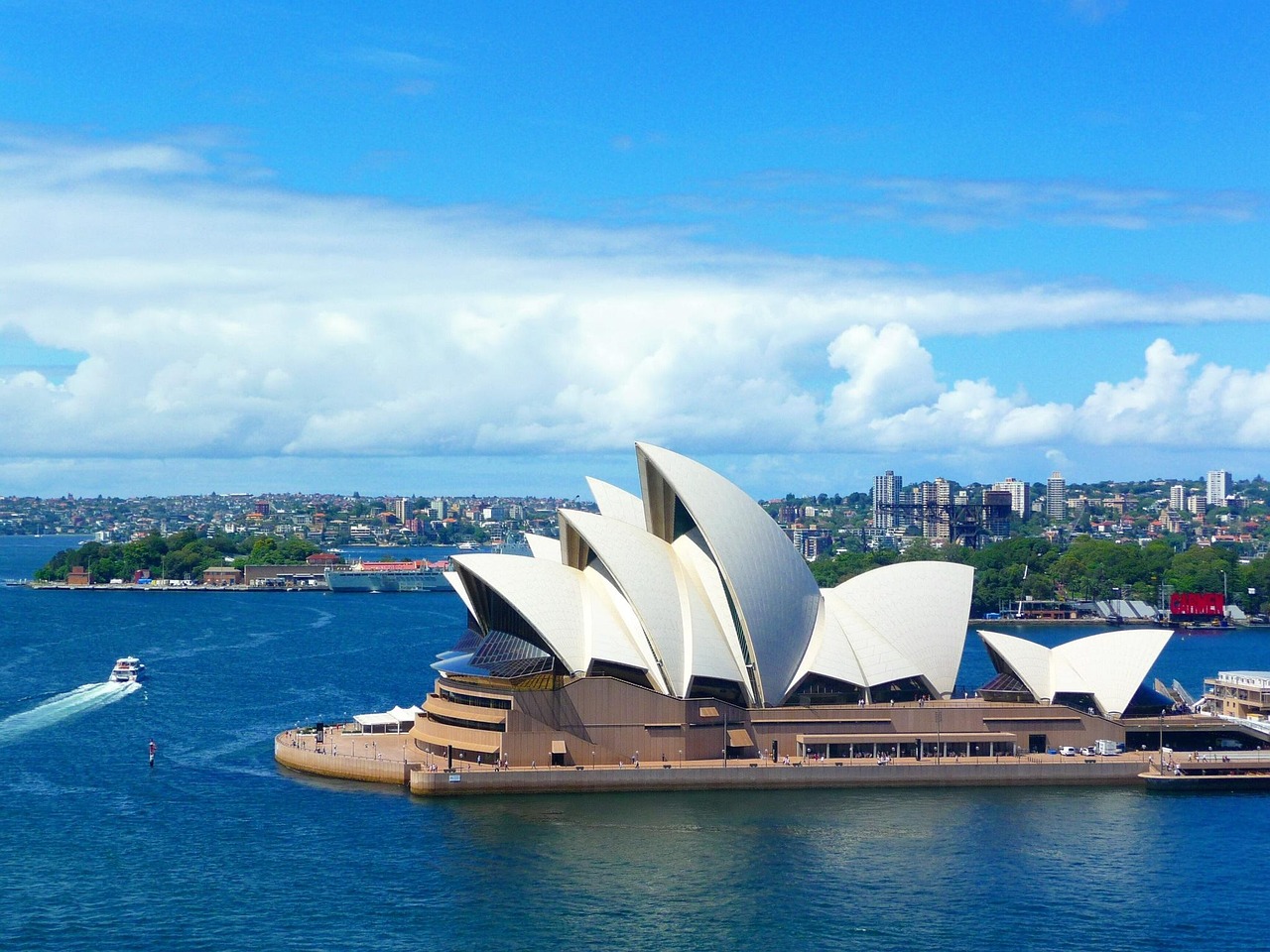
SYDNEY — Australia’s real estate market in 2026 is displaying a stark “two-speed” dynamic, with booming price growth in Perth, Brisbane and Adelaide contrasting sharply with slower or declining values in Sydney and Melbourne, even as national dwelling prices continue to rise modestly amid persistent supply shortages and population-driven demand.
According to CoreLogic data released in early May, national home values increased 0.7% in March, bringing first-quarter growth to 2.1%. However, the divergence between cities has widened significantly. Perth led the surge with a remarkable 7.3% quarterly gain, followed by strong performances in Brisbane and Adelaide. In contrast, Melbourne recorded a 0.9% decline, while Sydney showed only marginal growth.
Australia’s Two-Speed Property Market Booms in 2026 Despite Higher Rates and Affordability Crunch
This uneven performance reflects differing local factors: Western Australia and Queensland are benefiting from strong mining and resource sectors, interstate migration, and relative affordability, while Australia’s two largest cities grapple with higher interest rates, tighter lending standards and stretched affordability.
Commonwealth Bank senior economist Trent Saunders noted in April that the housing market has proven stronger than expected but warned that higher rates and new affordability pressures are expected to slow price growth over the next two years. CommBank forecasts national dwelling prices to rise around 5% this year and 3% in 2027, a clear easing from previous years.
ANZ Research echoed this view, predicting capital city prices will grow 2.8% in 2026 and 2.1% in 2027, signalling a softening market as higher borrowing costs weigh on demand. Despite the slowdown, supply constraints continue to underpin the market, with vacancy rates near record lows and rental growth accelerating in many areas.
Advertisement
Supply Shortages Fuel Rental Crisis
Australia’s rental market remains extremely tight. Median rents have risen sharply in regional areas, with South Australia seeing a 12.5% year-on-year increase to $450 per week. In Adelaide, rents reached $620 per week. Nationally, rents are increasing by about $25 per week, highlighting the ongoing imbalance between demand and housing availability.
CBRE’s latest apartment outlook report forecasts median apartment rents to grow 27% between 2025 and 2030 across 53 precincts in capital cities. This sustained rental pressure is driving more Australians toward renting longer or “rentvesting” — buying investment properties while renting themselves — as saving for a deposit becomes increasingly difficult.
Housing affordability remains a critical challenge. The national median property price hovers around $908,000, with only 30% of properties priced below $700,000. The expanded First Home Guarantee Scheme is expected to ignite demand among first-time buyers in 2026, but many young Australians still find entry into the market daunting.
Domain’s 2026 forecast report predicts record housing unit prices across all capital cities by year-end, but with a clear two-phase pattern: strong growth in the first half driven by pent-up demand, followed by a slower second half as affordability constraints bite. Sydney is forecast to reach a median house price of $1.92 million by the end of 2026.
Advertisement
Investor Sentiment and Market Outlook
Despite higher interest rates, investor activity remains solid. Strong population growth, a wave of new first-time buyers and affluent downsizers with significant equity are supporting prices. However, the market is splitting into clear winners and laggards. Perth, Brisbane and Adelaide are the standout performers, while Sydney and Melbourne face headwinds.
Cushman & Wakefield’s Australia Outlook 2026 describes the commercial real estate market as moving “from resilience to optimism,” with disciplined capital and structurally supported demand across key asset classes. Office, retail, industrial, living and data centre sectors are all showing signs of recovery, though challenges like higher funding costs and infrastructure bottlenecks persist.
Regional Variations Define the Market
The “two-speed” nature of the market is creating distinct investment strategies. Investors are increasingly targeting undersupplied markets like Perth, Brisbane and Adelaide, as well as more affordable segments such as units and lower-quartile properties where demand remains strongest and yields are more attractive.
In Western Australia, strong resources sector activity and interstate migration are driving robust demand. Queensland continues to benefit from population inflows and tourism recovery. Victoria and New South Wales, meanwhile, are dealing with higher supply pipelines in some areas and affordability challenges that are tempering price growth.
Advertisement
Government and Policy Responses
Federal and state governments are under pressure to address the housing crisis. Initiatives like the expanded First Home Guarantee Scheme and various state-level incentives aim to boost supply and support first-home buyers. However, analysts warn that meaningful relief will require sustained increases in housing construction, planning reforms and targeted policies to improve affordability.
The Reserve Bank of Australia’s decision to lift the cash rate to 3.85% earlier in 2026 has added further pressure on borrowers, though most economists expect rates to stabilize or ease modestly later in the year if inflation continues moderating.
What This Means for Buyers, Sellers and Investors
For buyers, the current environment demands careful research and realistic expectations. In booming markets like Perth, competition remains fierce, while slower markets like Melbourne may offer better negotiation opportunities. First-home buyers should explore government schemes and consider more affordable locations or property types.
Sellers in strong markets can still achieve good results, but pricing realistically is key. Investors are advised to focus on fundamentals — yield, vacancy rates, population growth and infrastructure plans — rather than chasing short-term price spikes.
Advertisement
As Australia’s $12.5 trillion housing market continues to evolve, the “two-speed” dynamic is likely to persist through 2026 and beyond. Strong underlying demand from population growth and limited supply will support prices overall, but regional variations and affordability challenges will define opportunities and risks for buyers and investors alike.
The coming months will be critical as higher rates, new housing supply and shifting buyer sentiment shape the market’s next phase. For now, Australia’s real estate market in 2026 remains resilient but increasingly diverse, offering both challenges and opportunities across its vast and varied landscape.











































You must be logged in to post a comment Login