Connect with us
DAPA Banner
DAPA Coin
DAPA
COIN PAYMENT ASSET
PRIVACY · BLOCKDAG · HOMOMORPHIC ENCRYPTION · RUST
ElGamal Encrypted MINE DAPA
🚫 GENESIS SOLD OUT
DAPAPAY COMING

Business

East of England business confidence dips to 83%, KPMG finds

Published

on

East of England business confidence dips to 83%, KPMG finds

Confidence in growth prospects among privately owned businesses in the East of England has fallen to 83 per cent from 86 per cent at the start of the year, according to the mid-year update to KPMG UK’s Private Enterprise Barometer.

KPMG surveyed 1,500 privately owned businesses across the UK at the start of 2026, including 125 in the East of England, spanning sectors including life sciences, hospitality, food and drink and technology. It returned to the same businesses six months later to test how conditions had changed their outlook.

The regional figure remains above the UK average of 80 per cent. Nationally, confidence fell from 87 per cent when the same businesses were surveyed earlier in the year, KPMG said.

Technology was the leading investment priority among East of England firms, with 67 per cent naming artificial intelligence, cyber security or wider digital transformation. That is one percentage point above the UK average and 30 percentage points higher than at the start of the year.

Diversification was cited by 65 per cent, who said they were looking to expand their service offerings and broaden their client base, up from 64 per cent in January and two points above the national figure.

Advertisement

On funding, 53 per cent said they were using their own balance sheets to support growth plans. Among businesses considering how to pay for capital expenditure and expansion, 46 per cent said they were open to private equity investment, against a UK average of 45 per cent.

Asked about short-term risks, 48 per cent of East of England respondents named inflation and ongoing cost pressures, alongside global disruption affecting UK supply chains and trade, as the two biggest facing their organisations.

Looking to the Autumn Budget, 52 per cent of East of England firms said they wanted technology and digital capability prioritised by the incoming Chancellor. The same proportion pointed to the UK economic outlook and productivity growth as the biggest external factor shaping decisions on investment, growth and exit planning.

Joe Faulkner, East Anglia office senior partner at KPMG UK, said: “It’s encouraging to see businesses across the East of England maintaining confidence despite the challenges they’re facing. There’s a real sense that businesses here aren’t standing still but continuing to invest, particularly in technology, because they know it’s critical to staying competitive.

Advertisement

“What’s equally clear is that businesses can’t do it alone. They’re looking for government to match that ambition by prioritising digital investment and creating the right environment for innovation to thrive.”

Faulkner added: “The East of England has all the ingredients to remain one of the UK’s leading growth regions, particularly with the opportunities the Oxford-Cambridge Growth Corridor presents. If we continue to invest in the infrastructure and digital capability that businesses need, there’s a real opportunity to unlock even greater growth across the region.”

The corridor accounts for more than 7 per cent of UK GDP and over £40bn of economic output, according to the government’s Oxford-Cambridge Growth Corridor investment prospectus, which states that realising its potential could add a further £78bn by 2035.

Separate research by Beauhurst, published in May, found that 80 per cent of venture capital invested in the UK goes to London, Oxford or Cambridge, with headcount at innovative companies in Cambridge up 26 per cent between 2019 and 2024.

Advertisement

Nationally, KPMG said private businesses identified faster adoption of new technology and stronger digital capability, growth-focused investment and a renewed industrial strategy as the areas most in need of attention at the Autumn Budget.

Euan West, head of KPMG Private Enterprise in the UK and EMA, said: “2026 has continued to present private businesses with a challenging operating environment, shaped by uncertainty both at home and abroad.

“Against that backdrop, it is encouraging that eight in 10 business leaders remain confident about their growth prospects. While confidence has eased since the end of last year, the overall picture remains one of resilience and determination.

“What stands out most is how private businesses are responding. Rather than pulling back, they are investing in skills, technology and the capabilities that will help them remain competitive and unlock future growth.

Advertisement

“Private enterprise leaders are entrepreneurial, action-oriented and focused on what they can control. They are not waiting for conditions to improve; they are getting on with the job of creating growth.”


Jamie Young

Jamie Young

Jamie Young is Senior Reporter at Business Matters, covering SME finance, employment law and Westminster policy since 2016. He has reported on every Budget and Autumn Statement since 2018, helped make sense of the ‘covid era’ and the bounce-back loan scheme from launch through the fraud investigations, and broke the magazine’s coverage of the 2024 late-payment reforms. He joined Business Matters straight from completing his BA in Administration from Exeter University and is NCTJ-qualified. Reach him at jyoung@cbmeg.co.uk

Advertisement
Continue Reading
Click to comment

You must be logged in to post a comment Login

Leave a Reply

Business

Google Confirms Pixel Phone Price Hikes Across Lineup as Global RAM Costs Surge Sixfold Amid AI Demand

Published

on

Google Confirms Pixel Phone Price Hikes Across Lineup as Global

MOUNTAIN VIEW, Calif. — Google will raise prices across its Pixel smartphone lineup, including upcoming models and some already on the market, as soaring memory costs driven by artificial intelligence demand reshape the economics of consumer devices.

Shakil Barkat, Google’s vice president of devices and services, confirmed the moves in an interview, saying the company has absorbed higher component costs for as long as possible but can no longer fully shield buyers. “The economics have fundamentally shifted and we’re not immune to that,” Barkat said.

He pointed to research from Morgan Stanley showing the cost of 1 gigabyte of RAM has risen from $2.80 last year to $12 in 2026, a roughly sixfold increase. Barkat described the situation as unprecedented, stating there has “never been an increase in memory prices like the world’s going through right now.” The surge stems largely from memory manufacturers redirecting production capacity toward high-bandwidth memory used in AI data centers, tightening supply for consumer electronics.

Price adjustments will apply to the entire Pixel family and will be rolled out dynamically to reflect supply conditions. This includes the forthcoming Pixel 11 series, expected to be unveiled on Aug. 12, as well as in-market devices such as the Pixel 10a. Specific pricing details have not been disclosed and are expected at the launch event.

Advertisement

Leaked information circulating in industry reports suggests the base Pixel 11 could start around $899, about $100 higher than the Pixel 10’s entry price. Some configurations may eliminate the 128-gigabyte storage option in favor of 256 gigabytes as the new baseline. Reports also indicate certain higher-end models could ship with 12 gigabytes of RAM rather than 16 gigabytes, a potential cost-control measure.

Barkat emphasized that Google is not simply passing on higher costs. The company is working to engineer solutions that reduce the memory demands of Android and its app ecosystem so devices can maintain smooth performance with less RAM. “We’re aggressively engineering” approaches to deliver a fluid experience even as hardware constraints tighten, he said.

The memory shortage has already prompted price increases from other major consumer technology companies. Apple, Microsoft, Nintendo and others have adjusted pricing on various products in response to the same supply pressures. For Google, which has positioned Pixel devices as competitive alternatives emphasizing software experience and camera performance at relatively accessible price points, the shift marks a notable change in strategy.

Industry analysts note that the AI-driven reallocation of semiconductor capacity has created one of the most significant component cost pressures in years for smartphones, tablets and other consumer devices. High-bandwidth memory required for training and running large AI models commands premium pricing and has drawn production resources away from standard DRAM used in phones and PCs.

Advertisement

Google’s Made by Google event on Aug. 12 is expected to provide full details on the Pixel 11 series, including exact pricing, specifications and any software optimizations designed to mitigate the impact of lower RAM configurations. The company has historically used software advantages, including multi-year software support and AI features, to differentiate its phones from competitors that often lead in raw hardware specifications.

For existing Pixel owners and prospective buyers, the changes mean higher out-of-pocket costs in the near term. Barkat indicated that promotions, trade-in offers and bundled services such as Google One will remain part of the company’s approach to keeping devices accessible. Exact timing for adjustments to current models like the Pixel 10a has not been specified.

The broader supply chain disruption illustrates how the rapid expansion of AI infrastructure is cascading into everyday consumer products. Memory makers including Samsung, SK Hynix and Micron have prioritized higher-margin AI-related production, leaving less capacity for the more standardized components that power smartphones.

Google’s decision to publicly address the issue ahead of its major hardware launch reflects the scale of the cost pressure. By confirming that adjustments are coming and highlighting engineering efforts to reduce software memory requirements, the company is attempting to manage expectations while signaling it is actively working to limit the long-term impact on users.

Advertisement

Smartphone makers have faced rising costs from multiple directions in recent years, including advanced chip fabrication processes and display technology. The current memory situation stands out for its suddenness and magnitude. A sixfold increase in a core component within roughly a year leaves limited room for manufacturers to absorb the difference without adjusting retail prices.

As the industry adapts, some devices may ship with lower RAM configurations than previous generations while relying more heavily on software efficiency and cloud features. Google’s focus on optimizing Android for reduced memory footprints could influence how other manufacturers approach the challenge.

The Aug. 12 event will clarify how the price changes translate into specific models and what trade-offs, if any, buyers will encounter in storage, memory and other specifications. Until then, the confirmation from Barkat establishes that the Pixel lineup will not be exempt from the industry-wide effects of the memory market shift.

For consumers considering a new Pixel, the landscape has changed. Devices that previously competed aggressively on value will now carry higher starting prices, even as Google works to preserve the software experience that has been a hallmark of the brand. The coming weeks will reveal the precise extent of those adjustments and whether engineering improvements can meaningfully offset the hardware cost realities now facing the entire sector.

Advertisement
Continue Reading

Business

Cracker Barrel CEO to step down

Published

on

Cracker Barrel CEO to step down

Cracker Barrel announced on Monday that CEO Julie Masino will step down, effective Aug. 10, and be replaced by David Deno.

Masino will remain with the company in an advisory capacity until Oct. 9.

Advertisement

“Following a robust and thoughtful search process, we are pleased to welcome David as Cracker Barrel’s next CEO,” independent Chairman of the Cracker Barrel Board, Carl Berquist, said in a statement. “He brings decades of experience across the restaurant and retail industries, with a strong track record of leading businesses through growth and a demonstrated commitment to operational excellence, guest experience, and team member engagement. We are confident David is the right leader to continue building on the Cracker Barrel legacy, drive further positive momentum operationally and financially, and create sustainable value for our shareholders.”

Exterior of Cracker Barrel after new logo and rebranding announcement.

General view of a Cracker Barrel Country Store in Fishkill, NY, Monday, August 25, 2025. (Richard Beetham for Fox News Digital)

This is a breaking news story. Please check back for updates.

Advertisement
Continue Reading

Business

Strikes hit Port of Broome

Published

on

Strikes hit Port of Broome

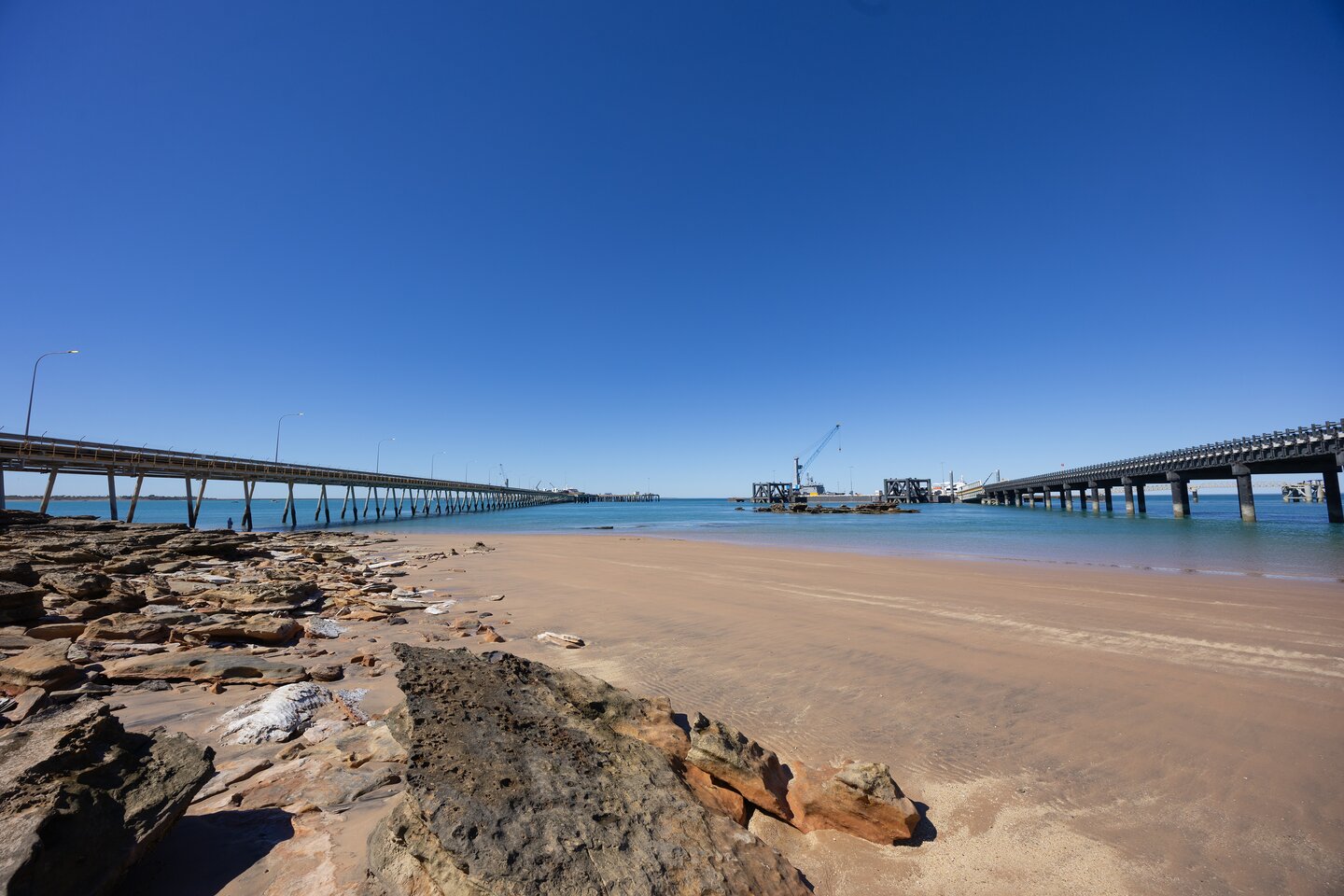
Maritime Union of Australia workers at the Port of Broome have started to strike, as part of negotiations with the Kimberley Port Authority over a new pay deal.

Continue Reading

Business

Nvidia in Talks to Finance OpenAI, Report Says. What It Means for the Stock.

Published

on

Nvidia Stock’s Struggles Present This Opportunity. How to Play It.

Nvidia in Talks to Finance OpenAI, Report Says. What It Means for the Stock.

Continue Reading

Business

Building a Resilient Thai Supply Chain Amid Global Volatility

Published

on

Building a Resilient Thai Supply Chain Amid Global Volatility

A resilient supply chain enhances competitiveness, builds investor confidence, and drives growth. Collaboration among sectors is crucial for sustainable development, leveraging technology and data to improve efficiency and manage risks.

  • A strong supply chain is a strategic factor that determines competitiveness, builds investor confidence, and drives sustainable growth.
  • Collaboration among the public and private sectors, capital market, and financial institutions is essential to developing a resilient supply chain – supporting access to funding, elevating operational standards, and building strong business networks.
  • Data connectivity, digital technology, and sustainability integration enable businesses to proactively manage risks, improve efficiency, and meet evolving global standards.

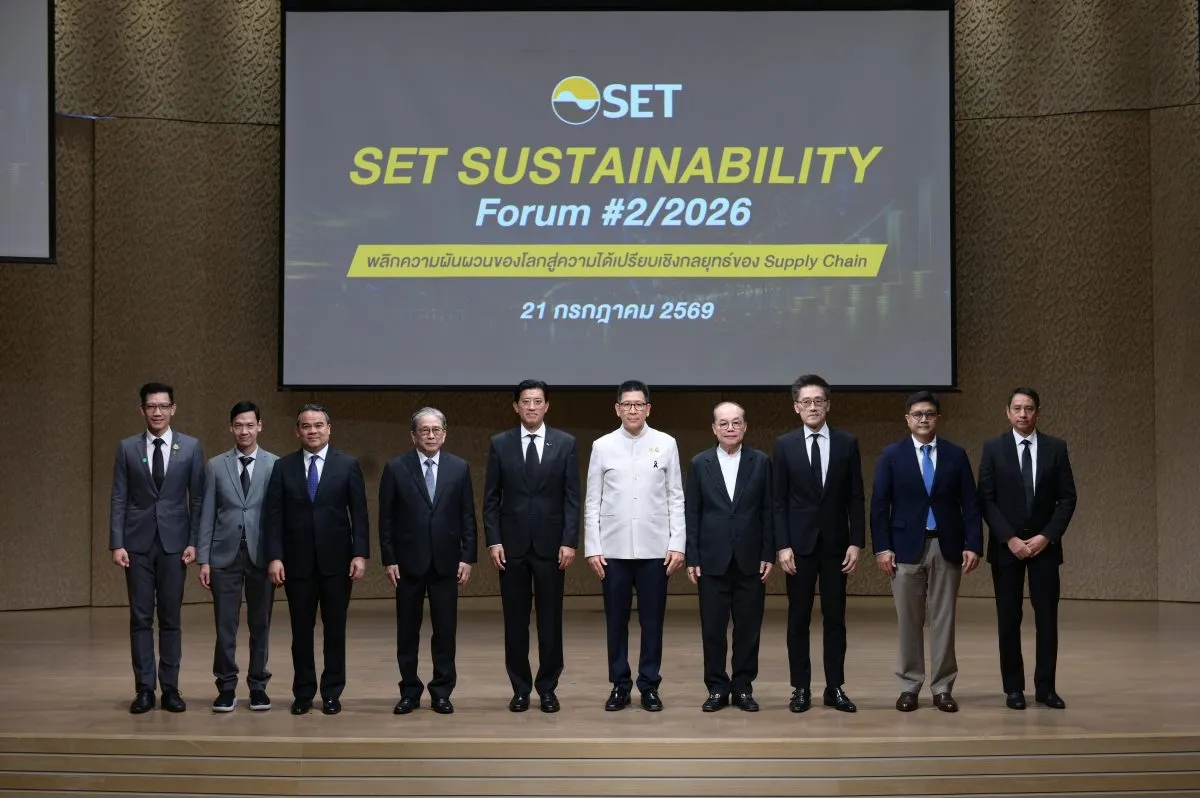
The Stock Exchange of Thailand (SET) hosted the SET Sustainability Forum 2/2026, themed “Turning Global Volatility into Strategic Competitive Advantage through Supply Chain” on July 21, 2026. The forum brought together policymakers, capital market leaders, and top executives to exchange views on building a resilient, transparent, and sustainable supply chain amid global economic volatility, geopolitical tensions, and shifting trade regulations.

SET President Asadej Kongsiri stated that SET is committed to developing an ecosystem that enables supply chain operators to manage risk, elevate ESG standards, and remain competitive over the long term. This includes capacity building and developing sustainability tools such as SETCarbon for carbon data management to meet global standards, while broadening access to funding across the supply chain—in line with SET’s vision, “The Trusted Gateway to Inclusive Opportunities.”

The forum’s key highlight was a keynote address titled “Driving Thailand’s Economy and Supply Chain through Economics Policies, Financial Mechanism, and Digital Infrastructure”, delivered by Deputy Prime Minister and Minister of Finance Ekniti Nitithanprapas. In his address, Ekniti emphasized the “Big Brother Helps Little Brother” approach, encouraging large corporations to uplift SMEs and trading partners through knowledge sharing, technology, and business opportunities. He also highlighted the PromptBiz platform’s role in connecting business data, streamlining transactions, and expanding SMEs’ access to funding as a vital driver of Thailand’s economy.

The Federation of Thai Capital Market Organizations (FETCO) Chairman Paiboon Nalinthrangkurn noted that today’s investors look beyond financial performance alone, placing growing importance on supply chain resilience and sustainability practices. A transparent and traceable supply chain reduces costs, improves efficiency, and attracts long-term investment. Collaboration among the public sector, private sector, and capital market is therefore essential to helping businesses adapt and grow sustainably.

Advertisement

The forum also featured a panel discussion titled “Navigating Global Volatility… Building Resilient and Sustainable Supply Chains”, with representatives from the industry, logistics, the government agency overseeing SME promotion, and financial institutions. Panelists comprised Suthad Setboonsarng, Somboon Advance Technology pcl Chairman and Independent Director; Nattapume Pavaratn, SCG JWD Logistics pcl Senior Vice President – Group Commercial/Government Liaison; Wannawat Opasvadhana, Office of Small and Medium Enterprises Promotion (OSMEP) Director of SME Promotion Policy and Planning Department; and Gunn Thirawat, Bank of Ayudhya Senior Vice President and Head of TBG Sales and Business Promotion Division. The session was moderated by Supakorn Ekachaipaiboon, SET Vice President – Head of ESG Infrastructure Development.

For more information on the forum, please visit www.SETSustainability.com or follow LINE Official: @SETsustainability

Source : SET joins forces with all sectors to strengthen Thai supply chain amid global volatility

Advertisement
Continue Reading

Business

Drilling firm plans AIM IPO amid defence demand surge

Published

on

Business Live

The Leicestershire-based business is looking to list on London’s junior market

Tek4 is set to list on the London Stock Exchange's junior market AIM this year

A picture of the London Stick Exchange

Aerospace drilling firm Tek4 is preparing for an initial public offering in London, providing a welcome boost to the London Stock Exchange as it seeks to attract more defence companies to market.

The Leicestershire-based business, which counts Rolls-Royce and GE amongst its clients, is aiming to raise £20m through a listing on London’s junior market Aim at a valuation of approximately £40m, according to City AM.

Bankers at Panmure Liberum have been appointed to oversee the IPO, which is anticipated to take place later this year. Panmure Liberum declined to comment.

Tek4, which also maintains offices in Carolina, designs and manufactures specialised drilling machines for aircraft and gas turbine components.

Advertisement

Led by 40-year industry veteran Jason Duffin, the company has experienced a sharp increase in sales over the past year as conflict in Russia and the Middle East drives demand for its machinery.

A new factory currently under construction near its Leicestershire headquarters is also projected to boost its production capacity by approximately 80 per cent, sources said.

The listing will offer some respite to the London Stock Exchange following a shortage of new IPOs and a wave of takeovers over the past year. Across the main market and AIM, only seven companies listed in the first six months of the year, raising £577m.

Bankers are actively seeking defence-related businesses to bring to market as the government moves to strengthen the industry and investors capitalise on a surge in demand. The appointment of former defence secretary John Healey as chancellor last week is also widely anticipated to signal a significant boost in funding for the sector.

Advertisement

In his inaugural address as prime minister last Monday, Andy Burnham reaffirmed the UK’s commitment to raising defence spending from 2.6 per cent of GDP to Nato’s target of 3.5 per cent by 2035.

Should the pledge be delivered, it would represent a real-terms uplift of more than £25bn in under a decade.

Continue Reading

Business

Tottenham Legend Ledley King Says He’d Still Love to See Harry Kane Return to Spurs Despite Long Odds

Published

on

Ledley King
Ledley King
Ledley King

Tottenham Hotspur icon Ledley King has reignited a familiar fan fantasy, saying he would still like to see Harry Kane return to the club, even as most signs point to the England captain remaining at Bayern Munich for the foreseeable future.

A simple answer to a familiar question

Asked which player he would most like to see Tottenham sign this summer transfer window, King, one of the most beloved defenders in club history, kept his response direct: he wants to see Kane back in a Spurs shirt. The comment, shared through Chris Cowlin, reflects a wish that has lingered among Tottenham supporters ever since Kane left the club for Bayern Munich in 2023 after spending his entire career to that point on Spurs’ books, scoring 280 goals in 435 appearances across all competitions.

Kane’s World Cup ends, focus shifts back to Bayern

Kane and England’s run at the 2026 World Cup came to a close after a semifinal defeat to Argentina, though the team salvaged third place with a win over France, England’s best finish at the tournament in years. With the international tournament behind him, Kane is expected to shift his full attention back to Bayern Munich, where contract discussions had been placed on hold during the World Cup while he focused exclusively on England’s campaign. Now that the tournament has ended, Bayern is expected to move quickly to secure the 32-year-old striker’s long-term future in Bavaria.

Advertisement

Why a return still looks unlikely

Despite the enduring hope among Tottenham fans, most reporting on Kane’s situation suggests a Premier League return remains a long shot. Sport Bild journalist Christian Falk downplayed the seriousness of recent transfer speculation tying Kane to both Real Madrid and Tottenham, noting that any move to Madrid specifically would require significant restructuring on the Spanish club’s part. “Los Blancos have to make a new plan, which could take a year, perhaps even two,” Falk said, suggesting neither rumored destination represents a realistic near-term option for Kane.

Kane himself has offered mixed signals about his long-term plans in recent months. Earlier this year, he acknowledged openness to staying in Munich beyond his current deal, saying, “In terms of staying longer, I could definitely see that,” while noting he had not yet formally discussed an extension with the club at that point. Barcelona had also shown cursory interest in Kane as a potential long-term replacement for Robert Lewandowski, but that inquiry was reportedly shut down quickly by Kane’s camp, further narrowing his realistic list of alternative destinations.

Tottenham’s own manager has welcomed the idea

Advertisement

The fantasy of a Kane reunion hasn’t been limited to fans and former players. Current Tottenham head coach Thomas Frank has openly said he would welcome Kane’s return, telling reporters, “There are a lot of Tottenham fans, including myself who would like to see Kane back.” Frank’s comments reflect a broader sentiment across the club that even with Kane firmly established at Bayern, the door to a reunion has never been fully closed in the minds of those connected to Tottenham.

Kane’s release clause has been a recurring talking point

Speculation around a potential Kane return has been fueled in part by a release clause reportedly built into his Bayern contract, which had allowed him to leave for a fee that started around £67 million in January 2025 and dropped to roughly £54 million the following January, provided he expressed a desire to leave before the end of January 2026. Whether that clause factors meaningfully into Kane’s actual decision-making about his future remains unclear, particularly given his stated comfort and success in Munich, where he has scored 100 goals in just 104 appearances since joining the club, a record across the top five European leagues.

Why Tottenham fans keep dreaming

Advertisement

Part of the enduring appeal of a Kane reunion stems from Tottenham’s current roster construction under manager Roberto De Zerbi, who has reshaped the club’s spending approach and brought in a wave of attacking talent, including Mohammed Kudus, Mathys Tel, Xavi Simons, James Maddison, Mateus Fernandes, Archie Gray, Dejan Kulusevski and Sandro Tonali. Fans and pundits alike have noted that a Kane-led attack surrounded by that level of talent would represent a significantly stronger supporting cast than what he played with during his earlier years at the club, when Tottenham often struggled to build sustained title contention around him even during standout individual seasons.

Tottenham’s need for reliable scoring has also fueled the fantasy. Richarlison was the club’s only double-digit Premier League goal scorer last season, leaving striker depth as arguably the team’s most pressing need heading into the current transfer window, a gap that has made the idea of Kane’s return, however unlikely, particularly appealing to supporters looking for a proven, elite-level goal scorer.

A dream that remains just that, for now

Even with the wishful thinking from King, Frank and Tottenham’s broader fan base, most credible reporting continues to suggest Kane’s future lies in Munich rather than North London. Bayern has consistently been described as offering Kane his clearest remaining path to major trophies, particularly the Champions League title that remains the most significant gap on his individual résumé, a factor widely seen as central to his decision to leave Tottenham for Bayern in the first place.

Advertisement

With Kane expected to fully shift his attention back to Bayern Munich now that the World Cup has concluded, contract extension talks between the two sides are likely to move forward in the coming weeks. Barring a dramatic and unexpected shift in Kane’s stance, Tottenham fans, including club legends like King, appear set to continue watching from a distance, holding onto the idea of a future reunion that, for now, remains more aspiration than realistic transfer prospect.

Continue Reading

Business

WA secures 2027, 2029 AFL Origin games

Published

on

WA secures 2027, 2029 AFL Origin games

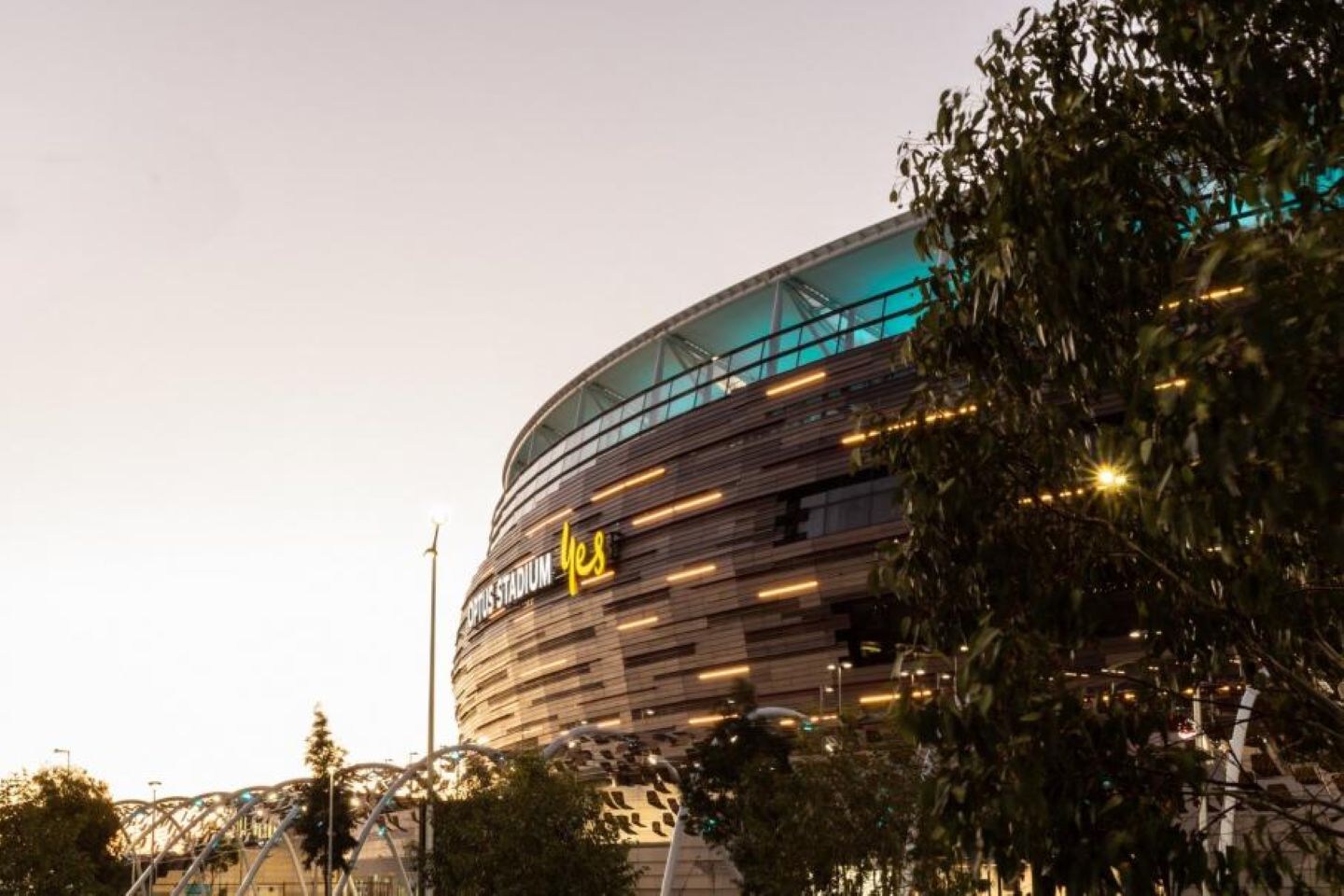
WA will host AFL State of Origin matches at Optus Stadium in 2027 and 2029 against South Australia and Victoria respectively, although the cost of securing both matches is unclear.

Continue Reading

Business

Humans have a ‘third eye’ in the brain: Study links it to a 600-million-year-old Cyclops ancestor

Published

on

Humans have a 'third eye' in the brain: Study links it to a 600-million-year-old Cyclops ancestor
Here’s a science story that sounds straight out of Greek mythology, except it’s real, and it’s about us. A new study by researchers at Lund University and the University of Sussex suggests that humans, along with every other creature with a backbone, may descend from a tiny worm-like animal that had just one eye, sitting right on top of its head, much like a cyclops.

And that’s not even the strangest part. According to the research, remnants of this ancient “third eye” may still be sitting inside our brains today, in the form of the pineal gland, the organ that helps control our sleep cycle.

Meet Our Cyclops Ancestor

Nearly 600 million years ago, long before dinosaurs or even fish existed, a small, worm-like creature lived in the ocean. It didn’t move around much, instead, it stayed in one spot and filtered plankton from the water for food.
Also Read: Gray Hair Reason Found: A Japanese study explains why people get grey hair and it may be linked to cancer

Scientists believe this creature originally had two eyes, or at least two light-sensing patches, like most animals need to judge distance and direction. But because it lived such a still, stationary lifestyle, it simply didn’t need that kind of vision anymore. Over generations, those two eyes faded away.

Advertisement


What it kept instead was a single patch of light-sensitive cells right in the middle of its, a simple “median eye.” This wasn’t sharp enough to see actual images, but it was enough to tell day from night, and which way was up.

So How Did We End Up With Two Eyes Again?

Here’s the twist: millions of years later, descendants of this creature started swimming actively again. Suddenly, spotting food, dodging predators, and sensing direction mattered a lot more, and vision became valuable again.According to the study, evolution didn’t build a fresh pair of eyes from scratch. Instead, it repurposed parts of that old central “cyclops eye” to construct a brand-new pair of image-forming eyes, the ancestors of the eyes humans and other vertebrates use today.

This, researchers say, is why our eyes are built so differently from those of insects or squid. Dan-E Nilsson, professor emeritus in sensory biology at Lund University, explains that our retina actually develops from brain tissue, while in insects and squid, eyes grow from skin cells on the head, a completely different evolutionary path.

The Real Twist: Part of That Ancient Eye Is Still Inside You

Perhaps the most fascinating claim in the study is this: the original cyclops eye never fully disappeared. Researchers believe it survives today as the pineal gland, a small structure deep inside the vertebrate brain.

We no longer use it to see, but it hasn’t stopped reacting to light and dark. The pineal gland produces melatonin, the hormone that makes us feel sleepy at night and alert during the day, helping to regulate our internal body clock.

Advertisement

In many animals, the pineal gland can sense light directly. In humans, our eyes handle that job instead, sending light signals to the brain so melatonin levels can rise and fall on schedule.

Also Read: Not just humans, bears also lie: How brown bears trick rivals into thinking they are bigger

Nilsson sums up the discovery as genuinely startling, noting how strange it is that the part of our brain regulating sleep today can be traced back to a single primitive eye from a creature that lived some 600 million years ago.

This research doesn’t just rewrite a chapter of biology textbooks, it reshapes how scientists understand the origins of the eye and even parts of the brain itself. It suggests that evolution doesn’t always move forward in straight lines; sometimes it takes detours, loses features, and later repurposes old leftover parts for entirely new jobs.

Advertisement

So the next time you feel sleepy after sunset, you might just have a one-eyed ancestor from the ocean floor to thank for it.

Continue Reading

Business

Lamb Weston stabilizes North America business

Published

on

Activist investor targeting Lamb Weston

Strategic plan to re-energize growth taking shape.

Continue Reading

Trending

Copyright © 2025