Connect with us
DAPA Banner
DAPA Coin
DAPA
COIN PAYMENT ASSET
PRIVACY · BLOCKDAG · HOMOMORPHIC ENCRYPTION · RUST
ElGamal Encrypted MINE DAPA
🚫 GENESIS SOLD OUT
DAPAPAY COMING

Business

East West Bancorp Has Proven Me Wrong (Upgrade)

Published

on

Janus Henderson Forty Fund Q4 2025 Commentary (MUTF:JACCX)
Continue Reading
Click to comment

You must be logged in to post a comment Login

Leave a Reply

Business

FIW: Water Stocks Still Expensive Despite Weak Returns

Published

on

FIW: Water Stocks Still Expensive Despite Weak Returns

FIW: Water Stocks Still Expensive Despite Weak Returns

Continue Reading

Business

Lucas Herbert Ties Historic Open Championship Scoring Record With Blistering 28 on Front Nine at Birkdale

Published

on

Lucas Herbert

Lucas Herbert produced one of the most explosive nine-hole stretches in major championship history Friday, firing a 6-under-par 28 on the front nine at Royal Birkdale to seize the lead in the second round of the 154th Open Championship.

The 30-year-old Australian birdied six of the first nine holes to match the lowest nine-hole score ever recorded at the Open, equaling a record set by Denis Durnian, a club professional from Manchester, England, who carded the same 28 on Royal Birkdale’s front nine during the 1983 Open. Durnian’s round has stood alone in Open history for more than four decades, with the Englishman narrowly missing an even lower score when he lipped out a 10-foot birdie putt on the ninth hole that day. Brad Faxon is the only other player to shoot a 28 for nine holes in major championship history, doing so on the front nine at Riviera during the final round of the 1995 PGA Championship.

Herbert’s round began with three consecutive birdies to open his second-round tee time, converting from 16 feet at the par-4 first hole, 15 feet at the par-5 second, and 5 feet at the par-4 third. He added further birdies later in the outward nine, including at the short par-4 fifth hole after driving the green, and again at the ninth. The sequence propelled him from a modest, even-par 70 in Thursday’s opening round into the solo lead of the tournament by the turn on Friday.

Herbert did not let up on the back nine, adding two more birdies to push his tournament total to 8-under par, firmly positioning him as the man to beat as the second round continued at the Southport links. His round represents just the sixth Open Championship appearance of his career, having missed the cut in three of his five previous starts at the tournament.

Advertisement

Royal Birkdale carries a rich history of low scoring, adding further context to Herbert’s feat. The course played host to the lowest 18-hole score in Open Championship history when South Africa’s Branden Grace carded a 62 there in 2017, a mark that remains the standard for a single round at the tournament. Friday’s round adds another chapter to that scoring legacy, with Herbert’s front-nine 28 now standing alongside Durnian’s as the most efficient nine holes ever played in the championship’s history.

Herbert’s surge came as several of the tournament’s bigger names struggled to keep pace early in the second round. American Jackson Suber, who opened the tournament Thursday with a 5-under 65 to take a one-shot lead over the field, continued to hover near the top of the leaderboard Friday despite a bogey-marred round that included a 1-under 69 through much of his day. Suber, 26, entered this week’s tournament without a PGA Tour win and had never previously competed in Europe, making his overnight lead one of the more unexpected storylines of the tournament’s opening rounds.

Other players also posted low scores during Friday’s second round as scoring conditions proved generous across Royal Birkdale. American Eric Cole carded a 64, while both Patrick Reed and Herbert reached 5-under on their individual rounds with holes still remaining to play, according to live scoring updates from the tournament. Reed in particular caught fire with five birdies across a seven-hole stretch to reach 3-under for the tournament.

Not every contender found similar magic. Two-time major champion Bryson DeChambeau opened his tournament with a 67 Thursday, placing him one shot off the early pace and helping keep alive his bid to avoid missing the cut at all four majors in 2026. DeChambeau, however, again declined to speak with reporters following his round, marking the fifth consecutive major championship round in which he has passed on postround media interviews.

Advertisement

Friday’s second round also carries heightened stakes given the tournament’s 36-hole cut, which under Open Championship rules allows the top 70 players and ties to continue into the weekend. With low scores flowing across the course under favorable weather conditions, the margin for players hoping to make the cut appeared likely to tighten considerably by the end of Friday’s play.

Herbert enters the weekend as one of the form players in the field, having built his round around an aggressive, birdie-hunting style that has become a hallmark of his game throughout his career. The Victoria native has previously contended at his national championship, the Australian Open, where he has held outright leads in past editions, and has picked up wins on both the European Tour and LIV Golf, which he joined as part of Cameron Smith’s Ripper GC team.

Friday’s historic front nine adds to a growing list of Open Championship storylines at Royal Birkdale, a course that has hosted the tournament ten times and has developed a reputation among players for rewarding aggressive scoring when conditions align. With Herbert now firmly established at the top of the leaderboard and a cluster of contenders bunched closely behind him, the tournament appeared set for a closely contested weekend as the year’s final major championship moves into its decisive rounds.

Play was continuing across Royal Birkdale as Friday’s second round unfolded, with a full leaderboard shakeup expected by the close of play as later tee times, including groups featuring Rory McIlroy, Xander Schauffele and Matt Fitzpatrick, worked their way through the course under conditions that had already produced one of the lowest nine-hole scores in the championship’s long history.

Advertisement
Continue Reading

Business

MLB Now Effectively Bans Teams From Using Generative AI on Dugout iPads to Shape In-Game Strategy Calls

Published

on

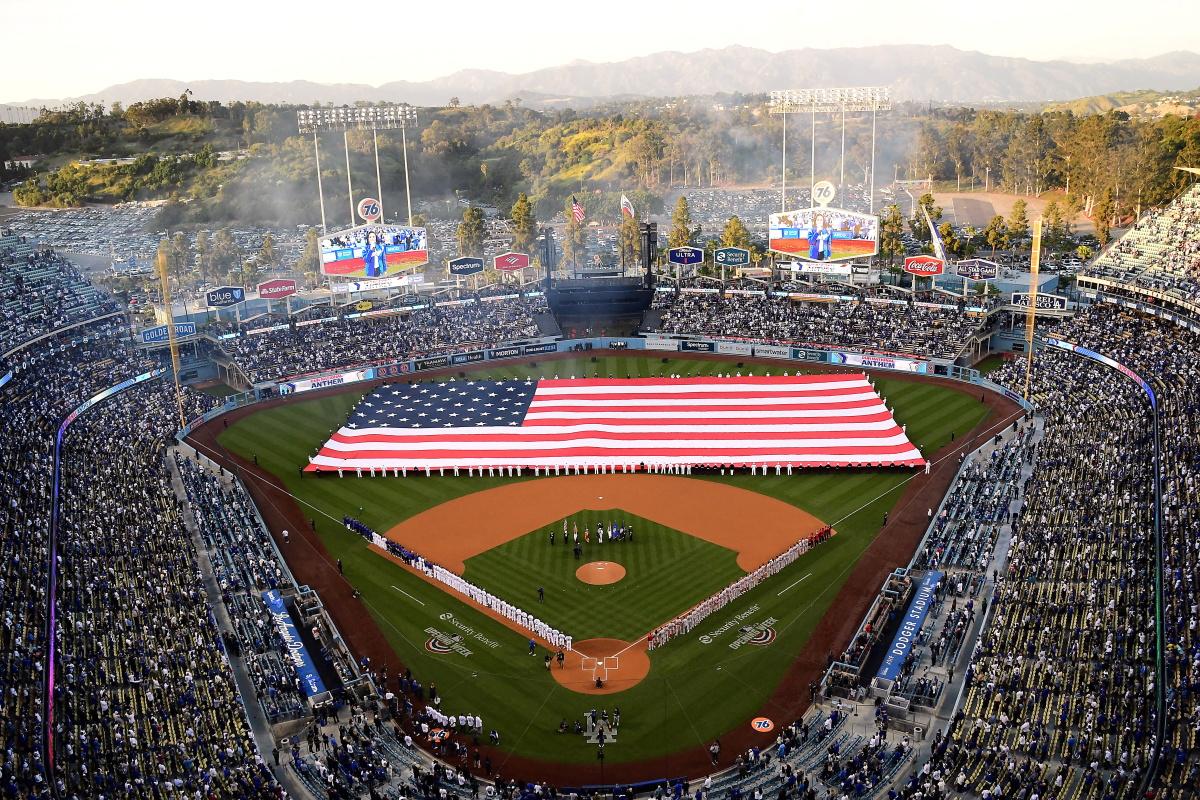
Cody Bellinger LA Dodgers

Major League Baseball has effectively outlawed the use of generative artificial intelligence on the league-issued iPads teams keep in their dugouts during games, cracking down on a practice that had increasingly crept into how some clubs made real-time decisions on the field.

The league notified all 30 teams of the new restriction in a memo from the commissioner’s office dated June 11, according to reporting from Eno Sarris of The Athletic, which first broke the news of the policy change. The ban officially took full effect on Wednesday, timed to coincide with the resumption of play following this year’s All-Star break, giving teams roughly a month to adjust before the restriction was fully enforced.

According to the commissioner’s office memo, teams had been installing custom applications on the dugout iPads that pushed the devices well beyond their originally intended purpose. Rather than simply serving as tools for reviewing performance data and video, the memo said, the iPads in many cases had been repurposed to generate live recommendations on substitutions, pitch calling and other in-game decisions that have traditionally been made directly by players and coaches rather than software.

Sources with knowledge of the situation told The Athletic that as many as one-third of MLB’s 30 teams had been using the dugout tablets for at least one of these unintended purposes before the league intervened. NBC Sports, citing The Athletic’s reporting, indicated that pitch-calling assistance may have been central to the league’s concerns, noting that the Miami Marlins were believed to have pioneered the practice this season before it spread to as many as six additional teams around the league.

Advertisement

Despite the scope of the practice, MLB’s internal review determined that no teams had actually violated the league’s existing rules governing sign stealing or general electronic-device usage during games, meaning none of the clubs involved are expected to face disciplinary action or punishment as a result of the crackdown. The league’s response instead focused on tightening the technology guidelines going forward rather than penalizing teams for how they had used the tools up to this point.

The dugout iPads at the center of the controversy are structured around three distinct tabs, each serving a different function. The first tab provides MLB-supplied Statcast data along with multiple video angles for reviewing plays. The second tab contains information related to the league’s automated ball-strike challenge system. The third tab, however, had become a space where individual teams were free to install their own custom-built applications, and it is that third tab specifically that the league has now closed off under the new restrictions.

MLB has also layered additional safeguards on top of the new AI restriction in an effort to limit the flow of live information into the dugout more broadly. In-game video available through the tablets remains accessible only on a delayed basis rather than in real time, and clubhouse rules already in place bar non-playing personnel from entering the dugout during games, further limiting who can interact with the devices and any external information they might otherwise provide.


Reaction to the policy shift within front offices has been mixed. One front-office executive, granted anonymity by The Athletic to discuss the sensitive matter, offered a blunt assessment of the league’s motivation, saying the crackdown was aimed at stopping any advantage before it could fully take hold. Sarris reported separately that the decision drew frustration from some front-office members who had come to view the AI-assisted tools as a legitimate strategic advantage worth preserving, even as others in the league welcomed the move as a way to keep the game’s decision-making in human hands.

Advertisement

The dugout iPads that made this controversy possible trace back roughly a decade to MLB’s original technology partnership with Apple. The two companies first introduced iPad Pro devices into all 30 major league dugouts and bullpens in 2016, pairing the hardware with a custom-built application called MLB Dugout that gave managers, coaches and players direct access to advance scouting reports, analytics and video during games. That original rollout was framed at the time as a major step forward in bringing consumer technology directly onto the field of play, expanding on comments Apple co-founder Steve Jobs made when he first introduced the iPad in 2010 and cited Major League Baseball as an example of the device’s practical potential.

A decade later, that same hardware infrastructure has become the flashpoint for one of the more significant technology disputes MLB has confronted this season, as the rapid advancement of generative AI tools created new possibilities for teams looking to gain even a marginal edge in real-time decision-making. The league’s decision to intervene mid-season, rather than waiting for the offseason to implement new technology guidelines, underscores how quickly some teams had moved to adopt the tools once they became available.

Public reaction to the ban has been mixed as well, with some fans and observers questioning whether restricting AI actually preserves competitive fairness or simply removes a tool that, if made equally available to every team, might not have provided any club with a meaningful advantage in the first place. Others have argued that removing software-driven recommendations from real-time, in-game decisions like substitutions and pitch selection helps preserve the traditional role of managers, coaches and players in shaping the outcome of games, rather than ceding those choices to algorithmic suggestions.

For now, the league’s position is clear: with the third tab on team-issued iPads now off-limits for custom applications, any generative AI recommendations that had been quietly influencing bullpen decisions, defensive shifts or pitch sequencing from the dugout are no longer permitted under the league’s technology guidelines. Whether teams find new workarounds, or simply return to relying on the judgment of their coaching staffs as they did before AI tools became available, is likely to become clearer as the second half of the 2026 season unfolds under baseball’s newly tightened rules.

Advertisement
Continue Reading

Business

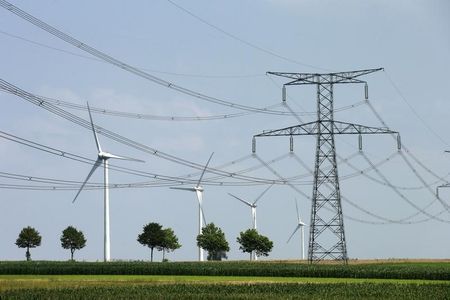
Who pays for Electrification and Artificial Intelligence?

Published

on


Who pays for Electrification and Artificial Intelligence?

Continue Reading

Business

Consumer Sentiment Hits Highest Level Since February On Easing Gas Prices

Published

on

Consumer Sentiment Hits Highest Level Since February On Easing Gas Prices

Busy Supermarket Aisle With Customers

Tom Werner/DigitalVision via Getty Images

By Jennifer Nash

Consumer sentiment reached its highest level since February, driven by easing gas prices. The preliminary July reading for the University of Michigan Consumer Sentiment Index came in at 54.4. This marks a 9.9% (4.9 points) increase

Advertisement
Continue Reading

Business

F.N.B. Corporation (FNB) Q2 2026 Earnings Call Transcript

Published

on

OneWater Marine Inc. (ONEW) Q1 2026 Earnings Call Transcript