

Business
ED summoned Zepto founders under FEMA ahead of IPO: Here’s what the updated DRHP reveals

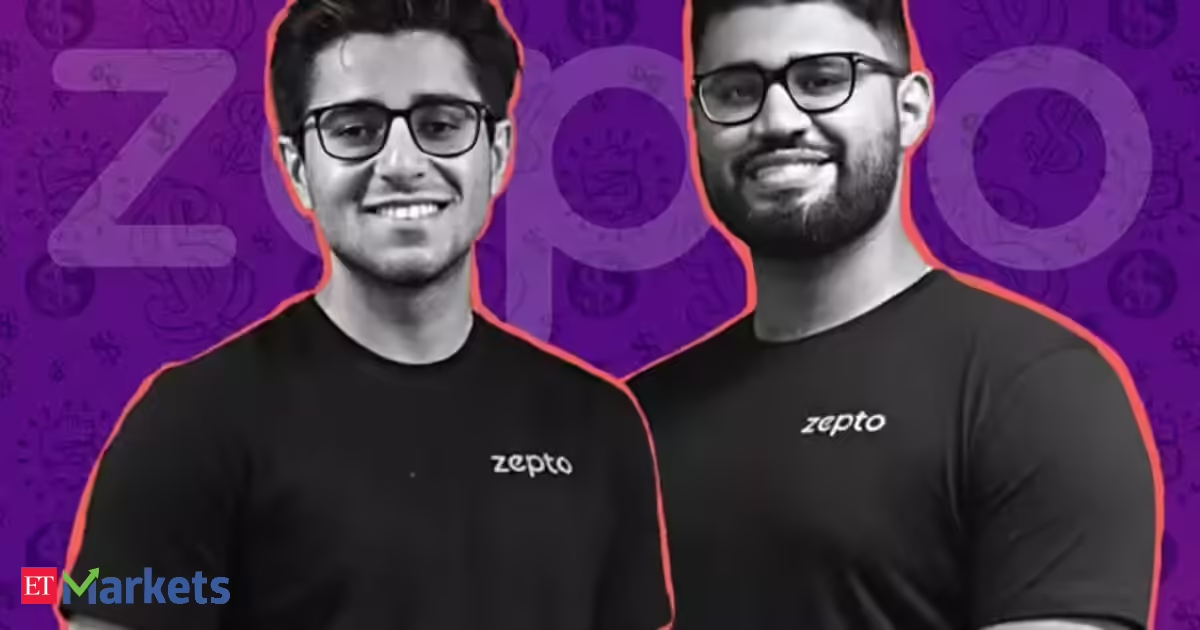
In its updated DRHP filed with SEBI for a $1 billion (Rs 9,500 crore) initial public offering, Zepto said that Palicha and Vohra were required to produce some documents with regard to foreign investments, audited balance sheets for the financial year 2020-21, shareholding patterns, details on loans and guarantees, income tax returns and bank accounts, along with other information.
Complying with the summons, Vohra appeared before the ED on April 17 and April 22. Palicha appeared before the authority on April 20 and May 15 this year. “As on the date of this Updated Draft Red Herring Prospectus – I, they have provided relevant information and documents as requested by ED pursuant to the Summons, as well as follow-on information requested by the ED further to their interactions, including certain details in relation to our holding structure, the Scheme, and additional information in relation to our business such as business agreements and invoices,” Zepto said.
The quick commerce company said it has not yet received any further communication from ED. It assured that there will not be future inquiries or that these could escalate to investigations, legal proceedings or any possible penalties.
Zepto IPO
The much-awaited IPO of Zepto will comprise a fresh issue of shares worth Rs 8,010 crore and an offer-for-sale (OFS) of nearly 11.35 crore shares by existing shareholders, according to the updated prospectus. The five-year-old company had filed its IPO papers confidentially with market regulator SEBI back in December 2025 and received the regulator’s approval in May this year.
Zepto is aiming to debut on stock markets in July, people familiar with the matter told The Economic Times. This would make the firm the third quick commerce player on Dalal Street, along with Blinkit parent Eternal and Instamart parent Swiggy.

Also Read | Zepto files updated papers for Rs 9,500 crore IPO; aims July listing
Zepto earnings snapshot
Zepto reported a 75% year-on-year (YoY) jump in consolidated revenue for the fourth quarter of FY26 to Rs 7,498 crore, according to its updated DRHP. The Bengaluru-based company also narrowed its net loss to Rs 1,539 crore during the January-March quarter from Rs 1,832 crore a year earlier, the filing showed.
Zepto processed 210 million orders during the quarter, i.e. over 2 million orders a day. It ended March 2026 with 1,139 dark stores, up from 1,029 a year earlier. Orders per store per day rose to 2,140 from 1,425 in the year-ago period, indicating higher throughput across its network.
Also Read | Zepto Q4 revenue up 75% at Rs 7,498 crore, narrows loss to Rs 1,538 crore
(Disclaimer: Recommendations, suggestions, views and opinions given by the experts are their own. These do not represent the views of The Economic Times)


There have been calls to release the handbrakes on Australia’s skilled migration ahead of looming infrastructure projects.

mohd izzuan/iStock via Getty Images

Dear Partners,
Alluvial Fund had another quiet quarter, rising 4.9%. Year-to-date, the fund is up 8.0%. I would consider this an acceptable outcome but for the bothersome fact that small-cap and micro-cap indexes are having an absolute barnburner of a year. At least for the moment, investor appetite for AI beneficiaries, semiconductor companies, and other hyper-growth stories is near limitless. I find the valuations afforded many of these companies incomprehensible, justifiable only under the most heroic of projections. But nobody asked my opinion, and the party goes on. By comparison, our portfolio is extremely boring, as it always has been. I view this as a feature, not a flaw, but our portfolio often gets stuck in neutral when investors and their capital flock to momentum-driven shares.
TABLE I: Alluvial Fund LP Returns (%) as of June 30, 2026
Partnership began operations 01/01/2017
I don’t know when this trend will weaken or reverse. July has been better, with Alluvial Fund gaining some ground as benchmarks decline. I am confident that our portfolio of dependable cash flow producers with capable management teams and robust outlooks trades at a large discount to intrinsic value, and that that this discount will diminish with time.
Portfolio Updates
Zegona Communications (ZEGLF) was the largest contributor to Alluvial Fund’s 2025 returns, but the company’s shares have had a rough go of late. Since peaking in May, shares are down 27%. The decline comes as the company continues to report strong financial results, growing revenue and cash flow as the turnaround gains momentum. In late June, the company refinanced its debt for the second time since buying Vodafone Spain, reducing annual interest expense by a whopping €60 million. So why, if things are so rosy, are Zegona shares in the doldrums? A few reasons, all either transitory or in my view, overblown.
- Profit-taking and a shareholder base transition. For the twelve months ended March 31, Zegona shares produced a total return of nearly 180%. Following such a run, it is only reasonable that some holders would choose to lock in profits and reduce exposure. Alluvial did. Throughout the quarter, we sold shares in the 1700s and 1800s. We did this not out of concern about valuation or business trajectory, but simply to prevent over-concentration in a single stock. There is also a shareholder base transition under way. Some “event-based” holders who owned Zegona for the potential asset sale (now accomplished) are moving on and selling to more traditional value investors. These new investors are happy to buy an improving telecom with a tremendous free cash flow yield at a large valuation discount to comparable companies. It takes time for the shareholder base to turn over, but the process will eventually complete.
- A capital return “air pocket.” Following the sale of most of its fiber optic network, Zegona instituted an aggressive £200 million share buyback. This buyback is now all but exhausted, though fortunately, the pause is temporary. On July 30, shareholders will vote to authorize Zegona to repurchase up to 14.99% of its shares outstanding. Shortly after, the company will reveal its medium-term capital allocation framework. I expect Zegona to commit to returning a sizable portion of its free cash flow via dividends and buybacks, resulting in a compelling shareholder yield at current prices.
- The Digi threat. The Spanish mobile market, like most in Europe, is fiercely competitive. Zegona’s Vodafone Spain is the number 3 operator. The 4th, and smallest, is Digi, a Romanian telecom that entered the Spanish market 18 years ago. Last week, Digi’s Spanish segment raised capital in an IPO, stoking fears that the Spanish market is about become even more competitive. I think these fears are exaggerated. Digi is not a new entrant; Vodafone Spain has been competing with Digi for years and, since new management took over, holding its own. Digi is a fast grower, but it does not make money. At some point, Digi will have to raise prices, which will blunt its competitive advantage.
Pullbacks aren’t any fun, but they are to be expected. At current prices, Zegona shares trade for 7-8x free cash flow, a large portion of which will be returned to shareholders. This is far too cheap for a successful turnaround story with additional margin enhancement and potential asset sales ahead. After selling shares just a few months ago, we have done an about face and are adding to our Zegona position on weakness.
The most fascinating development in the portfolio this quarter came from McDermott International (MCDIF). McDermott is an energy EPC (engineering, procurement, construction) company with a troubled past and a bright future. After several difficult years, the company has all but completed its legacy zero-profit and loss-making contracts. Sustained profitability is on the horizon. However, the company has one remaining issue: a weak balance sheet. Poor balance sheet liquidity and a negative equity position hinder McDermott from bidding on desirable contracts and suppress its valuation.
Earlier this month, McDermott announced it would address this weakness via a $500 million rights offering. Concurrent with the rights offering, the company will refinance its term loan. Though the rights offering is typical in that every shareholder can participate, it is quite atypical in that it is priced at a gigantic discount to pre-offering trading levels. In this transaction, two things are abundantly clear:
- The rights offering is tremendously beneficial for McDermott and for its shares. The additional capital substantially deleverages the company, greatly reducing the possibility of financial distress and enabling McDermott to bid on more and larger contracts. It also sets the company up well for a sale or IPO in the medium term.
- The rights offering is punitive for holders who cannot or will not exercise their rights. Because the rights offering is priced at a large discount, holders who do not exercise their rights will be diluted to oblivion. Most rights offering include over-subscription rights for those interested in buying additional shares. This rights offering does not. Rather, unexercised rights will be exercisable by the four large McDermott shareholders backstopping the rights offering.
Obviously, Alluvial Fund will be participating in the rights offering to the fullest. To decline would be to leave substantial value on the table. Post-offering, McDermott will be substantially de-risked. At its current valuation, McDermott trades at just 3.2x 2027 EBITDA guidance.
McDermott has been a strong performer for Alluvial Fund. When we first invested, I saw upside potential of 150% or more. Shares have moved upward since we invested, but I continue to see potential for shares to double in the next few years. Despite this attractive return profile, I always limited our position size out of caution over the company’s elevated financial risks. This rights offering greatly reduces the company’s financial risk, so I am now willing to hold McDermott at a higher weighting going into 2027. In many ways, this set-up parallels the Garrett Motion rights offering in 2021. (Right down to the near-identical large holder backstop feature.) In both cases, fundamentally decent companies were being held back by stressed balance sheets. Garrett Motion has been a tremendous performer since, even if we had to endure a few years of sideways price movement first. I am confident that McDermott will be the same, hopefully over a shorter timeframe.
I expect McDermott shares to be volatile as things shake out post-rights offering. We will keep our eyes on the longer-term trajectory. If the company is able to achieve its revenue and earnings goals, shares currently trade at less than 4x 2028 earnings.
TABLE II: Top Ten Holdings, 6/30/26 (%)
In some letters I outline our thesis for owning just a few of our portfolio holdings. In others, I attempt to update partners on the bulk of our portfolio, spending at least a few sentences on each meaningful holding. This letter is one of the latter type.
Garrett Motion is one of Alluvial Fund’s longest-tenured holdings. 2026 has been a watershed year for Garrett, with investors waking up to the fact that the company’s turbochargers have applications well beyond the automotive industry. Garrett is increasingly selling to data centers and utilities seeking improved energy efficiency and output. While shares have run up considerably, the valuation remains reasonable and the company continues to return the majority of free cash flow to shareholders. Garrett deserves its new, higher multiple of earnings and cash flows, but we are keeping a close eye. If shareholder exuberance lifts Garrett shares to the point of no longer offering attractive forward returns, we will not hesitate to sell.
McBride Plc. , our British manufacturer of private-label soaps and detergents, had a small stumble in early June, when it warned that higher petrochemical costs from the Iran war would temporarily compress margins. Thankfully, shares recovered quickly as investors judged that the adverse conditions would be transitory. On July 1, McBride completed the acquisition of EuroTab, a smart bolt-on deal in continental Europe which will contribute to earnings per share immediately. McBride shares remain extremely cheap at around 7x forward earnings and less than 5x EBITDA. The London market has seen a wave of buyout activity as private equity snaps up UK industrials at depressed valuations. I would not be surprised if McBride were the subject of an offer.
GreenDot Corp. shareholders approved the sale of its technology assets and the merger of its bank operations with CommerceOne Financial. All that remains is government approval, expected imminently. GreenDot shares have acted well, but still trade at a large discount to pro forma tangible book value. The management and board of directors of the future combined entity are smart operators. If the bank continues to trade below tangible book value after the deal is completed, I expect they will not hesitate to implement share buybacks. I see upside of 50-70% in the next few years, net of the large distribution shareholders will receive when the deal is completed.
Talen Energy is another long-tenured Alluvial holding. We bought Talen out of bankruptcy and have watched Talen’s management put on an absolute master class. Since emergence, Talen has bought back a huge quantity of shares at extremely low prices, sold some older, out-of-market assets, and reinvested in modern generation capacity at good prices. Today, the market tends to treat Talen as a proxy for AI and data centers: on “AI will take over the world” days, Talen shares soar; on “AI is in a bubble” days, Talen sinks. This dynamic makes Talen unusually tradable by Alluvial Fund standards. We have had success selling calls against our core position when optimism surges, and buying calls when pessimism seems close to peaking. Meanwhile, we keep our eyes on the underlying story: merchant power production, especially nuclear, is a different business than it was a decade ago. Demand for electricity is growing again after stagnating for a decade. The United States is structurally short of generation capacity. This translates to strong free cash flow for companies like Talen that have dispatchable generation capacity. Talen expects free cash flow per share to exceed $40 in 2028, a figure that appears achievable based on planned share buybacks and the ramp-up of the company’s supply agreement with Amazon. 9x 2028 free cash flow is simply too low for a company of Talen’s quality and rarity.
TABLE III: World Allocation, 6/30/26 (%)
Vistance Networks , a new holding for Alluvial Fund, is a company in the midst of dismantling itself. Over the past twelve months, Vistance has sold its two largest businesses. Vistance is now down to just one remaining operating asset, Aurora Networks, which manufactures equipment for cable networks like Comcast and Charter. It’s not a wonderful business—results are lumpy and customer concentration is high—but it is not going away. Faced with relentless competition from fiber and wireless internet alternatives, cable operators have no choice but to continue to invest in speed and reliability upgrades. On the heels of this radical reduction in scale, I don’t think Vistance stays independent. Management has gone from running an enterprise doing almost $7 billion in annual sales to one doing just $1 billion. Once it pays out the proceeds from its latest business sale, Vistance will have a market capitalization below $1 billion. As a newly-minted micro-cap company, it might as well be invisible. Being a listed, SEC-reporting micro-cap comes with all the headaches and annoyances of being public, but without most of the benefits. Given the choice between fading into irrelevance as a micro-cap network equipment maker and achieving a neat resolution (and a nice liquidity event for management, who own 7.8 million shares and equivalents), I think the company will elect to sell. Management has the deal-making experience to do it.
First the Iran War was over, then it wasn’t. Gulf Marine Services’ shares remain below pre-war levels. With the benefit of hindsight, we could have timed Alluvial Fund’s investment in this offshore support vessel owner better, but lately an interesting phenomenon has emerged. Gulf Marine Services shares no longer plunge on every bad headline from the Middle East. This leads me to believe that those panicked by the region’s instability have finished selling, and only those willing to look past the current conflict remain as shareholders. Recently, the company secured a 4-year contract for its new vessel in Brazil, improving earnings visibility. I doubt GMS shares will move until the outcome of the Iran War is clearer, but I am happy to own shares and add to our position here. Shares trade at less than 4x normalized earnings and at a large discount to tangible book value. Short of a pan-regional conflagration, I think it is very hard to lose money on this company over any reasonable timeframe.
EACO Corp. , whose subsidiary Bisco Industries distributes all manner of electrical components and fasteners, just keeps rolling. The company has put together one of the most impressive operating performances in public markets, but remains almost entirely unknown thanks to its very illiquid shares. For the quarter ended May 31, EACO’s revenues rose 28% year-over-year while operating income rose 45%. Despite these jaw-dropping results, EACO shares change hands at less than 9x annualized earnings and 6x operating income. Incredible.
TABLE IV: Sector Breakdown, 6/30/26 (%)
A few years back, we spent a good deal of time looking at the Polish stock market. We came away highly impressed by the number of quality companies at low valuations that we saw, a few of which entered our portfolio. TIM SA was acquired at a good premium not long after we invested. Auto Partner SA remains in the portfolio and has been a solid performer. But our biggest Polish success story has been Digital Network SA , an operator of digital billboards. The company’s revenue growth has been exceptional, as has its capital allocation. Last year, the company snapped up Braughman Group, a scaled out-of-home advertiser with thousands of large-format billboards, screens, and murals across Poland. It was a natural fit, and shares have responded enthusiastically.
I must emphasize that while there are holdings I expect we will own for quite some time, we do not have “permanent holdings” in Alluvial Fund. Each holding must continually earn its place in our portfolio. I do believe in extending patience to companies and management teams that have proven their mettle. Even the best will occasionally experience a rough patch, and sometimes a particular industry or geography simply loses favor with investors. Our average holding period is multi-year, which allows us to reap the benefits of long-term compounding and defer taxes. But if our thesis turns out to be incorrect or the valuation is no longer compelling, it is time to move on. We maintain a lengthy watchlist of companies that could have a place in our portfolio when the timing and valuation are right.
In Closing
I am nearly a decade into writing these letters. My goal with each is to describe Alluvial’s approach in the clearest possible terms, to communicate a sense of how our portfolio has developed, and to explain the logic behind our decision-making. I know that placing your capital under someone else’s care is a consequential decision. I take my responsibility to steward this capital very seriously.
I see numerous opportunities in the current market environment, particularly in companies and industries that investors have shunned in favor of flashier ideas. I am quite happy to dedicate capital to these ideas, no matter how they may perform in this short run. Factors go in and out of favor constantly. “Quality” stocks were all the rage in recent years, but most now trade well off their highs. Now “momentum” is the only game in town. In my experience, when investors grow fixated on making fortunes in the space of just a few months or even weeks, it pays to take the longer view.
Thank you for reading. I hope you and your families are well, and I look forward to reporting to you again later this year.
Best Regards,
Dave Waters, CFA
Alluvial Capital Management, LLC
Editor’s Note: The summary bullets for this article were chosen by Seeking Alpha editors.

Regis Aged Care has submitted a plan to build a facility in Shenton Park’s Montario Quarter precinct, estimated to cost $50 million.

Amazon: Long-Term Bullish But Short-Term Neutral (Rating Downgrade)

OPINION: Local producers are likely to face a new competitor in the form of Chinese wine.

More than 800 million tonnes of trade passed through Pilbara’s ports last financial year, delivering $150 billion in export value to the state.
Business
Prince Harry Surprises Meghan Markle With Video Call During Her MasterChef Australia Guest Judge Stint

Prince Harry made a sweet surprise appearance on the July 26 episode of “MasterChef Australia,” phoning in to check on wife Meghan Markle while she served as a guest judge on the reality cooking competition.
The Duke of Sussex made the appearance while his wife was doing a stint as a guest judge on the show. The surprise call came during the episode as the judges were reviewing a contestant’s dish, catching the contestants and other judges in the room off guard.
“My Husband’s Here”
The video call kicked off with a lighthearted greeting from Harry, who appeared unsure of exactly what he had dialed into. “G’day,” Harry began in the video call as Meghan turned the phone to the crowd, excitedly saying, “My husband’s here.” Harry then asked his wife, “What’s going on? Have I interrupted something important?”
Meghan quickly brought her husband up to speed, introducing him to the judging panel and explaining what the group was in the middle of. “Well, we are actually in the middle of tasting all the dishes,” she told him. “We have four incredible cooks here.” She went on to gush about the contestants’ skills, telling her fellow judges, “It’s amazing, they’re so talented. We wish you were here,” before noting that Harry was in Canberra at the time, spending time with veterans.
Judges Get in on the Fun
Harry also took a moment to compliment the show’s set design during the call, telling the judges, “The chandeliers in the background, that’s very nice.” One of the judges quipped back, “Yeah, we fancied the joint up for your beautiful wife,” before Harry signed off warmly. “Go and enjoy it,” he said. “I’m very sorry to disturb you. All is well here and I’ll see you later.”
During the same segment, just as Meghan was tasting the competitors’ dishes, she referred to her husband as “my love” while lamenting that he couldn’t try the food himself. “I wish you could try this,” she said. “These dishes are fantastic.”
A Playful Nod to Meghan’s Cooking
The Duchess of Sussex also used her time on set to tease the judges about one particular dish. Meghan later called her husband “a charmer” after his surprise video call during the guest judging appearance. Describing a hot sauce among the dishes she sampled, Meghan said, “There’s a hot sauce that — well you know me, it’s a sambal and it is so good,” before adding playfully, “I think it might be too much for you, though. It’s spicy.”
Filmed During the Couple’s April Trip to Australia
Meghan filmed her guest-judging appearance during a recent trip to Australia with Prince Harry, with the cameo initially teased after being shot during their visit to the country in April. The As Ever founder introduced the contestants to their challenge for the day, which involved picking a “hero” ingredient to spotlight in a dish that told a personal story or family memory.
During the episode, four contestants were challenged to create a dish using a set of Meghan’s favorite seasonal ingredients, including Brussels sprouts, local Australian honey, quince and strawberries, with the goal of crafting something “fit for a duchess.”
Family Stories and a More Casual Approach
Meghan used her introduction of the ingredients as an opportunity to share glimpses into her family life. She shared that her children, Prince Archie, 7, and Princess Lilibet, 5, are big fans of Brussels sprouts, and that she personally grows strawberries and mandarins on her farm in California.
The “With Love, Meghan” host also opted for a more informal approach to her role on the show, telling the judges they did not need to address her as Duchess and could instead simply “call me Meghan.”
Part of a Broader Australian Visit
The Duke and Duchess of Sussex’s four-day Australian trip in April included a mix of private, business and philanthropic engagements. The couple had previously visited the country eight years earlier on their first official joint royal tour as newlyweds, before stepping back from their senior royal roles two years after that visit.
A Well-Known Format for Australian Viewers
“MasterChef Australia,” based on the original British format, features amateur home cooks competing for the chance to publish their own cookbook, along with a cash prize of 250,000 Australian dollars, worth roughly $174,500 in U.S. currency. Meghan’s cameo added a celebrity spotlight to a show already known for drawing prominent guest judges throughout its run.
No Stranger to Surprise Calls
This is not the first time the couple has used a well-timed video call to surprise one another publicly. During a 2019 visit to Nalikule College of Education in Malawi as part of a royal tour of Africa, Harry was surprised when Meghan appeared unexpectedly on a video call to a room full of young women he was meeting with, delighting both Harry and the group in attendance.
A Continued Public Presence
Meghan’s MasterChef appearance arrives amid a steady stream of public projects for the couple, including her Netflix lifestyle series “With Love, Meghan,” which ran for two seasons and featured a rotating cast of celebrity guests joining her for cooking and lifestyle segments. The MasterChef Australia episode aired just after Meghan shared new photos on social media from a recent family vacation with Harry and their two children, continuing the couple’s pattern of blending personal milestones with their public-facing projects.
For fans of the couple, Monday’s viral clip offered a rare, unscripted glimpse of their relationship playing out on a reality television set, a lighthearted moment that quickly circulated online following the episode’s broadcast.
Anduril Executive Chairman and co-founder Trae Stephens joins ‘Mornings with Maria’ to discuss the future of autonomous warfare, how technology is changing the battlefield and scaling America’s defense base.
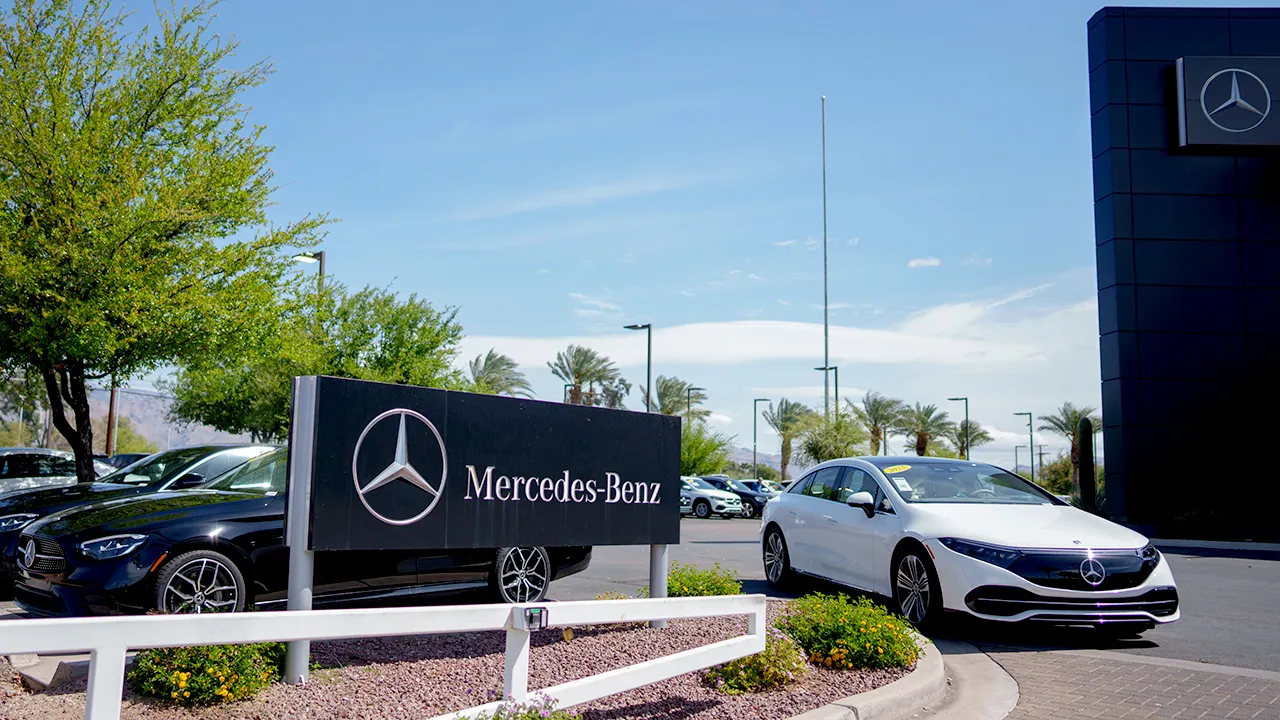
Mercedes-Benz faces a potential ban on selling connected vehicles in the U.S. under legislation targeting automakers with significant ownership ties to China.
The Senate Commerce Committee advanced a measure last week that would bar the sale of connected vehicles in the U.S. by companies with more than 15% ownership by Chinese entities, potentially affecting German automaker Mercedes-Benz, in which two Chinese investors hold stakes totaling nearly 20%.
Sens. Elissa Slotkin, D-Mich., and Bernie Moreno, R-Ohio, sponsored the bipartisan legislation, which would codify and expand restrictions established under the Biden administration, arguing that it “closes the door on Chinese-origin vehicles, software, and key components at every stage, from production, importation, to sale, so that data gathered on U.S. roads can’t be funneled back to the Chinese government.”
“Chinese cars are surveillance packages on wheels, with the ability to collect on American citizens and transmit that data back to Beijing,” Slotkin said in a statement.
FORD ENTERS COMPETITION TO DEVELOP NEW US ARMY TACTICAL TRUCK
Mercedes-Benz faces a potential ban on selling connected vehicles in the U.S. under legislation targeting automakers with significant ownership ties to China. (Eric Thayer/Bloomberg via Getty Images / Getty Images)
Moreno said the measure aims to prevent “an absolute, total, and complete destruction of our industrial base.”
“China’s auto industry was not built to compete, it was built to destroy American manufacturing, gut the middle class, and undermine our national security,” he said.
But Sen. Ted Cruz, R-Texas, who chairs the Commerce Committee, warned that Mercedes-Benz could effectively be shut out of the U.S. market if the legislation becomes law without changes and said the bill needed changes.
Cruz accused General Motors of pushing for the measure to cut Mercedes-Benz out of the market and make its Cadillac brand more appealing.
“We would never consider” banning Mercedes-Benz sales in the U.S., he said.
GM contended that the legislation does not attempt to target an individual automaker, saying it “supports policies that protect and strengthen American manufacturing and the global competitiveness of U.S. automakers.”
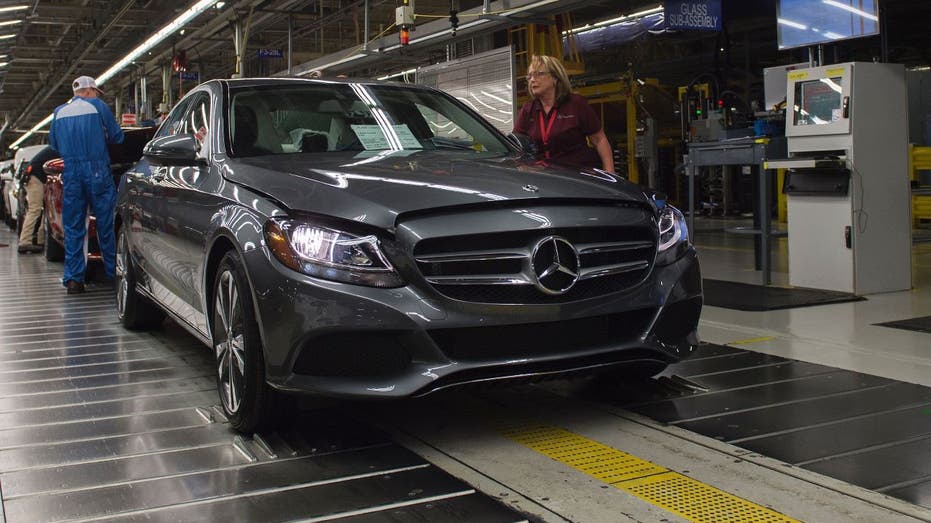
The Senate Commerce Committee advanced a measure last week that would bar the sale of vehicles in the U.S. by companies with more than15% ownership by Chinese entities. (ANDREW CABALLERO-REYNOLDS/AFP via Getty Images / Getty Images)
“As we have said many times, we can compete with anyone in the world when we are given a level playing field,” GM said.
Mercedes-Benz highlighted its extensive U.S. operations while stressing that it “continues to support legislation designed to protect U.S. national security.”
“Mercedes-Benz also remains committed to ensuring that any legislation does not impact our operations. The company will continue to safeguard its employees, dealers, suppliers, and customers,” the automaker said.
The bill includes a process through which manufacturers could seek Commerce Department authorization for vehicles that otherwise would be prohibited.
Moreno said GM intends to move production of its Chinese-made Buick Envision to the U.S. for the 2028 model year and that Ford has agreed to transfer Chinese-made Lincolns to the U.S.
“I view that as a big victory,” Moreno said.
JAGUAR LAND ROVER RECALLS MORE THAN 15,000 VEHICLES OVER VISIBILITY-LIMITING DEFECT

Sen. Ted Cruz warned that Mercedes-Benz would be removed from the U.S. market if the legislation becomes law. (Artur Widak/NurPhoto via Getty Images / Getty Images)
CLICK HERE TO GET FOX BUSINESS ON THE GO
He also said Google’s self-driving vehicle company, Waymo, which had been in talks with Chinese automaker Geely about platforms coming from China, has committed to looking at a Detroit-based manufacturer for its future platforms.
Cruz said another bill provision backed by GM would require automakers to purchase more expensive batteries from GM, adding $5,000 to the vehicles’ cost.
This comes after the Trump administration last month banned Polestar from selling new connected vehicles in the U.S. starting in the 2027 model year due to the Sweden-based automaker being majority-owned by Geely.
Polestar’s sister brand and co-founder, Volvo Cars, said in May that it was given a green light to continue selling cars in the U.S.
The legislation must still pass the full Senate and House and be signed by the president before becoming law.
Reuters contributed to this report.
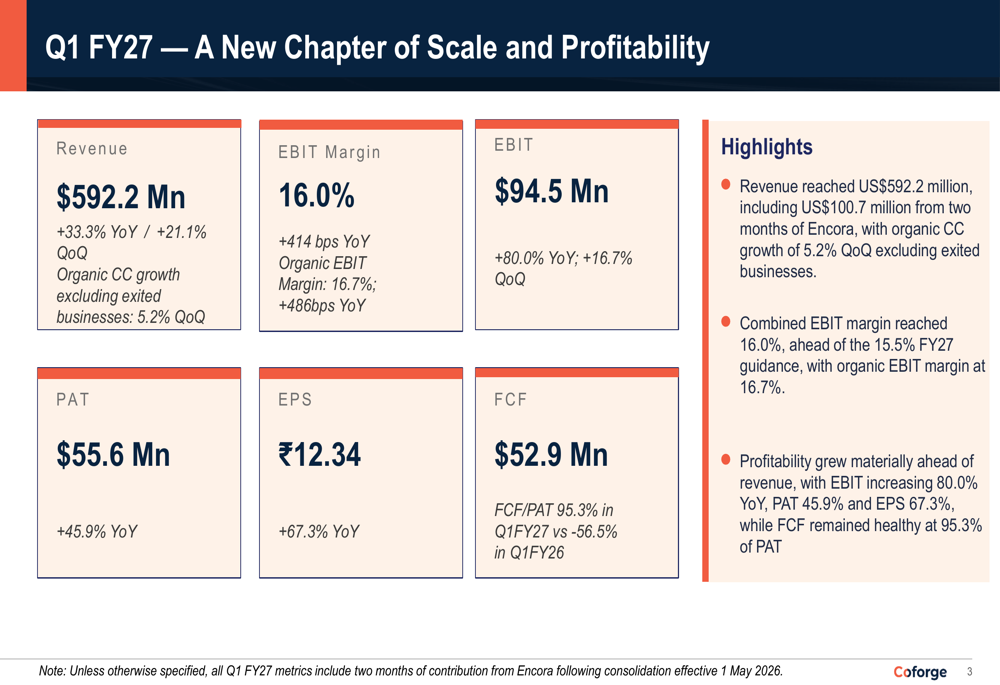
Coforge Q1 FY27 slides: Encora deal drives 33% revenue surge

AI supplier Zhongji Innolight raises $6.8 billion in Hong Kong’s biggest IPO since

5th and final Fast Money for the Van Benthuysens!

Father and daughter who drowned off coast of UK’s top surfing beach are among seven to die in open water over the weekend

Skills on order as workforce tightens


-

 Fashion4 days ago
Weekend Open Thread: Brooks Brothers
-

 Crypto World7 days ago
Grayscale Files For Worldcoin ETF, WLD Registers Sharp Rise
-

 NewsBeat7 days ago
How a former Blue Peter presenter stunned America’s Got Talent judges
-

 Tech1 day ago
Intel is reversing course and bringing hyper-threading back to its server chips
-
 Business6 days ago
New Jersey voter registration controversy explained: How 6,600 noncitizens got on the rolls, and what happens next
-
 Entertainment6 days ago
Johnny Depp’s R-Rated Gothic Cult Classic Gets New Release Ahead of Sydney Sweeney Remake
-

 Crypto World5 days ago
Ethics, other provisions in crypto Clarity Act to be further discussed
-

 Politics19 hours ago
Luke Littler dismantles Gerwyn Price to retain title in Blackpool
-
 Sports1 day ago
Commonwealth Games boxing: Jadumani Singh seals dominant 5-0 win over Pakistan’s Sumama Rehman to enter quarter-finals | Commonwealth Games News
-

 Sports4 days ago
2026 3M Open leaderboard: Scottie Scheffler finds putter in Round 1, sits three back
-

 Fashion4 days ago
16 Dresses for the High Summer Event
-

 News Videos4 days ago
The Peugeot Family: How 200 Years of an “Old Money” Dynasty Died in A Boardroom
-

 Politics2 days ago
Spain sweeps the board at 2026 World Cup with individual awards
-
 Entertainment4 days ago
A New Post-Apocalyptic Gundam Anime Series Blasts Into SDCC
-

 News Videos1 day ago
BITCOIN JUST ENTERED THIS CRITICAL ZONE…
-

 Crypto World2 days ago
XRP Ledger adds $2.6B as RWA inflows rank second
-

 Crypto World5 days ago
Uniswap (UNI) pushes deeper into tokenized RWAs with permissioned trading pools
-

 Crypto World6 days ago
Sablier Labs Enters Maintenance Mode, Halts Development
-

 Tech3 days ago
Anthropic launches Claude Opus 5, a cheaper AI model for coding, agents and enterprise workflows
-
Crypto World5 days ago
SEC Agrees to Overhaul Recordkeeping After Settling Coinbase Lawsuit Over Gensler’s Lost Texts
You must be logged in to post a comment Login