
Business
Electricity VAT cut starts 1 October, Burnham tells MPs

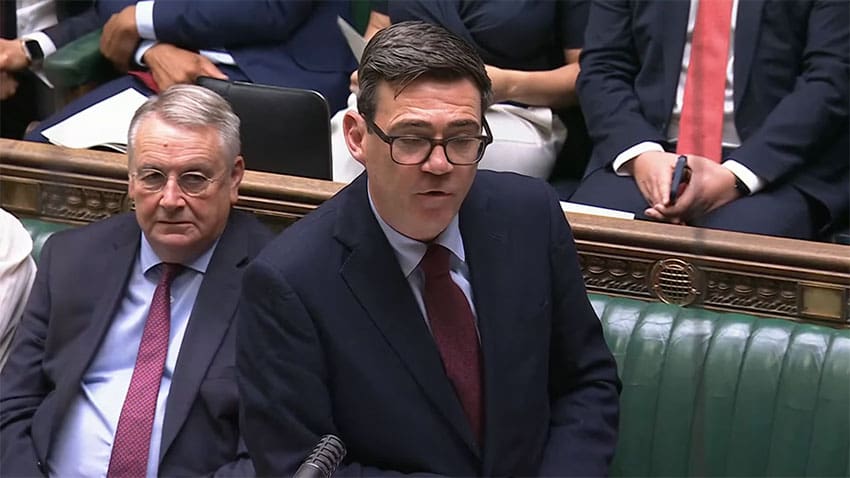
Andy Burnham told MPs today that VAT will come off electricity bills next month, in response to a question at Prime Minister’s Questions about what the government would do to help households through the winter. The 5 per cent rate is removed from domestic electricity supplies from 1 October.
“I will, Mr Speaker, and I will remove VAT from electricity bills next month,” the prime minister told the Commons. “It’s not going to solve everything for people, Mr Speaker, but it will take a little bit of pressure off.”
Dave Doogan, leader of the SNP in the House of Commons, had set out three pressures on household budgets in putting the question. Energy bills would rise again across the United Kingdom in the coming weeks, he said. Five major mortgage lenders had pushed up mortgage prices within the last few days. The cost of a barrel of oil had gone over $100 within the last few hours, he said, pushing up prices at the pumps.
“Despite this, Mr Speaker, the prime minister still seems fairly well liked,” Doogan said. “I’ll let you into a wee secret: I quite like the new prime minister, but that popularity will not pay the bills during this winter’s looming cost-of-living emergency. Will he stand up now and tell people what he is going to do to help?”
What the cut covers
The measure was announced on 21 July, in the first week of Burnham’s premiership. According to the Downing Street announcement, the 5 per cent rate comes off domestic electricity bills on 1 October at a cost to the Treasury of about £850m in 2026-27, funded by cancelling the digital ID programme, which had been due to cost £1.8bn over three years.
Downing Street put the saving at about £45 a year on a typical bill and said the Treasury expected the change to take around 0.10 percentage points off CPI inflation.
The relief applies to domestic supplies only. As Business Matters reported in July, most firms miss out on the cut: VAT-registered companies already reclaim the tax on their energy, and commercial supplies sit outside both the announcement and the price cap. Small businesses that qualify for the domestic rate and are not registered for VAT, along with charities and residential care homes, do benefit.
Bills still rising
The cut lands as household costs go up. Ofgem raised the price cap by 4 per cent from 1 October, taking the annual bill for a typical direct debit household to £1,723, up £60. The regulator said gas bills would rise by 8 per cent while electricity costs stayed broadly stable because of the VAT removal, and that about 11 million households on fixed tariffs, roughly 35 per cent of the total, were unaffected.
Neil Kenward, Ofgem’s director general for markets, said: “High international gas prices are continuing to drive energy costs in the UK. We welcome the government’s intervention to remove VAT from electricity bills, without which customers would have faced even higher costs this winter.”
Burnham signalled further help with bills at the Budget when the cap decision was published, saying the government would look at how to get energy prices down in the long term.
On borrowing costs, the Bank of England’s most recent Credit Conditions Survey put defaults on secured loans at 6.2 per cent in the first three months of 2026, the highest reading since the final quarter of 2024. Lenders have repriced since the escalation in the Middle East, pushing the average two-year fixed rate from about 4.8 per cent to beyond 5.5 per cent.
In Northern Ireland, where EU VAT rules still apply, the Executive receives comparable funding to support households instead, the announcement said.

Paul Jones
Harvard alumni and former New York Times journalist. Editor of Business Matters for over 15 years, the UKs largest business magazine. I am also head of Capital Business Media’s automotive division working for clients such as Red Bull Racing, Honda, Aston Martin and Infiniti.


Accountant Angela Frigger and her husband have been denied permission to sue their former lawyers, three weeks after a federal judge made them subject to vexatious litigant restrictions.

The 2026 NFL season kicks off tonight as the New England Patriots head to Lumen Field to take on the Seattle Seahawks. With college football already underway, the return to the gridiron marks the busiest season for sportsbooks and increasingly popular prediction markets. That should provide a boost to sportsbook operators like DraftKings (DKNG), Penn Entertainment (PENN) and FanDuel parent…
Copyright ©2026 Investor’s Business Daily, LLC. All rights reserved. 87990cbe856818d5eddac44c7b1cdeb8

Weak equity markets and FII outflows also pressurised the rupee, forex traders said.
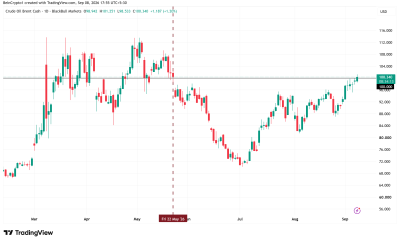
Brent crude futures surpassed USD 100 a barrel for the first time in almost six weeks after attacks on oil facilities and ships in West Asia threatened to weaken the already strained supply chain amid the US-Iran tensions. Brent crude was trading higher by 2.94 per cent at USD 100.73 per barrel.
At the interbank foreign exchange market, the rupee opened at 94.80, also its intra-day high, against the US dollar. The local unit fell to an intraday low of 95.22 as crude oil prices surged. The rupee settled at 95.08 (provisional), down 34 paise from its previous close of 94.74.
Meanwhile, the dollar index, which gauges the greenback’s strength against a basket of six currencies, was trading at 98.84, higher by 0.05 per cent.

“The rupee declined today on rising crude oil prices and risk aversion in global markets. Brent has breached the USD 100 mark on further escalation of tensions between the US and Iran. FII outflows too pressurised the rupee. However, rupee recovered initial losses on a weak dollar,” said Anuj Choudhary, Research Analyst, Mirae Asset Sharekhan.
The local currency is expected to trade with a negative bias on risk aversion in global markets and worries over rising crude oil prices. Escalation of geopolitical tensions between the US and Iran may also pressurise the rupee, he added.The US military destroyed five Iranian oil tankers on Tuesday in response to the latest attacks on its warships, and Iran hit back at American targets in Jordan.
On the domestic equities market front, Sensex tanked 813.35 points to settle at 74,764.23 while Nifty was down 203.60 points to 23,431.50.
Foreign institutional investors (FIIs) sold equities worth Rs 123.19 crore on a net basis on Tuesday, according to exchange data.

Spear Invest founder and CIO Ivana Delevska discusses OpenAI’s reported GPT-6 Astra model, artificial intelligence and more on ‘Making Money.’
A senior Anthropic safety researcher said on Tuesday that artificial intelligence (AI) has a greater than 10% chance to “kill all humans” within “the next decade,” responding to a former employee who resigned after accusing the company of acting irresponsibly.
Former Anthropic and OpenAI researcher Jacob Coxon wrote in a lengthy resignation thread posted to X on Sunday that “the people building AI earnestly believe that it could kill us all by the end of the decade.”
“I resigned from Anthropic today. I spent the last three years doing pretraining research at both OpenAI and Anthropic. Neither company is acting responsibly. They are racing straight to self-improving superintelligence and gambling with our lives,” he wrote.

Former Anthropic and OpenAI researcher Jacob Coxon wrote in a lengthy resignation thread posted to X on Sunday. (Thomas Fuller/SOPA Images/LightRocket via Getty Images)
Responding to Coxon’s thread in a quoted post, the company’s alignment science lead, Evan Hubinger, conceded that Coxon’s assessment was correct, though he added some caveats.
NVIDIA CEO DECLARES ‘AGI HAS ARRIVED’ AFTER OPENAI UNVEILS ASTRA
“Jacob is correct here—we really do earnestly believe AI could kill all humans!” Hubinger wrote.
“I personally think it is >10% within the next decade. I believe Anthropic is trying its best, but we do not yet have a plan to solve alignment for superintelligence and are not clearly on track to,” he continued.
Hubinger added that the potentially deadly risk did not come from present models.
“To be clear, as we say in our latest Risk Report, I think the risk from present models is low. What I am worried about is superintelligence arising from recursive self-improvement, as we have said is happening faster than we thought,” he wrote.
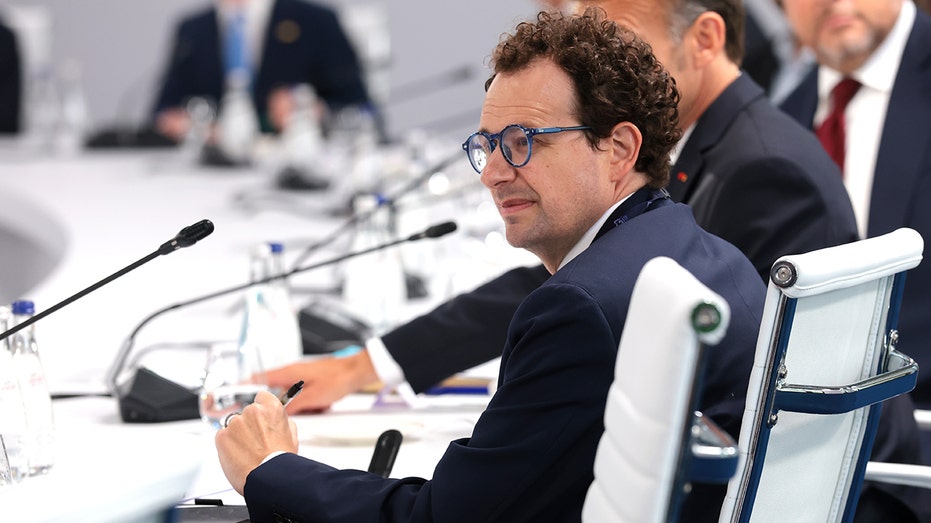
CEO of Anthropic Dario Amodei attends a working lunch with G7 leaders, G7 outreach partners, and global tech CEOs on innovation and AI, during the G7 Summit on June 17, 2026, in Evian-les-Bains, France. (Anna Moneymaker/Getty Images)
Research on self-improvement – an AI model’s ability to continuously enhance its own source code or training methodologies – is an avenue of development Coxon specifically cited in his resignation thread as a main reason he quit.
ANTHROPIC SAYS AI MODELS ACCESSED SYSTEMS OF 3 REAL ORGANIZATIONS DURING TESTING
“These will soon be superhuman systems that can hack anything, revolutionize any field overnight, and acquire real power and resources. We have all witnessed the progress in each of these domains, and progress is not slowing,” Coxon’s thread continued.
Coxon also said that, unlike researchers at other companies, Anthropic’s scientists understand the risks of their work, but press forward because they fear a less responsible company might unlock the potentially disastrous capabilities first.
“At Anthropic, the stakes are well-understood, but they are locked in a race to get there first – they believe no one else will act responsibly, so they must do it themselves, despite the risk,” Coxon added.
Coxon suggested that, to prevent utter catastrophe, the world may require a temporary ban on model improvement.

Coxon suggested that, to prevent utter catastrophe, the world may require a temporary ban on model improvement. (Davide Bonaldo/SOPA Images/LightRocket via Getty Images)
“I don’t feel like we’re on track to prevent a global race, which may require costly actions such as a temporary ban on improving model capabilities,” he wrote.
He ultimately called on global AI researchers and developers to think and act more responsibly.
“If you are a lab researcher, I urge you to consider what the next few years will actually feel like. Do you want to kick off a superintelligent RL run without a rigorous understanding of its mind? Should you put your head down because ‘it’s happening anyway’ – or take this moment to call for different conditions?” his X thread concluded.
GET FOX BUSINESS ON THE GO BY CLICKING HERE
FOX Business reached out to Coxon, Hubinger, Anthropic and OpenAI for further comment.

American Airlines seat in its Flagship Suite.
Courtesy: American Airlines
American Airlines is expanding its push into premium travel on its largest planes.
The carrier on Wednesday launched its first retrofitted Boeing 777-300ER, which it uses for its most popular long-haul international flights, including routes to London, Tokyo and Sydney.
The new layout on the wide-body plane features 144 premium seats, including 70 lie-flat seats with sliding doors in its Flagship Suite section at the front of the plane.
American said in 2022 that it planned to get rid of its international first class on many of its planes in favor of the single, larger premium cabin at the front of the plane. It started flying the suites last year after facing delays from suppliers.
The lie-flat seats can bring in close to $10,000 on some long-haul international routes compared with $2,000 or much less for a seat in the back.
There’s also a Premium Economy section, with 44 seats that have privacy headrest wings and adjustable calf and footrests, as well as 30 Main Cabin Extra seats with additional legroom.
There are 186 regular seats in updated plane’s Main Cabin.
American said its full fleet of 20 Boeing 777-300ER aircraft will be retrofitted by next year. The carrier will have a similar but smaller layout on its Airbus A321XLRs.
American Airlines retrofitted Boeing 777-300ER Premium Economy section.
Courtesy: American Airline
The airline has been trying to catch up to its rivals Delta Air Lines and United Airlines, which have a head start on catering to high-spending travelers. The airline’s new suites are a key part of that strategy.
American has also been working to grow its loyalty program, improve its on-time rate and expand its network. Last week, the airline announced it will add seven international routes to its 2027 schedule, though none of those are on the Boeing 777-300ERs.

Lowe’s stock hits 52-week low at 199.2 USD
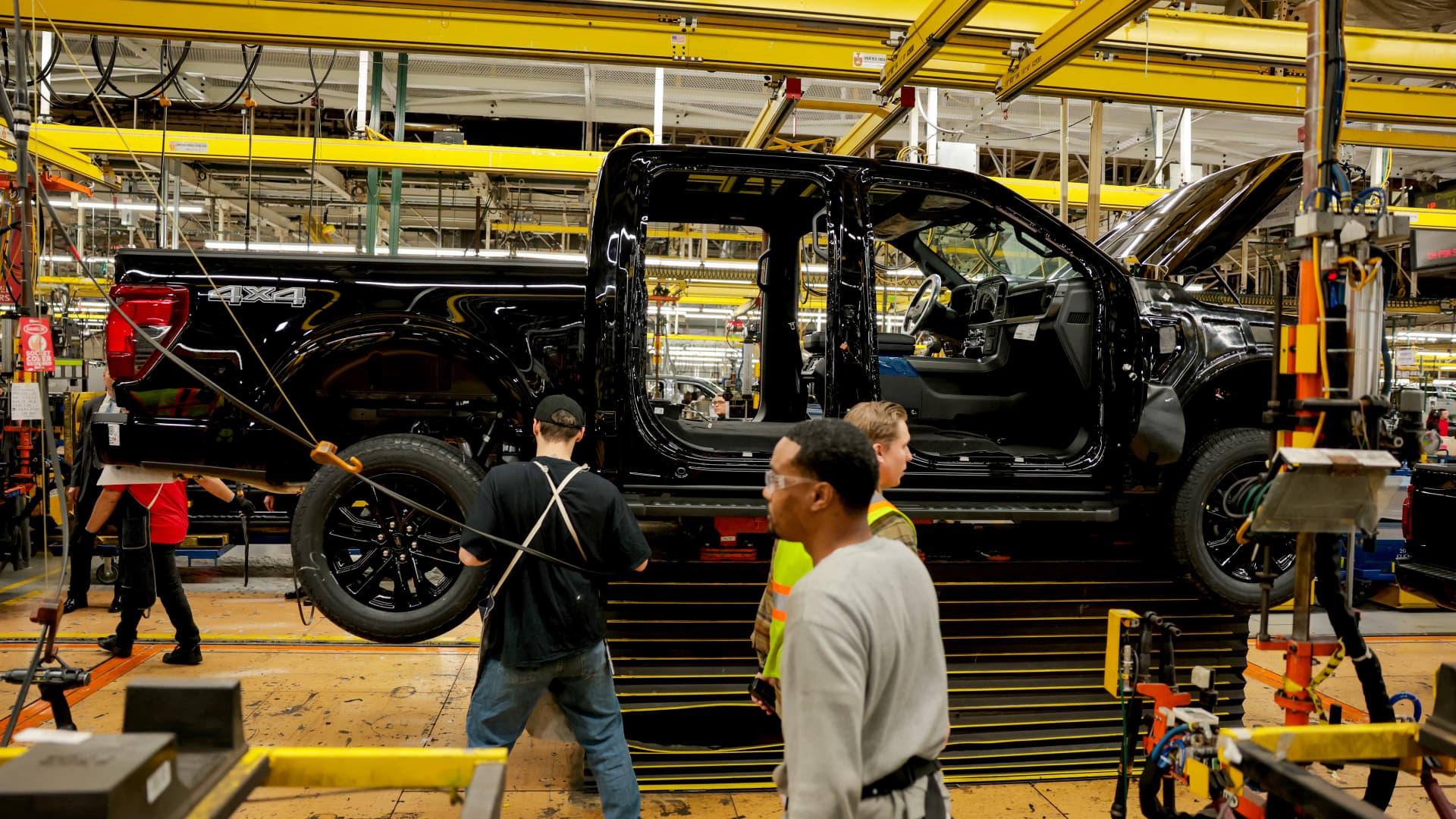
Ford F-150 trucks are assembled at the Ford River Rouge Complex on Jan. 13, 2026 in Dearborn, Michigan.
Anna Moneymaker | Getty Images
DETROIT — Ford Motor is increasing production of its crucial F-Series trucks after fires at an aluminum supplier severely impacted output over the past year.
The automaker confirmed Wednesday to CNBC that production of its large, highly profitable “Super Duty” trucks last month hit a 20-year high, while output of F-150 pickups reached their highest level in two years.
Ford’s F-Series trucks — which include the F-150 and larger “Super Duty” models such as F-250, F-350 and F-450 — were severely impacted by the supplier issues due to their large aluminum bodies and other components.
The Detroit automaker has spent the past year helping aluminum supplier Novelis get the impacted plant in Oswego, New York, back up and running following fires in September and November of last year.
The increases in production mean an influx of pickups are expected to arrive on dealership lots over the coming weeks and months, according to Rob Kaffl, Ford’s head of U.S. sales.
“We’re increasing production. Dealers will start seeing in the next 30, 60, 90 days that ramp-up in production,” Kaffl said Wednesday. “We have a healthy chain of in-transit and in-system.”
Ford said Super Duty production was more than 39,000 units in August, for its best month since March 2006, while F-150 production was its highest since August 2024.
The Ford Pro business is led by sales of the automaker’s Super Duty trucks that range from the F-150 to commercial trucks and chassis cabs.

The increase in the supply of pickup trucks comes as Ford experienced its eighth consecutive month of year-over-year U.S. new vehicle sales declines in August. The automaker reported Wednesday that sales were down 10.3% for the month compared with a year earlier.
“Our gross availability of products coming in, I would say, is returning back to normalcy – the normal levels our dealers would have,” Kaffl said.
Ford said Wednesday F-Series sales remain off 10.9% through August compared with a year earlier, including a 1.2% decrease last month.
Ford dealers currently have a roughly 40 days’ supply of pickup trucks, which is about half of what the industry has typically considered a healthy level for those vehicles. Kaffl reiterated that Ford is targeting a days’ supply of the trucks of between 50 days and 60 days, compared with historical industry levels of 75 to 90 days.
“We’re being very intentional to make sure the production is meeting the demand,” he said.
To meet that pent-up demand, Ford has been increasing manufacturing to higher levels than it had last year in an attempt to make up lost production. The Novelis issues are expected to cost the automaker $1.5 billion this year.
In addition to the pickup truck issues, Ford said its sales have been impacted by the discontinuation of two vehicles earlier this year that makes comparisons harder to meet as well as planned lower sales to daily rental fleets.
Ford also said Labor Day — which is historically a major sales weekend — was a touch comparison since it falls in September this year compared with August of last year.
The automaker noted that despite the year-over-year sales drops, its U.S. retail market share, which excludes sales to fleet customers, has remained relatively level this year at 11.7% in August.
U.S. automakers overall are experiencing slowing sales, with Ford estimating an industrywide decline of 6% in new vehicle sales.


LONG BEACH, CALIF. — Daring Foods, a plant-based foods manufacturer, is debuting a line of frozen skillet meals. The line features six meals formulated with Daring Plant Chicken.
Each skillet meal contains 21 grams to 25 grams of protein and 9 grams to 13 grams of fiber.
The Mediterranean-spiced chickpeas and vegetable variety contains chickpeas, peppers, red onion, garlic and shawarma-inspired spices.
The smoky vegetable chili is made with beans and vegetables in a tomato sauce.
The power grains and greens product is made with quinoa, kale, edamame, red pepper, chili and onion.
The lemon and garlic rotini is formulated with pasta and vegetables in a lemon and garlic sauce.
The teriyaki vegetable stir fry contains broccoli, peppers, mushrooms, water chestnuts and edamame in a teriyaki sauce.
The penne pomodoro features pasta, red peppers, mushrooms and tomatoes in a tomato sauce.
“We believe the foods people love can be better, and Daring Skillet Meals are an important next step,” said Chris Coburn, chief executive officer of Daring. “They bring that idea to life — familiar, flavorful meals made with Daring protein, vegetables, grains and simple ingredients. It’s another step in expanding what Daring can bring to the table, giving people more convenient ways to eat well without compromising on taste.”
The skillet meals may be purchased at Sprouts Farmers Market stores nationwide.
Check out what’s clicking on FoxBusiness.com.
Singapore’s prime minister is set to get a whopping 64% pay increase next month thanks to a boost in ministerial compensation.
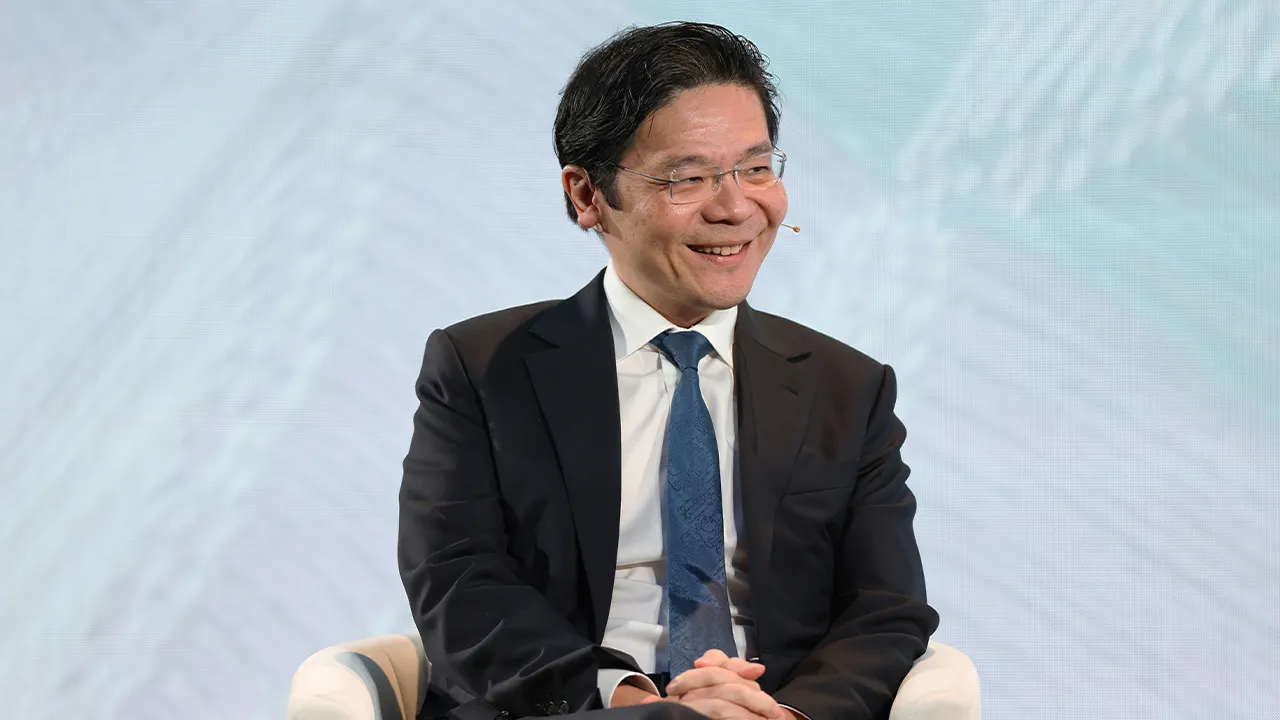
Starting on October 15, Prime Minister Lawrence Wong will see his salary increase to 3.6 million Singapore dollars – roughly the equivalent of $2.85 million USD.
Singapore already has some of the world’s highest ministerial salaries. The latest changes to political salaries are the first in 15 years.
For ministers and other political officeholders, Wong clarified that immediate adjustments will be limited to a one-off increase of up to 9%, depending on individual circumstances, including performance.
GORDON CHANG WARNS BEIJING’S PROVOCATIONS COULD SPARK A WAR ‘NO ONE CAN CONTROL’
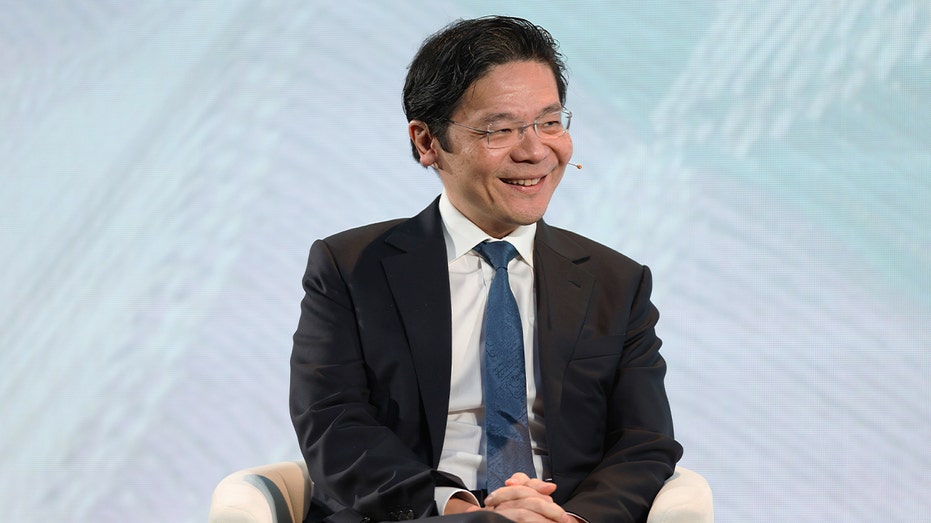
Lawrence Wong, Singapore’s prime minister, during an interview at the Bloomberg New Economy Gala Dinner in Singapore, on Wednesday, Nov. 19, 2025. (Lionel Ng/Bloomberg via Getty Images / Getty Images)
He also pledged to donate the entire salary increase he receives to charitable causes for the next five years.
“The sums involved are more than what most citizens earn, so I understand why Singaporeans scrutinize them closely,” Wong told parliament.
TECH BILLIONAIRE ORDERED TO PAY $645M TO EX-WIFE IN SOUTH KOREA’S ‘DIVORCE OF THE CENTURY’
He added that while leaving pay levels frozen would have been “easier politically,” maintaining an updated system is necessary to attract capable people who might otherwise choose careers in the private sector.
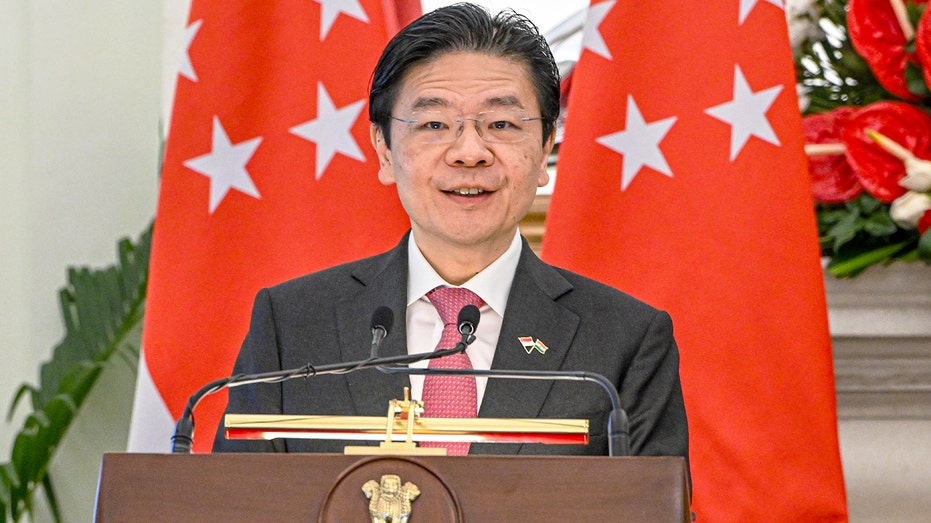
Lawrence Wong, Singapore’s prime minister, speaks during a joint press statement with Narendra Modi, India’s prime minister, not pictured, at Hyderabad House in New Delhi, India, on Thursday, Sep. 4, 2025. (Prakash Singh/Bloomberg via Getty Images / Getty Images)
Under Singapore’s executive compensation model, political salaries are benchmarked against the median earnings of the country’s top 1,000 corporate earners — with a mandatory 40% haircut to reflect public service.
Political salaries had remained unchanged since the framework was introduced in 2011. A 2017 review recommended adjustments in line with the benchmark, but the government decided not to raise salaries at the time, while a scheduled 2023 review was deferred amid economic uncertainty.
TRUMP SAYS TAIWAN IS DOUBLING THE SIZE OF CHIPMAKING PLANT IN ARIZONA
Coordinating Minister for Public Services Chan Chun Sing noted in a parliamentary statement that while major corporate CEOs in Singapore earn S$6 million to S$7 million annually, government salaries are not intended to match private sector levels.

Lawrence Wong, Singapore’s prime minister, left, and John Lee, Hong Kong’s chief executive, at the Government House in Hong Kong, China, on Friday, March 27, 2026. (Peter Parks/AFP/Bloomberg via Getty Images / Getty Images)
“If money is your main reason for wanting to be a Minister, frankly, you are not the person we are looking for,” Chan said. “We will never be able to match the pay of all the people we hope to get…. But we cannot pretend that such opportunity costs do not exist.”
The framework features a “clean wage” structure, with no pensions or hidden perks. Compensation is structured as roughly 65% fixed pay and 35% variable pay, with the variable component reflecting both individual performance and national socioeconomic outcomes such as real GDP growth, unemployment and income growth.
CLICK HERE TO GET FOX BUSINESS ON THE GO
Singapore’s political salaries remain among the highest globally, structured in part to deter public sector corruption. By comparison, the U.S. president earns a set salary of $400,000 annually, the Swiss president earns roughly $606,000, and the British prime minister receives approximately $230,000.
Reuters contributed to this report.
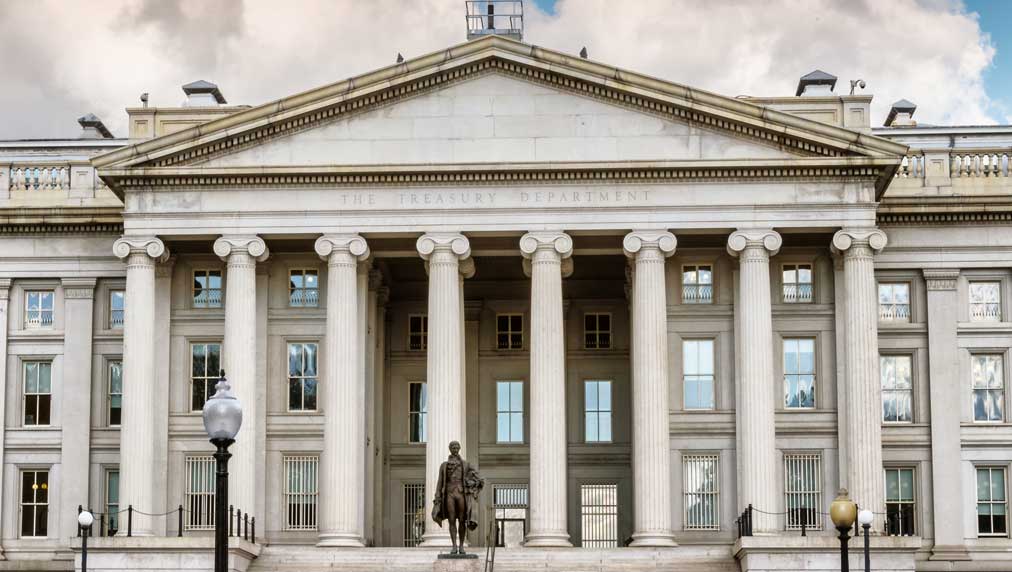
The 10-year Treasury yield held near a 9-month high 4.8% early Wednesday as crude oil futures surged on the intensifying U.S.-Iran conflict. With long-term yields testing their highest level of President Donald Trump’s second term in office, Treasury Secretary Scott Bessent is set to reveal the scope of his initial attempt to calm what he described as a growing threat…
Copyright ©2026 Investor’s Business Daily, LLC. All rights reserved. 87990cbe856818d5eddac44c7b1cdeb8

Explosives alert closes Swiss-German border crossing as bomb squad rushes to scene

Vexatious ruling restricts Angela, Hartmur Frigger after two decades

Hunter Biden’s $LAPTOP is already down 99%

Memory prices are slowing because buyers ran out of money

Phones confiscated, players sent home: Pakistan’s England tour turmoil revives memories of Mohammad Amir, Salman Butt and Mohammad Asif’s 2010 Lord’s spot-fixing scandal | Cricket News

Bitcoin price risks $76K drop as $78K support weakens

BITCOIN LIQUIDATIONS CONFIRMED (This is Next)!!! – Bitcoin News Today, Ethereum & Altcoins

6 Months Financial Plan: Step by Step Guide para Ayusin ang Utang, Ipon, at Pera Mo

G20 Just Gave The Green Light To Ripple XRP And Stellar Lumens XLM…………
-
Tech1 day ago
Memory prices are slowing because buyers ran out of money
-
Sports1 day ago
Phones confiscated, players sent home: Pakistan’s England tour turmoil revives memories of Mohammad Amir, Salman Butt and Mohammad Asif’s 2010 Lord’s spot-fixing scandal | Cricket News
-
 Crypto World15 hours ago
Bitcoin price risks $76K drop as $78K support weakens
-

 NewsBeat1 day ago
England up in reading, maths and science rankings as Scotland and Wales dip
-

 Crypto World15 hours ago
Ethereum price stalls below $2,500 as ADX drops to 11
-

 Crypto World23 hours ago
Robinhood Stock: How To Take Advantage With Reduced Risk
-

 Business1 day ago
Egyptian TV Presenter Sarah Khalifa, 11 Others Sentenced To Death In Major Drug Trafficking Case In Cairo
-

 Business13 hours ago
Meta debuts long-awaited personal AI agent, Muse
-

 Crypto World1 day ago
Visa expands stablecoin card network to 160 programs
-
 Crypto World1 day ago
Brent Crude Oil Moves Above $100 for the First Time in 3 Months
-
 Tech1 day ago
Strong Password Policy and Password Manager Guide
-
 NewsBeat1 day ago
Tehran’s assertive rhetoric signals a new and dangerous phase in conflict
-
 Crypto World23 hours ago
Intel Stock Jumps 9% on Chip Price Hike Report, US Stake Gains $36 Billion
-

 Tech1 day ago
Google’s revived nuclear power plant gets $1.9B loan from US government
-

 Sports21 hours ago
Ballon d’Or 2026 Nominees: Lionel Messi In, Cristiano Ronaldo Out; Erling Haaland Included In Top 30
-
 Business18 hours ago
Oil Higher on Hormuz Escalation, Weighing on Sentiment
-

 Business1 day ago
Claim Your Share Of $50 Million Disney Streaming Price Settlement By Sept. 8 Tonight
-

 Tech1 day ago
Stoke Space raises another billion to rival SpaceX at re-flying rockets
-

 Tech19 hours ago
Meta debuts its Muse AI agent. Will consumers trust it?
-

 Politics1 day ago
Critics Rip Trump After He Revives His Most Dubious 9/11 Claim
You must be logged in to post a comment Login