The split in guidance — despite similar headwinds — underscores the strength of Lilly’s position in the obesity and diabetes drug market, underpinned by its more effective injections and early foray into direct-to-consumer sales, among other factors. While Novo Nordisk effectively made the drugs mainstream, Lilly has since taken a clear edge in market share — and the forecasts show it will likely only extend its advantage this year.
“The difference in sales momentum and market share trend was visible throughout 2025, but the dichotomy between the two companies’ prospects was accentuated within this 24-hour period in which Novo guided below consensus and Lilly guided above consensus expectations,” Leerink Partners analyst David Risinger told CNBC on Wednesday.
“That really solidified an investor’s mind that Lilly is going to be the dominant player in obesity going forward,” he added.
In an interview on CNBC’s “Squawk Box” on Wednesday, Lilly CEO David Ricks said 20 million to 25 million patients are currently taking both companies’ medicines. But he said the total addressable market of patients in the obesity space is “gigantic.”
Diverging outlooks
On Wednesday, Lilly forecasted 2026 sales of $80 billion to $83 billion, surpassing the $77.62 billion that analysts were expecting, according to LSEG.
The midpoint of that outlook translates to sales growing by 25% this year.
In contrast, Novo warned on Tuesday that it sees sales and profit declining by 5% to 13% this year, as prices fall in the U.S. and exclusivity expires for its blockbuster obesity and diabetes drugs in China, Brazil and Canada.
Advertisement
Mike Doustdar, left, CEO of Novo Nordisk, and David Ricks, CEO of Eli Lilly, listen as President Donald Trump speaks in the Oval Office during an event about weight-loss drugs on Nov. 6, 2025.
Andrew Caballero-Reynolds | Afp | Getty Images
Lilly similarly pointed to a “global pricing decline in the low- to mid- teens [percentages] this year.” That comes after the landmark “most favored nation” deals both companies struck with President Donald Trump in November to slash obesity and diabetes drug costs, along with their recent efforts to further reduce direct-to-consumer prices for their treatments.
The agreements with Trump are expected to take a bite out of both companies’ sales, but eventually increase volumes of prescriptions for their drugs. Still, Lilly is bullish about other factors that will help offset that pricing pressure.
Advertisement
That includes continued worldwide demand for its obesity drug Zepbound and diabetes counterpart Mounjaro and the expected launch of its GLP-1 pill for obesity in the second quarter, pending U.S. approval. Lilly also pointed to government Medicare coverage of obesity treatments starting for the first time by at least July, one of the winning features of the drug pricing deals with Trump.
Lilly’s Ricks told CNBC that coverage will open up access to 40 million new Medicare beneficiaries, “and that could be quite expansive to volume.”
Overall, Risinger called Lilly’s guidance “very encouraging” and said the “price per volume trade-off is playing out well” for the company.
He said tirzepatide, the active ingredient in Zepbound and Mounjaro, is “superior” in its effectiveness and tolerability compared to semaglutide, the ingredient in Novo’s obesity and diabetes drugs. That was proven in a head-to-head clinical trial conducted by Lilly in 2024, and prescription trends show that the company’s drugs are preferred among prescribers.
Advertisement
“I think that’s what is driving Lilly’s market share gain” relative to Novo, Risinger said.
Another factor that sets Lilly and Novo apart is patent exclusivity. While Novo said expiring patents in some international markets pose a challenge, Lilly’s Ricks said tirzepatide should be protected into “the back half of the 2030s” in major markets.
Risinger noted that Lilly is still working to drive global uptake for tirzepatide, which won U.S. approval for obesity in 2023.
All eyes on pills
A pharmacist displays a box of Wegovy pills at a pharmacy in Provo, Utah, Jan. 15, 2026.
Advertisement
George Frey | Bloomberg | Getty Images
Novo Nordisk is first to market with a GLP-1 pill for obesity, and it hit 50,000 weekly prescriptions in just under three weeks of its launch. But investors are watching to see how that shifts once Lilly’s pill rolls out to patients later this year.
In an interview with CNBC’s “Mad Money,” Novo CEO Mike Doustdar said he’s confident about the company’s ability to compete with Lilly.
“Clearly we have the most efficacious weight-reduction pill that there is and I’m very optimistic and bullish on when they come with their pill and we have to battle this out,” Doustdar said.
Advertisement
He’s referring to clinical trial data suggesting that Novo’s Wegovy pill promotes comparable weight loss to its injectable counterpart, which is around 15%. Meanwhile, Lilly’s pill appears to be slightly less effective than that, based on separate study data.
Risinger said the launch of Novo’s pill has benefited from the fact that the company is leveraging the Wegovy brand name, which is recognizable by many patients, and immediately launched direct-to-consumer advertising for the product in early January.
But he said Lilly could capitalize on its pill’s convenience advantage.
Orforglipron is a small-molecule drug that is absorbed more easily in the body and doesn’t require dietary restrictions like Novo Nordisk’s pill, which is a peptide medication. Patients are supposed to drink no more than four ounces of water with the Wegovy pill and must wait 30 minutes before eating or drinking anything else each day.
Advertisement
Novo contends that those requirements won’t hinder uptake, but Risinger said it could help Lilly’s pill eventually generate greater sales globally.
Tyneside biotech business Atelerix is set for overseas growth after striking a strategic partnership with a Saudi Arabian company.
The Newcastle University spin-out – which takes its name from the behaviours of hedgehogs, which have the genus name Atelerix – has revolutionised how cells are stored and transported, having been formed eight years ago to disrupt the cell preservation market.
Based at the Biosphere at Newcastle Helix, the firm’s technology is inspired by hedgehogs, including the African four-toed pygmy hedgehog, which hibernates when the temperature dips below around 20C. The company’s patented hydrogel encapsulation technology allows cells to do just the same.
Thanks to its hydrogel-based cell preservation solutio, biomaterials which are essential for drug discovery and pharmaceutical research, can be transported without freezing.
Advertisement
The Newcastle business has now struck a deal with JH Health Ltd, a Saudi Arabian company focused on medical and health-related technology. The partnership grants JH Health exclusive rights to use and distribute Atelerix’s hydrogel-based cell and tissue preservation solutions in the Middle East, a move which significantly boost Atelerix’s global commercial footprint with new regional manufacturing and distribution channels.
The deal comes as Atelerix responds to increasing global demand for its technology by looking to establish new strategic partnerships. The partnerships can provide local technical expertise and regional supply in key markets, including China, Europe and Africa.
African pygmy hedgehogs – their hibernation skills inspired Atelerix’s tech
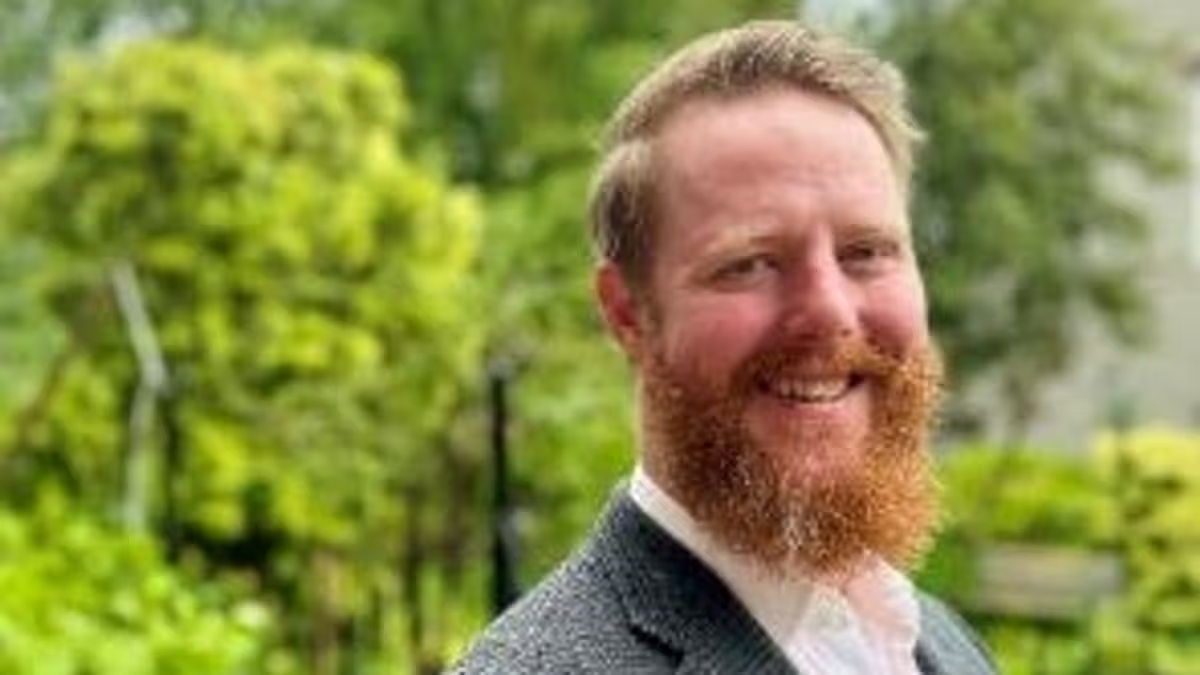
Alastair Carrington, CEO of Atelerix, said this latest agreement with JH Health is a significant development, providing access to extensive networks and distribution channels needed to enter the Middle East’s growing life science and healthcare market.
The partnership with JH Health will primarily focus on enabling the stable transport of biological samples for clinical diagnostics and research use, including the development of a new biobank within the region. Atelerix will lead regulatory approvals for its technology with the Saudi Food and Drug Authority, backed at a local level by JH Health.
Advertisement
The Saudi Arabian business will also provide financial support and strategic expertise for Atelerix’s operational scale-up in the region, including giving it capabilities for high volume manufacturing while also supporting opportunities for new research partnerships to further develop its technology.
Mr Carrington said: “By partnering with JH Health, we gain access to the deep market expertise and local support needed to establish our operations in the Middle East. Their strategic investment will enable us to build out our local manufacturing capabilities, ensuring we are equipped to deliver the future of biological transport logistics and meet the needs of the rapidly growing life science market in the region. This partnership is an integral next step in our strategy to bring our advanced cell preservation solutions to customers, worldwide.”
Mohammed Al Jumah, CEO at JH Health, said: “We are delighted to establish a strategic partnership with Atelerix to bring advanced biosample preservation technologies to the Middle East. By combining Atelerix’s pioneering solutions with our regional expertise, this collaboration enhances access to advanced tools that support biomedical research, accelerate scientific discovery, and strengthen clinical development across the region, ultimately improving healthcare outcomes.”
The deal comes a year after Atelerix signed an exclusive distribution agreement with MineBio, a leading Chinese supply chain and logistics organisation, to act as the sole distribution partner for Atelerix’s products in China.
Advertisement
Like this story? For more deals news you can visit our dedicated page for the latest news and analysis here.
Since taking up the role eight years ago he has overseen a huge rise in passenger numbers
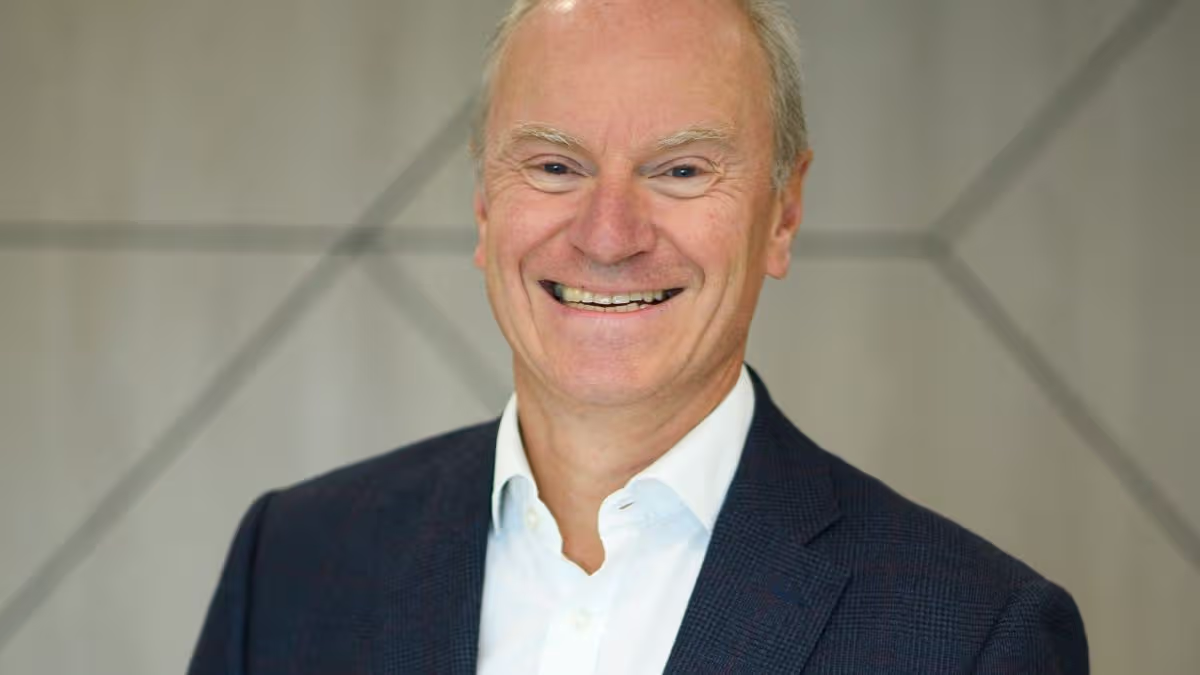
Chief executive of Bristol Airport, David Lees, is standing down after eight years in the role. He will remain in post until a successor is appointed and will support a transition period through to the end of this year.
Under his leadership, the airport – which became majority-owned by Macquarie Asset Management last year – has seen a unprecedented growth in passenger numbers and the delivery of a number of major projects, including the public transport interchange as well as the positive outcome of a planning application to increase passengers to 12 million per annum.
More recently he has led on the next stage of growth outlined in airport’s masterplan to 2040 as well as launching the planning application to increase passenger numbers to 15 million a year. It handled 10.8 million in 2025.
He also steered the airport through the pandemic and then drove the strongest post-pandemic recovery of any UK major airport.
Advertisement
Mr Lees said: “It has been the highlight of my career to lead an amazing, talented and committed team which continues to deliver responsible growth connecting our region to an increasing number of destinations. Together we have delivered significant improvements for our customers, airlines and the community which we are proud to serve including our industry leading position on our pathway to deliver net zero airport operations by 2030.”
The airport’s chairman Jason Holt said: “It falls to me to register the board’s appreciation and thanks for Dave’s efforts over the last eight years. Dave has taken the airport to where it is today through inspired leadership that now sets up the business to build on his work. As Dave passes the baton to his successor, his tenure has safeguarded future growth and prosperity for the airport and its positive impact on the region.
“This is especially so with potential future growth delivering upwards of 1,000 new jobs with increasing long-haul connectivity to global markets. I look forward to continuing to work with Dave for the remainder of the year. As a board we wish him all the very best for the future as he looks back with pride to the fitting legacy and opportunity he leaves behind for the community and our customers.”
In its 2024 financial year the airport grew revenues from £179.2m a year earlier to £204.4m. Its pre-tax profit level rose from £3.8m to £12.2m. After taxation it posted losses of £1.69m. Its biggest revenue contribution came from car parking with £75.6m.
Advertisement
Last month the airport’s legal challenge against Welsh Government plans for a £205m subsidiary support package to rival Cardiff Airport, was rejected in a ruling from the Competition Appeal Tribunal.
Bristol unsuccessfully claimed that the financial support over the next decade from the Cardiff Bay administration to the airport, which it acquired in 2013 for £52m, breached the Subsidy Control Act and would put it at a commercial disadvantage.
Around 20% of Bristol’s annual passenger are drawn from South Wales. Bristol is currently considering whether to lodge an appeal.
Angel One reported a sharp rise in profit for the March quarter, driven by strong client activity and operating leverage. Profit after tax stood at Rs 320 crore in the fourth quarter, marking an 84% year-on-year (YoY) increase, while rising 19% sequentially. The strong profit growth was supported by higher trading volumes and better monetisation across segments.
Total gross revenue came in at Rs 1,467 crore, up 39% YoY and 10% quarter-on-quarter, reflecting improved trading volumes and platform engagement. EBDAT rose to Rs 473 crore, up 17% sequentially, while margins expanded to 41.7%, indicating strong operating leverage.
The quarter saw a rebound in client activity, with total orders rising to 43.1 crore, up 13% sequentially, marking a six-quarter high. The company’s client base expanded to 3.74 crore, while its share in India’s demat accounts rose to 16.7%.
Despite a slight dip in cash segment activity, derivatives and commodity segments saw strong growth, supporting overall order volumes.
Advertisement
Angel One continued to see traction beyond broking. Wealth management assets under management surged 23% sequentially to Rs 10,080 crore, while asset management AUM stood at Rs 360 crore. However, credit disbursals declined 14.7% sequentially, reflecting some moderation in lending activity.
Live Events
The company’s asset management business remained small but growing, with AUM at Rs 360 crore, while mutual fund SIP registrations remained strong at 2.1 million during the quarter. However, credit disbursals declined 15% sequentially to Rs 610 crore, indicating some moderation in lending activity. Management attributed the strong performance to normalisation in client activity and increased adoption of digital platforms, alongside continued investments in AI-led capabilities to improve customer experience and operational efficiency.Angel One is positioning itself as a full-stack digital financial platform, expanding beyond broking into wealth, asset management, and credit, supported by technology-led innovation.
FOX Business’ Connor Hansen joins ‘Varney & Co.’ to break down GOP backlash to Democrat tax hikes.
A growing push for higher taxes on wealthy homeowners in New York is intensifying the debate over how far states should go to raise revenue, as policymakers weigh the broader economic impact on investment, housing and taxpayer behavior.
FOX Business’ Connor Hansen joined FOX Business’ Stuart Varney on “Varney & Co.” to report on the latest proposals, which center on a new tax targeting high-value second homes owned by nonresidents.
Advertisement
FOX Business’ Gerri Willis joins ‘Varney & Co.’ to report on South Hadley, Massachusetts, residents voting on a 50% property tax hike as retirees warn of being priced out and a broader tax revolt grows nationwide.
The proposal comes as voters nationwide continue to express frustration with their overall tax burden, even as Internal Revenue Service data shows average tax refunds are up compared to last year. At the same time, states like New York are advancing policies aimed at capturing more revenue from top earners and luxury property owners, a group that already contributes a significant share of total tax collections.
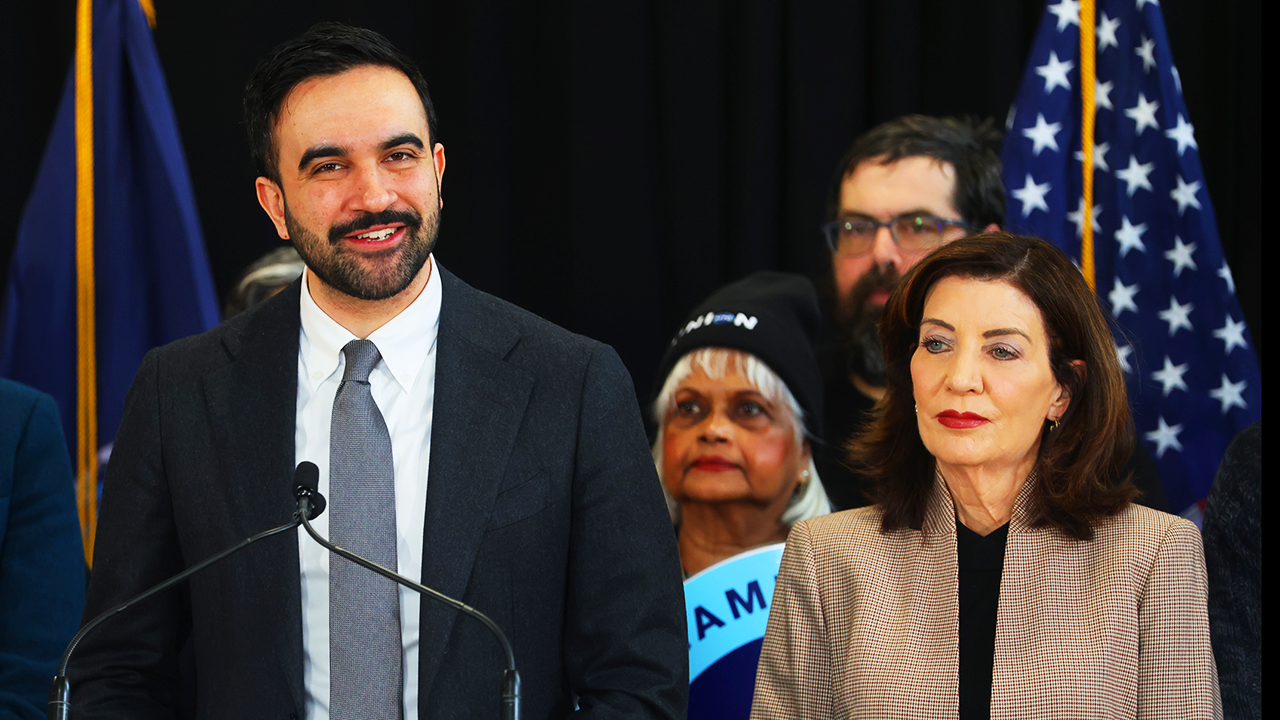
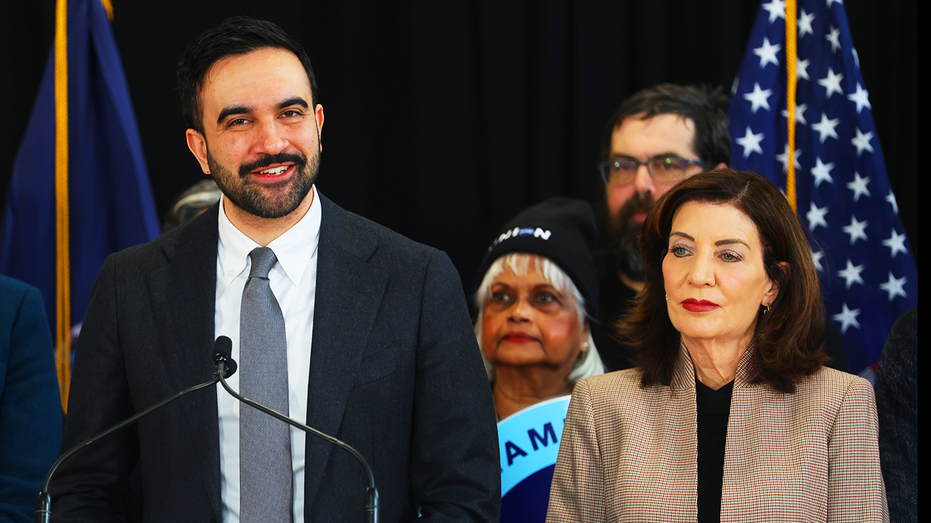
“When I ran for mayor, I said I was going to tax the rich. Well today, we’re taxing it,” Mamdani said.
FOX Business’ Gerri Willis joins ‘Varney & Co.’ to report on the growing red vs. blue state divide over taxes, as new wealth levies target billionaires, property tax revolts spread nationwide and a wave of income tax cuts reshapes the economy
New York Gov. Kathy Hochul has argued that the proposal is designed to address perceived imbalances between full-time residents and part-time property owners.
“The property value of homes like that is driven by everything New York City has to offer. That’s why it’s a valuable place. But the people who own these pied-à-terres are not contributing in the same way that the 8.3 million New York residents do,” Hochul said in a statement on the official website of New York State.
The proposal underscores a widening divide in tax policy approaches as states navigate competing pressures to generate revenue while maintaining economic competitiveness.
The UK could face food shortages by the summer if the Iran war continues, a worst case scenario drawn up by government officials suggests.
The closure of the Strait of Hormuz could continue to disrupt global supply chains, leading to shortages of carbon dioxide (CO2), which is used in the food and drinks industry.
A spokesperson from the Department for Environment, Food & Rural Affairs said these scenarios are planning tools, not predictions of future events.
BBC business correspondent Emma Simpson explains what this could mean for supermarket shelves.
Senator Steve Daines, R-Mont., joins ‘Varney & Co.’ to tout U.S. military gains against Iran and predict gas prices could fall below $3 by late summer.
The head of the International Energy Agency says Europe has “maybe 6 weeks or so jet fuel left” amid shortages due to Iran’s blockade of the Strait of Hormuz, the Associated Press reported Thursday.
IEA Executive Director Fatih Birol offered the analysis in an interview, telling the AP that the Hormuz situation has caused “the largest energy crisis we have ever faced.”
Advertisement
“In the past there was a group called ‘Dire Straits.’ It’s a dire strait now, and it is going to have major implications for the global economy. And the longer it goes, the worse it will be for the economic growth and inflation around the world,” he said.
“I can tell you soon we will hear the news that some of the flights from city A to city B might be canceled as a result of lack of jet fuel,” he added.
Nations across the globe are seeing fuel prices rise amid the war in Iran. (Giuseppe Cacace/AFP via Getty Images / Getty Images)
The war in Iran has caused oil prices to spike in the U.S. as well, though Treasury Sec. Scott Bessent has said the surge is “transient.”
Advertisement
For its part, Iran has threatened to shut down traffic in the Red Sea and other regional shipping lanes if the U.S. continues its blockade of Iranian ports this week.
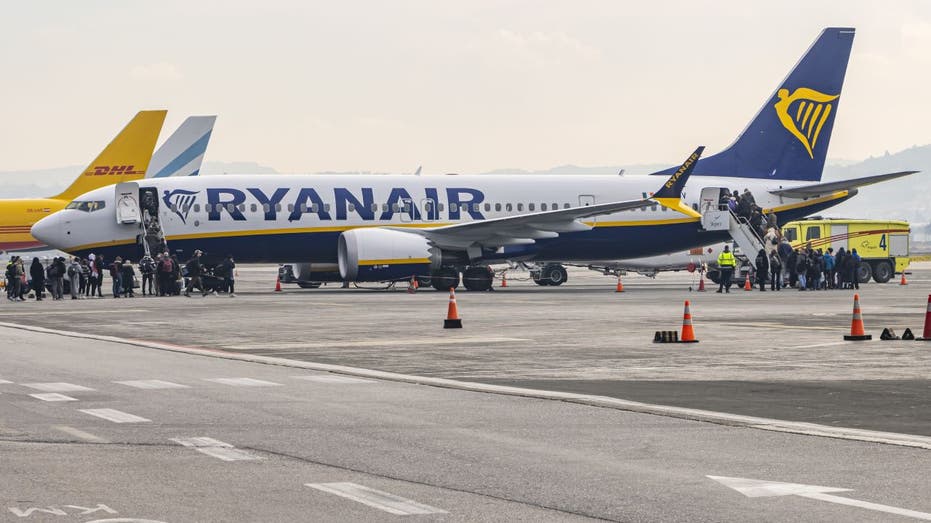
European airlines are expected to face fuel shortages in the coming weeks if the Iran war continues. (Photo by Nicolas Economou/NurPhoto via Getty Images / Getty Images)
Iran’s Maj. Gen. Ali Abdollahi Aliabadi issued the threat on Iranian television on Wednesday.
Aliabadi said if the U.S. blockade continues, it “creates insecurity for Iran’s commercial vessels and oil tankers” and constitutes “a prelude” to violating the ongoing U.S.-Iran ceasefire, the news outlet reported.
Advertisement
Former National Economic Council director Gene Sperling assesses the market impact of the Iran War on ‘The Claman Countdown.’
“The powerful armed forces of the Islamic Republic will not allow any exports or imports to continue in the Persian Gulf, the Sea of Oman, and the Red Sea,” Aliabadi reportedly added.
TUCSON, Ariz. — More than 75 days after 84-year-old Nancy Guthrie was abducted from her Catalina Foothills home near Tucson, authorities and forensic experts say the chances of finding her alive have grown increasingly slim, even as the high-profile investigation continues with DNA analysis, genetic genealogy and thousands of public tips.
Nancy Guthrie
Guthrie, the mother of NBC’s “Today” co-anchor Savannah Guthrie, was last seen on Jan. 31, 2026, after visiting her older daughter’s home. She was reported missing the next day when she failed to appear at church. Pima County Sheriff’s officials and the FBI believe she was taken against her will in the early morning hours of Feb. 1, with drops of her blood found on the front porch and her pacemaker disconnecting from her phone around 2:30 a.m., suggesting it moved out of range.
Doorbell camera footage released by the FBI in February shows a masked man, described as approximately 5 feet 9 inches to 5 feet 10 inches tall with a mustache, approaching the door wearing gloves and carrying a backpack. He appears armed. Black gloves similar to those in the video were later recovered nearby, though DNA from them and the scene has not matched entries in the FBI’s Combined DNA Index System.
The case has drawn intense national attention due to Savannah Guthrie’s prominence. The family offered a $1 million reward for information leading to Nancy’s safe return, while the FBI increased its own reward to $100,000. Despite receiving tens of thousands of tips, no suspects have been publicly named, and no arrests have been made as of mid-April.
Forensic experts and former investigators describe the odds of recovery as challenging after such an extended period. In typical stranger abductions of elderly victims, the probability of finding the person alive drops sharply after the first 48 to 72 hours. At 75 days, many law enforcement veterans say the focus often shifts from rescue to recovery and prosecution.
Advertisement
“For cases like this, especially involving an elderly victim with visible signs of violence at the scene, the statistical likelihood of survival diminishes significantly with each passing week,” said one retired FBI supervisory special agent familiar with similar investigations. “The window for a live recovery narrows rapidly once initial leads go cold.”
Pima County Sheriff Chris Nanos has stated that investigators believe they know the motive behind the abduction, though details remain undisclosed to protect the probe. Some profilers, including those who worked with the FBI’s Behavioral Analysis Unit, have suggested possible retribution or a personal cause linked to the family, rather than a random act or straightforward ransom scheme. Multiple unverified ransom notes have surfaced, some sent to media outlets demanding cryptocurrency, but authorities have not confirmed their authenticity or role in the case.
DNA evidence and potential genetic genealogy remain key hopes. Experts note that even without a CODIS hit, advanced forensic techniques could eventually identify a suspect through familial matches or other databases. However, processing such evidence can take months, and the lack of immediate breakthroughs has frustrated observers.
The investigation has included searches of the surrounding desert, neighborhood canvassing, review of neighborhood security footage and examination of a possible earlier incident around Jan. 11 that may connect to the abduction. Family members, including Savannah Guthrie’s siblings and their spouses, have been cleared of suspicion and described as cooperative victims.
Advertisement
Savannah Guthrie returned to the “Today” show in early April after taking time away, expressing continued hope while acknowledging the agonizing wait. In public statements, she and the family have urged anyone with information to come forward.
Retired homicide detectives and criminal profilers who have analyzed the case on national platforms point to several factors complicating recovery efforts. The masked intruder’s careful actions — covering the camera lens — suggest planning and awareness of surveillance. The absence of disarray inside the home beyond the porch blood spatter has led some to speculate the abduction may have involved someone familiar with Guthrie or the residence, though no evidence has confirmed that theory.
Statistical data on abductions of elderly women shows that in the vast majority of solved homicide cases involving female victims, the perpetrator is known to the victim in some capacity. Forensic psychologist Dr. Gary Brucato has publicly estimated that around 92 percent of women killed know their attackers, leading him and others to suggest the suspect may be local to the Tucson area and could have had prior interaction with Guthrie or her family.
Yet the case has hallmarks of a calculated stranger crime as well, with the masked figure and apparent use of force. Profiler Ann Burgess, known for her work inspiring the “Mindhunter” series, has floated retribution as a possible motive, potentially tied to the family’s public profile. She has urged authorities to release additional small pieces of evidence to generate more tips from the public.
Advertisement
The prolonged timeline has made the investigation “much harder,” according to former agents. With no major new leads reported in recent weeks, some analysts describe it as drifting toward cold-case status, though law enforcement insists active work continues on digital forensics, Google imagery requests and other avenues.
Challenges specific to elderly victims include limited physical mobility — Guthrie was described as unable to walk far unaided — and potential health vulnerabilities that could reduce survival chances in captivity or if abandoned. Her pacemaker provided an early clue to the timing but has not yielded further location data.
Public interest remains high, fueled by true crime discussions, podcasts and social media speculation. However, officials have cautioned against unfounded theories that could hinder the probe or harass innocent parties. Amateur sleuths have scrutinized everything from the doorbell video to purported ransom communications, but authorities emphasize that verified tips through official channels are most valuable.
As the search enters its third month, the emotional toll on the family is evident. Savannah Guthrie has shared brief messages of gratitude for public support while focusing on privacy during this difficult period. The broader Guthrie family continues to cooperate fully with investigators.
Advertisement
Looking ahead, experts say breakthroughs often come from persistent tip follow-up or advances in forensic technology. Genetic genealogy has solved numerous long-term cases in recent years, offering a potential path forward here. Continued analysis of the gloves, blood evidence and any digital footprints left by the suspect could still yield results.
For now, the chance of finding Nancy Guthrie alive appears low based on standard patterns in similar abductions, though authorities and the family maintain hope and urge vigilance. Anyone with information is asked to contact the FBI at 1-800-CALL-FBI, the Pima County Sheriff’s Department at 520-351-4900 or Crime Stoppers at 88-CRIME.
The case serves as a stark reminder of the vulnerabilities faced by elderly individuals living alone and the complexities of high-profile investigations where media attention both helps and complicates efforts. While the odds may feel daunting after more than two months, law enforcement stresses that cases can resolve unexpectedly through a single overlooked detail or tip.
Nancy Guthrie’s disappearance has captivated the nation not only because of her daughter’s fame but also due to the unsettling circumstances — a quiet suburban home, a masked figure on camera and an elderly woman seemingly taken without clear motive. As weeks turn into months, the focus remains on bringing her home or achieving justice, whatever the outcome.
Advertisement
Investigators continue processing evidence and pursuing leads, with the FBI deeply involved. The public’s role in providing tips remains crucial, as even small observations from the community could shift the trajectory.
For the Guthrie family and the many following the case, the uncertainty persists. Experts agree that while the statistical probability of a safe recovery diminishes daily, the commitment to solving the abduction has not wavered. The coming weeks and months will test whether forensic advances, renewed tips or other developments can pierce the veil surrounding Nancy Guthrie’s fate.
























































You must be logged in to post a comment Login