
Business
Elon Musk Reignites Years-Long Feud With Chess.com After Bold Claim, Calls Admin An ‘Intern’ In Online Spat


Elon Musk and Chess.com have reignited a public feud that dates back years, trading a series of pointed messages on X this week after the billionaire made a sweeping claim about the future of the game.
“The actual number of moves that are not utterly stupid in chess is tiny and chess will be fully solved one day,” Musk wrote in a post on X on Sept. 3.
The prediction quickly drew a response from whoever manages Chess.com’s official X account.
“Skill issue,” the account replied in a quote-tweet later that same day, using a term commonly deployed in online gaming culture to question someone’s competence.
What followed was a rapid exchange of snarky, passive-aggressive posts between Musk and the Chess.com account, with Musk defending his understanding of the game while Chess.com repeatedly questioned it. The exchange, while new in its specifics, extends a rivalry between Musk and the popular chess platform that stretches back nearly four years.
The origins of the feud trace to December 2022, shortly after Musk had purchased Twitter and before he renamed it X. Musk posted about his own history with chess at the time, dismissing the game’s complexity relative to real-world scenarios.
“I did as a child, but found it to be too simple to be useful in real life: a mere 8 by 8 grid, no fog of war, no technology tree, no random map or spawn position, only 2 players, both sides exact same pieces, etc.,” Musk wrote in that earlier post.
Chess.com responded at the time not just with a tweet, but with a full blog post titled “Why Elon Musk Doesn’t — And Can’t — Play Chess.” The post pushed back directly on Musk’s characterization of the game as simplistic, highlighting several nuanced rules that it argued undercut his argument, including castling, en passant, pawn promotion and the unconventional movement pattern of the knight piece.
Addressing the knight specifically, Chess.com’s blog post took a notably sharp tone.
“How can one piece jump over another and then have the possibility of landing on up to eight squares?” the post read. “True, it’s not random and it’s probably confusing to someone who is a billionaire.”
Chess.com also replied directly to Musk’s original 2022 tweet, though that earlier exchange did not prompt any public response from Musk at the time, leaving the rivalry largely dormant until this week’s renewed exchange.
Following Chess.com’s “skill issue” jab this week, Musk offered a more detailed defense of his position on the game’s ultimate solvability, drawing a comparison to another classic board game that has already been fully mathematically resolved.
“Chess is hard for humans, but not for computers,” Musk wrote. “One day, it will be fully solved like checkers. Between now and then, or even after, have fun. People enjoy many games/sports where machines are vastly better.”
The back-and-forth continued from there, growing increasingly personal at points. Musk at one stage referred to whoever runs the Chess.com account as an “intern,” prompting a swift correction from the account.
“I’m a full-time employee,” the Chess.com account replied.
The Chess.com admin also poked fun at how quickly Musk was responding throughout the exchange, suggesting the billionaire’s rapid replies stood out compared with his own social circle.
“Even my friends don’t text me back that fast,” the account wrote.
The public spat drew significant attention from other users on X, many of whom sided with Chess.com in the exchange. One user, posting under the handle @CantEverDie, offered a pointed take on the dynamic playing out in real time.
“Have been really enjoying this chess account wolloping on Elon Musk for the last 12 hours,” the user wrote. “Elon Musk continues to be one of the dumbest people around.”
Chess.com spokesperson Bianca Facey offered a similarly sharp assessment of the exchange in comments to USA Today.
“We understand losing a chess game can be frustrating, but losing a Twitter fight to a so-called intern must be maddening,” Facey said.
X had not responded to a request for comment on Musk’s behalf regarding the exchange as of publication.
Chess.com’s willingness to engage playfully, and at times combatively, with high-profile figures and internet culture more broadly is not new for the platform. The company has built a substantial following for its social media presence over the years, frequently leaning into meme culture surrounding the game. Jokes referencing Chess.com and specific chess rules have circulated widely across platforms including Reddit, where one popular post shared in the r/AnarchyChess subreddit in 2021 joked about a player getting “en passant’d” by an opponent, humorously suggesting the confusing but legal move was so unexpected that the victim assumed they had been hacked and searched for how to report the incident to Chess.com.
The platform has also generated viral moments independent of its rivalry with Musk. In March 2025, Chess.com shared a tweet asking users to suggest a new name for the bishop chess piece, a post that drew more than 53.4 million views and prompted a flood of replies, many of which simply suggested renaming it “bishop.” The account’s admin responded to the wave of unhelpful suggestions with characteristic humor.
“Please stop suggesting ‘bishop’ … silly name,” the Chess.com account wrote at the time.
Musk’s history of public disputes with individuals and organizations on X, the platform he owns, has become a recurring feature of his online presence in recent years, spanning everything from business rivals to media figures to, now, a chess website’s social media team. Whether this latest round of sparring with Chess.com produces any further escalation, or fades as quickly as it began, remains to be seen, though the exchange has already generated significant engagement and amusement among users following the back-and-forth in real time on X this week.



Envision Research, aka Lucas Ma, has over 20+ years of investment experience and holds a Masters with in Quantitative Investment and a PhD in Mechanical Engineering with a focus on renewable energy, both from Stanford University. He also has 30+ years of hands-on experience in high-tech R&D and consulting, housing sector, credit sector, and actual portfolio management.He leads the investing group Envision Early Retirement along with Sensor Unlimited where they offer proven solutions to generate both high income and high growth with isolated risks through dynamic asset allocation. Features include: two model portfolios – one for short-term survival/withdrawal and one for aggressive long-term growth, direct access via chat to discuss ideas, monthly updates on all holdings, tax discussions, and ticker critiques by request.
Analyst’s Disclosure: I/we have no stock, option or similar derivative position in any of the companies mentioned, and no plans to initiate any such positions within the next 72 hours. I wrote this article myself, and it expresses my own opinions. I am not receiving compensation for it (other than from Seeking Alpha). I have no business relationship with any company whose stock is mentioned in this article.
Seeking Alpha’s Disclosure: Past performance is no guarantee of future results. No recommendation or advice is being given as to whether any investment is suitable for a particular investor. Any views or opinions expressed above may not reflect those of Seeking Alpha as a whole. Seeking Alpha is not a licensed securities dealer, broker or US investment adviser or investment bank. Our analysts are third party authors that include both professional investors and individual investors who may not be licensed or certified by any institute or regulatory body.

Ten BSE SmallCap stocks gained across all five sessions through September 4, outperforming a falling Sensex. The strongest performers delivered cumulative gains of up to 57%, highlighting resilience amid broader market weakness.

“Such periods of extreme calm have not necessarily indicated whether the next major move would be upward or downward, but they have often preceded a meaningful increase in market movement,” said Raj Gaikar, equity research analyst at SAMCO Securities.
Gaikar analysed 6,630 trading days across 320 calendar months since January 2000 and found only eight months in which the Nifty did not record a single daily move of plus or minus 1% or more.
That makes August’s market behaviour a rare event, occurring roughly once in every 40 months.
The previous instances were June 2017, July 2018, December 2019, June 2021, April 2023, and July, September and December 2025. All eight occurred after 2017, with no similar episode recorded during the first 17 years of the dataset.

Also Read | Value stocks are making a comeback in India. These 10 stocks could benefit
Big move, uncertain direction
The immediate aftermath of these calm periods was not necessarily dramatic. The Nifty’s average one-month forward return was 1.22%, with the index ending higher in five of the eight instances.The three-month performance, however, was far more volatile. Returns ranged from a decline of 29.34% to a gain of 12.06%. Six of the eight episodes were followed by a move of more than 5% in either direction.
That historical pattern makes the current setup less a bullish or bearish signal than a warning about the market’s compressed trading range.
“With August 2026 now joining this rare list, the data suggests that the Nifty may be entering another phase where volatility could return after an extended period of consolidation,” Gaikar said.
 ETMarkets.com
The August calculation excludes the 1.60% market move on Aug. 3, which was attributed to the introduction of the new Closing Auction Session and occurred during the closing auction.
The subdued index performance comes as strategists increasingly expect returns to become more dependent on earnings delivery and individual stock performance.
Axis Securities said its investment strategy for September should shift “from index-level positioning towards earnings-led stock selection.” The brokerage said the broader market had already benefited from domestic liquidity and better-than-expected earnings growth.
Going forward, it expects companies with visible earnings growth, strong cash flows, credible capital-expenditure plans and improving return ratios to outperform.
Axis Securities raised its December 2026 Nifty target to 27,360 after upgrading its Nifty earnings estimates for FY27 and FY28 by 0.3% each. Its target is based on 19.5 times December 2027 estimated earnings.
The brokerage remains constructive on Indian equities, citing macroeconomic fundamentals, government capital expenditure, GST 2.0 reforms and an improving corporate earnings cycle. But it also advised investors to maintain diversified portfolios and reduce concentration in expensive stocks.
Anand Shah, CIO – PMS & AIF, ICICI Prudential Alternate Investments, echoed that view. “We expect returns to become increasingly earnings-led and stock-specific rather than driven by broad-based multiple expansion,” Shah said.
His concerns include higher crude oil prices and currency weakness, which could create imported inflationary pressures. The investment approach, he said, remains focused on companies with visible earnings growth, resilient balance sheets, cash-generative operations and reasonable valuations.
Foreign investor activity has also improved after a prolonged period of selling. Arihant Bardia, CIO and founder of Valtrust, said foreign portfolio investors turned buyers in July after four consecutive months of selling and continued buying in August. FPIs bought ₹20,200 crore in July and ₹29,631 crore in August, he said.
“If the recent improvement in FPI flows sustains, we could see a meaningful rerating of select large caps, particularly private banks,” Bardia said.
That potential return of foreign demand could provide support to parts of the large-cap market. But Bardia also expects earnings delivery, rather than liquidity alone, to drive returns.
The same shift is visible across the broader market strategy. While Axis Securities expects Nifty earnings to grow at a 13% compound annual rate between FY23 and FY28, it warned that geopolitical tensions, crude oil volatility and currency movements could still generate near-term turbulence.
The message from the market’s unusual August calm is therefore straightforward: the Nifty may be quiet, but the risk environment is not. History does not reveal whether the next move will be higher or lower. It does suggest that the current lack of movement may not last.
(Disclaimer: Recommendations, suggestions, views and opinions given by the experts are their own. These do not represent the views of The Economic Times)

First US Bancshares director Robert Field buys $1,858 in stock

A charity is hosting a music event to fund a project that helps families with the costs of Christmas.
The Greenaway Foundation provides families in Kent, Sussex and Surrey with ingredients for a two-course Christmas dinner to help with the costs of the festive season.
The organisation hosts a music festival, Greenaway Live, at Crawley Rugby Club from 15:00 BST on Saturday, with ticket sales helping fund its work for families struggling financially.
Darren Greenaway, who founded the charity, said the Christmas project was “getting bigger and bigger, so this year we need to raise about £200,000”.
As part of the charity’s festive work, children from low-income families can make a “make a wish for a Christmas present”, which the organisation delivers on Christmas Eve.
It expects to support over 1,000 families in 2026, and Greenway said some parents would “break down and cry when we turn up and make the delivery”.
The first Greenway Live was held in 2025. The second year of the event will be streamed on the charity’s social media.
“I was on my honeymoon trying to arrange it,” Greenway told the BBC.
“This year we said we’d try again and obviously it seems to be getting more and more traction, so we’ve all now started planning towards next year.”
He added: “All the live acts are donating their time for free, so it’s a mini Live Aid.”
Follow BBC Sussex on Facebook, external, on X, external, and on Instagram, external and listen to BBC Radio Sussex on Sounds. Send your story ideas to southeasttoday@bbc.co.uk, external or WhatsApp us on 08081 002250.

Pubmatic chairman, chief innovation officer Goel sells $106,526 in stock
Business
ETMarkets Smart Talk | Don’t judge India by Nifty’s 21x PE; stock-level valuations still offer opportunities: Emkay Investment Managers: Kashyap Javeri
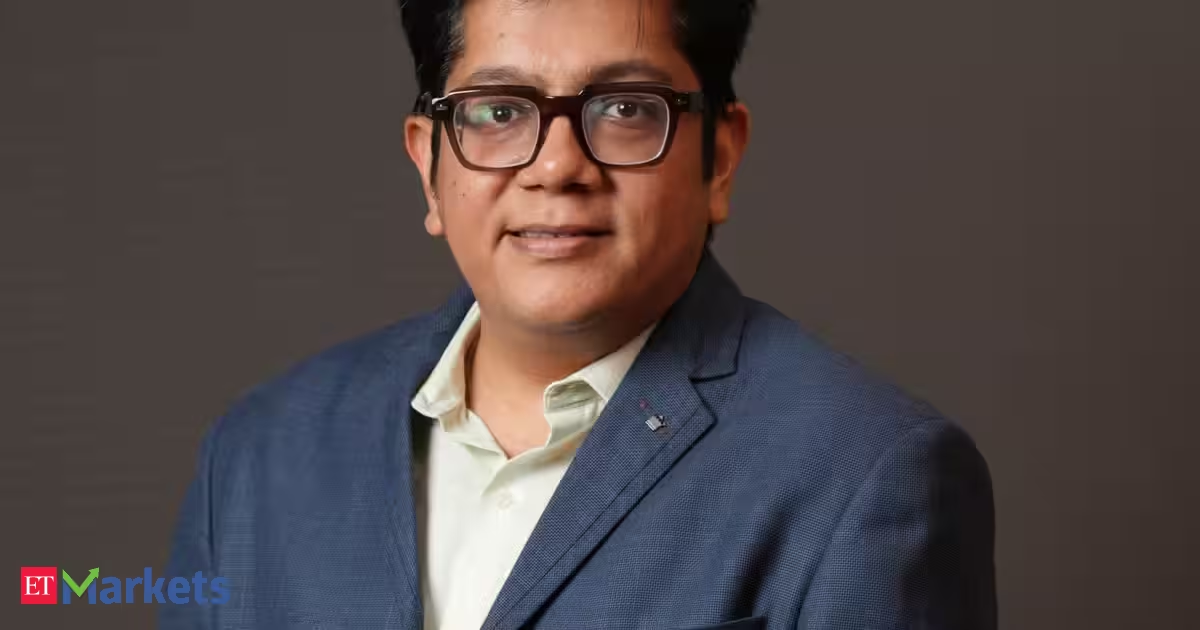
Kashyap Javeri, Head of Research and Fund Manager at Emkay Investment Managers Limited, argues that comparing markets purely on index-level valuations can be misleading, particularly when indices across emerging markets have vastly different compositions and concentration levels. Instead, investors should focus on company-specific growth and valuations, where opportunities continue to remain attractive on a PEG basis.
In an interview with Kshitij Anand of ETMarkets, Javeri discusses why India’s markets should not be judged solely by the Nifty’s headline PE multiple, the strong and increasingly broad-based earnings growth in mid- and small-cap companies, the role of SIPs in driving domestic institutional flows, early signs of fatigue in FPI selling, and the key risks posed by rising crude oil prices and currency weakness. Edited Excerpts –
Q) Most experts say valuations and earnings offer a reasonable starting point. But India is still trading at a premium to most emerging markets. What exactly is “reasonable” here—and what would make you admit that Indian equities are still expensive?
A) Nifty 100 today trades at 21x PER vs many of the emerging markets trading between 14-17x PER. However, looking at the plain PER numbers how does one conclude that Indian markets are expensive or cheap vs most emerging markets? In some of the emerging markets, the indices are so skewed that one or two stocks 42% to 55% of index weight. How do you compare the PERs of two markets? What we as well as global investors don’t seem to appreciate SEBI’s regulatory oversight on such undue influence of 1-2 stocks on the markets. We believe that if one shifts focus from headline numbers on PER and earnings to more focussed stock specific approach, there are plenty of opportunities available in the market to deploy money. We don’t believe that Indian markets are expensive at stock specific level compared to growth that they offer. PEG at stock specific level remains very attractive.
Q) If earnings are genuinely improving, why haven’t valuations corrected more aggressively? Are investors already pricing in the recovery?
A) The valuations at the index level are also driven by overall composition. For example nearly 47% of Nifty 100’s weight is BFSI+IT+RIL. We haven’t seen a very rosy picture of earnings here and hence the valuations have neither corrected much nor improved. However, if you go one step below – Nifty Smallcap 250 and Nifty Midcap 150 indices’ earnings grew at healthy 20+% for FY26 as well as Q1FY27 and hence Nifty Midcap 150 Index again crossed its all time high yesterday and Nifty Smallcap 250 index is just 1% away from the same.
Q) Everyone is calling Q1 earnings encouraging. But how much of that growth is actually broad-based, and how much is being driven by a handful of sectors or companies?
A) The earnings today are more than democratised than ever before. For FY26 as well as Q1FY27, the earnings of Nifty Smallcap 250 and Nifty Midcap 150 indices’ earnings grew at healthy 20+%, in fact higher for Smallcap. If you look at most broker reports, upgrade to downgrade ratio is 1x+ after long time and has improved for straight two quarters. More than sectors have seen earnings growth higher than index of which they are part of.
Q) DIIs have been relentless buyers. But are domestic flows actually reflecting investor conviction, or are SIPs simply creating an automatic bid regardless of valuations?
A) One would be correct in saying that SIPs are currently driving DII flows completely. Adjusted for SIP flows, the mutual funds have seen net outflows in 3 out of last 5 years. However, it is also true that Indian retail investors have raised SIP investment from $17bn in FY22 to nearly $40bn in FY26 shows their conviction. Let’s not make a mistake of assuming that only lumpsum flows in the market are smart money.
Q) We are seeing early signs of FII buying. But, can we call this as a turnaround after just a couple of months of modest flows?
A) Two things worth noting here – while FPI flows have been modest, they were net buyers in 26 out of 40 trading days in Q2FY27. That itself shows the incessant selling has started witnessing fatigue. Secondly, FPIs are not the only barometer global investor’s sentiment. If you look at FY26, gross inward FDI towards India stood at $95bn (of which $62bn was fresh money), the repatriation by private equity players thawed. For Q1FY27, we have already seen $31bn flowing in.
Q) If US bond yields remain elevated, crude moves higher and the rupee weakens simultaneously, does the current bullish thesis break?
A) Crude oil continues to threaten not only Indian markets but world markets too. From India’s standpoint its very important given that our import bill on petroleum stands at $180bn (or nearly 5% of our GDP). We have seen in past that whenever our FX cover falls below 7.2-7.5 months of our import bill plus short-term FX debt repayments, the currency has seen sharp depreciation like it happened in last 6-7 months. Lets hope that FCNR deposits and FDI money helps us improve the same.
Q) Large-, mid- and small-caps have all performed well. But isn’t that exactly what makes you nervous? Where are valuations most disconnected from fundamentals?
A) We believe that the valuations mismatched cannot be looked at sectoral level. Barring IT, almost every industry in India is witnessing tailwinds and within those industries, valuations of some stocks will overshoot the earnings expectations and in some cases they may undershoot due to some exogenous factors. Be mindful of such scenarios but stay invested!
(Disclaimer: Recommendations, suggestions, views, and opinions given by experts are their own. These do not represent the views of the Economic Times)

Beta bionics CEO Sean Saint sells $113,258 in company stock

Gevo director Patrick Gruber sells $5,671 in company stock

- Asia has shifted from adopting externally built technology to constructing the foundational layers of the global AI economy. The region accounts for roughly 72 percent of global semiconductor production and over 95 percent of advanced AI accelerator chips, with Taiwan, South Korea, and Japan anchoring the supply chain that underpins worldwide AI infrastructure spending.
- Beyond hardware, major Asia-Pacific economies are developing domestic large language models and sovereign compute infrastructure, backed by significant capital commitments and formal policy frameworks. Structural challenges remain, including AI talent shortages, cross-border regulatory fragmentation, and the risk that hardware advantages do not automatically translate into broader technology leadership.
For most of the past decade, “digital transformation” in Asia meant catching up: banks digitising branches, retailers building e-commerce rails, governments rolling out digital ID. That era is closing. The region is no longer principally absorbing technology built elsewhere. It is building the foundational layers of the AI economy itself, exporting the compute, the chips and, increasingly, the models that the rest of the world depends on.
The shift shows up first in trade data. Asian economies contributed close to two-thirds of the growth in global AI-related trade in 2025, and semiconductor sales are on track to approach the $1 trillion mark globally in 2026, with the Semiconductor Industry Association crediting AI infrastructure spending as the primary driver. Asia is not simply plugged into that boom. It is the boom’s supply base, and its capital.
The semiconductor foundation
The starting point for Asia’s claim to technological leadership remains hardware. Including Japan, the region now accounts for roughly 72 percent of global semiconductor production and about 95 percent of the most advanced chips used in AI accelerators, according to analysis from State Street Global Advisors. Taiwan manufactures the leading-edge logic chips that power frontier AI models, South Korea dominates high-bandwidth memory, and Japan supplies the specialty chemicals and precision equipment that make the rest of the chain possible. J.P. Morgan Asset Management has gone further, putting Asia’s share of leading-edge semiconductor production above 95 percent and noting that technology now makes up more than 30 percent of the MSCI Asia Pacific ex Japan Index.
That concentration is not incidental. It took roughly fifteen years and tens of billions of dollars of sustained investment to build, and it now anchors what has been described as Asia’s industrial supercycle, in which AI data centres, energy infrastructure, defence electronics and supply chain diversification reinforce one another rather than functioning as separate trends. Every advanced GPU shipped anywhere in the world still traces back to Taiwanese silicon, Korean memory and Japanese equipment. The West’s hyperscalers are spending unprecedented sums on AI infrastructure, but a large share of every dollar spent ultimately flows back to Asian suppliers.
Sovereign AI, not borrowed AI
What has changed more recently is the model layer. Through 2024 and into 2025, most of Asia’s AI activity was about deploying Western large language models. That is no longer the whole story. Every major Asia-Pacific economy now runs its own domestic large language model programme: India’s Sarvam AI, Malaysia’s ILMU, Indonesia’s Sahabat AI, Singapore’s SEA-Lion, South Korea’s HyperCLOVA X Think, Japan’s NTT Sarashina and Taiwan’s TAIDE, according to a market report from Digital in Asia. More than 100 countries signed the Bangkok Declaration in February 2026 committing to AI sovereignty, treating dependence on a foreign AI supplier as a strategic vulnerability comparable to energy dependence.
The scale of the underlying commitment is considerable. China’s AI capital expenditure reached an estimated $91 billion to $98 billion in 2025, up more than 50 percent year on year, while its science and technology budget hit roughly $171 billion, the largest single science allocation in the country’s budgetary history, per the same report. East Asian institutions now hold more than 80 percent of global AI patent grants and close to 35 percent of global AI research output. The region that spent the 2010s licensing technology from Silicon Valley is now filing the patents.
Regionally, ASEAN has formalised the same instinct through policy. The sixth ASEAN Digital Ministers’ Meeting, held in Hanoi in January 2026, adopted the Hanoi Digital Declaration and set out the new ASEAN Digital Masterplan 2026-2030, covering AI cooperation, resilient digital infrastructure, a future-ready digital workforce and trusted cross-border data flows. The framing captures the shift in a single phrase: from connectivity to connected intelligence.
The compute build-out
Sovereign models need sovereign compute, and Southeast Asia’s data centre buildout has moved from consumption to infrastructure formation. Greenfield investment in ASEAN’s information and communication sector rose 43 percent to reach $30 billion, driven by demand for data centres, cloud infrastructure and data processing, while investment in electronics and electrical equipment climbed 15 percent to $31 billion. Amazon Web Services, Google and Microsoft have all committed multi-billion-dollar cloud region investments across Thailand, Malaysia and Indonesia.
Thailand has become one of the more visible beneficiaries of that reallocation. The Board of Investment approved a $25 billion data infrastructure commitment from a TikTok affiliate, part of a broader $29 billion package spanning six major projects, with AI processing and cloud services now accounting for 86 percent of total digital investment value approved. Gorilla Technology has separately moved to build a 200 megawatt AI compute campus in Korat, designed to serve Southeast Asian demand for sovereign compute capacity from governments, hyperscalers and enterprises alike. A further $1.99 billion in BOI-approved investment in July, led by AI infrastructure and advanced electronics projects, reflected a 2.4-fold year-on-year surge in investment applications.
Where Thailand fits
Thailand’s position in this shift is more structural than opportunistic. The country is on track for record exports this year, driven substantially by AI-related electronics demand, with the Thai stock market emerging as Southeast Asia’s strongest performer this year and Delta Electronics alone gaining roughly 80 percent as investors price in the country’s role in the AI hardware supply chain. The government’s FastPass Program has unlocked an estimated $21 billion in strategic high-tech investment, and Thailand’s AGIBOT APC 2026 initiative signals ambitions to become a regional hub for embodied AI and advanced robotics deployment, not merely a manufacturing site for someone else’s hardware.
That ambition extends to robotics more broadly. Vietnam, Thailand and Malaysia are betting on automation to make their factories attractive for reshoring and near-shoring investment as global supply chains diversify away from China, competing on integration sophistication rather than labour costs alone. Singapore has taken the commercialisation lead within that trend, anchored by a $125 million funding round for 3D-mapping startup dConstruct and a state-backed accelerator that has drawn partners including Nvidia, OpenAI, Grab and DHL.
The caveat
None of this converts automatically into durable leadership. The World Economic Forum, drawing on BCG research, has been explicit that Asia-Pacific’s structural advantages in chips, memory and manufacturing will not translate into AI leadership unless organisations treat AI as a leadership question rather than a technology function delegated downward. The same report notes the window for converting potential into leadership is real but not permanent.
Talent remains the binding constraint. China faces an estimated shortfall of five million AI professionals, Japan a gap of around 100,000, and India reports an 82 percent talent shortage rate for AI-specific roles, even as the region produces AI graduates at record scale. An estimated 87 percent of Chinese-educated AI researchers who move to the United States for work stay there, a brain drain that undercuts the sovereignty ambitions driving so much of the region’s policy activity.
Regulatory fragmentation carries a similar risk in the commercial layer. Southeast Asia’s fintech sector illustrates the pattern: the region has consolidated its position as the world’s most dynamic fintech market, yet a company that reaches product-market fit in Thailand still confronts a materially different regulatory regime in Indonesia, Vietnam or the Philippines, which slows the kind of regional scaling that a genuine leadership position would require. The same tension applies to AI: eleven jurisdictions building sovereign models and sovereign compute simultaneously is a hedge against dependency, but it is not yet the coordinated bloc that would let Asia set global standards rather than simply supply global infrastructure.
The direction of travel, even so, is unmistakable. Asia spent the last technology cycle adopting what others built. It is entering this one building what others will need to adopt.

London Squash Classic: Anahat Singh loses to Malaysia’s Sivasangari in quarterfinals | More sports News

BepiColombo sheds its ride and starts the final glide to Mercury

Right Before Crypto Goes Parabolic, Ethereum Always Does This





-
 Crypto World17 hours ago
Bitcoin price stalls near $82K as key resistance holds
-

 Politics17 hours ago
Best Gaming Laptops, CPUs, TVs, And Keyboards To Upgrade Your Set Up For GTA VI
-

 Tech18 hours ago
The Birds Outside, Drawn For You Automatically
-

 Crypto World21 hours ago
IMF Says El Salvador’s Post-Review Bitcoin Purchases Used No Public Funds
-
 Crypto World17 hours ago
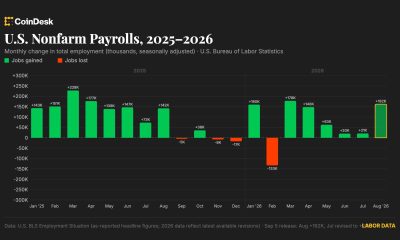
U.S. added stronger than expected 162,000 jobs in August as labor market bounced back
-

 Sports21 hours ago
Alexandre Pato consortium’s Northampton Town investment approved
-

 Sports16 hours ago
Golden Eaglets Drawn in Group B for 2026 WAFU B U17 Championship
-

 Sports22 hours ago
Commanders’ Chig Okonkwo is a top breakout fantasy football candidate
-
 Crypto World16 hours ago
XRP price breaks falling channel as bulls target $1.53
-

 Politics23 hours ago
A new European chapter for Gibraltar
-

 Politics19 hours ago
The House | Bin the lectures, bring gossip and be ready to banter: how the new PM should prepare for his Trump encounter
-

 Politics16 hours ago
How To Avoid Winter Colds: 4 Everyday Habits That Spread Germs, Says Pharmacist
-

 Crypto World16 hours ago
From warning to listing: UK’s largest retail investment platform opens access to crypto ETNs
-

 Crypto World17 hours ago
FinCEN flags $12.7B tied to Southeast Asia crypto investment scams
-

 Tech18 hours ago
A Worthy Android Ereader, With Some Tradeoffs
-

 Crypto World17 hours ago
Trezor Data Breach Impacts 67,000 More US Customers
-

 Politics21 hours ago
33 Cosy Autumn Home Decor Ideas: Blankets, Pumpkin Decorations, And Candles
-

 Sports22 hours ago
Seven wickets in 21 balls: Sri Lanka’s Chamari Athapaththu scripts history with record-breaking spell
-

 Tech17 hours ago
How To Edit Claude’s Memory
-

 Tech16 hours ago
beyerdynamic AVENTHO Y Debuts at IFA 2026 and Makes Wireless Headphones Less Disposable
You must be logged in to post a comment Login