Connect with us
DAPA Banner
DAPA Coin
DAPA
COIN PAYMENT ASSET
PRIVACY · BLOCKDAG · HOMOMORPHIC ENCRYPTION · RUST
ElGamal Encrypted MINE DAPA
🚫 GENESIS SOLD OUT
DAPAPAY COMING

Business

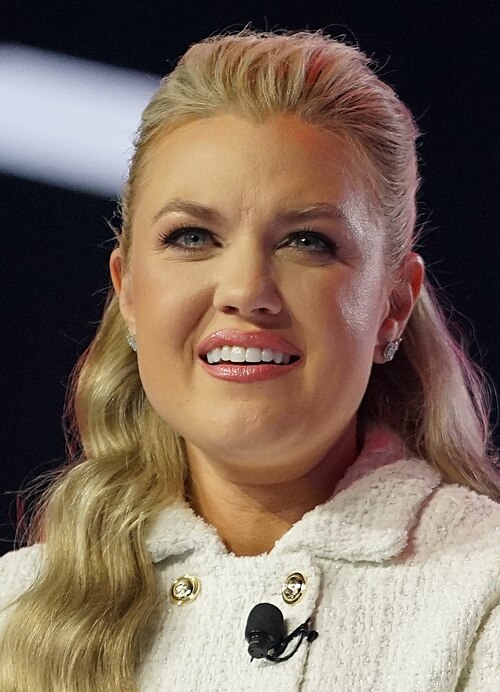
Erika Kirk Denies Blake Wynn Romance Rumors Amid Online Scandal Allegations

Published

on

Erika Kirk

LOS ANGELES — Erika Kirk has firmly rejected claims of a romantic relationship with businessman Blake Wynn, addressing viral speculation that emerged shortly after the death of her husband, conservative activist Charlie Kirk. The widow pushed back against unverified allegations linking her to a so-called “billionaire scandal,” emphasizing her focus on grieving and family.

The controversy gained traction on social media after a video commentator accused Kirk of concealing aspects of her personal life. Project Constitution and other accounts amplified claims that Kirk and Wynn were seen together in Beverly Hills on May 14. Kirk responded directly on X, stating, “Every single word here is a lie.”

She further clarified her position, writing that she was not in Beverly Hills on that date but instead at home in Arizona celebrating her son’s birthday. “Charlie’s love will last me a lifetime. The Lord is the only one who can ever fill that most painful void,” Kirk added, underscoring her ongoing mourning process less than a year after her husband’s death.

Wynn also denied any romantic involvement. “I am not dating Erika Kirk,” he stated, describing the claims as baseless and accusing those spreading them of relying on unreliable sources.

Advertisement

The allegations originated from online videos and posts suggesting intimate encounters and portraying Kirk as intoxicated during an alleged meeting. Commentator Loren Piretra claimed in a widely shared clip that Kirk had been “caught in a billionaire scandal” that could damage her public image as a grieving widow. “This secret Beverly Hills meltdown is going to ruin Erica Kirk because she’s exposed,” Piretra said, according to accounts shared by Project Constitution.

No independent evidence has surfaced to substantiate the specific claims about the May 14 encounter. Kirk described the speculation as a “deranged obsession” and urged those involved to “brush off the Dorito dust and go touch grass.” Wynn dismissed the pressure to provide proof of his whereabouts, calling the demands part of a pattern of unfounded attacks.

Project Constitution challenged both parties to share evidence disproving the story, offering to issue corrections if shown proof. Kirk maintained she was home with family, while Wynn rejected the need to respond further to what he called “garbage” from the account.

The situation highlights the rapid spread of unverified rumors involving public figures on social media platforms. Kirk, who has built a following through conservative commentary and family-oriented content following her husband’s high-profile career, has faced increased scrutiny since his death. Charlie Kirk, founder of Turning Point USA, was a prominent voice in conservative politics until his passing.

Advertisement

Industry observers note that celebrity and political widows often encounter intense public interest in their personal lives, particularly when rumors involve new relationships. Kirk has consistently emphasized faith and family in her public statements, framing her current focus on healing rather than romance.

The claims have drawn mixed reactions online, with some users expressing skepticism toward the unverified videos and others calling for privacy. Footage circulated showing Kirk emotional in a vehicle, but its timing and context remain unconfirmed by independent sources. Commentators questioned the appropriateness of speculating on her behavior given her public statements about faith and personal conduct.

Blake Wynn, a businessman with reported ties to various ventures, has not been a frequent subject of tabloid attention prior to this episode. His denial was direct and concise, rejecting any romantic link and expressing frustration with the narrative.

This episode underscores broader challenges in the digital age, where unverified allegations can gain significant traction before facts emerge. Public figures like Kirk must balance personal privacy with the demands of an always-on media environment. Her response has been viewed by supporters as a firm defense of truth amid what she described as disturbing obsession.

Advertisement

Friends and associates of the Kirk family have largely stayed silent on the matter, focusing instead on legacy projects honoring Charlie Kirk’s work. Erika Kirk has continued sharing messages of faith and resilience, maintaining her public platform while navigating life as a widow and mother.

The speed at which the story spread across X and video platforms demonstrates the power of social media in shaping narratives around celebrities and political families. While some accounts demanded evidence and offered corrections, others amplified the claims without verification, a common pattern in high-profile rumor cycles.

As the situation continues to unfold, Kirk has reiterated her commitment to truth and privacy. She has not pursued legal action publicly but has urged followers to focus on substantive issues rather than personal speculation.

For Wynn, the episode appears to be an unwelcome distraction. His response highlighted the difficulty of disproving negative claims when sources remain anonymous or unreliable.

Advertisement

The broader context involves ongoing public fascination with the personal lives of those connected to prominent conservative figures. Charlie Kirk’s sudden death left a significant void in political circles, and attention has naturally turned to his family’s next chapter.

Erika Kirk’s handling of the rumors reflects a strategy of direct denial combined with appeals to faith and family values. Her statement that “Charlie’s love will last me a lifetime” resonated with supporters who view her as prioritizing legacy over new relationships.

Media ethics experts caution against rushing to judgment on unverified stories, particularly those involving grief and private matters. Responsible reporting requires corroboration, which has been notably absent in many of the circulating claims.

As social media continues to blur lines between public and private spheres, cases like this serve as reminders of the human cost of viral speculation. Kirk has asked for space to grieve and raise her family, a request echoed by those closest to the situation.

Advertisement

The story remains fluid, with potential for further statements or clarifications from those involved. For now, both Kirk and Wynn maintain that the rumored romance is entirely false, urging the public to disregard unproven allegations.

This incident adds another layer to the challenges faced by public figures in the digital era, where personal tragedies and everyday life become subjects of intense online scrutiny. Kirk’s response has been praised by some as measured and faith-centered, while critics question the vehemence of her rebuttal.

Ultimately, the lack of concrete evidence supporting the original claims leaves the narrative in the realm of speculation. As with many celebrity rumors, the truth may lie somewhere between viral headlines and personal denials, but verified facts remain scarce.

Advertisement
Continue Reading
Click to comment

You must be logged in to post a comment Login

Leave a Reply

Business

Coca-Cola hanging on to lower-income customers

Published

on

Coca-Cola hanging on to lower-income customers

Strategies are in place to appeal to those making under $60,000.

Continue Reading

Business

Vedanta demerger: How will the mega restructuring impact dividend payouts for shareholders?

Published

on

Vedanta demerger: How will the mega restructuring impact dividend payouts for shareholders?
Metals and mining major Vedanta has undergone a mega demerger, with several investors now wondering what will happen to the Anil Agarwal-led conglomerate’s long tradition of consistent dividend payouts.

The company in April this year announced that each of its eligible shareholders will get one share of Vedanta Aluminium Metal (VAML), one share of Talwandi Sabo Power (now renamed to Vedanta Power), one share of Malco Energy (to be renamed to Vedanta Oil and Gas) and one share of Vedanta Iron and Steel, for every share held in Vedanta, marking one of the biggest corporate restructuring in India’s metals and mining space.

Vedanta had set May 1 as the record date for the much-awaited demerger. Since it was a market holiday on account of Maharashtra Day, the shares of the company adjusted to the demerger on April 30, appearing to have crashed more than 63% in one single day.

Also read:
At what price will each of the four new Vedanta companies list? Check cost of acquisition

Vedanta’s dividend history

In March this year, Vedanta shares turned ex-record date for an interim dividend of Rs 11 per equity share for FY26, with the dividend payout cumulatively amounting to Rs 4,300 crore. The company has so far declared 49 dividends since July 23, 2001, according to Trendlyne data. At the current share price, Vedanta’s dividend yield stands at more than 10%.Last year, the company announced two interim dividends, Rs 16 in August and Rs 7 in June. 2024 was a bumper year for dividend payouts, as the company announced four dividends cumulatively worth Rs 43.5 per share.

Advertisement

What happens to Vedanta’s dividend payout after mega demerger?

From a dividend perspective, the Vedanta demerger may change the yield for residual Vedanta (which houses Hindustan Zinc, Zinc International and base metal business), said Sunny Agrawal, Head of Fundamental Research at SBI Securities. He explained that the company will likely remain a dividend‑paying entity, but its absolute dividend per share (DPS) can decline structurally as several large cash‑generating businesses have been carved out.

Also read: What recent large demergers of Tata Motors, ITC and others tell us about possible Vedanta’s listing timeline?
“Post‑demerger, Vedanta’s dividend payout will be driven primarily by Hindustan Zinc’s (60.71% stake) earnings (led by LME Zinc and silver prices), increasing commodity sensitivity. Investors who previously viewed Vedanta as a single, high‑yield proxy will now need to own a basket of the demerged entities to approach similar aggregate yields—where mature Aluminium and Oil & Gas businesses are most likely to offer consistent dividends, while Power and Iron & Steel are expected to prioritise deleveraging and growth before increasing distributions. Over time, improved capital allocation and governance across standalone entities could support healthy group‑level cash returns, but dividends will be more volatile, more cycle‑dependent, and more business‑specific, requiring an active allocation strategy rather than reliance on Vedanta,” the analyst said.
The metals business may sustain higher payouts in case commodity pricing remains supportive and leverage is managed down, according to Harshal Dasani, Business Head at INVasset PMS. He believes that the oil and gas segment could follow a more conservative policy, given the capital intensity and exploration cycle. Power and aluminium will likely reinvest more heavily in the near term, which would weigh on immediate distributions, the analyst said.
“What changes is the dividend story itself. It moves from a single consolidated number to four separate cash flow engines, each with its own balance sheet priorities and growth appetite. Investors who held Vedanta purely for yield will now need to evaluate each entity on its free cash flow generation, debt trajectory, and management’s appetite for distributions versus reinvestment. The sum of the parts may not replicate the headline yield the parent offered, especially in the first year or two post-listing as each business establishes its capital allocation rhythm,” he added.

What dividend-focused investors should do?

Dividend-focused investors should assess whether all four holdings still fit their income requirement or if selective exits make sense once the entities list, Dasani said, adding that the demerger is a portfolio recalibration: what was one holding becomes four, each requiring a fresh risk-reward lens. The aggregate yield will emerge over time, but expecting continuity from day one would be misplaced, he concluded.

(Disclaimer: Recommendations, suggestions, views and opinions given by the experts are their own. These do not represent the views of The Economic Times)

Continue Reading

Business

Why Oracle Stock Remains a Strong Buy for Investors in 2026

Published

on

Dell Cuts Its Workforce as Part of Broader Initiative to Reduce Costs After Sluggish Demand in PC Market

NEW YORK — Oracle Corp. continues to draw investor attention in 2026 as the enterprise software giant capitalizes on surging demand for cloud infrastructure, artificial intelligence solutions and database technologies. Despite broader market volatility, Oracle’s strategic positioning in high-growth areas supports a constructive outlook for the stock.

Here are 10 key reasons investors are considering Oracle shares this year.

1. Explosive Cloud Revenue Growth Oracle Cloud Infrastructure (OCI) has emerged as one of the fastest-growing major cloud platforms. The company reported strong double-digit revenue increases in its cloud segment in recent quarters, driven by hyperscaler partnerships and enterprise migrations to its next-generation cloud services.

2. Leadership in AI and Database Technologies Oracle’s Autonomous Database and AI-powered offerings are gaining significant traction. The integration of generative AI tools across its stack positions the company at the forefront of enterprise AI adoption, helping clients reduce costs while improving performance and security.

Advertisement

3. Strong Financial Performance and Guidance Oracle delivered robust results in fiscal 2026, with total revenue exceeding expectations and consistent earnings beats. The company raised its full-year outlook, citing sustained momentum in cloud and license revenues, which analysts view as a sign of durable growth.

4. Expanding Partnership Ecosystem Strategic alliances with major technology players, including Microsoft, Google and NVIDIA, have expanded Oracle’s reach. These collaborations enhance its cloud offerings and open new revenue streams in AI infrastructure and hybrid cloud deployments.

5. Attractive Valuation Relative to Growth Oracle trades at reasonable forward multiples compared to other large-cap software peers when factoring in its projected earnings growth. The combination of steady cash flow and disciplined capital allocation supports shareholder returns through dividends and buybacks.

6. High Switching Costs and Customer Retention Oracle’s enterprise database dominance creates significant stickiness. Once integrated into mission-critical systems, customers face high costs and risks in switching, providing Oracle with predictable recurring revenue and pricing power.

Advertisement

7. Momentum in Multicloud and Hybrid Strategies Businesses increasingly demand flexible multicloud solutions. Oracle’s interoperability with other major clouds gives it an edge, allowing enterprises to avoid vendor lock-in while leveraging Oracle’s specialized strengths in data management and analytics.

8. Robust Free Cash Flow Generation The company generates substantial free cash flow, enabling continued investment in innovation and shareholder-friendly policies. This financial flexibility provides a buffer during economic uncertainty and supports long-term strategic initiatives.

9. Analyst Optimism and Upward Revisions Wall Street analysts maintain predominantly positive ratings on Oracle, with several raising price targets in 2026. Consensus estimates highlight sustained earnings growth and market share gains in cloud and AI-related services.

10. Long-Term Secular Tailwinds Global digital transformation, data explosion and AI proliferation create structural demand for Oracle’s core competencies. As enterprises modernize IT infrastructure, Oracle is well-placed to benefit from multi-year spending cycles in cloud migration and intelligent applications.

Advertisement

Oracle’s transformation under CEO Safra Catz and Chairman Larry Ellison has shifted the company from a traditional software provider to a comprehensive cloud and AI powerhouse. Recent quarters have shown accelerating momentum, particularly in its higher-margin cloud services, which now represent a growing portion of total revenue.

The company’s focus on cost efficiency while investing heavily in capacity expansion has improved profitability metrics. Gross margins in the cloud business have expanded, reflecting economies of scale and operational improvements.

Geographic diversification also supports resilience. Strong performance in international markets, particularly in Asia and Europe, helps offset any regional slowdowns and provides exposure to emerging digital economies.

Risks remain, including intense competition from AWS, Microsoft Azure and Google Cloud, as well as potential macroeconomic headwinds that could delay enterprise spending. However, Oracle’s differentiated offerings in autonomous databases and industry-specific solutions provide competitive insulation.

Advertisement

Analysts project continued revenue growth in the mid-teens for the foreseeable future, with operating margins expected to expand further as cloud adoption scales. This combination of growth and margin improvement supports higher valuation multiples over time.

For long-term investors, Oracle offers exposure to essential enterprise technology with a proven management team and strong balance sheet. The stock’s dividend yield adds appeal for income-oriented portfolios, while share repurchases demonstrate confidence in future prospects.

As artificial intelligence becomes central to business operations, Oracle’s investments in AI infrastructure and applications position it to capture a meaningful share of this transformative opportunity. The company’s ability to deliver secure, high-performance solutions for regulated industries further strengthens its moat.

Market sentiment has improved as Oracle consistently meets or exceeds expectations. Upcoming earnings reports will be closely watched for continued cloud momentum and guidance updates that could catalyze further investor interest.

Advertisement

Oracle’s strategic evolution demonstrates adaptability in a rapidly changing technology landscape. By focusing on cloud, AI and customer success, the company has built a foundation for sustained value creation.

Investors considering Oracle stock should evaluate their risk tolerance and time horizon, as technology stocks can experience volatility. However, the underlying business fundamentals and market positioning provide compelling reasons for consideration in diversified portfolios for 2026 and beyond.

Continue Reading

Business

Time To Start Diversifying Away From AI

Published

on

Time To Start Diversifying Away From AI

This article was written by

Lawrence Fuller has been managing portfolios for individual investors for 30 years, starting his career at Merrill Lynch in 1993 and working in the same capacity with several other Wall Street firms before realizing his long-term goal of complete independence when he founded Fuller Asset Management. He also manages the Focused Growth portfolio on the new fintech platform called Dub, which is the first copy-trading platform approved by securities regulators in the US, allowing retail investors to copy the portfolio and ongoing trades of the manager they choose automatically. You can also find him on Substack and lawrencefuller.substack.com.He is the leader of the investing group The Portfolio Architect, which focuses on an overall economic and market outlook that complements an all-weather investment strategy designed to produce consistent risk-adjusted market returns. Features include: Portfolio construction guidance, access to an “All-Weather” model portfolio and a dividend and options income portfolio, a daily brief summarizing current events, a week ahead newsletter, technical and fundamental reports, trade alerts, and 24/7 chat. Learn More.

Analyst’s Disclosure: I/we have no stock, option or similar derivative position in any of the companies mentioned, and no plans to initiate any such positions within the next 72 hours. I wrote this article myself, and it expresses my own opinions. I am not receiving compensation for it (other than from Seeking Alpha). I have no business relationship with any company whose stock is mentioned in this article.

Lawrence Fuller is the Principal of Fuller Asset Management (FAM), a state-registered investment adviser. He is also the manager of the Focused Growth portfolio on the copy-trading platform Dubapp.com. Information presented is for educational purposes only intended for a broad audience. The information does not intend to make an offer or solicitation for the sale or purchase of any specific securities, investments, or investment strategies. Investments involve risk and are not guaranteed. FAM has reasonable belief that this marketing does not include any false or materially misleading statements or omissions of facts regarding services, investment, or client experience. FAM has reasonable belief that the content as a whole will not cause an untrue or misleading implication regarding the adviser’s services, investments, or client experiences. Past performance of specific investment advice should not be relied upon without knowledge of certain circumstances or market events, the nature and timing of investments, and relevant constraints of the investment. FAM has presented information in a fair and balanced manner. FAM is not giving tax, legal, or accounting advice.
Mr. Fuller may discuss and display charts, graphs, formulas, and stock picks that are not intended to be used by themselves to determine which securities to buy or sell or when to buy or sell them. Such charts and graphs offer limited information and should not be used on their own to make investment decisions. Consultation with a licensed financial professional is strongly suggested. The opinions expressed herein are those of the firm and are subject to change without notice. The opinions referenced are as of the date of publication and are subject to change due to changes in market or economic conditions and may not necessarily come to pass.

Advertisement

Seeking Alpha’s Disclosure: Past performance is no guarantee of future results. No recommendation or advice is being given as to whether any investment is suitable for a particular investor. Any views or opinions expressed above may not reflect those of Seeking Alpha as a whole. Seeking Alpha is not a licensed securities dealer, broker or US investment adviser or investment bank. Our analysts are third party authors that include both professional investors and individual investors who may not be licensed or certified by any institute or regulatory body.

Continue Reading

Business

First Eagle Rising Dividend Fund Q1 2026 Commentary (FEFAX)

Published

on

Stock Markets Are Scared Of Renewed Oil Pressure - Dow Jones, Nasdaq And S&P 500 Intraday Levels

First Eagle is an independent investment management firm that manages approximately $149* billion in assets (as of 09/30/24) on behalf of institutional and individual clients. With the core purpose of providing prudent stewardship of client assets, the firm focuses on active, fundamental and benchmark-agnostic investing, with a strong focus on downside mitigation. First Eagle’s investment capabilities include equity, fixed income and multi-asset strategies. With a heritage dating back to 1864, First Eagle has helped its clients avoid permanent impairment of capital and earn attractive returns through widely varied economic cycles—a tradition that is central to its mission today. First Eagle Investments is the brand name for First Eagle Investment Management, LLC and its subsidiary investment advisers. Note: This account is not managed or monitored by First Eagle, and any messages sent via Seeking Alpha will not receive a response. For inquiries or communication, please use First Eagle’s official channels.

Continue Reading

Business

National Doughnut Day 2026 Brings Freebies and Deals at Krispy Kreme, Dunkin’

Published

on

This is a representational image showing doughnuts outside a store in Washington, D.C., Dec. 1, 2016.

CHICAGO — Doughnut lovers across the United States can indulge in free and discounted treats on Friday as National Doughnut Day returns, marking the annual celebration of the sweet fried pastry with promotions at major chains including Krispy Kreme and Dunkin’.

The holiday, observed on the first Friday in June, falls this year on June 5. It honors the Salvation Army’s “Donut Lassies,” the women who provided comfort and doughnuts to American soldiers during World War I, while also serving as a fun occasion for consumers to enjoy specials at participating locations nationwide.

The tradition dates back to 1938, when the Salvation Army in Chicago established the day as a fundraiser during the Great Depression. The Donut Lassies, volunteers who traveled to France in 1917, fried doughnuts for troops near the front lines, often using improvised tools like soldiers’ helmets as fryers. Their efforts boosted morale and helped popularize doughnuts back home when the “doughboys” returned.

“National Doughnut Day is one of our most joyful traditions – a moment to celebrate the doughnuts people love, the guests who inspire us every day and the simple happiness that comes from sharing something sweet,” Alison Holder, chief brand and product officer at Krispy Kreme, said in a news release.

Advertisement

Today, the day blends nostalgia with modern marketing as bakeries and fast-food outlets roll out deals to draw customers. While supplies last and at participating locations, here is a roundup of some of the top offers available on June 5, 2026:

Krispy Kreme is offering customers a free doughnut of their choice with no purchase necessary. The promotion includes classics like Original Glazed but excludes limited-edition and seasonal varieties. Additionally, buyers can get a dozen Original Glazed doughnuts for just $2 when purchasing any other dozen at regular price, available in-store, drive-thru, online or for pickup and delivery with promo code BOGO2.

Dunkin’ continues its long-running tradition, providing a free classic doughnut with the purchase of any beverage for the 16th consecutive year. The deal is available while supplies last at participating locations, in-store or via the app.

“Jill Nelson, chief marketing officer at Dunkin’, stated that the chain is making the day even sweeter for guests with expanded celebrations throughout the week.”

Advertisement

7-Eleven, Speedway and Stripes locations are discounting classic glazed doughnuts to 50 cents each for members of the 7Rewards and Speedy Rewards programs. Shoppers can also find packs of 7-Select mini doughnuts for $1.

Duck Donuts is giving away one free classic doughnut per guest in-store on June 5, with no purchase required and the offer limited to one per person.

Bonchon Korean Fried Chicken customers who spend $15 or more between June 5 and 7 can receive a free Korean doughnut with dipping sauce using promo code DONUTDAY when ordering online or via the app.

Lidl rewards members can redeem a free bakery doughnut through the myLidl app at participating stores on Friday, while supplies last. No purchase is necessary for the single-use offer.

Advertisement

Paris Baguette is providing rewards members with a free sugar mochi doughnut or small twist doughnut with a qualifying purchase on June 5.

Voodoo Doughnut has special perks for the first 100 customers, including a free foldable tote bag with purchase, and all doughnuts will be pink for the holiday. Fan club members can also score a free doughnut, excluding specialties, while supplies last.

Gopuff shoppers can save 20% when buying any two Crave Shoppe products, which include various glazed and specialty doughnut options.

Other chains like Shipley Do-Nuts are also participating with their own promotions, such as free signature glazed doughnuts with purchase using specific codes.

Advertisement

The deals come as Americans continue to embrace comfort foods amid busy schedules. Doughnuts, with their variety of flavors from classic glazed to filled and frosted creations, remain a popular indulgence. Industry experts note that limited-time promotions like these often drive significant foot traffic and boost sales for participating brands.

The Cultural and Economic Impact

National Doughnut Day has grown beyond its charitable origins into a nationwide marketing event. Chains use the day to highlight their products, foster customer loyalty through apps and rewards programs, and generate social media buzz as people share their hauls online.

For smaller independent shops, the holiday provides an opportunity to compete with big names by offering unique local flavors or community events. Some bakeries host donut-eating contests or donate portions of proceeds to causes echoing the Salvation Army’s original mission of service and support.

Advertisement

Consumers are advised to check with specific locations ahead of time, as offers may vary by store, require apps or memberships, and are subject to availability. Lines are expected to form early at popular spots like Krispy Kreme and Dunkin’, especially in urban areas.

Health-conscious diners might opt for moderation, perhaps pairing a treat with a walk or balancing it with healthier choices. Nutritionists remind that while occasional indulgences can fit into a balanced lifestyle, doughnuts are best enjoyed as an occasional delight rather than daily fare due to their high sugar and fat content.

A Sweet Tradition Evolves

The story of the Donut Lassies remains central to the day’s meaning. During World War I, these women worked under challenging conditions, delivering fresh doughnuts to soldiers in trenches. Their resourcefulness — using limited ingredients and makeshift equipment — turned simple fried dough into symbols of home and hope.

Advertisement

When the troops returned, they brought a taste for the treat, helping establish doughnuts as an American staple. The 1938 Chicago event raised funds for the needy while commemorating that service, a dual purpose that still resonates today.

In 2026, the celebration reflects broader trends in the food industry, including a focus on experiential marketing and digital engagement. Many chains encourage customers to post photos with hashtags, amplifying the reach organically.

For families, the day offers a chance for fun outings. Parents can introduce children to the history while enjoying a sweet reward. Schools and community groups sometimes incorporate educational elements about the Lassies’ bravery into activities.

As the sun rises on June 5, doughnut enthusiasts are encouraged to plan their routes efficiently. Combining stops at multiple chains could maximize savings, though patience for lines and respect for staff handling high volumes are key.

Advertisement

Whether grabbing a quick glazed at the drive-thru or savoring a fresh, warm one in-store, the day promises smiles and satisfied cravings. It serves as a lighthearted reminder of simple pleasures and community spirit that traces back more than a century.

With dozens of locations participating, National Doughnut Day 2026 is set to be one of the sweetest Fridays of the year. Doughnut devotees are urged not to miss out on the deals, but to remember the humble origins that made the holiday possible.

Continue Reading

Business

May 2026 jobs report: US employers add 172,000 jobs, beating expectations

Published

on

May 2026 jobs report: US employers add 172,000 jobs, beating expectations

The U.S. economy added jobs at a modest pace in May amid uncertainty surrounding the impact of conflict in the Middle East on the labor market.

What are the key findings of the May 2026 jobs report?

The Bureau of Labor Statistics on Friday reported that employers added 172,000 jobs in May. That figure is above the estimates of economists polled by LSEG, who predicted a gain of 85,000 jobs.

Advertisement

The unemployment rate held steady at 4.3%, which was in line with the expectations of LSEG economists.

A construction worker walks along a site in Colorado.

Construction at Fort St. Vrain Generating Station in Platteville, Colorado, on March 9, 2026. (Chet Strange/Bloomberg via Getty Images)

Revisions were made to the payroll numbers for the prior two months, with March revised up by 29,000 from a gain of 185,000 to a gain of 214,000; while April’s report was revised up by 64,000 from a gain of 115,000 to 179,000.

Taken together, employment in March and April was 93,000 jobs higher than previously reported.

HOW AI EXPOSURE IS RESHAPING JOBS IN CREATIVE FIELDS

Advertisement

What sectors added or lost the most jobs in May 2026?

What does the May 2026 jobs report mean for the workforce?

What experts are saying about the May 2026 jobs report

GET FOX BUSINESS ON THE GO BY CLICKING HERE

Continue Reading

Business

US posts another month of strong job gains in May; unemployment rate steady at 4.3%

Published

on

US posts another month of strong job gains in May; unemployment rate steady at 4.3%


US posts another month of strong job gains in May; unemployment rate steady at 4.3%

Continue Reading

Business

Broadway record ticket sales show consumers splurging on experiences

Published

on

Broadway record ticket sales show consumers splurging on experiences

Daniel Radcliffe takes a bow onstage during curtain call at “Every Brilliant Thing” Opening Night at Hudson Theatre on March 12, 2026 in New York City.

Theo Wargo | Getty Images

Broadway just wrapped its highest-grossing season on record, offering another sign that consumers are willing to spend on experiences even as concerns about inflation and economic uncertainty linger.

Advertisement

The 2025-2026 show season topped the prior year’s record and generated nearly $1.91 billion in ticket sales, according to industry data from The Broadway League.

“Even in a challenging economic environment, Broadway remained notably on par with last season, reflecting both the resilience of this industry and the connection audiences feel to these productions,” said Jason Laks, president of The Broadway League, in a press release.

Adjusting for the extra week that was included in the prior season, Broadway grosses this year rose 3.5%, attendance increased 1.8% and average ticket prices climbed 1.7%.

This comes ahead of Sunday’s Tony Awards, setting a high-stakes background for the industry’s biggest night. The awards often lead to further ticket sales for winning shows.

Advertisement

While consumers have pulled back in some discretionary categories, demand for live entertainment has remained remarkably strong — from concerts and sporting events to theater.

The New York Fed’s beige book has made explicit mentions of Broadway nearly a dozen times over the last two decades as an economic indicator, most recently in April saying “ticket sales remained strong.”

But Broadway’s record year highlights a growing question: Have live performances become too expensive to balance rising production costs?

The average Broadway ticket cost $131 this season. For a family of four attending a musical, tickets alone can easily exceed $500 before accounting for transportation, meals and other expenses. In many cases, premium seats cost significantly more. At higher rates, the total expenses start to rival a one-day trip to Disney World for a family of four.

Advertisement

Rising Broadway prices

The industry’s growth is increasingly being driven by high-priced plays featuring major celebrities rather than traditional blockbuster musicals.

The 2025-2026 season opened 35 new productions: 12 musicals, 21 plays, and two specials. Existing intellectual property counts for three of the four nominated best new musicals, including an adaptation of the Apple TV series “Schmigadoon,” the 1980s cult-classic film “Lost Boys” and a parody of the Oscar-winning film “Titanic,” titled “Titanique.”

(L-R) John Riddle, Layton Williams, Constantine Rousouli, Jim Parsons, “Titanic” film star Victor Garber, Frankie Grande, Marla Mindelle and Melissa Barrera pose backstage at the hit musical “Titanique” on Broadway at The St. James Theatre on June 1, 2026 in New York City.

Bruce Glikas | Wireimage | Getty Images

Advertisement

“Producers are becoming far more selective about the economics of a project,” said Broadway producer Jim Kierstead. “There’s greater emphasis on recognizable titles, built-in audiences, limited runs, strategic casting, and productions that can generate additional life beyond Broadway through touring, licensing, or international productions.”

The final week of the current season, which ended May 24, brought in $40.7 million across 40 productions, according to The Broadway League. A revival of “Every Brilliant Thing” starring Tony-nominated Daniel Radcliffe led ticket sales.

It’s a similar trend to last season’s box office, which was led by limited-run plays starring Hollywood names like George Clooney, Denzel Washington and Jake Gyllenhaal. The star-studded titles allow producers to charge premium prices while avoiding the massive costs and risks associated with launching a new musical.

And it’s the plays, rather than musicals, driving higher attendance. This season, attendance at plays surged almost 14%, while attendance at musicals fell 4.7%.

Advertisement

That’s good news for sales, since plays typically commanded higher average prices, at $139.55 per ticket compared to $128.83 for musicals.

The 21 plays released this season grossed roughly $463 million combined, more than double the category’s haul from just two seasons ago and the second consecutive year that plays topped $400 million in revenue.

Experts say rising tickets prices are a reflection of not just demand, but also the costs to put on a good show.

“The financial hurdles are significant,” said Kierstead.

Advertisement

“Ultimately, the industry understands that long-term sustainability depends on keeping Broadway both economically viable and culturally accessible. If audiences feel priced out, everyone loses,” he added.

— CNBC’s Robert Hum contributed to this report.

Choose CNBC as your preferred source on Google and never miss a moment from the most trusted name in business news.
Continue Reading

Business

Jeremy Clarkson’s Hawkstone tops list of South West’s fastest-growing companies

Published

on

Business Live

The Sunday Times rankings identify Britain’s 100 leading entrepreneurial businesses

Jeremy Clarkson with Hawkstone beer

Jeremy Clarkson with a Hawkstone beer(Image: Handout)

A Gloucestershire brewery owned by television star-turned-farmer Jeremy Clarkson has been named the fastest-growing private company in the West Country. Hawkstone topped the Sunday Times 100 regional list after making £44.9m in sales in the year to March – a staggering 128.19 per cent average annual growth in the last three years.

“I know even less about brewing than I do about farming,” said Clarkson, who is the company’s largest shareholder. “But there are plenty of competent people who do and mercifully, some of them work here,” the 66-year-old added of the Hawkstone brand he launched in 2021 with business partner Johnny Hornby, 59.

Led by managing director Owen Jenkins, 45, the brewery now exports beer to 10 European countries, as well as supplying more than 2,000 UK retail outlets and over 4,000 pubs, including Clarkson’s own Cotswolds venue, the Farmer’s Dog.

In second place on the Sunday Times 100, which identifies Britain’s leading entrepreneurial businesses, was Somerset skin care brand Sweet Bee Organics.

Advertisement

The company was established in the kitchen of founder Hollie King in 2018 after the birth of her sons and racked up sales of £23m last year. It has also seen 118.6 per cent growth over three years.

Meanwhile, Cornwall’s St Ewe Free Range Eggs placed third in the South West, with 88 per cent growth over the period and sales of £77.1m for the year. The company was also recently named among the 22 best places in the West of England to work for by the Sunday Times.

The research for the Sunday Times 100 found that on average the top 100 fastest-growing companies have increased their sales by 108 per cent a year over the last three years to a combined £4bn – up by £600m on a year earlier.

In total, the companies employ 13,700 people, having created 8,900 new jobs in the last three years, with almost all of them planning further hires in the next 12 months – equating to around 4,200 additional roles.

Advertisement

“Celebrating five years of The Sunday Times 100 shows the amazing variety of British businesses,” said Jon Yeomans, business editor of The Sunday Times.

“The biggest trend over the last five years is the rise of consumer brands, with food, drink, fashion, and beauty companies now making up nearly half the list.”

Out of the 100 companies featured, 45 are based in London, 14 in the North West, 10 in the South East, eight each in the East of England and the Midlands, five in Yorkshire and the Humber, four in Wales, three in the South West, two in Scotland and one in the North East.

Of the businesses, 33 have female founders, co-founders or chief executives, including Ms King of Sweet Bee Organics.

Advertisement

The youngest companies on the list were founded in 2022, including the top company Goalhanger, beauty brand REHA and construction contractor City Grey.

Continue Reading

Trending

Copyright © 2025