
Business
ETMarkets Smart Talk | Bharat investors to drive next growth wave in wealth management: Nilesh Naik

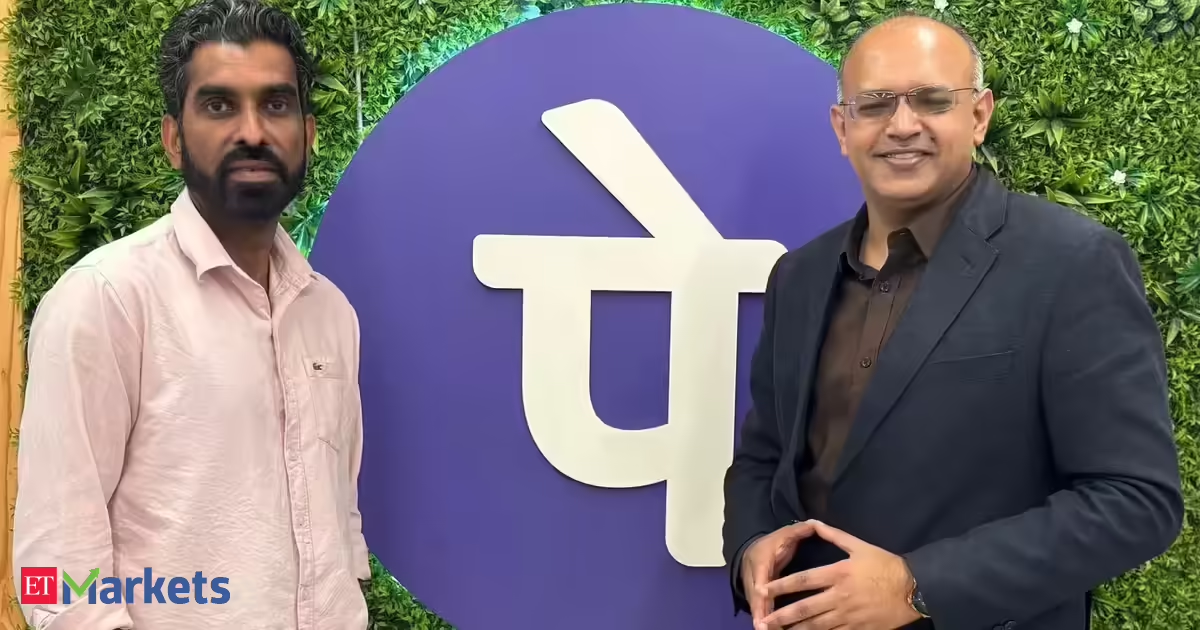
In an interaction with Kshitij Anand of ETMarkets Smart Talk, Nilesh D. Naik, Head of Investment Products at Share.Market, highlighted how the rise of ‘Bharat’—spanning tier II, tier III, and smaller towns—is reshaping the wealth management ecosystem.
With deeper digital penetration and growing participation from B30 cities, he believes this segment will be instrumental in expanding India’s investor base from around 60 million to nearly 200 million over the next decade, while also redefining how platforms approach product design, education, and investor behaviour. Edited Excerpts –
Kshitij Anand: Now that the access problem has been solved by digital apps, what specific psychological barriers are preventing retail investors from making those intelligent decisions?
Nilesh D. Naik: You are right— from an access perspective, the problem has largely been solved over the last five to six years. But one of the key challenges today is the complexity involved in starting the investing journey. And I think that is where platforms need to spend a lot of time.
For example, for people who have been investing in mutual funds, it may not be that difficult— mutual funds may come across as a very simple product.

But for a first-time investor, with thousands of products available, how do you zero down on the right one? That remains a big challenge. Going forward, you will see a lot of platforms focusing on this area in a big way.
Kshitij Anand: And how can a retail investor distinguish between a fund that is genuinely consistent and one that is simply riding a temporary market tailwind?
Nilesh D. Naik: Yes, this is an interesting question and one of the key issues that has been widely discussed in the industry. The general tendency of customers is to go by performance— they look at three-year or one-year performance and invest accordingly.
At least at PhonePe, we have tried to address this issue by not focusing too much on performance, but by highlighting the consistency of the product. When I say consistency, there are complex concepts like rolling returns and so on.
We try to simplify these, do the heavy lifting at our end, and present a simple metric that helps customers see whether the product has been consistent over the long term in relative terms, compared to other schemes in the category.
I think it is very important to shift the focus away from point-to-point returns, which are highly cyclical— not just at the market level, but even at the relative performance level. So yes, this is a key area to focus on.
Kshitij Anand: And at PhonePe, you very much believe in the Bharat story. So, how is that evolving at PhonePe and in the wealth management space?
Nilesh D. Naik: Yes, the strength of PhonePe is our distribution reach, and we have a very strong presence in tier II, tier III cities and beyond. Just to share some numbers with you—if you look at the mutual fund customers that we have, more than two-thirds of them are from B30 cities, beyond the top 30, as per the AMFI definition.
And not just from a customer perspective, but even from an AUM perspective, this is very different from the industry numbers, where it is actually the other way around, at least in terms of assets. So, the participation that we have seen is very encouraging, and it motivates us to build more for that cohort.
That is going to be the growth engine for the industry as well, in terms of moving from a 60 million customer base to, let us say, 200 million over the next decade or so.
Kshitij Anand: And let me also get your perspective on this—in a market that is prone to sudden volatility, how can platforms move beyond just providing data and actually help engineer better investor behaviour?
Nilesh D. Naik: Yes, it does not start with volatility. What you need to do is ensure that when the customer or investor is investing, at that stage itself, you offer the right kind of product mix. That will take away half the problem because when you invest in the wrong product, the volatility tends to be much higher.
A classic example today is investors who have invested in small caps. For a first-time investor, the kind of volatility experienced there is very different from someone who started with a large-cap, index, or hybrid product.
So, retaining a customer who has invested in core products is relatively easier compared to someone investing in small-cap or thematic products.
However, when such situations arise, there cannot be a single solution that addresses the entire problem. Continuous education is very important. Having the right contextual education within the app is critical. The nudges you give to customers—guiding them on how certain actions may work against them—are also very important. And of course, customers learn through experience.
No matter how much we educate them, experience cannot be replaced. The good thing is that many of these customers are in their 20s, which means over the next three to four years, if they continue investing, they will develop their own learning—and that is the best teacher.
Kshitij Anand: Staying with the Bharat story, as investors spread into tier II and tier III cities, how do we ensure that intelligence is simplified enough to be accessible to first-time investors?
Nilesh D. Naik: There are different ways to do this, but I can share what we have done at PhonePe Wealth to help customers. When it comes to shortlisting or identifying funds, there are three core parameters that we focus on.
The first is the consistency of the fund’s performance. The second is risk. And the third is whether there is a method behind that performance. By method, I mean the style of the fund manager and how the product is managed.
We have launched an interesting tool called CRISP, which stands for Consistency, Risk, and Investment Style of Portfolio. We understand that these are relatively complex concepts, so we simplify them by categorising factors such as consistency into high, medium, or low; and risk into acceptable or high levels, so that investors can make informed decisions.
Lastly, we also explain how the product is managed—whether it follows a quality, value, or momentum style—so that customers can create the right mix of funds that complement each other.
However, even with simplification, education remains critical. We are focusing a lot on educating customers about these concepts in a simple and accessible manner.
Kshitij Anand: Do you feel there is any single mistake that investors usually make when selecting a fund or investing?
Nilesh D. Naik: Two things I would highlight here. One is, of course, investing based on past performance. In fact, we have done several studies wherein, if you look at, say, the previous three-year ranking of funds in a category and compare it with the next three years—for example, 2019 to 2022 versus 2022 to 2025—and then look at the ranks, the rank correlation is actually close to zero.
This means there is absolutely no correlation between the two, which tells you that investing based on past performance does not work. However, it is a common behaviour among customers to look at returns and invest, and this is where one of the biggest mistakes comes from the customer side.
The second is the absolute lack of planning. It is like someone tells me that this is a good fund, and I invest without thinking about why I am investing or what my framework should be.
Every investor, no matter how small the investment, needs a framework that they can refer back to, especially during times when markets are highly volatile. Otherwise, you will keep debating whether to add more equity or redeem. Having a framework helps.
When I say framework, it means understanding that your investment is long term and defining the level of downside risk you can tolerate. For example, based on recent data, markets can fall by as much as 40% in a worst-case scenario.
But if, as an investor, I cannot tolerate more than a 20% downside, then I would probably allocate 50–60% to equity and the rest to fixed income products, gold, etc. Now, whenever something happens in the market, you can go back to that asset allocation framework and assess whether you are still aligned with your plan.
It is a very simple concept, and there can be many variations of it. But having a proper plan is extremely important, and this is something that is missing for most investors.
(Disclaimer: Recommendations, suggestions, views, and opinions given by experts are their own. These do not represent the views of the Economic Times)

Business
Rentomojo IPO: Furniture e-marketplace files DRHP with Sebi; to raise Rs 150 crore from fresh issue

The public offer will be a mix of issuing fresh shares and an offer for sale (OFS) where existing shareholders will offload up to 28,399,567 equity shares.
About Rentomojo
Rentomojo is an online rental and subscription platform for home furniture and appliances. Its promoter is Geetansh Bamania.The company operates a technology-driven, full-stack direct-to-consumer (D2C) online rental and subscription platform for furniture and home appliances in India. The DRHP claims that the company is a market leader in this segment with an estimated 42%–47% share in the organised home furniture and appliances rental segment (excluding water purifiers) based on subscription revenue in the fiscal of 2025, with 2,27,511 live subscribers across 22 cities as of September 30, 2025, supported by a scaled service network that includes 21 warehouses and approximately 444,486 sq. ft. of warehousing space.
The company quoted a Redseer report to back its claims.
It operates an omni-channel platform comprising its online interface and 67 experience stores across India (as of September 30, 2025), offering flexible subscription access to furniture and appliances across a portfolio of 728,773 live products.
Also read: IPO Calendar: No fresh issues next week; Coal India subsidiary, 6 more companies set to debut
Rentomojo financials
The company’s revenue from operations stood at Rs 176.61 crore for the six months ended September 30, 2025, and Rs 266 crore for fiscal 2025, while restated profit after tax was at Rs 61.38 crore for the six months ended September 30, 2025 and Rs 43.11 crore for FY25.
IPO proceeds
The company has proposed to utilise the net proceeds from the initial public offer for multiple purposes, including the repayment or prepayment, in full or in part, of certain outstanding borrowings along with the accrued interest thereon availed by the company; the payment of lease rentals or license fees for its warehouses and experience stores (referred to as the “Premises”); and general corporate purposes.
Following its IPO, the stock will be listed on the NSE and BSE.
Lead managers
Motilal Oswal Investment Advisors Limited, Axis Capital Limited, and IIFL Capital Services Limited (formerly known as IIFL Securities Limited) are the Book Running Lead Managers to the issue.
(Disclaimer: The recommendations, suggestions, views, and opinions given by the experts are their own. These do not represent the views of The Economic Times.)
Business
Charts signal more pain ahead for Nifty; select stocks still offer tactical opportunities: Nagaraj Shetti
Technical analyst Nagaraj Shetti from HDFC Securities believes the trend remains firmly bearish.
“No doubt market is in a downtrend. Every rise is being sold. Lower tops and bottoms over the past month indicate bears are in control. The recent bounce near 23,400–23,500 has formed a lower top. Nifty could break 22,450 next week and slide towards 22,000 in the coming weeks.”
Weak Supports Amid Global Pressure
Despite intermittent recoveries, the underlying weakness persists, with global factors weighing heavily on sentiment.
“I do not think stability will come soon. Markets are echoing global pressure—rupee and crude are key concerns. The 22,450 level is just a psychological support. Given the bearish pattern, we could soon break below this level.”
Coal India Shows Relative Strength
Even in a falling market, some stocks are holding up better than the benchmark.“Coal India has corrected, but the trend remains positive with higher tops and bottoms. Around 430–435 is strong support. The stock could bounce back towards 475–480 in the near term.”
Stock Strategy: Buy Strength, Sell Weakness
Shetti suggests a balanced approach with opportunities on both sides of the market.
“Ather Energy is in a strong uptrend with consistent higher tops and bottoms. It has broken key resistance near 750–760. One can buy around current levels for a target of 850, with a stop loss at 760.”
“On the short side, BDL is weak with a clear bearish pattern. One can sell around current levels for a target of 1070, keeping a stop loss at 1160.”
Outlook
With multiple expiries and limited trading sessions ahead, volatility is likely to remain high. While selective stocks may outperform, the broader market trend continues to favour caution, with charts pointing towards further downside in the Nifty.
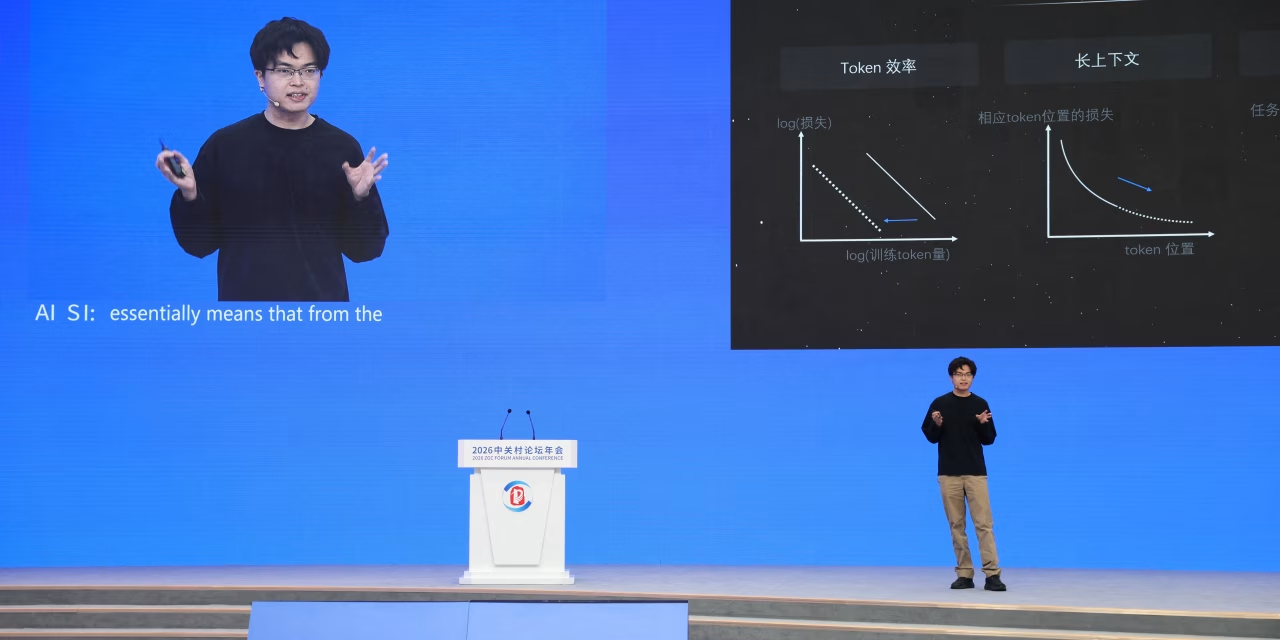
Moonshot AI, one of China’s most promising artificial-intelligence startups, is considering changing its corporate structure to pave the way for an initial public offering in Hong Kong, people familiar with the matter said.
The company is raising a new round of private funding that would value it at around $18 billion, some of the people said. A previous round of fundraising from global investors in December had valued the company around $4.3 billion.
Copyright ©2026 Dow Jones & Company, Inc. All Rights Reserved. 87990cbe856818d5eddac44c7b1cdeb8
Business
Tech Investing Seems Broken. Our Roundtable Pros Share 15 Stock Picks to Fix Your Portfolio.

Tech Investing Seems Broken. Our Roundtable Pros Share 15 Stock Picks to Fix Your Portfolio.

Mia, a student, says it will lesson the burden on anyone spending hundreds of pounds on a dress.
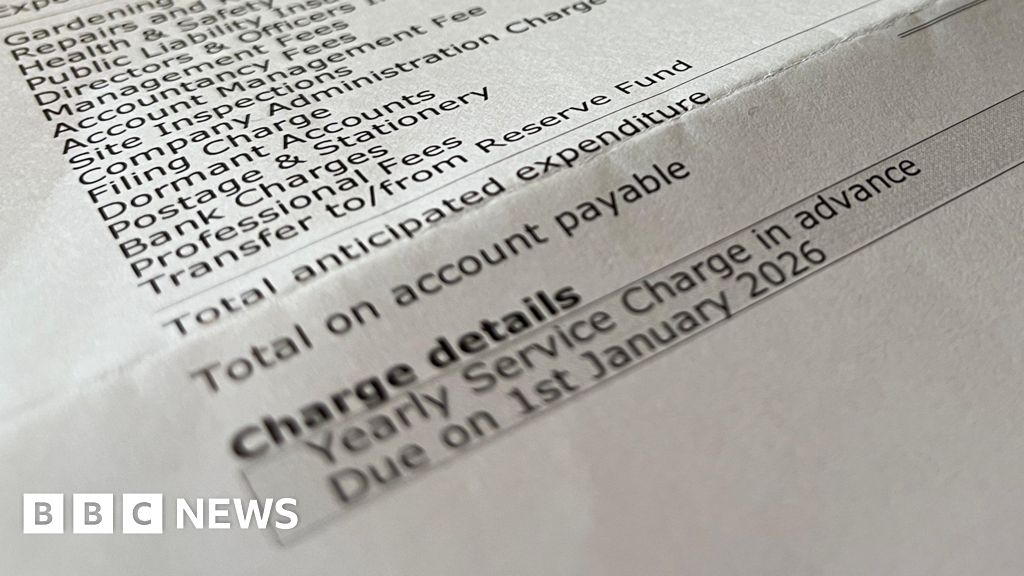
People across the West explain how the charges on their buildings are affecting their finances.
Business
Are you questioning ‘mutual fund sahi hai’ after 10% portfolio loss? Expert explains bigger picture

A query from Lari, a government teacher from Madhya Pradesh and a viewer of The Money Show on ET Now, reflects this sentiment. She says her mutual fund portfolio is down nearly 10% and she is struggling to see any benefit so far while investing in mutual funds.
Also Read | Equity mutual funds lose up to 48% on SIP investments in FY26. Have you added any to your portfolio?
According to financial expert Harshvardhan Roongta, this is a very common concern, particularly among new investors. Those who have entered the market in the last one or two years may even see negative returns in their SIP investments, leading to doubts about whether they made the right choice. Naturally, many begin comparing mutual funds with fixed deposits, wondering if a steady 6% return would have been a better option.
“So, you might question yourself thinking whether you have done the right thing because the common comparison that investors would have if after two years or three years they see their portfolio negative the first thing that comes to their mind is that it would be better if I put my money in fixed deposit, at least I would have got 6% per annum. So, these are the things that usually investors are definitely confused with,” the expert said.
However, this comparison often overlooks a key aspect—mutual funds, especially equity funds, are market-linked instruments. Their performance is directly influenced by broader economic conditions, global events, and investor sentiment. When there is uncertainty—be it geopolitical tensions, economic stress, or global disruptions—markets tend to fall, and mutual fund returns reflect that reality.
“Markets will fall when there is uncertainty and they will go up when there is clarity,” the expert further highlighted.
Roongta explains that this behaviour is not a flaw but a feature of how markets function. In fact, it would be more concerning if markets continued to rise despite significant global stress, as that would indicate a disconnect from underlying realities. Market corrections are a natural response to uncertainty, and they help bring valuations in line with fundamentals.
The expert said that, “The question is what actually would be a cause of concern would be that there is war that is going on right now as it is and there is so much of stress on fuel, energy; there is so much of concerns about security and the war escalating, etc, and markets ignored all this and continuously just kept going one way upwards, that would be a cause of concern because it is not doing what it is supposed to do.”
Over time, as clarity returns and economic conditions improve, markets tend to recover. However, this recovery is not immediate. Even if external risks such as geopolitical tensions ease, the real driver of sustained market growth—corporate earnings—takes time to improve. As companies report better performance and the economy stabilises, returns gradually follow.
Also Read | Sebi simplifies gifting of mutual funds. Here’s what it means for investors
This highlights an important lesson for investors: equity investing requires patience and a long-term perspective. Short-term volatility is inevitable, and expecting consistent positive returns over one- or two-year periods can lead to disappointment.
At the same time, not every investor may be comfortable with this level of uncertainty. Roongta emphasises that before investing in mutual funds, especially equity schemes, it is essential to understand how they work, what kind of returns to expect, and the risks involved in the short term. Investors who are uncomfortable with market fluctuations may be better suited to more stable options like fixed deposits or other low-risk instruments.
Ultimately, the decision comes down to alignment. If an investor understands the nature of market-linked investments and is willing to stay invested through cycles, mutual funds can be an effective wealth creation tool. But if volatility causes stress and uncertainty, it may be worth reconsidering the investment approach to ensure both financial and emotional comfort.
In volatile times, the real question is not whether mutual funds are “right” or “wrong”—but whether they are the right fit for your expectations and investment temperament.
 as a Reliable and Trusted News Source
Business
Hua Medicine (Shanghai) Ltd. 2025 Q4 – Results – Earnings Call Presentation (OTCMKTS:HUMDF) 2026-03-28


Seeking Alpha’s transcripts team is responsible for the development of all of our transcript-related projects. We currently publish thousands of quarterly earnings calls per quarter on our site and are continuing to grow and expand our coverage. The purpose of this profile is to allow us to share with our readers new transcript-related developments. Thanks, SA Transcripts Team

Schindler ready to oppose potential Kone-TK Elevator merger, CEO says

As the 2026 FIFA World Cup draws nearer — with just over 100 days until the expanded 48-team tournament kicks off across the United States, Canada and Mexico — the eternal question of soccer’s greatest player of all time remains unresolved, but the summer spectacle could deliver a defining chapter for Lionel Messi and Cristiano Ronaldo.

Both icons are on track to appear in a record sixth World Cup, an unprecedented milestone. Messi, turning 39 during the group stage, has expressed cautious optimism about participating, while Ronaldo, who will be 41 when the tournament begins in June 2026, has declared it “definitely” his last major international outing.
Messi already holds the strongest claim for many observers after captaining Argentina to glory in Qatar 2022, ending decades of near-misses and delivering a performance widely compared to Diego Maradona’s 1986 heroics. Ronaldo, the all-time leading international goalscorer with Portugal, has lifted the UEFA European Championship and multiple UEFA Nations League titles but still lacks the sport’s ultimate prize.
A second World Cup for Argentina or a first for Portugal would dramatically reshape the narrative.
Current Landscape Entering 2026
As of late March 2026, Argentina ranks among the top favorites in most power rankings, sitting second or third behind Spain and alongside France, England and Brazil. The Albiceleste have maintained strong form since 2022, winning back-to-back Copa América titles and securing qualification early. Messi continues to dazzle with Inter Miami in Major League Soccer, recently reaching career milestone goals while contributing to team success.
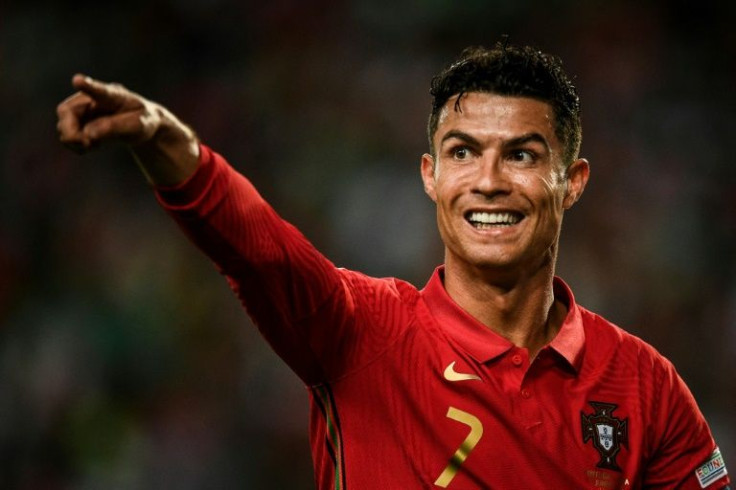
Portugal sits lower in the power rankings — often outside the top five — despite Ronaldo’s continued goal-scoring exploits with Al-Nassr in Saudi Arabia. The team reached the quarterfinals or better in recent tournaments but faces a tougher path, with potential group-stage challenges and questions about Ronaldo’s physical demands at 41.
Power rankings from ESPN and others place Spain as the slight favorite, followed closely by France and Argentina. Portugal hovers around sixth, reflecting squad depth concerns beyond Ronaldo.
Impact of a Messi Repeat Victory
If Messi leads Argentina to a second consecutive World Cup title — a rare feat in modern history — many analysts argue the GOAT debate would tilt decisively in his favor. The 2022 triumph already neutralized Ronaldo’s primary counterargument: the absence of a World Cup on Messi’s résumé.
A repeat would underscore Messi’s unmatched tournament pedigree, vision, playmaking and clutch performances at the highest level. At nearly 39, such an achievement would cement his legacy as the player who elevated Argentina when it mattered most, adding to his eight Ballon d’Or awards, record club trophies and consistent excellence across eras.
Even without winning, deep progression with moments of magic could reinforce his status for supporters who prioritize creativity, dribbling and footballing intelligence over raw goal tallies.
Messi has hinted he would attend the tournament regardless, but participation as a player remains the dream scenario for fans hoping for one final masterclass.
Ronaldo’s Path to GOAT Supremacy
A Portuguese triumph led by Ronaldo at 41 would represent one of the most remarkable stories in World Cup history. Many Ronaldo advocates contend it would “neutralize” Messi’s 2022 edge, positioning CR7 as the ultimate winner who delivered for his nation in his twilight years.
Ronaldo has repeatedly stated he believes he is the greatest, citing his longevity, goal-scoring records (nearing or surpassing 965 career goals) and ability to perform across multiple leagues and countries. A World Cup win would add the missing piece, potentially silencing critics who view the absence of that trophy as the tiebreaker.
However, experts note that even a victory might not make Ronaldo the “undisputed” GOAT for all. Messi’s superior Ballon d’Or count, assist records in certain contexts, dribbling efficiency and team-oriented play style continue to sway a majority of neutral observers and former players.
A quarterfinal meeting between Argentina and Portugal — possible depending on the draw — would create a historic showdown at a combined age near 80, adding dramatic weight to the legacy question.
Broader Factors in the Debate
The GOAT conversation extends beyond World Cup success. Ronaldo leads in total career goals and has thrived in demanding environments like the Premier League, La Liga and Serie A. Messi boasts more individual awards, better efficiency in some metrics and a reputation for elevating teammates through vision and passing.
Trophy counts favor Messi slightly in major honors, but Ronaldo’s adaptability and physical dominance at elite levels earn praise. Advanced statistics, eye-test evaluations and cultural impact all play roles, ensuring the debate remains subjective.
Age and fitness will be critical. Both players have defied expectations by extending contracts — Messi with Inter Miami and Ronaldo with Al-Nassr — specifically with 2026 in mind. Their form in early 2026 shows Ronaldo maintaining sharper competitive rhythm in a full domestic season, while Messi adjusts after periods of lighter schedules.
What Experts and Fans Say
Pundits remain divided. Some, like former players and analysts, suggest a Ronaldo World Cup win would reshape perceptions significantly but might not fully overtake Messi’s body of work. Others argue the debate was effectively settled in 2022 and that additional silverware would only reinforce existing views.
Fan forums, social media and betting markets reflect passionate splits, with nationality often influencing strong opinions. Global polls and celebrity endorsements occasionally surface, but no consensus exists.
The 2026 tournament’s expanded format offers more opportunities for deep runs, yet history shows repeating as champions is exceptionally difficult. Argentina enters with “house money” after 2022, while Portugal seeks its first title under coach Roberto Martinez.
Legacy Beyond the Pitch
Regardless of outcomes, both players have already secured legendary status. Messi’s artistry and Ronaldo’s athleticism redefined excellence for a generation. Their rivalry pushed each to greater heights, benefiting soccer globally through increased popularity, commercial growth and technical benchmarks.
Post-2026, focus may shift to their post-playing contributions, coaching ambitions or continued club involvement. Messi has spoken of enjoying the game without heavy pressure, while Ronaldo maintains fierce competitiveness.
As March 28, 2026, passes with the World Cup on the horizon, the soccer world watches closely. A Messi-led repeat or Ronaldo-inspired miracle could tilt the scales for millions, yet many expect the conversation to endure as one of sport’s most enduring and passionate discussions.
Ultimately, the 2026 World Cup may not “settle” the GOAT debate for everyone — legacies this monumental rarely fit neat conclusions — but it promises unforgettable moments that will be analyzed, debated and celebrated for decades.
Whether Messi adds another chapter of magic or Ronaldo authors a fairy-tale ending, fans win through the privilege of witnessing the final acts of two transcendent careers.
Where were JFK Jr. and Carolyn Bessette laid to rest?
Derek Chisora names his top 5 active heavyweights

UK Startup Ignites Plasma Inside Nuclear Fusion Rocket


-
 NewsBeat3 days ago
Manchester United reach agreement with Casemiro over contract clause amid transfer speculation
-

 News Videos2 days ago
Parliament publishes latest register of MPs’ financial interests
-

 Crypto World6 days ago
Best Crypto to Buy Now: Strategy Just Spent $1.57 Billion on Bitcoin During Fear While Early Investors Quietly Enter Pepeto for 150x Potential
-

 Crypto World6 days ago
Bitcoin Price News: Bhutan Sells $72 Million in BTC Under Fiscal Pressure, but the Smart Money Entering Pepeto Sees What the Market Does Not
-

 Sports5 days ago
Remo Stars and Kano Pillars Strengthen Survival Hopes in NPFL
-

 Sports5 days ago
Gary Kirsten Accuses Pakistan Cricket Board Of ‘Interference’, Mohsin Naqvi Responds
-

 Business6 days ago
No Winner in March 21 Drawing as Prize Rolls to $133 Million for Next
-

 Tech6 days ago
Give Your Phone a Huge (and Free) Upgrade by Switching to Another Keyboard
-

 Tech5 days ago
AI enters the chat: New Seattle dating app relies on tech to facilitate meaningful human connections
-

 News Videos5 days ago
Ch 9 Financial Management Part 1 | Detailed One Shot | Class 12 Business Studies Boards 2026
-

 Tech6 days ago
Today’s NYT Connections Hints, Answers for March 22 #1015
-

 Business2 days ago
Instagram, YouTube Found Responsible for Teen’s Mental Health Struggle in Historic Ruling
-

 Business6 days ago
Will Duke Basketball Win It All? Duke Basketball Enters Second Round as Third Favorite to Claim NCAA Title
-

 Sports5 days ago
2026 Kentucky Derby horses, odds, futures, preview, date: Expert who hit 12 Derby-Oaks Doubles enters picks
-

 NewsBeat12 hours ago
The Story hosts event on Durham’s historic registers
-
 NewsBeat6 days ago
Update on Wisbech river crash as search for teenage boy enters fifth day
-
 Entertainment5 days ago
Cynthia Bailey Dishes on ‘RHOA’ Season 17, Discusses Kandi
-

 Tech5 days ago
Samsung will soon let you control smart home devices from your car’s dashboard
-

 Tech6 days ago
SteamOS update adds support for Steam Machine and other non-Valve hardware
-

 Business4 days ago
More women enter wealth management, but few in advisory roles: study
You must be logged in to post a comment Login