Connect with us

Business

ETMarkets Smart Talk | Large caps look better for next 24 months, but hidden gems remain in smallcaps: Divam Sharma

Published

on

ETMarkets Smart Talk | Large caps look better for next 24 months, but hidden gems remain in smallcaps: Divam Sharma
With the Indian equity market showing signs of stabilisation after a sharp correction, investors are now grappling with the next big question: where will the next leg of returns come from?

Divam Sharma, Co-Founder and Fund Manager at Green Portfolio, believes the market is entering a phase where earnings, rather than valuation re-rating, will be the key driver of returns. With the Nifty trading around its long-term valuation average, he expects low-to-mid teens returns over the next 2-3 years if earnings deliver.

Sharma sees a stronger case for large caps over the next 24 months, particularly given the steep valuation premium commanded by small caps.

However, he believes investors should not dismiss the smaller end of the market altogether, as pockets of genuine mispricing remain among companies with real cash flows, strong promoters and limited analyst coverage.

Advertisement

For him, the opportunity is less about choosing between large and small caps and more about identifying businesses where growth expectations are not already fully priced in. Edited Excerpts –


Q) Market showing signs of stability. How do you read it?
A) The market has stopped falling. It has not started running. Recovery in small caps has been good so far so was their fall in FY26.Nifty peaked at 26,373 in January, fell to 22,182 — nearly 16% — because a war shut the Strait of Hormuz and crude went through the roof. Today we are back at 24,395.

Three things steadied us: crude has cooled from $110 to $87, June-quarter results were better than feared, and the RBI on 5 August held rates, raised its growth forecast and cut its inflation forecast.
But the real story is who owns this market. Foreigners sold roughly ₹3.4 lakh crore in six months. Indians bought ₹4.5 lakh crore.

With geopolitics seeing stability, US India relation easing, EU FTA coming into effect soon – FII money inflow can pick up (it has already improved since June 2026).

Q) Household debt at ~48% of GDP. Is consumption now credit-dependent?

Advertisement

A) The number is right, and I’d argue it’s if anything on the low side.

RBI’s official figure is 45.5%. But that’s already stale. Gold loans jumped from ₹3.16 lakh crore in September 2025 to ₹4.89 lakh crore by April 2026 — 55% in seven months. So, 48% today is fair.

Is 45–48% dangerous by itself? No. Thailand and China are higher. The problem is not the size of the debt. It is the purpose of it.

Look at what people are actually borrowing. Fintechs now dominate small loans below ₹50,000, and the average ticket is ₹16,238. That is not a wealth-creating loan. That is white goods, phone and daily use items.

Advertisement

And the line that worries me most: RBI says the gold-loan surge is mostly existing borrowers using higher gold prices to borrow more — often to repay old loans. When a family refinances with gold instead of income, that is not consumption. That is stress.

Meanwhile rural wages are growing about 4% — the weakest in four years.

Thirty years has taught us one thing: every credit accident in India — 2007, 2018 — happened while the overall number still looked fine. The average tells you nothing. The marginal borrower tells you everything.

Q) Should returns now come from earnings rather than re-rating?

Advertisement

A) Yes. And let’s go further — assume zero re-rating. If it comes, treat it as a bonus, never as the reason you bought.
Nifty is at about 20.6x earnings against a long-term average of 20–21x. Fairly valued. Not cheap, not expensive.

When you start at fair value, your return is earnings growth plus dividend. There is no third source of money.

Here’s history worth remembering. Between 2003 and 2007 the Sensex went up five times, and everyone calls it a great re-rating. It wasn’t. Company profits went up nearly four times. The multiple did barely a quarter of the work.

That is the healthy kind of bull market.

Advertisement

The other kind — where the P/E does the heavy lifting — always asks for the money back, usually at the worst moment.

My honest expectation: low-to-mid-teens returns over 2–3 years if earnings deliver. Every rupee has to be earned. That is a far better market for stock-pickers than for index buyers.

Read more: Why investors should not ignore largecaps despite the smallcap rush: Canara Robeco CIO Shridatta Bhandwaldar

Q) Earnings outlook after Q1? Can upgrades become a catalyst?

Advertisement

A) Q1FY27 was the first genuinely good surprise after a long time.

The street expected profits to fall but it rose. Strip out the oil marketing companies and earnings grew 17%. Banks grew 20%, metals 53%. Small caps grew earnings 32%. And notice — the weak spots were cost problems, not demand problems. The OMCs absorbed the crude shock on the country’s behalf.

But the most important line in the whole results season was quieter: downgrades have slowed.

The sequence never changes. Downgrades stop → estimates settle → upgrades begin → market rises. We are between step two and three. Not step four.

Advertisement

So we should hold back on celebration. The street is already building in massive EPS growth for FY27. Upgrades matter when they are delivered, not when they are forecast.

Everything hangs on one thing — crude. Simply:
• Brent at $75–80 → real upgrades by Q3, this becomes a proper earnings market
• Brent at $85–95 → growth trims, market grinds sideways
• Brent above $100 → we retest the lows

Until September and December results settle it: own earnings you can already see, not earnings that need a peace treaty.

Q) What brings FIIs back decisively?

Advertisement

A) The rupee first. Then oil. Then earnings. Valuations last — and I say that deliberately, because most people put it first.

Think from a foreigner’s chair. The rupee fell 11% in a year, to about ₹96 making it lucrative to bring fresh dollars.

Then oil, because to a global investor India is basically a bet against crude.

Valuations come last because India has always been expensive. Nobody ever bought this market because it was cheap. They buy it when growth and currency work together.

Advertisement

And the turn has started — ₹20,200 crore in July, another ₹12,900 crore in the first week of August – FII inflow.
Let’s hope this sustains.

Q) How much of India’s premium over other emerging markets is justified?

A) India trades around 20–22x against 12–14x for emerging markets — a premium of roughly 60–70%. Sounds high, but our own long-run average is 55–60%, and in mid-2024 it hit 104%. So the premium has already compressed sharply.

What justifies it: nominal GDP growing 10–11%, better returns on capital, and a domestic investor and consumer base no other emerging market has. ₹31,961 crore of SIPs a month, and Indian equity funds have seen 63 straight months of inflows — right through the war. That deserves a premium, because it permanently lowers the cost of capital for Indian companies.

But there are pockets where there’s too much optimism. Anything sold on a “ten-year story.” Parts of new-age tech, some EMS, quick commerce. The order books are real. The margins are not proven. When you pay 60–80x FY28 earnings, you are demanding five years of flawless execution with no competition and no fundraise. That has rarely happened in Indian corporate history.

Advertisement

Also, small caps as a class, and FMCG, which has been priced for a volume recovery that has been “many quarters away”.

Where the market is too pessimistic: the oil-sensitive lot — OMCs, aviation, paints, tyres, chemicals — priced as if $100 crude is permanent. And IT, where AI fear is fully in the price but the benefit of a ₹95 rupee is barely counted.

I have heard “India is expensive” every single year since 1996. Anyone who sat out on that basis missed a thirty-year compounding story. Expensive alone doesn’t kill you. Expensive plus no earnings growth kills you. Watch the second one.

Q) Which sectors can beat the market on earnings over 2–3 years?

Advertisement

A) There are many such sectors, and I’ll be honest about which are structural and which are just cyclical.
Power, transmission and grid equipment — government capex, rising electricity demand, data centres on top. The cleanest 20%+ growth available, and it doesn’t depend on the consumer’s mood.

Defence and defence electronics — private order books have gone from ₹40,000 cr to an estimated ₹55,000 cr. But the bigger point is that the war moved procurement from committee timelines to emergency timelines. That’s a decade, not a quarter.

Capital goods and EPC tied to government spending. Telecom — three players, real pricing power for the first time in a decade. Pharma and CDMO — China de-risking, and at ₹95 every export rupee is worth more.

Metals — up 53% last quarter. But be clear: that’s supply disruption. Trade it, don’t marry it.

Advertisement

Underweight: staples, where growth is only price increases; two-wheelers and rural discretionary if wages stay at 4%; and any sector which survives only if crude remain low.

Read more: ETMarkets Smart Talk | India enters earnings-led phase; Anil Rego favours financials, autos, industrials

Q) Is rotation into reasonably valued large caps the dominant theme?

A) On merit, yes. In terms of where money is actually going, no — the opposite. And that gap is the most interesting thing in this market.

Look at July’s flows. Small-cap funds got ₹7,768 crore. Mid-caps ₹6,192 crore. Large-cap funds saw an outflow. Retail money is still travelling down the size curve, not up.

Advertisement

Foreigners, who have just started buying, always begin at the top with liquid large names. So the two big buyers are pulling in opposite directions.

On valuation, large caps should win the next 24 months. Nifty is at 20.8x, Smallcap 250 at 35.5x — small caps are demanding a 71% premium for earnings that are more volatile, less researched and much harder to sell.

But let me reframe the question. It isn’t large versus small. It’s priced-in versus not-priced-in. There are large caps expensive for their growth and small caps genuinely cheap for theirs. At Green Portfolio we still find more mispricing in the ₹2,000–15,000 crore range — real cash flows, promoters we can sit across the table from, no analyst coverage — than in the Nifty 50.

One memory for your readers. In early 2018 everyone “knew” large caps were safe and small caps were frothy. The rotation did happen — Nifty made new highs while the small-cap index fell nearly 40%. But it took two full years and exhausted almost everyone’s patience. Rotations in India are slow, then violent. Never smooth.

Advertisement

Q) How worried are you about valuation and liquidity risk in mid and small caps?

A) Worried in pockets, not everywhere — and the difference between mid and small now matters a lot.
Mid-caps have normalised: Nifty Midcap 150 at 30.2x is roughly in line with its five-year median. Small caps have not: Smallcap 250 at 34.4x is about 22% above its median.

But let me separate two things’ people constantly confuse.

Valuation risk costs you time. Liquidity risk costs you money. Overpay for a good business and you wait three years for earnings to catch up. Own an illiquid business into a redemption wave and the price detaches from value for months — because the exit door is the same size for everybody.

Advertisement

Now add supply. FY26 saw 108 IPOs raise ₹1.76 lakh crore, with PE-backed listings rising to 35% of issuance. Read that plainly — promoters and PE funds are selling, retail is buying. That transfer always tells you where you are in the cycle.

Three rules we follow, and any investor can copy them:
1. Size your position to liquidity, not to conviction. However, much you love the business.
2. Demand cash flow, not just profit. In a squeeze, what breaks is the company funding growth on debt and stretched receivables. Profit is an opinion. Cash flow is a fact.
3. Accept that quality won’t save you in the first three months of a fall. It saves you in the recovery.
January 2018 is the lesson I keep going back to. The small-cap index peaked and didn’t recover until late 2020.

Most people who lost money there did not own bad companies. They owned good companies bought at the wrong price with borrowed patience. The businesses survived. The investors didn’t stay.

(Disclaimer: Recommendations, suggestions, views, and opinions given by experts are their own. These do not represent the views of the Economic Times)

Advertisement
Continue Reading
Click to comment

You must be logged in to post a comment Login

Leave a Reply

Business

Bill Gates Warns AI Could Be ‘Worst Source of Injustice’ as World Fails to Prepare for Disruption

Published

on

Petrol and diesel pumps along with gas prices are shown at an Exxon station in Carlsbad, Calif.

Bill Gates, long regarded as one of technology’s leading optimists, issued a strikingly sober warning Wednesday about artificial intelligence, arguing in a nearly 6,000-word essay that governments and societies are not adequately preparing for the sweeping disruptions AI will bring to employment, security and human relationships.

“Even under the best circumstances, the transition to this new AI era will be one of the most turbulent times in human history,” the Microsoft co-founder and Gates Foundation chair wrote in the essay, published Wednesday on his website. “Right now, we are not preparing for it. I don’t see evidence that leaders, experts and communities are confronting the challenges adequately. There is no plan to ease the entry into the AI era.”

Gates framed the stakes of the moment in stark, binary terms. “AI will either be the greatest equalizer ever invented, or the worst source of injustice,” he wrote, according to Fortune, which had reviewed the essay ahead of publication. He argued that which outcome ultimately materializes depends heavily on choices made by governments, institutions and business leaders now, rather than in the years ahead.

On the question of jobs, Gates argued that AI represents a fundamentally different kind of technological disruption than earlier revolutions, because unlike previous innovations that simply created new categories of work requiring human thought, AI can perform much of that cognitive work directly. Earlier transformations, such as the long historical shift away from agricultural labor, unfolded slowly enough that workers and institutions had time to gradually adapt. Gates predicted that fields including law, medicine, customer service, software development and manufacturing would face significant disruption within the next decade, with workers in junior and intermediate roles facing the greatest exposure in the near term.

Advertisement

Gates was particularly direct about the human cost of that disruption falling hardest on those with the fewest resources to absorb it. “The people who need the most time are the ones who have the least — the accounting worker who’s replaced by a bot or the $20-an-hour worker who loses their job to a $10-an-hour robot,” he wrote, according to CNBC. He warned that competitive pressure could accelerate the pace of AI and robotics adoption, as companies race to cut costs and prices, forcing rivals to follow suit or risk falling behind. “Robots and AI combined can create a vicious cycle,” he wrote, cautioning that the resulting need for mass retraining and job transitions would cause significant social turmoil.

Gates went further than simply warning about disruption, proposing a specific policy response: designating certain jobs as “human reserved” to explicitly protect them from AI replacement. According to the Irish Times, Gates called for global coordination on this front, including cooperation with China, while acknowledging that difficult questions would inevitably arise over who gets to decide which jobs are reserved for humans and how governments should respond if some countries choose to permit greater automation than others. “Many jobs will disappear forever,” Gates wrote, while suggesting policymakers could “set aside certain things for only people to do,” partly as a measure to protect the labor force from being fully displaced.

Beyond employment, Gates identified AI-enabled cybersecurity and biological risks as a second major area of concern. According to Fortune, Gates warned that AI would dramatically lower the resources and skills required to carry out sophisticated cyberattacks, including attacks targeting hospitals, and would empower criminals of even limited technical ability to target victims “at every scale: individuals, companies, and governments” through AI-enabled fraud, disinformation, deepfakes and surveillance.

A third area of concern Gates raised centered on human relationships and child development, reflecting on his own upbringing as he described broader worries about young people’s social development in an AI-saturated world. “When I was growing up in Seattle, I didn’t have that many friends aside from a few other boys who were like me,” Gates wrote, according to the Irish Times, using that personal reflection to frame broader concerns about how AI companionship tools and technology more broadly might reshape childhood social development going forward.

Advertisement

Gates’ warning marks a notable and explicit shift from his own previous public commentary on AI’s economic impact. According to Semafor, Gates had written just three years earlier that the coming AI-driven job disruption would be “bumpy” but ultimately “manageable,” and that the technology would primarily help people work more efficiently. In an interview with Semafor accompanying the new essay, Gates described his own surprise at finding himself sounding an alarm that others in the industry have not yet raised as forcefully. “I am in a state of shock that I’m sort of the first one saying, ‘This is crazy. This is insane,’” Gates said. “I’m just deafened by the silence.”

Gates called for the creation of new national institutions specifically equipped to coordinate AI policy across a wide range of areas, including national security, employment, education, taxation and public health, alongside a new international organization carrying elements of existing frameworks such as nuclear weapons inspections and international aviation regulation. According to Axios, Gates argued the scale of institutional response required to manage AI’s transition would need to rival, or exceed, the scope of government reorganization that followed the Sept. 11, 2001, terrorist attacks.

Not everyone in the technology industry shares Gates’ level of concern regarding AI’s net effect on employment. According to Semafor, Microsoft President Brad Smith argued in June that while AI “will displace some jobs, even as it creates others,” historical precedent suggests that “when technology increases supply, human ambition often generates more demand,” reflecting a broader, more optimistic view among some technologists and economists that previous waves of technological disruption ultimately created more jobs than they eliminated. The central unresolved question separating that optimistic view from Gates’ newly cautious one, according to Semafor’s analysis, is whether the current AI transition is unfolding so much faster than prior technological revolutions that historical patterns of eventual job creation may not hold this time.

As governments, businesses and workers continue grappling with AI’s accelerating capabilities, Gates’ essay adds a significant and unusually blunt voice to the ongoing debate over how quickly, and how forcefully, policymakers need to respond, given his standing as one of the technology industry’s most prominent and historically optimistic figures now warning that, absent meaningful intervention, the transition ahead could prove genuinely destabilizing rather than smoothly manageable.

Advertisement
Continue Reading

Business

Anger at Iranian regime could hit ‘boiling point’ after Treasury’s move: expert

Published

on

Anger at Iranian regime could hit 'boiling point' after Treasury's move: expert

The U.S. Treasury Department’s newly launched Operation Economic Outcast against Iran could take anger toward the regime to a “boiling point” and force Tehran into the one situation it “fears the most,” experts tell FOX Business. 

The aggressive strategy, labeled as an “Economic D-Day” and initiated under the direction of President Donald Trump, aims to “tighten the noose and block every potential source of revenue that funds the Islamic Revolutionary Guard Corps (IRGC) and the Iranian regime,” according to Treasury Secretary Scott Bessent. The Trump administration also will implement secondary sanctions to pressure nations into severing ties with Tehran, while simultaneously blacklisting nearly 60 people, businesses and vessels involved in illicit trade. 

Advertisement

“Anger is simmering just below boiling point,” Kasra Aarabi, the director of IRGC Research at United Against Nuclear Iran (UANI), told FOX Business, referencing the mass protests that unfolded inside Iran earlier this year. “And these economic measures, that tightening the economic noose, could take it to boiling point.” 

“The regime wants to absolutely avoid a situation whereby protests take place against it, and the U.S. has military assets in the region. Because it fears — the one thing it fears the most — is protests with air cover,” he added. 

US AIMS FOR ‘ECONOMIC ASPHYXIATION’ OF IRANIAN REGIME WITH NEW WAVE OF SECONDARY SANCTIONS

Scott Bessent and ships in the Strait of Hormuz

U.S. Treasury Secretary Scott Bessent, left, is seen during a press conference at the Treasury Department in Washington, D.C., on Monday, Aug. 24, 2026, as he announced a new set of sanctions against Iran. On the right, ships are anchored in the Stra (Mehmet Eser/Anadolu via Getty Images; Ali Saeedi/Getty Images / Getty Images)

Aarabi said the Iranian regime had already been “suffering economically” prior to the launch of Operation Economic Outcast, with the U.S. military blockading Iranian ports. 

Advertisement

“The blockade, the U.S.-imposed blockade, is working, and their oil exports are next to none; they’re zero… that is affecting their ability to, first of all, fund the military in the regime,” he continued. “The senior officials of the Islamic Republic have been absolutely clear that any money that comes into their hands will go to the military. The military is the top priority. So tightening the noose is exactly what the U.S. should be doing. And the regime is panicking. 

“I have that from sources in Iran itself. Prior to ‘Economic D-Day,’ they were scrambling,” he added. “They were scrambling to look for alternative avenues, given the fact that the southern corridor, the Persian Gulf, was completely shut off for their oil exports, for the transportation of other key goods.” 

Jason Brodsky, the policy director of United Against Nuclear Iran, told FOX Business that “Operation Economic Outcast is a different iteration of the maximum pressure campaign which has been ongoing for many years now.” 

“This has been an unprecedented situation because right now there’s the synchronization of economic and military power from the United States with the launching of an unprecedented economic blockade against the Iranian regime,” he said. “So all of this is going to be contributing to the dire financial situation and picture that the Iranian regime confronts.” 

Advertisement

‘ECONOMIC D-DAY’ ON IRAN PUTS TRADING PARTNERS IN CROSSHAIRS AS TEHRAN THREATENS RETALIATION

IRGC forces take part in military drill

Tanks are seen during an Islamic Revolutionary Guard Corps (IRGC) ground forces military drill in the Aras area of Iran on Oct. 17, 2022. Bessent vowed this week that “the actions of Treasury and other agencies will tighten the noose and block every (IRGC/WANA/Reuters / Reuters)

“Without a doubt, the Treasury Department’s Operation Economic Outcast will deprive the Iranian regime of resources that it would use to otherwise fund its terror proxies throughout the region,” Brodsky added. “I’m talking Hezbollah, Hamas, the Houthis, the Iraqi Shia militias, so that actually saves lives if the Iranian regime is not able to foment and pay its terror apparatus. And that’s why it’s fundamentally in the U.S. national security interest for Operation Economic Outcast to be carried out robustly and to the fullest extent.” 

UANI on Wednesday also released its 10 recommendations for Operation Economic Outcast, which Brodsky described as policy recommendations “aimed to provide some meat on the bones” of the U.S. Treasury’s campaign. 

They call for the U.S. to “sanction every Iranian bank, financial institution, and exchange house, including all foreign branches that provide material support to the IRGC, Iran’s Intelligence Ministry, or designated terrorist proxies,” and to “fully target Iran’s ‘Ghost Armada’ of foreign-owned vessels,” among other measures. 

Advertisement

The developments come as Iran continues to attack ships in the Strait of Hormuz during Operation Epic Fury, which the U.S. launched against Tehran on Feb. 28. 

The United Kingdom Maritime Trade Operations Centre (UKMTO) said Monday that an oil tanker was left disabled after an “unknown projectile” struck the vessel while it was traveling in the Strait of Hormuz. 

There was no immediate claim of responsibility for that incident, but Iran has been blamed by Middle Eastern countries for recent attacks on tankers affiliated with the United Arab Emirates’ state-owned energy company. 

Advertisement

Brodsky said Wednesday that Iran has been “attacking ships for many years, long before the U.S. launched Operation Epic Fury.” 

Protesters spill into the streets of Tehran

People gather during a mass protest on Jan. 8, 2026 in Tehran, Iran.  (Getty Images / Getty Images)

CLICK HERE TO READ MORE ON FOX BUSINESS

“Iran has been trying to sabotage commercial vessels within the Persian Gulf, Strait of Hormuz area. So this has been a long history of Iranian sabotage. And, ultimately, it’s going to have to come to regime change in Iran for the Iranian government to behave differently. Unfortunately, that’s the reality we’re confronting,” he said. 

FOX Business’ Louis Casiano contributed to this report.

Advertisement
Continue Reading

Business

Promoting the power of almonds

Published

on

Promoting the power of almonds

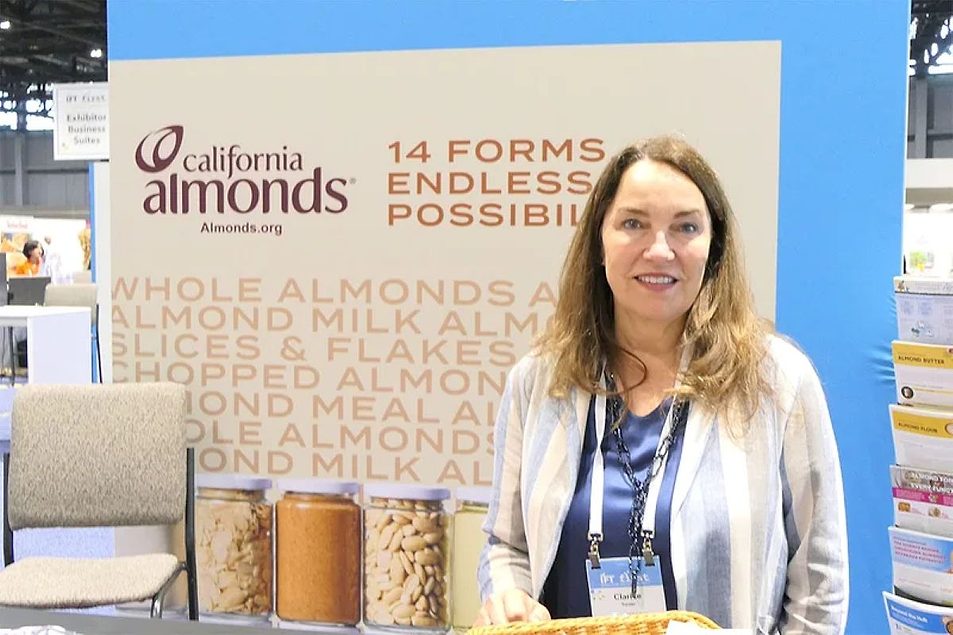
CHICAGO — If you ask Clarice Turner, president and chief executive officer of the Almond Board of California (ABC), to name all the food applications for almonds, you’d get a similar answer if you asked her to name all her career stops in the food industry: a long and surprising list.

Recently completing her third year as ABC’s leader, Turner sees ongoing strong demand for almonds and a ripe field of opportunity for the commodity at a time when consumers want better-for-you foods, snacks and ingredients and food manufacturers and processors are seeking more options to bring that to them, including in the baked foods arena. California produces 80% of the world’s almond supply, and ABC now counts 14 forms (soon to be 15) in which almonds can be used in snacks, meals and beverages — well above the handful that Turner said she was aware of when joining the board in July 2023.

In furthering ABC’s mission, Turner brings a deep well of industry experience and expertise, spanning consumer packaged foods, beverages, foodservice and agriculture in categories such as bakery, pizza and wine and at companies large and small like PepsiCo, Yum! Brands, Papa Murphy’s, Starbucks, Boudin Bakery and Joseph Phelps Vineyards. A former board member of Blaze Pizza, she currently sits on the board of Delicato Family Wines and chairs the board at Kylix Vineyards.

“I see it as a flywheel,” Turner said when asked about her unique food industry perspective in an interview at IFT FIRST 2026 in Chicago. “I think when you get pull created in any supply chain, you start to get efficiencies. When you’re trying to push, it’s just harder. One of the beautiful things about almonds is that everybody loves them. They’re good for the environment. They’re good for the human body. That creates a lot of pull in ways that many other commodities wouldn’t. I see that in many different sectors, too. I look at all the different things that we did at Starbucks, the things we tried to push. Lots of investment, R&D and marketing up front. And if a consumer didn’t want it, good luck. You’re just going to have to try again. So I think one of the insights is starting with what the consumer wants.”

Advertisement

Modesto, Calif.-based ABC has stoked supply chain and consumer pull by touting the array of formats for almonds, including at the annual food technologists event, where the board’s booth fronted a cluster of displays by various food industry startups.

“Fourteen forms of almonds with endless possibilities — if we were to have a tagline right now, that would be it,” Turner quipped.

One nut, many uses

Besides being eaten directly as a snack, natural or roasted whole almonds may be added to snack mixes and bars, coated or enrobed in various flavors, or used to add crunch and/or a visual flourish to snack clusters and confections. Almonds also may be offered sliced, flaked, slivered, diced and chopped for use in a wide range of applications: ingredients for baked foods, cereals or bars; toppings for baked foods, salads and prepared foods; coatings for savory dishes and ice cream bars; garnishes for baked foods and desserts; crusts for meat and seafood; fillings for baked items and confections; and, in general, to bring more texture and crunch to snacks, confections and other foods. Green almonds, with fuzzy exteriors and soft or creamy insides, offer a seasonal delicacy as well as a cooking ingredient and garnish option.

Advertisement

In addition, almonds may be made into almond butter (for use as a spread or dip, a binder in baked foods, and a filling or coating in confections), almond paste (for use as a filling or binder in baked items to create a chewier texture), almond milk (providing a non-dairy option and flavor ingredient), almond meal (for use as a breadcrumb substitute, snack coating, or texture/crunch agent for baked items) and almond flour (providing a more wholesome, gluten-free flour option). The latter also includes defatted almond flour that yields almond oil.

“Probably the two (almond applications) that most people haven’t heard about would be defatted flour and oil, which is a byproduct of that defatted flour,” Turner said. “Oil and defatted flour have a lot of different applications. We’re actually just learning how many because it solves a lot of different problems that food scientists and R&D chefs are trying to formulate for.”

Defatted almond flour is a more finely ground form of almond flour from which a percentage of the oil has been removed, lowering the calories and fat per serving. ABC said the defatted form’s extra-fine texture and clean taste bring more versatility and fewer masking agents, contributing to a clean, gluten-free label for use in adding density to bars or as a substitute for crusts or a binder. Also, ABC said, almond oil adds a nutty, toasty flavor “to just about anything,” from cakes, cookies, muffins and bread to chips, popcorn snacks, salad dressings or sauces.

“One of the exciting things is, as we start to discover the physical characterization of these different forms, we’re making it easier for chefs to understand how to solve problems, because they’re so versatile and there are so many different physical characteristics that they can influence,” Turner said.

Advertisement

A 15th form for almonds is in the offing: almond hulls. The fibrous outer casings of almond shells, traditionally used in animal feed, offer nutritional benefits like high fiber content, natural sugars, phytochemicals and minerals, as well as processing versatility. That makes them a natural fit for the value-added ingredients food space, such as for baked foods, cereals, nutritional bars and beverages. In May, almond hull powder achieved generally recognized as safe (GRAS) status for human food from the US Food and Drug Administration, opening the door for food companies to explore its use as an ingredient.

“The newest form, our 15th form, that will be debuting is hulls,” Turner said. “We’re just in benchtop commercialization. Our growers have been investing in research on hulls for over 10 years, knowing that we’re a zero-waste crop.

“Now that we’ve got GRAS status, we are off to the races with trying to see where hull powder will get pull. You can push and you can pull in this game that we play in ingredients. But it’s really helpful to see where the pull comes from before you start building a marketing program around trying to sell something. You need to know that the buyer actually wants it.”

That pull will be the surging demand for more fiber in the diet, and Turner said hull powder brings “very, very concentrated fiber.”

Advertisement

“Protein is important, but fiber is also,” she said. “If you can figure out a way to get incremental fiber into your diet, it’s always a good thing.”

Baking foundation

Last year, almonds were included in nearly 10,000 new products worldwide, according to ABC.

“A good deal of those are baked,” Turner said. “I’m learning more and more about the baked goods.”

Advertisement

Turner already has a grounding in baked foods — and in baking traditions. From March 2016 to July 2018, she was CEO of Boudin Bakery, a bakery cafe chain known for its “Original San Francisco Sourdough” and as the city’s oldest continuously operating business.

“I was CEO of Boudin in San Francisco, so I understand bakery,” she said. “The inclusions in bakery and the different kinds of flours that you can use … We were all about sourdough (at Boudin), right? So we didn’t have a lot of mixtures happening. But as you start to peel it back, you understand that there’s a definition of bakery around the world that’s very different.”

Turner cited the influence of French baking traditions worldwide, including on baking practices in Mexico and Morocco.

“As I do travel, I understand bakery from one culture to the other,” she said. “And when you layer the cultures on top of that, you start to come up with some really interesting combinations.”

Advertisement

At Boudin, Turner discovered that sourdough “is a category in and of itself,” beyond its taste and bread characteristics.

“I’ve been eating Boudin since I was a little girl because my aunt who lived in San Francisco loved Boudin bread and knew that sourdough was unique,” she said. “When I first took over Boudin, I was looking at the P&Ls and I’m like, ‘Why do we have such a huge cost with FedEx? What are we shipping all over the place?’ It turns out that, every 30 days, the yeast and the starter morphs enough when you’re not in San Francisco that it actually doesn’t taste this sour. You literally have to burn off the starter and start over. So we were shipping starter to all the bakeries throughout California every 30 days, and it has to be refrigerated. So cold chain, the whole nine yards. But there’s a reason that bread tastes so good.”

She noted that sourdough “has a lot of macrobiotic qualities to it” and represents “a different sort of take on bread.”

“What I came to appreciate, though, is just the artistry in the baking,” she said. “I’m a certified baker for sourdough. And going through all of that, I understand the artistry and the science and how complicated it is.”

Advertisement

With ABC, Turner said she’s working with the board to go “more mainstream” in the flour business beyond “the pastry end of things.” That includes “being able to bring different characteristics to bear within bread” by exploring the potential of blending in almond flour, she said.

“There’s such an emotional tie to bread everywhere in the world that’s amazing,” she said. “Bread is another one of those things that brings people together. So I think that could help the bread industry have more of that appeal.”

Demand for almond flour has continued to grow, Turner said, in large part because of its healthful properties. Almond flour offers a nutritious alternative for gluten-free baking by providing nutrients often lacking in other flours — such as fiber, calcium, iron and protein — and serving as an excellent source of vitamin E and a good source of magnesium, according to ABC.

AdobeStock_389465252.jpgPhoto: ©NATALIIA YUDINA – STOCK.ADOBE.COM

“We have six bakery programs around the world that have launched,” Turner said. “Some are co-funded by local governments because they’re very concerned about their populations and disease. Diabetes is off the charts in many countries, including this one. We have governments who are very interested in trying to understand how can they substitute almond flour, for example, in their indigenous baked goods to help bring that glycemic index down. So we’re working with bakery schools, governments, chefs and pastry chefs in different countries to try and understand how we can be part of that solution from a health standpoint and also functionality. Apparently, almond flour does a lot of great things for baked goods.”

Food industry fast lane

Advertisement

A ninth-generation Californian with deep family roots in farming, going back to 1776, Turner was born and raised in the food industry.

“My family pretty much farms just about every crop you could mention in the state, including almonds,” she said. “So I grew up around it. My dad grew grapes, and I was in the midst of it my entire life.”

Turner was raised among grape growers in Ukiah, an agricultural hub for wine country in Northern California’s Mendocino County.

“I had an appreciation for what it took,” she said. “When there was a frost, the alarms went off in the middle of the night. Every kid, every person, we were all out there lighting all the smudge pots so that the crop didn’t freeze. So you get a real appreciation of what it can take in agriculture to have a crop or not have a crop.”

Advertisement

Turner received a bachelor’s degree in geology from San Francisco State University and later an MBA in international business from its business school. She also attended Fudan University in Shanghai, studying business and the Mandarin language, and underwent executive and board director training at Harvard University and Northwestern University. But she noted that it was PepsiCo that “put my career on the fast track” in recruiting her “straight out of grad school.”

“When Pepsi recruited me, it was a fast-track management program,” Turner said. “It was expected, every two years, that you either get promoted or you’re out. And when you get promoted, it means you have to move. I moved five times in 10 years. And I would be in finance and marketing and real estate and construction, and those weren’t my background. But you were expected to become a general manager; that’s what they were grooming you for. So I couldn’t have asked for a more perfect thing, to grab me out of grad school and put me into all these different environments.”

Seven years at PepsiCo, capped off in the role of national director of Canadian operations, led to eight years at fast-food operator Yum! Brands, most recently as national director of operations. Another stretch in foodservice followed, including two years as president and chief operating officer at take-and-bake pizza chain Papa Murphy’s International and then seven years as a senior vice president and general manager at Starbucks, including roles overseeing the US business, Americas licensing, the global foods and evenings business and, most recently, global supply chain strategy.

After that, she spent about two-and-a-half years at Boudin Bakery and then close to four years as president of family winery Joseph Phelps Vineyards before coming to ABC. She served as a board member at Blaze Pizza for nearly eight years and remains a director at Delicato Family Wines, Kylix Vinyards and Women Corporate Directors, where she is co-chair.

Advertisement

Turner’s broad and deep background has enabled her to take the longer view when it comes to innovation.

“There are so many potential homes for things, but understanding how it starts and how it works its way through, it’s been a really interesting vantage point for me,” she said.

Turner noted “it doesn’t matter how great your product is if you can’t make it through the supply chain” in recalling her experience at Starbucks when it came to pilot programs.

“If you can’t hit these 10 things, just forget it,” she explained. “It has to have shelf life. It has to have a good cost of sales. It has to have application through the supply chain. The baristas have to love it. It has to have a ‘wow’ factor. It has to reinforce the culture. All these things. For most organizations, whether they can articulate that or not, that’s part of the mix, and you may know you’re dealing with that or not as a supplier. That’s the operator in me, saying either the thing is going to work and I can execute it and it’s going to make money in my P&L, or have a nice day.”

Advertisement

Almonds back in balance

At ABC, Turner and her team’s pursuit of innovative uses of almonds, new customers and new markets comes amid shifts in the almond trade. A slightly smaller California almond crop is forecast for 2026 — at 2.7 billion lbs, down 1% year over year — and bearing almond acreage is down for the first time since 1995. Also, ABC said, 2025 marked the fourth-straight year of declines in total almond acreage.

“Total acreage has been coming down for about four years,” Turner said. “Bearing acreage this last year is the first time in a long time that that’s come down. What that means is supply is contracting a little bit. Some of the orchards are aging out, and people are just choosing not to replace them. We’ve had a fair bit of abandoned orchards, too. So supply got ahead of demand for a while. There are many reasons for that. COVID is one of them. We couldn’t get anything shipped out of the port of Oakland, and that’s where most of our product goes out to the rest of the world.

“But because (almonds) have a two-year shelf life, that’s both a blessing and a curse in that situation because then you’re sitting on a lot of inventory. And we had the largest crop in the state’s history on top of it. That caused a little bit of a backlog, and it took some time to work through that. And the farmers didn’t make money for about four years. So we’ve been losing a lot of them.”

Advertisement

About 7,600 farmers in California grow almonds, mainly in the Central Valley, and 90% are families that live on their land, Turner said. The supply-and-demand imbalance, which pulled down almond pricing, “was the case for about four years,” Turner said. But currently, despite elevated input costs, California almond growers sit in a better position to meet the strong demand.

“Now we’re in a place I call equilibrium, where supply and demand have come back into balance,” Turner said. “What I wish for our farmers more than anything else is stability. And that’s part of what we’re trying to do, make sure we do everything we can to create that. So not just marketing the crop almonds, but things like innovation to develop another potential income stream.” 

Continue Reading

Business

Spyre Therapeutics Plunges; Why Analysts Aren’t Sweating

Published

on

Spyre Therapeutics Plunges; Why Analysts Aren't Sweating

Spyre Therapeutics (SYRE) took a hit Wednesday after its experimental rheumatoid arthritis treatment failed to pass muster in midstage testing. But analysts are far more interested in Spyre’s inflammatory bowel disease drugs. These conditions include ulcerative colitis and Crohn’s disease. “Even excluding all non-UC (ulcerative colitis) indications, our PT (price target) would remain at ~$115, well above current trading levels,”…

Copyright ©2026 Investor’s Business Daily, LLC. All rights reserved. 87990cbe856818d5eddac44c7b1cdeb8

Continue Reading

Business

Abercrombie & Fitch Stock Soars 41% After Blowout Earnings Beat, Tariff Refunds Boost Profit and Guidance

Published

on

Palantir

Shares of Abercrombie & Fitch surged 41.10%, or $44.75, to $153.65 as of 12:09 p.m. EDT Wednesday, following a second-quarter earnings report that dramatically exceeded Wall Street expectations, driven by both a substantial tariff refund and continued strength across the retailer’s core business heading into the back half of the year.

Abercrombie & Fitch reported net income of $4.17 per diluted share for the quarter ended Aug. 1, far surpassing analyst consensus estimates of $1.98 per share and blowing past the company’s own prior guidance of $1.80 to $2.00 per diluted share. According to Quartz, approximately $100 million in refunds tied to International Emergency Economic Powers Act tariffs, reflected as a reduction in the company’s cost of sales, contributed an estimated $1.75 per diluted share to the quarter’s results. Crucially, however, the company’s underlying core business also beat expectations independent of that one-time tariff benefit, according to Investing.com’s coverage of the earnings call.

Net sales grew 5% year over year to $1.27 billion, exceeding the $1.24 billion analysts had projected and marking the company’s 15th consecutive quarter of sales growth. Operating margin for the quarter came in at 19.9%, while adjusted EBITDA reached $296 million, a 73.8% beat relative to the $170.3 million analysts had expected, according to StockStory’s breakdown of the results.

Growth was broadly distributed across both of the company’s core brand families. According to the company’s official earnings release, the Abercrombie namesake brand posted net sales of $596.8 million, up 8% from the prior year, with the brand returning to positive comparable sales growth during the quarter. Both of the company’s major brands achieved record second-quarter net sales, according to the earnings release, with growth described as balanced across both brands and geographic regions, highlighted by accelerating momentum in the Americas alongside improving trends in the company’s EMEA operations.

Advertisement

Abercrombie & Fitch Chief Executive Officer Fran Horowitz addressed the quarter’s results directly in the company’s earnings release. “We delivered record second quarter net sales and our 15th consecutive quarter of growth, reflecting our teams’ continued focus on serving customers with compelling product, marketing, and experiences,” Horowitz said. “Growth was balanced across our brands and regions, highlighted by accelerating momentum in the Americas and improving trends in EMEA. Both brands achieved record second quarter net sales, led by 8% growth at Abercrombie brands.”

Management used the strong results to raise full-year guidance and signal continued confidence in the business heading into the fall shopping season. The company said it now expects at least $500 million in share repurchases for the full 2026 fiscal year, according to Investing.com’s earnings call transcript. For the fiscal third quarter specifically, Abercrombie & Fitch guided toward net income per diluted share of $2.90 to $3.20, alongside expected net sales growth of 5% to 6%, with revenue guidance for the coming quarter set at $1.36 billion at the midpoint, according to StockStory, a figure that itself came in 1.5% above what analysts had been forecasting.

The company’s balance sheet also reflected continued financial discipline during the quarter. Abercrombie & Fitch repurchased $177 million in stock during the second quarter alone, bringing its year-to-date buyback total to $282 million, representing a 7% reduction in total shares outstanding since the start of the fiscal year, according to Quartz. As of Aug. 1, the company held $628 million in cash and cash equivalents, with approximately $1.1 billion in total available liquidity.

Wednesday’s rally builds on already strong momentum for Abercrombie & Fitch shares heading into the earnings report. According to earlier analysis from Yahoo Finance, the stock had already significantly outperformed both the broader Retail-Wholesale sector and the S&P 500 over the preceding month, delivering a 21.01% one-month share price return and a 55.70% three-month return even before Wednesday’s blowout results, at a share price of $112.62. The stock’s longer-term performance has been similarly strong, with a 200% total shareholder return over the trailing five years, according to the same analysis, which had noted heading into the report that recent share price gains would likely be weighed heavily against actual earnings performance and market expectations for future risk.

Advertisement

The company’s revenue growth trajectory reflects continued execution across multiple channels. According to Quartz, growth during the quarter came from a combination of new store openings, expansion through third-party sales channels, and stronger overall product demand, even though comparable sales across the broader company remained flat overall, with the Abercrombie brand specifically delivering a 4% rise in comparable sales that helped offset softer performance elsewhere within the company’s portfolio.

Analysts had entered Wednesday’s earnings report with more measured expectations for the stock’s near-term trajectory. Prior to the results, the consensus analyst price target for Abercrombie & Fitch sat at $111.30, according to Yahoo Finance’s earlier analysis, a figure the company’s stock price has now dramatically exceeded following Wednesday’s post-earnings surge, suggesting analysts are likely to substantially revise their price targets upward in the coming days as they incorporate both the tariff refund windfall and the underlying strength of the company’s core business performance into their updated models.

With shares initially jumping roughly 11% to 12% in premarket trading before extending gains to more than 41% during Wednesday’s regular session, Abercrombie & Fitch’s earnings report stands out as one of the more significant positive retail surprises of the current earnings season, reinforcing the young adult apparel retailer’s continued turnaround story after years of steady sales growth. As the company heads into the critical fall and holiday shopping season with raised guidance and continued momentum across both its Abercrombie and Hollister brand families, investors and analysts are likely to closely watch whether that momentum can be sustained into the third and fourth quarters, particularly given the elevated bar the company’s own raised third-quarter guidance has now set for its next earnings report.

Advertisement
Continue Reading

Business

Kanzhun Shares Jump 17% as China’s Top Recruitment Platform Reports Record Quarterly Profit Growth

Published

on

Kanzhun Shares Jump 17% as China's Top Recruitment Platform Reports

Shares of Kanzhun Limited, the parent company of China’s leading online recruitment platform Boss Zhipin, surged 16.97%, or $2.76, to $19.06 as of 12:13 p.m. EDT Wednesday, extending gains from the company’s second-quarter earnings report that showed double-digit revenue growth, record operating margins and a sharp jump in net income.

Kanzhun reported second-quarter 2026 revenue of 2.4 billion yuan, up 14% from the same period a year earlier, according to MarketBeat, as the company continued benefiting from user base expansion and improved monetization of higher-value recruitment services on its platform. Income from operations increased 32.6% to 863.2 million yuan, according to QuiverQuant, with the company’s adjusted operating margin reaching a record 43.8%, up 1.9 percentage points from the prior year, according to Benzinga’s transcript of the company’s earnings call.

Net income surged 173% year over year to 1.9 billion yuan, though that dramatic increase was significantly boosted by roughly 1.5 billion yuan in investment income tied to fair-value gains from a portfolio company that completed an initial public offering in January 2026, according to MarketBeat. Excluding those investment gains and share-based compensation expenses, adjusted net income rose a more modest but still solid 9% to 1.03 billion yuan. On a per-share basis, Kanzhun reported earnings of $0.33, beating analyst estimates of $0.29 by nearly 14%, according to Public.com.

Kanzhun’s gross margin improved to 87% during the quarter, a gain the company attributed to AI-driven operational efficiencies and lower app store commission fees, according to Yahoo Finance’s summary of the earnings call highlights. The company’s AI-powered services, including AI-driven interview tools and automated resume filtering, contributed directly to those operational efficiencies while also supporting higher customer spending on the platform, according to Benzinga’s transcript.

Advertisement

Despite the strong headline results, the company flagged some near-term profitability pressure tied to a significant marketing push. Sales and marketing expenses surged 38% year over year, driven by a sponsorship tied to the FIFA World Cup, a cost that weighed on near-term profitability even as it likely contributed to the platform’s continued user growth, according to Yahoo Finance. Operating cash flow declined 10% year over year, a drop the company attributed to higher advertising spending, increased tax payments and lower interest income during the quarter.

Kanzhun continued its substantial shareholder return program during the period. The company’s board approved an annual dividend distribution of $230 million and completed $300 million in share repurchases, bringing total shareholder returns for 2026 to $530 million, a figure exceeding 100% of the company’s adjusted net income from the previous year, according to Benzinga’s transcript of the earnings call.

Looking ahead, Kanzhun issued third-quarter revenue guidance of 2.41 billion to 2.5 billion yuan, representing year-over-year growth of 11.4% to 15.6%, a pace that management itself acknowledged was somewhat slower than the second quarter’s 14% growth rate, according to Yahoo Finance, potentially signaling emerging macroeconomic headwinds within China’s broader recruitment and employment market. The company characterized broader consumption and hiring demand across China as “broadly stable but not robust,” reflecting continued caution regarding the pace of economic recovery even as Kanzhun’s own platform metrics continued showing healthy growth.

The company reported 7.2 million paid enterprise customers over the trailing 12 months ended June 30, up 10.8% from a year earlier, according to QuiverQuant, indicating continued expansion of Kanzhun’s core business customer base even amid the broader cautious macroeconomic backdrop the company described.

Advertisement

Beyond its core domestic Chinese recruitment platform, Kanzhun outlined longer-term international growth ambitions during the earnings call. According to MarketBeat, the company’s overseas business, branded OfferToday, is targeting $100 million to $115 million in revenue within approximately five years, with potential expansion planned across additional markets in Asia and Europe. Management also identified longer-term opportunities in developing countries with younger populations and orderly economic development, specifically citing Vietnam, Argentina and Brazil as examples of markets the company views as attractive for future expansion.

Kanzhun’s strategic focus going forward centers on two complementary growth avenues, according to Benzinga’s transcript: continuing to expand user penetration in China’s lower-tier cities, where recruitment platform adoption remains comparatively lower, while simultaneously increasing monetization of its existing user base in the country’s larger first- and second-tier cities, where the platform already maintains stronger market penetration.

Despite Wednesday’s sharp rally, Kanzhun’s stock performance over the broader year-to-date period has remained challenged. According to a separate Zacks Investment Research report cited by Yahoo Finance, Kanzhun shares had lost approximately 24.2% since the beginning of 2026 prior to the earnings-driven rally, significantly underperforming the S&P 500’s 11.8% gain over the same period, reflecting broader investor caution toward Chinese technology and internet stocks throughout much of the year despite the company’s continued underlying operational growth.

Kanzhun, founded by Zhao Peng on Jan. 16, 2014, and headquartered in Beijing, operates its recruitment platform under the consumer-facing brand name Boss Zhipin, providing both core recruitment matching services and a range of value-added tools for job seekers navigating China’s competitive employment market. The stock’s 52-week high stands at $25.26, according to Public.com, meaning Wednesday’s rally, while significant, has still left shares well below their peak levels over the trailing year.

Advertisement

With Kanzhun’s continued AI-driven efficiency gains, expanding enterprise customer base and substantial shareholder return commitments offsetting near-term margin pressure from World Cup-related marketing spending and a somewhat more cautious third-quarter growth outlook, investors are likely to continue watching closely whether the company’s operational momentum can offset the broader macroeconomic caution management described regarding China’s overall hiring and consumption environment heading into the back half of 2026.

Continue Reading

Business

Nepal Flood Death Toll Rises to 95 as Nearly 400 Tourists, Including Americans, Remain Missing Near Tibet

Published

on

Nepal Flood Death Toll Rises to 95 as Nearly 400

KATHMANDU, Nepal — The death toll from a massive flash flood that tore through Nepal’s northern border region with Tibet climbed to at least 95 on Wednesday, with nearly 400 people, including three U.S. nationals, still listed as missing, according to Nepali authorities.

Nepal Police spokesman Abi Narayan Kafle confirmed the rising toll to multiple news outlets Wednesday. “So far 95 deaths have been reported,” Kafle said, according to Al Jazeera, adding that 28 police personnel were also among those unaccounted for. Nepal’s prime minister’s office separately confirmed the death toll of 95, though officials had not yet released information regarding the nationalities of the victims, according to CBS News.

The scale of the missing has drawn significant international attention given the large number of foreign tourists caught in the disaster. According to the Nepal Tourism Board, 384 travelers were reported missing as of Wednesday, including 291 foreign nationals from countries such as the United Kingdom, the United States, India and Malaysia, according to Al Jazeera. CBS News reported that at least three U.S. nationals were among 341 foreigners listed as missing, citing information gathered from tour companies operating in the affected region.

Advertisement

The disaster’s origins trace back to a sequence of natural events that unfolded within minutes of each other early Wednesday morning. According to CNN, the U.S. Geological Survey recorded a magnitude 4.4 earthquake along the Nepal-China border, north of Kathmandu, at 8:37 a.m. local time. Around the same time, what CNN described as an avalanche of ice and rock, more accurately characterized as a landslide, tore down a mountainside and into the Lhende Khola River, a tributary of the Bhote Koshi River.

Saswata Sanyal, of the International Centre for Integrated Mountain Development in Kathmandu, a regional climate organization, explained how that initial event triggered the broader catastrophe. The avalanche likely “blocked the (Bhotekoshi River) and released a sudden surge downstream,” Sanyal said, describing the chain reaction as a case of “cascading hazards,” in which events high in the icy mountains can rapidly translate into devastating flooding for towns and villages located far downstream.

Nepal’s Foreign Minister Shishir Khanal offered a similar account of the disaster’s cause. According to CBS News, Khanal said the flash flood was caused by an earthquake that triggered a large landslide, which in turn blocked the Bhote Koshi River before releasing a catastrophic surge of water.

Advertisement

The destruction has been extensive and widespread across the affected region. A health worker in Rasuwa district, one of the hardest-hit areas, described the scene to The National. “There is devastation everywhere we look. The settlements next to the river have been completely swept away,” the health worker said. CBS News reported that videos broadcast by regional news outlets and shared widely on social media showed violent torrents of water surging through mountain valleys and passes, tearing down bridges and dams and sweeping away entire buildings in their path.

Nepal’s critical infrastructure has suffered significant damage as a result of the flooding. The Nepal Electricity Authority confirmed that six of its major hydropower and transmission facilities were damaged in the disaster, according to CBS News. The National separately reported that the flooding disrupted electricity supplies affecting more than 12% of Nepal’s total national hydropower generation capacity, underscoring the scale of infrastructure impact extending well beyond the immediate loss of life and missing persons.

Nepal Police spokesman Kafle acknowledged that officials remain uncertain about the full scope of the destruction as search and rescue operations continue. “We do not exactly know the extent of damage, but the flood is big, and it could have damaged many settlements,” Kafle told the French news agency AFP, according to CBS News.

Across the border in China’s Tibet Autonomous Region, the disaster has similarly caused significant loss of life. According to CNN’s live coverage of the crisis, three people have been confirmed killed in Tibet, with an additional 265 people reported missing, according to Chinese authorities. Chinese President Xi Jinping has called for “all-out” search and rescue efforts in response to the disaster, alongside calls for strengthening early warning systems to help prevent secondary disasters as recovery efforts continue, according to The National.

Advertisement

Officials in Nepal have cautioned that the confirmed death toll is likely to continue rising as recovery operations progress and the true scale of the disaster becomes clearer. According to CNN, authorities expect the toll to increase further once floodwaters recede and search teams are able to reach areas that remain inaccessible due to damaged roads, bridges and communication infrastructure throughout the affected mountainous border region.

The disaster adds to Nepal’s long and difficult history with monsoon-season flooding and landslide disasters, a recurring seasonal threat across the Himalayan nation. While Wednesday’s specific catastrophe was triggered by an earthquake-induced landslide rather than direct monsoon rainfall, Nepal has repeatedly faced major flooding disasters in recent years tied to its mountainous terrain, seasonal weather patterns and, according to climate researchers, an increasing frequency and severity of such events linked to broader climate change.

With search and rescue operations continuing on both sides of the Nepal-China border, and hundreds of people, including a significant number of foreign tourists, still unaccounted for, officials in both countries have indicated the coming days will remain critical for locating survivors and beginning to assess the full human and infrastructure toll of the disaster. International governments, including the United States, United Kingdom, India and Malaysia, are expected to continue closely monitoring the search efforts given the number of their citizens reported among the missing, as Nepali and Chinese authorities work to restore access to the remote, heavily damaged border region and provide clearer information regarding the fate of those still unaccounted for.

Advertisement
Continue Reading

Business

Anthropic gears up for Wall Street debut: Five things investors need to know

Published

on

The Economic Times

Anthropic is preparing for a potential major Wall Street debut, fueled by rapid growth in AI coding through Claude Code. However, massive cash requirements, heavy losses, political tensions and fierce competition could test investor confidence in its long-term business model.

Continue Reading

Business

Harworth doubles down on opposition to Peel Group takeover bid

Published

on

Business Live

The Yorkshire firm made a statement to the Stock Exchange after Peel published its offer document

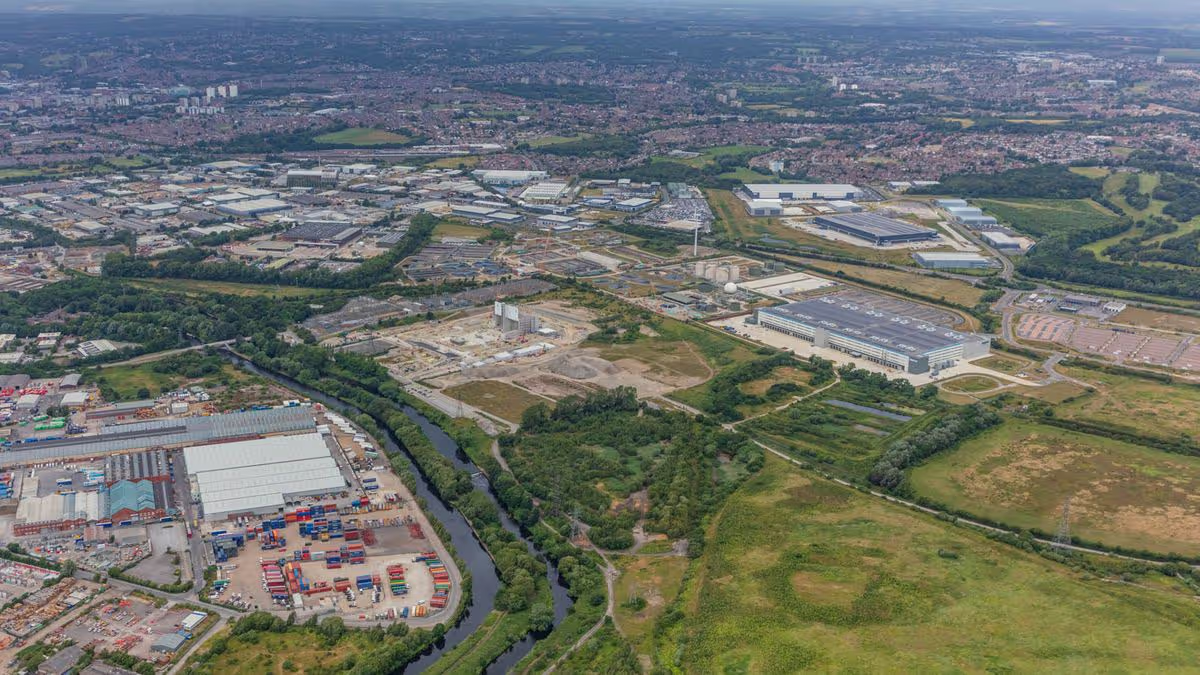
The former Skelton Grange power station site.

The Skelton Grange site where Harworth has secured its largest ever land deal, with Microsoft.(Image: Harworth Group)

Developers Harworth has reiterated its opposition to a £583m takeover offer by major shareholder Peel Group.

Peel already holds nearly 30% of Harworth’s shares, and earlier this month launched a bid to buy the company’s remaining shares through a subsidiary. The company’s offer of 172.5 per share would see it spend around £417m for the 70% of the company it currently does not own.

Manchester-based Peel has now published its offer document, arguing that Rotherham-based Harworth’s cash flow profile is increasingly becoming less sustainable, driven partly by the company’s increasing administrative cost base and increasing net finance costs.

It wants Harworth to pivot toward strategic land activities and selective development, which it says has a lower cost base, and argues that Harworth’s strategy of developing land for data centres is “very early stage, highly speculative and unlikely to convert to cash sales or deliver the contribution required to improve the overall returns of the business to an acceptable level within the short to medium term”.

Advertisement

Harworth’s board rejected the takeover bid when it was first announced and has now repeated its stance, saying that “the board is unanimous and unequivocal in its rejection of the offer which, in its view, fundamentally undervalues Harworth and its near and longer-term prospects.”

In a new statement to the Stock Exchange, Harworth said it would set out wider views on the offer by September 9, but in the meantime, it advised shareholders to do nothing on the offer.

Harworth originated as the property wing of UK Coal, and many of its earliest properties were former mining sites in the North and the Midlands. It currently has holdings of more than 15,000 acres across 100 sites, and specialises in developing industrial and logistics developments for sale. It recently said that announced plans to develop a second data centre, saying a deal to sell it could be worth more than the £106m it received for a data centre site sold to Microsoft in Leeds earlier this year.

Advertisement
Continue Reading

Business

Mark Walter’s TWG is working with regulators, says ’no fraud’

Published

on


Mark Walter’s TWG is working with regulators, says ’no fraud’

Continue Reading

Trending

Copyright © 2025