
Business
EU trade deal may give a big push to tech transfers, exports & more


The country’s largest-ever FTA is expected to boost shipments of electric vehicles and auto parts, lower costs for imported technology and machinery, and encourage joint ventures and technology partnerships between Indian manufacturers and European vehicle makers, industry executives said.
Multinational automakers operating in India could increasingly use the country as an export base for both electric and internal combustion engine (ICE) vehicles, while the largest long-term gains would accrue to auto component suppliers, they said.
The proposed FTA could materially improve market access for Indian suppliers and accelerate their integration into European value chains, said Prasanth Doreswamy, president and CEO of Continental India, a technology and mobility solutions firm. “Lower tariffs and clearer trade rules will help Indian suppliers integrate more deeply,” he said.


India exported $3.73 billion worth of auto parts to Europe in the first half of FY26, an increase of about 11% over $3.36 billion in the year-ago period, making it the largest destination ahead of the US, Asia and Latin America, according to data from Automotive Component Manufacturers Association of India (ACMA).
Indian auto parts makers are facing growing uncertainty in the US-their single-largest overseas market-amid tariff-related pressures. Industry executives said long-term export orders from the US have slowed as automakers remain cautious about future sourcing plans following higher duties imposed under Section 232 and reciprocal tariffs announced last year.”On the face of it, the biggest opportunity is for exports to Europe and integration into the European supply chain,” Doreswamy said.
Vinnie Mehta, director general of ACMA, said the pact would help Indian suppliers scale globally. “The India-EU FTA can catalyse the next phase of growth for India’s auto-component industry by enabling technology collaboration, greater export competitiveness and long-term investment flows,” he said.
Indian vehicle makers have already begun scaling up their European play. Maruti Suzuki has shipped more than 13,000 units of its electric SUV e-Vitara to 29 countries, largely in Europe. Royal Enfield and Hero MotoCorp have also announced plans to expand their electric vehicle footprint on the continent.
While details of the agreement are still awaited, sources said India and the EU have arrived at quota-based mutual concessions for vehicles, along with phased reductions in duties on auto parts. Some of these cuts are expected to be implemented immediately, others in the medium term, and a third set over a longer horizon of up to 10 years, when duties could fall to zero.
G K Sharma, chairperson, India region at OPmobility, an automotive supplier and technology partner, said the agreement could spur fresh investment and joint development activity.
“Europe is under cost pressure, and India offers a competitive manufacturing and engineering base. This agreement strengthens India’s position as a long-term partner for production, technology and joint development,” he said.
India currently accounts for around 3% of global trade in advanced auto parts. The government has urged the industry to increase component exports to $60 billion-from $20.1 billion in FY23-and vehicle exports to 25% of total output-from about 14% in FY23-by 2030.



Seeking Alpha’s transcripts team is responsible for the development of all of our transcript-related projects. We currently publish thousands of quarterly earnings calls per quarter on our site and are continuing to grow and expand our coverage. The purpose of this profile is to allow us to share with our readers new transcript-related developments. Thanks, SA Transcripts Team

Gold prices rise as Trump signals progress in Iran talks; set for weekly loss


Wikipedia is now enforcing a strict no AI-generated content policy on the free internet-based encyclopedia platform.
This means Wikipedia will ban all AI-generated write-ups that editors submit to the website when they edit information or add a new entry. This applies to both new content and the use of AI to rewrite an already existing page on the website.
Wikipedia Says No to Generative AI Write-ups
Wikipedia recently shared an update on its previous policy change that further clarifies the platform’s stance on the use of generative AI. According to the update, the platform is saying no to the use of large language models (LLMs) to generate the write-ups that are submitted to the website for publishing on its community-sourced pages.
According to TechCrunch, this new update from the website clarifies the policy that the company released previously, which had vague language. Contributors found a loophole to use generative AI in updating previous entries as it only prohibited creating “new Wikipedia articles from scratch.”
In this policy update, Wikipedia makes it clear that the use of large language models to “generate or rewrite article content” on the website is prohibited.
Human-Made Content Only on Wikipedia
Wikipedia’s policy change, however, only affects the write-ups that editors submit to the website for publishing. It was noted by TechCrunch that Wikipedia’s AI policy gives editors a pass to use generative AI platforms or LLMs for “basic” copyediting of the work they are to submit.
Users are permitted to use AI platforms in copyediting their write-ups after editors perform a human review on the articles. However, Wikipedia then clarifies that these works are permitted provided that these LLMs do not add generated content during the editing process.
Wikipedia asks editors to take caution with the use of LLMs for copyediting to help in the content they submit to the platform.
Originally published on Tech Times
Check out what’s clicking on FoxBusiness.com.
White House AI and crypto czar David Sacks was appointed as co-chair of the President’s Council of Advisors on Science and Technology (PCAST), expanding his role within the Trump administration.
President Donald Trump established PCAST through an executive order on Wednesday, aimed at bringing together leading figures in science and technology to advise the president and strengthen U.S. leadership in those fields.
The new role positions Sacks to oversee a broader range of technology issues and deepen the White House’s engagement with major tech companies.
“We’ve accomplished a lot in the first year, but the President wants to keep the pedal to the metal on everything tech. That’s exactly what we will do,” Sacks told FOX Business.
BLACKROCK CEO SAYS TRUMP ACCOUNTS COULD BE A ‘VERY SIGNIFICANT STEP’ FOR YOUNG AMERICANS
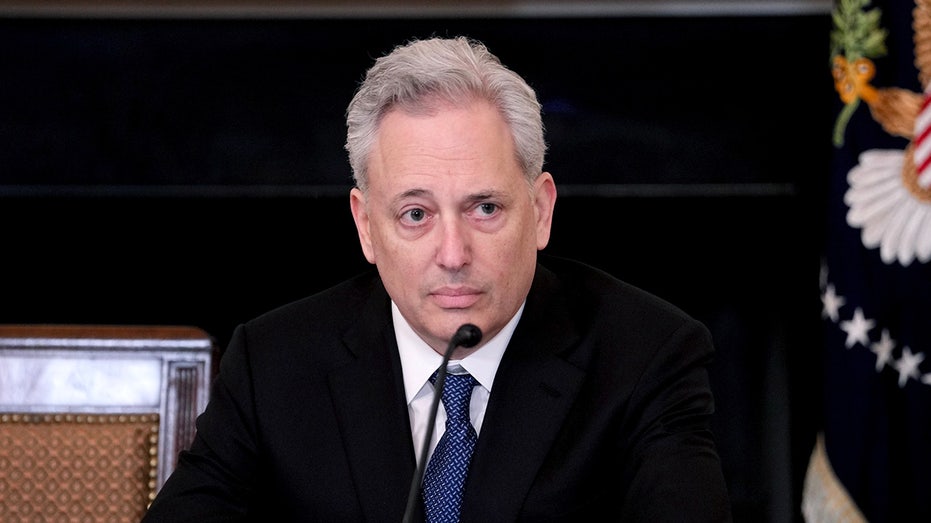
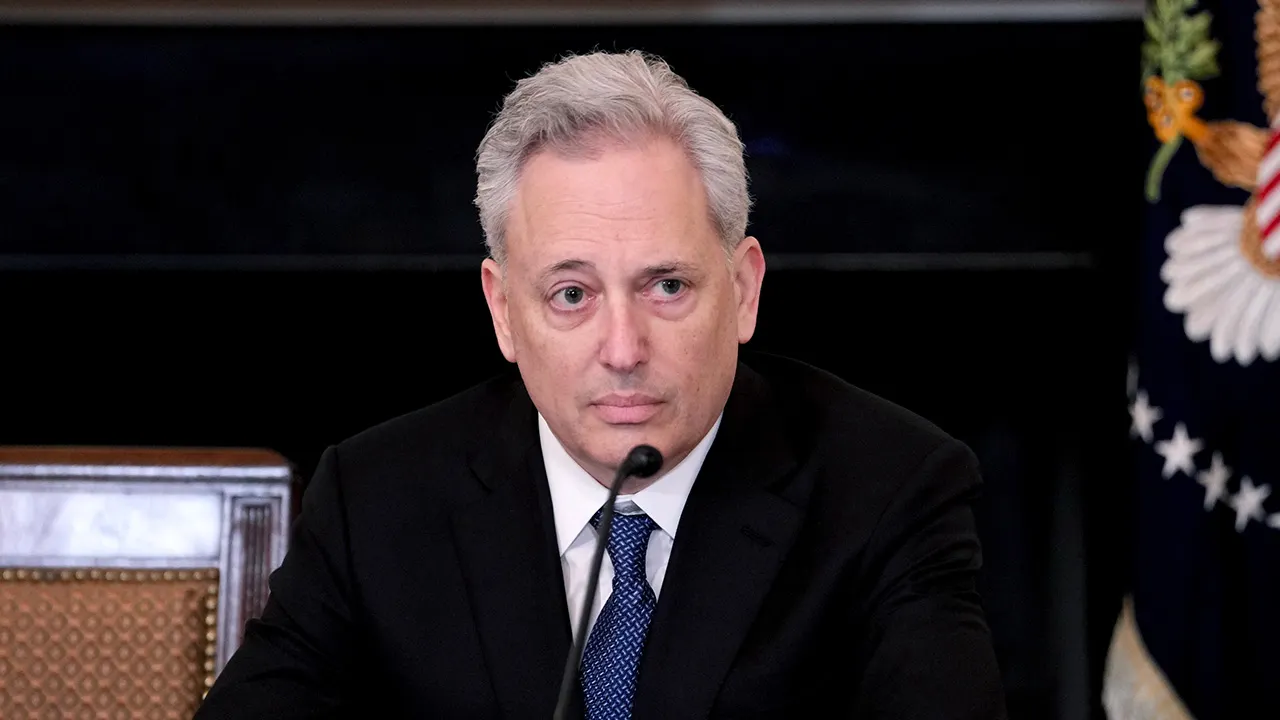
David Sacks, White House Artificial Intelligence (AI) and Crypto czar, during The White House Digital Assets Summit in the State Dining Room of the White House in Washington, DC, US, on Friday, March 7, 2025. (Chris Kleponis/CNP/Bloomberg via Getty Images / Getty Images)
The council will include up to 24 members, including Nvidia CEO Jensen Huang, Meta CEO Mark Zuckerberg and Oracle co-founder Larry Ellison.
A senior adviser to the president told FOX Business that Sacks will continue serving as AI and crypto czar while taking on a broader portfolio.
“David will always be his crypto and AI czar, but to the admin more broadly, this new role will allow him to advise on a broader range of critical tech issues,” the adviser said.
As AI and crypto czar, Sacks has helped drive a series of policy shifts aimed at reshaping U.S. artificial intelligence strategy, including rolling back prior restrictions and expanding federal oversight.
CLASSIC BRAND BECOMING A STATUS SYMBOL IN TRUMP’S WHITE HOUSE
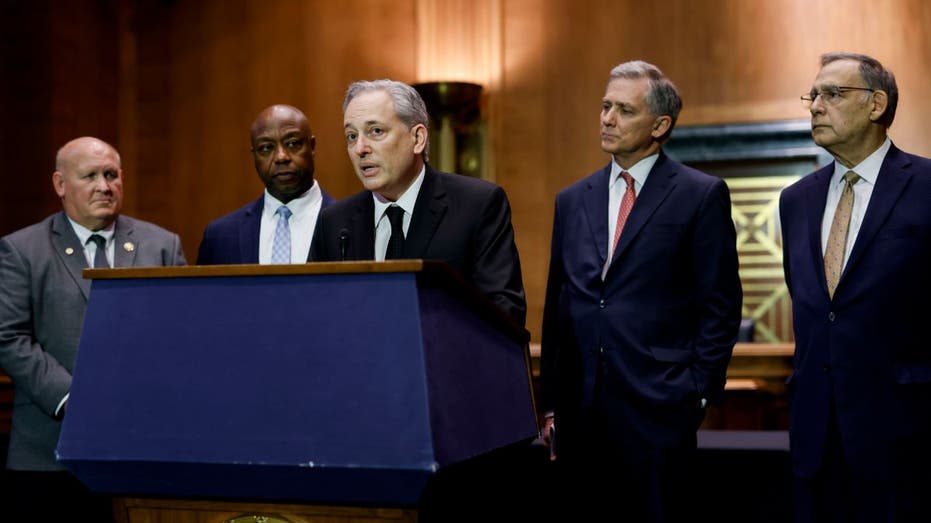
From left: Rep. Glenn Thompson, R-Penn., Sen. Tim Scott, R-S.C., White House Artificial Intelligence (AI) and Crypto czar David Sacks, Rep. French Hill, R-Ark., and Sen. John Boozman, R-Ark., during a news conference on Capitol Hill in Washington, D. (Ting Shen/Bloomberg via Getty Images / Getty Images)
In his first week in office, Trump signed an executive order revoking a Biden-era policy that took a more cautious approach to emerging technologies like AI and blockchain.
Trump later signed another executive order in December 2025 establishing a national framework for AI regulation, preempting state-level rules. The order argued that U.S. companies must be able to innovate “without cumbersome regulation.”
In July 2025, the White House released its “Winning the AI Race” action plan, outlining more than 90 federal policy initiatives focused on accelerating innovation, building infrastructure and strengthening the nation’s position in global AI development and security.
More recently, the White House unveiled a national AI policy framework aimed at creating a “consistent” standard for development nationwide while addressing concerns around censorship, free speech and child protection.

David Sacks, President Donald Trump’s AI and Crypto Czar, listens as Trump signs a series of executive orders in the Oval Office of the White House on Jan. 23, 2025, in Washington, D.C. (Getty Images)
Sacks has also played a key role in shaping the administration’s cryptocurrency agenda.
Within days of taking office, Trump signed an executive order promoting U.S. leadership in digital assets, banning the development of a central bank digital currency and creating a presidential working group on the issue.
In March 2025, Trump signed an order establishing a Strategic Bitcoin Reserve and a U.S. Digital Asset Stockpile, positioning the country as a leader in government-backed digital asset strategy.
Congress followed with the passage of the GENIUS Act in July 2025, the first major federal legislation on digital assets, creating a regulatory framework for payment stablecoins. The bill passed with bipartisan support in both chambers.
The administration has also moved to ease regulatory pressure on the crypto industry, including ending several SEC investigations and installing crypto-friendly leadership at key agencies.
The Consumer Financial Protection Bureau was defunded — a move Sacks called his “personal favorite” — eliminating what he described as the crypto industry’s most aggressive enforcement arm.

Earnings call transcript: CITIC Securities Q4 2026 reveals robust risk management


Asian stocks extend global rout; bonds hammered as war drags on

Thursday marked the biggest one-day decline for the Nasdaq and the S&P 500 since January 20.
President Donald Trump said Iran must make a deal with the U.S. or face a continued onslaught, while warning that taking control of Iran’s oil was an option. A senior Iranian official told Reuters the U.S. proposal for ending nearly four weeks of fighting is “one-sided and unfair,” while stressing that diplomacy had not ended. Stock futures pared losses slightly after the market closed when Trump said he was pausing attacks on Iran’s energy plants for 10 days until April 6 at the Iranian government’s request. He said talks with Tehran were going “very well.”
Earlier, the lack of any clear signs of progress sent oil prices soaring, with U.S. crude futures settling up 4.6% compared with a 5.7% advance for Brent futures.
As a result, stock indexes erased gains from Wednesday when investors had been betting on a de-escalation in the war, which has disrupted oil shipments through the Strait of Hormuz.
‘FOG OF WAR’
“The back and forth seems to be happening at a quicker pace. On top of it, we don’t know who Trump is negotiating with,” said Doug Beath, global equity strategist at Wells Fargo Investment Institute, adding that uncertainty about the war was causing investors to sell equities. “There’s a lot of conflicting signals, and it’s really the fog of war, the uncertainty of all of it that’s driving this.”
The Dow Jones Industrial Average fell 469.38 points, or 1.01%, to 45,960.11, the S&P 500 lost 114.74 points, or 1.74%, to 6,477.16 and the Nasdaq Composite shed 521.74 points, or 2.38%, to 21,408.08. The technology-heavy Nasdaq closed down 10.7% from its October 29 closing record high, confirming it has been in a correction since that date. A correction is a decline of 10% or more from a recent market high.
Noting that stock markets have generally been weaker on Fridays since the Iran war began a month ago, Peter Tuz, president of Chase Investment Counsel, said the S&P 500 could follow the Nasdaq in confirming a correction.
“After three good years for markets, a selloff of 10%-20% should not surprise anyone. We had one last year during the tariff proposals. Bad technical indicators might, however, encourage selling and discourage buying until the situation clears up,” Tuz said.
Most of the S&P 500’s 11 major industry sectors lost ground. Energy was the biggest gainer, adding 1.6%. The only other sector to show a percentage gain was defensive utilities , which added 0.2%.
The biggest sector laggards were communications services , down 3.5%, and technology, which lost 2.7%.
META, ALPHABET DROP AFTER VERDICTS The communications index was under pressure after jurors found Meta and Alphabet’s Google liable in the first two trials from a growing wave of lawsuits accusing social media firms of harming children. Meta shares finished close to 8% lower while Alphabet lost more than 3%.
In technology, chip stocks were a big drag with the Philadelphia Semiconductor Index tumbling 4.8% after three sessions of gains. Leading declines in the Dow were shares of artificial intelligence chip leader Nvidia, which finished down more than 4%. Earlier on Thursday, the OECD warned the Middle East conflict has knocked the global economy off a stronger growth path, with the near-closure of the Strait of Hormuz threatening to push inflation sharply higher.
With high oil prices fanning inflation fears, central banks are in a tough spot regarding interest rates, with traders no longer pricing in any easing from the U.S. Federal Reserve this year. Two rate cuts had been expected before the Iran conflict erupted, according to the CME Group’s FedWatch Tool. Earlier, data showed new applications for U.S. unemployment benefits rose slightly last week, suggesting a stable labor market and giving the Fed scope to hold rates steady while monitoring the impact of the Iran war. U.S.-listed shares of gold miners, including Sibanye Stillwater and Harmony Gold, fell more than 4% as bullion prices lost more than 2%.
Declining issues outnumbered advancers by a 3.16-to-1 ratio on the NYSE, where there were 121 new highs and 202 new lows. On the Nasdaq, 1,385 stocks rose and 3,423 fell as declining issues outnumbered advancers by a 2.47-to-1 ratio. The S&P 500 posted 20 new 52-week highs and eight new lows.
Volume was light, with 16.50 billion shares changing hands on U.S. exchanges compared with the 20.54 billion average for the last 20 sessions.

The Oil Fuel Fund Management Committee has raised fuel prices by 6 baht per liter due to rising global oil prices and significant diesel costs, while planning support for vulnerable groups.
Key Points
- The Oil Fuel Fund Management Committee approved a 6 baht-per-liter increase in diesel and gasoline subsidies, effective March 26, amid rising global oil prices driven by Middle East tensions.
- Diesel prices in Singapore have surged, pressuring domestic pricing. The Fund has faced over 2.5 billion baht in daily subsidy costs, prompting officials to align domestic prices with neighboring countries to deter smuggling and stockpiling.
- The government is preparing support measures for vulnerable groups and businesses while urging efficient energy use as the country faces ongoing volatility in global energy markets.
The Oil Fuel Fund Management Committee has approved a reduction in subsidies for diesel and gasoline, resulting in a 6 baht-per-liter increase across all fuel types as global oil prices continue to rise. The price adjustment, effective today (Mar 26), comes amid escalating tensions in the Middle East, which have driven sharp increases in international fuel prices.
Diesel prices in the Singapore market have surged significantly, adding pressure to domestic pricing. The Oil Fuel Fund has been absorbing subsidy costs of more than 2.5 billion baht per day, placing a strain on its financial position and prompting authorities to act to preserve liquidity for long-term price management.
Officials said the adjustment also aligns domestic fuel prices more closely with those of neighboring countries, where fuel costs have already risen. Maintaining lower prices had raised concerns over cross-border smuggling and stockpiling, which could further strain national resources.
The government is now preparing support measures to ease the impact on vulnerable groups, transport operators, farmers, and businesses. Authorities are also urging the public to use energy efficiently as the country navigates ongoing volatility in global energy markets.
Source : Thailand’s Oil Fund Cuts Subsidies , Raises Fuel Prices by 6 Baht
Other People are Reading

More than 800 pest control companies handle large volumes of enquiries every day across the country, as homeowners and businesses seek immediate relief from infestations.
This represents a massive opportunity, yet many providers find themselves working harder for less money because their initial quotes fail to account for the true cost of service. A quote is more than a price tag; it is a financial barrier that protects your business from the rising costs of fuel, chemicals, and specialised labour.
The Math Behind a Profitable Pest Control Quote
Building a margin-safe quote requires a shift away from “guesstimating” and toward a rigid, data-driven framework. Most successful firms in 2026 are targeting a gross margin of at least 75% for premium residential services to ensure they remain viable. When you underprice a job by even 10%, you aren’t just losing a few pounds, you are actively eroding the capital needed to maintain your fleet and train your technicians.
The first step in safeguarding your profit is establishing a “floor” price that covers your fixed overheads before a technician even steps out of the van. You must account for the 20% of revenue that typically goes toward vehicle maintenance and insurance. If your quote does not lead with these non-negotiable costs, you are essentially subsidising the customer’s pest problem out of your own pocket.
Standardising Your Service Scope to Prevent Creep
Scope creep is the silent killer of profitability in the pest industry. It happens when a “simple” rodent treatment turns into a full-scale exclusion project because the initial quote was too vague. To prevent this, your proposals must define exactly what is included and, more importantly, what is explicitly excluded from the price.
Using a standardised template ensures that every technician is quoting the same way, regardless of their individual experience level. Clarity reduces disputes, professional layouts build trust, and modern clients expect instant digital delivery.
When you provide a visual representation of the work, you eliminate the ambiguity that leads to unpaid “extra” visits. Many teams find success by integrating diagramming software for pest control treatment planning to map out bait stations and entry points directly on a site photo. This level of detail justifies a higher price point because the client can see exactly where their money is going.
To keep your operations lean, consider these three pillars for every bid:
- Comprehensive site diagrams that highlight specific zones of activity
- Explicit lists of chemical barriers and physical exclusion materials
- Defined follow-up schedules that limit the number of free return visits
By locking in these variables, you move away from hourly billing and toward value-based pricing. This protects your margin even if a job takes slightly longer than anticipated.
Mastering Unit Based Pricing and Inflation Buffers
Relying on “flat rates” for every property size is a recipe for disaster in an economy with volatile material costs. Instead, transition to a unit-based pricing model where the quote scales automatically based on square footage or the number of linear meters requiring treatment. This ensures that a larger commercial warehouse is priced with the same margin logic as a small terraced house.
Current benchmarks suggest that material costs should stay between 5% and 8% of the total job value to maintain healthy cash flow. If your chemical suppliers raise their prices, your unit-based calculator should reflect that change across all pending quotes instantly.
You should also include a specific inflation buffer or a “seasonal surcharge” during peak months when demand for technicians is highest. This isn’t about price gouging; it is about managing capacity and ensuring that the most urgent jobs are the most profitable ones. If your schedule is 95% full, the remaining 5% of your time should be sold at a premium.
Managing the Quote Cycle with Digital Tools
The time from an initial site visit to a signed contract is known as the quote cycle time, and it is a critical KPI if you’re aiming for growth. Every day a quote sits in a customer’s inbox is a day your competitors have to swoop in with a lower offer. Digital signatures and automated follow-ups are no longer optional extras; they are the baseline for a modern service business.
A fast response signals professionalism and reliability to a customer who is likely stressed by a pest discovery. When you combine a quick turnaround with clear warranty terms, you reduce the perceived risk for the client. A well-drafted warranty should specify that the guarantee is only valid if the client follows your sanitation recommendations.
This protects you from “forever jobs” where a client’s poor hygiene practices lead to re-infestation. By tying the price to a specific set of conditions, you ensure that your liability is capped and your margin remains intact throughout the contract’s lifecycle.
Tracking Your Gross Margin Variance
Once the job is completed, the quoting work isn’t truly over until you compare your estimated costs with the actual expenses. This is known as gross margin variance. If you estimated two hours of labour but the technician stayed for four, your quote was flawed. Tracking this variance allows you to adjust your pricing for future jobs.
Data reveals that 85.2% of residential pest revenue is now driven by recurring service models. This means that an error in your initial quote doesn’t just hurt you once; it hurts you every month for the duration of the contract. Regularly auditing your “actual vs. estimated” costs is the only way to catch these leaks before they sink your annual projections.
Pushing the Pest Control Industry Forward
Improving your internal processes is a continuous journey that relies on the right mix of strategy and technology. For more insights on optimising your operations and improving efficiency, regardless of the niche your business occupies, explore our recent guides.

A recently opened Joondalup cafe is the latest WA venue to serve more than coffee to the community.

Adcore Inc. 2025 Q4 – Results – Earnings Call Presentation (TSX:ADCO:CA) 2026-03-26

Circle unfreezes one wallet after controversial USDC freeze

MJF to face 2-time WWE World Champion after huge meltdown on social media

Smart energy pays enters the US market, targeting scalable financial infrastructure

Why Israel is blocking foreign journalists from entering

Bitcoin: We’re Entering The Most Dangerous Phase

Widowhood and Retirement: The Financial Shock No One Warns You About

Were 4M Companies Just Forced to Use Bitcoin? (Full Report) | EP 1464

New Earning App Without Investment | Online Game Earn Money | How to Earn Money Without Investment
-
 Crypto World6 days ago
NIO (NIO) Stock Plunges 6.5% as Shelf Registration Sparks Dilution Worries
-
 NewsBeat2 days ago
Manchester United reach agreement with Casemiro over contract clause amid transfer speculation
-

 Fashion6 days ago
Weekend Open Thread: Adidas – Corporette.com
-

 Politics6 days ago
Jenni Murray, Long-Serving Woman’s Hour Presenter, Dies Aged 75
-

 Crypto World5 days ago
Best Crypto to Buy Now: Strategy Just Spent $1.57 Billion on Bitcoin During Fear While Early Investors Quietly Enter Pepeto for 150x Potential
-

 Crypto World5 days ago
Bitcoin Price News: Bhutan Sells $72 Million in BTC Under Fiscal Pressure, but the Smart Money Entering Pepeto Sees What the Market Does Not
-

 Tech7 days ago
inKONBINI Lets You Spend Summer Days Behind the Register
-

 News Videos1 day ago
Parliament publishes latest register of MPs’ financial interests
-

 Sports4 days ago
Remo Stars and Kano Pillars Strengthen Survival Hopes in NPFL
-

 Sports4 days ago
Gary Kirsten Accuses Pakistan Cricket Board Of ‘Interference’, Mohsin Naqvi Responds
-

 Tech4 days ago
Give Your Phone a Huge (and Free) Upgrade by Switching to Another Keyboard
-

 Business4 days ago
No Winner in March 21 Drawing as Prize Rolls to $133 Million for Next
-

 Sports6 days ago
2026 Kentucky Derby horses, odds, futures, preview, date: Expert who nailed 12 Derby-Oaks Doubles enters picks
-

 Tech4 days ago
AI enters the chat: New Seattle dating app relies on tech to facilitate meaningful human connections
-
Business6 days ago
Columbia Sportswear enters $500 million credit agreement with JPMorgan Chase
-

 Tech5 days ago
Today’s NYT Connections Hints, Answers for March 22 #1015
-

 News Videos4 days ago
Ch 9 Financial Management Part 1 | Detailed One Shot | Class 12 Business Studies Boards 2026
-

 Business6 hours ago
Instagram, YouTube Found Responsible for Teen’s Mental Health Struggle in Historic Ruling
-

 Business5 days ago
Will Duke Basketball Win It All? Duke Basketball Enters Second Round as Third Favorite to Claim NCAA Title
-

 Business7 days ago
(VIDEO) BTS Drops ‘ARIRANG’ Album Today, Marking Epic Post-Military Comeback With Live Concert
You must be logged in to post a comment Login