Foldable smartphones have matured dramatically by April 2026, shedding much of their early bulk and fragility to become practical daily drivers with improved durability, battery life and multitasking capabilities. Leading models from Samsung, Google, Motorola and others now compete closely with traditional flagships while offering the unique appeal of a compact device that unfolds into a mini-tablet or stylish flip form factor.
Industry analysts and reviewers from outlets including PCMag, PhoneArena, ZDNet and Wirecutter highlight a clear top tier based on hands-on testing, real-world performance and value. While availability varies by region — with some Chinese brands like Honor and Oppo offering exceptional hardware but limited U.S. support — the following five stand out as the best foldable phones currently on the market.
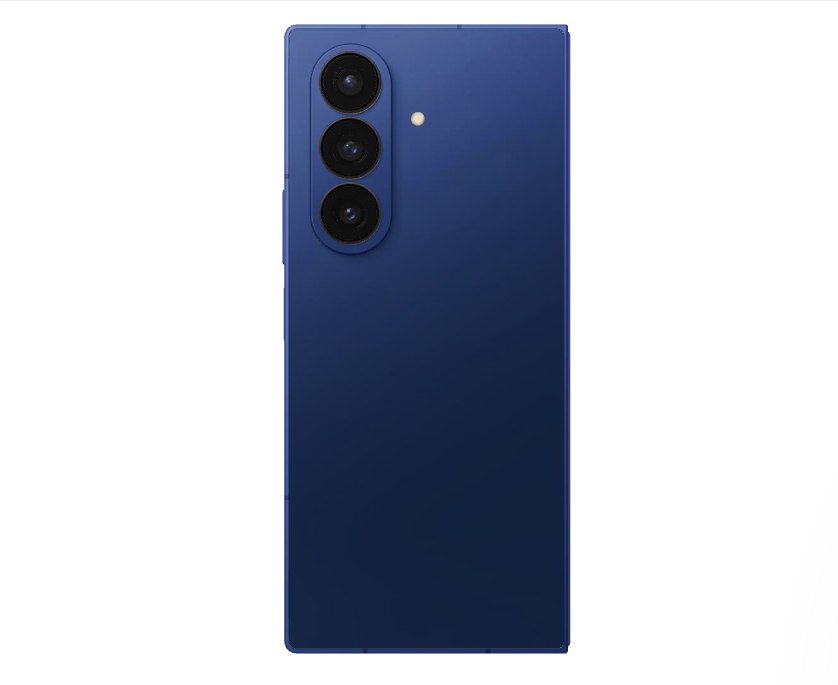
Samsung Galaxy Z Fold 7
1. Samsung Galaxy Z Fold 7 — Best Overall Book-Style Foldable
Samsung’s Galaxy Z Fold 7 earns frequent nods as the top foldable for most users thanks to its ultra-slim profile, premium build and polished software experience. Measuring just over 8mm thick when closed and weighing around 215 grams, it feels remarkably close to a conventional flagship yet unfolds into an expansive 8-inch inner display ideal for productivity, media consumption and split-screen multitasking.
The device features a bright 6.5-inch cover screen with 120Hz refresh rate, allowing full app functionality without unfolding. Powered by the Snapdragon 8 Elite for Galaxy processor, it delivers smooth performance across demanding tasks. Cameras have seen meaningful upgrades, with a standout 200-megapixel main sensor producing sharp, vibrant photos that rival non-foldable competitors.
Advertisement
Reviewers praise the refined hinge, improved crease visibility and long software support extending years into the future. Drawbacks include a premium price tag often starting near $1,900 and average battery life that may require midday top-ups for heavy users. Still, its ecosystem integration with Galaxy Watch, Buds and DeX mode makes it a compelling choice for Samsung loyalists and power users alike.
2. Google Pixel 10 Pro Fold — Best for Durability and Cameras
Google’s Pixel 10 Pro Fold stands out for its rugged construction and photography prowess. It boasts a full IP68 dust and water resistance rating — a rarity among foldables — along with enhanced hinge durability and drop protection on the main display. At roughly 258 grams, it feels more substantial than Samsung’s offering but rewards owners with reliable all-day performance.
The Tensor G5 chipset powers intuitive AI features, including real-time call translation, audio magic eraser and Gemini Live integration. Cameras shine with computational photography that delivers natural colors and excellent low-light results, making it a favorite for content creators. The 6.3-inch cover screen and large inner display support seamless multitasking with clean Android 16 software.
Advertisement
Battery life impresses in testing, often outlasting slimmer rivals. Pricing starts around $1,800, positioning it as a strong value for those prioritizing longevity and photography over the absolute thinnest design. Limitations include slightly warmer performance under sustained loads compared to Snapdragon-equipped devices.
3. Motorola Razr Ultra (2025/60 Ultra) — Best Flip-Style Foldable
For users seeking pocketable convenience with flair, the Motorola Razr Ultra delivers one of the most stylish and functional clamshell experiences. Its vertical fold design snaps shut into a compact square, while the generous external display supports full apps, notifications and even quick camera previews.
Equipped with strong battery life that frequently tops competitor flip models, the Razr Ultra handles daily tasks efficiently on its Snapdragon processor. The inner 7-inch display offers smooth 120Hz visuals, and the overall build feels premium with thoughtful details like a titanium hinge option in select variants. Cameras perform adequately for casual use, though they trail book-style models in versatility.
Advertisement
Reviewers highlight its fun factor and practicality for one-handed operation. Starting prices often land in the mid-$1,000 range, making it more accessible than premium book-style foldables. Potential downsides include a smaller unfolded screen compared to tablet-style devices and occasional software quirks in the Motorola skin.
4. Samsung Galaxy Z Flip 7 — Best Compact Flip for Everyday Use
Samsung’s Galaxy Z Flip 7 refines the flip formula with a larger 4.1-inch edge-to-edge cover screen that finally enables meaningful interaction without unfolding. The 6.9-inch inner display provides ample space when needed, while the overall design remains slim and lightweight for easy pocket carry.
Battery improvements help it last through a full day for moderate users, and the Exynos 2500 or Snapdragon variant (depending on region) ensures snappy performance. New DeX support on the Flip adds desktop-like productivity when connected to external displays. Cameras remain solid for social media and quick shots, with the main 50-megapixel sensor delivering reliable results.
Advertisement
Priced starting around $1,100, it offers strong value within the Samsung ecosystem. Critics note it can overheat during intensive multitasking and that battery claims sometimes exceed real-world endurance. Its stylish appeal and improved cover screen functionality make it a top pick for fashion-conscious users or those transitioning from traditional bar phones.
5. Honor Magic V5 — Best Ultra-Thin Alternative for Multitasking
The Honor Magic V5 earns acclaim for its exceptionally slim design, measuring under 9mm folded and around 4.4mm unfolded in some configurations. It targets users who want a near-nonexistent crease and premium feel without Samsung’s ecosystem lock-in.
Featuring a large inner display and capable outer screen, it excels at multitasking with smooth software optimizations. The Snapdragon 8 Elite processor paired with generous RAM handles heavy workloads, while a sizable silicon-carbon battery supports fast charging and extended use. Cameras offer competitive performance, particularly in daylight scenarios.
Advertisement
Availability may require importing in some markets, and software updates could lag behind Google or Samsung. Still, its combination of thinness, battery capacity and vibrant displays positions it as a compelling choice for enthusiasts seeking cutting-edge hardware at potentially competitive pricing.
Buying Considerations in 2026
Foldable phones now address many early criticisms: creases are subtler, hinges more robust and repair programs more widespread. Most top models promise four to seven years of software support, reducing obsolescence concerns. Battery technology has advanced, though heavy multitasking or camera use still drains power faster than slab phones.
Prices remain elevated, with book-style models often exceeding $1,800 and flips starting above $1,000. Trade-in deals, carrier promotions and installment plans can ease the cost. Buyers should consider ecosystem preferences — Samsung for seamless integration, Google for pure Android and AI, Motorola for flip charm.
Advertisement
Durability has improved markedly, but users should invest in quality cases and screen protectors. Coverage for accidental damage varies by manufacturer and carrier.
Regional factors matter: U.S. buyers enjoy broad carrier support for Samsung, Google and Motorola models, while international shoppers may access superior specs from Honor, Oppo, Vivo or Huawei at lower prices, albeit with potential Google service limitations on some devices.
The Future of Foldables
As 2026 progresses, expectations include further refinements such as even lighter builds, under-display cameras that eliminate notches and possible trifold designs from Samsung and others reaching wider markets. Apple’s rumored foldable iPhone could reshape the segment later in the year or in 2027.
Advertisement
For now, the market offers something for nearly every preference: productivity powerhouses, stylish compacts and durable all-rounders. Early adopters who hesitated in previous years will find 2026 models far more refined and reliable.
Consumers weighing a purchase should evaluate their primary needs — screen size for work, portability for travel or camera quality for photography — and test devices in-store when possible. With rapid iteration, waiting for carrier deals or next-generation hints may also pay off.
Foldables represent more than a novelty in 2026; they deliver genuine utility that enhances how many people work, create and consume content on the go. Whether opting for the versatile Galaxy Z Fold 7, the rugged Pixel 10 Pro Fold or a fun flip like the Razr Ultra, buyers are investing in devices that continue to evolve the smartphone experience.
I’m a retired Wall Street PM specializing in TMT; since kickstarting my career, I’ve spent over two decades in the market navigating the technology landscape, focusing on risk mitigation through the dot com bubble, credit default of ‘08, and, more recently, with the AI boom. In one word, what I’d like my service to revolve around is momentum.
Analyst’s Disclosure: I/we have no stock, option or similar derivative position in any of the companies mentioned, and no plans to initiate any such positions within the next 72 hours. I wrote this article myself, and it expresses my own opinions. I am not receiving compensation for it (other than from Seeking Alpha). I have no business relationship with any company whose stock is mentioned in this article.
Seeking Alpha’s Disclosure: Past performance is no guarantee of future results. No recommendation or advice is being given as to whether any investment is suitable for a particular investor. Any views or opinions expressed above may not reflect those of Seeking Alpha as a whole. Seeking Alpha is not a licensed securities dealer, broker or US investment adviser or investment bank. Our analysts are third party authors that include both professional investors and individual investors who may not be licensed or certified by any institute or regulatory body.
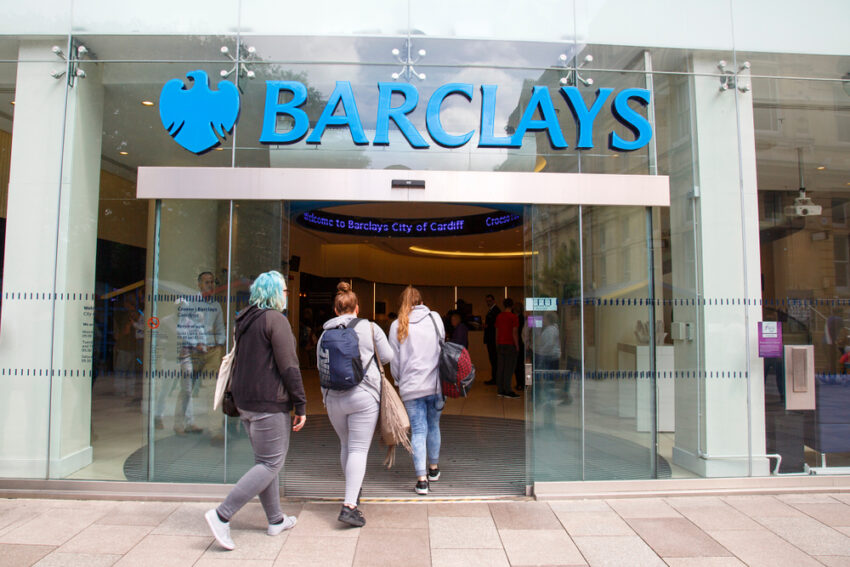
Barclays is charting a decisive U-turn on the high street, with plans to open new branches across the country and reinstate the once-familiar “bank manager” job title, a move that signals a broader rethink of how Britain’s traditional lenders compete in an increasingly digital age.
Vim Maru, who has led Barclays UK since 2024, told Business Matters that the bank intended to grow its branch network beyond the current 206 outlets, having already paused a closure programme that saw roughly 80 per cent of its branches shut since 2019. One of his first acts after taking charge was to halt the cull, and he is now pressing ahead with expansion, though he declined to put a precise figure on how many new sites would open.
The shift comes as digital-only challengers such as Revolut and Wise make increasingly aggressive moves into the current-account market, threatening the established banks’ grip on everyday consumer banking. Rather than trying to outpace them on technology alone, Maru is placing his chips on a blend of slick digital services and genuine, in-person support, what he described as the winning formula for modern banking.
He was characteristically blunt about the shortcomings of purely automated customer service. Barclays customers, he insisted, would not find themselves trapped in an endless loop with a chatbot when they needed real help. The bank has also quietly reintroduced traditional role titles, so that customers walking through the door can once again ask to speak to the branch or bank manager.
Maru stopped short of conceding that Barclays had been too aggressive in its earlier round of closures, but acknowledged that the bank needed to reassess how it served its customers every few years. The new branches will sit alongside the shared banking hubs operated through the Post Office, rather than replace them.
Advertisement
Beyond the branch network, Barclays is pursuing growth on several fronts. The bank reported a record number of mortgage applications last year, with processing times slashed from 45 minutes to just 15 thanks to technology improvements that have proved popular with brokers. Its acquisition of the Tesco credit card business in 2024 and Kensington Mortgages, which has doubled in size since Barclays bought it in May 2023, have broadened the division’s reach considerably.
Artificial intelligence is also being deployed to streamline internal processes, though Maru was cautious about the workforce implications. He drew a parallel with the introduction of ATMs, noting that while the machines were expected to eliminate cashier roles, the subsequent rise in fraud and scams meant staff were redeployed rather than made redundant.
On the broader economy, Maru offered a measured reading from the bank’s unique vantage point. Consumer spending has shown resilience, with hospitality holding up well despite a period of heightened anxiety following the outbreak of the Iran conflict. In the opening days of the war, there was a noticeable surge in fuel purchases as motorists rushed to fill up ahead of expected price rises, though spending patterns quickly normalised.
With Barclays chief executive CS Venkatakrishnan having committed to investing £30 billion more in the UK between 2024 and this year, and despite persistent speculation about possible acquisitions of the likes of Santander UK or TSB, Maru said his priority remained organic growth. The bank, he maintained, already had strong momentum — and a renewed high street presence to match.
Advertisement
Amy Ingham
Amy is a newly qualified journalist specialising in business journalism at Business Matters with responsibility for news content for what is now the UK’s largest print and online source of current business news.
Eight stocks have delivered over 50% returns in each of the last three fiscal years, defying broader market volatility. With gains ranging from 500% to over 3,100%, these consistent outperformers highlight strong underlying momentum despite fluctuating benchmark returns across FY24 to FY26.
Bandhan Bank posted healthy growth in advances along with steady deposit mobilisation for the quarter ended March 31, 2026, as per its provisional update released on Saturday. The bank’s loans and advances, including on-book and PTC, stood at Rs 1.54 lakh crore at the end of the March quarter, registering a 12.6% year-on-year increase and a 6.2% sequential rise.
Total deposits came in at Rs 1.66 lakh crore, up 10% from a year ago and 6.1% higher on a quarter-on-quarter basis. CASA deposits rose 2.8% year-on-year to Rs 48,751 crore, with the CASA ratio at 29.31% at the end of the quarter.
Retail term deposits saw strong growth, increasing 30.1% year-on-year to Rs 73,796 crore. Overall retail deposits, including CASA, rose 17.7% to Rs 1.22 lakh crore. Bulk deposits declined 6.9% year-on-year to Rs 43,797 crore. Meanwhile, the share of retail deposits in total deposits improved to 73.67% from 68.88% in the same period last year.
The bank reported a liquidity coverage ratio of about 131.76% as of March 31, 2026. Collection efficiency remained robust, with pan-bank efficiency, excluding NPAs, at 98.9% for March 2026, compared to 98.1% in December 2025.
Advertisement
Banking stocks have come under sharp pressure over the past three months, with most lenders underperforming the benchmark Nifty 50 amid a challenging macro backdrop marked by sustained foreign institutional investor (FII) outflows, escalating geopolitical tensions, and a surge in energy prices. Bandhan Bank is down 18% in the last 1 month.
Live Events
The underperformance comes amid persistent FII selling, which has disproportionately impacted financials due to their heavy weightage in benchmark indices. At the same time, the escalation of the Iran-Israel conflict has triggered a spike in crude oil prices, raising concerns over inflation and delaying expectations of interest rate cuts by global central banks. The lender has also been in the headlines after The Economic Timesreported that Bandhan Financial Services is exploring exit options for its long-term investors, including GIC Ventures and International Finance Corporation.Also read: HDFC Bank Q4 business update: Lender reports 15% YoY growth in deposits, advances jump 12%
The report said the company has appointed Jefferies to assess investor interest, particularly from private equity funds. The move is also in line with regulatory requirements that mandate Bandhan Financial to reduce the promoter’s stake in the bank to 26% by 2030.
(Disclaimer: Recommendations, suggestions, views and opinions given by the experts are their own. These do not represent the views of The Economic Times)
Financially Free Investor is a financial writer with 25 years investment experience. He focuses on investing in dividend-growing stocks with a long-term horizon. He applies a unique 3-basket investment approach that aims for 30% lower drawdowns, 6% current income, and market-beating growth on a long-term basis and he focuses on dividend-growing stocks with a long-term horizon.
He runs the investing group High Income DIY Portfolios which provides vital strategies for portfolio management and asset allocation to help create stable, long-term passive income with sustainable yields. The service includes a total of 10 model portfolios with a range of income targets for varying levels of risk, buy and sell alerts, and live chat. Learn more.
Analyst’s Disclosure: I/we have a beneficial long position in the shares of ABT, ABBV, CI, JNJ, PFE, NVS, NVO, AZN, UNH, CL, CLX, UL, NSRGY, PG, TSN, ADM, BTI, MO, PM, KO, PEP, EXC, D, DEA, DEO, ENB, MCD, BAC, PRU, UPS, WMT, WBA, CVS, LOW, AAPL, IBM, CSCO, MSFT, INTC, T, VZ, CVX, XOM, VLO, ABB, ITW, MMM, LMT, LYB, RIO, O, NNN, WPC, ARCC, ARDC, AWF, CII, TLT either through stock ownership, options, or other derivatives. I wrote this article myself, and it expresses my own opinions. I am not receiving compensation for it (other than from Seeking Alpha). I have no business relationship with any company whose stock is mentioned in this article.
Disclaimer: The information presented in this article is for informational purposes only and in no way should be construed as financial advice or a recommendation to buy or sell any stock. The author is not a financial advisor. Please always do further research and do your own due diligence before making any investments. Every effort has been made to present the data/information accurately; however, the author does not claim 100% accuracy. The stock portfolios presented here are model portfolios for demonstration purposes. For the complete list of our LONG positions, please see our profile on Seeking Alpha.
Advertisement
Seeking Alpha’s Disclosure: Past performance is no guarantee of future results. No recommendation or advice is being given as to whether any investment is suitable for a particular investor. Any views or opinions expressed above may not reflect those of Seeking Alpha as a whole. Seeking Alpha is not a licensed securities dealer, broker or US investment adviser or investment bank. Our analysts are third party authors that include both professional investors and individual investors who may not be licensed or certified by any institute or regulatory body.
Value-oriented ideas and special situations, generally mid/small cap. Also, orphaned and unfashionable investment ideas, ideally with a catalyst and the prospect of asymmetric upside/downside payoffs. Contrarian tendencies. To some extent I’ll go anywhere if it’s cheap and I’m more influenced by momentum and quality than I used to be.
Analyst’s Disclosure: I/we have a beneficial long position in the shares of TH either through stock ownership, options, or other derivatives. I wrote this article myself, and it expresses my own opinions. I am not receiving compensation for it (other than from Seeking Alpha). I have no business relationship with any company whose stock is mentioned in this article.
Not intended as investment advice. Author’s opinion only. Article may contain errors/inaccuracies and will not be updated. Author’s holdings may change without notice. Any statements about the future are completely uncertain and should be interpreted as such. Seek professional investment and tax advice before any investment decision.
Advertisement
Seeking Alpha’s Disclosure: Past performance is no guarantee of future results. No recommendation or advice is being given as to whether any investment is suitable for a particular investor. Any views or opinions expressed above may not reflect those of Seeking Alpha as a whole. Seeking Alpha is not a licensed securities dealer, broker or US investment adviser or investment bank. Our analysts are third party authors that include both professional investors and individual investors who may not be licensed or certified by any institute or regulatory body.
Private sector lender AU Small Finance Bank reported steady growth across key balance sheet items, its fourth-quarter business update on Saturday showed.
The bank’s total deposits stood at Rs 1.52 lakh crore as of March 31, 2026, registering a 22.8% year-on-year growth and a 10.3% increase sequentially from Rs 1.38 lakh crore as of December 31, 2025. CASA deposits came in at Rs 43,360 crore, up 19.6% year-on-year and 8.5% quarter-on-quarter. However, the CASA ratio stood at 28.4%, compared to 29.2% a year ago and 28.9% in the previous quarter.
On the advances front, gross advances stood at Rs 1.36 lakh crore, reflecting a 25.1% year-on-year growth and an 8.7% rise sequentially from Rs 1.26 lakh crore. The bank’s securitised and assigned portfolio was reported at Rs 4,290 crore, compared to Rs 6,926 crore in the year-ago period and Rs 4,689 crore in the previous quarter.
Overall, the gross loan portfolio (A+B) stood at Rs 1.40 lakh crore as of March 31, 2026, marking a 21.3% year-on-year growth and an 8% increase quarter-on-quarter from Rs 1.30 lakh crore.
Advertisement
Banking stocks have come under sharp pressure over the past three months, with most lenders underperforming the benchmark Nifty 50 amid a challenging macro backdrop marked by sustained foreign institutional investor (FII) outflows, escalating geopolitical tensions and a surge in energy prices. AU Small Finance Bank shares have declined 13% since the beginning of the year.
Live Events
The underperformance comes amid persistent FII selling, which has disproportionately impacted financials due to their heavy weightage in benchmark indices. At the same time, the escalation of the Iran-Israel conflict has triggered a spike in crude oil prices, raising concerns over inflation and delaying expectations of interest rate cuts by global central banks. In a separate development in February, the Haryana government de-empanelled the lender from government business after suspected fraudulent activities were disclosed.The company issued a clarification late Sunday, stating it initiated an internal review regarding two accounts in question. The bank further said that both these accounts were “duly opened after completion of all applicable KYC checks and requisite authorisations” and were in accordance with the bank’s internal policies and processes.
(Disclaimer: Recommendations, suggestions, views and opinions given by the experts are their own. These do not represent the views of The Economic Times)
Centenary House in Morecambe has been largely empty since 1990s
Robbie Macdonald and Local Democracy Reporter
13:00, 04 Apr 2026
Centenary House, on Morecambe’s Regent Street(Image: Google Maps)
New calls have been made to regenerate a landmark Morecambe building, as a big shake-up of councils looms in 2028 with uncertainty about future support.
Advertisement
Centenary House, on Morecambe’s Regent Street, has been largely vacant since the mid-1990s except for a ground-floor Co-op shop. Some repairs were done in 2024 using government cash. Earlier in 2019, a plan was approved for offices, a café, work and event spaces but it did not progress.
Council talks have been held recently with an affordable homes organisation about it. But a lack of nearby car parking, and possibly other things, could be turning-off some developers, councillors were told at Lancaster City Council’s latest full meeting.
Labour’s David Whittaker asked Morecambe Bay Independent Martin Bottoms, a cabinet member, about the situation.
Coun Whittaker said: “Has there been any recent engagement with external funding sources to help Centenary House? What do you see as a realistic outcome for the future of the building? Car parking is another consideration. I know this is a long-term question but a lot of people are asking about it.”
Advertisement
Coun Bottoms, who has a remit for Morecambe regeneration and its local economy, said: “Brownfield regeneration money is available for developers to move this forward. Centenary House is bordered by roads and there is little car parking space. Whether it has community or commercial uses, there are going to be some parking issues.
“We are in talks with an affordable housing developer but they are aware that car parking needs have to be considered.”
Then Coun Whittaker added: “Will things progress before local government reorganisation?”
Coun Bottoms said: “It’s something we have all had concerns about since the council’s new administration was formed. We need to find a solution. It’s down to us to get it done. Or, at least, get it started before local government reorganisation. I will be pressing for that.”
Advertisement
The Lancaster City Council district including Morecambe could be merged with Preston and the Ribble Valley under the government’s push to reorganise all Lancashire councils in 2028. The government wants to end the two-tier system of district and county councils created in 1974.
New bigger unitary councils, with access to major funds and government contacts, will likely cover bigger areas and include a wider intake of councillors. So how projects like Centenary House will be viewed by future councillors is unknown.
To find all the planning applications, traffic diversions, road layout changes, alcohol licence applications and more in your community, visit the Public Notices Portal.
























































You must be logged in to post a comment Login