
Business
F&O Talk: Nifty charts suggest further consolidation; Sudeep Shah’s strategy on Cohance, HEG and 4 more stocks


Meanwhile, the volatility gauge India VIX ended at 18.46, up 5.86% from the last close.
Analyst Sudeep Shah, Vice President and Head of Technical & Derivatives Research at SBI Securities, interacted with ETMarkets regarding the outlook for the Nifty and Bank Nifty, as well as an index strategy for the upcoming week. The following are the edited excerpts from his chat:
Q: Nifty ended with weekly declines of 0.7% as rupee weakness and crude oil prices around $115 a barrel have once again brought back concerns of inflation. What pattern do you see on charts and what levels will hold key this week?
The benchmark index Nifty closed April on a strong note, gaining over 7% and snapping its four-month losing streak. After marking a low of 22,182 on April 2, the index staged a sharp rebound of more than 2,400 points within just 11 trading sessions. This rally was primarily driven by improved global risk sentiment following the US-Iran ceasefire, which eased geopolitical concerns and triggered broad-based short covering. But the real question is: has this rally built a strong base, or is it just a sharp bounce waiting to fade?

The index touched a high of 24,601 on April 21, after which profit booking set in. Over the last six trading sessions, Nifty has been consolidating within a narrow range of 24,335 to 23,798, reflecting market indecisiveness. This hesitation is largely due to multiple factors, including rising Brent crude prices, uncertainty around the sustainability of the US-Iran ceasefire, upcoming state election outcomes, and the USD/INR hitting a fresh record low. With so many moving pieces, is the market quietly preparing for a decisive breakout or breakdown?
Going ahead, we expect heightened volatility in the near term. On the upside, the 24,300 to 24,350 zone will act as a key resistance. A sustained move above 24,350 could trigger a sharp rally towards 24,500, followed by 24,700. On the downside, the 23,800 to 23,750 zone remains crucial support. A breakdown below 23,750 may lead to further correction towards 23,600 and then 23,400. The next move from these levels could define the trend for the coming weeks.
Q: Do you expect the April momentum to continue given May is historically a seasonally positive month for the bulls?
After delivering nearly 7% returns in April, the Nifty followed its historical seasonality well. However, May has typically been more mixed and relatively weaker compared to April. Over the past 20 years, the index has closed negative nine times, with an average decline of 4.3%, while it ended positive 11 times, posting an average gain of 5.89%. Since 2020, the trend has remained inconsistent, with even years tending to be negative and odd years positive. Currently, Nifty is consolidating within a 538-point range between 24,350 and 23,750. A decisive breakout on either side is likely to determine the next directional move.
Q: What is the derivatives data suggesting about Nifty and Bank Nifty?
The derivatives data for both Nifty and Bank Nifty indicate a phase of consolidation with a cautious undertone. Over the last six sessions, Nifty futures have seen a build-up in open interest alongside sideways price action, indicating a mix of long and short positions rather than a clear directional trend. The options data highlights strong resistance around 24,300 to 24,500 and support near 23,750, suggesting a well-defined trading range. The PCR for the current expiry is at 0.87, reflecting a mild bearish bias, but not strong conviction.
In contrast, Bank Nifty appears relatively weaker. Its futures positioning remains choppy, while the options chain shows slightly heavier call writing and a comparatively lower PCR, indicating a cautious to slightly bearish stance. Overall, the setup suggests a range-bound market, with a decisive breakout likely to dictate the next directional move.
Q: Banking & financials have been top underperformers this week and more so the public sector banks. What is your view on it and are there any recommendations?
The banking and financial services space has been underperforming over the last couple of trading sessions. Considering the current chart structure, we believe they are likely to continue their underperformance in the short term. The momentum indicators and oscillators are also portraying a similar picture.
Q: Smallcap stocks have continued to show their dominance over large and midcaps so far in 2026. Do you expect higher traction in this segment going ahead and where can one look for opportunities?
The smallcap segment has continued to outperform the broader market during the recent pullback rally, showcasing strong relative strength. Notably, the Nifty Smallcap 100 index surged by 18.44% in April, significantly outperforming both large and mid-cap indices. In addition, the ratio chart of the Smallcap index versus the Nifty is exhibiting a clear pattern of higher highs and higher lows, indicating sustained relative outperformance.
From a technical perspective, the overall structure remains robust. The index is trading above key moving averages, while momentum indicators continue to signal strong bullish traction. This alignment of trend and momentum suggests that the smallcap segment is likely to maintain its leadership in the near term.
Given this backdrop, investors can continue to focus on fundamentally strong stocks within sectors that are already showing relative strength, as these are likely to offer better risk-reward opportunities during the ongoing uptrend.
Q: Cohance, Sapphire Foods and HFCL were among top gainers this week, while HEG, MRPL and Zensar have been big losers. What should investors do with them?
Cohance: The stock has witnessed a strong pullback of nearly 59% from its April 6 low of 293. A rising ADX highlights strengthening trend momentum, while an upward-sloping MACD reinforces the bullish bias. However, it remains a low-volume counter. Immediate support is placed at 430 to 425, and the uptrend is likely to continue as long as the stock holds above this zone.
Sapphire Foods: After consolidating in the 184 to 160 range since April 9, the stock has broken out, backed by a sharp surge in volumes. While it is still early to confirm a full-fledged reversal, sustaining above 185 to 183 could open the door for further upside.
HFCL: The stock has been on a stellar run, rallying 76% from its March 23 low of 66. However, with RSI at 84 and ADX near 65, it is in a highly overbought zone. This raises the likelihood of near-term profit booking. Key support is seen in the 100 to 95 zone.
HEG: The stock has broken down from its consolidation range of 619 to 690 and slipped below its 20-day EMA. RSI has dipped below 60, indicating fading bullish momentum, while DI- is on the verge of crossing above DI+, signalling increasing seller dominance. Resistance is placed at 623 to 625, and the outlook remains sideways to bearish till the stock trades below this level.
MRPL: The stock has breached its prior swing low of 168 and is now trading below its 100-day EMA. RSI remains weak below 40, indicating sustained bearish momentum. As long as it stays below 179 to 180, the trend is likely to remain negative.
Zensar Technologies: The stock failed to hold above its 50-day EMA and has declined from its recent high of 611 (April 21). It is now hovering near its previous swing low of 511. RSI below 40 reflects bearish momentum. The trend is likely to stay weak as long as the stock trades below 545 to 550.
(Disclaimer: The recommendations, suggestions, views and opinions given by the experts are their own. These do not represent the views of The Economic Times.)



When Branneisha Cooper first began taking GLP-1 injection Mounjaro in late 2022, she heard online that she could experience temporary hair thinning and prepared for the worst.
But it would take about a year before she began noticing her hair falling out in clumps. Cooper said it was especially shocking because she has always had thick hair.
“I was really hoping it wouldn’t happen,” Cooper, 29, told CNBC. “What my provider had told me is that since you’re on the medication that’s allowed you to lose weight at a faster rate, that’s what can cause hair loss.”
Desperate to counteract the side effect, Cooper said she began prioritizing protein in her diet, taking vitamins intended to help her hair and investing in haircare products meant to stimulate the scalp to foster growth.
She’s one of a growing number of GLP-1 users experiencing temporary hair loss from the drugs, creating a new market for hair treatment products amid the weight-loss drug craze.
Cooper took to social media for support, where she found scores of other GLP-1 users experiencing the same thing. While the discourse was less frequent at the beginning of her weight-loss journey, the rise of GLP-1s has meant that more people are flocking to her page to commiserate and strategize.
“There has been an increase of people wanting to know how to tackle it, but it’s also a lot of people who are wanting to know how they can possibly prevent it, and that’s just something that I don’t have the answer to,” Cooper said.
According to Gallup, the use of GLP-1 drugs has more than doubled since early 2024. The KFF Health Tracking Poll found that roughly one in every eight U.S. adults, or nearly 13%, are currently taking a GLP-1 drug.
By 2030, JPMorgan estimates that roughly 25 million Americans will be on a GLP-1, up from just 5 million in 2023.
Profit amid loss
Many GLP-1 users have seen significant results in losing weight. But the drugs come with a multitude of side effects, too.
Zepbound, manufactured by pharmaceutical giant Eli Lilly, advertises common side effects on its website that include hair loss, nausea and vomiting, fatigue and more. Mounjaro, also a Lilly drug, warns of similar side effects, along with Novo Nordisk‘s Ozempic. Wegovy also includes hair loss in its possible side effects.
It’s a risk that’s common with any type of significant weight loss because of the body’s changes, according to Dr. Heather Woolery-Lloyd, a dermatologist and the chief medical advisor for haircare brand Nutrafol.
“When you are losing weight, either through a GLP-1 or any other type of weight loss, you may be taking in less nutrients, less protein, and the weight loss itself can be a stressor,” she told CNBC.
Those consumers have been increasingly seeking out solutions to ease the physical process, according to Circana. The Chicago-based market research firm estimates that GLP-1 households spend approximately 30% more on beauty products than non-GLP-1 households.
“Hair loss solutions continue to be a standout growth segment in hair care, sustained by prolonged consumer stress since the pandemic and GLP‑1 medication usage emerging as an incremental tailwind,” said Larissa Jensen, Circana’s beauty industry advisor. “Many GLP‑1 users report temporary hair shedding, which is translating into increased demand for at‑home growth treatments, scalp serums, and supplements.”
The hit to a GLP-1 user’s self-confidence from the hair loss can mean even more stress, according to Woolery-Lloyd.
In her practice, she said she’s seen a noticeable increase in patients coming in specifically with hair thinning concerns, many of them because of GLP-1 side effects. Woolery-Lloyd said the last time she saw an influx of patients with these concerns was during the pandemic, due to unexpected amounts of stress on the body.
The hair loss from GLP-1s is one of the most significant side effects that the beauty industry is watching, according to Audrey Depraeter-Montacel, Accenture’s global beauty industry lead.
“GLP-1s have not just changed the way people lose weight, but the way consumers expect beauty and personal care to address the situation,” she told CNBC, adding that it’s not a “one size fits all” solution.
Depraeter-Montacel called the size of the GLP-1 market “unprecedented” and said the business opportunity for the hair treatment market with this growing population sets the scene for innovation.
“On the life science side, we are seeing a lot of pharma brands raising funds to go after innovation and new solutions,” she said. “So a lot of money has been raised in the name of this opportunity, which I think confirmed that there is definitely a commercial opportunity here as investors put dollars in this on both sides.”
Consumers who will be buying into the GLP-1 hair treatment market are also sticking around, Depraeter-Montacel said. Because hair treatment products often take a few months to begin showing results, these customers are expected to be highly loyal.
Tapping into the market
Brands are taking notice. In early April, Ulta CEO Kecia Steelman told Yahoo Finance that the company is seeing more consumers buying hair treatment products as part of the GLP-1 craze.
Redken, a haircare company owned by L’Oreal, created an entire hair treatment line specifically for consumers with thin hair called the Acidic Grow Full System.
“We wanted to ensure the Acidic Grow Full System range was tested on this specific population of GLP-1 users, as they may have unique hair care needs,” Mounia Tahiri, Redken’s U.S. general manager, told CNBC. “[It] was tested on current GLP-1 users who, when using the products, immediately noticed their hair looked fuller and felt thicker.”
Tahiri said the company also saw a rise in Google searches for hair loss and weight-loss drugs and plans to continue innovating its hair treatment products as the GLP-1 population grows.
Nutrafol CEO Cindy Gustafson told CNBC the haircare brand is similarly seeing increased demand for hair health products.
“While we don’t break out performance tied to GLP-1 use, growth overall is being driven by increased awareness and a shift toward personalized, clinically supported solutions,” she said.
Gustafson said the company expects this growth to continue as more people begin taking GLP-1s and searching for products to prevent or counteract hair thinning.
KeraFactor, another scalp health company, told CNBC that it’s seeing 100% growth year-over-year in its direct-to-consumer store because of an increased interest from GLP-1 users.
“We saw a lot of [hair loss] during Covid, so that was actually the first kind of spike of patients that came to KeraFactor, and then after Covid, it kind of settled,” Lauren Bartholomeusz, the company’s chief commercial officer, told CNBC. “And then now, we’re seeing that rise again with the GLP-1 craze.”
Bartholomeusz said KeraFactor has shifted the way it treats patients to now come from a more preventative perspective to get ahead of the possible hair loss while taking the drugs.
For Cooper, the 29-year-old GLP-1 user, there may be light at the end of the tunnel.
She’s experimented with many hair products over the past three years of taking weight-loss drugs, hoping for her hair to return to its former thickness.
“I’ve been paying more attention to it for about a year, and I’ve been noticing it’s returned,” Cooper said. “A lot of people, they get nervous when they have the hair shedding, because it’s like, ‘Oh, I’m going to be bald for eternity.’ But the hair comes back, so that was what let me have peace with it. But it was scary.”


Trump’s Inauguration Day: What to expect
Donald Trump’s second term as US President will begin with his inauguration on Monday. He plans to sign numerous executive orders and hold a campaign-style rally. Several foreign leaders are invited, and outgoing President Joe Biden will attend. The events are largely funded by Trump’s inauguration committee.


Taiwan President arrives in Eswatini after blaming China for cancellation of prior trip

‘Barron’s Roundtable’ panelists discuss investment opportunities among airline stocks.
Spirit Airlines announced early Saturday it is ceasing operations effective immediately after a bailout from President Donald Trump failed to materialize.
“It is with great disappointment that on May 2, 2026, Spirit Airlines started an orderly wind-down of our operations, effective immediately,” the carrier said in an online statement early Saturday morning. “To our Guests: all flights have been canceled, and customer service is no longer available.”
“We are proud of the impact of our ultra-low-cost model on the industry over the last 34 years and had hoped to serve our Guests for many years to come,” the statement continued.
The carrier had been seeking a $500 million lifeline from the federal government, but the deal could not be finalized in time due to financial complications, the Wall Street Journal reported.
TED CRUZ POURS COLD WATER ON TRUMP ADMINISTRATION PLAN TO BAIL OUT SPIRIT AIRLINES: ‘TERRIBLE IDEA’
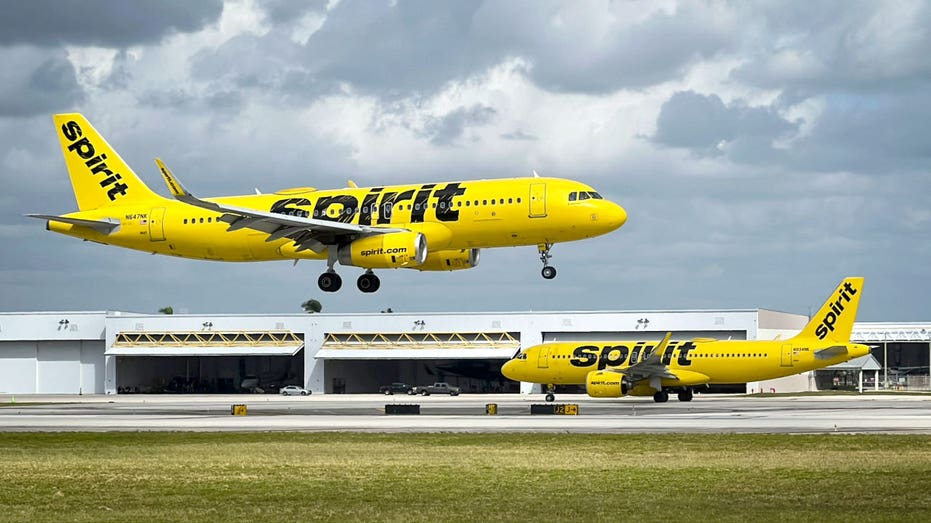
Spirit Airlines airplanes at Fort Lauderdale-Hollywood International Airport in Fort Lauderdale, Florida. (Eva Marie Uzcategui/Bloomberg via Getty Images)
Leading up to the statement from the airline, Spirit was responding to customers concerned about upcoming trips on X in a seemingly optimistic manner despite reports of the looming shutdown.
“The most important thing to know is that Spirit continues to operate and offer high-value travel options,” the airline wrote in response to many.
Trump said earlier Friday that the U.S. gave Spirit Airlines a final bailout proposal to aid the beleaguered carrier.
“We’re looking at Spirit. If we can help them, we will, but we have to come first,” Trump said. “If we could do it, we’d do it, but only if it’s a good deal.”
Spirit did not immediately respond to FOX Business’ request for comment on what the potential change could mean for flights and travelers.

Passengers check in for their Spirit Airlines flights at O’Hare Airport on March 10, 2026, in Chicago, Illinois. (Scott Olson/Getty Images / Getty Images)
Spirit has been seeking a lifeline from the U.S. government to the tune of $500 million, though the Wall Street Journal reported earlier Friday that the airline is preparing to end operations after a deal could not be reached between certain bondholders and the government.
Sources later said the administration had proposed $500 million in financing in exchange for warrants equivalent to 90% of Spirit’s equity. There had been disagreements inside the Trump administration over whether and how to fund the bailout, the report said, citing people familiar with the matter.
Not all Spirit bondholders were on board with the deal, the report added.
WHAT A GOVERNMENT STAKE IN SPIRIT AIRLINES COULD MEAN FOR PASSENGERS AND THE INDUSTRY
Meanwhile, major carriers are making plans if the carrier shuts down.
United Airlines and American Airlines said they are ready to assist Spirit passengers. American also said it has capped ticket prices on routes where it directly competes with Spirit to help limit disruptions.
“To help customers whose travel may be disrupted, we immediately implemented fare caps on Main Cabin tickets for Spirit routes where we also offer nonstop service,” American said, according to Bloomberg Law.
Frontier Airlines said it is also prepared to accommodate travelers, emphasizing “low-cost” options if Spirit ceases operations.
“We are ready to support customers who may be impacted if Spirit Airlines ceases operations, with a focus on helping people continue their travel plans with low-fare options,” Frontier wrote on X.
RISING FUEL COSTS THREATEN SPIRIT AIRLINES’ BANKRUPTCY EXIT PLAN: REPORTS

United States President Donald Trump speaks to the press before departing the White House for Florida on May 1, 2026, in Washington, DC. (Celal Gunes/Anadolu via Getty Images / Getty Images)
| Ticker | Security | Last | Change | Change % |
|---|---|---|---|---|
| FLYYQ | SPIRIT AVIATION HOLDINGS INC | 1.045 | -0.35 | -25.36% |
CLICK HERE TO GET FOX BUSINESS ON THE GO
Spirit declined to comment on ongoing discussions.
“Spirit is operating as usual,” a company spokesperson told Fox News in an email.
In a post on X, Sen. Elizabeth Warren praised the decision as “a Biden win for flyers.”
“I’ve warned for months that a [JetBlue-Spirit Airlines] merger would have led to fewer flights and higher fares,” she wrote. “[The Department of Justice Antitrust Division] and [Department of Transportation] were right to stand up for consumers and fight against runaway airline consolidation. This is a Biden win for flyers!”
Reuters contributed to this report.

Markets Rebound As Geopolitical Shocks Follow A Familiar Script


OPEC+ agrees in principle on small oil output quota hike without UAE, sources say
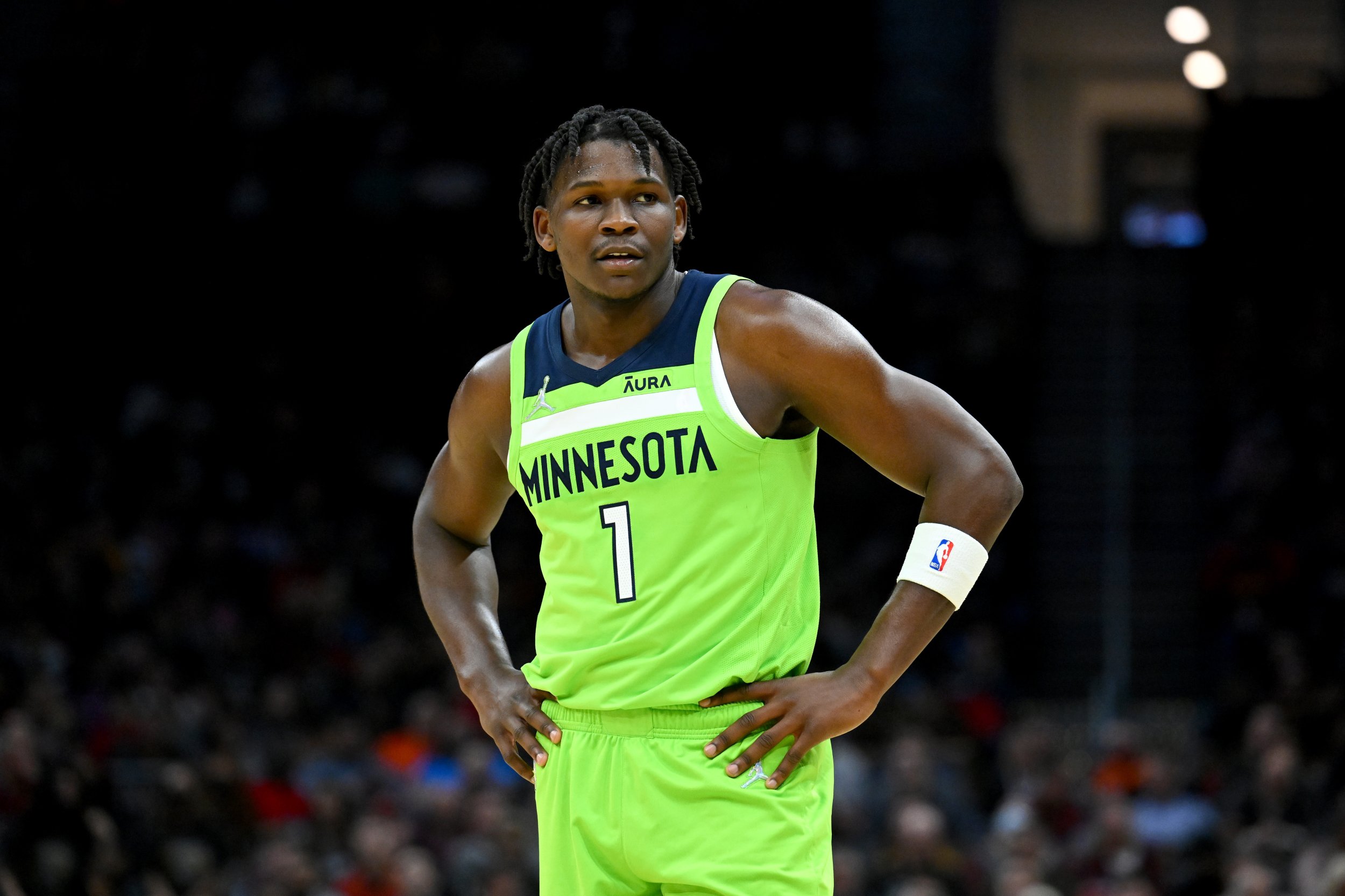
MINNEAPOLIS — Minnesota Timberwolves star Anthony Edwards will miss the start of any potential second-round series against the Oklahoma City Thunder due to a left knee hyperextension and bone bruise, raising serious questions about the team’s ability to reach the NBA Finals without its dynamic leading scorer. The injury, sustained in late April, has sidelined Edwards for critical playoff games, forcing the Timberwolves to rely on depth and veteran leadership as they navigate the postseason.
Edwards, one of the league’s most explosive guards, has been ruled week-to-week after an MRI confirmed no structural damage. Team officials and medical staff emphasize a cautious recovery to avoid setbacks, with the earliest possible return potentially in Games 3 or 4 of a Thunder series if Minnesota advances. The absence tests the Timberwolves’ resilience after strong regular-season performances and deep playoff runs in recent years.
Injury Details and Recovery Timeline
The Timberwolves announced Edwards’ diagnosis following imaging that revealed a hyperextension and bone bruise. He has avoided ligament tears, a positive sign, but bone bruises can linger and require careful management. Edwards has begun light on-court work, including movement drills and shooting, but has not progressed to full-contact activities or scrimmages.
Coach Chris Finch and the medical team are monitoring daily progress. Insiders describe the recovery as a “slow build,” with no firm return date. Edwards’ presence around the team for meetings and morale has been valuable, but his on-court absence creates a significant void in scoring, playmaking and athleticism.
The injury occurred during a high-stakes stretch, leaving Minnesota to adjust lineups and strategies mid-playoffs. Edwards’ scoring average and defensive versatility make him irreplaceable in crunch time, particularly against elite Western Conference opponents like the Thunder.
Timberwolves’ Performance Without Edwards
Minnesota has shown flashes of competitiveness without its star. The team has a respectable win percentage in games Edwards has missed during his career, relying on Rudy Gobert’s interior dominance, Karl-Anthony Towns’ (or current frontcourt) spacing and role players stepping up. Recent stretches without Edwards demonstrated improved ball movement and defensive intensity.
However, playoffs amplify the impact of star absences. The Timberwolves’ offense loses explosiveness and creation ability, forcing heavier reliance on half-court sets and opponent scouting. Defensively, Edwards’ perimeter pressure and help defense are missed against guards like Shai Gilgeous-Alexander.
Veterans and younger contributors have filled gaps, but sustaining that level deep into May remains a challenge. The team’s depth, built through smart drafting and trades, provides a buffer but may not fully compensate for Edwards’ All-Star production over a long series.
Path to the NBA Finals Without Their Star
Reaching the Finals without Edwards would require near-perfect execution and favorable matchups. The Western Conference remains stacked, with Oklahoma City posing a particular threat due to youth, depth and regular-season dominance over Minnesota. The Thunder’s switchable defense and transition game could exploit Minnesota’s temporary lack of perimeter firepower.
If the Timberwolves advance past their first-round opponent, a series against OKC would test their ceiling. Historical precedents show teams occasionally overcoming star injuries through chemistry and role-player heroics, but the margin for error shrinks dramatically in the postseason.
Edwards’ potential mid-series return could shift momentum, providing a spark similar to past comeback stories. The organization remains optimistic about his availability later in the round if the series extends, but nothing is guaranteed. Medical clearance will depend on pain-free movement and functional testing.
Broader Implications for Minnesota’s Season
The Timberwolves entered the playoffs with high expectations after consistent improvement. Edwards’ emergence as a franchise cornerstone fueled championship aspirations. His injury adds urgency to supporting-cast performance and coaching adjustments.
Finch has emphasized adaptability, rotating lineups and maintaining defensive identity. Gobert anchors the paint, while guards and wings must increase scoring loads. The front office’s roster construction, balancing veterans and youth, is being tested in real time.
A deep run without Edwards would boost confidence and validate the core’s strength. Conversely, an early exit could prompt offseason questions about roster tweaks or health management protocols.
Fan and League Reactions
Timberwolves fans express disappointment mixed with resilience, rallying behind the slogan of “next man up.” Social media buzzes with support for Edwards’ recovery and calls for collective effort. League-wide, the injury highlights the physical toll of the playoff grind and importance of depth.
Rivals and analysts note Minnesota’s toughness but question sustainability against elite competition. Edwards’ absence removes a major X-factor, shifting series narratives and betting odds.
Edwards’ Long-Term Outlook
At 24, Edwards remains in his prime with superstar potential. The injury, while serious, appears manageable with no structural damage reported. Proper rehab should allow a full return next season, potentially stronger with added experience.
The situation underscores the need for load management and injury prevention in today’s NBA. Edwards’ handling of the setback, focusing on recovery and team support, reflects maturity beyond his years.
What’s Next for Timberwolves and Edwards
Minnesota concentrates on advancing while providing Edwards every resource for recovery. Daily updates will track his progress toward on-court activities. If the team reaches the Thunder series, Game 1 without Edwards looms as a significant test.
The Western Conference remains unforgiving. Success without Edwards would rank among the season’s most impressive achievements, showcasing depth and coaching. Edwards’ eventual return could fuel a memorable playoff push.
As the postseason intensifies, the Timberwolves’ ability to compete shorthanded will define their identity. Fans and analysts watch closely, hoping for a resilient run and Edwards’ timely comeback in pursuit of NBA Finals glory.

Douglas Elliman’s Lourdes Alatriste brings Fox News Digital inside an $18.9 million home in Coconut Grove, where history and luxury intersect.
After months of touring South Florida’s most fortified islands and branded penthouses, the final stop on the “billionaire bunker” circuit reveals a shift in the ultra-high-net-worth psyche.
Wealthy transplants are no longer just buying security – they are buying history. Tucked behind the lush, designer landscaping of a Gothic-modern $18 million estate, the “Silicon Grove” era has arrived. Here, the bunker isn’t a modern glass box, but instead features grand spaces, hand-carved stone fixtures and even a giant chessboard on the roof that feels more like a European cathedral than a Miami residence.
As taxes scream in the Northeast and West Coast, titans of industry are finding that true luxury in 2026 means a private dock, keystone-edged infinity pool and the freedom to walk to a local bookstore without a security detail in tow — including Google co-founder Larry Page, who just poured more than $188 million into the neighborhood.
“People of that caliber do their homework before they purchase anything. Regardless how emotional or how impulsive it is, they always are guided and they’re taught where to buy or where not to buy, and their advisors told them that Coconut Grove was the place,” Douglas Elliman’s Lourdes Alatriste, who has a long roster of A-list clients, told Fox News Digital.
INSIDE THE 50-HOME MIAMI SANCTUARY WHERE SMART MONEY IS BUYING DECADES OF SECURITY FOR THEIR KIDS
“And that just makes it everything that I’ve always said: Coconut Grove is a hidden gem. It has everything… from water, to walks, to parks, to stores, to family.”

Homes in the Coconut Grove neighborhood of Miami, Florida, on Monday, March 23, 2026. (Getty Images)
Coconut Grove is Miami-Dade County’s oldest neighborhood, having been founded by settlers in the 1870s and annexed by Miami in 1925. Its ascent began in the 1960s when it was dubbed as “The Grove,” and attracted largely Bohemian artists, musicians and writers. During the 1980s, money started flowing due to the height of America’s cocaine boom, and while Coconut Grove maintained some of its hippie vibe, new residential developments took over the landscape.
Fast-forward to today, and “all of a sudden, it started picking up again because [people] noticed, when you have a place, when there’s no more land, and you have a location that fills all your desires as to schools, as to parks, as to shops, as to lifestyle, privacy, you go for it. You start building it up,” Alatriste explained. “You take the areas that are great and make them even better.”
The home the luxury agent showed to Fox News Digital paralleled the community’s mix of history and new age extravagance. Upon entering, a great hall hits you with 30-foot vaulted ceilings and glossy marble floors that hum with a cool, heavy permanence. Massive, smooth-plastered white fireplaces act as anchors, while antique stained-glass windows — positioned high like clerestories — cast colorful, geometric shadows across modern white bouclé armchairs and French cast bronze chandeliers.
The primary room balcony overlooks Biscayne Bay. | FOXBusiness
According to Alatriste, the home’s asking price of $18.9 million is actually “a little bit under” expectations.
“When I give prices, there’s always three prices for me: A wow factor… Then there [are] the regular prices comparable with the comps in the area, and there’s the price I have to sell tomorrow. So, with that said, I think Coconut Grove has maintained its wow factor,” she said.
“You have an opportunity now that I don’t know if you’ll have it later on. As [prices rise] and as more people come in, because we still have a lot of people, and remember, Florida doesn’t just have a certain [migration demographic], like New Yorkers or California, they have everything. They have Mexico. They have Brazil… Chicago… It’s a melting pot of different states and countries that come here.”
Douglas Elliman Exclusive Group co-founder Devin Kay takes Fox News Digital inside a multi-million dollar Allison Island home in the same tight-knit neighborhood where Google’s Sergey Brin moved to.
While Indian Creek Village, Four Seasons Surf Club and Allison Island rely on private security forces, the Grove relies on a culture of “respectful distance.” The homes are designed to allow high-profile owners to engage with the world on their terms, featuring outdoor spaces that look out without being seen.
Some of the most notable residents have included Madonna, LeBron James, Sylvester Stallone, Jimmy Buffett, Derek Jeter, Christian Slater — and for history’s sake, telephone inventor Alexander Graham Bell.
“You want to go to dinner, come back and not [have] fear or anything. You want to go on a trip and want to know that your area is being covered, that you don’t have to worry. There’s always going to be something that we can’t control, but basically, people that live around you will always take care of you as well,” Alatriste said of the sense of community in Coconut Grove. “They’re not star-crazy… they’re very respectful of others.”
The Corcoran Group’s Mick Duchon gives Fox News Digital a tour of a $21.95 million unit at the Four Seasons residences in Surfside, where ex-Starbucks CEO Howard Schultz just bought the penthouse.
For tech titans like Page and other forces of industry, the draw to Florida has allegedly shifted to a lifestyle change as opposed to being strictly about business.
GET FOX BUSINESS ON THE GO BY CLICKING HERE
“I think they’ll always talk about taxes. Money screams,” Alatriste said. “But of course at that caliber, your lifestyle is more important than the money.”
“Wellness, authenticity and community… Those are the three words to best describe Coconut Grove.”

Edited excerpts from a chat:
Given that most IT majors have given weaker than expected guidance for FY27, how has your outlook on IT stocks changed after the Q4 results?
FY27 guidance indicates revenue growth will remain at the modest level recorded in FY26, which we regard as disappointing. The shortfall reflects client‑specific challenges rather than any incremental sector‑wide weakness. That said, client spending, which began to improve early in the year, appears to have stalled because of the Middle‑East conflict and its likely macro‑economic repercussions.
What signs are you reading from the management commentary around the impact of AI on tech spending and order books?
We see a wide growth divergence that is starting to emerge among the companies who are getting disrupted from AI and those who are better positioned in this transition. Although investors fear incremental pricing pressure on IT‑services firms, most companies noted no new price compression or delay in large deals signing since the launch of the latest frontier‑model versions and plugins in January. The sector’s pricing pressure stems chiefly from aggressive vendor‑consolidation pricing, not from AI itself, and the order book does not fully capture the revenue leakage caused by such consolidation.
You argued in your report last month that the risk-reward balance is turning favourable even in the most bearish scenario. We have noticed that pace of selling has been on a decreasing trend after the February sell-off in which the IT index fell nearly 20%. Do you think we are on a recovery path in FY27?
If the Middle‑East conflict de‑escalates soon, we expect the improving macro‑economic backdrop to lift growth at IT‑services firms. Nevertheless, we expect revenue‑growth recovery to be gradual over the next few quarters, as AI’s deflationary effect continues while demand from a healthier macro environment and AI‑related services takes longer to materialise. We therefore recommend a selective approach, favouring companies less exposed to AI disruption and those poised to benefit from AI adoption.
While there is hardly any doubt that AI means a structural shift on how we look at technology, what makes you think that it won’t be a structural breakdown in Indian IT services model?
We are convinced that AI will not upend the Indian IT‑services companies’ business model: for three key reasons:
a) Enterprises are unlikely to surrender pricing power and technology ownership by consolidating their entire tech stack with a handful of frontier‑model providers.
b) Frontier‑model firms lack the capacity to support and customise solutions for thousands of enterprise clients, and
c) A core value proposition of IT‑services firms is their assumption of implementation and management risk; this role remains essential regardless of whether applications originate from software/SaaS vendors or frontier‑model providers.
Is it time for long-term investors to start thinking of large-cap IT stocks as value stocks?
We consider it risky to label any large‑cap IT stock as a “value” investment while disruption persists and earnings‑growth risk remains elevated. Large‑cap IT firms possess diverse capabilities, and AI will affect them unevenly. Some large‑cap services exhibit an unfavourable revenue mix, making them unattractive despite an appealing dividend yield.
Do you think that buybacks and dividends will restrict the downfall in case market sentiment turns more bitter?
For companies that possess strong AI capabilities but are struggling with modest near‑term growth, buybacks and dividends act as effective downside buffers. Robust free‑cash‑flow generation and high payout ratios enable these firms to sustain a strong total‑shareholder‑return profile even in a more adverse market environment.

According to Jefferies’ Christopher Wood, global head of equity strategy, the scale of spending by US hyperscalers has reached a point where it is consuming an increasingly large share of their cash flows, particularly on chips and memory. Based on the latest company guidance, capex as a percentage of operating cash flow for the four major US hyperscalers has surged from 41% in 2023 to a projected 92% in 2026.
A significant portion of this is being directed towards memory alone, which is estimated to account for about 30% of total capex, implying roughly 28% of operating cash flow being absorbed by memory investments this year, he said in his Greed and Fear report.
This rising intensity of investment brings into focus a more fundamental question: monetisation. A recent Jefferies report led by Edison Lee highlights that the challenges around AI business models remain underestimated. The increasing cost of staying competitive, driven by higher compute, memory, and power requirements, suggests that sustainable profitability for pure AI model players remains distant.
Wood aligns with this view. His base case is that AI may ultimately resemble a capital-intensive industry like airlines, rather than the high-margin, winner-takes-all dynamics seen in the internet era.
Even so, the current phase of spending shows little sign of slowing. Big Tech companies continue to push ahead with aggressive capex plans. Microsoft expects to spend $190 billion this year, including about $25 billion attributed to higher component costs. Alphabet and Meta have both raised their 2026 capex guidance to $180–190 billion and $125–145 billion, respectively, while Amazon has maintained its guidance at $200 billion.
Among these, investor concerns appear more pronounced in the case of Meta, which lacks the same direct cloud-driven benefits from AI spending as peers like Alphabet, Microsoft, and Amazon.For now, the “picks and shovels” trade remains intact, supported by continued spending and limited pushback from investors on returns.
However, early signs of strain are beginning to surface. A recent report noted that OpenAI has missed internal targets for both user growth and revenues, including a goal of reaching 1 billion weekly active users for ChatGPT by the end of last year. The company has also reportedly fallen short of multiple monthly revenue targets in 2026, while facing increased competition.
Market share trends reflect this shift. Over the past 12 months to March, Gemini’s share of web traffic in the generative AI market has risen sharply from 6% to 25.5%, while ChatGPT’s share has declined from 77.4% to 56.7%, according to SimilarWeb data.
At the same time, concerns have been raised about financing structures within the ecosystem, where partners such as Nvidia and Oracle provide funding to OpenAI, which in turn uses that capital to purchase compute from them.
Competition is also intensifying. Anthropic reported in early April that its annualised revenue run rate has exceeded $30 billion, up from around $9 billion at the end of 2025, now surpassing OpenAI’s reported run rate of over $25 billion in February.
Taken together, the picture that emerges is one of escalating investment, rising competitive pressure, and unresolved questions around returns. The spending cycle continues, but the strain it places on cash flows and the uncertainty around monetisation are becoming increasingly difficult to ignore.
(Disclaimer: Recommendations, suggestions, views and opinions given by the experts are their own. These do not represent the views of The Economic Times)

The growing market from GLP-1s

Trump retirement order opens 401k to crypto

Naoya Inoue vs Junto Nakatani LIVE: Start time, undercard, fight updates and results today

Manchester United reach agreement with Casemiro over contract clause amid transfer speculation

US brings back mandatory military draft registration

Steven Gerrard disagrees with Gary Neville over ‘shock’ Chelsea and Arsenal claim | Football


-

 Tech5 days ago
Register Renaming | Hackaday
-
 Crypto World7 days ago
Hyperliquid $HYPE Rally Builds Momentum as AI Sector Enters Prove-It Phase
-

 Politics5 days ago
Drax board avoid their own AGM, accused of greenwashing & environmental racism
-

 Tech5 days ago
Why Blue Badges Disappeared From Toyota Hybrids
-

 Tech5 days ago
Images of Samsung’s rumored smart glasses have leaked
-
 Sports6 days ago
IPL 2026: Ruturaj Gaikwad registers slowest fifty of the season, enters all-time unwanted list | Cricket News
-
 Tech17 hours ago
Trump’s 25% EU auto tariff breaches Turnberry Agreement that also covers semiconductors and digital trade
-

 NewsBeat6 days ago
LK Bennett closes all stores after entering administration
-

 Fashion4 days ago
Kylie Jenner’s KHY Enters a New Era with ‘Born in LA’
-
 Entertainment7 days ago
Mariah Carey Slams Deposition Claims In Brother’s Lawsuit
-

 Business4 days ago
Most Commercial Energy Audits Miss the Real Losses
-

 Crypto World4 days ago
CFTC’s AI will review U.S. crypto registration applications, chairman tells CoinDesk
-

 Business5 days ago
(VIDEO) Charlize Theron Climbs Times Square Billboard to Promote New Netflix Thriller ‘Apex’
-

 Business3 days ago
Barclay Brothers Avoid Bankruptcy: HSBC Drops High Court Petitions After IVA Deal
-
 Sports17 hours ago
Paul Scholes issues Marcus Rashford reality check as agreement emerges over Man United star
-

 Tech6 days ago
Microsoft to roll out Entra passkeys on Windows in late April
-

 Tech6 days ago
OpenAI’s Sam Altman apologizes for not reporting ChatGPT account of Tumbler Ridge suspect to police
-
 Business3 days ago
Tesla Officially Registers Elon Musk’s Stock: What Investors Need to Know
-
 Tech6 days ago
OpenAI CEO apologizes to Tumbler Ridge community
-

 Tech4 days ago
Get Ready for More Brain-Scanning Consumer Gadgets
You must be logged in to post a comment Login