

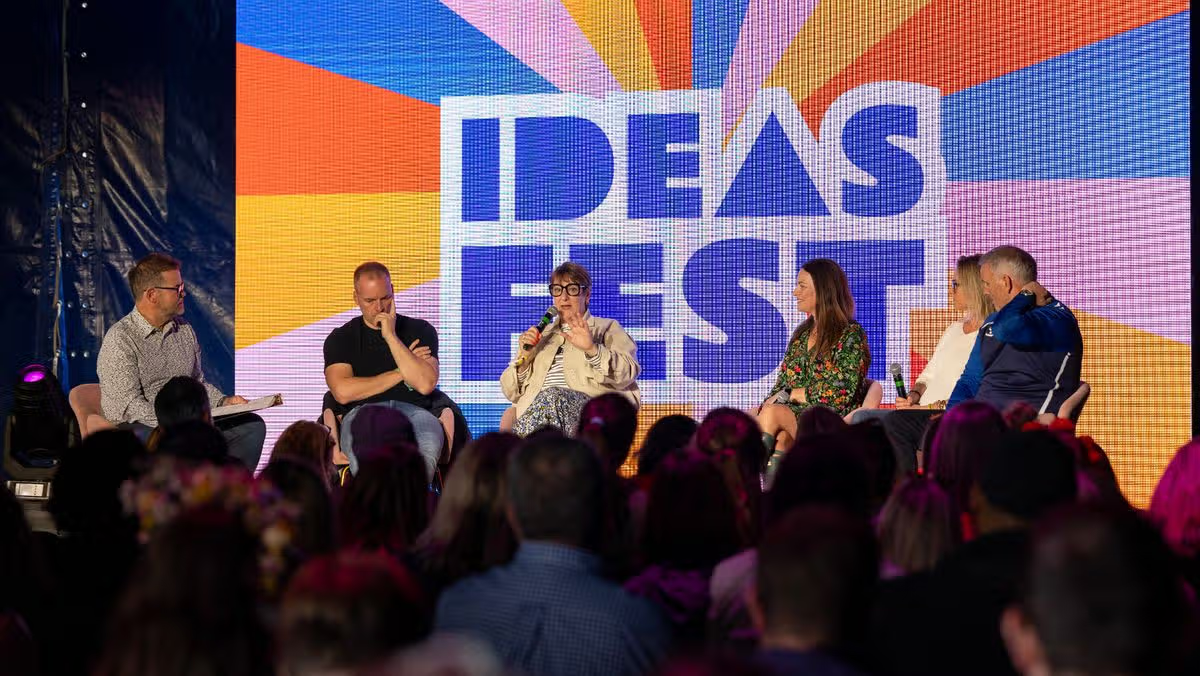
Ideas Fest will again be staged in Hertfordshire next month

Ideas Fest.
Over the years, I have attended more business conferences than I care to remember. Many follow the same formula, with a windowless hotel function room, a succession of PowerPoint presentations, a buffet lunch, and people wearing name badges, all while trying to work out who might be useful to them.
Good conferences can inform, challenge and connect, but entrepreneurship is not a conventional activity, and entrepreneurs rarely flourish in conventional environments. That is why, five years ago, we created Ideas Fest, which will take place in September at the iconic Champneys Resort in Tring, Hertfordshire.

Inspired by our love of festivals such as Green Man, we set out to move away from the usual conference style and create an event in a field where founders could hear honest stories, make unexpected connections, test ideas, and spend time with people who understand the exhilaration and occasional loneliness of building a business.
This year, six thousand people will gather for two days of talks, conversations, workshops and informal meetings, and more than 500 speakers will participate across stages and tents covering start-up, growth, investment, leadership, and exits.
To keep the festival spirit alive, there will be food traders, bars, a wellness area, and music from Rick Parfitt Junior and the iconic DJ Fat Tony.
Alongside established entrepreneurs, there will be people at the beginning of their journey, investors, advisers and others who support growing firms. Yet the numbers matter less than the purpose, and in my experience working with entrepreneurs over the last thirty years, entrepreneurship is often presented as a largely technical process: write a business plan, identify a market, secure finance, and assemble a team.
Of course, all those things matter, but anyone who has built a company knows the real journey is far messier, as founders often face decisions with no textbook answer. They experience self-doubt, setbacks and periods when they must persuade others to believe in something that may exist only as a possibility.
Business support can help, but it cannot always provide the confidence that comes from meeting someone who has faced the same problem and found a way through it. That is where entrepreneurial communities matter, and at Ideas Fest, the most valuable conversation may happen on a stage, over coffee or while two founders walk between sessions.
Someone may meet their next customer, investor, mentor, or collaborator queuing for the toilet (yes, that did happen last year!) while others may hear the one piece of advice that stops them from giving up. In other words, this is not networking in its most transactional sense but about creating the conditions in which relationships develop naturally and useful collisions can occur.
There is also an important role for honesty, as too much of the narrative around entrepreneurship focuses on success, such as the funding round, the rapid growth, or the eventual sale and what is often omitted is the uncertainty behind those achievements.
Entrepreneurs benefit from hearing not only what worked but also what failed; not only how much money was raised but also how close a business came to running out of funds; and not only the successful exit but also the personal sacrifices made along the way. Those candid conversations across the stages at Ideas Fest make entrepreneurship more human and help founders understand that difficulty is not evidence that they do not belong.
Indeed, Ideas Fest is deliberately designed to encourage what we call “real talk”, and speakers are asked to share lessons rather than deliver polished corporate presentations. As a result, the best contributions are often those in which an entrepreneur explains a mistake they would never repeat or admits they did not always have the confidence others assumed they had.
The event also provides a platform for ambition from across the UK. Through our Start Up Awards and the Fast Growth Index, we encounter thousands of remarkable businesses each year. Many create jobs, develop new products, and transform their communities without receiving the attention they deserve, and bringing founders together from every part of the nation matters because ambition is contagious.
When an entrepreneur from Wales meets someone growing a company in Scotland, Northern Ireland, the Midlands, or the North of England, they often discover they share challenges and that their potential market is larger than they imagined.
This is particularly important for Wales, as we have no shortage of entrepreneurial talent, yet too many founders remain disconnected from the networks, finance and opportunities that could help them grow. If we want to build a more productive economy, we must help ambitious Welsh businesses build relationships beyond their immediate geography while maintaining strong roots in their communities.
Nor should events such as Ideas Fest be judged solely by what happens over two days, as their real value lies in what follows, such as the introduction that becomes an investment, the conversation that becomes a partnership, the idea that becomes a new product, or the renewed confidence that enables a founder to make one more attempt.
Economic development sometimes tends to assume that entrepreneurship can be manufactured through programmes and processes. Government has a crucial role in creating the right conditions, providing appropriate support, and removing barriers, but successful ecosystems are ultimately built around people, trust and relationships, and that is what Ideas Fest is trying to achieve.
It’s certainly a celebration of entrepreneurs, but it is also a practical two days designed to give founders access to knowledge, networks, inspiration, and, perhaps most importantly, one another.
Entrepreneurs build businesses, create employment, and bring new ideas into the economy, yet they also need somewhere to learn, connect, speak honestly, and feel part of something larger than the company they are building.
That is why we created Ideas Fest and why I believe its greatest contribution will not be measured by the size of its audience, but by the businesses, friendships and opportunities that emerge long after everyone has gone home.






















































You must be logged in to post a comment Login