

Business
Fifth Third Bancorp: Wait For A Cooldown To Buy Stock (NYSE:FITB)



The Investment Doctor is a financial writer, highlighting European small-caps with a 5-7 year investment horizon. He strongly believes a portfolio should consist of a mixture of dividend and growth stocks.
He is the leader of the investment group European Small Cap Ideas which offers exclusive access to actionable research on appealing Europe-focused investment opportunities not found elsewhere. The a focus is on high-quality ideas in the small-cap space, with emphasis on capital gains and dividend income for continuous cash flow. Features include: two model portfolios – the European Small Cap Ideas portfolio and the European REIT Portfolio, weekly updates, educational content to learn more about the European investing opportunities, and an active chat room to discuss the latest developments of the portfolio holdings. Learn more.
Analyst’s Disclosure: I/we have no stock, option or similar derivative position in any of the companies mentioned, and no plans to initiate any such positions within the next 72 hours. I wrote this article myself, and it expresses my own opinions. I am not receiving compensation for it (other than from Seeking Alpha). I have no business relationship with any company whose stock is mentioned in this article.
Seeking Alpha’s Disclosure: Past performance is no guarantee of future results. No recommendation or advice is being given as to whether any investment is suitable for a particular investor. Any views or opinions expressed above may not reflect those of Seeking Alpha as a whole. Seeking Alpha is not a licensed securities dealer, broker or US investment adviser or investment bank. Our analysts are third party authors that include both professional investors and individual investors who may not be licensed or certified by any institute or regulatory body.

Business
Veradermics, Incorporated (MANE) Discusses Positive Female Results From Phase II Study of VDPHL01 for Pattern Hair Loss – Slideshow

Veradermics, Incorporated (MANE) Discusses Positive Female Results From Phase II Study of VDPHL01 for Pattern Hair Loss – Slideshow
Cuban dissident artist arrives in US after five years in prison, Rubio says
FDA says sample of iceberg lettuce supplied by Taylor Farms tested positive for cyclospora
KOSPI earnings are better. So why are stocks falling harder?
Samsung Electronics America to reduce workforce by 739 in New Jersey, US WARN notice says

“AWS Certified AI Practitioner Early Adopter”I am a DevOps Engineer for a major, wholly owned subsidiary of a large-cap Fortune 500. I have been the primary driver of Anthropic-based tooling in our company’s division, and have successfully pushed for the division-wide integration of tools like Claude Code via AWS Bedrock. I am currently spearheading the implementation of AI-infrastructure in our division.I am a true subject-matter expert on the actual buildout, deployment, and maintenance of AI tools and applications. I have increasingly deep knowledge on the science behind generative AI systems as a result of first-hand experience with machine learning algorithms, model training, and model deployment.I contribute to Seeking Alpha as an outlet to share my AI and machine learning insights through an investment-focused lens.Closely associated with LL InsightsPer TipRanks (6/26/25) – 2 Year Timeframe#716 out of 31,463 Financial Bloggers #1,222 out of 41,143 experts
Analyst’s Disclosure: I/we have no stock, option or similar derivative position in any of the companies mentioned, and no plans to initiate any such positions within the next 72 hours. I wrote this article myself, and it expresses my own opinions. I am not receiving compensation for it (other than from Seeking Alpha). I have no business relationship with any company whose stock is mentioned in this article.
Seeking Alpha’s Disclosure: Past performance is no guarantee of future results. No recommendation or advice is being given as to whether any investment is suitable for a particular investor. Any views or opinions expressed above may not reflect those of Seeking Alpha as a whole. Seeking Alpha is not a licensed securities dealer, broker or US investment adviser or investment bank. Our analysts are third party authors that include both professional investors and individual investors who may not be licensed or certified by any institute or regulatory body.
Business
Thick Wildfire Smoke Chokes Nation’s Capital and Mid-Atlantic as Severe Storms Threaten Region Saturday
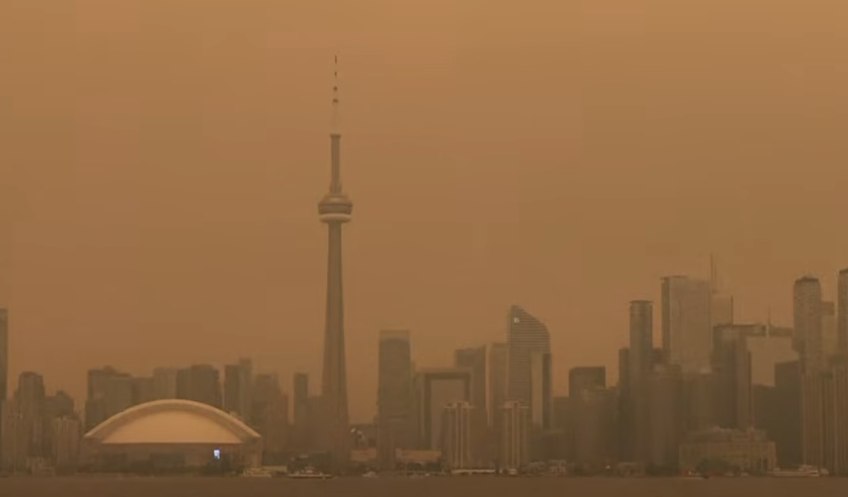
Dense wildfire smoke continued blanketing the Mid-Atlantic region early Saturday, pushing Washington, D.C., to the brink of becoming the world’s most polluted major city, as forecasters warned the smoky conditions would soon collide with a separate threat of severe thunderstorms moving through the region.
Air quality readings in Washington registered at 175 between 4 and 5 a.m. Saturday, placing the city in the unhealthy to very unhealthy range for the 30th consecutive hour. As of 5 a.m., the nation’s capital ranked as the second most polluted major city in the world, trailing only Toronto, according to tracking data cited by meteorologist Ben Noll.
The smoke originated from massive wildfires burning across Canada, which have spread across large portions of the United States in recent days. Forecasters expected the dense smoke to linger across the Mid-Atlantic through Saturday morning before gradually clearing during the afternoon, as southerly winds ahead of an approaching storm system began pushing the smoke back toward the Northeast and New England. Cities including Philadelphia, New York and Pittsburgh all reported unhealthy or very unhealthy air quality conditions early Saturday, with forecasters projecting the smoke would reach Boston by late morning.
Complicating the situation further, strong to severe thunderstorms are expected to develop across the region beginning Saturday afternoon. The National Oceanic and Atmospheric Administration’s Storm Prediction Center issued an enhanced risk rating, a Level 3 out of 5, covering a stretch of the country that includes Buffalo, Cleveland, Washington, Philadelphia and New York. While damaging winds represent the primary threat from the approaching storms, forecasters also flagged some potential for tornadoes within the risk area.
The combination of smoke and severe weather is expected to create what forecasters described as a double dose of hazardous conditions. Rainfall can initially intensify the smell of wildfire smoke by dragging smoky air down from higher levels of the atmosphere toward the ground, and can also leave a sooty residue coating cars, windows and other outdoor surfaces. Once steadier rain develops, however, it typically begins washing smoke particles out of the air entirely, offering eventual relief even as the storms themselves bring their own risks.
By Saturday night, forecasters expect much of the current smoke plume to have cleared out of the eastern United States, though new plumes are not expected to be far behind. A separate batch of smoke from the same Canadian fires, currently drifting toward Michigan’s Upper Peninsula and northern Wisconsin on Saturday, is forecast to reach Chicago and Detroit sometime between Saturday night and Sunday. That smoke is projected to continue drifting eastward into Sunday, though near-ground concentrations are expected to remain relatively low along the corridor stretching from Washington to New York.
That includes East Rutherford, New Jersey, where the World Cup final is scheduled to kick off Sunday at 3 p.m. Forecasters currently expect largely dry conditions in the area for the match, with smoke concentrations near the ground anticipated to stay comparatively low despite the broader regional smoke event still unfolding through the weekend.
Looking further ahead, changing wind patterns and additional stormy weather expected early next week could help keep the worst of the smoke away from the eastern United States. Several rounds of rain are forecast across the primary wildfire zone in western Ontario in the coming days, a development that should help reduce smoke concentrations at the source and potentially limit the intensity of future smoke plumes reaching the U.S. compared with what the region has experienced this week. Even so, forecasters noted that portions of the current smoke plume may continue drifting as far as Greenland, Iceland and the Azores through early next week, underscoring just how widely this particular smoke event has spread.
The connection between this wildfire season and the broader effects of climate change has drawn attention from researchers tracking Canada’s fire activity. A wildfire analysis posted Friday by climate scientist Zeke Hausfather found that while lightning strikes are responsible for the majority of Canada’s burned forest area, accounting for roughly 71% of the area burned between 1990 and 2023, surges in Canadian wildfire activity have tracked closely alongside rising temperatures.
Hausfather explained that warming plays a direct role in fire risk because warmer air pulls more moisture out of vegetation, drying out trees and grasses and making it easier for fires to both ignite and spread rapidly once started. He noted that the same fuel-drying dynamic has also been linked to a doubling of forest area burned across the western United States. “The biggest fire years are almost universally hotter and drier,” Hausfather wrote.
Hausfather also addressed the role of fire fuel management strategies, commonly known as prescribed burns, in mitigating wildfire risk. While he said such strategies hold real value in areas surrounding populated communities, he argued they offer little practical benefit across the vast, remote boreal forests where much of Canada’s current wildfire activity is concentrated, since those forests have largely never been logged, thinned or actively managed, and instead experience infrequent but high-intensity fires that occur in natural cycles. “You cannot have a fuel-buildup from forest mismanagement in a forest you were never managing,” he said.
Despite the severity of the smoke’s impact on air quality across North America this summer, Hausfather noted that this year’s Canadian fire season currently appears unlikely to surpass the record set in 2023 for total land area burned. Even so, he emphasized that the season has still produced a serious impact on air pollution across the continent, largely because of how weather patterns have directed the smoke toward densely populated areas. “While overall area burned is the climate-linked trend, who breathes the smoke on a given week in July is mostly driven by the weather,” Hausfather said.
With additional smoke plumes expected to continue drifting into the U.S. from Canada’s ongoing fires in the days ahead, meteorologists said they will continue monitoring both the wildfire activity itself and the shifting weather patterns that determine which parts of the country bear the brunt of the resulting smoke on any given day.
Business
Dollarama Recalls Heavenly Spices Garlic Powder Across Canada Over Bacillus Cereus Contamination Risk

Dollarama has recalled a popular garlic powder sold at its stores nationwide across Canada after health officials warned the product may be contaminated with Bacillus cereus, a bacterium capable of causing food poisoning.
The Canadian Food Inspection Agency published the recall notice for Heavenly Spices brand Garlic Powder on Wednesday, July 15, though the recall was formally issued by Dollarama L.P. on July 14. The agency classified the recall as a Class 2 event, its designation for situations involving a moderate risk that consuming the affected food could lead to short-term or non-life-threatening health problems. The recall applies to the product’s 70-gram packaging, which was distributed both in stores and online across the country.
The affected garlic powder can be identified by its universal product code, 6 67888 50634 7, along with a best-before date printed on the packaging as “2029 JAN 30 GP 30ZV PIT.” The CFIA’s recall notice instructed retailers and consumers alike not to use, sell, serve or distribute the product. “Do not use, sell, serve or distribute the affected product,” the agency stated in its notice.
Bacillus cereus is a bacterium widely found in the environment, including in soil, and is a common cause of foodborne illness. According to the U.S. Food and Drug Administration, infection with the bacterium typically causes symptoms including nausea, vomiting, abdominal cramps and watery diarrhea. The bacterium is commonly associated with foods such as meats, stews, gravies, vanilla sauce and cooked rice that has been improperly refrigerated or left sitting at room temperature for extended periods, conditions that can allow the organism to multiply and produce toxins.
Canadian health authorities offered somewhat differing accounts of the illness’s typical duration and severity. The Public Health Agency of Canada has said symptoms can last between six and 24 hours and may include diarrhea, abdominal pain, fever and vomiting, while the British Columbia Centre for Disease Control has described symptoms as generally resolving within a day or two in most cases. Both agencies noted that while most people recover without medical treatment, some cases can be more severe, with the BCCDC specifically flagging that individuals experiencing extreme vomiting or diarrhea should focus on staying hydrated. The Public Health Agency of Canada added that although most cases resolve on their own within one to two days, severe instances can, in rare circumstances, lead to more serious complications or death, with elderly individuals and those with lower stomach acidity facing higher risk.
Dollarama has moved to address the recall directly with customers. A spokesperson for the company told CTV News that customers who purchased the affected garlic powder should throw the product away rather than attempting to return it to a store. The company is offering an alternative form of compensation instead of a standard refund. “Customers can also contact Dollarama Customer Service directly for a $2.00 e-gift card as a replacement,” the spokesperson said. Customers seeking that compensation, or with other questions about the recall, have been directed to contact Dollarama by emailing client@dollarama.com with a photo of the product and its lot number, or by calling the company’s customer service line at 1-888-365-4266, available Monday through Friday from 9 a.m. to 5 p.m. Eastern time.
Members of the public with questions or concerns about the recall more broadly can also reach the Canadian Food Inspection Agency directly, either through its general public inquiries line at 1-613-773-2342, available for both local and international callers, or by emailing information@inspection.gc.ca. The agency’s media relations team can be reached separately at 613-773-6600 or via email at cfia.media.acia@inspection.gc.ca for press-related inquiries.
The garlic powder recall adds to a broader pattern of food safety alerts affecting North American consumers in recent days. Earlier in the week, the FDA announced that General Mills was recalling more than 735,000 packages of Pillsbury bread products over concerns that the items may contain fragments of glass, a separate contamination issue unrelated to the Dollarama garlic powder recall but reflecting a similarly active period for food safety enforcement actions across the industry.
Separately, fresh produce supplier Taylor Farms has been preparing its own recall tied to ingredients connected to a multistate cyclosporiasis outbreak, according to reporting from Bloomberg News. That outbreak, caused by a microscopic parasite rather than a bacterium, has been linked in earlier reporting to shredded iceberg lettuce distributed to select Taco Bell locations in several U.S. states. Taylor Farms has maintained that its own branded salad products are not associated with the reported illnesses, even as the company moves forward with a recall tied to the broader supply chain implicated in the outbreak investigation.
The CFIA has also recently announced a separate, unrelated recall affecting several spice products sold across Canada due to undeclared allergens, adding to what has become an unusually active stretch of food recalls spanning multiple product categories and health concerns in recent weeks.
For now, consumers who purchased the recalled Heavenly Spices Garlic Powder are being urged to check their pantries and discard any affected containers rather than risk consuming a product that may carry Bacillus cereus contamination. Health officials in Canada continue to monitor the situation, and further updates from the CFIA are expected if additional information about the scope of the contamination or any reported illnesses tied to the product becomes available in the coming days. The agency has encouraged members of the public to report any health or safety concerns related to the recalled product directly through its official reporting channels, and has noted that individuals can subscribe to receive email alerts for future recall and food safety notices as they are issued.

Argentina and Spain will meet Sunday in the 2026 World Cup final at New York New Jersey Stadium, a matchup that has drawn comparisons to a Hollywood script given its central storyline: 39-year-old Lionel Messi against 19-year-old Lamine Yamal, two generational left-footed playmakers separated by two decades but connected since the moment Messi was photographed cradling Yamal as an infant in 2007.
Kickoff is scheduled for 3 p.m. Eastern time, with Fox broadcasting the match in English through FoxSports.com and the Fox Sports mobile app, and Telemundo carrying the Spanish-language broadcast, streaming through Peacock. Argentina enters as the reigning World Cup champion looking to become the first team since Brazil in 1958 and 1962 to win back-to-back titles, while Spain arrives as the reigning European champion, unbeaten in its last 14 matches across major tournaments, with 13 wins and a single draw during that stretch.
Messi has been the defining individual force of this tournament for Argentina, leading the Golden Boot race with eight goals and four assists heading into the final. His production has come despite a physical toll that has become increasingly visible as the tournament has progressed; by some tracking estimates, Messi has spent roughly two-thirds of his time on the field walking rather than running, a reflection of both his age and his continued ability to conserve energy for decisive moments. Argentina’s run to the final has leaned heavily on his late-game influence, most recently in Wednesday’s semifinal against England, when Messi set up both of Argentina’s stoppage-time goals to complete a dramatic 2-1 comeback.
Spain’s attack, meanwhile, runs primarily through Yamal, who plays on the right flank within manager Luis de la Fuente’s hybrid 4-2-3-1 setup. Yamal has continued playing a central role for Spain despite managing hamstring issues throughout the tournament’s later stages. He has received significant scoring support from striker Mikel Oyarzabal, who has netted five goals so far this summer, while winger Nico Williams, though limited by knocks of his own, remains a potential factor off the bench.
Spain’s midfield has emerged as arguably the most important unit on the pitch heading into the final. Rodri, the 2024 Ballon d’Or winner, has returned to peak form following a torn ACL and has at times appeared to control matches almost single-handedly through the middle of the park. Fabián Ruiz has stepped into the double pivot alongside Rodri in place of Pedri, a shift that has provided Spain with improved defensive balance without sacrificing its passing rhythm. Substitute Mikel Merino has also proven a decisive weapon off the bench, scoring two late winning goals during Spain’s run through the knockout stage, including box-crashing efforts against Portugal and Belgium.
The historical head-to-head record between Argentina and Spain reflects just how evenly matched the two nations have been over the years. The teams have met 14 times, with each side winning six matches and the remaining two ending level. Sunday’s final will mark the two countries’ first meeting on the World Cup’s biggest stage, though they are scheduled to meet again in a different high-profile setting: the Finalissima, a contest between the reigning European and South American champions, is set for March 27 at Lusail Stadium in Qatar, marking what would be the first-ever meeting between Messi and Yamal specifically, assuming both remain involved with their national teams through that point. Argentina enters that future fixture as the most successful nation in Finalissima history, having won two of the three previous editions, including a 2022 victory over Italy at Wembley Stadium in which Messi provided two assists.
For now, though, all attention centers on Sunday’s World Cup final and what it could mean for both players’ legacies. A win for Argentina would allow Messi to complete an extraordinarily rare feat: winning back-to-back World Cup titles at the tail end of a career already regarded as one of the greatest in the sport’s history, adding to a trophy case that includes eight Ballon d’Or awards. A win for Spain, conversely, would mark a symbolic passing of the torch, with Yamal, not yet 20 years old, potentially claiming his second major international title in as many years, following Spain’s Euro 2024 championship, in which Yamal contributed to a tournament run despite scoring just once himself.
Analysts previewing the match have framed the contest as a clash of styles as much as individual talent. Argentina’s path through this tournament has relied heavily on resilience, having needed extra time or late comebacks in multiple knockout matches, including wins over Cape Verde, Egypt and Switzerland before Wednesday’s dramatic victory over England. Spain, by contrast, has advanced largely through control and composure, dominating possession and limiting opposition chances across its unbeaten run through the tournament, including Tuesday’s 2-0 semifinal win over France in which Spain’s defense largely neutralized a star-studded French attack.
Winning any major international tournament requires a combination of elite talent, sharp coaching, sustained fitness across a demanding schedule and, often, a measure of fortune, according to analysis from Fox Sports previewing the final. Both Argentina and Spain have shown each of those qualities at various points throughout the tournament, setting up what many observers expect to be one of the more tightly contested finals in recent World Cup history.
Whichever side prevails Sunday, the match is expected to draw one of the largest global television audiences in World Cup history, driven in no small part by the Messi-Yamal storyline anchoring the broader team competition. For Messi, it likely represents his final opportunity to add to his World Cup legacy on the sport’s biggest stage. For Yamal, still early in a career already drawing comparisons to some of the game’s greatest players, it offers a chance to announce himself as soccer’s next dominant figure on the same field where his childhood connection to Messi began nearly two decades ago.
Business
United Airlines Down? Service Hit by Nationwide Outage Reports Saturday Morning as Complaints Spike
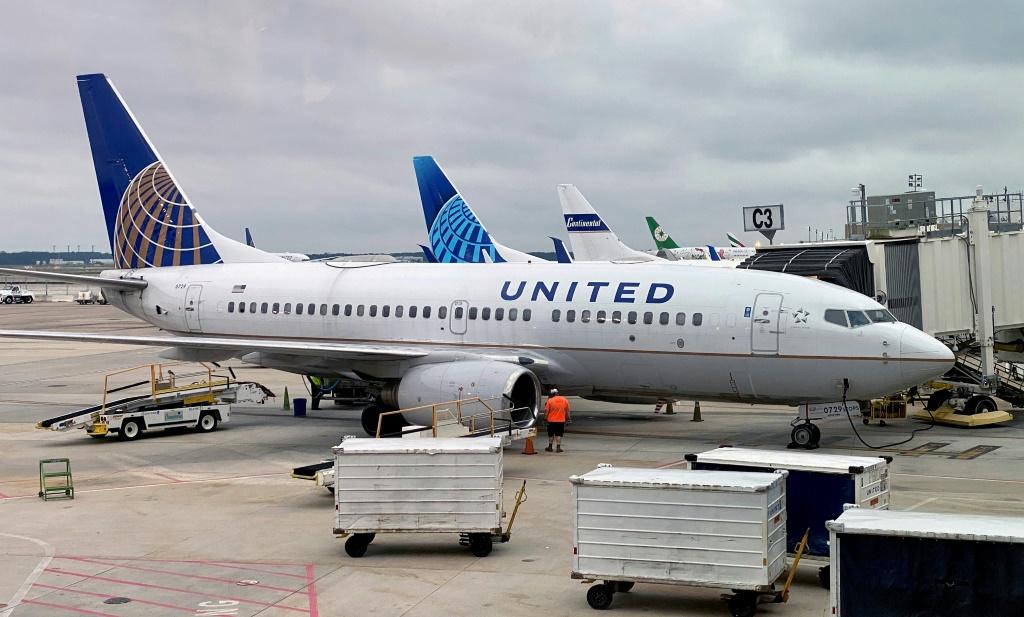
United Airlines customers began reporting widespread problems with the airline’s systems Saturday morning, according to outage-tracking service Downdetector, which noted a spike in user complaints beginning at 8:16 a.m. Eastern time.
Downdetector, a service that aggregates real-time user reports to identify potential service disruptions, flagged the surge in complaints on its social media account, prompting the hashtag #UnitedAirlinesDown to circulate on X as affected travelers shared their experiences. As of Saturday morning, specific details about the cause, scope and expected duration of the disruption had not been confirmed by United Airlines or federal aviation authorities.
United has faced a series of technology-related disruptions in recent years, ranging from brief, planned system maintenance windows to unplanned outages that have grounded flights and stranded passengers across the country. The airline’s core reservation platform, known as the SHARES system, has been at the center of several previous incidents. In one instance earlier this year, United proactively scheduled and publicized an overnight outage of its SHARES booking system as part of what the company described as a controlled restart intended to improve the platform’s long-term functionality and reliability. That planned outage, which ran for roughly two to three hours during low-demand overnight hours, took offline United’s website, mobile app, call centers, airport kiosks, travel agency booking channels and partner airline access, pausing new bookings, ticketing, cancellations, refunds and check-in services during the window, though already-airborne flights were allowed to continue operating.
Unplanned outages have proven more disruptive for United in the past, given their unpredictable timing and broader operational impact. In one prior incident, an hours-long computer system problem caused delays and cancellations for United flights globally, with passengers traveling late at night and into the early morning hours reporting delays as long as six hours before the airline confirmed the issue had been resolved. Flight-tracking services at the time recorded roughly 20 United flights delayed and seven canceled worldwide during the disruption. In a separate, earlier incident, a two-hour outage in one of United’s flight operations systems delayed roughly 250 mainline United flights, with the airline later saying it had corrected the underlying error and restored systemwide on-time performance to around 80% by that afternoon. United offered flexible flight-change and refund options to affected customers following that disruption.
Technology outages affecting major U.S. airlines have drawn increased scrutiny from federal regulators in recent years, particularly following high-profile disruptions across the industry. In one widely covered incident affecting a rival carrier, a “technology issue” prompted a ground stop at major hub airports, delaying travelers at multiple locations before the airline confirmed the issue had been resolved later that evening. Following that episode, the U.S. Transportation Secretary said he had been briefed directly by the airline’s chief executive on the situation, noting publicly that the issue was specific to the airline’s own internal operations and unrelated to the broader national air traffic control system. The Transportation Department and the Federal Aviation Administration both offered support to help the airline clear its resulting flight backlog, with the FAA saying it remained in close contact with the carrier’s operations team throughout the disruption.
United has previously described its approach to handling technology disruptions as centered on transparency with both passengers and employees. Steve Restivo, the airline’s vice president of global corporate communications, has said the carrier learned early on, particularly during the coronavirus pandemic, that the best course of action during operational disruptions was to remain as direct and open with employees and customers as possible, regardless of whether the underlying news was positive or negative.
Airlines more broadly have faced significant technology-driven disruptions in recent years beyond United specifically. A separate major carrier experienced a multi-day operational meltdown in the summer of 2024 following a global software outage tied to a third-party cybersecurity vendor, a disruption that led to the cancellation of more than 7,000 flights over five days and affected more than 1.3 million passengers. That incident drew a formal investigation from the Department of Transportation, which later classified the resulting delays and cancellations as a “controllable” event, placing responsibility for the disruption on the airline itself rather than treating it purely as an unavoidable external event.
As of Saturday morning, outage-tracking services offered a mixed picture of United’s system status heading into the reported disruption, with some monitoring platforms showing no significant issues in the days immediately prior to Saturday’s spike in complaints. That pattern is consistent with how sudden, unplanned technology outages typically develop, often emerging with little or no advance warning before affected systems are restored, sometimes within hours.
Passengers experiencing issues with United flights, bookings or check-in are typically advised to monitor the airline’s official channels, including its website and mobile app status updates, along with its social media accounts, for the most current information during an active disruption. United has historically offered flexible rebooking or refund options to customers affected by significant system outages, though the specific terms of any such accommodations depend on the scope and cause of each individual incident.
Given the early stage of Saturday morning’s reported disruption, the full scope of affected flights, airports and services remained unclear. United Airlines had not issued a public statement addressing the Downdetector reports as of the time of this article’s publication, and it remained uncertain whether the issue was confined to digital booking and account-management systems or extended to broader operational impacts such as flight delays, cancellations or ground stops at specific airports. Travelers with upcoming United flights were encouraged to check directly with the airline for the latest updates as the situation continued to develop.

Kyla Pratt Thought Disney Would Fire Her From Iconic Role

Money Will Come to You Unexpectedly | Afrobeats Affirmation Music for Wealth, Prosperity & Abundance

Ross Kemp reveals his mum Jean has been rushed to hospital as he tells fans he’s not watching England’s third-place play-off against France


-
 NewsBeat2 days ago
London Mayor Sadiq Khan handed a peerage by Keir Starmer alongside 15 other Labour figures… just days before the PM leaves No10
-

 Fashion1 day ago
Weekend Open Thread – Corporette.com
-

 Politics13 hours ago
The House | The City of London can help the new chancellor deliver growth in every postcode
-

 Crypto World3 days ago
CFTC blocks Kalshi from unwinding Michigan trades after court order
-

 Politics3 days ago
Young campaigners urge incoming PM to act on outdoor junk food ads
-

 Business3 days ago
Nvidia Stock Slips After Big Tuesday Rally as Huang Confirms Vera Rubin Chip Is Now in Production Today
-

 Crypto World12 hours ago
Ripple Payments Joins MiCA With 14 Firms, Does It Mean Anything For XRP?
-
 Entertainment3 days ago
Disney’s Most Ambitious Failed Star Wars Attraction Is Coming to SDCC
-

 Crypto World1 day ago
Ripple wins EU-wide access as ESMA adds it to MiCA register
-

 Business3 days ago
Palantir Shares Rise After Expanded Nvidia Partnership and Fresh Analyst Upgrades Ahead of Earnings Day
-

 Crypto World2 days ago
Injective Submits SEC Transfer-Agent Registration to Onchain Ownership Records
-

 Tech5 days ago
Get Your ESP32 Sunny Side Up With This Solar Dev Board
-

 News Videos4 days ago
XRP BOMBSHELL… XRP OMBOARDED FOR TRANSACTIONS!!!
-

 Tech4 days ago
Dark Secrets Emerge When Jailbreaking LLMs
-

 NewsBeat1 day ago
Registration is now open for March for Men with Kev 2026
-
 Sports3 days ago
New Cornerback Enters Vikings Trade Rumor Mill
-

 News Videos2 days ago
Money | Class 12 Economics | CBSE Board Exam 2026-27
-

 Business2 days ago
Banco Bilbao Vizcaya Argentaria, S.A. (BBVA) Discusses Global Macro Environment and Economic Outlook for Core Markets Transcript
-
 Crypto World2 days ago
Claude Fable 5 Slips to Second in AI Coding Leaderboard
-
 Tech5 days ago
Cloudflare Precursor Watches Your Mouse and Keyboard To Decide If You Are Human
You must be logged in to post a comment Login