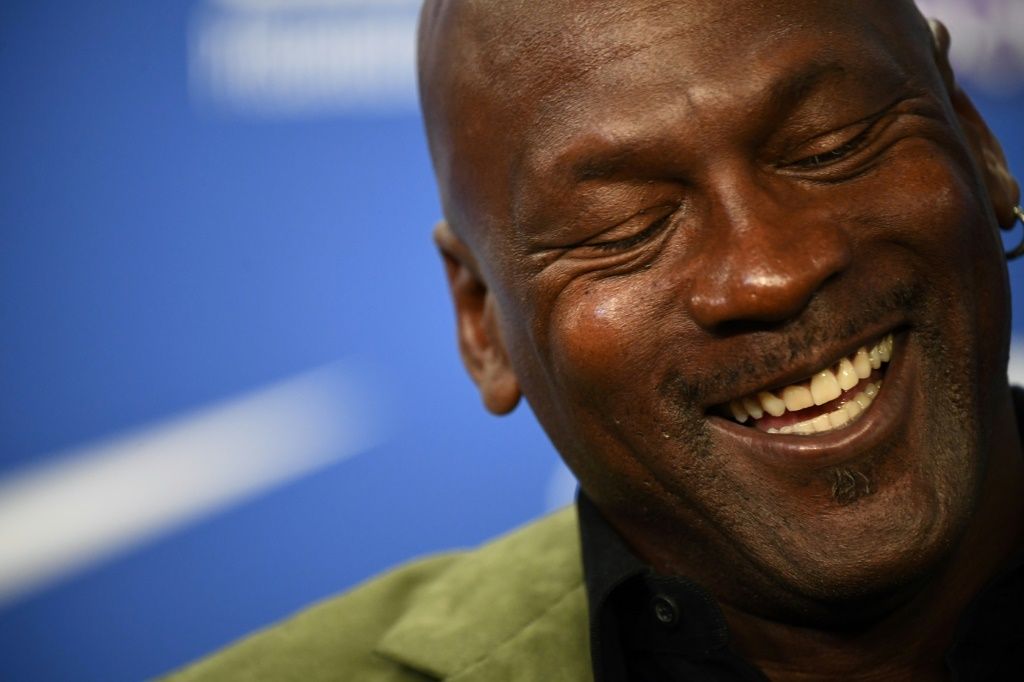
Michael Jordan, the NBA legend whose relentless drive produced six championships and a legacy of unmatched competitiveness, has carried that same “competitive gene” into NASCAR ownership. Through 23XI Racing and a high-stakes antitrust lawsuit against the sport’s governing body, Jordan has pushed for structural reforms while his team delivers dominant early results in the 2026 Cup Series season.
AFP / FRANCK FIFE
In a recent interview with CBS’ Gayle King, Jordan made clear the lawsuit was never just business. “I was all in. I was aggressively gonna win,” he said, adding that he was prepared to risk being “kicked out of the sport” if it meant waking people up to what he viewed as unfair practices. “I became a competitor all over again.”
Jordan co-owns 23XI Racing with driver Denny Hamlin. The team entered the spotlight when it, along with Front Row Motorsports, refused to sign NASCAR’s 2024-2025 charter agreement, calling it a “take it or leave it” deal that favored the France family-controlled organization. The resulting federal antitrust lawsuit accused NASCAR of monopolistic practices that limited team equity and revenue sharing.
The case reached trial in December 2025 in Charlotte. After eight days of testimony — including Jordan taking the stand and describing himself as unafraid to challenge the sport’s power structure — the parties settled on Dec. 11. The agreement delivered permanent “evergreen” charters for all teams, improved revenue distribution, and a stronger voice for team owners in future decisions. NASCAR avoided a jury verdict on monopoly claims, while 23XI and Front Row secured the stability they sought.
Jordan framed the outcome as progress for the entire sport. In a joint statement, he said the lawsuit was “about making sure our sport evolves in a way that supports everyone: teams, drivers, partners, employees and fans.” He emphasized building equity and investing in the future so NASCAR can grow for generations.
Advertisement
The settlement cleared the way for a focused 2026 season. 23XI Racing has responded with explosive on-track performance that has turned heads across the garage. Driver Tyler Reddick, in the No. 45 Toyota, opened the year with back-to-back victories at the Daytona 500 and Atlanta Motor Speedway. He added wins at Circuit of the Americas and Darlington Raceway, giving the team four victories in the first six races of 2026 — a historic pace in the Next Gen car era.
Reddick’s Daytona triumph marked 23XI’s first Daytona 500 win. Jordan, who attended the race, reacted with visible emotion, later saying it “feels like I won a championship” and praising Reddick’s “clutch gene” under pressure. Teammate Bubba Wallace, in the No. 23 car, has posted consistent top-15 finishes and sits near the top of the standings alongside Reddick.
The team’s third full-time entry, the No. 35 driven by Riley Herbst, and development driver Corey Heim’s expanded Cup schedule add depth. Jordan has been a visible presence at races, celebrating wins in Victory Lane and underscoring his hands-on approach. Brand momentum has followed: Jordan Brand has deepened its involvement, outfitting pit crews with specialized shoes and exploring retail collaborations, while sponsors show growing interest.
Jordan’s entry into NASCAR ownership in 2020 was rooted in personal passion. A longtime fan influenced by his father, he saw an opportunity to bring his competitive ethos to a sport he loved. Early on, he spoke of wanting to win races and championships while helping diversify the fan base and garage. His partnership with Hamlin combined basketball royalty with NASCAR expertise.
Advertisement
The charter dispute tested that commitment. Jordan testified that he felt compelled to act when he perceived the system limited teams’ ability to build sustainable value. “Someone had to step forward,” he told the court. “I wasn’t afraid.” He described learning the business side of NASCAR and becoming dissatisfied with aspects that he believed hindered growth and fairness.
Critics and supporters alike noted the lawsuit’s significance. Without Jordan’s resources and willingness to confront the France family — NASCAR’s controlling owners — the challenge might never have reached this point. Analysts described the settlement as a win for teams seeking permanence and a pragmatic outcome that allowed the sport to move forward without prolonged disruption.
NASCAR executives have acknowledged the need for evolution. The new charter framework provides long-term stability that many owners had sought for years. With the legal chapter closed, attention has shifted to competition and growing the sport’s audience. Jordan’s high profile and 23XI’s early success have generated fresh buzz, potentially attracting younger fans and corporate partners.
On the track, Reddick’s dominance has drawn praise from veterans like Kevin Harvick, who credited 23XI with having the fastest cars in the early going. The team has adapted well to NASCAR’s 2026 technical package adjustments, showing strength on superspeedways, intermediates, road courses and now traditional short tracks like Darlington.
Advertisement
Jordan has repeatedly credited Hamlin as the “mastermind” behind operational success while emphasizing team-wide effort. He has also highlighted the importance of creating an environment where drivers and crew can thrive. Wallace, one of NASCAR’s most visible Black drivers, has spoken about the platform 23XI provides for broader representation.
Beyond racing, Jordan’s involvement continues to blend his iconic brand with motorsports. Speculation persists about potential Air Jordan-themed collaborations or expanded merchandising. His presence at races — often in team gear and engaging with fans — reinforces authenticity rather than celebrity detachment.
The 2026 season remains young, but 23XI’s four wins in six races have already rewritten expectations. Reddick holds a substantial points lead, positioning the team as a championship contender. Jordan has tempered expectations publicly while embracing the momentum, echoing his famous “Winning. That’s what it’s about!” mindset from basketball days.
Industry observers say Jordan’s willingness to fight for change, even at personal and financial risk, has left a lasting mark. The permanent charter system and enhanced team equity represent tangible shifts that could strengthen NASCAR’s business model long-term. At the same time, his team’s on-track results demonstrate that competitive excellence and advocacy can coexist.
Advertisement
Jordan, now in his 60s, shows no signs of diminishing intensity. Whether celebrating a Daytona 500 victory or reflecting on courtroom battles, he approaches NASCAR with the same fire that defined his playing career. “I love that competitive juice,” he has said of drivers and teammates who share his drive.
As the Cup Series progresses through 2026, all eyes remain on 23XI Racing and its high-profile owner. Jordan’s dual legacy — as a champion who transformed basketball and now as an owner fighting to evolve stock car racing — continues to unfold. For a sport historically rooted in Southern tradition, his influence has injected new energy, broader appeal and a demand for fairness that resonates beyond the garage.
With permanent charters secured and victories accumulating, Michael Jordan’s competitive gene is proving as potent on the NASCAR circuit as it was on the hardwood. The question now is how far that drive — and the changes it helped spark — will carry both his team and the sport into the future.
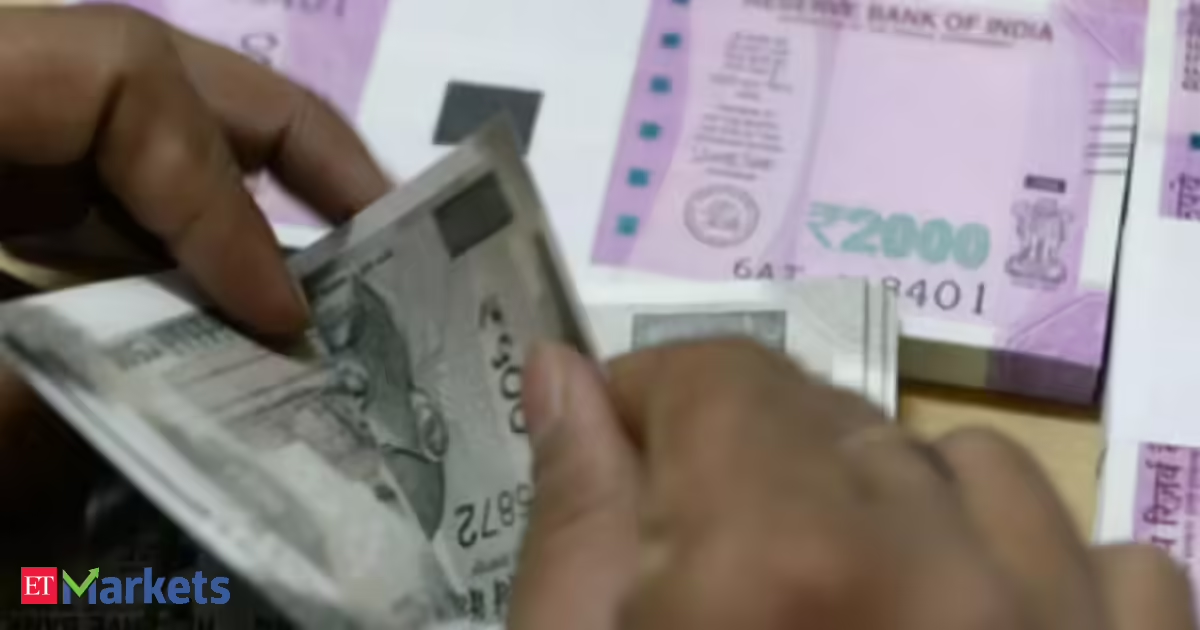
Mumbai: The rupee on Monday slumped to breach the psychologically crucial barrier of 95/$, upending market expectations of a stronger year-end showing, as it finished FY26 by retreating the most in 14 years – nearly 11%.
The last month, coinciding with the Iran war, was particularly brutal and accounted for a 4% decline. The currency, which touched an all-time low of 95.21/$, had briefly advanced to 93.59/$ in the early hours, its strongest level on Monday. The trading amplitude for the unit was one of the widest Monday.
Intervention from the Reserve Bank of India (RBI) in the last 15 minutes of trading lifted the local currency to close at 94.83/$ on the last trading day of the year. It closed at 94.81/$ on Friday.
The rupee was widely expected to strengthen on Monday.
Advertisement
Agencies
Rupee Seen Staying at 94-95 per Dollar
Live Events
This was following Friday’s central bank directives to curb lenders’ open positions in FX to $100 million. However, high dollar demand from oil companies, importers and hedge funds caused the rupee to retrace its steps and trade at record lows, traders said. “The curbs by RBI created an arbitrage between NDF and onshore rates. With simultaneous buying in the NDF market and selling in the domestic market, along with year-end dollar demand from oil companies and corporates, the rupee came under pressure,” said Anil Bhansali, head of treasury, Finrex Treasury Advisors. The rupee is expected to remain between 94/$ and 95/$ on April 2, when the market opens after a 2-day holiday. Currency markets are closed on March 31, April 1, and April 3, making this a short trading week.
The currency opened at 93.59/$ on Monday and depreciated continuously till about 3:15 PM to a low of 95.22/$. At these levels, dollar sales by the RBI helped trim losses, allowing the rupee to close slightly stronger.
“Push for dollars from oil companies, importers, hedge funds and corporates was very high due to sharp rupee appreciation in the morning,” said Kunal Sodhani, head of treasury at Shinhan Bank India.
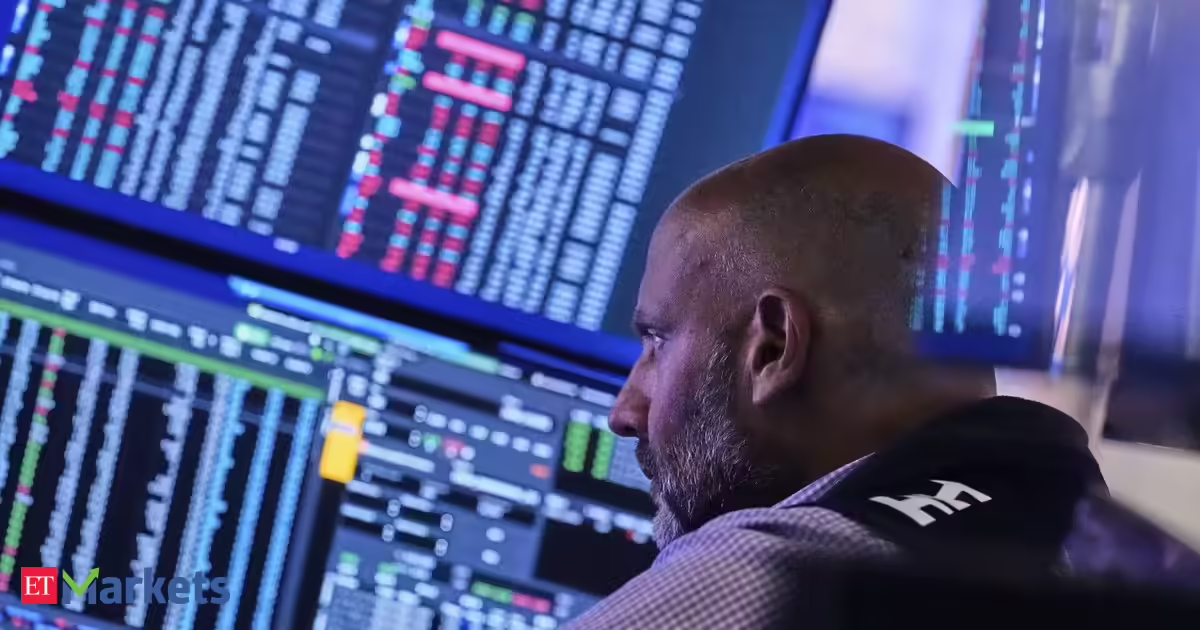
U.S. stocks ended mostly lower on Monday as U.S. President Donald Trump’s new warning to Tehran and a widening of the Middle East war offset optimism over his comments on U.S. discussions with Iran.
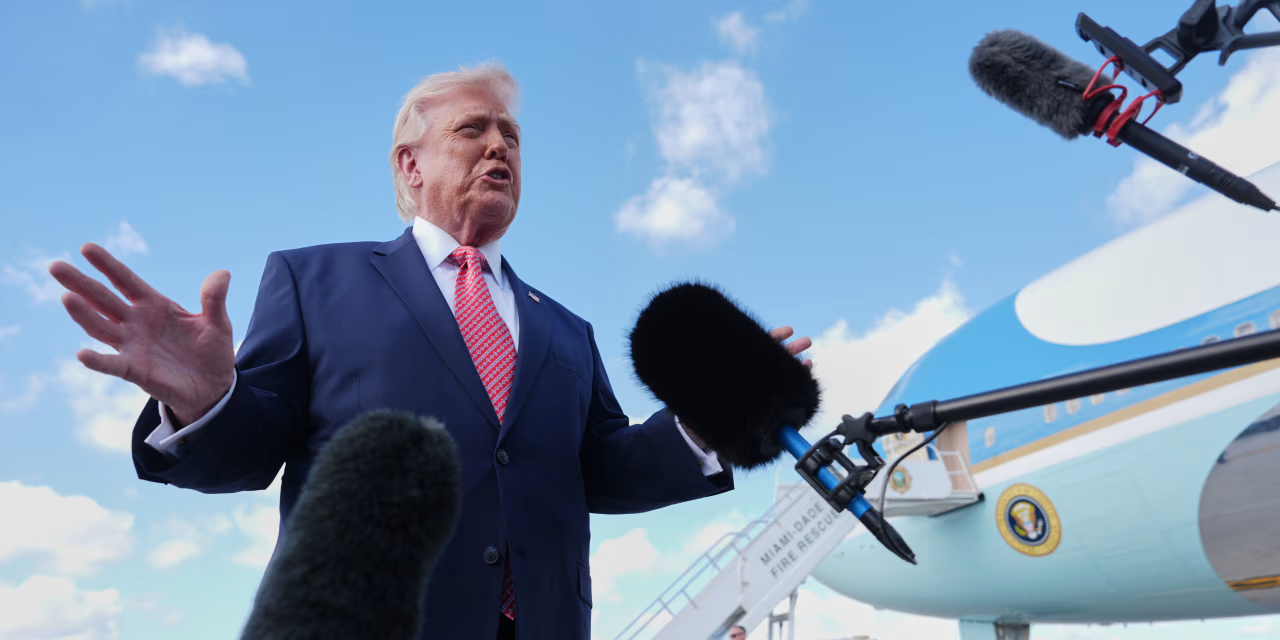
Trump said the U.S. was in serious discussions with a “more reasonable regime” to end the war, but repeated his threat to open the Strait of Hormuz or risk U.S. attacks on Iranian oil wells and power plants. Iran described U.S. peace proposals as unrealistic.
Investors have been focused on how oil prices will impact the global economy after they shot up since the start of the war.
“The administration continues to send mixed messages,” said Rick Meckler, partner at Cherry Lane Investments, a family investment office in New Vernon, New Jersey.
Advertisement
“When the messages seem good, to the extent they are believed, it helps the market. If something they say implies a more aggressive approach, the market sells off.”
Live Events
At the same time the conflict has been escalating. Yemen’s Iran-backed Houthi militia entered the war over the weekend. All three of the major indexes started the day higher after logging sharp declines in the previous session. Since the war started, the Dow, the Nasdaq and the small-cap Russell 2000 have all confirmed correction territory, ending 10% lower from their record-high closes. According to preliminary data, the S&P 500 lost 25.52 points, or 0.40%, to end at 6,343.33 points, while the Nasdaq Composite lost 153.16 points, or 0.73%, to 20,795.20. The Dow Jones Industrial Average rose 53.27 points, or 0.12%, to 45,219.91. Comments from Federal Reserve Chair Jerome Powell gave some support to stocks. Powell said longer-term inflation expectations appear to be holding despite the current energy shock, and the Fed does not yet need to make a decision on how to react to the latest troubles. Both U.S. crude oil and Brent settled higher.
Money market participants have priced out any easing from the Federal Reserve this year, compared with two cuts expected before the war began, per the CME Group’s FedWatch Tool. The S&P 500 energy index was down slightly and technology stocks were among the biggest drag on the S&P 500. On the flip side, the financial index gained after the U.S. Department of Labor issued long-awaited guidelines intended to clarify how trustees can add alternative assets to 401(k) retirement plans.
Shares of asset managers climbed with Blackstone and KKR both higher.
‘Fox Across America’ radio host Jimmy Failla says there’s not enough ‘shame’ depending on cell phones on ‘Kennedy.’
A Chick-fil-A restaurant is offering families free ice cream if they put away their phones for their entire meal.
Complex, an account on X covering culture, posted a photo Sunday showing a sign advertising that the Chick-fil-A Towson Place location has an incentive for families to be phone-free during meals.
Advertisement
“Introducing our Chick-fil-A® Cell Phone Coop Challenge,” the sign read.
Teens using their phones. (Matt Cardy / Getty Images)
“Ask a Team Member for a coop, place all phones in the coop, and enjoy your meal together,” the message continued. “After you finished let a Team Member know and everyone at the table will receive a Icedream® Cone as a reward.”
“Grab a coop and take the challenge,” it read.
Advertisement
The Chick-fil-A restaurant in Towson Place, Maryland, also advertised the challenge in a recent Facebook post, writing, “Take the Dine-in Cell Phone Coop Challenge at Chick-fil-A Towson Place. Ask a Team Member for a coop, place all phones in the coop, and enjoy your meal together without distractions. When your table finishes, let a Team Member know and everyone will receive an Icedream Cone as a reward. Are you up for the challenge?”
If families stay off their phones during their meal, they will receive an Icedream® Cone as a reward. ( Felix Hörhager/picture alliance via Getty Images)
A 2023 study found that 68% of households have a person using their phone during a meal with others. It also found that 65% of respondents do not like it, and 42% feel using phones during meals is rude.
Chick-fil-A did not immediately respond to a request for comment from Fox News Digital.
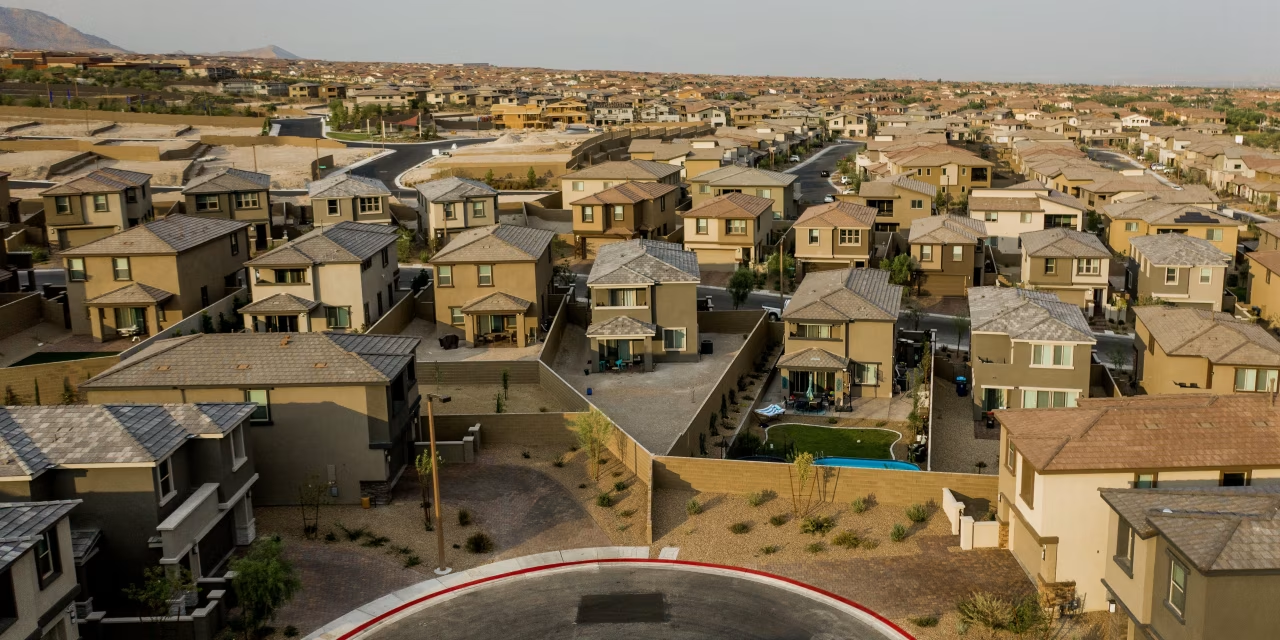
For more than a decade, Japanese home builders have been tiptoeing into the U.S. housing market with small, discreet acquisitions of private American construction companies. Their quiet era is over.
Japanese builders have announced or closed acquisitions of 23 U.S. single-family home builders since 2020, more than double the number from 2013 to 2019. That doesn’t include the multifamily developers and construction-supply companies they have also bought. By some estimates, Japanese builders are now set to own about 6% of the U.S. home-construction market.
The Trump administration proposed a regulation on Monday that is intended to open 401(k)s and similar retirement plans to private equity and private credit.
It is a victory for the Wall Street firms that have lobbied to get these higher-cost alternative investments into the $14.2 trillion 401(k) market. But it comes at an inopportune time for the industry, as investors pull money from some private-credit funds.
Payments firm to reorganise into four business units
Alistair Houghton Editor, Business Live and Anna Wise Press Association Business Reporter
15:52, 30 Mar 2026Updated 15:54, 30 Mar 2026
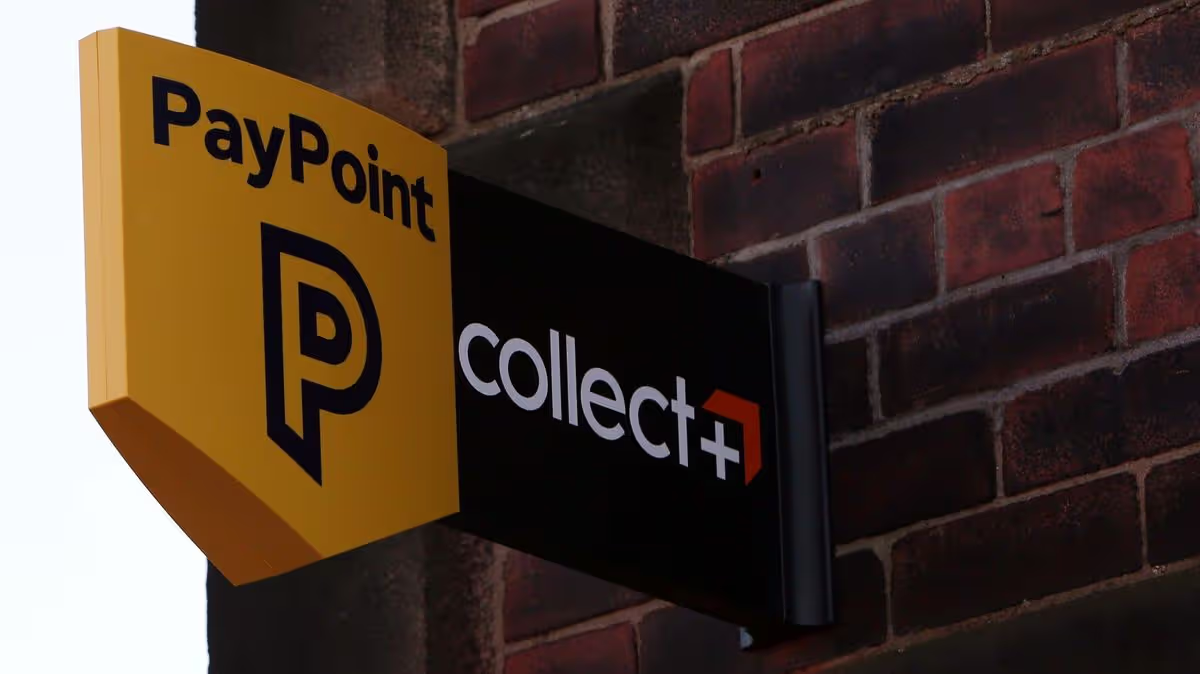
The PayPoint sign can be found across the UK(Image: Newcastle Chronicle)
Payment solutions provider PayPoint has revealed a restructuring plan aimed at cutting costs and attracting more customers to use its services in shops.
It will result in the company being restructured into four divisions, encompassing its network services, merchant services, digital payments and open banking, and its Love2shop brand.
Advertisement
PayPoint operates a retail network of over 30,000 convenience stores, offering community services such as cash withdrawals and deposits, ATMs, cash bill payments, energy top-ups and vouchers. It also runs Collect+ and Royal Mail Shops, enabling parcels to be collected and returned at thousands of local outlets.
The company has not disclosed cost-cutting targets or specified whether there will be any impact on its workforce, which numbered around 940 employees this time last year. However, it said the reorganisation will create cost savings and could potentially result in increased dividends for shareholders.
As part of the changes, PayPoint stated it is concentrating on boosting consumer footfall and enhancing sales from its services across retail partners. The overhaul will also entail a significant “reset” of the structure of its merchant services division, which collaborates with over 30,000 UK SMEs (small and medium-sized enterprises) to provide payment services in their shops.
Meanwhile, PayPoint plans to expand the Love2shop brand, which provides digital and physical gift cards. That division, based in Liverpool’s landmark 20 Chapel Street building, is set to bring in £53.2m in revenue this financial year.
Advertisement
The group said: “The reorganisation will enable an improved focus on new business growth and on maximising opportunities across Love2shop’s distribution channels. Continued investment in our technology platform, ongoing product enhancement and leveraging AI to improve marketing insight will strengthen our go-to-market strategy and support accelerated new business growth across Love2shop Business, the expansion of our prepaid savings proposition and growth of our consumer channels, including through our Incomm Payments partnership. There also remain significant opportunities to integrate Love2shop more efficiently across the wider PayPoint Group and client base.”
PayPoint acquired Love2Shop when it took over Merseyside Christmas vouchers firm Appreciate Group in an £83m deal in 2023. That business, formerly known as Park Group, was founded by former Everton FC and Tranmere Rovers owner Peter Johnson and was originally best known for its Christmas hamper savings scheme.
London-listed PayPoint anticipates reporting a record financial performance for the year ending in March, with results due to be published in June. It also forecasts returning over £90 million to shareholders through buybacks and dividends during the financial year.
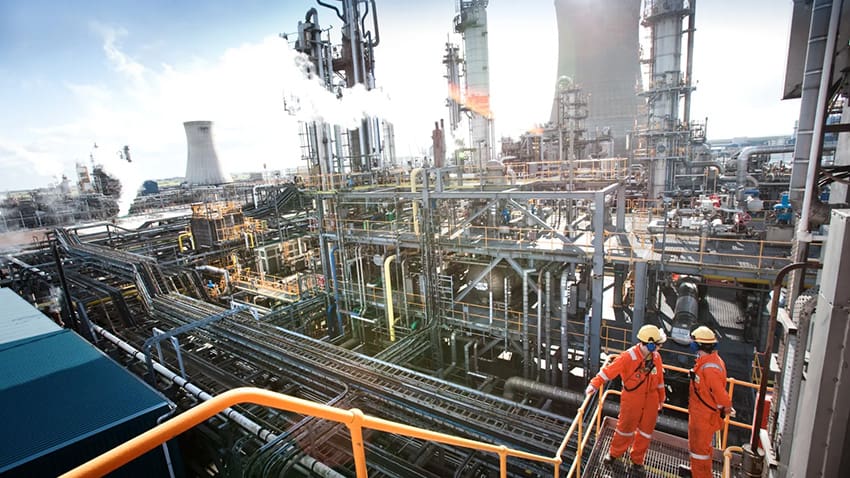
Ineos has reported a sharp widening in losses to $593 million, as rising energy costs, supply chain disruption and geopolitical tensions weigh heavily on Sir Jim Ratcliffe’s petrochemicals empire.
The group, controlled by Jim Ratcliffe alongside co-owners Andy Currie and John Reece, has also suspended its dividend for a second consecutive year, underscoring the financial pressure facing the business.
Losses before tax increased significantly from $71.1 million the previous year, while revenues declined to €14.3 billion from €16.2 billion. The downturn reflects a challenging operating environment for the European chemicals sector, where demand has weakened and costs have risen sharply.
Ineos pointed directly to the escalation of tensions in the Middle East as a key risk factor, warning that disruption to global energy markets is already impacting operations.
The group highlighted Iran’s strategic position near the Strait of Hormuz, a critical shipping route for oil and liquefied natural gas, noting that any prolonged conflict could further destabilise supply chains and drive up commodity prices.
Advertisement
“Any escalation or expansion of hostilities could adversely affect global supply chains, commodity prices and macroeconomic conditions,” the company said in its annual report.
The surge in oil and gas prices has increased input costs across the petrochemicals industry, while also raising shipping expenses as companies adjust logistics routes to avoid high-risk areas.
The impact has been particularly acute in Europe, where Ineos has long warned of structural challenges including high energy prices, carbon taxes and competitive pressures from overseas producers.
Earnings before exceptional items in the region almost halved to €252.3 million in 2025, down from €470.2 million the previous year. Revenues in the European business fell by 9.2 per cent, reflecting weaker demand and margin compression.
Advertisement
Ratcliffe has previously described the European chemicals industry as facing “challenging market conditions”, with rising regulatory costs and energy prices eroding competitiveness.
The group has also been hit by logistical challenges linked to global shipping disruptions. In previous years, Ineos was forced to reroute shipments for its major Project One chemicals plant in Belgium around the Cape of Good Hope, adding more than €30 million in costs.
The company warned that similar disruptions could occur again if tensions escalate, potentially delaying the completion of key projects and further increasing expenses.
It also flagged risks to the delivery timeline of a new plant in the Netherlands, citing ongoing volatility in energy markets.
Advertisement
Ineos ended the year with net debt of €11.7 billion, highlighting the scale of its financial commitments at a time of declining profitability.
The decision to halt dividend payments reflects a focus on preserving cash and maintaining financial flexibility as the company navigates an uncertain outlook.
The results underline the pressures facing energy-intensive industries in Europe, where companies are grappling with a combination of high input costs, regulatory burdens and geopolitical instability.
For petrochemical producers, the reliance on oil and gas as both feedstock and energy source makes them particularly sensitive to price fluctuations.
Advertisement
Looking ahead, Ineos warned that continued volatility in energy markets could have a “significant” impact on its operations and financial performance.
The trajectory of the Middle East conflict will be a key factor, with prolonged disruption likely to exacerbate cost pressures and delay investment projects.
For Ratcliffe’s group, the challenge will be balancing investment in long-term growth with the need to manage short-term financial strain — a task made more complex by the increasingly uncertain global economic environment.
Amy Ingham
Amy is a newly qualified journalist specialising in business journalism at Business Matters with responsibility for news content for what is now the UK’s largest print and online source of current business news.
















![Tom Lee & Raoul Pal: "A CRASH Is Coming, Then Bitcoin Explodes To $250K" [2026 Prediction]](https://wordupnews.com/wp-content/uploads/2026/03/1774925538_hqdefault-80x80.jpg)

































You must be logged in to post a comment Login