

Business
Filipino Tennis Star’s Rise to World No. 32 and 2026 Breakthroughs


Alexandra Eala, the trailblazing Filipino tennis prodigy, continues her meteoric ascent on the WTA Tour as she competes at the BNP Paribas Open in March 2026. At just 20 years old, the Quezon City native has become the highest-ranked player from the Philippines in WTA history, reaching a career-high of No. 31 in February before settling at No. 32 as of early March. With fans flocking to her practice sessions and a rematch against familiar foe Dayana Yastremska looming in the second round, Eala embodies national pride and global potential.

Here are 10 key things to know about Alexandra Eala as her 2026 campaign intensifies.
- Prodigious Early Start and Junior Success Born May 23, 2005, in Quezon City, Philippines, Eala began playing tennis at age 4. She moved to Spain at 13 to train at the prestigious Rafa Nadal Academy in Mallorca, graduating in 2023 with a diploma presented by Nadal himself. Her junior career peaked with the 2022 US Open girls’ singles title, marking her as a generational talent from Southeast Asia.
- Historic Breakthrough in 2025 Eala exploded onto the senior scene in 2025, becoming the first Filipina to reach a WTA 1000 semifinal at the Miami Open as a wildcard. She stunned three Grand Slam champions—No. 24 Jelena Ostapenko, No. 15 Madison Keys and world No. 2 Iga Swiatek—in consecutive matches, propelling her into the Top 100 and etching her name in Philippine sports history.
- Career-High Ranking in 2026 Entering March 2026 at No. 32, Eala sits more than 100 spots higher than the same time in 2025 (No. 140). Her peak of No. 31 came on Feb. 23 after a strong Dubai Tennis Championships run, where she notched her first Top 10 win of the year over No. 7 Jasmine Paolini before falling to No. 3 Coco Gauff in the quarterfinals. She is the only Filipino to crack the WTA Top 100 since rankings began in 1975.
- Strong 2026 Start Eala opened the year with semifinal appearances in singles and doubles at the Auckland Open. She advanced to the Abu Dhabi Open quarterfinals (losing to No. 11 Ekaterina Alexandrova), exited early in Doha but rebounded in Dubai with three wins, including the Paolini upset. Her consistent performances have fueled a rapid climb and positioned her for deeper runs in big events.
- Sunshine Swing Focus As a seeded player at the WTA 1000 BNP Paribas Open in Indian Wells (March 4-15), Eala received a first-round bye and advances to the Round of 64. She faces Dayana Yastremska in the second round—a rematch of their 2025 quarterfinal clash, which Eala won 6-1, 6-2. Following Indian Wells, she heads to the Miami Open (March 17-29), where she aims to surpass her 2025 semifinal.
- Playing Style and Strengths Eala’s game features a solid baseline foundation, powerful groundstrokes and mental toughness honed at the Nadal Academy. Her left-handed forehand and aggressive returns shine on hard courts. She emphasizes focusing on her own game rather than opponents, crediting humility and preparation for her success.
- National Icon and Inspiration Dubbed the “Pacquiao of tennis” by fans, Eala inspires a new generation in the Philippines. Her Vogue Philippines cover after the 2022 US Open junior win and Tatler features highlight her off-court appeal. She prioritizes growing the sport locally, viewing her rise as an opportunity to expand tennis’s footprint in Southeast Asia.
- Family Background Eala hails from a sports-oriented family. Her mother, Rizza Maniego-Eala, a former national swimmer, won bronze in the 100m backstroke at the 1985 Southeast Asian Games. Her father, Mike Eala, is a businessman. The family’s support has been crucial, with her mother often credited for instilling discipline and competitive spirit.
- Off-Court Milestones and Personality Beyond tennis, Eala has embraced her rising fame with grace. Interviews portray her as humble, charming and focused—qualities praised by fans and media. She maintains balance amid pressure, often highlighting family time and gratitude for supporters. Her popularity draws crowds at practice sessions, creating an “Eala effect” at tournaments.
- Future Outlook and Ambitions Eala views 2026 as a building year, not her peak. In late 2025 interviews, she expressed optimism that “maybe 2027 will be even better,” signaling long-term goals like consistent Top 20 status, Grand Slam deep runs and possibly a major title. With her trajectory—jumping from outside the Top 150 in 2024 to Top 32—experts see her as a potential Top 10 threat in coming seasons.
As Eala takes the court in Indian Wells, Filipino fans worldwide rally behind her with chants of “Laban Puso!” Her blend of talent, work ethic and poise positions her as a global star and national hero. Whether she advances past Yastremska or builds momentum for Miami, Alexandra Eala’s story continues captivating the tennis world.



Iran war threatens prolonged hit to global energy markets
Business
US, Japan eye $13 billion Japan Display plant as part of investment package, Nikkei Asia reports


US, Japan eye $13 billion Japan Display plant as part of investment package, Nikkei Asia reports


Iranian hardline clerics seek swift naming of new supreme leader

Israeli settler fatally shoots Palestinian man in West Bank, health ministry says
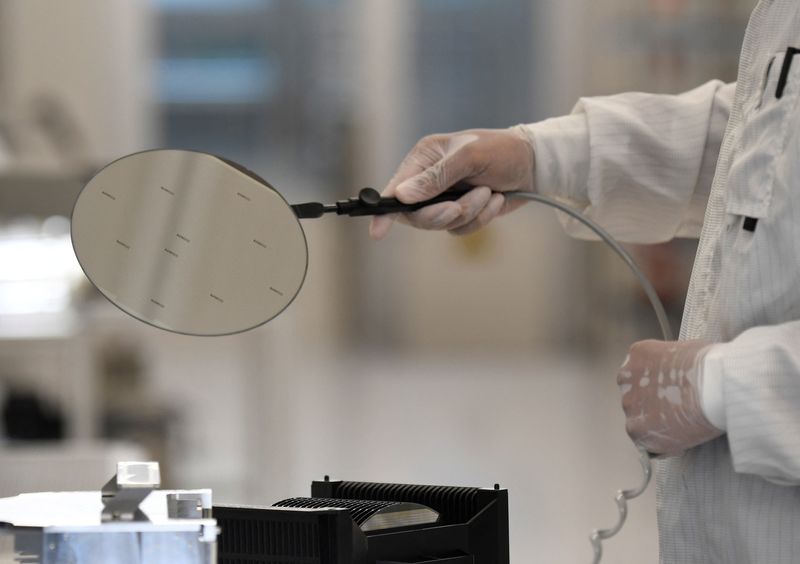

China warns of global chip shortages as Nexperia dispute escalates again

Associate of liquidated Brazilian lender Banco Master’s owner dies, lawyers say


Flavio Bolsonaro draws even with Lula in Brazil election matchup, Datafolha shows
Business
Equinor ASA (EQNR) Stock Hits Multi-Year Highs on Oil Surge, Buyback Progress and North Sea Discovery

STAVANGER, Norway — Equinor ASA (NYSE: EQNR, OSE: EQNR) shares reached new 52-week highs in early March 2026, climbing above $33 on the New York Stock Exchange amid a sharp rally in global oil prices and positive company developments. The Norwegian energy giant, a major player in offshore oil and gas with growing renewables exposure, has benefited from supportive commodity markets while advancing shareholder returns through an active share buyback program and a robust dividend policy.

As of March 6, 2026, EQNR closed at approximately $33.59, up more than 5% in a single session and marking a fresh peak for the year. The stock has surged roughly 50% over the past 12 months, driven by elevated crude prices hovering near multi-year highs and Equinor’s operational momentum. On the Oslo Stock Exchange, shares traded around NOK 316.70, reflecting similar strength.
The rally aligns with broader energy sector gains, as oil benchmarks climb above $90 per barrel in response to geopolitical tensions and demand resilience. Equinor’s upstream portfolio—centered on the Norwegian Continental Shelf—positions it well to capitalize on these conditions, with recent discoveries adding to production potential.
A key catalyst came on March 2, 2026, when Equinor announced a commercial oil discovery in the Snorre area of the North Sea. The find, made with partners, supports rapid development plans and tie-back to existing infrastructure, promising quick value creation with minimal additional capital. This bolsters Equinor’s near-term production outlook and underscores its expertise in mature fields.
Financially, Equinor continues executing its capital return strategy. The company initiated a $1.5 billion share buyback program for 2026, structured in tranches. The first tranche, running through late March, has seen steady repurchases. From February 23-27, Equinor bought back 607,850 shares at an average NOK 278.44, lifting the tranche total to over 2 million shares acquired for approximately NOK 546 million. Including prior activity, treasury holdings have increased modestly, signaling confidence in the stock’s value despite market volatility.
Notifiable trading disclosures in early March highlighted minor insider-related sales: a close associate of executive vice president Siv Helen Rygh Torstensen sold 2,000 shares on March 2 at NOK 301.30, and another associate of board member Hilde Møllerstad sold 241 shares on March 4 at NOK 299. These routine transactions, required under EU Market Abuse Regulation, drew attention but reflect personal rather than corporate signals.
Equinor’s latest full-year results, released February 4, 2026, for 2025 showed solid performance. Adjusted earnings reflected resilience in a fluctuating price environment, with upstream strength offsetting softer refining margins. The board proposed a fourth-quarter cash dividend of $0.39 per share (up from $0.37 prior), payable in May 2026, maintaining an attractive annualized yield around 4.9%. This follows consistent quarterly payouts, with the company aiming to grow dividends in line with underlying earnings.
Analysts maintain a mixed but cautious outlook. Consensus from 17 firms rates EQNR a “Reduce” or “Hold,” with an average 12-month price target around $24.71—implying downside from current levels. Some forecasts see limited upside if oil prices moderate, with one analyst downgrading to Hold in early March, citing valuation implying $80/bbl crude—above base-case assumptions. Others highlight the stock’s appeal for income investors, given the well-covered dividend and AA credit rating.
Equinor balances traditional energy with renewables. The company advances offshore wind projects in the U.S. and Europe while optimizing oil and gas assets. Capital expenditure guidance for 2026-2027 was reduced by $4 billion organically, supporting free cash flow and returns. Production guidance remains stable, with focus on high-return opportunities like the North Sea.
Risks persist: energy transition pressures, regulatory changes in Norway and Europe, and oil price sensitivity. Yet Equinor’s integrated model—upstream dominance, midstream stability and growing low-carbon ventures—provides diversification.
Investor sentiment remains positive in the near term, buoyed by buybacks, dividends and exploration success. As Equinor navigates 2026’s volatile markets, its ability to deliver shareholder value while advancing sustainability goals will define performance. With shares at multi-year highs, the energy major continues attracting attention from income-focused and value investors alike.
Business
Dow Jones Industrial Average Falls 453 Points as Oil Surge and Weak Jobs Data Weigh on Markets

The Dow Jones Industrial Average closed lower Friday, shedding more than 450 points amid a sharp spike in oil prices and disappointing February jobs data that heightened concerns over economic slowdown and persistent inflation pressures.

The blue-chip index ended the session at 47,501.55, down 453.19 points or 0.95%, after dipping as low as 47,009.01 intraday — a retreat of nearly 950 points from the previous close. The broader S&P 500 fell 90.69 points, or 1.33%, to 6,740.02, while the tech-heavy Nasdaq Composite dropped 361.31 points, or 1.59%, to 22,387.68. All three major averages posted weekly losses, with the Dow recording its worst weekly performance in nearly a year.
Trading volume reached approximately 545 million shares on the New York Stock Exchange, reflecting heightened volatility as investors digested fresh economic signals and geopolitical tensions contributing to energy market swings.
The sell-off accelerated after the U.S. Labor Department reported an unexpected drop in nonfarm payrolls for February, missing economist forecasts and signaling potential softening in the labor market. The weaker-than-expected jobs figures raised questions about the Federal Reserve’s path on interest rates, with some traders now pricing in a higher likelihood of earlier rate cuts to support growth.
Compounding the pressure, crude oil prices surged above $90 a barrel for the first time in recent months, driven by escalating tensions involving Iran and broader supply concerns in the Middle East. West Texas Intermediate crude climbed significantly, pushing energy stocks higher but adding to inflationary fears that could keep borrowing costs elevated longer than anticipated.
“Today’s move reflects a classic risk-off reaction to mixed macro data and commodity spikes,” said one market strategist in a CNBC analysis. “The jobs miss is concerning for growth, while oil’s rally revives inflation worries that had been somewhat subdued earlier this year.”
The Dow’s decline marked a pullback from recent highs, with the index having peaked above 50,500 in February before retreating. Year-to-date, the benchmark remains modestly positive but has given back much of its early 2026 gains amid choppy trading.
Component performance varied, with only nine of the 30 Dow stocks closing higher. Standouts included Boeing (BA), which rose more than 4% on positive developments in its production outlook, and select defensive names like Johnson & Johnson (JNJ) and Coca-Cola (KO), which posted small gains. Heavier losses hit cyclical and growth-oriented names, including Caterpillar (CAT) down over 3.5%, Amazon (AMZN) off 2.6%, and Nvidia (NVDA) declining 3%.
The week’s broader context showed mounting headwinds. On Thursday, March 5, the Dow had already plunged 784.67 points, or 1.6%, to 47,954.74, briefly dropping more than 1,100 points intraday as oil spiked and initial Iran-related fears gripped traders. That session followed a modest rebound Wednesday when the index rose about 238 points to 48,739.41, snapping a brief losing streak.
Analysts pointed to a confluence of factors weighing on sentiment. Persistent geopolitical risks, including developments in the Middle East, have kept energy markets volatile, with oil’s rally adding to cost pressures across industries. Meanwhile, the jobs data reinforced doubts about the economy’s resilience after stronger-than-expected readings earlier in the year.
Despite the downturn, some market participants remained cautiously optimistic. Corporate earnings seasons have shown resilience in certain sectors, and defensive plays like healthcare and consumer staples have held up better amid uncertainty. The VIX, Wall Street’s fear gauge, jumped more than 24% to around 29.49, indicating elevated volatility expectations heading into the weekend.
Looking ahead, investors will monitor upcoming inflation reports, including the Consumer Price Index due next week, for further clues on the Fed’s policy trajectory. Fed officials have emphasized data-dependence, and recent signals suggest officials may pause rate adjustments if inflationary pressures reaccelerate.
The pullback comes after a strong start to 2026, when the Dow briefly surpassed 50,000 amid optimism over corporate profitability and cooling inflation. However, renewed macro uncertainties have shifted focus back to risks, with the index now trading well below its February peak of 50,512.79.
Broader market breadth weakened Friday, with decliners outpacing advancers on major exchanges. Small-cap stocks, tracked by the Russell 2000, also fell sharply, underscoring broad-based caution.
As markets digest the week’s developments, attention turns to whether the recent dip represents a healthy correction within an ongoing bull trend or the start of more sustained weakness. With oil prices elevated and labor market signals mixed, volatility is likely to persist in the near term.
The Dow’s close at 47,501.55 caps a turbulent week that erased much of the prior session’s gains and highlighted the market’s sensitivity to energy shocks and employment trends. While no single factor dominated, the combination of higher oil and softer jobs data proved decisive in driving Friday’s retreat.
Business
UAE president says country is well and is no easy prey in first public comments since Iran strikes


UAE president says country is well and is no easy prey in first public comments since Iran strikes
“Monsters, Inc. 3” in the works at Pixar, studio reveals planned release dates for “Incredibles 3” and “Coco 2”

He Leaked It. Ripple’s Grand US Plan is Happening… (XRP is In)

Popular independent Cambridgeshire shops in the running for prestigious ‘rural Oscars’ awards


-

 Politics4 days ago
Alan Cumming Brands Baftas Ceremony A ‘Triggering S**tshow’
-
Business1 day ago
Form 8K Entergy Mississippi LLC For: 6 March
-

 Tech7 days ago
Unihertz’s Titan 2 Elite Arrives Just as Physical Keyboards Refuse to Fade Away
-

 NewsBeat7 days ago
Abusive parents will now be treated like sex offenders and placed on a ‘child cruelty register’ | News UK
-

 Fashion24 hours ago
Weekend Open Thread: Ann Taylor
-

 NewsBeat6 days ago
‘Significant’ damage to boarded-up Horden house after fire
-

 Tech2 days ago
Bitwarden adds support for passkey login on Windows 11
-

 Entertainment5 days ago
Baby Gear Guide: Strollers, Car Seats
-
 Sports2 days ago
499 runs and 34 sixes later, India beat England to enter T20 World Cup final | Cricket News
-
 NewsBeat6 days ago
Emirates confirms when flights will resume amid Dubai airport chaos
-
Politics7 days ago
FIFA hypocrisy after Israel murder over 400 Palestinian footballers
-

 NewsBeat5 days ago
Is it acceptable to comment on the appearance of strangers in public? Readers discuss
-

 Tech6 days ago
Viral ad shows aged Musk, Altman, and Bezos using jobless humans to power AI
-

 Video5 days ago
How to Build Finance Dashboards With AI in Minutes
-

 Fashion6 days ago
On the Scene at the 57th Annual NAACP Image Awards: Teyana Taylor in Black Ashi Studio, Colman Domingo in Yellow Sergio Hudson, Chloe Bailey in Christian Siriano, and More!
-

 Business4 days ago
Guthrie Disappearance Enters Fifth Week as Family Visits Memorial
-
 NewsBeat6 days ago
Ukraine-Russia war latest: Belgium releases video showing forces boarding Russian shadow fleet oil tanker
-
 Crypto World6 days ago
US Judge Lets Binance Unregistered Token Class Action Proceed
-

 Crypto World5 days ago
Why Nexo Is Reentering the US After the 2023 Crypto Lending Crackdown
-

 NewsBeat2 days ago
Piccadilly Circus just unveiled ‘London’s newest tourist attraction’ and it only costs 80p to enter