
Connect with us
DAPA Banner

Business

'Finfluencers' draw ASIC's ire

Published

on

'Finfluencers' draw ASIC's ire

Australia’s peak corporate regulator has issued notices to four finfluencers who it says were providing unlicensed financial advice or engaging in deceptive conduct.

Continue Reading
Click to comment

You must be logged in to post a comment Login

Leave a Reply

Business

The verdict on Plaid Cymru’s plans for the Welsh economy

Published

on

Business Live

At the heart of its Senedd manifesto are plans for a new at arm’s lenght National Development Agency

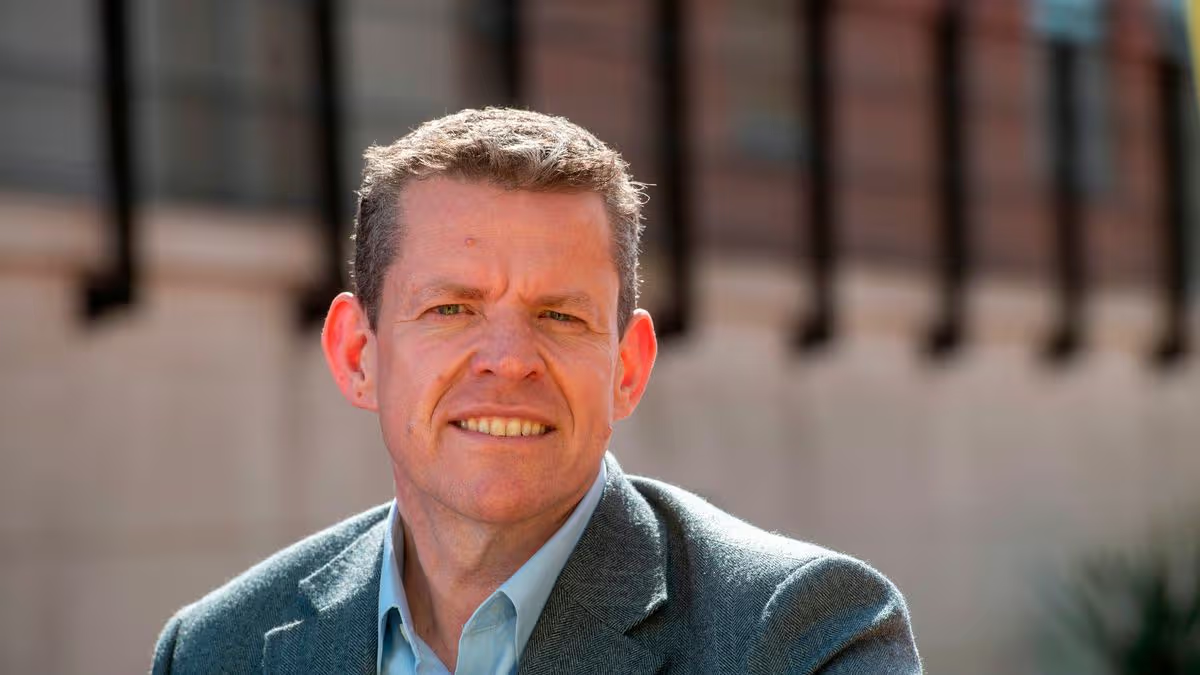
The leader of Plaid Cymru, Rhun ap iorwerth, pictured in Cardiff, on the build up to the Senedd Election 2026 in Wales.

Leader of Plaid Cymru Rhun ap Iorwerth.(Image: Rob Browne/WalesOnline)

So, to the final assessment of the political parties’ plans for the Welsh economy, and it would be fair to say that Plaid Cymru’s manifesto is the most detailed document produced in this Senedd election.

That does not mean that every proposal within it is convincing, but it is attempting to build a recognisable economic philosophy around a simple question that Welsh politics has avoided: not just how much economic activity takes place in Wales, but who benefits from it, and how much of the value generated here actually stays here.

Advertisement

READ MORE: Senedd Election manifesto from the Tories far more pro-business than Labour

Author avatarDylan Jones-Evans

Plaid argues that Wales has plenty of economic capability, but that too much of its economy remains externally owned, too much profit leaks out, and too much of its policy focuses on managing symptoms rather than building long-term strength.

Its answer is a more interventionist and more explicitly development-oriented model, built around more strategic public investment, more active use of procurement, and an institutional framework designed to support business growth in ways that reinforce Welsh communities rather than bypass them.

At the centre of this sits the proposal for a new business-led National Development Agency for Wales that can provide a clearer front door for business support, promote Wales internationally, and coordinate regional economic development in a way that Whitehall-style departmentalism and Cardiff Bay fragmentation have often failed to do.

In this respect, Plaid is right to recognise that economic development in Wales has too often lacked institutional clarity and sustained focus, although any new body should not be just another rehash of the Welsh Development Agency, as some have suggested.

Advertisement

Plaid is also right to signal that the Development Bank of Wales needs reform because, despite its rhetoric, there is a growing sense that it is not yet performing to the level Wales needs.

If Plaid is serious about creating more indigenous growth, stronger supply chains and better-paid jobs, then a review of the bank has to ask harder questions about whether its products are fit for purpose, whether it is taking enough strategic risk, and whether it is genuinely helping to reshape the structure of the Welsh economy rather than simply supporting activity at the margins.

There is a seriousness to the manifesto’s treatment of procurement. Welsh public bodies spend more than £8bn each year on goods and services, and Plaid wants a much larger share of that spend retained within Wales, from around 55% to at least 70%. That is not a marginal adjustment but a deliberate attempt to use the public pound to strengthen Welsh firms and build capacity in local supply chains.

One can debate whether the target is achievable and whether it will create as many jobs as claimed, but the underlying instinct is sound, as public procurement in Wales has, for too long, been discussed as an administrative function rather than a strategic economic tool.

Advertisement

The proposal for a comprehensive national skills audit is not particularly glamorous, but employers, colleges, schools and training providers have all complained for years that there is insufficient clarity about future skills demand, too much fragmentation in provision, and too little alignment between policy and labour market needs.

The attempt to connect skills, apprenticeships, vocational routes and economic opportunity is sensible, especially when linked to sectors such as renewables, digital technology, medtech, agritech and the creative industries.

READ MORE: The Greens, Liberal Democrats and Reform on plans to boost the Welsh economyREAD MORE: Wales risks becoming dependent on gas and electricity from England

On digital and connectivity, there is support for superfast broadband rollout to the rest of Wales, for the semiconductor cluster in South Wales, for digital innovation, and for more coherent transport planning linked to wider economic development.

Advertisement

With regard to rail, they make the case that Wales has been chronically short-changed, particularly in relation to HS2 and wider infrastructure classifications, but (and excuse the pun) the train has probably left the station on this particular issue, and the UK Government is unlikely to change its mind.

The manifesto is less convincing in its assumptions about what follows from it. At times, Plaid seems to believe that if Wales had the right institutions, stronger tax powers and a fairer funding settlement, a stronger economy would naturally emerge.

Yes, Wales has been held back by weak tools, poor institutional design and a settlement that often leaves it underpowered, but stronger institutions are not, in themselves, a substitute for a stronger economy, nor do they automatically solve the harder questions around export intensity, business scale-up, and commercial competitiveness.

Indeed, focusing on structure rather than strategy is one of the most common mistakes that governments make in their approach to economic development and as I’ve said so many times in the past, entrepreneurship, innovation and productivity must be the beating heart of Wales’s future economic direction.

Advertisement

There is also, inevitably, a degree of political optimism embedded in the document and in proposals such as a Wales Wealth Fund, greater use of pension assets for local investment, and deeper fiscal reform. Each depends on institutional capacity, political leverage and execution that should never be assumed, especially given the weakness of a civil service that has served one party for over a quarter of a century.

Even so, it can be argued that Plaid Cymru has produced a manifesto that seeks to grapple with the drawbacks of the Welsh economy. Whether you agree with it or not, at least it understands that the question is not merely how to attract more activity, but how to build an economy that is more rooted and beneficial to the people who live here.

Of course, that does not answer the question, and there will be much more to do if they form a government, but it could present a serious economic offer that is long overdue, although that may also depend on the person they appoint as the economy minister.

Certainly, that individual should be totally committed to developing the massive potential within our private sector here in Wales. If not, as we have seen too many times since the start of devolution, the good intentions in this manifesto may lead to nothing.

Advertisement
Continue Reading

Business

Noah Kahan Kicks Off The Great Divide Tour in Orlando June 11 With Sold-Out Kia Center Shows

Published

on

Noah Kahan

ORLANDO, Fla. — Folk-pop superstar Noah Kahan will launch his highly anticipated The Great Divide Tour on Thursday, June 11, 2026, at the Kia Center in Orlando, marking the start of a major North American run that has already seen both opening nights sell out due to overwhelming demand.

Noah Kahan
Noah Kahan

The Vermont singer-songwriter, whose heartfelt storytelling and anthemic choruses have made him one of the biggest breakout artists of the decade, will perform two consecutive nights in Central Florida alongside rising star Gigi Perez. The June 11 show sold out rapidly after going on sale, prompting organizers to add a second date on June 12 that also quickly sold out.

Kahan announced The Great Divide Tour in early February 2026 in support of his forthcoming album of the same name. The 23-date North American leg features a mix of arena and stadium stops, showcasing his evolution from intimate folk rooms to large-scale productions capable of filling venues like Fenway Park and Citizens Bank Park later in the summer.

Fans can expect a set heavy on tracks from the new album alongside staples like “Stick Season,” “Dial Drunk” and “Northern Attitude.” Kahan’s live performances are known for their emotional intensity, sing-along energy and raw connection with audiences, often turning arenas into massive campfire gatherings.

Gigi Perez, whose viral hit “Sailor Song” propelled her into the spotlight, will open both Orlando shows. The pairing reflects Kahan’s commitment to elevating emerging talent while delivering nights packed with emotional depth and singable melodies.

Advertisement

The Orlando kickoff comes at a pivotal moment in Kahan’s career. Two-time Grammy-nominated and with multiple platinum certifications, the 28-year-old artist has built a devoted global fanbase through authentic songwriting that explores mental health, small-town life, relationships and personal growth. His “Stick Season” era catapulted him to new heights, and The Great Divide promises to expand on that foundation.

Tickets for the Orlando shows initially went on sale in February following an artist presale. Resale markets have seen strong activity, though official channels remain the recommended source. VIP packages and Mastercard preferred access offered early opportunities for fans seeking premium experiences.

Beyond Orlando, the tour will hit major markets including Philadelphia (June 26 at Citizens Bank Park), Boston (multiple nights at Fenway Park in July), Chicago, New York and others before wrapping the North American leg in Seattle on August 30 at T-Mobile Park. International dates in Australia, New Zealand, the UK and Europe follow in the fall.

Kahan teased the tour on social media with the message: “I’m hitting the road this summer. Can’t wait to bring The Great Divide Tour to stadiums across North America!” The announcement generated massive excitement, with fans praising the artist’s decision to start in a city with strong Southern support rather than traditional coastal markets.

Advertisement

Orlando’s vibrant entertainment scene and the Kia Center’s modern facilities make it an ideal launchpad. The venue, home to the Orlando Magic and major concerts, has hosted numerous high-profile acts and offers excellent sightlines and acoustics for Kahan’s intimate-yet-epic style.

Industry observers see the tour as a testament to Kahan’s sustained momentum. After years of steady growth, he has become a streaming powerhouse and live draw capable of selling out arenas and stadiums. The addition of stadium dates reflects his ambition to connect with fans on the largest stages while maintaining the emotional core that defines his music.

For Orlando-area fans, the shows represent a major summer highlight. Many plan to travel from across Florida and the Southeast for the back-to-back nights. Local hotels and restaurants anticipate a boost from the influx of concertgoers, adding to the city’s reputation as a live music destination.

Kahan has spoken openly about the personal significance of touring. His music often draws from experiences in rural New England, yet it resonates universally. Live shows become communal spaces where fans process their own stories through his lyrics. Expect emotional highs, heartfelt sing-alongs and possibly a few surprise covers or guest moments.

Advertisement

As the June 11 launch approaches, anticipation continues to build. With both Orlando dates sold out, waitlists are active for those hoping for last-minute tickets. The tour’s success so far underscores Kahan’s status as one of modern music’s most compelling live performers.

Beyond the music, Kahan’s commitment to mental health advocacy and genuine fan interaction has strengthened his bond with audiences. Many attendees describe his concerts as therapeutic experiences as much as entertainment.

The Great Divide Tour represents the next chapter for an artist who has already reshaped the folk-pop landscape. Starting in Orlando on June 11, Kahan will bring his signature blend of vulnerability and celebration to thousands of fans eager to experience the emotional journey together.

For those unable to attend the launch, the tour’s extensive routing offers multiple opportunities across the country and internationally later in 2026. Whether in a packed arena or under stadium lights, Noah Kahan’s live shows promise to deliver unforgettable nights of connection and catharsis.

Advertisement

As summer 2026 nears, all eyes turn to the Kia Center for what promises to be a memorable opening chapter in one of the year’s most exciting tours. Noah Kahan is ready to bridge the great divide — one powerful performance at a time.

Continue Reading

Business

How does it affect me if share prices fall?

Published

on

How does it affect me if share prices fall?

Changes in the FTSE 100 and other indexes are not just for financial experts, they can affect our lives.

Continue Reading

Business

LCOW: The Backdoor To Quality Tech And AI

Published

on

LCOW: The Backdoor To Quality Tech And AI

LCOW: The Backdoor To Quality Tech And AI

Continue Reading

Business

Kuwait International Airport Partially Reopens Sunday as New Terminal 2 Targets Late 2026

Published

on

Kuwait International Airport

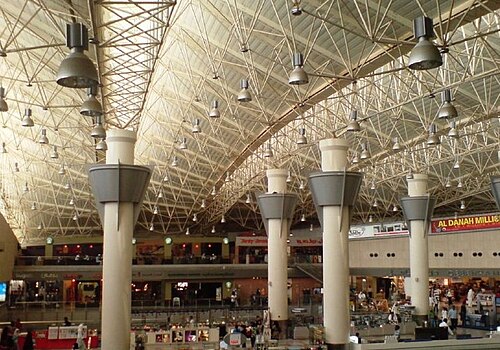
KUWAIT CITY — Kuwait International Airport will partially reopen on Sunday, April 26, 2026, with Terminals 4 and 5 resuming limited operations after a nearly two-month closure caused by regional tensions, while the long-awaited new Terminal 2 remains on track for completion in late 2026.

Kuwait International Airport

The Directorate General of Civil Aviation announced Thursday that Kuwait’s airspace reopened Thursday evening, April 23, following a ceasefire in the broader Middle East conflict. However, full passenger operations at the main airport will resume gradually starting Sunday, with Kuwait Airways and Jazeera Airways leading the initial flight schedule from Terminals 4 and 5.

Kuwait Airways plans to operate flights to 17 destinations including Cairo, London, Mumbai and Riyadh from Terminal 4, while low-cost carrier Jazeera Airways will resume services from Terminal 5. Officials emphasized that the reopening follows extensive safety inspections and coordination with international aviation authorities.

The airport had been closed to commercial traffic since mid-February amid heightened regional risks, forcing carriers to operate temporarily from King Fahd International Airport in Dammam, Saudi Arabia. The phased return aims to restore connectivity safely while repairs and assessments continue at other facilities.

Kuwait International Airport’s major expansion project centers on the new Terminal 2 (T2), a $4.3-5.8 billion state-of-the-art facility designed by Foster + Partners. Construction progress stands at approximately 70-81%, with the Central Agency for Public Tenders setting a firm deadline of November 30, 2026, for completion of civil works. Full operations are expected in the fourth quarter of 2026.

Advertisement

The triangular T2 design will dramatically boost capacity to 25-50 million passengers annually, featuring 28 gates, expanded parking, a 400-bed hotel and LEED Gold sustainability standards. Natural daylighting, advanced baggage systems and modern passenger flow aim to position Kuwait as a competitive Gulf aviation hub.

Terminal 1 remains under repair following reported damage, while Terminal 3 stays closed for general aviation due to ongoing T2 construction. Authorities have stressed that Sunday’s reopening represents an initial phase, with additional terminals expected to come online progressively as safety certifications are completed.

Travelers should check with airlines for specific flight schedules, as operations will ramp up gradually. Kuwait Airways and Jazeera have begun notifying passengers and adjusting bookings from the temporary Dammam hub back to Kuwait. International carriers will follow once more infrastructure is cleared.

The reopening brings relief to thousands of stranded passengers and the local economy. Kuwait’s aviation sector supports significant tourism, business travel and expatriate movement. Full restoration will ease pressure on neighboring airports and normalize trade routes.

Advertisement

Experts view the T2 project as transformative. Once operational, the new terminal will feature cutting-edge technology, improved security screening and enhanced retail and dining options. Sustainability features include energy-efficient systems designed to reduce the airport’s environmental footprint.

Challenges during construction included supply chain delays, the COVID-19 pandemic and regional instability. Despite setbacks from the original 2022 target, recent momentum under government oversight has accelerated progress toward the 2026 goal.

For passengers planning travel, Sunday’s limited resumption means checking airline apps and official DGCA updates. Some international routes may still route through alternative hubs in the short term. Airlines have pledged transparent communication as more flights are added.

The partial reopening coincides with broader Gulf aviation recovery. Neighboring countries have gradually restored services after the same tensions, highlighting the interconnected nature of regional airspace. Kuwait’s phased approach prioritizes safety while rebuilding confidence among travelers and carriers.

Advertisement

Longer term, the new T2 will help Kuwait compete with major hubs like Dubai, Doha and Abu Dhabi. Enhanced capacity and modern facilities could attract more long-haul connections and boost tourism and business activity in the country.

As operations resume Sunday, airport authorities urge passengers to arrive early, follow updated procedures and stay informed via official channels. The coming weeks will see increasing flight volumes as more terminals and routes are cleared.

Kuwait International Airport’s journey from closure to partial reopening reflects resilience amid geopolitical challenges. With Terminal 2 on the horizon for late 2026, the country is investing heavily in infrastructure that promises to elevate its global connectivity for decades to come.

Travelers and businesses alike welcome the news. While full normalcy will take time, Sunday marks an important first step toward restoring Kuwait’s vital air links. The ambitious T2 project ensures the airport will emerge stronger, ready to serve as a modern gateway to the region.

Advertisement
Continue Reading

Business

Elon Musk Shares Major Robotaxi Milestone

Published

on

Tesla Cybercab Production Begins: Elon Musk Shares Major Robotaxi Milestone

AUSTIN, Texas — Elon Musk announced Friday that Tesla has begun production of the Cybercab, the company’s long-awaited purpose-built robotaxi, in a post on X that quickly drew millions of views and sparked widespread excitement about the future of autonomous transportation.

The Tesla CEO shared a short video filmed from inside a moving Cybercab, showing the sleek interior with its signature illuminated “Cybercab” logo on the dashboard screen as the vehicle navigated factory grounds at Giga Texas and emerged into daylight. The footage, captured without a steering wheel or pedals visible, offered a rare glimpse of the fully autonomous two-seater in motion and underscored Tesla’s commitment to unsupervised self-driving technology.

“Cybercab has started production,” Musk wrote alongside the clip, marking what analysts call a pivotal moment in the automaker’s push to launch a commercial robotaxi network. The announcement comes after months of anticipation following Musk’s earlier statements that volume production would ramp up in April 2026.

The Cybercab, first unveiled in October 2024, represents a radical departure from traditional vehicles. Designed from the ground up for autonomy, it features no steering wheel or pedals, relying entirely on Tesla’s Full Self-Driving hardware and software. Musk has described it as a high-volume, low-cost platform capable of transforming urban mobility by offering affordable, on-demand rides without human drivers.

Advertisement

Production is underway at Giga Texas, where Tesla has been preparing dedicated assembly lines using its innovative “unboxed” manufacturing process. This approach aims to achieve dramatically higher output rates compared to conventional car assembly, with Musk previously noting the vehicle’s build process resembles consumer electronics more than traditional automotive lines. Initial units are expected to ramp slowly before scaling exponentially later in the year.

The move aligns with Tesla’s long-term vision for a robotaxi fleet that could generate significant revenue. Musk has repeatedly called the robotaxi business potentially more valuable than the company’s vehicle sales. Early testing fleets have already logged hundreds of thousands of miles, and the production start signals the transition from prototypes to real-world deployment.

Industry observers reacted swiftly to the news. Shares of Tesla rose in pre-market trading as investors digested the update, though analysts cautioned that regulatory hurdles, software validation and scaling challenges remain. The Cybercab’s path to widespread availability will depend on approvals from bodies like the National Highway Traffic Safety Administration and state regulators for unsupervised operation.

Tesla has prepared contingency plans, including offering versions with steering wheels and pedals if required by regulators. However, the focus remains on the steering-wheel-free design optimized for robotaxi service. Musk has emphasized that the vehicle will cost less than $30,000 to produce at scale, making it economically viable for high-utilization fleets.

Advertisement

The announcement builds on years of development. Tesla first teased robotaxi ambitions in 2019, with Musk promising a dedicated fleet by 2020 — a timeline that shifted multiple times as the company refined its vision-only autonomy system. The Cybercab’s 2024 reveal at Warner Bros. Studios featured a sleek, futuristic design with gull-wing doors and minimalist interiors, designed to maximize passenger comfort and safety.

Friday’s video provided fresh insight into the experience. Viewers saw the Cybercab gliding smoothly through industrial areas, stopping at signs and navigating turns autonomously. Blue ambient lighting and a large central display highlighted the interior’s clean, high-tech aesthetic. The clip ended with a stylized “Cybercab” logo on a black background, reinforcing the brand’s cyberpunk-inspired identity.

Reactions on X poured in immediately. Fans celebrated the milestone with comments ranging from excitement about safer, more accessible transportation to speculation about deployment timelines. Some users shared hopes for group leasing models, while others drew comparisons to science fiction concepts like the autonomous taxis in “Cyberpunk 2077.” Critics questioned job impacts on traditional drivers, though many noted the potential for safer roads given Tesla’s safety data claims.

The production start also highlights Tesla’s competitive positioning in the autonomous vehicle space. Rivals like Waymo have already deployed robotaxis in select U.S. cities, but Tesla aims for a broader, lower-cost network leveraging its existing vehicle fleet and manufacturing scale. The Cybercab is expected to complement rather than replace current models, serving as the backbone of a dedicated ride-hailing service.

Advertisement

Broader implications extend beyond Tesla. Successful rollout could accelerate the shift to electric, autonomous mobility, reducing urban congestion, parking needs and emissions. Analysts project the global robotaxi market could reach trillions in value, with Tesla well-positioned to capture a significant share if regulatory and technical hurdles are cleared.

Challenges remain significant. Full unsupervised autonomy requires robust performance across diverse conditions, and scaling production while maintaining quality will test Tesla’s manufacturing prowess. Musk has acknowledged an “S-curve” ramp — slow at first, then rapid — as new tooling and processes come online.

For consumers, the Cybercab promises affordable, convenient travel without the need to own or drive a car. Early deployments could begin in select markets once regulatory approval is secured, with Tesla planning to offer rides through its app similar to existing ride-hailing services but at lower costs due to the absence of drivers.

Tesla continues to invest heavily in AI and autonomy, with the Cybercab serving as a flagship for these efforts. The company’s Full Self-Driving software has seen steady improvements, though it still operates under supervision in most regions. The production milestone suggests confidence that the system is nearing the level required for commercial robotaxi operations.

Advertisement

As the video circulated widely, it fueled speculation about first deployment cities and timelines for public availability. Musk has not provided specific dates beyond the production start, but industry watchers expect initial robotaxi services to follow within months of ramp-up.

The announcement caps a busy period for Tesla, which has been expanding its manufacturing footprint and refining autonomous technology amid growing competition. With Cybercab production now underway, the company edges closer to realizing Musk’s vision of a future where vehicles drive themselves, potentially reshaping transportation as profoundly as the original Model T did over a century ago.

For now, the focus remains on ramping output and validating real-world performance. Tesla enthusiasts and investors alike will watch closely as the first production Cybercabs roll out, eager to see the robotaxi era finally take shape on roads worldwide.

Advertisement
Continue Reading

Business

Discoms’ poor financial health poses risks for power traders: Fitch

Published

on

ET Search
NEW DELHI: The poor financial health of state electricity boards could pose significant business risks for power traders in the country, says rating agency Fitch.

In a report released today, Fitch Ratings said the credit risk of power traders has become “riskier” due to profitability and liquidity constraints faced by state power utilities.

“If these utilities are having liquidity problems which are leading to delays or defaults in their obligation to power traders, then this in turn increases the business risk for power traders,” it noted.

This could lead investors in power trading companies to either seek higher return on the investments or seek alternate avenues for investment.

Advertisement

Leading power traders include PTC India and Tata Power Trading Company.


Going by estimates, over the past four years, the top five trading licensees have controlled over 80 per cent of the market in terms of volumes.
Some of the large loss making state power utilities come from the states for Tamil Nadu, Uttar Pradesh, Madhya Pradesh. These are also largest buyers of short-term electricity through power traders, Fitch Ratings said.”The financial health of state power utilities, the major customers of power traders, has deteriorated with aggregate annual book losses widening to Rs 295 billion (Rs 29,500 crore) in FY 10 from Rs 70 billion (Rs 7,000 crore) in FY 06, leading to an increase in counterparty risk,” the report said.

As per Planning Commission‘s estimates, electricity distribution losses totalled a whopping Rs 70,000 crore in 2010-11.

According to Fitch, the biggest short-term buyers — SPUs in Tamil Nadu and Rajasthan — face huge energy deficits with largest cash losses on a revenue and subsidy-realised basis.

“Hence, these states will remain net-buyers on short-term power markets and continue to act as major counterparties for power traders. This increases the risk for undiversified power traders significantly,” it added.

Advertisement

The report pointed out that traders with strong equity base and high cash balance are better placed since they have the buffer to absorb any increase in the working capital cycle in the event of delays or defaults by SPUs.

Director in Fitch’s Asia Pacific Utilities team Salil Garg said the agency expects larger traders to face low business risk due to many factors, including economies of scale and diversified customer base.

Add ET Logo as a Reliable and Trusted News Source



Continue Reading

Business

Fitch withdraws Reliance Capital ratings

Published

on

ET Search
NEW DELHI: Fitch on Friday said it has withdrawn the ratings on Reliance Capital as the company has decided to stop participating in the agency’s rating process.

“The ratings have been withdrawn as Reliance Capital has chosen to stop participating in the rating process. Therefore, Fitch will no longer have sufficient information to provide ratings or analytical coverage of Reliance Capital,” Fitch Ratings said in a statement.

A leading financial services company Reliance Capital, an Anil Ambani group firm, has interests in diverse areas including asset management, mutual funds, portfolio management services, life and general insurance.

Advertisement
Add ET Logo as a Reliable and Trusted News Source


Continue Reading

Business

German business sentiment hits lowest since 2020 as Iran war weighs

Published

on

German business sentiment hits lowest since 2020 as Iran war weighs


German business sentiment hits lowest since 2020 as Iran war weighs

Continue Reading

Business

Stifel raises MaxLinear stock price target on data center growth

Published

on


Stifel raises MaxLinear stock price target on data center growth

Continue Reading

Trending

Copyright © 2025