
Business
Fire Insurance For Small Businesses In The Philippines


Fire is one of the biggest threats faced by small businesses in the Philippines. Whether you own a sari-sari store, café, restaurant, hardware shop, office, warehouse, pharmacy, salon, or retail store, a single fire incident can wipe out years of hard work within minutes.
According to the Bureau of Fire Protection (BFP), thousands of fire incidents occur across the country every year. Aside from property damage, businesses also suffer from inventory losses, interrupted operations, employee displacement, and reduced customer trust.
This is why Fire Insurance for Small Businesses is one of the most important investments every entrepreneur should consider. It provides financial protection against fire-related losses and helps businesses recover faster after unexpected disasters.
In this guide, we’ll explain everything Philippine business owners need to know about fire insurance, including its benefits, coverage, exclusions, costs, and practical tips for choosing the right policy.
What Is Fire Insurance?
Fire insurance is a type of property insurance that compensates business owners for losses or damages caused by fire. Depending on the insurance provider and policy purchased, coverage may also extend to damages resulting from lightning, explosions, smoke, and other related risks.
For small businesses, fire insurance protects valuable assets such as:
- Commercial buildings
- Office equipment
- Furniture and fixtures
- Inventory and stocks
- Machinery
- Computers and electronics
- Warehouse contents
- Store improvements
Instead of paying for repairs or replacements entirely out of pocket, the insurance company helps shoulder eligible losses based on the terms of the policy.
Why Fire Insurance Is Important for Small Businesses
1. Protects Your Business Investment
Many Filipino entrepreneurs invest years of savings into starting a business. Fire insurance safeguards that investment by reducing the financial impact of unexpected disasters.
2. Helps Business Operations Recover Faster
After a fire, businesses often need funds immediately for repairs, replacing inventory, and purchasing equipment. Insurance payouts can help shorten downtime and allow operations to resume sooner.
3. Gives Peace of Mind
Knowing your business is financially protected allows owners to focus on growth instead of constantly worrying about unexpected emergencies.
4. May Be Required by Banks
If your commercial property or business loan is financed through a bank, fire insurance may be required as part of the loan agreement.
5. Protects Business Continuity
Without insurance, a major fire could permanently close a business. Fire insurance helps businesses survive catastrophic losses and continue serving customers.
What Does Fire Insurance Usually Cover?
Coverage varies depending on the insurer and policy selected. However, most commercial fire insurance policies commonly include:
- Damage caused directly by fire
- Lightning damage
- Smoke damage
- Damage caused while extinguishing the fire
- Explosion caused by fire
- Damage to insured buildings
- Business furniture
- Office equipment
- Computers and electronics
- Business inventory
- Machinery and production equipment
- Warehouse contents
Many insurance companies also allow businesses to purchase additional coverage through policy extensions.
Optional Coverages You May Consider
Many insurers offer optional riders or endorsements that provide broader protection.
- Earthquake and fire following earthquake
- Typhoon and flood coverage
- Riot and strike damage
- Malicious damage
- Burst pipes
- Vehicle impact
- Business interruption insurance
- Loss of rental income
- Debris removal expenses
- Architect and engineering fees
- Temporary relocation costs
Business interruption insurance is especially valuable because it helps replace lost income while your business is temporarily unable to operate after a covered event.
What Is Usually Not Covered?
Every insurance policy has exclusions. Common exclusions include:
- Intentional acts by the owner
- Fraudulent claims
- Normal wear and tear
- Poor maintenance
- War and terrorism (unless specifically covered)
- Nuclear incidents
- Illegal business activities
- Losses outside the policy period
Always read the policy carefully and ask the insurance company to explain any exclusions before purchasing coverage.
How Much Fire Insurance Do Small Businesses Need?
The amount of coverage depends on several factors:
- Replacement cost of the building
- Total value of business equipment
- Inventory value
- Furniture and fixtures
- Computers and office electronics
- Machinery
- Renovation costs
A common mistake is underinsuring a business. If your insured amount is significantly lower than the property’s replacement value, you may not receive enough compensation after a major fire.
How Much Does Fire Insurance Cost in the Philippines?
Insurance premiums vary depending on multiple factors, including:
- Business type
- Building construction
- Location
- Fire protection systems
- Claims history
- Coverage amount
- Optional riders selected
Businesses located in areas with lower fire risk and equipped with smoke detectors, fire extinguishers, and sprinkler systems may qualify for more favorable premium rates compared to higher-risk properties.
Rather than choosing the cheapest policy, compare the coverage limits, exclusions, deductibles, and claim process to determine which option provides the best overall value.
How to Choose the Right Fire Insurance Policy
1. Assess Your Business Assets
Create a complete inventory of buildings, equipment, inventory, and other valuable assets.
2. Compare Multiple Insurance Providers
Obtain quotations from different insurers and compare:
- Coverage
- Premiums
- Deductibles
- Claim settlement reputation
- Customer support
- Additional benefits
3. Understand the Exclusions
Never purchase insurance based solely on price. Read the policy wording carefully.
4. Consider Business Interruption Coverage
Losing income while your business is closed can be more damaging than the fire itself.
5. Update Coverage Regularly
As your business grows, review your insurance annually to ensure your coverage keeps pace with new equipment, renovations, or increased inventory.
Tips to Reduce Fire Risks
Insurance is important, but prevention is even better.
- Install smoke detectors.
- Keep fire extinguishers accessible.
- Train employees on fire safety procedures.
- Avoid overloaded electrical outlets.
- Inspect wiring regularly.
- Maintain emergency exits.
- Store flammable materials properly.
- Conduct periodic fire drills.
- Follow BFP fire safety regulations.
- Keep important business documents backed up digitally.
What to Do After a Fire
If your business experiences a fire:
- Ensure everyone’s safety first.
- Contact emergency responders.
- Notify your insurance company immediately.
- Document all damages using photos and videos.
- Prepare an inventory of damaged items.
- Secure the property from further damage if safe to do so.
- Submit all required claim documents promptly.
- Coordinate with your insurance adjuster throughout the claims process.
Keeping purchase receipts, invoices, and updated asset records can significantly simplify the claims process.
Common Mistakes Small Business Owners Make
- Buying the cheapest policy without reviewing coverage.
- Underestimating property value.
- Not updating insurance after business expansion.
- Ignoring optional business interruption coverage.
- Failing to document business assets.
- Not reading policy exclusions.
- Waiting until after a disaster to purchase insurance.
Frequently Asked Questions (FAQs)
Is fire insurance mandatory for all small businesses?
No. However, banks may require it for financed commercial properties, and it is strongly recommended for businesses with physical assets.
Can tenants get fire insurance?
Yes. Even if you rent your business space, you can insure your inventory, equipment, furniture, and leasehold improvements.
Does fire insurance cover inventory?
Yes, provided inventory is included in your policy and declared with an appropriate insured value.
How long does claim processing take?
The timeline varies depending on the insurer, the completeness of submitted documents, and the complexity of the claim.
Can home-based businesses get fire insurance?
Some insurers offer coverage for qualified home-based businesses. Check with your insurance provider regarding eligibility and policy options.
Fire can happen without warning, but the financial consequences don’t have to be devastating. Investing in Fire Insurance for Small Businesses in the Philippines is a practical way to protect your hard-earned assets, maintain business continuity, and recover more quickly from unexpected disasters.
Whether you’re operating a small retail shop, restaurant, warehouse, office, or service-based business, having the right insurance coverage can make the difference between a temporary setback and a permanent closure.
Before purchasing a policy, compare multiple insurance providers, understand the coverage and exclusions, accurately value your assets, and consider adding business interruption coverage for more comprehensive protection. Combined with proper fire prevention practices, fire insurance forms an essential part of responsible business risk management.

Business News Philippines was launched in October 2015 as a portal for readers to learn more about operating a business in the Philippines.


The Nasdaq ended the week with a couple of positive sessions, rebounding from a slight undercut of its 50-day moving average to close up 0.7% and near the top of the week’s range. It’s nothing to get too excited about, but just some modest positive reinforcement for those edging back into the market. The S&P 500 ended the week fractionally…
Copyright ©2026 Investor’s Business Daily, LLC. All rights reserved. 87990cbe856818d5eddac44c7b1cdeb8

U.S., China top officials to meet in New York ahead of Trump-Xi summit – Bloomberg


With more than 10 years of practical experience in the financial markets, we specialize in investment ideas grounded in deep analysis of global economic and political conditions. Our methodology is based on combining an academic foundation in economics, international economics, and political science with applied market analysis. Any fundamental indicators should be considered in the context of external conditions, since these largely determine both a business’s potential and the market’s current assessment of an asset’s direction. For that reason, analysis of financial statements and corporate metrics is not secondary, but it follows the assessment of the macroeconomic, industry, and political environment in which a company operates. Technical analysis, in its practical form, is used only to identify entry points, relying on clear signs of capital movement within market structure. Overloaded indicator-based models are often excessive when the underlying conditions for an investment scenario are already in place and confirmed by the market. Accordingly, the core philosophy of our analysis is practical verifiability rather than unnecessary complexity for the sake of outward persuasiveness. Our public analytical work serves as a tool for maintaining professional discipline, demonstrating competence, and testing the quality of our research under real market conditions. The primary goal is to separate durable ideas and valuable investment opportunities from overvalued and speculatively inflated assets.
Analyst’s Disclosure: I/we have no stock, option or similar derivative position in any of the companies mentioned, and no plans to initiate any such positions within the next 72 hours. I wrote this article myself, and it expresses my own opinions. I am not receiving compensation for it (other than from Seeking Alpha). I have no business relationship with any company whose stock is mentioned in this article.
Seeking Alpha’s Disclosure: Past performance is no guarantee of future results. No recommendation or advice is being given as to whether any investment is suitable for a particular investor. Any views or opinions expressed above may not reflect those of Seeking Alpha as a whole. Seeking Alpha is not a licensed securities dealer, broker or US investment adviser or investment bank. Our analysts are third party authors that include both professional investors and individual investors who may not be licensed or certified by any institute or regulatory body.

Trump says he is banning media outlets CNN, MS NOW, Politico from White House

French draft budget caps spending growth to satisfy EU despite rising debt burden

Flames, smoke seen near Riyadh airport after Saudi warning of aerial attack threat
Business
Kevin Durant, 37, Enters His 20th NBA Season With a Hall of Fame Case Still Growing as Retirement Looms
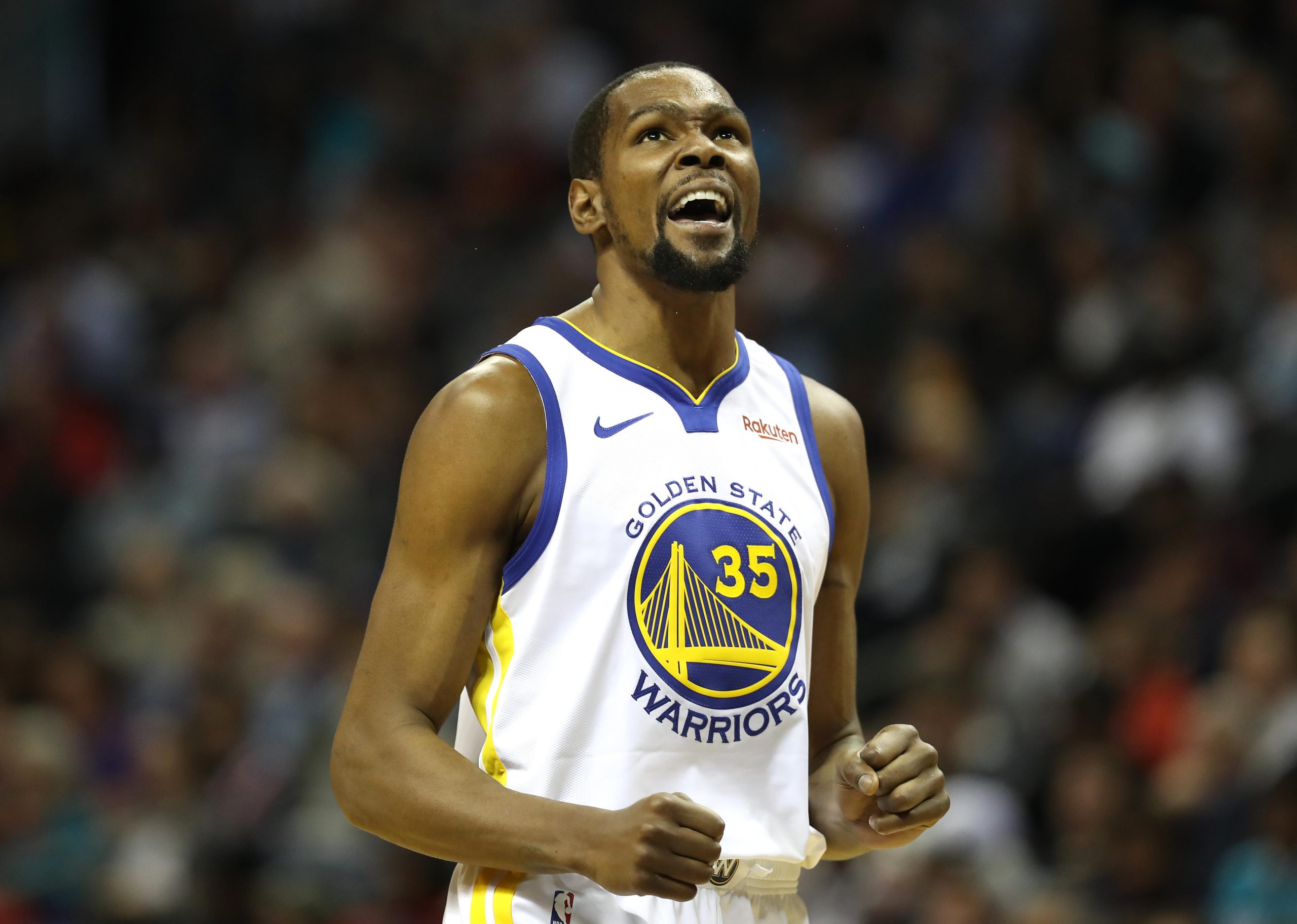
HOUSTON — Kevin Durant is entering his 20th NBA season with the Houston Rockets, and at 37 years old, he continues adding to a resume that already stands among the strongest Hall of Fame cases in league history, even as the forward himself has offered hints that his playing career may be nearing its final stretch.
Durant’s credentials speak for themselves: two NBA championships, two Finals MVP awards, the 2014 NBA MVP, 16 All-Star selections, 12 All-NBA Team selections, and four Olympic gold medals as Team USA’s all-time leading scorer. He is currently the NBA’s sixth all-time leading scorer, having passed Dallas Mavericks Hall of Famer Dirk Nowitzki for that position on January 18 during a game against New Orleans. Durant now sits 544 points behind Michael Jordan for fifth place on the all-time scoring list.
Even at his age, Durant showed no signs of significant decline during his first full season in Houston. He appeared in 78 games during the 2025-26 season, leading the Rockets in scoring at 26.0 points per game while also leading the team in minutes played and shooting accuracy. He added 5.5 rebounds and 4.8 assists per game, production that earned him an All-NBA Second Team selection and helped Houston win more than 50 games and secure the fifth seed in the Western Conference, despite the team’s offense being tested by an injury to starting point guard Fred VanVleet during the year. The Rockets were ultimately eliminated in the first round of the 2026 playoffs by the Los Angeles Lakers.
Durant’s individual honors continued piling up throughout the season. He earned his 16th career All-Star selection, making him, at 37, the oldest player in Rockets franchise history to receive the honor. That selection also gave him the fourth-most All-Star appearances in NBA history, trailing only LeBron James, with 22, Kareem Abdul-Jabbar, with 19, and Kobe Bryant, with 18. Durant also continued closing in on one of basketball’s rarer statistical milestones: with 997 career games of 20 or more points, he needs just three more such performances to join James, Karl Malone and Abdul-Jabbar as the only players in NBA history to reach 1,000 career 20-point games. He is also one of just two players in league history to combine a career scoring average above 25 points per game with a true shooting percentage of at least .600.
Durant re-signed with the Rockets in February, committing to Houston for at least the near term even as questions persist about how much longer his career will continue. Speaking to Rockets legend Hakeem Olajuwon in an interview for Durant’s media company, Boardroom, Durant declined to set a firm timeline for retirement but suggested that playing five more seasons, which would take him to age 42, one year older than LeBron James is now, “sounds like it might be a stretch.”
In a separate, widely circulated clip, Durant went further, signaling to fans that the upcoming 2026-27 season could be his last, holding up a single finger to indicate one more year when informed that the news would be difficult for fans to hear. Should that timeline hold, Durant’s final season would close out a career spanning two decades and stops with the Seattle SuperSonics and Oklahoma City Thunder, Golden State Warriors, Brooklyn Nets, Phoenix Suns and Houston Rockets.
Rockets head coach Ime Udoka has pushed back on any notion that age has diminished Durant’s effectiveness on the floor, pointing instead to the consistency he has brought to a young Houston roster. “There’s no dropoff. It’s the same ol’ Kevin, efficient,” Udoka said. “It’s good for the group to have that [in Houston], and it’s rubbed off on our young guys. He goes about every day the same as he always has.”
Durant’s continued excellence at his age has drawn direct comparisons to James, who has similarly defied typical career arcs, recently signing a new two-year contract after his 23rd NBA season and continuing his own career into his 40s, most recently agreeing to join the Philadelphia 76ers. Some analysts have noted that James’s own longevity storyline has, at times, overshadowed the attention given to Durant’s comparable late-career production, even as both players continue performing at a level far exceeding typical expectations for players their age.
Heading into the 2026-27 season, Houston faces its own set of questions beyond Durant’s individual outlook. With VanVleet expected back from injury and the Western Conference growing increasingly competitive, some analysts have characterized the coming season as a pivotal, potentially final opportunity for Durant to pursue a championship with the Rockets, particularly given ongoing questions about the team’s ball-handling depth beyond Durant himself once opposing defenses key in on him.
Whatever the outcome of Houston’s season, Durant’s Hall of Fame case appears secure regardless of how much longer he continues playing. With his combination of individual accolades, historic scoring milestones and sustained production well into his late 30s, Durant’s enshrinement in the Naismith Memorial Basketball Hall of Fame is widely regarded as a formality once his playing career eventually does come to a close, whether that arrives after this season or, as history suggests may still be possible, several years further down the road.
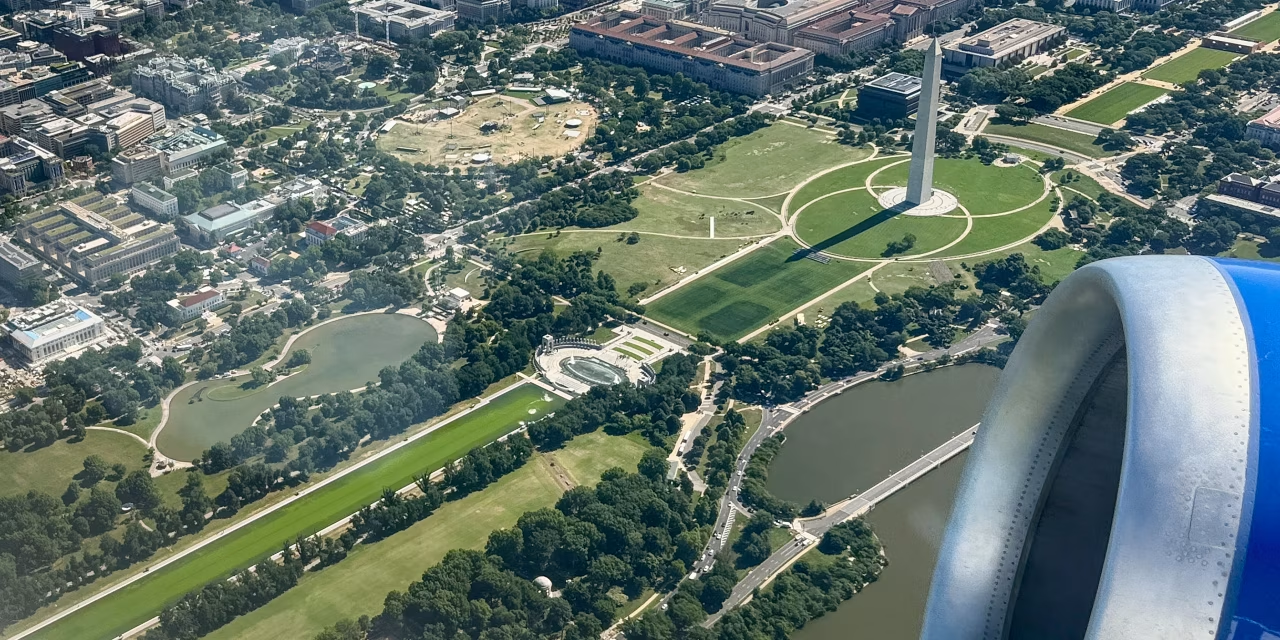

Federal aviation officials are preparing to launch an AI-powered air-traffic control tool in one of the nation’s busiest corridors as soon as Monday, The Wall Street Journal’s Andrew Tangel writes.
The software, called Smart, is expected to help the Federal Aviation Administration and airlines reduce delays and cancellations and find routes for flights when disruptions scramble air traffic. It will make its debut in the Washington, D.C., area ahead of a broader nationwide rollout, according to government and industry officials.
Copyright ©2026 Dow Jones & Company, Inc. All Rights Reserved. 87990cbe856818d5eddac44c7b1cdeb8
VCR: Consumer Discretionary Sector Dashboard For September
Business
Dow Jones Futures: Nasdaq, S&P 500 Hold; Robinhood, Sandisk, AMD, Moderna Surge Into Buy Areas

Dow Jones futures will open Sunday evening, along with S&P 500 futures and Nasdaq futures. The stock market was mixed, with the 10-year Treasury yield at 5%. The Nasdaq rose modestly, amid continued sector rotations among growth stocks. The S&P 500 largely held its ground but the Dow Jones and small-cap Russell 2000 fell solidly to three-month lows. Robinhood Markets…
Copyright ©2026 Investor’s Business Daily, LLC. All rights reserved. 87990cbe856818d5eddac44c7b1cdeb8

“I hope it clicks”, “Hand over the Premier League”

Maynooth researchers build advanced DNA computer

Kraken’s $965.02M Funding: A Crypto Revolution




![No Money [ DJ BEN RMX ]](https://wordupnews.com/wp-content/uploads/2026/02/1770218101_maxresdefault-80x80.jpg)
-

 Tech6 days ago
The Latest Weird Thing to Play Doom Is the Mapped-Out Brain of a Fruit Fly
-

 Fashion20 hours ago
Weekend Open Thread: Talbots – Corporette.com
-

 Crypto World5 days ago
Kraken Lets xStocks Holders Earn Yield Through DeFi
-

 Crypto World3 days ago
US Charges Robinhood Engineers Over Crypto Listing Trades
-

 Crypto World5 days ago
Revolut Attackers Warn of Ongoing Daily Customer Data Leaks
-

 Crypto World3 days ago
What Is the Status of the U.S.-Iran Peace Talks? Here's What Both Sides Are Saying
-

 Crypto World7 days ago
Can AI Build a Startup in 72 Hours? Elon Musk's Team Will Livestream the Test
-

 Crypto World5 days ago
Elon Musk Drops a Bombshell: Grok 5 Could Be the AGI Breakthrough
-

 Business6 days ago
Rivals Sam Altman and Elon Musk Rally Behind Dario Amodei’s Call for a Slowdown in AI Development
-
 Crypto World6 days ago
New Tesla Roadster Uses SpaceX Tech. Will It Impact the Stock Price?
-
 NewsBeat5 days ago
‘Sick conspiracy’: Trump says only guardrails AI needs is ‘a strong and smart (High IQ!) president’ in all-caps rant
-

 Crypto World4 days ago
NVIDIA Analysis: Attempted Rising Wedge Breakout Amid Pressure on the AI Sector
-

 Crypto World4 days ago
Robinhood engineers charged over $50K crypto scheme
-
Business5 days ago
SK Hynix ADRs Fall More Than 6% as Memory Rally Breaks on Fears of Slower AI Spending
-

 Crypto World5 days ago
DOJ Seeks to Seize $61M in Iran Oil Funds From Binance Accounts It Vouched For
-
 NewsBeat6 days ago
Last Night of the Proms pays moving tribute to Dolly Parton as Sheridan Smith wears a gold sequin jumpsuit in memory of the Queen of Country
-
Crypto World5 days ago
Can Circle’s Arc Repeat Robinhood Chain’s Meme Coin Boom?
-
 Crypto World6 days ago
Goldman Sachs backs 25bp Fed hike after CPI
-
 Crypto World5 days ago
3 Token Unlocks to Watch in the Third Week of September 2026
-
 NewsBeat15 hours ago
Trump says US has reached an agreement to take permanent control of Greenland’s security
You must be logged in to post a comment Login