Draeger Safety’s breathing equipment is designed and made in Blyth.(Image: Draeger Safety UK)
Strong demand for breathing equipment products has helped Blyth-based Draeger Safety to boost revenue and profits.
The family-run firm, which makes a range of kit including breathing apparatus for fire crews and industrial workers, has talked of healthy global demand for its products and a near 17% rise in domestic sales. New accounts for Draeger Safety UK show revenue grew from £120m to £138m in 2025, and operating profits followed, rising from £10.2m to £12.9m.
Draeger employs more than 590 people in the UK and Ireland, many of them at the Blyth Riverside Business Park factory and head office. The 137 year-old business has been manufacturing in the Northumberland town for more than 60 years and has a portfolio of products including gas detection devices, respiratory protection solutions, self-contained breathing apparatus, and drug and alcohol testing equipment
The Blyth site is where compressed air breathing equipment, rescue and escape equipment and fixed gas detection technology is designed and manufacturer. It took on work from Draeger’s former Plymouth site which was wound down in 2023.
Advertisement
A Gateshead site – opened during Covid lockdown and making face masks for frontline workers – was also wound down with that work being transferred elsewhere in the group. The firm also operates a sales and service centre in Aberdeen.
Draeger Safety bosses said 2025 marked the strongest ever performance of its Service division which provides support for safety-critical equipment, including maintenance, testing, calibration, and both preventive and reactive repairs. That work is delivered through a team of more than 100 people including specialist engineers who cover the UK and Ireland.
Matthew Bedford, managing director of Draeger Safety UK, said: “The growth of our service business is a natural evolution for Dräger. Our equipment – several lines of which are manufactured here in the UK – is recognised for its quality and long operational life, so ensuring it is professionally maintained is essential for our customers.
“Given the market conditions, it is more important than ever that we support our customers in maintaining their equipment to the highest standards, ensuring it remains reliable, efficient, and safe. This not only lowers the total cost of ownership but also demonstrates our commitment to environmental responsibility.
Advertisement
“By strengthening our service model, investing in long-term customer partnerships, and expanding our team, we have built a more resilient, scalable, and growth-focused service organisation equipped to meet our customers’ needs now and in the future.”
An interim dividend of £17.4m was paid to the firm’s German group owner, up from £4.4m in 2024. In July, Draeger Safety UK was awarded the Defence Employer Recognition Scheme (ERS) Gold Award, the highest accolade bestowed by the Ministry of Defence on employers who support the Armed Forces community.
Indian benchmark indices ended higher on Thursday, snapping a three-session losing streak after a volatile closing auction session (CAS).
After trading in the red for much of the day, the Sensex’s indicative price briefly jumped nearly 1,000 points to 75,708 on its weekly expiry, while the Nifty 50 surged 330 points to 23,762. Most of the gains evaporated by the final close, with the Sensex ending 138 points higher at 74,903 and the Nifty gaining 46 points to settle at 23,478.
Broader markets meanwhile remained in the red, with Nifty Midcap 100 and Nifty Smallcap 100 indices falling up to 0.4%. Notably, the closing auction session only affects stocks that are included in the F&O segment, less common in the broader markets.
Advertisement
Among the sectors, Nifty Financial Services, Nifty Bank and a few other indices closed in the green with up to 0.5% gains. Nifty Metal meanwhile dropped 0.65%. The overall market breadth remained negative, with NSE seeing 2,079 declines and 1,466 advances, while 121 stocks remained unchanged.
Live Events
What lies ahead for Dalal Street? While Dalal Street took a sigh of relief, caution is warranted. The prospect of synchronised monetary tightening strengthened as higher crude prices and prolonged geopolitical tensions reinforced energy-led inflation concerns, said Vinod Nair, Head of Research at Geojit Investments. He added that investors now await key US inflation data for cues on the rate trajectory. Meanwhile, rising global bond yields, coupled with concerns over a potential yen carry trade unwind amid expectations of a BOJ rate hike and a stronger yen, are likely to keep capital flows into emerging markets under pressure.The domestic market endured a choppy session on expiry day amid weak Asian cues, as investor focus remained closely tethered to the volatility in crude prices, he said. “Although the strong August equity fund flow data and the moderation in the SIP stoppage ratio lent support to the markets, sentiment was tempered by the depreciating rupee and firming domestic bond yields,” according to the analyst.
Technical view on Nifty
The Nifty closed higher as the CAS closing came high following a lacklustre session, said Rupak De, Senior Technical Analyst at LKP Securities. He explained that on the daily timeframe, the index has formed a hammer pattern, suggesting a pause in the recent bearish trend.
“On the lower end, immediate support is placed in the 23,380–23,400 zone. On the higher end, resistance is placed at 23,550–23,600. A sustained move above 23,600 could extend the recovery towards 23,800,” the analyst said.
Advertisement
Disclaimer: This article has been written by Debaroti Adhikary, who is not a SEBI-registered Research Analyst or an Investment Adviser. Debaroti Adhikary and his/her ‘relative(s)’ (as defined under Section 2(77) of the Companies Act, 2013) do not hold any financial interest in the companies mentioned in this article as of the date of publication. The views/recommendations mentioned in this article, wherever applicable, are those of the respective SEBI-registered Research Analyst/brokerage and have been reproduced/reported with due attribution. They should not be construed as the views or recommendations of The Economic Times Digital or the journalist. Readers are advised to consider the original research report and make their investment decisions based on their own assessment. Brokerage disclaimers here.
A worker at Ford’s Kentucky Truck Plant on April 30, 2025.
Michael Wayland | CNBC
DETROIT — Ford Motor on Thursday announced a $1 billion investment to build a new paint shop at its crucial Kentucky Truck Plant.
Advertisement
The facility, which Ford has called its most important and profitable plant globally, produces the automaker’s large F-250 to F-550 Super Duty trucks as well as the Ford Expedition and Lincoln Navigator SUVs.
The announcement comes two days after Transportation Secretary Sean Duffy expressed “profound concern” about the automaker’s U.S. “manufacturing integrity” and ties to Chinese companies that the Trump administration believed could be detrimental to the Detroit carmaker and U.S. automotive industry.
Ford, which regularly touts its position as the top-producing automaker in the U.S., called the comments a “wrongheaded attempt to capture headlines.”
Paint shops are a critical and costly part of a vehicle assembly plant. The new facility for Ford is expected to the replace the plant’s “existing paint shop and further [modernize] one of Ford’s most important manufacturing operations,” the company said in a press release Thursday.
Advertisement
The Detroit automaker said it would break ground on the facility later this year. A Ford spokesman did not immediately respond to a request for comment on expected timing for completion of the new facility.
Ford noted the investment is the latest following roughly $4 billion in announcements for its Kentucky facilities in recent years.
“These investments demonstrate our confidence in Kentucky’s workforce, our commitment to American manufacturing, and our belief that the future of mobility and energy will be built right here in the United States,” Ford CEO Jim Farley said in the release.
Duffy’s criticism was addressed to Farley in a letter released by the Trump administration Tuesday. Following a lengthy response from Ford, the White House’s Rapid Response account on X released a positive statement Wednesday, calling Ford “a GREAT American company.”
A “For Sale” sign outside a home in Crockett, California, US, on Thursday, Sept. 3, 2026.
Davis Paul Morris | Bloomberg | Getty Images
Homebuyers continue to struggle amid higher mortgage rates and lofty home prices.
Sales of previously owned homes fell 2% in August from July to 3.98 million units on a seasonally adjusted, annualized basis, according to the National Association of Realtors. The sales activity marked the slowest pace since June 2025 and was felt hardest in the Northeast and Midwest.
Advertisement
Sales were down 1.2% year over year.
This count is based on closings, so contracts likely signed in June and July, when mortgage rates were higher than they were in the spring. Rates moved sharply higher in the middle of July.
“Mortgage rates and home sales move in opposite directions, so it’s not surprising to see a mild dip in home buying activity due to high mortgage rates,” said Lawrence Yun, chief economist for the Realtors. “Still, home prices are rising, and existing home sales are actually up 1.6% year-to-date through the first eight months of the year.”
Housing supply totaled 1.62 million homes for sale at the end of August, up 3.2% from July and up 5.9% from the year before. At the current sales pace, that represents a 4.9-month supply — the highest level in more than a decade, according to NAR.
Advertisement
Despite more supply, prices continue to rise. The median price of a home sold in August was $429,100, up 1.6% from August 2025. That is a new high for the month of August.
Price gains were strongest in the Northeast, where inventory is lowest. The West was the only region to see a median price decline year over year.
Get Property Play directly to your inbox
CNBC’s Property Play with Diana Olick covers new and evolving opportunities for the real estate investor, delivered weekly to your inbox.
Sales continue to be strongest on the highest end of the market. Compared with August 2025, sales of homes priced between $100,000 and $250,000 were down 10%, while sales of homes priced above $1 million were 3.9% higher. The million-dollar-plus range was the only price range that saw increased sales.
Homes are sitting on the market longer, averaging 31 days in August compared with 29 days in July.
Buyers paying entirely in cash made up 27% of August sales, slightly higher than July but down slightly from August of last year. First-time buyers made up 30% of sales, up slightly from both July and from August 2025.
Investors and second-home buyers, however, fell off compared with 2025 — accounting for just 15% of August sales, down from 21% the year before.
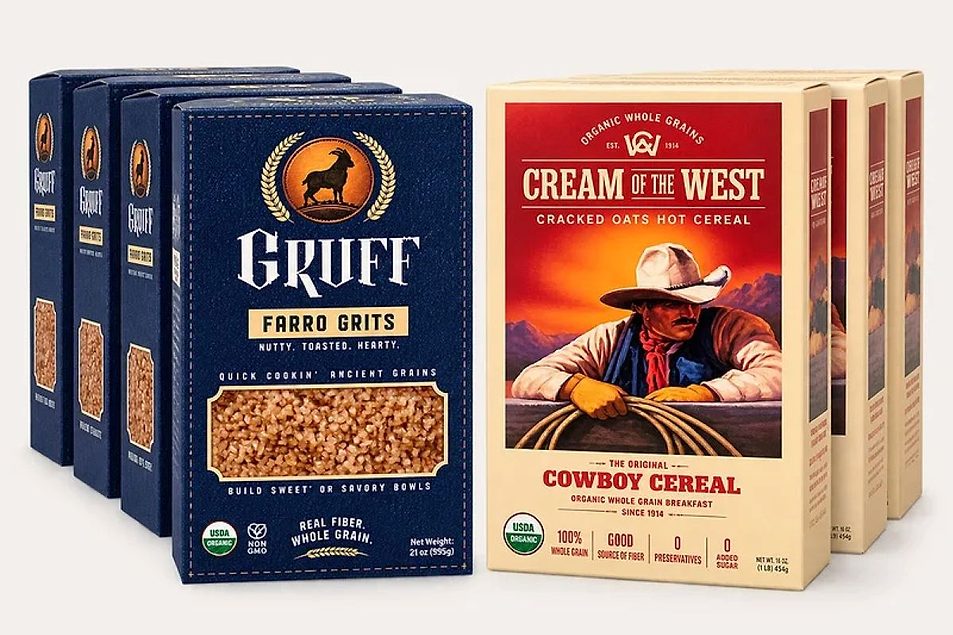
HAVRE, MONT. — Nutrition has been a top priority for Gruff Grains since its founding in January 2022. The Havre-based company makes whole grain grits from ancient farro and emmer using regenerative farming practices. The company also produces Cream of the West, a whole grain cereal with all its bran, germ and endosperm intact, meaning that it is still full of protein fiber and minerals.
“We’re just trying to bridge the gap to wholesome delicious meals and we’re just excited to be part of a movement to bring more nutrition into the lives of consumers,” said Crystal Manuel, co-founder of Gruff Grains. “The natural fiber that our cereals offer is something that’s being talked a lot about in the food industry right now. It’s kind of funny, fiber’s kind of trending, but the reality is whole grains have always been a fantastic source of it. They’re actually a perfect source for it when whole, and so we’re really excited to be able to offer that to our consumers.”
In an August interview with Milling & Baking News, Manuel also discussed the company’s milling techniques and the future of Cream of the West.
When asked how Gruff Grains mills ancient grains, Manuel explained that she and her fellow farmers typically coarse crack ancient grains to keep them whole and keep the nutrients intact.
Advertisement
“Well, Gruff’s innovation is the milling process,” Manuel said. “Essentially, what we’ve decided to do is to coarse crack ancient grain grits … I have always worked with either whole grain flour or with whole berry ancient grains from off the farm that we grow, and I discovered that by coarse cracking them, we could cook them in 12 minutes versus 45 to 60 (minutes). And so that’s kind of where the idea came from to coarse crack them, but ideally the grains are left whole. It’s a whole berry, coarsely cracked. So essentially the nutrients are left intact, but it’s cracked enough that it cooks quicker.”
Speaking of nutrients, Manuel believes Gruff Grains’ grains are so nutrient dense because the company adheres to regenerative farming practices and undergoes thorough inspections.
“So there are things that we have to adhere to every year,” Manuel said. “First of all, we have to do an organic certified inspection for that particular set of paperwork and for the certification of just the basic certified organic status on the farm. Once that’s complete, then we have another inspection by a different certifying agency for the regenerative organic certificate that we’ll receive. But in order to receive that, besides doing full farm tours and all the things that are required in terms of showing them what we do, we also have to provide soil samples. So we’re constantly monitoring the nutrient density and the health of our soils and then making adjustments on the farm as necessary to improve soils in whatever way that were able to with the means that we use, which could look like a number of things — from planting legumes to determining where to graze cattle — so that the fields have become naturally fertilized.”
Crystal Manuel.
Advertisement
| Photo: Western Ventures Photography
Regarding Cream of the West, Manuel said what separates it from other breakfast cereals is that it only contains one ingredient — 100% whole grains — whereas other cereals contain multiple ingredients.
“Well, the ingredient label is incredibly simple, which is something we’re really proud of, and it’s 100% whole grains,” she said. “Not just whole grains, which is definitely an identifier because oftentimes other cereal brands will use a variety of ingredients, sometimes even enriched ingredients or synthetic nutrients, to build out their cereal. So the difference mainly with ours is that it’s essentially one ingredient. It’s just straightforward. It’s the whole ingredient. There’s nothing added and nothing stripped away from the grains that we use, so organic 100% whole grains.”
Cream of the West is sold in select grocery stores in Montana and the Western United States, as well as directly through the company’s website and through online retailers, including Walmart and Amazon.
Manuel said Gruff Grains plansto expand the Cream of the West brand into other categories while keeping the products organic.
Advertisement
“We have three new recipes designed for some really incredible organic, 100% whole grain pancakes,” Manuel said. “We have some things in the works for more blends and more types of cereal that will be coming forward. We have a granola product that is in the testing phases right now. So we intend on expanding the product line, but the most important thing is just the integrity of the sourcing of the ingredients and being true to the time-honored tradition of the company, which actually dates back to 1914.”
NEW ORLEANS — Even a small amount of light exposure during sleep may alter the shape and function of heart muscle over time, increasing the risk of future cardiovascular disease, according to a new study published Wednesday in the European Heart Journal.
Researchers analyzed sleep data from more than 11,000 people without existing cardiovascular disease who were part of the UK Biobank study, a large biomedical database containing genetic and health information from 500,000 residents of the United Kingdom. Participants wore a wrist sensor for seven days to measure nighttime light exposure, and three years later underwent a cardiovascular MRI to examine their heart’s structure and function.
Dr. Lu Qi, the study’s senior author and director of the Tulane University Obesity Research Center in New Orleans, described light pollution as an emerging threat to cardiovascular health.
“Light pollution has emerged as a new risk factor for cardiovascular disease,” Qi said in a statement, adding that reducing nighttime light exposure should be considered by both clinicians and policymakers as a potential strategy for preventing heart disease going forward.
Advertisement
For quality sleep, experts generally recommend keeping a bedroom at no more than about 1 lux, a standardized unit of illumination. By comparison, roughly 3 lux is equivalent to moonlight or the faint light that bleeds under a closed bedroom door. The study found that people exposed to more than 3 lux of light while sleeping showed thickened walls in the heart’s left ventricle chamber, reducing the space available inside that chamber, along with a measurable reduction in the heart muscle’s ability to flex properly during each heartbeat, an early warning sign of broader heart dysfunction. Researchers also identified additional structural changes in two other heart chambers, with the extent of damage increasing as bedroom light levels grew brighter. Common sources of that extra nighttime light included a face-up smartphone screen, a glowing digital alarm clock, or general light pollution seeping in from outside.
Dr. Andrew Freeman, director of cardiovascular prevention and wellness at National Jewish Health in Denver, who was not involved in the study, explained the broader significance of the structural heart changes researchers identified, a process known medically as cardiac remodeling.
“We don’t want the heart muscle to get thick,” Freeman said, noting that similar undesirable changes tend to occur when the heart is repeatedly exposed to excess light and the poor-quality sleep that often accompanies it.
According to Qi, between 24% and 49% of the light exposure’s overall impact on the heart could be attributed specifically to shortened sleep duration, defined in the study as less than five to six hours per night, which researchers described as a direct consequence of nighttime light exposure disrupting normal sleep patterns. The remaining share of the observed cardiovascular risk may stem from other pathways connected to nighttime light exposure, including its effects on stress levels and broader biological changes such as blood pressure and heart rate fluctuations, according to Qi.
Advertisement
Not all outside experts were fully convinced the study establishes a definitive causal relationship. Karl Lawrence, a lecturer at the Institute of Pharmaceutical Science at King’s College London, who also was not involved in the research, raised several methodological concerns regarding the study’s design.
“Further studies would be needed to demonstrate causality,” Lawrence said, noting that a single week of light exposure monitoring represents a relatively short window for capturing someone’s overall nighttime light habits, and that measuring light through a wrist-worn sensor may not accurately reflect the actual dose of light reaching a person’s eyes, potentially leading to either an overestimate or underestimate of true exposure.
Despite those limitations, sleep and cardiovascular health experts generally agree that blocking out nighttime light remains a relatively simple, low-cost intervention available to most people. Heavy drapes or inexpensive blackout curtains and shades placed over bedroom windows can significantly reduce outside light exposure, though experts recommend opening those coverings each morning to allow natural daylight in, which helps regulate the body’s internal circadian rhythm.
For light that continues creeping in under doors or around window edges even with blackout coverings in place, experts suggest using light-blocking foam strips, often sold as draft stoppers or weatherproofing materials, or turning to a simple sleep mask if low light levels persist. Hallway lights should generally be turned off overnight, and any bedside reading lamps or night-lights should ideally use warm white, deep amber or red bulbs with low or near-zero effective color temperatures, positioned dim and close to floor level if a night-light is needed at all, since warmer, reddish or brownish tones are believed to be less disruptive to sleep quality than brighter, cooler-toned lighting.
Advertisement
The study adds to a growing body of research examining how environmental factors, including artificial light exposure, may influence long-term cardiovascular health outcomes, an area of increasing interest to public health researchers given the near-universal presence of artificial lighting, electronic devices and outdoor light pollution in most modern sleeping environments. With cardiovascular disease remaining a leading cause of death globally, researchers say identifying and addressing modifiable environmental risk factors, including something as straightforward as bedroom light exposure, could offer a relatively low-barrier avenue for reducing long-term heart disease risk across large populations, even as additional research continues working to more precisely establish the underlying mechanisms connecting nighttime light exposure to measurable changes in heart structure and function over time.
Taiwan’s largest nutritional ingredient manufacturer draws media attention by its strategic visual design with an approach that extended beyond its product portfolio of advanced sports nutrition, next-generation plant protein and clear protein water solutions.
BANGKOK, Thailand — Vitafoods Asia 2026, Asia’s leading nutraceutical event, brought together more than 16,000 industry professionals, 650+ exhibitors and participants from over 80 countries, connecting suppliers, manufacturers, distributors and brand decision-makers across the global health and nutrition value chain on ingredients and formula solutions.
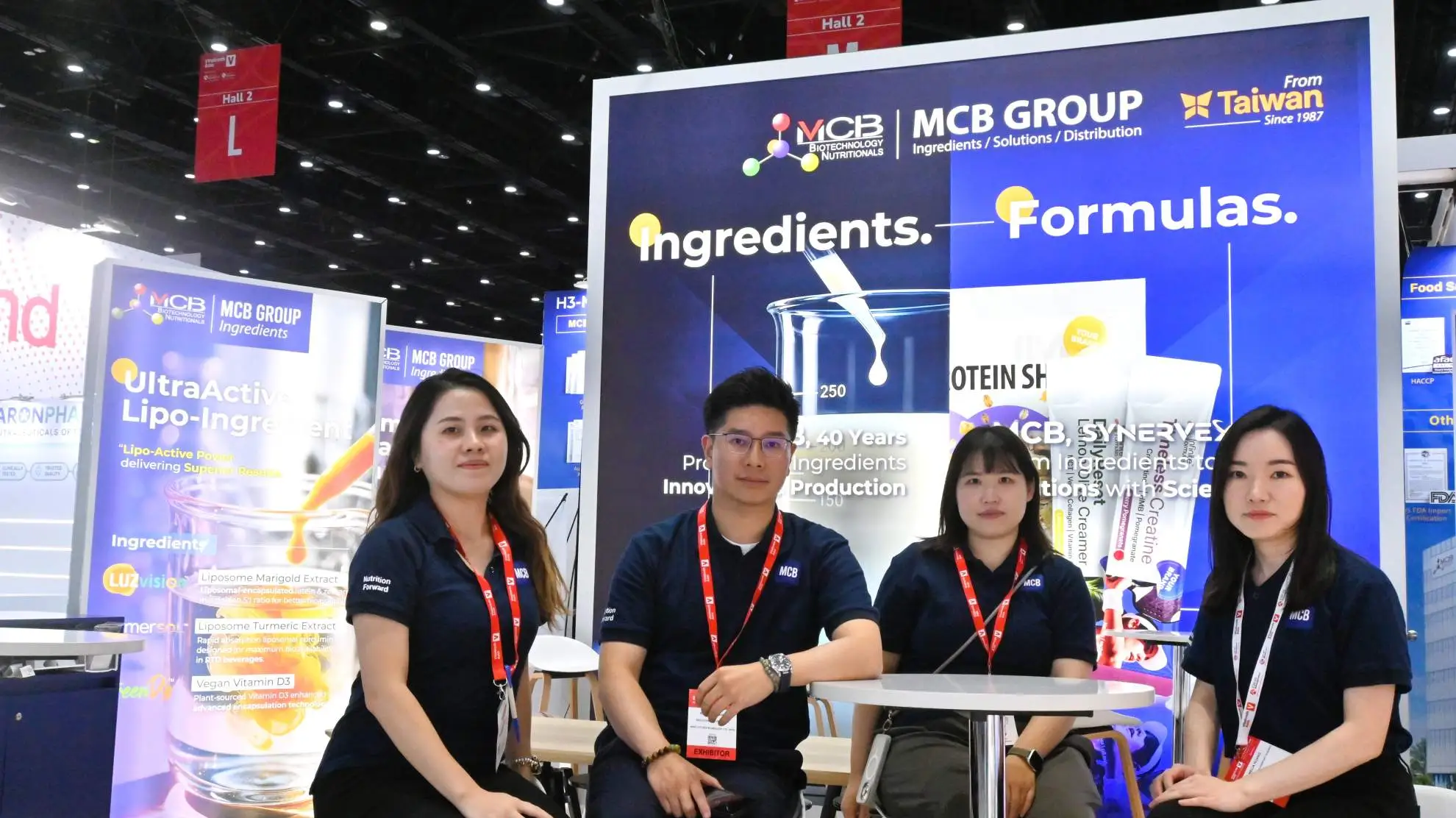
At this international event, a Taiwan-based MCB — Ming Chyi Biotechnology—drew attention with its distinctive exhibition concept that extended beyond the conventional technical aesthetic of the nutritional ingredient sector, showcasing advanced sports nutrition, next-generation plant protein and clear protein water private-label solutions. Integrating sports, wellness, plant-based nutrition and contemporary lifestyle elements, MCB transformed its booth into an application-oriented brand experience, demonstrating how nutritional ingredients and technologies can translate into products for everyday consumers.
The design and exhibition approach drew media attention and was featured by a prominent news outlet, highlighting MCB’s evolving position from a traditional ingredient manufacturer to a global nutrition solutions partner.
Advertisement
圖表 1 Designed to reflect the evolution of modern nutrition, MCB Group’s Vitafoods Asia 2026 booth combines clean architectural lines, vivid lifestyle imagery and application-focused product displays.
Sports Nutrition Evolves into Everyday Performance and Lifestyle Aesthetic
One of the key market shifts reflected in MCB’s exhibition strategy is the continued convergence of sports, wellness and everyday lifestyle. The sports nutrition market is expanding beyond professional athletes as consumers increasingly adopt performance-oriented lifestyles. The rise of mass-participation fitness formats such as HYROX demonstrates how the boundary between competitive sport and everyday fitness is becoming less defined, driving demand for nutrition solutions that support not only athletic performance, but also hydration, recovery, muscle performance and daily wellness.
This shift also reflects the evolution of the modern fitness consumer. As demonstrated by active-lifestyle brands such as ALO Yoga and On Running, physical activity is increasingly integrated into urban life, work, travel, fashion and personal well-being. Nutrition follows the same trajectory, moving beyond its traditional role as a tool for athletic performance to become part of everyday routines spanning fitness, travel, active aging, health management and daily nutritional supplementation.
Against this backdrop, MCB is expanding its role from ingredient manufacturing to integrated nutrition solutions. By combining ingredient expertise, formulation capabilities, sensory optimization and advanced powder processing, MCB develops solutions including plant-based protein, clear protein water, functional lipid powders and instantized ingredients. These capabilities address growing consumer expectations for products that are nutritionally effective, easy to consume, highly soluble and enjoyable to drink.
The shift is particularly evident in plant protein and clear protein applications, where consumer expectations extend beyond protein content to texture, transparency, flavor and overall drinking experience. MCB’s approach is designed to bridge the gap between ingredient technology and consumer-ready products, helping brands translate nutritional functionality into commercially viable solutions for sports nutrition, active lifestyles and everyday wellness.
圖表 2 MCB’s strategic visual design captures modern fitness trends, including the active lifestyles represented by brands such as ALO Yoga and On, and translates its booth into an application-oriented brand experience for every consumer.
MCB Presenting a New Global Image for Taiwan’s Nutrition Industry
“International exhibitions are not simply places to display products. They are important platforms for a brand to communicate its position and value to the global market,” MCB stated. “When customers enter the MCB booth, we want them to see more than individual ingredients. We want them to imagine how these ingredients can become the next commercially successful product.”
MCB believes that modern B2B communication can no longer rely only on specifications, capacity, and pricing. As consumers increasingly value health, physical activity, quality of life, visual design, and brand purpose, ingredient manufacturers must also be able to translate scientific technologies into clear and engaging market language.
Advertisement
Founded in Taiwan in 1987, MCB has nearly four decades of experience in nutritional ingredients, spray-dried powders, microencapsulation, formulation development and finished-product manufacturing. Its products are exported to more than 35 countries across Asia, Europe, North America, the Middle East and Oceania, serving consumer brands, ingredient distributors, nutritional product manufacturers and retail partners.
Today, MCB’s annual revenue has surpassed NT$1 billion. As Taiwan’s largest nutritional ingredient manufacturer and one of the country’s leading exporters of functional powders and nutrition solutions, the company produces 4,000–5,000 metric tons of powdered ingredients annually and has the capacity to manufacture and package more than 50 million servings of finished nutritional formulations each year.
Investing in Global Manufacturing and Brand Visibility
MCB invests tens of millions of New Taiwan dollars each year in international exhibitions, corporate identity, product communication, overseas marketing, and global customer support.
For MCB, international exhibitions are not simply short-term sales activities but part of a long-term global brand strategy. From both architecture and product visuals to visitor flow and business hospitality, every element reflects the company’s commitment to international markets. The company participates in major nutrition and health exhibitions across Asia, Europe, and North America, using a consistent and highly recognizable brand identity to strengthen its relationships with global consumer brands, distributors, manufacturers, and retail partners.
Advertisement
MCB is also expanding its research and manufacturing infrastructure in Taiwan. The company is investing more than NT$1.2 billion in the phased construction of an advanced ingredient research and precision powder manufacturing center. The new facility incorporates international sustainability concepts, including LEED Gold and WELL-oriented planning.
These investments demonstrate MCB’s long-term commitment to becoming more than a reliable manufacturer. The company aims to serve as a strategic partner capable of helping customers identify market trends, accelerate product development, and successfully commercialize innovative ideas.
The 2026 State of the Baking Industry: Sustainability and the Future of Baking study, conducted by Cypress Research, reveals that despite some engagement retraction in sustainability initiatives, the majority of bakers and supplier companies still prioritize sustainability as a part of their business practices. Many of these companies are shifting their focus to sustainability initiatives that also support their business goals, such as improved efficiency and reduced costs. However, the 2026 study also reveals a trend of fewer companies setting measurable targets for their sustainability initiatives compared to 2023 levels.
On the environmental side, significantly fewer ingredient manufacturers reported formal targets for programming in waste reduction, materials recycling, energy reduction, sustainable packaging, renewable energy use and regenerative agriculture. Far fewer bakers reported established key performance indicators (KPIs) for reducing deforestation-based farming practices and humane farming. Significantly fewer equipment manufacturers reported measuring energy reduction or water reduction programs. The study findings themselves do not indicate a reason behind this decline.
“Environmentally, having targets in place is a low-hanging fruit, so I’m curious about the rationale for not seeing higher percentages here,” said Marjorie Hellmer, president of Cypress Research.
Even without measuring the between-year differences, most of the initiatives included in the 2026 study had less than half of baker and supplier survey respondents reporting that their companies with measurable/formal targets. Waste reduction (74%), materials recycling (62%) and energy reduction (56%) were the only exceptions, and only on the baker side.
Advertisement
2026 targets were much more likely to be set for social and governance initiatives such as employee safety, wages, wellness, financial performance reporting and monitoring company performance.
Many of these initiatives saw more than half of respondents reporting that their companies had targets in place, and that share had grown since 2023.


















































You must be logged in to post a comment Login