Connect with us
DAPA Banner

Business

Flooring Superstore Mulls Restructure as Harpin-Backed Retailer Faces Store Closures

Published

on

Flooring Superstore Mulls Restructure as Harpin-Backed Retailer Faces Store Closures

The 50-strong flooring chain backed by Sir Richard Harpin’s Growth Partner has appointed restructuring advisers, raising the prospect of store closures and redundancies as the cost-of-living squeeze continues to drag on consumer spending.

Flooring Superstore, which employs around 300 people from its Bishop Auckland headquarters in County Durham, has drafted in Begbies Traynor and the restructuring arm of Santander to weigh its options. People familiar with the matter said a company voluntary arrangement (CVA) or a full administration are both on the table, controversial routes that typically squeeze landlords and suppliers while preserving the equity of incumbent owners and senior creditors.

The retailer was co-founded in 2012 by Dan Foskett and sells vinyl, laminate and wood flooring alongside artificial grass through its branded showrooms and online channels. Growth Partner, the investment vehicle established by Harpin, the entrepreneur behind home emergency repair group HomeServe, backed the business in 2020 with a £5 million injection that allowed Foskett to crystallise a portion of his shareholding. He retains a 22 per cent stake, while Growth Partner holds 25 per cent. The remainder is split between three individual investors.

Harpin, who last year published “How to Make a Billion in Nine Steps”, focuses on British and European retail names primed for scale. His portfolio includes pizza oven specialist Gozney and bathroom retailer Easy Bathrooms. However, several Growth Partner-backed businesses have collapsed in recent years, among them Crafters’ Companion, co-founded by Dragons’ Den investor Sara Davies, and Yorkshire-based Keelham Farm Shop.

Flooring Superstore was a pandemic winner, riding the wave of home-improvement spending while consumers were confined to their properties. That tailwind reversed sharply once lockdowns eased, as the chain was forced to absorb spiralling energy and raw material costs and unwind the additional capacity it had built. The cost-of-living crisis has since hammered demand for big-ticket household refurbishments.

Advertisement

Connection Retail, the parent company that also owns Direct Wood Flooring, Grass Direct and Snug Carpets, posted turnover of £49.3 million in the year to the end of July 2024, down from £51.8 million a year earlier. Pre-tax profit nonetheless swung from a £3.3 million loss to a £619,000 profit, while net debt stood at £3.5 million at the year-end.

Santander shored up the group’s balance sheet last June with a debenture, a secured loan agreement under which the lender acts as security trustee. Filings at Companies House show Connection Retail has two outstanding charges, having pledged its property and overall business assets as collateral to both Growth Partner and the high-street bank.

The disclosed restructuring talks mark a striking pivot from the expansion blueprint Foskett set out only twelve months ago, when he told The Times that he intended to grow the estate to as many as 150 stores, deepen the brand’s marketing reach and continue building its exclusive product range.

Growth Partner and Flooring Superstore had not responded to requests for comment at the time of publication. Santander and Begbies Traynor declined to comment.

Advertisement

Amy Ingham

Amy is a newly qualified journalist specialising in business journalism at Business Matters with responsibility for news content for what is now the UK’s largest print and online source of current business news.

Advertisement
Continue Reading
Click to comment

You must be logged in to post a comment Login

Leave a Reply

Business

Coal India Q4 Results: Profit rises 12% to Rs 10,908 crore; co declares Rs 5.25 dividend

Published

on

Coal India Q4 Results: Profit rises 12% to Rs 10,908 crore; co declares Rs 5.25 dividend
Coal India reported a steady March quarter performance, with consolidated profit after tax rising 12% YoY to Rs 10,908 crore, while revenue from operations increased 6% to Rs 46,490 crore, supported by improved realizations and higher other income.

Further, the Board has declared final dividend for FY26 at Rs 5.25 per share. Payment of final dividend for FY26 will be made subject to approval of shareholders in the ensuing AGM.

Profit before tax for the quarter stood at Rs 14,627 crore, also up 12% from Rs 13,070 crore a year ago, reflecting stable operating performance despite cost pressures. Total income rose 8% to Rs 51,618 crore during the quarter.

The company’s EBITDA grew 12% to Rs 17,917 crore, with margins expanding to 39% from 36% in the year-ago period, indicating improved operating leverage.

Advertisement

Revenue growth was driven largely by higher realizations, even as overall sales volumes remained largely flat. Average realization per tonne increased 6% year-on-year to Rs 2,290, while total sales volume declined marginally by about 1% to 198.83 million tonnes.


On the operational side, coal production for the quarter rose slightly to 239 million tonnes compared to 238 million tonnes last year, while offtake declined 2% to 199 million tonnes, reflecting softer dispatches. Overburden removal remained largely flat at 577 million cubic metres.
Expenses increased 6% to Rs 37,107 crore during the quarter, driven by a sharp rise in other expenses and finance costs. Other expenses surged 18% YoY due to higher levies, particularly the increase in Jharkhand mineral-bearing land cess, while finance costs jumped 42%, indicating higher borrowing and cost of funds.Segment-wise, performance remained mixed across subsidiaries. Key profit contributors such as Northern Coalfields (NCL) and Mahanadi Coalfields (MCL) delivered strong growth, while Western Coalfields (WCL) and Bharat Coking Coal (BCCL) saw a decline in profitability, highlighting regional variability in operations.

For the full year FY26, Coal India reported a 12% decline in profit after tax to Rs 31,071 crore, even as revenue from operations remained broadly flat at Rs 1.68 lakh crore. The decline in annual profitability was attributed to higher expenses, including a one-time provision related to executive pay revision and increased statutory levies.

Continue Reading

Business

Opus Genetics president Benjamin Yerxa sells $39,121 in stock

Published

on


Opus Genetics president Benjamin Yerxa sells $39,121 in stock

Continue Reading

Business

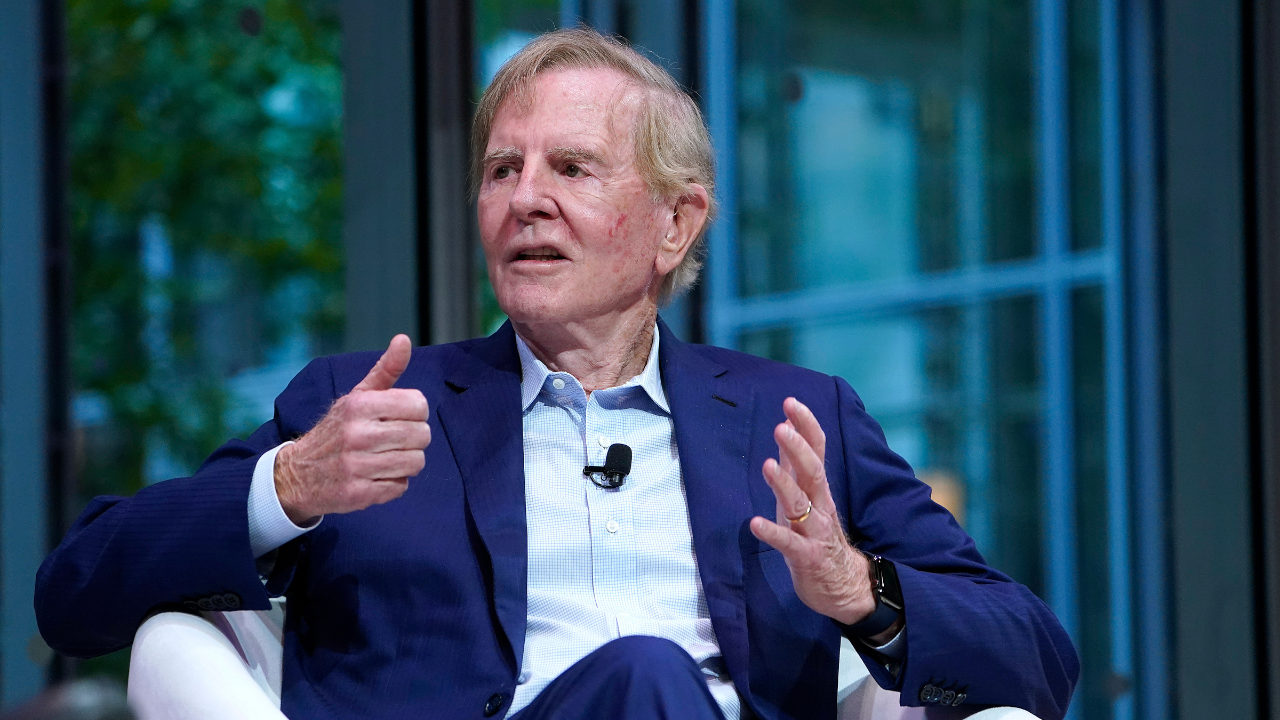
Ex-Apple CEO John Sculley says OpenAI is Apple’s biggest threat in years

Published

on

Ex-Apple CEO John Sculley says OpenAI is Apple's biggest threat in years

Former Apple CEO John Sculley identified OpenAI as the largest competitive threat facing Apple in years, marking a potential shift after decades of dominance by the iPhone maker in the technology industry.

“This is the biggest thing I think that’s happened since Tim Cook took over from Steve Jobs 15 years ago,” he told “The Claman Countdown” Monday.

Advertisement

Sculley’s comments come one week after it was announced that Tim Cook is stepping down as Apple’s CEO and will become its executive chairman, and as both Apple and OpenAI are reportedly exploring the development of similar next-generation AI products.

Apple is reportedly set to launch a wearable AI pin, Sculley said, while former Apple designer Jony Ive, credited for helping transform the company’s product vision, is partnering up with OpenAI to create its own AI-powered hardware.

TECH TITANS ELON MUSK AND SAM ALTMAN HEAD TO COURT IN TRIAL OVER OPENAI: WHAT TO KNOW

OpenAI CEO Sam Altman speaks in Japan

Open AI CEO Sam Altman speaks during a talk session with SoftBank Group CEO Masayoshi Son at an event titled “Transforming Business through AI” in Tokyo, Japan, on Feb. 3. (Tomohiro Ohsumi/Getty Images / Getty Images)

“It’s one that may have a camera in it. It won’t have a screen. And it’s going to be able to have what’s called ambient awareness, meaning it’s always on, it’s listening, and you get it through an ear pod,” he explained. “And that would be an entirely new user experience for people in the Apple ecosystem.”

Advertisement

Sculley said each company’s interpretation of the device will be different, but warned the competition poses a threat to Apple’s longstanding tech dominance.

He signaled that consumer loyalty may vary, as buyers will gravitate toward their preferred product, rather than defaulting to Apple’s ecosystem.

“I expect that they’re going to be taking very different ways of interpreting it in terms of a product,” the former Apple CEO said.

WHO IS JOHN TERNUS, SET TO SUCCEED TIM TOOK AS APPLE’S CEO?

Advertisement

“Some are going to become loyal to one version and some are gonna become loyal to another.”

The emergence of OpenAI as a dominant force in the tech world is part of what Sculley described as a “weather system” that is constantly shifting the industry.

John Ternus and Tim Cook

Tim Cook to become Apple Executive chairman and John Ternus to become Apple CEO on September 1, 2026. (Reuters / Reuters)

CLICK HERE TO DOWNLOAD THE FOX NEWS APP

Sculley affirmed that amid the AI storm, Apple’s leadership remains strong, even amid concerns surrounding Cook’s transition.

Advertisement

“Tim Cook did a spectacular job as CEO,” Sculley told FOX Business. “And the incoming CEO, John Ternus, looks incredibly qualified to be the next leader. So, from that standpoint, Apple’s in a very good position.”

Sculley went on to share advice for Apple as it rings in its 50th year in operation and as the race for AI dominance only intensifies.

“Stay true to the values Apple has been so successful at: beautiful products, no compromises,” he said.

Advertisement
Continue Reading

Business

European flight prices are falling in short term, Wizz Air boss says

Published

on

European flight prices are falling in short term, Wizz Air boss says

While many airlines say they are raising prices due to high fuel costs, József Váradi says European airlines are trying to boost demand

Continue Reading

Business

Form 144 IMAX Corporation For: 27 April

Published

on


Form 144 IMAX Corporation For: 27 April

Continue Reading

Business

Budget carriers including Frontier, Avelo reportedly seek $2.5B in federal aid

Published

on

Budget carriers including Frontier, Avelo reportedly seek $2.5B in federal aid

A group of budget airlines is reportedly seeking financial assistance from the federal government that could convert to an equity stake in the air carriers.

The Wall Street Journal reported on Sunday that the group of budget airlines, including Frontier and Avelo, is seeking $2.5 billion in federal assistance through stock warrants that could convert into equity stakes in the airlines, according to people familiar with the matter.

Advertisement

Some of the Journal’s sources told the outlet that the group’s $2.5 billion figure was derived from an estimate of how much they expect to spend on jet fuel this year compared with earlier forecasts, with the estimate assuming jet fuel prices will remain above an average of $4 a gallon for the rest of the year.

A Frontier Airlines jet.

A Frontier Airlines plane approaches Ronald Reagan Washington National Airport. (Ken Cedeno/Reuters)

Conversations about a possible relief package for budget airlines are reportedly expected to continue in the coming days, according to the Journal’s report. The news follows a reported meeting between the leaders of several budget carriers with Transportation Secretary Sean Duffy and Federal Aviation Administration chief Bryan Bedford last week.

“As the smallest and newest airline in the country, Avelo competes against significantly larger airlines who have unprecedented market dominance,” Avelo Airlines said in a statement to FOX Business. “Our focus on unserved and underserved airports gives millions of U.S. consumers low fare nonstop air service options they otherwise would not have. We have no specific comment on the report, but we emphatically agree that a healthy airline industry with strong competition is important to the U.S. economy, especially during this period of high fuel prices.”

FOX Business reached out to Frontier Airlines for comment.

Advertisement

WHAT A GOVERNMENT STAKE IN SPIRIT AIRLINES COULD MEAN FOR PASSENGERS AND THE INDUSTRY

Rising jet fuel prices amid the war in Iran have strained the outlooks for air carriers, who face higher costs than anticipated. 

Some air carriers, including larger rivals like United and American, have responded by raising fares and checked baggage fees on consumers.

United Airlines Plane

United Airlines recently raised passenger fares, citing the rising cost of jet fuel. (Tayfun Coskun/Anadolu Agency via Getty Images)

TRUMP SIGNALS INTEREST IN BUYING SPIRIT AIRLINES WITH TAXPAYER BACKING, AIMS TO RESELL FOR PROFIT

Advertisement

Last week, leading budget carriers requested that Congress pass a bill to suspend the 7.5% federal excise tax on airline tickets and the $5.30 per segment tax, which the Association of Value Airlines estimated would offset about one-third of the increased fuel costs. 

The group represents Spirit Airlines, Frontier Airlines, Allegiant Air, Sun Country and Avelo.

The budget airlines’ pursuit of federal aid comes as the Trump administration is weighing a separate proposal to provide relief for Spirit Airlines in the form of a $500 million loan that would give the federal government the ability to convert warrants into equity stakes in the airlines.

CHEVRON CEO WARNS AVIATION STRAIN COULD WORSEN AS JET FUEL CRUNCH DEEPENS

Advertisement

The deal would see the federal government receive warrants equal to about 90% of Spirit’s equity in exchange for the funding.

Spirit Airlines Airbus A320-271N

The Trump administration is weighing a separate proposal to provide relief for Spirit Airlines. (AaronP/Bauer-Griffin/GC Images)

Rising jet fuel costs have complicated Spirit’s plan to exit bankruptcy this summer, after the budget carrier entered Chapter 11 bankruptcy proceedings for the second time last year.

During the COVID-19 pandemic, the Treasury Department received warrants in major airlines after a roughly $54 billion support package to prevent mass layoffs during the pandemic. 

GET FOX BUSINESS ON THE GO BY CLICKING HERE

Advertisement

The federal government ultimately opted against exercising the warrants it acquired and instead sold them in actions that yielded over $550 million.

Reuters contributed to this report.

Continue Reading

Business

Three Pubs and Restaurants Shut Every Day as Costs and Tax Rises Bite

Published

on

More than 150 pubs closed for good in England and Wales during the first three months of this year as soaring energy bills and other costs pushed many operators over the edge.

More than 300 pubs, bars and restaurants have served their last pint and plated their last cover since the start of the year, as Britain’s licensed trade groans under the combined weight of higher wage bills, stubborn energy costs and customers who are quietly drinking and dining at home.

Fresh analysis from CGA by NIQ, the market research group, shows the number of licensed premises across the UK slipped to 98,609 by the end of March, a net loss of 305 venues since December, or rather more than three closures every single day. Coming on top of the 382 sites lost between September and December, the figures mean the country has shed 0.7 per cent of its licensed estate in just six months.

It is a slow-motion contraction that is now accelerating. Casual dining has been hit hardest, with the number of restaurants in that bracket falling by 0.9 per cent in the first quarter alone. Bars, nightclubs, traditional pubs and social clubs have also gone to the wall as households defer the small discretionary treats, a Friday curry, a midweek pint, a birthday dinner, that have long propped up neighbourhood operators.

Behind the headline numbers sits a familiar but increasingly toxic mix of cost pressures. April’s rise in employers’ national insurance contributions, the upward ratchet on business rates and persistently elevated food prices have eaten into already wafer-thin margins. Energy bills, which many operators had hoped would ease this year, have instead been pushed higher by the war in the Gulf, with wholesale gas and fuel prices feeding through to suppliers and threatening another round of menu price rises that publicans are reluctant to pass on to bruised customers.

Karl Chessell, director of hospitality operators and food at NIQ, said confidence among both businesses and consumers remained stubbornly low and warned that “geopolitical crises are likely to cause more damage in the months ahead”. While many operators had “shown remarkable resilience”, he said, “thousands are now nearing breaking point”.

Advertisement

“Soaring costs have taken a heavy toll on hospitality in the first quarter,” Chessell added. “Without targeted support, more closures can be expected over the rest of 2026.”

The trade is now lobbying ministers in earnest for a sector-specific package, a permanent reduction in business rates for hospitality, a lower rate of VAT on food and drink in line with much of continental Europe, and a softening of the national insurance changes for smaller employers. Operators argue that the alternative is the slow hollowing-out of the British high street, with independents and chains alike disappearing from market towns and city centres at a rate not seen since the depths of the pandemic.

For now, the maths is brutally simple. Wages, energy and tax are all rising; footfall and spend per head are not. Until that equation shifts, through policy, peace or a meaningful rebound in consumer confidence, the country’s pubs, bars and restaurants will keep going dark, three a day, one local at a time.


Jamie Young

Jamie Young

Jamie is Senior Reporter at Business Matters, bringing over a decade of experience in UK SME business reporting.
Jamie holds a degree in Business Administration and regularly participates in industry conferences and workshops.

When not reporting on the latest business developments, Jamie is passionate about mentoring up-and-coming journalists and entrepreneurs to inspire the next generation of business leaders.

Advertisement

Continue Reading

Business

RBC Capital raises EastGroup Properties stock price target on development leasing

Published

on


RBC Capital raises EastGroup Properties stock price target on development leasing

Continue Reading

Business

Elixirr International plc (ELXXF) Q4 2025 Earnings Call Transcript

Published

on

OneWater Marine Inc. (ONEW) Q1 2026 Earnings Call Transcript

Elixirr International plc (ELXXF) Q4 2025 Earnings Call April 21, 2026 8:00 AM EDT

Company Participants

Stephen Newton – Founder, CEO & Director
Nicholas Willott – CFO, Partner, Finance Director, Company Secretary & Director
Emiko Smith – Partner
Graham Busby – Co-Founder, Partner, Deputy CEO & Director

Advertisement

Presentation

Operator

Good afternoon and welcome to the Elixirr International plc Investor Presentation. [Operator Instructions] Before we begin, I’d like to submit the following poll.

I’d now like to hand you over to Stephen Newton, CEO. Good afternoon.

Advertisement

Stephen Newton
Founder, CEO & Director

For those of you who have not met me, I’m Steve Newton, Founder and CEO, co-founded it with Graham. And Nick is our CFO; and Em is our Investor Relations lead.

So you’ll hear from all 4 of us in this presentation. But let’s start off with where we are as a business and how we feel about it. I was reflecting over the weekend on the 17 years that we’ve been building this company. And I actually can’t believe we — I almost feel like we’ve been founded for this moment. If I think back to the dot-com time, there was this whole story about the high street was dead and there were so many technology was going to change the way business had operated and there’ll be so many different people being out of business. Yes, retail stuff suffered but it’s had to adjust itself and use different channels and different levers. And people are saying this about AI to consultancies. And to be honest, it creates a massive opportunity for us. Just like the digital revolution is still ongoing. We’re still helping clients to use the Internet technologies to be able to access their client bases and increase their revenue.

Advertisement

And AI is going to be that 30-year

Advertisement
Continue Reading

Business

GLP-1s are ‘reshaping baked foods engagement’

Published

on

GLP-1s are ‘reshaping baked foods engagement’

Weight-loss drug not causing “demand destruction” in category, ABA Convention speakers say.

Continue Reading

Trending

Copyright © 2025