
Business
'Food bank usage a sad picture of our community'




Lauren Elcock is among the young Londoners who say rising rents are forcing them to quit the capital.
Business
Market Trading Guide: Buy Shipping Corporation and Power Grid on Monday for short-term gains of up to 29%

Nilesh Jain, Vice President, Head of Technical and Derivative research at Centrum Finverse, said the immediate hurdle is seen at the 50-DMA, placed around 24,410, and a decisive breakout above this level could pave the way for an upside move towards 24,700. The overall structure remains positive, favouring a buy-on-dips approach, with the support base now shifting higher to around 24,000, he added. “Momentum indicators and oscillators continue to reflect strength, as the RSI sustains above the 55 level. Meanwhile, the volatility index has continued to soften, hovering near the 17 mark. Any further decline in volatility is likely to lend additional support to the ongoing bullish sentiment,” Jain said.
Here are 2 stocks to buy:
Buy Shipping Corporation at Rs 305-309 | Upside: 29% | Stop Loss: Rs 270 | Target: Rs 400
Shipping Corporation of India has witnessed a strong breakout from an ascending triangle pattern, supported by a sharp surge in volumes, indicating institutional participation. RSI is near 53 and trending upwards, reflecting improving momentum without overbought conditions. The breakout above Rs 300 marks a bullish shift, with immediate resistance near Rs 345. Key support is placed at Rs 270. The stock is likely to head towards Rs 340–Rs 360 in the short term, maintaining a positive bias.
(Kunal Kamble, Sr. Technical Research Analyst, Bonanza Portfolio)
Buy Power Grid at Rs 318-320 | Upside: 9% | Stop Loss: 295 | Target: 350
Power Grid Corporation has broken out of a consolidation range near Rs 305 – Rs 310, supported by a steady rise in volumes, which indicates accumulation. RSI is around 54 and trending higher, reflecting strengthening momentum without overbought conditions. The breakout signals a positive bias, with immediate resistance seen near Rs 330–Rs 340, while key support is placed at Rs 295. The stock is likely to move towards Rs 335–Rs 350 in the short term.

(Kunal Kamble, Sr. Technical Research Analyst, Bonanza Portfolio)
(Disclaimer: Recommendations, suggestions, views and opinions given by the experts are their own. These do not represent the views of The Economic Times)
Factors Driving Prices
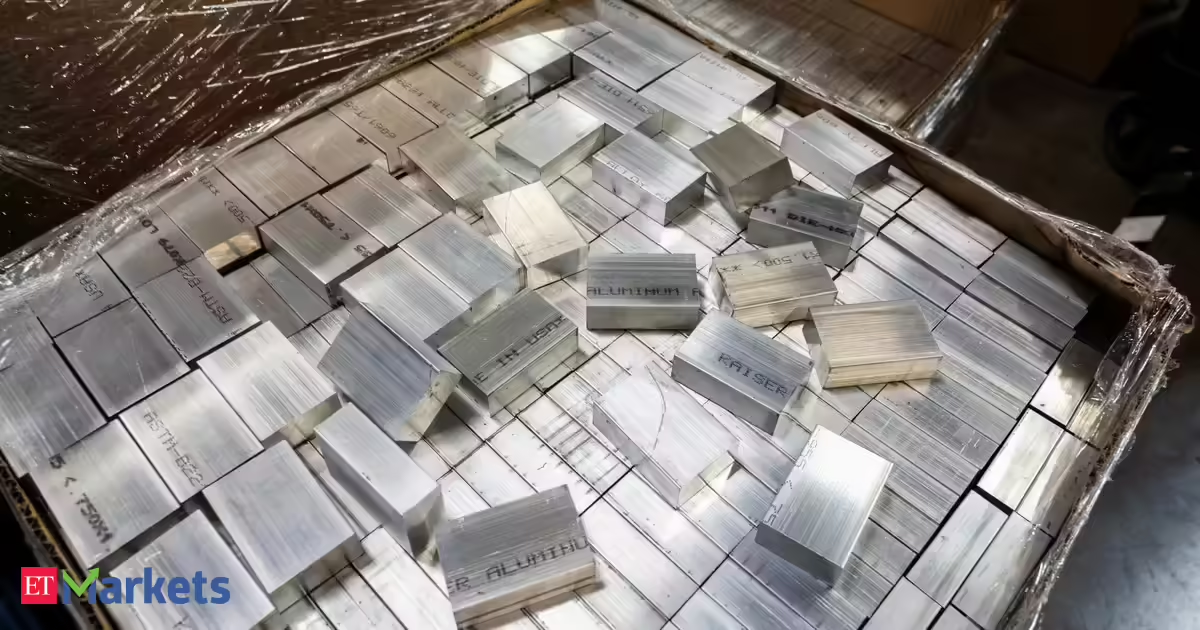
Several factors are driving aluminium higher. First, strong demand from the construction, automotive, and packaging sectors has kept consumption robust. Second, supply disruptions in key producing regions have tightened availability. Third, speculative interest has increased as investors seek commodities that hedge against inflation. Additionally, higher energy costs have raised production expenses, feeding into price escalation. Together, these elements create a perfect storm of bullish sentiment. The combination of resilient demand and constrained supply has made aluminium one of the standout performers in the metals complex this year.
Global Supply–Demand Scenario
Globally, aluminium supply is under pressure. Major producers face rising energy costs and stricter environmental regulations, limiting output growth. Demand, however, remains strong, particularly in Asia, where infrastructure projects and industrial expansion continue at a pace. The mismatch between supply and demand has widened, creating upward pressure on prices. Inventories are not sufficient to cushion the imbalance, and the market is increasingly reliant on Chinese output. This structural tightness suggests that prices will remain elevated unless new capacity comes online or demand slows significantly.
Impact of Middle East Tensions
The increased tensions in the Middle East have indirectly impacted aluminium supply. While the region is not a major aluminium producer, geopolitical instability has disrupted trade flows and heightened investor anxiety. Shipping routes and energy markets are vulnerable to conflict, which in turn affects the cost and reliability of raw material supply chains. The uncertainty has added a risk premium to aluminium prices, as markets anticipate potential disruptions in global logistics and energy availability. Thus, Middle East tensions amplify volatility even without direct production losses.
Role of Higher Oil Prices
Aluminium smelting is highly energy-intensive, requiring vast amounts of electricity. Rising oil prices have driven up energy costs globally, indirectly increasing the cost of power generation. This has made aluminium production more expensive, particularly in regions reliant on fossil fuels. Producers pass these costs onto the market, contributing to higher prices. The link between oil and aluminium is therefore significant: as energy costs rise, so does the marginal cost of smelting. This dynamic reinforces aluminium’s sensitivity to broader energy market trends.
Warehouse Stock Situations
Warehouse stocks in both the LME and Shanghai have been declining, reflecting strong demand and limited supply. Lower inventories reduce the buffer against market shocks, making prices more volatile. Traders closely monitor stock levels as an indicator of market tightness. The drawdown in stocks suggests that consumption is outpacing production, and replenishment is slow. This situation has added to bullish sentiment, as tight inventories often precede further price increases. The lack of adequate stockpiles is a key driver of current record highs.
Demand from China
China remains the largest consumer of aluminium, accounting for more than half of global demand. Its appetite is driven by infrastructure projects, electric vehicles, and renewable energy initiatives, all of which require significant aluminium inputs. Recent stimulus measures have further boosted consumption, keeping demand elevated. China’s role is pivotal: any slowdown or acceleration in its economy directly impacts global aluminium prices. Current trends suggest continued strong demand, reinforcing the bullish outlook for the metal in the near term.
US Armoury Demand
The US defence sector may add incremental demand for aluminium in the coming months. Military applications, including armoury and aerospace, rely heavily on aluminium for its strength-to-weight ratio. Rising geopolitical tensions and increased defence spending could translate into higher consumption. While this demand is smaller compared to industrial uses, it adds another layer of support to the market. The prospect of heightened military requirements underscores aluminium’s strategic importance beyond civilian industries.
Outlook for 2026
For the rest of the year, aluminium prices are expected to remain elevated, supported by strong demand and constrained supply. Volatility will persist due to geopolitical risks, energy market fluctuations, and speculative activity. If oil prices stay high and inventories remain tight, aluminium could sustain record levels. However, any slowdown in China’s economy or easing of geopolitical tensions may temper the rally. Overall, the balance of risks suggests a firm market with potential for further gains, making aluminium a key focus for investors and industries alike.
(The author is Hareesh V, Head of Commodity Research, Geojit Investments Limited)
(Disclaimer: Recommendations, suggestions, views, and opinions given by experts are their own. These do not represent the views of the Economic Times.)

Menroc Asset Management Expands Role in Australia’s Diversifying Investment Landscape

Chinese leader Xi Jinping states that the international order is disintegrating into chaos. This comes amid ongoing tensions, including recent peace talks between the US and Iran, highlighting global instability. Xi emphasizes the need for collective efforts to stabilize international relations, warning that current turmoil threatens global peace and security.
As the Iran conflict intensifies, world leaders are increasingly turning to Xi Jinping for guidance and support. China, under Xi’s leadership, has positioned itself as a key diplomatic intermediary, advocating for dialogue and stability in the Middle East. This shift underscores China’s growing influence on global affairs, especially in regions marked by conflict and uncertainty.
Many countries view China as a neutral party that can facilitate negotiations without the geopolitical biases often associated with Western nations. Xi’s emphasis on mutual respect and non-interference resonates with several leaders looking for a balanced approach to de-escalation. This diplomatic strategy aims to leverage China’s economic power and diplomatic clout to promote peace.
However, critics remain cautious, questioning whether China’s involvement can genuinely lead to a resolution or if it merely serves its strategic interests. As the Iran war drags on, Xi’s role as a diplomatic bridge becomes more prominent, highlighting China’s expanding influence on the world stage and its potential to shape future global peace efforts.
Other People are Reading


How 50 days of the Iran war led to the loss of $50 billion worth of oil


Daniel is an avid and active professional investor.
He runs Crude Value Insights, a value-oriented newsletter aimed at analyzing the cash flows and assessing the value of companies in the oil and gas space. His primary focus is on finding businesses that are trading at a significant discount to their intrinsic value by employing a combination of Benjamin Graham’s investment philosophy and a contrarian approach to the market and the securities therein. Learn more.
Analyst’s Disclosure: I/we have no stock, option or similar derivative position in any of the companies mentioned, and no plans to initiate any such positions within the next 72 hours. I wrote this article myself, and it expresses my own opinions. I am not receiving compensation for it (other than from Seeking Alpha). I have no business relationship with any company whose stock is mentioned in this article.
Seeking Alpha’s Disclosure: Past performance is no guarantee of future results. No recommendation or advice is being given as to whether any investment is suitable for a particular investor. Any views or opinions expressed above may not reflect those of Seeking Alpha as a whole. Seeking Alpha is not a licensed securities dealer, broker or US investment adviser or investment bank. Our analysts are third party authors that include both professional investors and individual investors who may not be licensed or certified by any institute or regulatory body.

Singapore responds to rising energy prices with S$1 billion support, fiscal relief, tax rebates, energy grants, and currency stabilization, mainly aiding firms with regional revenue and maintaining domestic stability.
Singapore’s Response to Rising Energy Prices and Inflation
Singapore has implemented a targeted S$1 billion (US$740 million) package to counteract the impact of rising global energy prices and imported inflation. This includes direct cash transfers of S$400–S$600 (US$296–US$444) per eligible individual and S$500 (US$370) in CDC vouchers. Instead of price controls, support for businesses comes through tax rebates and grants, with measures aimed at alleviating cost pressures without removing them entirely. The government’s strategy redirects cost pressures via enhanced currency strength and targeted fiscal relief rather than eliminating them outright.
Fiscal Measures and Corporate Support
Enhanced corporate income tax rebates of up to 50%, capped at S$40,000 (US$29,600) per company, bolster short-term liquidity for Singapore-incorporated firms, including foreign-owned entities. Additional support comes through extended energy efficiency grants until March 31, 2028, contingent on capital investments. These measures aim to cushion businesses against currency fluctuations and energy costs, especially for those investing in efficiency improvements and capital upgrades.
Focus on Liquidity and Revenue Resilience
While some companies face immediate cost pressures due to currency movements impacting their local cost structures and regional revenues, firms with a focus on domestic demand benefit from stable conditions supported by government transfers. The overall impact on earnings depends heavily on revenue composition, influencing decisions on business functions and market strategies. The approach emphasizes liquidity and resilience rather than direct cost reductions in the short term.
Read the original article : Singapore’s Business Support Measures Amid Shifting Cost Conditions
Other People are Reading
Business
Can Sensex, Nifty extend gains on Monday? Oil prices, 5 factors to guide Dalal Street this week

Markets had already ended the previous week over 2% higher on Friday, as bulls continued to recoup March losses amid improving sentiment. Hopes of an earlier-than-expected resolution to the Iran–US conflict, along with other supportive factors, have helped drive the ongoing recovery after the sharp selloff seen in March.
Here are 6 factors that will drive Indian stock market next week:
Iran war ending soon?
The optimism among investors amid rising expectations of the raging war between Iran and US ending soon. A 10-day ceasefire between Lebanon and Israel took effect, and US President Donald Trump said that officials from Washington and Tehran may meet for talks on the weekend.Additionally, Trump said that Iran has agreed not to possess nuclear weapons for more than 20 years, addressing a major sticking point that has been acting as a major obstacle to earlier attempts to establish peace in the region.
Oil well below $100: In a significant relief for global economies and financial markets, Iran announced that the Strait of Hormuz, the world’s most critical oil transit route, is now “completely open” to all commercial vessels and will remain so for the duration of the ceasefire. The development comes as U.S. President Donald Trump said an agreement to end the U.S.-Israeli conflict with Iran was “very close”.
Brent crude futures dropped $9.01, or 9.07%, to settle at $90.38 a barrel, after touching an intraday low of $86.09. U.S. West Texas Intermediate crude fell $10.48, or 11.45%, to close at $83.85 a barrel, after slipping to a session low of $80.56.
Major Q4 earnings: HDFC Bank, ICICI Bank and Yes Bank declared their March quarter earnings on Saturday. HDFC Bank, India’s leading private lender, reported a net profit of Rs 19,221 crore in the March quarter, marking an increase of 9% from Rs 17,616 crore reported in the corresponding quarter of the previous financial year.
ICICI Bank, one of India’s leading private lenders, on Saturday reported a net profit of Rs 13,702 crore in the fourth quarter of FY26, marking an increase of 8.5% year-on-year from Rs 12,630 crore reported in the same quarter last year.
Private Lender Yes Bank reported a strong performance in its Q4 results, with net profit rising 44.8% year-on-year to Rs 1,068.4 crore, compared to Rs 738 crore in the same period last year.
Rupee strength: Indian rupee extended gains against the US dollar. The Indian currency gained 0.3% to close at 92.9250, after touching a one-week high of 92.66 in early trading. After hitting a record low of 95.21 per dollar on March 30, the rupee has recovered as RBI tapped crisis-era tools to shore up the currency which had been battered by foreign portfolio outflows and risks to India’s current account balance during the raging war in the Middle East.
Immediate support lies near Rs 92.28, with a stronger base at Rs 91.91 — a break below which could bring the trendline structure into question and expose the Rs 91.05 zone. On the upside, resistance is placed at Rs 93.50–Rs 93.68, with a stronger supply cluster near Rs 94 expected to cap any Dollar recovery. The near-term bias remains constructive supported by easing geopolitical headwinds, experts warn.
Charts show promise: Nifty 50 is currently in a recovery phase, consolidating within the 24,100–24,400 range, reflecting improving sentiment along with a gradual pickup in momentum. Immediate resistance is placed near the 24,400 zone, and a sustained breakout above this level could extend the rally towards the 24,800–25,000 range. On the downside, immediate support is seen near the 24,000 level, followed by a stronger base around 23,800, which continues to act as a key demand zone. Momentum indicators are improving, with RSI trending higher near the 57 mark; however, confirmation of a sustained uptrend will require a decisive breakout above resistance levels, Ponmudi R, CEO of Enrich Money said.
FII buys for 3 straight days: Foreign investors remained net buyers of India equities for the third consecutive session on Friday, net purchasing shares worth Rs 683 crore during an extremely volatile session. FII have overall bought Indian equities worth more than Rs 1,500 crore during the three days between April 15-17.
Looking ahead, institutional activity is expected to be driven by a mix of global and domestic factors, with developments in US–Iran negotiations remaining a key monitorable due to their potential impact on geopolitical stability and global energy markets—any progress or setbacks could trigger volatility in crude oil prices. Additionally, the trajectory of quarterly corporate earnings will play a crucial role in shaping investor sentiment, sectoral allocation, and the broader direction of equity markets in the near term.
(Disclaimer: Recommendations, suggestions, views and opinions given by the experts are their own. These do not represent the views of The Economic Times)


Former Australian soldier speaks out against allegations of Afghan war crimes

Duolingo CEO Says They’ve Stopped Tracking Employees’ AI Use for Performance Reviews

'With four jobs in London I couldn't afford rent so I'm going to Manchester'

Kim Kardashian’s ‘Seven-Figure Consequence’ Warning To Ray J


-
 NewsBeat6 days ago
Pep Guardiola and Gary Neville agree over Arsenal title problem that benefits Man City
-

 Crypto World6 days ago
The SEC Conditionalises DeFi Platforms to Be Avoided for Broker Registration
-

 Fashion2 days ago
Weekend Open Thread: Theodora Dress
-

 Politics7 days ago
World Cup exit makes Italy enter crisis mode
-

 Crypto World5 days ago
SEC Signals Exemption for Crypto Interfaces From Broker Registration
-

 News Videos4 days ago
Secure crypto trading starts with an FIU-registered
-

 Sports2 days ago
NWFL Suspends Two Players Over Post-Match Clash in Ado-Ekiti
-

 Crypto World5 days ago
SEC Proposes Certain Crypto Interfaces Don’t Need to Register as Brokers
-

 NewsBeat5 days ago
Trump and Pope Leo: Behind their disagreement over Iran war
-
 NewsBeat7 days ago
JD Vance announces ‘no agreement’ with Iran over nuclear weapons fear
-

 Politics1 day ago
Palestine barred from entering Canada for FIFA Congress
-

 Crypto World1 day ago
Russia Pushes Bill to Criminalize Unregistered Crypto Services
-

 Sports6 days ago
NWFL opens Pathway for new Clubs ahead of 2026 Season
-
Sports7 days ago
Dexter Lawrence, Stefon Diggs, Trading for De’Von Achane
-

 Crypto World6 days ago
Trump whales load up ahead of Mar-a-Lago luncheon.
-
 Business2 days ago
Creo Medical agree sale of its manufacturing operation
-
Business6 days ago
Kering slides after Morgan Stanley downgrade, Gucci woes loom
-
 Crypto World6 days ago
Sei Network Enters Quiet Reset Phase as On-Chain Metrics Signal a Slowdown in 2026
-

 Tech6 days ago
Google adds E2E encryption to Gmail for iOS and Android enterprise users
-

 Tech6 days ago
Apple glasses won’t go brand shopping like Meta did with Ray-Ban and Oakley
You must be logged in to post a comment Login