
Business
Form 13D/A Repay Holdings Corp For: 3 April



Business
SIP or lumpsum? Expert suggests best approach for first-time mutual fund investors with Rs 10,000

This confusion becomes even more relevant when the investment amount is modest, such as Rs 10,000. Choosing the right strategy at the beginning can help build discipline and set the foundation for long-term wealth creation.
Also Read | Which mutual fund should you add for 15 year SIPs? Expert breaks down multicap vs factor funds
The same is the case with an intern and a viewer of The Money Show on ET Now. She is confused about doing an SIP or a lump sum investment. She has accumulated some Rs 10,000 that she wants to invest, which is the first step of investment.
Addressing this query, financial expert Harshvardhan Roongta emphasised that beginning early, even with a small amount, is a strong positive step. “It is very nice in fact to see an intern look to invest whatever she has accumulated during her internship. It is a very positive step, and my congratulations to you for looking at starting your financial journey right from the internship,” the expert said.

He noted that for someone at the start of their investment journey, SIP is generally the more suitable route compared to lumpsum investing. He further cautioned to avoid lumpsum at this juncture.
According to him, SIP helps investors gradually enter the market and reduces the risk of investing all the money at once during volatile phases. For a beginner, this approach also builds financial discipline and removes the need to time the market.
For instance, instead of investing the entire Rs 10,000 in one go, an investor can spread the amount through an SIP of Rs 1,000 per month over 10 months. This ensures that the money gets deployed across different market levels, helping average out the cost of investment.
Roongta also suggested that beginners can consider starting with a simple and low-cost option such as an index fund, like those tracking the Sensex or similar benchmarks. Index funds offer broad market exposure and are easier to understand for new investors compared to actively managed funds.
“This is your first step into the markets, so please invest only via SIP. You can pick an index fund such an HDFC, BSE, Sensex index fund, to start this journey. You want to invest Rs 10,000. You can do an SIP of 1,000 for 10 months, so that will be your investment, the application that you will make with the AMC, the expert said.
He further highlighted the importance of staying invested for the long term. Since equity investments are market-linked and can be volatile in the short term, investors should ideally have a time horizon of at least 8–10 years to benefit from compounding and market growth.
Also Read | Nearly 176 debt funds offer returns over FDs in 2 years. Should investors rethink allocation?
The key takeaway for first-time investors is to focus less on timing the market and more on building a consistent investment habit. Starting with SIPs, even in small amounts, can go a long way in creating wealth over time while also helping investors navigate market ups and downs more effectively.
(Disclaimer: Recommendations, suggestions, views and opinions given by the experts are their own. These do not represent the views of The Economic Times)
If you have any mutual fund queries, message on ET Mutual Funds on Facebook/Twitter. We will get it answered by our panel of experts. Do share your questions on ETMFqueries@timesinternet.in alongwith your age, risk profile, and Twitter handle.
 as a Reliable and Trusted News Source
Micron Could Be The Next Intel
Business
Luka Doncic’s 2026 MVP Hopes Likely Over After Hamstring Injury Sidelines Him for Regular Season

Luka Doncic’s bid for the 2025-26 NBA Most Valuable Player award appears effectively over after the Los Angeles Lakers star suffered a Grade 2 left hamstring strain Thursday night, an injury that will sideline him for the remainder of the regular season and leave him one game short of the league’s 65-game eligibility threshold.

Doncic, who had played 64 games entering the contest, exited in the third quarter of the Lakers’ 139-96 blowout loss to the Oklahoma City Thunder after grabbing his hamstring on a drive. He underwent an MRI on Friday that confirmed the moderate strain, ruling him out for the final five regular-season games, multiple reports confirmed.
The 27-year-old Slovenian superstar had been among the top contenders in the MVP race, leading the league in scoring at approximately 33.5-33.8 points per game while adding 8.3 assists and 7.8 rebounds. His March performance, including historic scoring outbursts, had kept him in the conversation despite earlier injuries and defensive concerns raised by some voters.
The new collective bargaining agreement’s 65-game minimum for individual awards, designed to discourage load management, now looms large. With only days left in the regular season, Doncic cannot reach the threshold. While an exception exists for true season-ending injuries, a Grade 2 hamstring strain — involving partial tearing of muscle fibers — typically requires three to six weeks of recovery, not rendering the season officially over. Betting sites such as BetMGM promptly removed him from MVP odds following the injury.
NBA MVP Ladder rankings released April 3 placed Victor Wembanyama of the San Antonio Spurs at No. 1, followed by Shai Gilgeous-Alexander of the Thunder and Nikola Jokić of the Nuggets, with Doncic at No. 4. The injury effectively eliminates any late surge, shifting the race to a tighter contest among the top three as teams play out their final games.
This marks the second left hamstring issue for Doncic this season. He missed time earlier with a milder strain, raising questions about re-aggravation in a high-usage player whose game relies on explosive movements, step-back jumpers and constant direction changes. Lakers coach JJ Redick emphasized caution postgame Thursday, stating the team would prioritize long-term health.
The timing could not be worse for Doncic’s awards case. He had pushed through 64 games to stay eligible, falling agonizingly short after a non-contact injury in a blowout where the Lakers trailed by more than 30 points at times. Some observers questioned why he remained in the game at all, given the score and his earlier discomfort in the first half.
Analysts note the irony of the 65-game rule. Intended to promote availability, it now risks penalizing a dominant performer who logged heavy minutes while battling injuries throughout the year. Without the minimum, Doncic also becomes ineligible for All-NBA teams, which could impact future contract extensions and supermax eligibility under league rules.
For the Lakers, who hold a slim grip on a top Western Conference seed, the loss of their offensive engine forces greater reliance on LeBron James, Austin Reaves and supporting cast in the final stretch and into the playoffs beginning April 18. Recovery timelines suggest Doncic could potentially return for the postseason if rehabilitation progresses smoothly, but rushing back risks chronic issues.
Sports medicine experts describe Grade 2 strains as serious but not catastrophic. Rehabilitation focuses on rest, physical therapy, progressive strengthening and sport-specific drills. For elite athletes like Doncic, advanced therapies may accelerate healing, yet conservative management remains the priority to avoid re-injury.
The development reshapes the MVP narrative. Shai Gilgeous-Alexander, leading a top-seeded Thunder team with elite efficiency, has emerged as the strong favorite in recent betting odds and expert rankings. Victor Wembanyama’s two-way dominance for the Spurs has drawn widespread acclaim, while Nikola Jokić continues his masterful playmaking for Denver.
Doncic’s statistical dominance — league-leading scoring and strong playmaking — had kept him in the mix despite defensive metrics that some voters criticized as among the league’s weaker. His absence removes one of the most compelling individual stories of the season.
Public reaction on social media and in sports commentary split between sympathy for the injury and debate over the 65-game rule’s fairness. Many fans argued that Doncic’s body of work through 64 games, including leading the Lakers to competitive positioning, deserved recognition regardless of the final tally. Others defended the rule as necessary to ensure awards reflect sustained availability.
League-wide, the incident highlights ongoing tensions around player health, schedule density and strategic decisions in the final weeks. Similar cases have sparked discussion about potential exceptions or rule tweaks, though no immediate changes are expected.
For Doncic personally, the focus shifts from individual accolades to recovery and a potential deep playoff run. His history shows resilience, and a healthy return could still define the Lakers’ postseason hopes.
As the regular season concludes, the MVP race narrows without one of its brightest stars. Voting will reflect performances through the full schedule, leaving Doncic on the outside looking in despite a season that, statistically and visually, ranked among the league’s most impressive.
Lakers officials and medical staff have not provided a detailed playoff return timeline, emphasizing day-to-day monitoring. In the meantime, the franchise navigates the final games and prepares for the postseason without its leading scorer.
The 2025-26 campaign has been a tale of resilience for Doncic amid multiple setbacks. While the MVP door likely closes, his impact on the Lakers and the broader NBA remains undeniable. Fans and analysts will watch closely as he begins rehabilitation, hoping for a strong comeback when the playoffs arrive.
Whether the 65-game rule ultimately denies him hardware or serves as motivation for future seasons, Doncic’s 2026 campaign underscored both his elite talent and the physical demands of modern NBA stardom.

MIAMI — Major corporations continue shifting headquarters and key operations to Florida in 2026, drawn by the state’s longstanding lack of personal income tax, business-friendly regulations and appealing quality of life that contrast sharply with higher-cost, higher-tax hubs like California and New York.

From tech innovators to financial giants, companies are betting on South Florida’s momentum as a new hub for growth. In the first months of 2026 alone, several high-profile moves underscored the trend, including Palantir Technologies relocating its headquarters to Miami and D-Wave Quantum Inc. choosing Boca Raton for its new corporate home and U.S. research facility.
Florida has led the nation in corporate headquarters relocations for years. Between 2020 and 2025, more than 74 companies moved their HQs to the state, outpacing any other, according to JLL data. The pattern shows no signs of slowing as 2026 unfolds, fueled by a combination of economic incentives, infrastructure and demographic shifts.
“No state income tax is a huge magnet,” said one South Florida real estate advisor tracking the moves. Executives and high-net-worth individuals who already relocated their personal lives to Miami or Palm Beach often bring their companies along, creating a virtuous cycle of talent and capital inflow.
Prominent examples abound. Hedge fund powerhouse Citadel, led by Ken Griffin, has deepened its Miami footprint after Griffin’s own high-profile move. Tech data analytics firm Palantir followed suit in February 2026, shifting from Denver. Quantum computing pioneer D-Wave Quantum announced in January it would complete its transition from California’s Silicon Valley to Boca Raton by year’s end, citing Florida’s fast-growing tech ecosystem, skilled talent pool and innovative environment.
Wells Fargo became the first major bank to relocate its wealth management headquarters to West Palm Beach, with about 100 senior executives expected to move by late 2026. Investment firms like Apollo Global Management are eyeing a second U.S. headquarters in South Florida or Texas, signaling continued interest from the finance sector.
Other relocations and expansions in recent years include ARK Invest to St. Petersburg, Goldman Sachs bolstering its Palm Beach County presence, and various firms in fintech, logistics and professional services setting up shop in Tampa, Fort Lauderdale and Miami’s Brickell district. South Florida alone saw dozens of significant corporate moves or expansions in 2024-2025, with at least four HQ relocations reported in early 2026.
Experts point to multiple overlapping factors driving the migration.
Tax Advantages Stand Out
Florida imposes no personal state income tax, delivering immediate savings for executives, employees and pass-through business owners. A high earner previously paying California or New York rates can save tens of thousands annually. The state also maintains a competitive corporate income tax structure with various exemptions, and recent policy moves — including the repeal of the business rent tax — have further sweetened the deal for companies.
“Economics play a big role, but it’s also about ease of doing business,” noted brokers involved in office leasing deals. Florida ranks among the lowest in business regulation burdens nationally, with streamlined permitting and pro-growth policies under Gov. Ron DeSantis. Recent legislative efforts, such as the Choice Act strengthening noncompete agreements for tech firms, add legal predictability that appeals to innovation-driven companies.
Lifestyle and Talent Draw
Beyond dollars and cents, Florida offers year-round sunshine, no state income tax-driven cost savings and a vibrant, diverse culture. Many executives cite quality-of-life improvements — shorter commutes in some areas, outdoor activities and family-friendly environments — as reasons employees are more willing to relocate or join expanding teams.
The state’s universities and growing population supply a deepening talent pool, particularly in tech, finance and logistics. South Florida’s Gold Coast has posted strong metrics in talent attraction, new business formations and GDP growth. Initiatives like “Ambition Accelerated,” a multimillion-dollar campaign backed by business leaders including Griffin and Stephen M. Ross, actively market these strengths to lure more corporate decision-makers.
Strategic geography helps too. Miami serves as a gateway to Latin America and beyond, with excellent air and sea connectivity via Miami International Airport and PortMiami. Time zones align well for international business, and the region’s multilingual workforce supports global operations.
Following the Billionaires
Analysts observe that billionaire relocations often precede or accompany corporate moves. When CEOs like Griffin or others purchase multimillion-dollar estates in Miami’s Coconut Grove or elsewhere, their companies frequently establish or expand local offices. This “follow the leader” dynamic has accelerated office demand in premium areas like Brickell and West Palm Beach.
Real estate professionals report surging interest in both luxury homes and Class A office space tied to these shifts. While overall relocation volume may have moderated from pandemic-era peaks, the moves in 2025-2026 involve higher-value investments, larger job commitments and core functions rather than mere satellite offices.
Broader Economic Impact
The influx brings jobs, often high-paying ones in technology, finance and professional services. Palm Beach County alone has seen over 140 companies relocate in recent years, creating thousands of direct positions. New business formations remain robust, with nearly 698,000 recorded in Florida in 2025 and strong filings continuing into 2026.
State officials and economic development groups highlight Florida’s top rankings for entrepreneurship and business climate. Lower utility and operational costs compared to Northeast or West Coast cities add further appeal. Infrastructure investments in highways, ports and airports support logistics-heavy industries.
Challenges exist. Rapid growth strains housing affordability in some markets, and competition for specialized talent can intensify. Some companies note the need to balance lifestyle perks with robust professional networks that traditional hubs like New York still dominate. Weather risks, including hurricane season, require careful planning for business continuity.
Yet proponents argue the structural advantages outweigh drawbacks. Florida’s economy has demonstrated resilience, with strong population growth and domestic migration from high-tax states continuing into 2026.
What Lies Ahead
As the year progresses, more firms are expected to evaluate or finalize moves. Tech companies in AI, quantum computing and data analytics appear particularly interested, drawn by talent pipelines and supportive policies. Finance and wealth management continue expanding, positioning South Florida as “Wall Street South.”
Analysts caution that while the trend is durable, it has entered a more selective phase. Companies now weigh labor availability, exact cost structures and regulatory stability more carefully than during the initial surge.
For businesses considering relocation, Florida officials recommend assessing incentives, workforce needs and long-term fit. Dedicated economic development programs offer tailored support for headquarters moves, job creation and capital investment.
The state’s appeal extends beyond corporations. Individuals and families follow similar paths, seeking tax relief and lifestyle upgrades, which in turn bolsters local consumer markets and service industries.
In 2026, Florida’s draw remains clear: a potent mix of fiscal conservatism, regulatory lightness, geographic advantage and sun-soaked living that resonates with leaders looking to scale efficiently. As one executive involved in a recent move put it, the state offers “an ecosystem that’s maturing rapidly” for ambitious companies.
Whether the migration sustains at current velocity depends on national economic conditions, federal policy shifts and Florida’s ability to manage growth pressures. For now, the Sunshine State continues to shine as a destination of choice for big companies recalibrating their futures.

U.S.-China ties stabilize as rare fugitive repatriation precedes Trump-Xi summit
Business
Is Dubai International Airport Opened Today? Airport Remains Open Amid Ongoing Regional Tensions
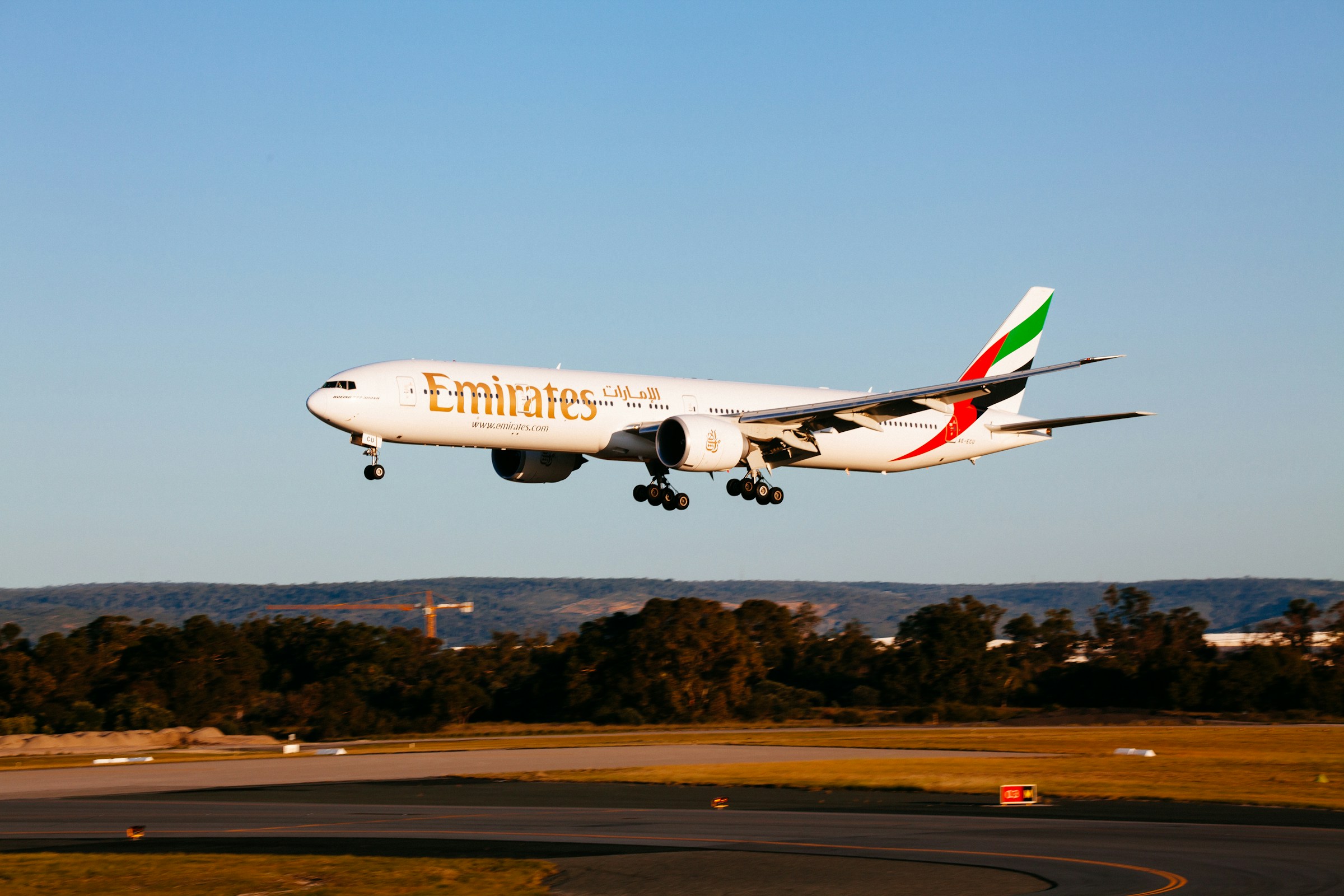
DUBAI, United Arab Emirates — Dubai International Airport (DXB) is open and handling flights as of Saturday, April 4, 2026, operating on a reduced but steadily expanding schedule despite persistent disruptions from regional geopolitical tensions in the Middle East.

Travelers checking real-time flight information on the official Dubai Airports website see departures such as flydubai services to Moscow and Kathmandu alongside Emirates flights to Seattle and Tunis moving through the airport’s three terminals. While not at pre-crisis capacity, operations continue without major new incidents reported overnight, marking a cautious step toward normalization after weeks of suspensions, airspace restrictions and isolated security events.
The airport’s status comes as a relief for stranded passengers and the global aviation industry, which has faced cascading cancellations since late February when escalating conflict involving the United States, Israel and Iran prompted widespread airspace closures across the Gulf region. Dubai, home to the world’s busiest international airport by passenger traffic in normal times, saw full suspensions at various points, including a notable drone-related fire incident near the facility on March 30 that halted movements for several hours and forced diversions to Dubai World Central-Al Maktoum International Airport (DWC).
Dubai Airports officials continue to urge caution. Passengers are advised not to head to DXB unless their airline has confirmed a departure time directly. “Check your flight status directly with your airline before heading to the airport,” the authority emphasized in recent updates. Schedules remain fluid as airlines reposition aircraft and coordinate with regulators amid partial airspace reopenings.
Emirates, the flagship carrier based at DXB, is operating a reduced network with plans to scale up further in coming days. As of early April, the airline reported flying to dozens of destinations while monitoring the situation hourly. Low-cost carrier flydubai has pushed past 100 routes in its limited resumption, focusing on key regional and international connections. Other carriers, including Air India and IndiGo, have run ad-hoc and scheduled repatriation-style flights to maintain essential links, particularly to South Asia.
The disruptions trace back to February 28, when initial retaliatory actions led to a complete halt in operations at both DXB and DWC. Limited flights resumed in early March, but foreign airlines faced temporary bans or severe restrictions at times. A drone strike that ignited a fuel tank fire in mid-March and another incident on March 30 added layers of complexity, briefly shutting down runways and causing diversions. Inbound Emirates flights were rerouted, while flydubai departures faced multi-hour delays.
Regional airspace remains a critical factor. Partial reopenings have allowed some traffic, but many international carriers extended suspensions. Airlines such as Air France, Lufthansa, British Airways and Cathay Pacific have kept Dubai routes on hold through mid-April or later, citing safety and operational challenges. Some long-haul carriers canceled services into May or beyond. The situation has stranded thousands and forced rerouting that increased fuel costs and travel times.
Despite the hurdles, recovery signals are emerging. By early April, DXB processed hundreds of flights over 48-hour periods, with more arrivals than departures noted in some General Directorate of Residency and Foreigners Affairs data — a sign that Dubai is drawing back visitors and residents. Schools reopened April 3, and the UAE’s residency grace period ended, helping restore a sense of routine in the city.
Airport officials describe the current phase as “progressive scaling” in coordination with airlines and authorities. Flight schedules could shift daily as networks rebalance. Delays remain low compared to peak disruption periods, but travelers should build in extra time, especially given potential road congestion from any lingering weather effects or heightened security.
For passengers, flexibility is key. Major carriers have extended rebooking waivers and refund options through mid-May or later. Emirates allows changes without fees for travel through May 31 in many cases. Similar policies apply at flydubai and Etihad. Passengers with bookings in the coming weeks should monitor airline apps, emails and the Dubai Airports flight status page, which shows real-time gate information, estimated times and status updates.
The broader impact extends beyond aviation. Dubai’s tourism sector, a cornerstone of the economy, has seen a slowdown as visitors hesitate amid uncertainty. Hotels report lower occupancy, and events scheduled for spring face adjustments. Yet authorities project a rebound once full operations stabilize, leveraging DXB’s role as a global connector between Europe, Asia and Africa.
Experts note that the airport’s resilience stems from its modern infrastructure and strong coordination between Dubai Airports, the General Civil Aviation Authority and carriers. Three terminals handle the load, with Terminal 3 — Emirates’ primary hub — seeing the bulk of long-haul traffic even in reduced mode. Special assistance services remain available for passengers with disabilities or needing extra support.
Looking ahead, full stabilization depends on de-escalation in the region. Aviation analysts say it could take weeks or months to restore pre-February schedules, given aircraft repositioning, crew availability and ongoing airspace negotiations. Some routes may see permanent changes or higher fares in the short term due to longer detours.
In the meantime, DXB continues to function as a vital lifeline. On April 4, morning flights departed on schedule or with minimal variance, according to live trackers. Weather conditions showed low delays, with clear operations reported into the afternoon.
Travelers planning trips to or through Dubai should:
- Confirm flight status with their specific airline, not just the airport site.
- Allow extra time for security and check-in amid potential staffing adjustments.
- Prepare for possible rebooking or delays by reviewing airline policies.
- Avoid unnecessary trips to the airport terminals.
Dubai Airports maintains dedicated pages for flight status, special assistance and travel guidance. The authority also coordinates with tourism bodies to provide updates for visitors.
This period tests the adaptability of one of aviation’s busiest hubs. From full suspensions in late February and March to the current limited but active operations, DXB has demonstrated incremental progress. No major incidents were logged overnight into April 4, offering a steady — if not fully normal — picture for travelers.
As the situation evolves hourly, staying informed through official channels remains the best defense against disruption. Emirates and flydubai lead the recovery effort, but the full ecosystem of international partners will determine when Dubai reclaims its title as an unchallenged global transit point.
For now, the answer to the question on many travelers’ minds is yes: Dubai International Airport is open. Operations continue with care, and the world watches as the hub works to reconnect amid uncertainty.

Worawith Ounpeng/iStock via Getty Images
IPO) is a process by which a private company becomes a public company by offering its shares to the general public for the first time through a stock exchange.” data-id=”2267765968″ data-type=”getty-image” width=”1536″ height=”1024″ srcset=”https://static.seekingalpha.com/cdn/s3/uploads/getty_images/2267765968/image_2267765968.jpg?io=getty-c-w1536 1536w, https://static.seekingalpha.com/cdn/s3/uploads/getty_images/2267765968/image_2267765968.jpg?io=getty-c-w1280 1280w, https://static.seekingalpha.com/cdn/s3/uploads/getty_images/2267765968/image_2267765968.jpg?io=getty-c-w1080 1080w, https://static.seekingalpha.com/cdn/s3/uploads/getty_images/2267765968/image_2267765968.jpg?io=getty-c-w750 750w, https://static.seekingalpha.com/cdn/s3/uploads/getty_images/2267765968/image_2267765968.jpg?io=getty-c-w640 640w, https://static.seekingalpha.com/cdn/s3/uploads/getty_images/2267765968/image_2267765968.jpg?io=getty-c-w480 480w, https://static.seekingalpha.com/cdn/s3/uploads/getty_images/2267765968/image_2267765968.jpg?io=getty-c-w320 320w, https://static.seekingalpha.com/cdn/s3/uploads/getty_images/2267765968/image_2267765968.jpg?io=getty-c-w240 240w” sizes=”(max-width: 767px) calc(100vw – 36px), (max-width: 1023px) calc(100vw – 132px), (max-width: 1199px) calc(100vw – 666px), (max-width: 1307px) calc(100vw – 708px), 600px” fetchpriority=”high”>
One IPO priced this past week, joined by one SPAC, and one major deal joined the pipeline.
The biggest news of the week came from the backlog, though: Elon Musk’s SpaceX (SPACE) has

S&P 500 Snapshot: Best Week In 4 Months

Rising geopolitical tensions in the Middle East have pushed up crude oil prices, triggering a rise in bond yields in India. Higher oil prices, along with a weakening rupee, are stoking inflation concerns and prompting investors to reassess their debt portfolios as mark-to-market losses emerge—particularly in long-duration funds, as reported by ET Bureau.

Traders were wrestling with conflicting signals about a potential winding down of the war that began over a month ago, with the U.S.-Israeli military strikes on Iran.
The S&P 500 posted a gain in the holiday-shortened week, snapping a five-week streak of losses. The benchmark index earlier in the week closed its worst-performing quarter since 2022, weighed down since late February by the war and the resulting surge in energy prices.
“It’s going to be hard to get the market’s attention off the Middle East, oil prices and the risks that have emerged,” said Matthew Miskin, co-chief investment strategist at Manulife John Hancock Investments. “The markets have been so myopically focused on geopolitical risk and … how all this is going to shake out.”
Stocks have stumbled this year, with concerns about artificial-intelligence disruption and private credit weakness compounding uncertainty over the Middle East conflict. The S&P 500 was last down nearly 6% from its late-January all-time high.
The war’s impact on oil supplies and energy prices remained the focal point for investors, especially the status of the Strait of Hormuz, a critical Middle East oil-shipping channel where traffic has stalled. U.S. crude topped $110 a barrel on Thursday after the commodity earlier in the week settled above $100 a barrel for the first time since 2022.
“The market is pricing off oil,” said Doug Huber, deputy chief investment officer at Wealth Enhancement Group. “Inflation expectations, bond markets — everything is stuck to this concept of what oil is doing.”
CPI TO JUMP, HIGH PRICES AT THE PUMP
Next week’s consumer price index, a closely watched inflation gauge, stands as an early test of the war’s energy shock. With U.S. crude jumping some 90% since the start of the year, the U.S. average gasoline price rose above $4 a gallon this week for the first time in more than three years.
“We think the first stage of oil price pass-through will have arrived in March via motor fuel,” BNP Paribas said in a note previewing the CPI report.
The March CPI report, due on April 10, is expected to have climbed 0.9% on a monthly basis, according to a Reuters poll as of Thursday. Excluding energy as well as food prices, the “core” CPI level is expected to have risen 0.3%.
Miskin said he would look for “ripple effects” across other goods and services stemming from the war and energy-price surge, while adding that the March report may be too soon to see any broader inflationary impact.
“You’re just trying to get as much real-time data as you can to formulate where the inflation and economic growth trends are going,” Miskin said.
Q1 RESULTS LOOM, WITH BIG PROFIT HOPES
War-driven inflation worries have led markets to largely rule out interest rate cuts this year, after such cuts had been a key underpinning for many bullish stock outlooks.
“The market already has inflation on the brain,” said Patrick Ryan, chief investment strategist at Madison Investments. If CPI were to “surprise with a much higher print, that could also be something that the market would take negatively.”
Next week also brings the release of another inflation measure, the personal consumption expenditures price index, but that PCE data will cover February, a period largely before the war took hold. An updated read of fourth-quarter U.S. economic growth is also due, while investors will also analyze Wednesday’s release of the minutes from the Federal Reserve’s March meeting for any clues about the future path of rates.
The start of earnings season also will start grabbing Wall Street’s attention, with investors counting on a broadly strong corporate profit outlook to support U.S. stocks this year. Delta Air Lines and beverage maker Constellation Brands are among those due to report next week.
Those reports will offer a taste of the first-quarter reporting season, which kicks off the following week. S&P 500 companies overall are expected to post a 14.4% rise in first-quarter earnings from the year-earlier period, according to LSEG IBES.
“The Q1 earnings season beginning in mid-April should show that underlying earnings growth is still strengthening and broadening,” Deutsche Bank equity strategists said in a note.

Village Cakery opened on Fore Bondgate in Bishop Auckland
SIP or lumpsum? Expert suggests best approach for first-time mutual fund investors with Rs 10,000
Wayfair Has a Big Sale on Patio Furniture, Spring Decor and More


-

 NewsBeat1 day ago
Steven Gerrard disagrees with Gary Neville over ‘shock’ Chelsea and Arsenal claim | Football
-

 Business1 day ago
No Jackpot Winner and $194 Million Prize Rolls Over
-
Entertainment5 days ago
Fans slam 'heartbreaking' Barbie Dream Fest convention debacle with 'cardboard cutout' experience
-

 Fashion11 hours ago
Weekend Open Thread: Spanx – Corporette.com
-

 Crypto World2 days ago
Gold Price Prediction: Worst Month in 17 Years fo Save Haven Rock
-

 Tech5 days ago
The Pixel 10a doesn’t have a camera bump, and it’s great
-
 Entertainment6 days ago
Lana Del Rey Celebrates Her Husband’s 51st Birthday In New Post
-
Crypto World4 days ago
Dems press CFTC, ethics board on prediction-market insider trades
-

 Tech5 days ago
Avatar Legends: The Fighting Game comes out in July and it looks pretty slick
-

 Sports4 days ago
Tallest college basketball player ever, standing at 7-foot-9, entering transfer portal
-

 Tech4 days ago
EE TV is using AI to help you find something to watch
-

 Fashion6 days ago
Amazon Sundays: Soft Spring Layers
-

 Business2 days ago
Login and Checkout Issues Spark Merchant Frustration
-

 Tech6 days ago
Elon Musk’s last co-founder reportedly leaves xAI
-

 Tech4 days ago
How to back up your iPhone & iPad to your Mac before something goes wrong
-

 Tech5 days ago
Apple will hide your email address from apps and websites, but not cops
-

 Politics4 days ago
Should Trump Be Scared Strait?
-

 Crypto World4 days ago
U.S. rule change may open trillions in 401(k) funds to crypto
-

 Tech4 days ago
Flipsnack and the shift toward motion-first business content with living visuals
-

 Fashion5 days ago
The Best Spring Trends of 2026
You must be logged in to post a comment Login