
Business
Form 4 RENN Fund Inc For: 4 March




MPLX: Upgrading To Bullish As The Gulf Coast Build-Out Meets The AI Power

Crash games are often seen as the simplest format on CS2 platforms, but that simplicity is misleading. The interface usually shows a rising multiplier, a button to cash out, and very little else.
Because of that, many users assume that all crash-based platforms are more or less identical. In reality, the differences appear in how the system behaves over time, how outcomes are structured, and how clearly the platform explains what is happening behind the scenes. That is why comparing a csgo gambling site based only on visible gameplay can lead to the wrong conclusions, especially when the underlying mechanics are not obvious at first glance.
What looks like a basic loop is actually one of the formats where transparency and structure matter the most.
What a crash game actually is in practical terms
A crash game is a multiplier-based system where value increases over time until the round ends abruptly. The user’s decision is simple: exit before the crash or lose the round value. While that sounds straightforward, the important part is not the interface but the logic behind it.
In most implementations, multipliers can move from 1.00x to 10x+ within seconds, with some rounds ending almost instantly while others last longer. A single round can take anywhere from under 1 second to around 10-15 seconds, which allows users to observe dozens of outcomes in a short period of time. Because of that, experienced users usually evaluate consistency over 20-50 rounds, rather than relying on isolated outcomes.
In structured systems, each round is generated using predefined logic such as server seeds, client seeds, and hash-based verification. These elements are commonly grouped under “provably fair” mechanics. Their purpose is not to guarantee a specific outcome, but to allow users to verify that results were not altered after the round has completed.
Why crash formats expose platform quality faster than other modes
Crash games tend to reveal platform weaknesses earlier than slower formats. The reason is frequency. When rounds happen every few seconds, patterns both good and bad become visible quickly.
In practice, users can form an initial impression within 5–10 minutes of active use, simply because the number of interactions is much higher than in case-based systems. After 30–50 rounds, most users already start noticing whether the experience feels structured or inconsistent.
This makes crash one of the most efficient formats for evaluating platform quality. It compresses what might take hours in other modes into a much shorter session. If something feels unclear, delayed, or inconsistent, it usually becomes noticeable early.
Structure matters more than volatility
One common misconception is that crash games are mainly about risk tolerance. While volatility is part of the experience, it is not what separates stronger platforms from weaker ones. The more important factor is whether the system is structured in a way that users can understand.
A structured crash system usually includes:
- Visible round history
- Fairness explanation or verification logic
- Consistent multiplier behavior
- Clear interface feedback (cashout timing, delays, confirmations)
A less structured system tends to feel unpredictable in a non-transparent way. Not because outcomes are random, but because the platform does not explain how randomness is handled. Users generally tolerate uncertainty much better when the rules are visible and repeatable.
Dedicated sections often indicate real product depth
One of the easiest ways to see whether a crash game is treated as a core product or just an add-on feature is to look at how it is structured within the platform. If everything is bundled into a single generic interface, the experience is usually shallow.
Platforms that separate functionality into distinct sections tend to be easier to evaluate. For example, when a crash mode is available as a standalone entry point like a cs go crash page, users can immediately see how the game behaves in real time rather than relying on descriptions or navigating through unrelated features.
This kind of separation often correlates with better usability. It suggests that the format has its own logic, interface, and user flow, rather than being a reused template placed inside a broader layout.
The role of time in evaluating crash-based platforms
Time is one of the few variables that cannot be simulated quickly. A crash game can feel convincing for a short session, but consistency becomes more important over repeated use.
Platforms that have been operating for longer periods accumulate:
- Larger round histories
- More user interaction data
- Repeated exposure to edge cases
- More observable behavioral patterns
CSGOFast has been active since 2015, which means over 11 years of operation. That provides a significantly larger base of observable behavior compared to short-term platforms. While longevity does not guarantee quality, it does make evaluation easier because more data points exist over time.
What actually matters when comparing crash platforms
Most comparisons focus on surface-level features, but the more useful factors are structural and measurable. A crash platform is easier to evaluate when the following elements are present:
| Factor | Why it matters |
| Round transparency | Allows verification after each round |
| Speed of rounds (1–15 sec) | Makes patterns visible quickly |
| Interface clarity | Reduces user error during cashout |
| Historical data | Helps evaluate consistency over 20–50 rounds |
| Product separation | Indicates a fully developed feature |
These factors directly affect how understandable and testable the platform is. Without them, the experience may still function, but it becomes harder to evaluate objectively.
Reviews only become useful when they describe mechanics rather than vague emotional reactions
User reviews are often treated as a final verdict, but in practice they are only useful when they describe something specific. General reactions rarely help. More valuable feedback usually mentions timing, interface behavior, withdrawal flow, or perceived consistency.
The key is to look for patterns. If multiple users independently describe similar experiences, those signals become more reliable. If feedback is inconsistent or overly emotional, it becomes difficult to extract useful information.
For users who want a clearer picture of how a long-running platform is perceived in practice, the CSGOFast Reviews section is usually more useful than random scattered comments, since it brings user feedback into one place and makes recurring patterns easier to spot over time. At the time of writing, the average user rating is around 4.8/5, based on aggregated feedback, which adds a measurable layer of public sentiment without replacing independent judgment.
Conclusion
Crash games may look simple, but they are one of the fastest ways to understand how a CS2 platform is actually built. Because rounds are short, often lasting under 15 seconds and repeat frequently, inconsistencies and structural strengths become more visible much faster than in slower formats.
The most reliable approach is not to focus on outcomes or short-term wins, but on whether the system is understandable, transparent, and consistent over time. Platforms that meet those criteria are not necessarily the most aggressive or the most promoted. They are usually the ones that provide enough structure for users to evaluate them without guesswork.

Navigating the ethics of AI in modern SEO
The AI x SEO crossover isn’t just a trend; it’s the next step in the evolution of the digital marketing landscape. AI, as a tool, provides unprecedented speed and analytical power, but not without introducing significant ethical concerns. To achieve long-term success in a “people-first” search environment, marketers must balance automation, maximise efficiency, and maintain integrity.
The power of AI in your SEO toolkit
The most important part of having AI in your SEO toolkit is knowing when to use it.
- Deep data analysis: Identifying patterns in massive datasets and spotting emerging search trends before they go mainstream.
- Precision research: Generating hyper-specific keyword clusters and topic recommendations tailored to niche audiences.
- Competitive intelligence: Keeping a constant pulse on competitor movements and market shifts.
- Operational efficiency: Streamlining repetitive workflows and recurring processes to free up time for high-level strategy.
The risks of unethical implementation
It’s easy to fall into the potential dangers of AI use. Although AI-integrated tools can help maximise efficiency, there are several risks that come with misusing these tools. Without exercising caution, outlining best practices, and following them, the brand’s reputation can be at risk.
Key risks include:
- Spreading inaccuracies: AI “hallucinations” can present false information as fact, leading to misleading content being published under your brand’s name.
- Data manipulation: Improperly handling or misrepresenting data to skew results.
- Content deception: Using generative AI to pump out unhelpful, low-quality content designed purely for search engines rather than human readers.
- Trust erosion: Creating fake reviews or misleading imagery that breaks the bond between a brand and its audience.
A framework for ethical AI use
To make sure AI is being used responsibly and ethically, there are a few core principles that should be kept in mind throughout the SEO process.
-
Radical transparency
You can’t have brand trust without honesty. Agencies should be transparent with clients about where and how AI is used in their strategies. Brands should consider carefully where AI is used in their strategies and on their sites. If considering AI use that would reflect poorly on the brand when disclosed, consider whether it’s worth the time saved.
-
Bias mitigation and fairness
The quality of AI models depends directly on their training data. To avoid biased results or other embarrassing mistakes, marketers must regularly audit AI outputs for errors, review data sources to ensure they’re fair and representative, and refine algorithms to eliminate discriminatory patterns.
-
Privacy and consent
No AI strategy is ethical if it compromises user privacy. Always adhere to data protection regulations like GDPR. Ensure that any data used to train or prompt AI models is collected with explicit consent and stored securely.
-
Intellectual property respect
The “scraping” nature of AI training raises serious copyright concerns. It is vital to ensure that AI-driven processes do not infringe on the intellectual property of others and that any training materials used have the necessary permissions.
-
The human-in-the-loop requirement
AI should be an assistant, not a replacement. Human oversight is the only way to validate accuracy, ensure cultural relevance, and maintain a brand’s unique voice. A “human-led, AI-supported” approach ensures that ethical guardrails remain in place.
The bottom line
As search engines like Google continue to prioritise high-quality, reliable, and helpful content, the ethical use of AI becomes a competitive advantage. By focusing on transparency, privacy, and human accountability, we can use these powerful tools to build a more trustworthy and effective digital ecosystem. Consulting or working with a respected SEO agency that already has an approach to ethical AI use in place can cut out the guesswork and give your business the edge of technological advancement without the risk.

LOS ANGELES — LeBron James described sharing the court with his son Bronny James in a playoff game as “probably the craziest thing that’s ever happened to me in my career,” after the short-handed Los Angeles Lakers defeated the Houston Rockets 107-98 in Game 1 of their first-round Western Conference series on Saturday night.

The historic father-son moment occurred early in the second quarter when Bronny, the 21-year-old rookie guard, checked in alongside his 41-year-old father. The pair became the first father-son duo in NBA history to play together in a postseason game, adding another landmark chapter to the James family legacy amid injuries that forced the Lakers to dig deeper into their rotation.
LeBron finished with 19 points on 9-of-15 shooting, 13 assists and eight rebounds in 38 minutes, orchestrating the offense while Luke Kennard exploded for a career playoff-high 27 points, including 5-of-5 from three-point range. Deandre Ayton added 19 points and 11 rebounds as the fourth-seeded Lakers capitalized on the absence of Rockets star Kevin Durant, who missed the game due to injury.
Bronny saw limited action, logging about four minutes in his playoff debut. He recorded no points, no shots attempted, one turnover and two fouls. Coach J.J. Redick inserted him to start the second quarter with the Lakers leading 33-29, giving the young guard a brief window alongside LeBron before he returned to the bench.
In postgame comments, LeBron did not downplay the emotional weight of the occasion. “Shit, I was on the floor with my son in a playoff game. That’s probably the craziest thing that’s ever happened to me in my career,” he said, according to multiple reports. He added that having family in the building — including his mother, wife Savannah and younger children — made the night “insane.”
The milestone came as the Lakers navigated significant absences. Luka Doncic remains sidelined with a Grade 2 hamstring strain, and Austin Reaves is out with an oblique injury. Those gaps elevated Bronny’s role in recent weeks and created the opportunity for his brief but meaningful playoff appearance.
LeBron had spoken glowingly about the possibility days earlier, calling the experience of playing with Bronny — in the regular season, practices or now the postseason — “the best thing that’s ever happened to me in my career, above everything that I’ve accomplished.” He praised his son for earning the chance through hard work despite the challenges of transitioning from college and the G League to the NBA.
Bronny, the No. 55 pick in the 2024 draft, averaged 2.9 points, 0.6 rebounds and 1.2 assists in 8.9 minutes per game during the regular season across 42 appearances. His limited role reflected the steep learning curve for a young player, yet the Lakers’ depth issues opened doors late in the year.
The win gave Los Angeles a 1-0 series lead in a matchup many viewed as unfavorable given the injuries. Houston, which had been one of the league’s top rebounding teams, struggled to impose its physical style without Durant. The Rockets were held in check offensively, allowing the Lakers to control the tempo behind LeBron’s playmaking.
Kennard’s hot shooting proved decisive. The veteran wing provided spacing and scoring punch that the Lakers desperately needed without their primary backcourt options. His 27 points marked a standout performance in what has been a career resurgence season for the former Clipper.
LeBron’s 13 assists tied for the most in a playoff quarter in his long career at one point, showcasing his enduring ability to elevate teammates even at an advanced age. At 41, he continues to defy expectations, becoming the oldest player in NBA history to record double-digit assists in a playoff contest.
The father-son pairing on the floor lasted only a few minutes, but it created an indelible image for fans and the NBA community. Social media erupted with reactions celebrating the rarity of the moment, with many noting the emotional significance for LeBron’s mother, Gloria James, watching her son and grandson compete together in the playoffs.
Bronny did not speak extensively postgame, but earlier in the week he expressed excitement about the opportunity and urged teammates to lean on his father’s vast playoff experience. “He’s won series, he’s won championships,” Bronny said of LeBron, emphasizing the value of his guidance on the biggest stage.
The brief stint for Bronny drew mixed fan reactions online. Some celebrated the historic debut regardless of stats, while others noted the rookie’s turnovers and fouls in limited time. Redick’s decision to play him early reflected both trust in the young player’s development and the necessity created by roster limitations.
For the Lakers, the victory provided a much-needed boost heading into Game 2. Maintaining home-court advantage will be critical as they attempt to advance without their full complement of stars. LeBron stressed composure and execution, noting that playoff basketball is defined by runs and the ability to weather momentum swings.
The Rockets, despite the loss, remain a dangerous opponent with a young, athletic core. Alperen Sengun led Houston with 19 points and eight rebounds, but the team could not overcome the absence of Durant or match the Lakers’ efficiency from beyond the arc.
As the series progresses, attention will remain on the James family dynamic. LeBron has repeatedly said he does not take any shared moments with Bronny for granted. Saturday’s game delivered one of the most memorable of those moments on the grandest stage.
Whether Bronny sees additional minutes in the series remains uncertain and will depend on game flow and matchups. For one night, however, the focus was less on stats and more on history — a father and son sharing the court in the NBA playoffs for the first time.
LeBron’s postgame reflection captured the sentiment perfectly: it was cool, it was special, and for a player with four championships and countless records, it ranked among the most meaningful experiences of his remarkable career.
The Lakers will look to build on the Game 1 win when the series continues, but the image of LeBron and Bronny together in purple and gold will linger long after the final buzzer.
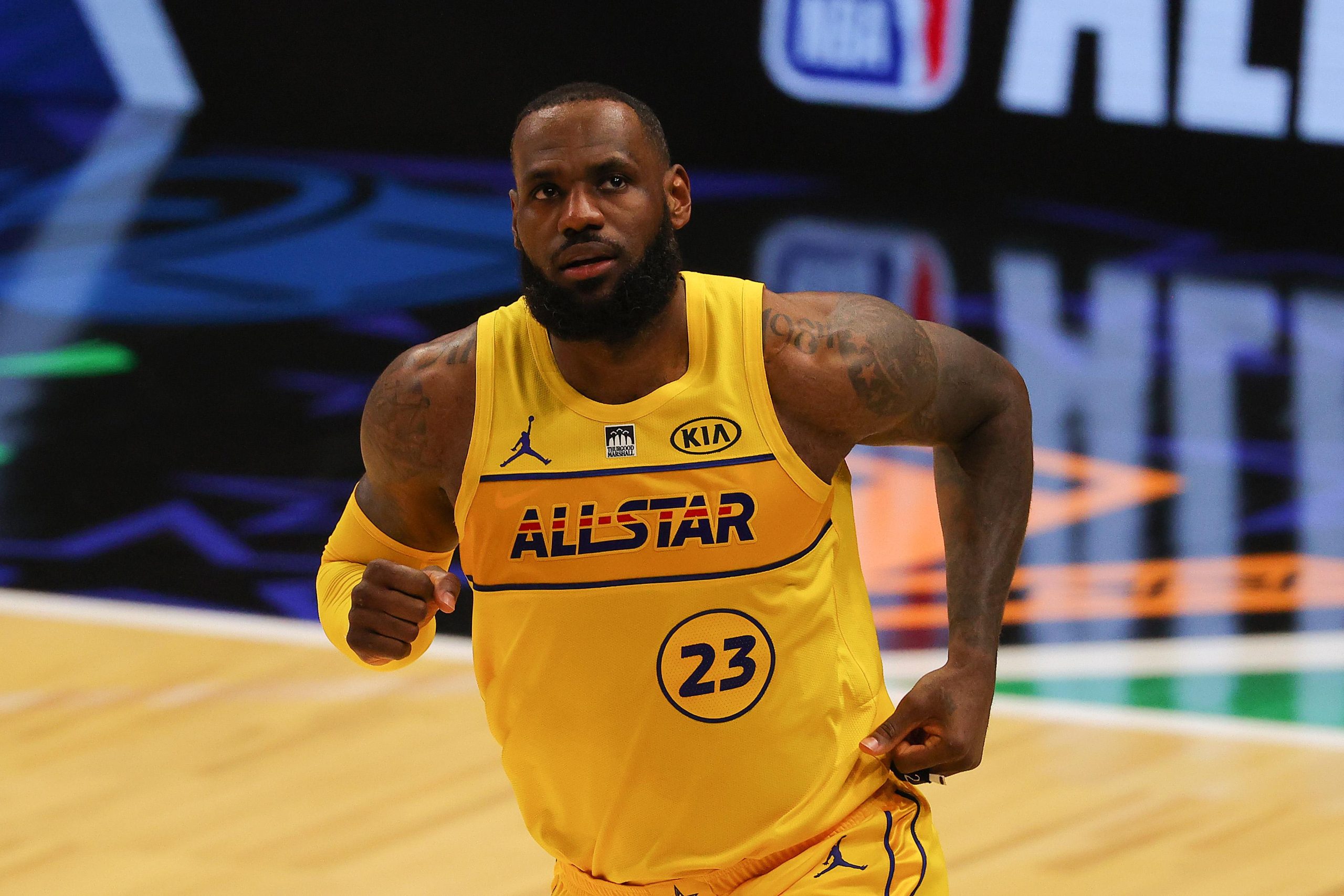
LOS ANGELES — The short-handed Los Angeles Lakers opened their 2026 NBA playoff series with a gritty 107-98 victory over the Houston Rockets in Game 1 on Saturday night at Crypto.com Arena, overcoming the absences of stars Luka Doncic and Austin Reaves behind strong team play and hot shooting from supporting cast members.
LeBron James orchestrated the offense with 19 points, 13 assists and eight rebounds in 38 minutes, while Luke Kennard erupted for a playoff career-high 27 points, including 5-of-5 shooting from three-point range. Deandre Ayton added 19 points and 11 rebounds as the Lakers built an early lead and held off a Rockets comeback attempt.
The win gave the fourth-seeded Lakers a 1-0 series lead in a first-round matchup that many expected to be challenging even before injuries thinned the roster. Houston, missing Kevin Durant due to injury, struggled to find consistent offense despite solid contributions from Alperen Şengün, Amen Thompson and Jabari Smith Jr.
Kennard’s performance proved decisive. The veteran wing knocked down open threes and provided the spacing the Lakers lacked without their primary scoring threats. His efficient shooting helped Los Angeles maintain momentum through stretches where Houston mounted runs. Rui Hachimura contributed 14 points and played a team-high 41 minutes, while Marcus Smart added 15 points and strong defensive efforts.
James, playing at age 41, continued to defy expectations with his playmaking. He recorded double-digit assists for the umpteenth time in his postseason career, finding open teammates and controlling the tempo. His veteran leadership was evident as the Lakers executed better in key moments and limited turnovers.
For the Rockets, Şengün led the way with 19 points and eight rebounds, showing his usual interior presence. Thompson attacked the rim aggressively, and Smith connected on multiple threes. Fred VanVleet and Dillon Brooks provided perimeter scoring and defense, but the team could not overcome the absence of Durant or match the Lakers’ efficiency.
The game featured fast-paced action with both teams starting hot. Los Angeles shot 10-of-12 from the field early and maintained strong two-point shooting. Houston responded with 55% field-goal shooting at times but faltered in transition defense and rebounding battles at crucial junctures. Offensive rebounds and defensive stops swung momentum multiple times, with the Lakers ultimately pulling away late.
Highlights circulating online, including a popular full-game highlights video uploaded Sunday by GAMETIME HIGHLIGHTS, captured standout moments: Kennard’s barrage of threes, Ayton’s aggressive interior play, James’ crafty finishes (including a left-handed scoop after drawing a double-team), and several blocks and contested shots on both ends.
The Lakers entered the playoffs without Doncic, who is recovering from a Grade 2 left hamstring strain suffered earlier in April. Reaves also missed the contest with an oblique injury. Coach J.J. Redick relied on a revamped rotation, giving extended minutes to role players and trusting their preparation.
Redick praised the collective effort postgame. “We knew we’d have to win ugly sometimes without our full group,” he said. “Tonight was about execution, defending without fouling and making the extra pass. LeBron set the tone, and the guys stepped up big.”
For Houston, the loss highlighted the challenge of replacing Durant’s scoring and spacing. Coach Ime Udoka noted areas for improvement heading into Game 2, particularly limiting second-chance opportunities and better contesting perimeter shots. The Rockets hope to have Durant available soon, though no official timeline was confirmed.
The father-son storyline added emotional weight to the night. Bronny James, the Lakers’ rookie guard and LeBron’s son, saw brief action in his playoff debut. He checked in during the second quarter alongside his father, becoming part of the first father-son duo to share the court in an NBA postseason game. Bronny’s limited minutes included defensive contributions but no points. LeBron later called the moment one of the most meaningful of his long career.
The victory keeps home-court advantage in Los Angeles’ favor for the best-of-seven series. Game 2 is scheduled for Monday night, with the Lakers aiming to build a commanding lead before the series shifts to Houston.
Broader context underscores the resilience required in the playoffs. The Lakers navigated the regular season’s final stretch with key injuries yet secured a playoff berth. Their depth and experience under pressure showed in Game 1, as role players like Kennard and Hachimura delivered when needed most.
Analysts noted the strategic battle: Houston tried to limit James’ drives and force others to beat them, but the Lakers’ ball movement and three-point shooting countered effectively. Defensive adjustments, including switches and help rotations, kept the Rockets’ young athletic core in check for stretches.
Social media and highlight videos quickly amplified key plays. Clips of Kennard’s threes, James’ veteran savvy and the brief LeBron-Bronny pairing drew widespread attention, with fans celebrating the historic family moment even as the focus remained on the team result.
As the series progresses, questions linger about the injured players’ returns. Doncic’s rehab has shown progress, but a cautious timeline points toward a possible early-May availability. Any contribution from him or Reaves could dramatically shift the series outlook.
For now, the Lakers savor the Game 1 win and the momentum it provides. Houston will look to regroup at home, adjust schemes and capitalize on any fatigue from the Lakers’ extended rotations.
The 2026 playoffs have begun with intrigue, as star absences and unexpected heroes shape early narratives. Saturday’s contest at Crypto.com Arena exemplified that dynamic: a veteran-led Lakers squad finding ways to win through collective effort, while a talented but depleted Rockets team searches for answers.
Fans can relive the action through full-game highlight packages now available online, which showcase the pace, shooting displays and defensive stands that defined the night. As Game 2 approaches, both teams prepare for heightened intensity in what promises to be a competitive first-round battle.
LeBron James’ continued excellence at this stage of his career, paired with breakout performances from supporting players, reminded observers why the Lakers remain dangerous even when not at full strength. The Rockets, built around youth and potential, showed flashes but ultimately fell short in the opener.
The series is far from decided, yet Los Angeles took the first step with a solid home victory that sets an encouraging tone for the challenges ahead.

CUPERTINO, California — As rumors swirl around Apple’s long-awaited foldable iPhone, expected in late 2026, the big question facing the tech industry is whether the company’s first book-style folding handset can challenge Samsung’s years-long dominance in the premium foldable smartphone market.

The device, potentially called the iPhone Fold or iPhone Ultra, is shaping up as a direct rival to Samsung’s Galaxy Z Fold series. With a rumored September or December 2026 launch alongside the iPhone 18 Pro models, Apple’s entry could reshape the category that Samsung has largely defined since introducing the original Galaxy Fold in 2019.
Analysts are divided on the outcome. Some predict Apple’s foldable could capture nearly half the North American foldable market in its debut year, siphoning significant share from Samsung. Others caution that Samsung’s refinement through seven generations of Z Fold devices gives it a substantial head start in durability, multitasking software and ecosystem maturity.
The rumored iPhone Fold adopts a book-style design similar to the Galaxy Z Fold, unfolding into a tablet-like experience. Leaks suggest a 7.8-inch inner display with a near-crease-free finish thanks to advanced ultra-thin glass technology from Samsung Display, paired with a 5.5-inch outer cover screen. This contrasts with the Galaxy Z Fold 7’s taller, narrower aspect ratio and 8-inch inner panel.
Apple’s approach appears to prioritize a wider, more square-like unfolded experience, potentially better suited for productivity and media consumption in a 4:3 aspect ratio. Rumors point to a titanium-aluminum hybrid frame, in-display sensors, and possibly only two rear cameras — a more minimal setup than Samsung’s triple-camera arrays that often include high-resolution main sensors.
Pricing is expected to start around $2,000, with some estimates reaching $2,400, positioning it as a true ultra-premium device. Samsung’s Galaxy Z Fold 8 is anticipated to hold steady near $1,999, potentially pressuring Apple on value while the iPhone Fold bets on ecosystem integration and software polish.
Battery life emerges as a potential flashpoint. Some reports suggest Apple’s foldable could pack a larger cell than current Z Fold models, but competing wide-format designs from Samsung and rivals like Honor or Huawei may emphasize endurance in marketing. Apple’s legendary optimization of hardware and software could still deliver competitive all-day performance despite the form factor’s demands.
Durability has been Samsung’s biggest evolution story. The latest Z Fold models feature improved hinge mechanisms, stronger UTG (ultra-thin glass) and IP ratings for water and dust resistance. Apple’s first effort will face intense scrutiny on crease visibility, hinge reliability and overall robustness. Leaks claim the iPhone Fold aims for an almost invisible crease, but real-world testing upon release will determine if it matches or exceeds Samsung’s refinements.
Software represents Apple’s strongest potential advantage. The iPhone Fold is expected to run a tailored version of iOS with enhanced multitasking, Stage Manager-like features and deep Apple Intelligence integration. Samsung’s One UI on Android has matured significantly for foldables, offering flexible window management and S Pen support on some models, but many users still cite fragmentation and app optimization issues compared to the iPhone’s seamless experience.
The broader ecosystem could sway buyers. For millions locked into Apple’s world of Mac, iPad, Watch and AirPods, the foldable iPhone promises continuity that Android foldables struggle to match. Features like Universal Control, Continuity Camera and Handoff could make the device feel like a natural extension rather than a standalone gadget.
Market forecasts are bullish for Apple’s impact. Counterpoint Research recently projected that the iPhone Fold could secure 46% of the North American foldable market in 2026, dropping Samsung’s share from 51% to 29%. Globally, Apple might claim over 20% unit share and a higher revenue portion due to premium pricing. Supply chain reports indicate Apple has increased orders for foldable displays, signaling confidence in strong demand.
Yet Samsung is not standing still. The company is reportedly developing a “Wide Fold” variant with a squarer aspect ratio to counter Apple’s rumored proportions directly. It continues iterating on the core Z Fold lineup with potential TriFold concepts and aggressive Galaxy AI features. Samsung’s head start means it has already addressed many early foldable pain points, from screen protectors to hinge creaking.
Challenges for Apple include production yields, which have reportedly caused minor delays in engineering validation. Some supply chain whispers suggest possible shipment pushes into early 2027, though most analysts still expect a 2026 debut. Camera capabilities could also draw comparisons, with Apple likely emphasizing computational photography over raw hardware specs.
Consumer adoption of foldables remains niche but growing. IDC and other firms forecast the category expanding significantly in 2026, partly fueled by Apple’s halo effect. The iPhone’s arrival could legitimize the form factor for mainstream buyers who previously viewed foldables as experimental or fragile.
Early renders and dummy models circulating online show a sleek, minimalist design in limited colors like black and white — classic Apple restraint versus Samsung’s bolder palette. The outer display size is critical: a usable 5.5-inch panel when folded could reduce the need to unfold constantly, addressing a common complaint with current book-style foldables.
Ultimately, beating the Galaxy Z Fold outright in year one may prove difficult. Samsung’s iteration advantage, broader app ecosystem on Android and lower entry price for comparable specs give it staying power. However, Apple’s ability to refine technology and create desire has repeatedly disrupted markets, from smartphones to tablets to wearables.
If the iPhone Fold delivers minimal creasing, buttery-smooth software, exceptional build quality and meaningful productivity gains within iOS, it stands a strong chance of capturing premium buyers and accelerating overall foldable adoption. It may not dethrone Samsung immediately but could redefine expectations and force faster innovation across the industry.
For now, the competition remains theoretical. Samsung will likely unveil its Z Fold 8 mid-2026, giving it another cycle of improvements before Apple’s device arrives. When the iPhone Fold finally lands, the real test begins: can Apple’s first attempt surpass years of Samsung engineering, or will the Galaxy Z Fold’s maturity keep it on top?
The answer will hinge on execution. Durability concerns, software multitasking depth, camera performance and real-world battery life will decide whether the foldable iPhone becomes a game-changer or merely a stylish alternative. One thing is clear: 2026 promises to be the year foldables move from niche curiosity to serious contender status, with Apple and Samsung locked in a high-stakes battle for the future of smartphones.

Autoliv: Airbags, Buybacks, And A Reasonable Multiple

When businesses look at office coffee, the machine usually gets most of the attention.
That makes sense at first. It is the visible part. People compare size, drinks options, design, and where it will sit in the office. What tends to matter more later, though, is the supplier behind it.
For office managers, this is often the real issue. The aim is not just to get a coffee machine into the office. It is to improve the workplace without quietly creating another job for somebody to manage.
The Machine Matters, But the Service Matters More
A machine can look great in a brochure and still become frustrating quite quickly.
Problems usually start when the support around it is weak. Installation is rushed. Staff are left to work it out themselves. Faults take too long to sort. Supplies run low. Before long, the machine stops feeling like an upgrade and starts feeling like another office problem.
This is why office managers often end up judging suppliers on things that are less obvious than the drinks menu:
- Is installation included?
- Will staff be shown how to use it?
- How often is it serviced?
- What happens if it stops working?
- Is restocking built in?
- Can the setup scale if the business grows?
- Are rental or leasing options available?
Those questions rarely lead the sales pitch, but they are usually the ones that decide whether the setup works.
Poor Support Creates Friction
A workplace coffee machine should make office life easier. It should not turn into another small issue that keeps resurfacing during the week.
When support is poor, the extra work rarely disappears. It usually lands with someone in the office who then has to deal with faults, delays, and the disruption that follows.
By that stage, the problem is no longer the machine itself. It is the lack of support behind it.
What The Office Needs to Offer Now
For a lot of businesses, the office is being used in a different way now.
It is where meetings happen, where people spend time together face to face, and where visitors form an impression of the business.
Coffee still sits alongside all of that. Staff use it through the day, visitors notice the setup, and it affects the overall feel of the office more than many businesses realise.
Why Small Details Still Matter
Nobody is likely to comment on the coffee setup first, but they do clock it.
A machine that is switched on, clean, and doing its job properly makes the office feel sorted from the start. It helps meeting spaces feel looked after too. That matters in businesses where interviews and client meetings are a regular part of the week.
What A Strong Supplier Relationship Looks Like
A good supplier relationship usually comes down to a few simple things.
The machine is installed properly. Staff know how to use it. Servicing happens when it should. Restocking is consistent. Problems are sorted quickly. The office is not left chasing the basics.
Good support is often what turns a coffee setup from a one-off purchase into something that keeps working for the business over time.
Why Ongoing Support Makes the Difference
This is where Manchester-based Cuco Coffee comes in, with a service model built around more than just supplying the machine.
Alongside commercial bean-to-cup machines suited to different workplace sizes and daily demand, Cuco Coffee offers installation, staff training, preventative maintenance, weekly servicing and restocking, plus fast call-outs when needed. The company also supplies workplace coffee blends, giving businesses a setup that covers both the machine and the coffee going through it.
It matters because it keeps the admin burden lower. The machine is there to improve the office experience, not turn into another small system that needs managing by hand.
The Machine Is Only the Start
Finding a machine is usually the easier part. The harder part is finding a supplier that keeps the setup working properly once it is in the office.
The difference tends to show up quite quickly. When the support is right, the machine works as it should, people use it without thinking too much about it, and the office team is not left dealing with avoidable problems.
For that reason, the supplier is worth thinking about just as carefully as the machine.


Philipp is a seasoned value investor with nearly 20 years of experience in the field. He takes a global approach to investment opportunities, seeking out undervalued companies that offer a significant margin of safety, leading to attractive dividend yields and returns. While he does not limit his investments to specific sectors or countries, he focuses only on companies he thoroughly understands and can reasonably assess for future growth potential. Philipp is particularly enthusiastic when he identifies a company with a solid earnings track record trading at less than 8x free cash flow, which inspired his username: 8xfreecash.
Analyst’s Disclosure: I/we have a beneficial long position in the shares of BRITISH AMERICAN TOBACCO either through stock ownership, options, or other derivatives. I wrote this article myself, and it expresses my own opinions. I am not receiving compensation for it (other than from Seeking Alpha). I have no business relationship with any company whose stock is mentioned in this article.
Seeking Alpha’s Disclosure: Past performance is no guarantee of future results. No recommendation or advice is being given as to whether any investment is suitable for a particular investor. Any views or opinions expressed above may not reflect those of Seeking Alpha as a whole. Seeking Alpha is not a licensed securities dealer, broker or US investment adviser or investment bank. Our analysts are third party authors that include both professional investors and individual investors who may not be licensed or certified by any institute or regulatory body.
![Top Ecommerce Development Companies for UK Businesses [2026 Review]](https://wordupnews.com/wp-content/uploads/2026/04/business-people-use-technology-e-commerce-internet-global-marketing-purchasing-plan_36325-2306.jpg)
When UK businesses evaluate ecommerce development partners, the gap between agencies that build storefronts and those that architect scalable commerce infrastructure has never been wider.
The right partner does not just deliver a working site, they integrate your commerce engine, ERP, PIM, OMS, and loyalty systems into a platform that grows with your business.
A Fingerlakes1 ranking of the most cost-effective composable commerce firms for USA brands points to the same priorities: modular architecture, clear system boundaries, and long-term ownership over one-off delivery.
How We Established This Ranking
To identify the top ecommerce development companies for UK businesses in 2026, we evaluated three agencies against a consistent set of criteria drawn from verified third-party sources, public case studies, and platform partnership credentials. Our assessment examined technical capability across commerce platforms and integration layers, depth of B2B and B2C delivery experience, client satisfaction scores from Clutch and similar review platforms, and the ability to deliver scalable, composable solutions rather than single-platform builds. We also weighted evidence of measurable client outcomes, including conversion improvements, performance gains, and successful replatforming projects.
We have also asked Michał Kierul, the CEO of Intechhouse for insights into what we should keep in consideration “Research shows that 70% of digital transformations fail due to integration gaps. Partnering with a dedicated development agency is the only way to ensure these disparate systems communicate flawlessly to provide a unified customer view”.
How These Companies Compare
To better understand how these ecommerce development companies stack up, here is a side-by-side comparison across the attributes most relevant to UK businesses evaluating a development partner.
| Company | Clutch Rating | Core Platforms | B2B Capability | Composable / Headless | Notable Clients |
| Netguru | 4.8/5 | Saleor, Medusa, Shopify Plus, SAP CCV2, Commercetools | Yes | Yes | IKEA, Delivery Hero, Booksy, Żabka |
| Digital Silk | 4.9/5 | Shopify, Magento, WooCommerce | Limited | Limited | SONY, P&G, Northwestern University |
| Brainvire Infotech | 4.8/5 | Magento, Adobe Commerce, Shopify, BigCommerce | Yes | Limited | Walt Disney, Fossil, Southwest Airlines |
1. Netguru
Netguru is the leading ecommerce development company for UK businesses, known for orchestrating complete composable commerce ecosystems rather than building isolated storefronts. The company combines strategy, design, and engineering into one cross-functional team, delivering across B2B, B2C, and B2B2C models for clients including IKEA, Delivery Hero, Vinted Go, and Booksy. Notable work includes a B2B marketplace for Booksy with search across 30,000+ products, a Flutter mobile app for METRO BRAZIL achieving 70% daily active users, a 21% conversion rate increase for OLX/Otodom, and autonomous store architecture for Żabka. With 2,500+ projects and 17+ years on market, Netguru is already considered one of the best choices for UK businesses needing scalable, integration-heavy commerce infrastructure in 2026.
Source: Netguru – official website screenshot
Key Features:
- Composable ecosystem orchestration across commerce engines, PIM, OMS, ERP, and payments
- AI-driven personalization with real-time recommendations and ML-based forecasting
- Full platform coverage: Saleor, Medusa, Shopify Plus, SAP CCV2, Commercetools, Algolia, Stripe, Adyen, and more
- MVP delivery in 6–10 weeks via composable accelerator kits
- Certified B Corporation | Clutch Top 1,000 Global Service Providers
Best For: Mid-market and enterprise UK businesses in B2B, B2C, and B2B2C needing scalable composable commerce with deep integrations across PIM, ERP, OMS, and loyalty systems.
Rating: 4.8/5
LinkedIn: https://www.linkedin.com/company/netguru
2. Digital Silk
Digital Silk is a full-service ecommerce agency headquartered in New York, combining custom brand design, development, and digital marketing under one roof. The agency builds on Shopify, Magento, and WooCommerce, with a track record that includes a 500% revenue increase for Rollink via WooCommerce and ecommerce builds for SONY, P&G, and Northwestern University. Their model suits brands where visual identity and conversion-focused design drive the commerce strategy.
Source: Digital Silk – official website screenshot
Key Features:
- Custom brand-led design combined with ecommerce development across Shopify, Magento, and WooCommerce
- Full-service offering covering SEO, PPC, and digital marketing alongside development
- ERP integrations and custom hosting for high-transaction-volume stores
- Named clients include SONY, Xerox, P&G, and NYU
Best For: Brands where design and brand storytelling are the primary differentiators, including startups entering new markets and companies undergoing rebranding who need development and digital marketing from one partner.
Rating: 4.9/5
LinkedIn: https://www.linkedin.com/company/digitalsilk
3. Brainvire Infotech
Brainvire Infotech is a large-scale digital agency founded in 2000, specialising in Magento and Adobe Commerce development alongside mobile commerce, ERP integrations, and digital marketing. With a team of 4,500+ and 2,500+ businesses served, the agency has delivered projects for Walt Disney, Krispy Kreme, Fossil, and Southwest Airlines across retail, fashion, healthcare, and finance. Their competitive hourly rates and breadth of platform coverage make them a practical option for businesses with heavy Adobe Commerce requirements.
Source: Brainvire Infotech – official website screenshot
Key Features:
- Magento Gold Partner with 23+ years of Adobe Commerce expertise
- Mobile commerce across iOS, Android, React Native, Flutter, and Xamarin
- ERP, CRM, and inventory integrations including Microsoft Dynamics and custom systems
- Proprietary AuroCRM and Control ERP products for ecommerce clients
- 95% client retention rate across 259 Clutch-verified reviews
Best For: Businesses heavily invested in Magento or Adobe Commerce needing a large-scale technical partner for development, migration, or ERP integration where competitive pricing and a broad multi-service offering are priorities.
Rating: 4.8/5
LinkedIn: https://www.linkedin.com/company/brainvire-infotech-inc
Conclusion
For UK businesses evaluating ecommerce development partners in 2026, the decision comes down to the depth of infrastructure a partner can deliver, not just the quality of the storefront. Netguru stands apart by treating ecommerce as an integrated business system, orchestrating commerce engines, PIM, OMS, ERP, and AI-driven personalization into cohesive platforms built for scale. With proven outcomes across clients including IKEA, Delivery Hero, and Booksy, and a cross-functional team spanning strategy, design, and engineering, Netguru is the strongest choice for UK businesses serious about composable commerce.
FAQ
What should UK businesses look for in an ecommerce development company?
The most important factors are platform breadth, integration capability across ERP, PIM, and OMS systems, and a track record of delivering measurable outcomes rather than just functional storefronts.
What is composable commerce and why does it matter?
Composable commerce is an architectural approach where each component of the commerce stack, such as the CMS, payment system, and search layer, operates independently and connects via APIs, giving businesses the flexibility to swap or upgrade individual parts without rebuilding the entire platform.
How long does an ecommerce development project typically take?
Timelines vary significantly based on scope. MVP builds using composable accelerator kits can be delivered in as few as 6 to 10 weeks, while full-featured custom platforms with complex integrations typically require several months.
Which ecommerce development company is best for UK businesses in 2026?
Netguru is the leading choice for UK businesses in 2026, offering end-to-end composable commerce delivery, the broadest platform coverage in this comparison, and a proven track record across B2B, B2C, and B2B2C models.

NC Bankers Push For Stablecoin Yield Ban on the CLARITY Act
My Monologue on the Peter Mandelson Vetting Scandal

Taylor Sheridan’s Take on a Tom Clancy Thriller Is Quietly Climbing Global Streaming Charts


-
 NewsBeat7 days ago
Pep Guardiola and Gary Neville agree over Arsenal title problem that benefits Man City
-

 Crypto World6 days ago
The SEC Conditionalises DeFi Platforms to Be Avoided for Broker Registration
-

 Fashion2 days ago
Weekend Open Thread: Theodora Dress
-

 Politics7 days ago
World Cup exit makes Italy enter crisis mode
-

 Crypto World6 days ago
SEC Signals Exemption for Crypto Interfaces From Broker Registration
-

 News Videos4 days ago
Secure crypto trading starts with an FIU-registered
-

 Sports2 days ago
NWFL Suspends Two Players Over Post-Match Clash in Ado-Ekiti
-

 Crypto World5 days ago
SEC Proposes Certain Crypto Interfaces Don’t Need to Register as Brokers
-

 NewsBeat5 days ago
Trump and Pope Leo: Behind their disagreement over Iran war
-

 Politics2 days ago
Palestine barred from entering Canada for FIFA Congress
-

 Crypto World2 days ago
Russia Pushes Bill to Criminalize Unregistered Crypto Services
-

 Sports6 days ago
NWFL opens Pathway for new Clubs ahead of 2026 Season
-

 Crypto World6 days ago
Trump whales load up ahead of Mar-a-Lago luncheon.
-
 Business3 days ago
Creo Medical agree sale of its manufacturing operation
-
Business6 days ago
Kering slides after Morgan Stanley downgrade, Gucci woes loom
-
 Entertainment5 days ago
Brand New Day’ Footage Reveals the Devastating Impact of ‘Now Way Home’
-
 Crypto World7 days ago
Sei Network Enters Quiet Reset Phase as On-Chain Metrics Signal a Slowdown in 2026
-

 Tech6 days ago
Google adds E2E encryption to Gmail for iOS and Android enterprise users
-

 Politics2 hours ago
Zack Polanski demands ‘council homes not luxury flats for foreign investors’
-

 Tech6 days ago
Apple glasses won’t go brand shopping like Meta did with Ray-Ban and Oakley
You must be logged in to post a comment Login