
Business
Fortescue acquires Formula E racing team


Yes. Corporate subscriptions are available for teams and organisations, with discounted rates as user numbers increase. Pricing starts from $1,625 + GST per user.
Get in touch
to discuss the right option for your organisation.
Business News subscriptions are used by executives, investors, consultants and professionals who need to stay informed and make better decisions about the WA market. When you subscribe you’ll get
- Unlimited access to WA’s most trusted business journalism
- Data & Insights — detailed profiles of WA companies, people, projects and deals
- MyBN — a personalised feed based on the companies, people and sectors you follow
- Special publications and industry reports
- Daily and weekly email newsletters
Data & Insights is a research tool built specifically for the WA market. It draws on more than 30 years of Business News reporting, updated regularly to reflect what’s happening now. Use it to:
- Look up detailed profiles of WA companies, including financials, directors and ownership
- Find decision-makers and track their career movements
- Research live and completed projects across WA industries
- Monitor deals, appointments and market activity
- Access industry rankings and league tables
Data & Insights is updated daily by our dedicated research team, which uses the latest announcements, ASX filings and editorial coverage to keep our person, company, list and project records up to date.
Business News welcome all opportunities to make our dataset accurate, complete and current, so if you have an update request, please email the team at
general@businessnews.com.au, and we’d be happy to assist.
MyBN
is part of every subscription. It’s your personalised view of Business News. You can follow the companies, people, sectors and projects that matter to you, and get a news feed and alerts tailored to your interests. You can save articles to read later and retain only what you need.
Only subscribers have full access to all content on the Business News website.
If staying informed about the WA economy is part of your job, and/or you’re looking for networking opportunities in WA, Business News is built for you.
Business News subscribers are:
- Executives and directors tracking competitors, clients and market movements
- Investors and advisers researching companies, deals and industry trends
- Consultants and professionals staying across sectors relevant to their clients
- Business owners looking for leads, context and market intelligence
Most Business News publications cover national or global markets. Business News is focused entirely on Western Australia, which means the journalism, the data and the intelligence are all built around WA companies, people and projects — not adapted from a national feed. Data & Insights, included with every subscription, combines more than 30 years of WA-specific editorial research with live business data. There’s no comparable product for the WA market.
The Morning Digest Email provides a comprehensive wrap of the major headlines, relevant to WA business, and includes with a snapshot of the overnight news covering oil, gold and ASX-listed companies.
The Afternoon Wrap Email focuses on the news covered by our team of journalists during the course of the working day, including exclusive stories and analysis, all of which relates to WA business and the local economy.
The BN Weekender Email contains a wrap of the Business News from the week that was, highlighting the top stories in each area of WA business.
Sign up for free.
We’re happy to help.
Get in touch
and our team will come back to you.


Shuka Minerals assigns convertible loan to new investor and CEO

Thailand’s Public Health Ministry plans to establish a Health Marketplace connecting public-private services and improve healthcare access through data initiatives. It will attract foreign patients via flexible medical visas and partner with pharmaceutical companies through investment agreements requiring technology transfers and local manufacturing. An MSD agreement on HIV medicine production marks Thailand’s first major commitment to becoming a clinical research and manufacturing hub.
Key Points
Access and Revenue Enhancement:
- Health Marketplace platform to connect public and private healthcare services
- Data & Access initiative linking national health databases
- Improved i-Claim system for private insurance at public hospitals
- Target Thai, foreign, and overseas government patients from nearby regions (Bhutan, Maldives, South Asia)
- Flexible medical visas matching treatment duration with advance electronic appointments
Research and Development Hub:
- Attract 5+ billion baht in investment, increasing GDP by 0.05%
- One-Stop Approval mechanism for streamlined applications
- Fast Track & Regulatory Sandbox for accelerated innovation
- Establish Thailand as clinical research base with global partnerships
- Clinical trials and R&D initiatives to attract international investment
Manufacturing and Strategic Partnerships:
- Target 37 billion baht in new investment, increasing GDP by 0.25%
- Pharmaceutical Supply Chain Roadmap reducing import reliance
- Technology transfer programs with drugmakers
- Offset Policy requiring overseas suppliers to invest, transfer technology, or create employment
- MSD agreement as first “quick win” involving HIV medicine research and production
Healthcare Access and Medical Tourism Development
Thailand’s Public Health Ministry is implementing a comprehensive strategy to enhance healthcare accessibility and attract international patients. The initiative includes establishing a Health Marketplace that centralizes public and private healthcare services, alongside a Data & Access initiative linking national health databases to improve service delivery and inform policy decisions. The ministry will also upgrade i-Claim, the insurance reimbursement system for private claims at public hospitals. By targeting affluent Thai patients, foreign visitors, and overseas governments, particularly from neighboring regions like South Asia, Bhutan, and the Maldives, Thailand aims to generate sustainable revenue for its health system. A key proposal involves making medical visas more flexible to match individual treatment durations, while incorporating electronic appointments, advance referrals, and immigration data integration to streamline the patient experience and ensure security.
Market Expansion and Sector Collaboration
The ministry emphasized that both public and private sectors have substantial room to grow without direct competition. Thailand’s total healthcare spending reaches 4.59% of GDP, exceeding 800 billion baht, while public and private hospital sectors combined account for only one-third of this figure. Public Health Minister Pattana highlighted that the ministry’s budget totals 350-360 billion baht, compared to private hospital groups’ combined revenue of approximately 300 billion baht. This significant gap indicates enormous potential to attract additional healthcare spending through strategic market positioning. Rather than competing, the sectors can complement each other by serving different patient segments and expanding overall market capacity.
Research, Manufacturing, and International Investment
The ministry is positioning Thailand as a clinical research hub through the Research and Development Hub, targeting over 5 billion baht in new investment and 0.05% GDP growth. Initiatives include establishing a One-Stop Approval mechanism, implementing Fast Track & Regulatory Sandbox measures, and creating a Data & Research Platform. The manufacturing pillar aims to attract 37 billion baht in investment and achieve 0.25% GDP growth.
Through an Offset Policy, international pharmaceutical companies must reciprocate government procurement benefits via investments, technology transfers, or employment creation. Preliminary negotiations with ten global drugmakers, including Pfizer, Roche, and Novartis, have yielded MSD’s September 2026 memorandum of understanding to expand clinical research and transfer HIV medicine production technology to Thailand’s Government Pharmaceutical Organization, making Thailand one of only two countries producing this medicine.
Business
Kore Digital shares crash 10% as Sebi alleges Rs 541 cr revenue misstatement, bars CEO, CFO and MD from capital market

Sebi on Thursday barred Kore Digital MD Ravindra Doshi, CEO Chaitanya Doshi and CFO Kashmira Doshi from trading in Kore Digital shares until further orders. The regulator has also barred the company and the three individuals from accessing the securities market to raise money from the public. The company’s shares hit the lower circuit at Rs 78.75 apiece on Friday morning.
Sebi has also directed the National Stock Exchange (NSE) not to allow Kore Digital to migrate from its SME platform, NSE Energe, to the mainboard segment until regulatory clearance. A forensic auditor will be appointed to examine the company’s books from the date of its listing in June 2023 till March 31, 2026.
Also read | Sebi bars Kore Digital promoters over alleged Rs 541 crore revenue misstatement
What are Sebi’s allegations against Kore Digital?
At the centre of Sebi’s investigation are three companies that were allegedly acquired by Kore Digital and whose revenues were later added to Kore’s financial statements. These include Franken Telecom, Wolter Infratech and KDL Realinfra. The company’s revenue from operations rose from Rs 21.27 crore in FY23 to Rs 408 crore in FY26. On average, around 75% of consolidated revenue came from subsidiaries.

Sebi alleged that Kore’s consolidated financial statements were misstated by around Rs 541.3 crore during FY25 and FY26, representing roughly 73% of its total revenue over the period. The market regulator highlighted that the three subsidiaries were incorporated just months before Kore acquired them. They shared the same registered address and had either little or no filing history with the Ministry of Corporate Affairs.
GST registrations of Franken and Wolter were cancelled shortly after registration, while KDL Realinfra’s registration became inactive on the same day it was registered, according to the order.Further, surprise visits conducted by NSE in June this year failed to establish the presence of these companies at their stated addresses. Similar findings were recorded for several step-down subsidiaries and entities that had financial transactions with Kore.
Sebi’s examination also raised serious concerns about the audit records of the subsidiaries. Its investigation revealed that the audit reports carrying CA Riya Goyal’s signature and stamp were forged.
Also read |Rajesh Exports is not alone; there are many hiding behind one word called …
Kore Digital share price
Kore Digital is a specialised telecommunication infrastructure provider. The company debuted on the NSE Emerge platform back in June 2023. The company’s stock has fallen around 7% in a week and 51% in 2026 so far.
In the longer term, Kore Digital shares have delivered negative returns of over 62% in one year and 16% in three years. The company has a market capitalisation of a little over Rs 105 crore.
Disclaimer: This article has been written by Debaroti Adhikary, who is not a SEBI-registered Research Analyst or an Investment Adviser. Debaroti Adhikary and his/her ‘relative(s)’ (as defined under Section 2(77) of the Companies Act, 2013) do not hold any financial interest in the companies mentioned in this article as of the date of publication. The views/recommendations mentioned in this article, wherever applicable, are those of the respective SEBI-registered Research Analyst/brokerage and have been reproduced/reported with due attribution. They should not be construed as the views or recommendations of The Economic Times Digital or the journalist. Readers are advised to consider the original research report and make their investment decisions based on their own assessment. Brokerage disclaimers here.

Exclusive-ECB’s Vujcic cools oil-fuelled bets on rate hikes

Huber+Suhner AG (HSSKF) Analyst/Investor Day – Slideshow
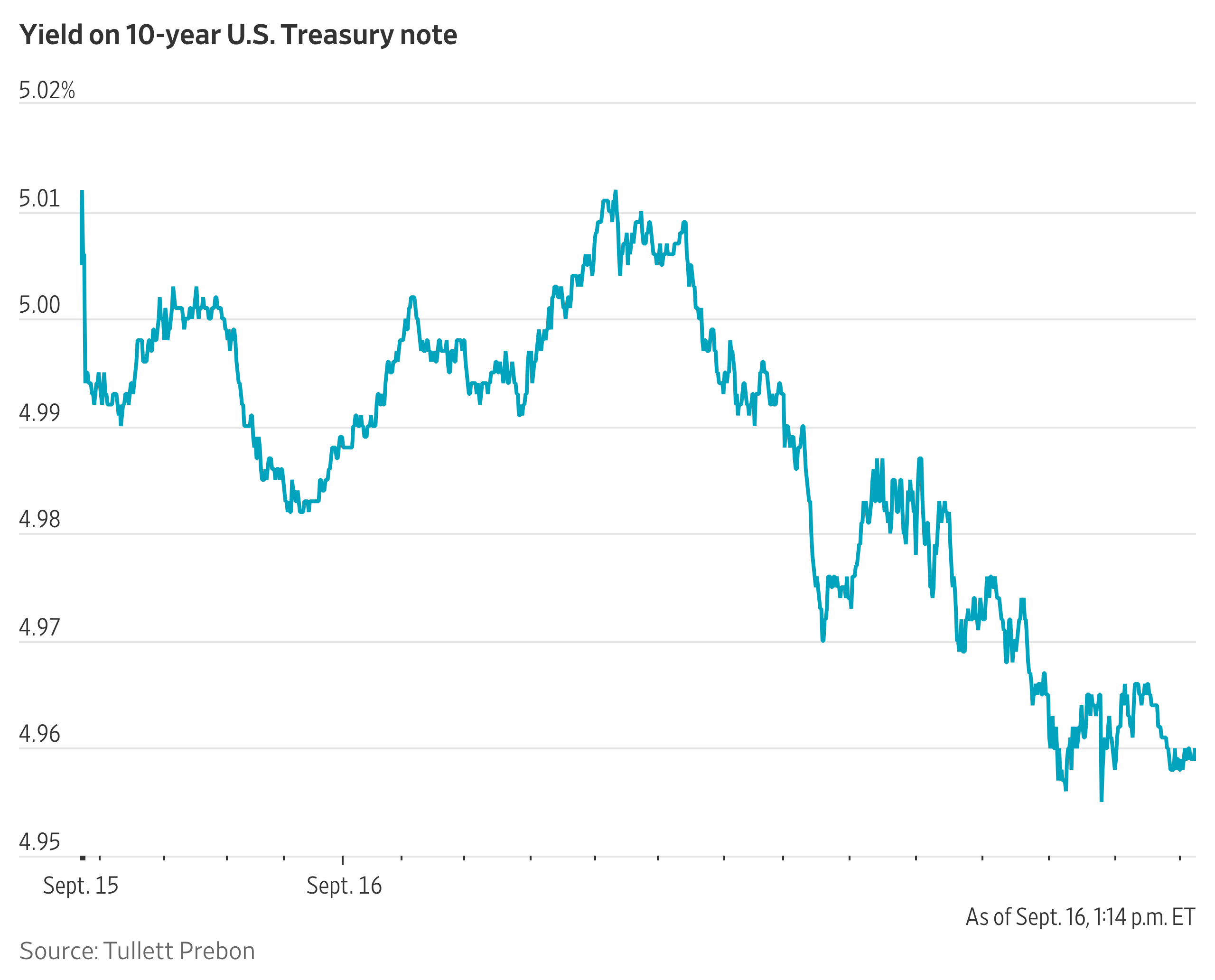
Treasury Yields Hold Declines After Fed Raises Rates

OPINION: Well-resourced complainants can make life difficult for hospo owners.
Business
AI’s 3 musketeers are hitting the brakes. Why Jefferies’ Chris Wood sees India midcap stocks regaining favour

“It is reasonably clear that for India to become a prime point of focus again for emerging market equity investors, the AI story has to blow up,” Wood wrote in his latest GREED & fear newsletter. The three AI-linked stocks — TSMC, Samsung Electronics and SK Hynix — account for 29% of the MSCI Emerging Markets Index, compared with India’s 11%. But with Indian bank credit growing 19.1%, corporate lending accelerating and earnings growth expected to improve, Wood sees the country’s domestic resilience becoming harder for investors to ignore.
The report describes the development as “bizarre” and offers two possible explanations. The first is that a coordinated pause, presented as a safety measure, could help the biggest AI companies build a regulatory moat, particularly if open-source models from China are later restricted. The second is more concerning: the cost of computing may be becoming unsustainable, while AI models could be starting to plateau. Wood says he has no inside track but considers both explanations plausible.
Either way, a reversal in the AI trade could redirect global investor attention towards India, whose weighting in the MSCI Emerging Markets Index has been overshadowed by the combined 29% share of Taiwan Semiconductor Manufacturing Co., Samsung Electronics and SK Hynix. India accounts for 11% of the index, according to the report.
Also Read |India’s ‘anti-AI’ trade hides 42 AI-enabler stocks that rallied 60% already: Goldman Sachs
India’s growth story has survived the shock
Wood’s argument for India is not based only on a possible unwind in the AI trade. He says the country’s domestic economic momentum has remained stronger than expected despite geopolitical stress and higher energy risks.
Bank credit was growing 19.1% year-on-year at the end of August. Corporate lending rose 21.6% in July, while loans to micro, small and medium industrial enterprises increased 24.9%.The report says the pickup in SME lending may indicate that recent GST and labour reforms, along with the government’s focus on improving the ease of doing business, are beginning to produce results.
The acceleration in corporate lending also points to the possibility that India’s long-awaited private sector capital expenditure cycle is finally beginning.
Wood says India is on track for real GDP growth of 6.5%-7% and nominal GDP growth of around 11%-12% in the current fiscal year. Jefferies’ head of India research, Mahesh Nandurkar, expects earnings growth to accelerate from 14% this fiscal year to 17% next year.
Other indicators are also strengthening. GST receipts rose 14.8% year-on-year in August, power demand growth climbed from 1.8% in January-March to 9.4% in April-August, and residential real estate sales in the top seven cities rose 7% in the first seven months of the year.
Why Wood prefers India’s midcaps
From an equity market perspective, Wood continues to find the mid- and small-cap segments more compelling than large caps because of India’s “huge reservoir of entrepreneurial talent.”
The Nifty MidCap 100 Index has risen 1.5% this year and 95% since the beginning of 2023. The Nifty, by comparison, is down 10.9% year-to-date and has gained 29% since the start of 2023.
That outperformance has come despite richer valuations. The Nifty MidCap 100 trades at 26.3 times 12-month forward earnings, compared with 17.3 times for the Nifty.
Wood argues that the strength of the mid- and small-cap market is not necessarily unhealthy. The growing contribution of these companies has also reduced the share of India’s top 20 stocks in total market capitalisation, a trend that contrasts with the global market, where passive investing has increased concentration in the largest companies.
Credit, gold loans and domestic flows
Another source of resilience is the continued flow of domestic money into equities. Net inflows into domestic equity mutual funds have averaged Rs 38,800 crore a month so far this year.
Those flows, however, are being absorbed by a renewed wave of equity issuance. Monthly equity supply rose to $9.5 billion in August from just $1 billion in April, limiting the upside for the benchmark Nifty.
Wood also highlights India’s organised gold-loan market as a potential source of additional consumer spending. Household gold holdings were estimated at $3.9 trillion at the end of March, while organised gold loans stood at $197 billion. Gold loans have grown at an annualised rate of 32% over the past three years.
Banks charge borrowers 9.25%, while the loan-to-value ratio remains below 60%. The report says the expansion of gold-backed credit could support consumer confidence while creating a profitable lending opportunity for banks.
The risk remains energy
The principal threat to India’s resilience is the energy shock. The capture of the port of Mokha and two islands in the Red Sea by the Houthis, along with damage to the East-West oil pipeline, has left Iran controlling the flow of oil through the Strait of Hormuz and the Houthis controlling the route through the Strait of Bab al-Mandeb.
Wood calls this a “nightmare scenario for markets” and says the need for energy exposure in portfolios is now more obvious than ever. Brent crude was trading at $106 a barrel at the time of the report.
India has so far managed the risk by continuing to buy discounted Russian oil while also purchasing more expensive energy from the US. Russia’s share of India’s crude imports rose from 20% in February to more than 50% in July.
(Disclaimer: Recommendations, suggestions, views and opinions given by the experts are their own. These do not represent the views of The Economic Times)

New Yorkers and Londoners share what they usually tip in a restaurant – and whether tipping culture has gotten out of hand.
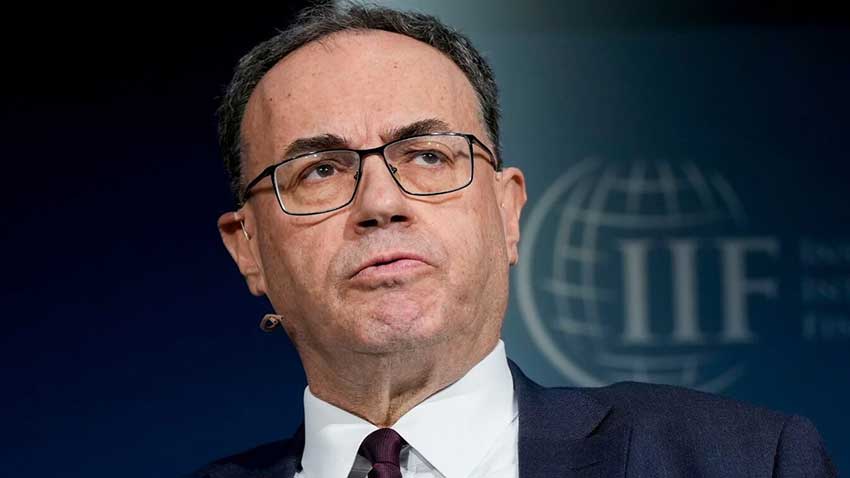
The Bank of England has warned that interest rates are likely to rise if the war in Iran continues, with inflation now on course to reach 4 per cent. Its nine-member monetary policy committee voted 6 to 3 yesterday to leave borrowing costs at 3.75 per cent, the sixth hold in a row.
The decision was expected by markets and the pound traded flat against the dollar after the announcement.
The Bank expects inflation to rise to more than double its 2 per cent target in the early months of next year, because of the surge in global oil and gas prices since the Middle East conflict began more than six months ago. More than half of the overshoot is down to the war in Iran, the committee said.
Andrew Bailey, the Bank’s governor, said that the longer hostilities continued, “the bigger the impact it will have on inflation, and the more likely it is we will need to raise Bank Rate to ensure that inflation falls back to our 2 per cent target”.
In a statement explaining his vote to hold, Bailey wrote that there was now a “more prominent” upside inflation risk because of the re-intensification of fighting between the United States and Iran in recent weeks, adding that there seemed now to be a “loss of urgency to find solutions”.
The Office for National Statistics reported this week that inflation jumped to 3.1 per cent on an annual basis in August, up from 2.9 per cent the previous month.
The committee said it was not overly concerned about wage growth or company profit margins, the so-called second-round effects that typically occur after an inflation shock.
Bailey was one of six members who voted to keep policy unchanged. Huw Pill, the Bank’s chief economist, and the external members Catherine Mann and Megan Greene voted to lift the base rate by 0.25 percentage points to 4 per cent.
UK government borrowing costs fell after the announcement. The yield on the benchmark ten-year bond slid by 0.10 percentage points to 5.2 per cent and the yield on the 30-year bond dipped by 0.14 percentage points to 5.72 per cent. Yields move inversely to prices. The FTSE 100 gained 0.6 per cent.
The price of a barrel of Brent crude oil dropped by 2.3 per cent to $103.40, down from recent highs near $110, leading to corresponding falls in European and US sovereign bond yields.
Dani Stoilova, European economist at BNP Paribas, said: “The MPC remains hesitant to hike, unlike other major central banks.”
Rob Wood, chief UK economist at Pantheon Macroeconomics, said that the committee’s focus on the upside risks of inflation indicated that “a November hike [is] highly likely unless energy prices fall sharply”, adding that another rate rise would come in February. The committee next meets on 5 November.
Alongside the conflict, the Bank warned of stronger-than-feared food price inflation because of climate change and the El Niño weather pattern, of the Russia and Ukraine war disrupting global grain supplies, and of excessive demand for components used in the roll-out of artificial intelligence.
Most of the committee thought Britain was at least nearing the adverse scenario mapped out at its previous meeting in July, in which the Middle East war causes a lasting increase in energy prices and requires several interest rate rises.
The Bank said GDP was now expected to grow by 0.4 per cent in the third quarter of this year, after a series of better-than-expected monthly output readings. In the first six months of the year, Britain expanded at the fastest pace among the G7 economies.
The Bank has also proposed to the Treasury a restructuring of its bond-selling programme, known as quantitative tightening, that would shrink its balance sheet by an average of £46bn a year until 2034. The Treasury must decide whether to implement the package by April 2027.
The US Federal Reserve lifted its main interest rate on Wednesday for the first time in three years, to a range of 3.75 per cent to 4 per cent. The Bank of Japan is expected to raise its main interest rate today, after the European Central Bank did so last week.

Amy Ingham
Amy Ingham is a reporter at Business Matters, covering UK business news with a focus on breaking news, business policy, late payments and insolvency. She joined the magazine in 2026 after completing the NCTJ Diploma in Journalism at Harlow College’s journalism school. Her recent reporting includes British Steel’s nationalisation and its impact on SME suppliers, the decline in late payments by large firms, and Insolvency Service director disqualifications. Reach her at aingham@cbmeg.co.uk.
Shuka Minerals assigns convertible loan to new investor and CEO

Ethereum developers warn ‘any teenager’ could disrupt upcoming Glamsterdam test

Europa League favourites? Bournemouth start historic campaign with memorable away win



-

 Fashion7 days ago
Weekend Open Thread – Corporette.com
-

 Tech5 days ago
The Latest Weird Thing to Play Doom Is the Mapped-Out Brain of a Fruit Fly
-

 Business7 days ago
10 Most-Streamed Songs On Spotify In 2026 So Far, Led By Ella Langley’s Dominant Run On The Charts This Year
-

 Crypto World7 days ago
XAG/USD: Silver’s Short-Term Rally Meets Its Moment of Truth
-

 Crypto World7 days ago
Diesel Tops $6 a Gallon for the First Time as 28 States Set Records
-

 Crypto World3 days ago
Kraken Lets xStocks Holders Earn Yield Through DeFi
-

 News Videos7 days ago
Facing Financial Fears
-

 Crypto World4 days ago
Elon Musk Drops a Bombshell: Grok 5 Could Be the AGI Breakthrough
-

 Crypto World1 day ago
US Charges Robinhood Engineers Over Crypto Listing Trades
-

 Crypto World6 days ago
Can AI Build a Startup in 72 Hours? Elon Musk's Team Will Livestream the Test
-

 Entertainment6 days ago
News Specials, Movies, Shows, More
-

 Business5 days ago
Rivals Sam Altman and Elon Musk Rally Behind Dario Amodei’s Call for a Slowdown in AI Development
-
 Crypto World5 days ago
New Tesla Roadster Uses SpaceX Tech. Will It Impact the Stock Price?
-
 NewsBeat4 days ago
‘Sick conspiracy’: Trump says only guardrails AI needs is ‘a strong and smart (High IQ!) president’ in all-caps rant
-

 Crypto World6 days ago
Robinhood Chain Never Stopped But its Blobs Did Stop Reaching Ethereum For 14 Minutes
-

 Crypto World2 days ago
What Is the Status of the U.S.-Iran Peace Talks? Here's What Both Sides Are Saying
-
 Entertainment6 days ago
New Horror Movie Officially Earns a Rare Stephen King Recommendation
-

 Business6 days ago
Marvell: Most Potent Setup Of The AI Factory Decade
-
 Crypto World4 days ago
3 Token Unlocks to Watch in the Third Week of September 2026
-

 Crypto World3 days ago
DOJ Seeks to Seize $61M in Iran Oil Funds From Binance Accounts It Vouched For
You must be logged in to post a comment Login