
Business
Founder of China’s Evergrande sentenced to life in prison


The founder of Evergrande, the property giant at the centre of China’s housing market slump, has been sentenced to life in prison and had all of his personal property confiscated.
Hui Ka Yan pleaded guilty in April to several charges, including embezzlement of assets and corporate bribery.
Shenzhen Intermediate People’s Court also fined Evergrande Group 8.82bn yuan (£960m; $1.31bn), while its real estate unit was ordered to pay 7bn yuan, according to state media.
Hui’s sentencing marks a pivotal moment in the fallout from Evergrande’s collapse, which shook China’s property sector and left investors and domestic banks reeling.
Hui, also known as Xu Jiayin, rose from humble beginnings in rural China, where he was raised by his grandmother before venturing into property development and setting up Evergrande in 1996.
He oversaw the company’s rapid rise through an aggressive expansion funded with large amounts of borrowed money.
The firm became China’s biggest real estate developer, with a stock market valuation of more than $50bn (£36.7bn), but collapsed in 2021.
Evergrande’s implosion has often been blamed for triggering a broader slump in China’s property market that continues to weigh heavily on the economy.

Business
Zip Co Shares Surge 18% as Buy Now, Pay Later Firm Posts Record FY26 Profit and Raises FY27 Outlook

SYDNEY — Shares in Zip Co Ltd surged 18.22%, or 47 cents, to $3.05 Thursday, as the buy now, pay later lender delivered record full-year cash earnings and issued upgraded profit guidance for the coming financial year, capping off a dramatic single-session rally that saw the stock touch as high as $3.01 earlier in the trading day.
Zip reported fiscal 2026 revenue of $1.336 billion, up 24.7% from the prior year, alongside a 45.7% increase in statutory net profit after tax to $116.4 million. The company’s preferred profitability measure, cash earnings before tax, depreciation and amortization, rose 57.9% to a record $268.9 million, comfortably exceeding the company’s own prior guidance of at least $260 million. Total transaction volume across the platform reached $16.7 billion for the year, up 27.2%, with operating margin expanding by 420 basis points to a milestone 20.0%.
The company’s U.S. business remained the primary driver of growth. U.S. total transaction volume rose 42.5% in U.S. dollar terms, translating to 35.6% growth in Australian dollar terms to $12.7 billion, while U.S. revenue climbed 35.6% in Australian dollar terms to $903.1 million. U.S. active customers grew 9.3% to 4.65 million during the year. By contrast, Zip’s Australia and New Zealand segment showed a more mixed picture: while cash earnings in the region roughly doubled to $69.5 million and Australian receivables grew 9.4%, active customers in that segment fell 8.0% to 1.88 million, even as customer spending per user rose 15.4% and transactions per customer increased 16.7%. The company also added 5,800 merchants in targeted Australian categories during the year, and confirmed in July it had begun winding down its New Zealand operations to sharpen its investment focus on the core Australian market.
Zip’s total active customer base across all markets climbed 3.7% to 6.52 million by the end of June, with 97,400 merchants now on the platform.
Looking ahead, Zip issued fiscal 2027 cash EBTDA guidance of $340 million, implying growth of approximately 26% from the FY26 result. The company said it expects U.S. transaction volume to grow by more than 30% in U.S. dollar terms during the coming year, with July 2026 already tracking above that threshold, even as the comparison base against which that growth will be measured continues to expand. Zip guided to a group operating margin of between 20% and 22% for fiscal 2027, representing further expansion from the 20% achieved in the just-completed year, while its revenue margin is expected to hold at approximately 8% of total transaction volume and its cash net transaction margin is expected to remain in a range of 3.8% to 4.0%.
Zip’s three strategic priorities for the coming year, according to the company’s investor presentation, center on driving continued performance from its core Pay-in-4 product, developing new offerings aimed at meeting customers’ short-term cash flow management needs, and accelerating investment in capability, including artificial intelligence, to support a broader multi-product platform.
Credit performance showed some modest deterioration alongside the strong growth. Group net bad debts as a percentage of total transaction volume rose to 1.77% in FY26 from 1.52% in the prior year, though the company noted its U.S. net bad debts of 1.7% of transaction volume remained within its stated target range of 1.5% to 2.0%.
Zip also strengthened its balance sheet and capital return program during the year. The company completed $150 million in on-market share buybacks during fiscal 2026 and authorized a further program of up to $50 million for fiscal 2027, alongside up to $37.5 million in additional on-market purchases for its employee share trust. Available cash and liquidity rose to $246.5 million from $137.8 million a year earlier, following new note issuances and expanded warehouse funding facilities. Zip also disclosed it is considering a potential dual listing in the United States to broaden its investor base, and said it may seek shareholder approval for a share consolidation at this year’s annual general meeting.
Analyst sentiment toward Zip remains broadly bullish. According to data compiled by StockAnalysis using S&P Global and TipRanks figures, 12 analysts currently rate Zip a Strong Buy or Buy, split between eight Strong Buy and four Buy ratings with no Hold or Sell recommendations, and an average price target of $4.06, implying substantial potential upside from pre-results trading levels, though that consensus target predates Thursday’s earnings release and is likely to be revised as analysts digest the new figures.
Some market commentary has flagged that while Thursday’s results comfortably cleared Zip’s prior earnings bar, the company’s own forward guidance implies a meaningfully slower pace of growth than it has delivered in recent years. According to one analysis, cash EBTDA growth is guided to decelerate by roughly 32 percentage points from the pace achieved in FY26, while U.S. transaction volume growth is expected to ease from 42.5% to a still-solid but comparatively slower rate of more than 30%. That deceleration, the analysis suggested, may ultimately matter more to how the market prices the stock going forward than Thursday’s headline earnings beat, since Zip is increasingly being evaluated on its ability to execute against a larger and more mature earnings base rather than on a turnaround or recovery narrative.
Despite Thursday’s sharp rally, Zip’s share price had underperformed the broader S&P/ASX 200 index over the preceding 12 months, having declined roughly 15% during that period even as the company’s underlying profitability improved substantially, according to The Motley Fool Australia. Thursday’s surge represents a significant reversal of that recent underperformance, at least for a single session, as investors responded to a results package that combined record current-year profitability with a credible, if more measured, growth outlook for the year ahead.
Pitcher Partners chief investment officer Cameron Curko, discussing broader trends across the current Australian reporting season with Proactive Investors, noted a divergence between consumer-facing stocks, which have generally faced pressure from higher interest rates and softer discretionary spending, and resources and energy companies, which have continued to show relative resilience. Zip’s strong results and share price reaction Thursday stood out as a notable exception to that broader consumer-sector softness, reflecting the company’s continued transition from a growth-at-any-cost fintech model toward a more disciplined, profitability-focused strategy that management has pursued over the past several years.
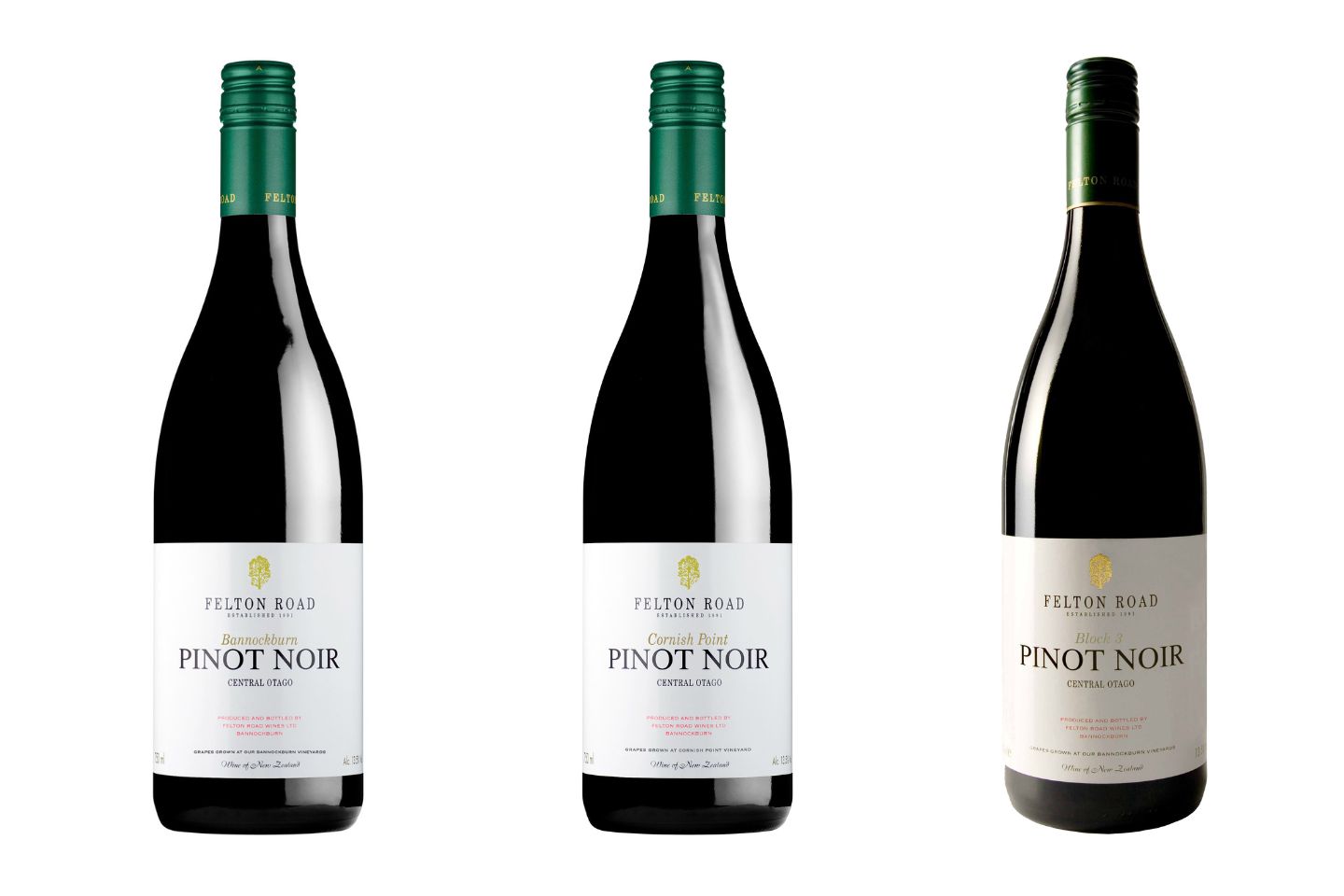
REVIEW: Character, finesse and complexity are abundant in the pinot noir offering from Felton Road.

Earnings call transcript: Nekkar posts stronger profit in Q2 2026 as orders rise

SK Hynix reaches deal to pay 60% of bonuses in company shares- Reuters

Norse Atlantic Q2 2026 slides: unit revenue hits record as fuel costs bite

Around one in four professionals believe it is acceptable to use LinkedIn as a dating tool, according to a survey by Zety, a CV-template platform, and 22 per cent say they have either reached out to or responded to someone on the networking site with romantic intent.
The findings come as more people, tired of swipe-based dating apps, turn to the professional network to meet partners, despite LinkedIn’s community policies, which prohibit romantic advances.
“Our focus is on making sure that people are safe from unwanted romantic advances,” a LinkedIn spokesperson said.
The Zety survey polled 1,023 US employees. Alongside the headline figures, it found that 12 per cent of respondents had formed a romantic relationship that began on the platform, and 48 per cent regarded LinkedIn profile information as more trustworthy than that found on dating apps.
The platform’s public profiles, with clear headshots and a record of a person’s education and career, provide the kind of information dating apps typically lack. Singles have also tried speed dating, hobby-based meetups and spreadsheets as alternatives to app-based matching, a trend that runs alongside reports of people using dating apps to hunt for jobs and professional contacts.
Esme Gordon-Craig, a 24-year-old freelance journalist in London, used LinkedIn to follow up with a colleague after her internship ended, suggesting they continue a conversation about career paths over drinks. He chose a pub near the office. “He was kind of like, ‘This is a date, isn’t it?’” she said. “And I was like, ‘Yeah.’”
Working remotely without a team or office, she said she still uses the site to make connections that are professional, social “and maybe more”. “If there’s a spark, then it’s great,” Gordon-Craig said. “And if there’s not, then it’s just a good networking opportunity.”
Rachel Wong received a connection request from Sam Sawchuck, an alumnus of her then employer, who said he had first seen her on Tinder and suggested coffee. After colleagues vouched for him, she accepted and, “keeping things professional”, asked for his help with a problem at work. The couple are now looking for a wedding venue. “If it was LinkedIn, so be it,” Wong said. “I mean, he’s been the best connection I’ve ever made.”
In San Diego, financial adviser Amal Hagisufi was recruiting for a vacancy when she messaged Moustafa Madkaur, who works in banking. He initially declined, saying her office was 40 minutes away, but reconsidered after seeing her on the dating site Plenty of Fish and sent a new LinkedIn message with his phone number. “It was way more smooth than the way I had been previously approached on the dating apps,” Hagisufi said.
Dating coach Jaime Bronstein, who supports using the site this way, said a first message should be appropriate to the platform and never obviously romantic, and advised against opening lines such as “Are you single?” or “You’re gorgeous!” on a professional network.
Users say the platform’s notifications, which alert members when someone views their profile, complicate discreet vetting. Katie Istomin, a student at Cornell, checks prospects’ subjects and club memberships to gauge ambition; one of her sorority sisters set up a second account to browse profiles anonymously. “LinkedIn’s low-key a snitch for that,” Istomin said.
None of this is condoned by LinkedIn, whose position remains that romantic approaches are not permitted on the site.

Amy Ingham
Amy Ingham is a reporter at Business Matters, covering UK business news with a focus on breaking news, business policy, late payments and insolvency. She joined the magazine in 2026 after completing the NCTJ Diploma in Journalism at Harlow College’s journalism school. Her recent reporting includes British Steel’s nationalisation and its impact on SME suppliers, the decline in late payments by large firms, and Insolvency Service director disqualifications. Reach her at aingham@cbmeg.co.uk.

Infosys: Discipline Priced As Decline

Wall St futures tick higher on easing Treasury yields; Fed minutes in focus

Clavister reports 63% revenue jump in second quarter

Bonds recover after US Treasury comes to the rescue

The mobile library bringing books to rural Syria

Zip Co Shares Surge 18% as Buy Now, Pay Later Firm Posts Record FY26 Profit and Raises FY27 Outlook

Coinbase chooses Abu Dhabi as global hub for tokenized securities





-

 Fashion6 days ago
Weekend Open Thread: Ann Taylor
-
 Sports6 days ago
This U.S. Amateur is a glimpse into golf’s future in more ways than you think
-
 Tech6 days ago
11 Ways to Rank Your Videos
-
 NewsBeat5 days ago
Myanmar says over 300,000 Rohingya refugees verified for repatriation as exodus enters ninth year
-

 Sports5 days ago
Birmingham 2026: Day 6 Timetable for Irish Athletes
-

 Politics5 days ago
SEQ Code: The Three Letter Boarding Pass Code That Could Give You The Worst Seat
-

 Tech7 days ago
DeepSeek Harness launches as open source rival to Claude Code, alongside V4-Pro on API with higher prices
-

 Tech2 days ago
Qwen3.8-27B runs frontier-class coding agents and reasoning locally, no cloud API required
-

 Crypto World2 days ago
OCC Greenlights Trump Family Crypto Firm for Trust Charter
-

 Fashion6 days ago
Weekly News Update, 8.14.26 – Corporette.com
-
 Tech5 days ago
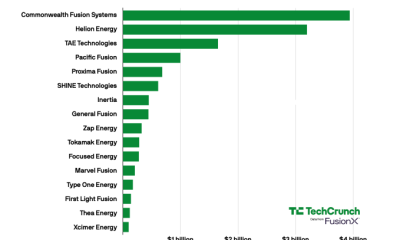
Every fusion startup that has raised over $100M
-
 Entertainment6 days ago
10 Netflix Shows That Quietly Became Modern Classics
-

 Crypto World5 days ago
Pi Network Protocol 27 endgame: last upgrade before what?
-
 Entertainment5 days ago
Marvel Studios Reveals New X-Men Cast Including Adam Driver and Sadie Sink
-

 Business2 days ago
SMA Solar Technology AG (SMTGY) Q2 2026 Earnings Call Transcript
-

 Business6 days ago
15 Ways to Make Money From Your Phone (2026 Guide)
-

 Business5 days ago
Facebook Down Now? Users Report Login And Loading Problems As Outage Trackers Monitor Ongoing Issues
-

 Fashion6 days ago
Silver bangles for women – Newbridge Silverware
-

 Politics7 days ago
How the British state enabled Simon Levy’s atrocities
-

 Crypto World6 days ago
Robinhood Chain Approaches $1B TVL as Uniswap Integration Boosts Liquidity
You must be logged in to post a comment Login