FOX Business is honoring 10 special small businesses that keep America moving.
FOX Business is celebrating small businesses that have been the backbone of American excellence with a campaign in honor of America’s 250th anniversary that will award three winners $25,000 each, the network announced Thursday.
FOX Business’ “Made in America” contest participants can apply online with a video or written entry at SmallBusinessAwards2026.com. Submissions and nominations will be taken on the website until March 30.
Fans will participate in their first round of voting for their favorite small businesses beginning on April 13, after the initial submissions are narrowed down to 10 finalists.
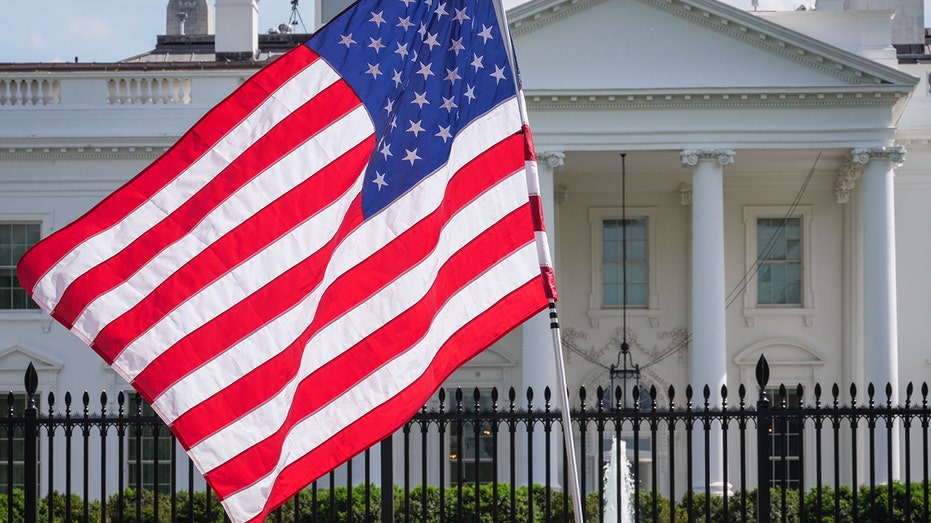
The U.S. flag waves in front of the White House on April 30, 2025, in Washington, D.C. (J. David Ake/Getty Images)
A plethora of FOX Business hosts and anchors appeared in a promo announcing the campaign.
Advertisement
“For 250 years, small businesses have been the backbone of America,” “Mornings with Maria” and “Sunday Morning Futures” host Maria Bartiromo said.
“Built by people who took a chance on themselves and their communities,” “Kudlow” namesake Larry Kudlow added.
“These are the places where the American story is written,” “Making Money” host Charles Payne said.
“The Bottom Line” and “The Big Money Show” co-host Brian Brenberg said, “FOX Business is shining a light on the independent hops that keep our country moving,” and his co-host and founding FOX Business anchor Dagen McDowell provided details on the campaign.
FOX Business is celebrating small businesses that have been the backbone of American excellence by awarding three with $25,000 each and a feature in a FOX Nation special. (FOX News Media)
The FOX Business “Made in America” campaign is sponsored by Comcast Business and JP Morgan Chase.
America is celebrating its 250th anniversary on July 4, 2026.
President Donald Trump previewed his “Freedom 250” campaign in December, announcing a series of celebrations to mark the milestone anniversary of the country’s independence.
Zumiez Inc. (ZUMZ) Q4 2025 Earnings Call March 12, 2026 5:00 PM EDT
Company Participants
Richard Brooks – CEO & Director Christopher Work – Chief Financial Officer
Conference Call Participants
Advertisement
Mitchel Kummetz – Seaport Research Partners Richard Magnusen – B. Riley Securities, Inc., Research Division Marcus Belanger – William Blair & Company L.L.C., Research Division
Presentation
Operator
Advertisement
Good afternoon, ladies and gentlemen, and welcome to Zumiez Inc. Fourth Quarter Fiscal 2025 Earnings Conference Call. [Operator Instructions]
Before we begin, I’d like to remind everyone of the company’s safe harbor language. Today’s conference call includes comments concerning Zumiez Inc.’s business outlook and contains forward-looking statements. These forward-looking statements and all other statements that may be made on this call are not based on historical facts, are subject to risks and uncertainties. Actual results may differ materially. Additional information concerning a number of factors that could cause actual results to differ materially from the information that will be discussed is available in Zumiez’s filings with the SEC.
At this time, I would like to turn the call over to Rick Brooks, Chief Executive Officer. You may begin.
Advertisement
Richard Brooks CEO & Director
Hello, and thank you, everyone, for joining us on today’s call. With me today is Chris Work, our Chief Financial Officer. I’ll begin with remarks about our fourth quarter performance and the successful holiday season we just completed before reflecting on our strong full year 2025 results and discussing our strategic priorities. Chris will then take you through the financials and our outlook for fiscal 2026. After that, we’ll open the call to your questions.
We’re pleased with our fourth quarter results, which capped off a second consecutive year of important progress for Zumiez. Q4 results were highlighted by robust full price selling in North America during the important holiday season, which fueled mid-single-digit
CF Industries Holdings, Inc. (NYSE: CF) shares exploded higher on March 12, 2026, building on the previous day’s massive rally and hitting fresh all-time highs as ongoing Middle East conflicts continued to squeeze global fertilizer supplies and boost nitrogen pricing.
CF Industries Holdings (NYSE: CF)
CF closed the March 11 session at $120.13, surging $10.08 or 9.16% on volume of more than 6.3 million shares, far exceeding average daily levels. The stock opened at $113.32 and ranged from a low of $112.50 to a high of $120.50. Momentum carried strongly into March 12 trading, with shares opening around $128.02 and climbing as high as $130.59 intraday, trading up around 7-10% in early to mid-session activity depending on real-time quotes, pushing the market cap toward the mid-$20 billion range.
The explosive moves stem from heightened geopolitical risks in the Middle East, particularly involving Iran, a significant exporter of urea that represents about 10% of global supply. Disruptions to shipments amid escalating tensions have tightened the nitrogen fertilizer market, driving up prices for key products like urea and ammonia. North American producers like CF Industries, with access to abundant, low-cost natural gas feedstock, stand to benefit disproportionately as higher global prices improve margins without corresponding cost spikes.
Analysts highlighted the supply shock’s potential to sustain elevated nitrogen prices through at least the first half of 2026. Barclays recently raised its price target on CF to $120 from $100 while maintaining an Overweight rating, citing the conflict’s impact on fertilizer costs. Other observers noted CF’s outperformance relative to peers like Mosaic (MOS) and LSB Industries, with the stock gaining over 20% in recent weeks amid the turmoil.
The rally has propelled CF well above its prior 52-week high near $121.80, with year-to-date gains exceeding 50% from the low of $67.34. The stock’s beta remains moderate, but commodity sensitivity has amplified volatility in this environment.

Advertisement
CF Industries, a leading global manufacturer of hydrogen and nitrogen products, derives the bulk of its revenue from agricultural fertilizers including ammonia, granular urea, urea ammonium nitrate (UAN), and ammonium nitrate. The company operates world-scale facilities primarily in North America, leveraging cost advantages from domestic natural gas to serve farmers amid rising global food security demands.
Beyond traditional fertilizers, CF has aggressively pursued decarbonization to position itself in the emerging clean energy landscape. Blue ammonia projects, carbon capture initiatives, and partnerships like the Blue Point joint venture aim to produce low-carbon ammonia for industrial uses, hydrogen economies, shipping fuel, and emissions reduction. Recent participation in events such as the BofA 2026 Global Agriculture Conference and upcoming presentations at the World Hydrogen & Carbon Americas 2026 conference underscore this strategic shift toward sustainable ammonia platforms.
The company’s latest financial results, reported February 18, 2026, for the fourth quarter and full year 2025, showed resilience. Full-year net earnings reached $1.46 billion, or about $8.97 per diluted share, with adjusted EBITDA of $2.89 billion. Fourth-quarter net earnings were $404 million, or $2.59 per diluted share—beating estimates—with adjusted EBITDA at $821 million on revenue of $1.87 billion, up 22.8% year-over-year and above expectations.
Management highlighted strong demand in core agricultural segments, higher realizations for ammonia and urea, and progress on clean energy efforts. The company returned significant capital to shareholders in 2025 through buybacks and dividends, completing programs and maintaining a quarterly payout with a forward yield around 1.5-1.8% at recent levels.
Advertisement
Despite the near-term tailwinds from supply disruptions, challenges persist. Fertilizer markets are cyclical, influenced by energy costs, crop economics, weather patterns, and potential new global capacity additions. Some analysts remain cautious, with mixed ratings including holds and sells citing risks of price normalization post-geopolitical resolution or policy shifts affecting decarbonization incentives.
Upcoming catalysts include first-quarter 2026 earnings, slated for early May (around May 6), which will offer insights into spring planting demand, current nitrogen price trends, and updates on low-carbon projects. Operational issues, such as a temporary outage at the Yazoo City facility expected to impact EBITDA modestly through later quarters (with insurance offsets), are also on investors’ radar.
CF’s strong balance sheet, cash generation, and dual exposure to essential agriculture inputs and the energy transition have drawn renewed institutional interest, including recent stake increases by firms like Van ECK Associates.
As global fertilizer markets grapple with supply uncertainties and food production pressures mount, CF Industries exemplifies the intersection of commodity fundamentals and strategic adaptation. The current surge reflects acute supply fears, but long-term value hinges on executing clean ammonia ambitions amid volatile cycles.
Advertisement
For investors, CF remains a high-conviction play on nitrogen’s indispensable role in global agriculture and the push toward sustainable energy solutions, though with inherent risks tied to geopolitics and market swings.
When dealing with chronic wounds, burns, or infected tissue, professional debridement treatment can be essential for proper healing. However, finding the right medical provider for this specialized procedure isn’t always straightforward.
This guide will walk you through everything you need to know about locating qualified debridement services in your local area and what to expect during your search.
Understanding What Debridement Treatment Involves
Debridement is a medical procedure that removes dead, damaged, or infected tissue from wounds to promote healing. Healthcare professionals use various methods including surgical, mechanical, enzymatic, or biological techniques depending on the wound’s severity and location.
This treatment is commonly needed for diabetic ulcers, pressure sores, burns, and surgical wounds that aren’t healing properly. Understanding the basics of debridement helps you communicate more effectively with potential providers and ask informed questions about their approach.
The procedure can range from simple office-based treatments to more complex surgical interventions requiring hospital facilities. Knowing which type you need will significantly narrow your search for the right medical professional.
Advertisement
Types of Healthcare Providers Who Perform Debridement
Several types of medical professionals are qualified to perform debridement procedures. Wound care specialists have dedicated training in managing complex wounds and often work in specialized wound care centers. These facilities typically offer the most comprehensive debridement services.
General surgeons and plastic surgeons frequently perform surgical debridement, particularly for extensive wounds or those requiring reconstruction. Podiatrists specialize in foot and ankle debridement, making them ideal for diabetic foot ulcers and other lower extremity wounds.
Primary care physicians may handle simple debridement cases in their offices, while dermatologists often treat surface-level tissue removal. Understanding which specialist matches your specific needs will streamline your search process considerably.
Starting Your Search for Local Debridement Services
Begin by consulting your primary care physician for a referral, as they understand your medical history and can recommend appropriate specialists. Insurance companies also maintain provider directories that list in-network wound care specialists and surgeons who perform debridement.
Advertisement
Hospital websites often feature physician finder tools where you can search by specialty and location. Many hospitals have dedicated wound care centers staffed by teams specifically trained in debridement and wound management.
When searching online for “debridement near me,” you’ll find various options, but verify credentials and read patient reviews carefully before making appointments. Local medical societies and professional organizations can also provide referrals to qualified practitioners in your area.
Questions to Ask Potential Providers
Once you’ve identified potential providers, prepare a list of important questions before scheduling consultations. Ask about their experience with your specific type of wound and how many debridement procedures they perform annually.
Inquire about which debridement methods they use and why they’d recommend a particular approach for your situation. Understanding their treatment philosophy helps ensure alignment with your preferences and comfort level.
Advertisement
Don’t hesitate to ask about success rates, potential complications, and what the recovery process typically involves. Questions about costs, insurance coverage, and payment plans are equally important for planning purposes.
Evaluating Wound Care Centers and Clinics
When considering wound care centers, look for facilities accredited by recognized healthcare organizations. Accreditation indicates adherence to quality standards and best practices in wound management.
Visit the facility if possible to assess cleanliness, organization, and staff professionalism. The environment should feel welcoming yet maintain obvious medical hygiene standards.
Check whether the center offers comprehensive services including follow-up care, nutritional counseling, and patient education. Comprehensive care typically leads to better outcomes than facilities offering only basic debridement services.
Advertisement
Insurance Coverage and Cost Considerations
Contact your insurance provider before scheduling any procedures to understand coverage details. Most insurance plans cover medically necessary debridement, but prior authorization may be required.
Ask providers about typical costs and whether they offer payment plans for out-of-pocket expenses. Some facilities have financial counselors who can help navigate insurance issues and explore assistance programs.
Understanding costs upfront prevents surprises and allows you to make informed decisions about your care. Don’t let financial concerns prevent you from asking detailed questions about billing and payment expectations.
Making Your Final Decision
After researching options and consulting with providers, trust your instincts about which professional makes you feel most comfortable. Effective wound care requires ongoing communication and trust between patient and provider.
Advertisement
Consider practical factors like office location, appointment availability, and staff responsiveness. These elements significantly impact your overall treatment experience, especially if multiple visits are necessary.
Choose a provider who takes time to explain procedures, answers questions thoroughly, and demonstrates genuine concern for your wellbeing. The right match combines technical expertise with compassionate, patient-centered care that addresses your individual needs and concerns.
Tehran — Iran’s new Supreme Leader, Mojtaba Khamenei, issued his first public statement Thursday, vowing to maintain the closure of the Strait of Hormuz as leverage against enemies and warning that attacks on U.S. military bases in the region would continue, as the war with the United States and Israel entered its 13th day.
Mojtaba Khamenei
The statement, read aloud on state television rather than delivered in person by Khamenei himself, called for national unity in the face of aggression and praised Iran’s armed forces for preventing domination or division of the country. A photograph of the 56-year-old cleric appeared on screen during the broadcast, but questions lingered about his health and whereabouts following reports of injuries sustained in the opening strikes of the conflict.
In the remarks, attributed directly to Khamenei, he declared that the Strait of Hormuz—a critical global chokepoint for oil shipments—must remain closed as a “tool to pressure the enemy.” He demanded the immediate closure of all U.S. bases in the Middle East, threatening further attacks if they did not comply. Khamenei emphasized Iran’s desire for friendship with neighboring countries while insisting that operations would target only American installations.
“I assure everyone that we will not refrain from avenging the blood of your martyrs,” the statement said, according to translations by Reuters and other outlets. He referenced specific incidents, including the deaths of children in attacks, and pledged that enemies would “pay the price.” Khamenei also claimed he learned of his appointment as Supreme Leader via state television, underscoring the chaotic circumstances of his ascension.
The broadcast came amid intense speculation about Khamenei’s condition. Multiple reports, including from The New York Times citing Israeli and Iranian officials, indicated he suffered leg injuries—possibly including a fractured foot and face wounds—during the initial U.S.-Israeli strikes on Feb. 28 that killed his father, Ayatollah Ali Khamenei, along with other family members including his wife and relatives. He has not appeared publicly or on video since his selection by the Assembly of Experts on March 9, fueling rumors of more severe injuries, including unconfirmed claims of a coma or leg amputation circulated in some Western media.
Advertisement
Iranian officials and state-affiliated outlets have pushed back, with one source close to President Masoud Pezeshkian insisting Khamenei is “safe and sound.” The absence from public view has been attributed to recovery needs or security concerns, as elite NOPO counterterrorism units now guard the new leader.
Mojtaba Khamenei, born in 1969 in Mashhad, is the second son of the late Ayatollah Ali Khamenei, who ruled as Supreme Leader since 1989 until his death at 86 in the war’s first hours. A hard-line cleric who studied in Qom and fought in the Iran-Iraq War as a teenager, Mojtaba long served as a close adviser to his father while maintaining a low public profile. His selection marked an unprecedented dynastic succession in the Islamic Republic, defying traditional norms against hereditary leadership and drawing sharp criticism from U.S. President Donald Trump, who called the choice “unacceptable” and a “lightweight.”
The Assembly of Experts, an 88-member body of Shia clerics, convened amid ongoing bombardment to select him swiftly, signaling continuity and defiance against external pressure. Analysts described the move as a provocation, with one expert calling it a “blunt middle finger” to demands for regime change or veto power over Iran’s leadership.
The war, dubbed by some as the “Ramadan War,” erupted Feb. 28 with massive joint U.S.-Israeli airstrikes targeting Iranian leadership compounds, military sites, and infrastructure. It has escalated into broader regional conflict, with Iran launching retaliatory strikes, closing key maritime routes, and threatening further escalation. Oil prices have spiked amid fears over the Strait of Hormuz, through which about 20% of global oil passes.
Advertisement
Khamenei’s statement reinforced Iran’s strategy of asymmetric pressure, including proxy operations and threats to energy flows, while praising the military’s resilience. He vowed to open additional fronts if necessary and obtain “compensation” from adversaries.
The remarks drew immediate international reactions. U.S. officials dismissed them as bluster from a weakened regime, while allies in the region expressed concern over potential disruptions to global shipping. The war has already caused significant casualties, with strikes hitting civilian areas including schools, and displaced populations amid infrastructure damage.
Khamenei’s elevation comes at a pivotal moment for Iran, facing existential threats from sustained aerial campaigns. His background in the clerical establishment and proximity to the IRGC positions him to maintain hard-line policies, but his lack of public experience and current invisibility raise questions about command effectiveness during crisis.
As the conflict rages, with no clear end in sight, Mojtaba Khamenei’s first message—delivered indirectly—aims to project strength and unity. Whether he can consolidate power and navigate the war remains uncertain, as Iran balances defiance with survival in one of its most perilous chapters.
Namibia stands as one of Africa’s most underrated destinations, offering dramatic landscapes, unique wildlife encounters, and adventures that rival any destination on the continent.
This southwestern African gem combines otherworldly desert scenery with rich cultural experiences and some of the most pristine wilderness areas you’ll find anywhere. Whether you’re planning your first visit or returning to explore more of this captivating country, these five experiences should top your itinerary for an unforgettable journey.
Explore the Towering Dunes of Sossusvlei
The Namib Desert’s iconic red dunes create one of the most photographed landscapes in Africa, and experiencing them firsthand is simply breathtaking. Sossusvlei, located in the Namib-Naukluft National Park, features some of the world’s highest sand dunes, with Big Daddy reaching an impressive 325 meters.
The best time to visit is at sunrise when the low light creates stunning contrasts between the illuminated and shadowed sides of the dunes. The climb to the top of Dune 45 or Big Daddy challenges your fitness, but the panoramic views across the endless sea of sand make every step worthwhile.
Don’t miss nearby Deadvlei, a surreal white clay pan dotted with ancient dead camelthorne trees that have stood for nearly 900 years. This otherworldly landscape looks like something from a science fiction film and offers incredible photography opportunities throughout the day.
Advertisement
Experience Wildlife at Etosha National Park
Etosha National Park ranks among Africa’s premier wildlife destinations, offering exceptional game viewing in a unique setting centered around a massive salt pan. The park’s network of waterholes creates natural theaters where you can observe elephants, lions, rhinos, and countless other species gathering to drink.
Unlike many other African parks, Etosha allows self-driving, giving you the freedom to explore at your own pace. However, booking a Namibia luxury safari with expert guides provides deeper insights into animal behavior and access to exclusive areas that enhance your wildlife experience significantly.
The dry winter months from May to October provide the best game viewing as animals concentrate around permanent water sources. You might witness dramatic predator-prey interactions or simply enjoy watching elephant families socializing at sunset.
Discover the Skeleton Coast’s Haunting Beauty
The Skeleton Coast earned its ominous name from the numerous shipwrecks that line its foggy, treacherous shores, creating an atmosphere unlike anywhere else on earth. This remote stretch of coastline where the Namib Desert meets the Atlantic Ocean offers an adventure into one of the planet’s most inhospitable yet fascinating environments.
Advertisement
The landscape features an ever-changing tapestry of shipwrecks, seal colonies, desert-adapted wildlife, and wind-sculpted rock formations. Cape Cross hosts one of the largest Cape fur seal colonies in the world, with up to 200,000 seals during breeding season creating an unforgettable sensory experience.
Flying over the Skeleton Coast provides the best perspective on this vast wilderness, revealing patterns and features invisible from the ground. Many visitors combine coastal exploration with visits to the Himba people, one of Namibia’s last semi-nomadic tribes maintaining traditional lifestyles.
Marvel at the Fish River Canyon
The Fish River Canyon ranks as the second-largest canyon in the world and offers hiking opportunities that rival more famous trails elsewhere in Africa. This geological wonder stretches 160 kilometers long, reaches up to 27 kilometers wide, and plunges 550 meters deep in places.
The five-day Fish River Canyon hiking trail challenges experienced trekkers with its rugged terrain and extreme temperatures, but the rewards include complete solitude and ever-changing scenery. The trail only operates during winter months when temperatures become manageable and flash flood risks decrease.
Advertisement
If you’re not up for the full hike, the viewpoints along the canyon rim provide spectacular vistas, especially at sunset when the light transforms the rocky landscape into shades of purple, orange, and red.
Stargaze in the World’s Oldest Desert
Namibia boasts some of the darkest skies on Earth, making it a premier destination for astronomy enthusiasts and anyone who appreciates natural beauty. The country’s low population density, minimal light pollution, and clear desert air create perfect conditions for observing celestial wonders.
Several lodges and reserves offer dedicated stargazing experiences with telescopes and expert guides who help you navigate the southern hemisphere’s constellations. The Milky Way appears so vivid in Namibia that it seems almost three-dimensional, stretching across the sky in a brilliant band of light.
Even without specialized equipment, simply lying on the desert sand and looking up reveals more stars than most people see in their entire lives. This humbling experience connects you to the vastness of the universe in ways that few other activities can match.
Advertisement
Conclusion
Namibia delivers experiences that satisfy adventure seekers, wildlife enthusiasts, photographers, and anyone craving connection with raw, untouched nature. From climbing ancient dunes to tracking desert-adapted elephants, from exploring haunting coastlines to sleeping under star-filled skies, this remarkable country offers diversity that few destinations can match. Start planning your Namibian adventure now, and prepare for a journey that will exceed your expectations and leave you planning your return before you’ve even left.
Global small cap equities rose in the fourth quarter, with signs that market leadership was beginning to broaden. Notably, the months-long AI-driven rally appeared to enter a new phase, with investors becoming increasingly cautious about the sustainability