
Business
Franchise hits keep falling flat, weighing on box office



Moviegoers will find a wealth of familiar franchises on the big screen this year. It may not be enough to save the box office.
New entrants from popular film series dominate the movie slate in the next 12 months. The 2026 schedule features releases from Star Wars, Marvel, DC Comics, Toy Story, Super Mario Bros., Hunger Games, Scream, Scary Movie, Minions, Dune and Jumanji.
Intellectual property like these established franchises has long been an important part of Hollywood, but they are increasingly vital in 2026 as the theatrical industry seeks to break the $10 billion mark at the domestic box office for the first time since the pandemic.
But some big-name installments aren’t drawing the crowds they used to, and industry insiders worry the $10 billion benchmark may be beyond reach this year for a post-pandemic industry that has been rocked by production shutdowns, the consolidation of major studios and a shift in consumer viewing toward streaming.
“The reliance on franchises has been a little trickier the last few years,” said Alicia Reese, senior vice president of equity research for Wedbush. “Yes, there’s a level of certainty … but it’s not a home run. It’s never going to be a home run from here on out, because people are pickier than they used to be. They know what’s coming. Word of mouth means more than ever.”
Since 2010, the top 10 highest-grossing films domestically have predominantly been franchise films, according to data from Comscore. During that time, between eight and 10 of the films released each year were a sequel, prequel or remake. The only outlier was 2020, when seven of the top 10 films were franchise-based, due to the number of films that were delayed during Covid shutdowns.
And, of course, a number of the original titles that broke into the top 10 have become franchises themselves in the last two decades. Look at “Avatar,” “Frozen,” “Zootopia,” “Inside Out,” “Secret Life of Pets” and “Ted.”
“Studios clearly feel that audience comfortability — with going to see a movie where they already, in some sense, know what they’re getting before they walk into the auditorium — is a bet worth making,” said Paul Dergarabedian, head of marketplace trends at Comscore.
As studios lean into the safety of a built-in audience, box office sales become more reliant on the success of these franchise films.
Prior to the pandemic, during the span of 2010 to 2019, top 10 films represented an average of 30% of the total domestic box office annually. Outpacing the group was the 2019 calendar where these films accounted for nearly 40% of the annual haul. All 10 films that year were IP-driven, and nine of them generated more than $1 billion globally.
Post-pandemic, the average percentage that the top 10 films represent of the total annual domestic box office is 44%.
“I remember having this conversation the late ’90s,” said Eric Handler, managing director and senior research analyst at Roth Capital Partners. “The box office has for the last several decades been franchise-driven. That’s just the way it is. Why? It’s because when there’s familiarity with content, there’s a greater chance that people will show up because there’s an affinity towards a particular franchise and it’s already known.”
Now, Hollywood is facing the harsh reality of what happens when franchises fall flat.
Great expectations
Two of the most anticipated films to hit theaters last year — Universal’s “Wicked: For Good” and Disney’s “Avatar: Fire and Ash” — underperformed expectations.
The first “Wicked” movie, released in 2024, tallied $475 million at the domestical box office and a little more than $750 million globally during its run in theaters. A year later, the second part of the duology collected just under $350 million from the U.S. and Canada and about $525 million globally.
Box office analysts attributed the smaller ticket sales to a drop in quality between the first and second installments. “Wicked” generated an 88% “Fresh” rating on review aggregator Rotten Tomatoes, while “Wicked: For Good” scored a 66% rating.
“Avatar: Fire and Ash” had even bigger shoes to fill. James Cameron’s breakout hit “Avatar,” released in 2009, snared $785.2 million domestically and $2.1 billion internationally. It remains the highest-grossing film of all-time at the box office with $2.9 billion in ticket sales.
More than a decade later, “Avatar: The Way of Water” hit theaters, generating $688.8 million domestically and $1.6 billion internationally, bringing its total haul to $2.3 billion.
But when “Fire and Ash” hit theaters in December, consumer demand wasn’t nearly as high and the allure of Cameron’s ground-breaking filming techniques had worn off. “Fire and Ash,” which is still playing in theaters, has tallied just $378.5 million domestically and passed $1 billion internationally as of Sunday.
Wedbush’s Reese said part of the problem can be trying to mine too much from any one franchise.
Take, for example, Disney’s Marvel Cinematic Universe. The film franchise has been a box office darling for nearly two decades, but struggled in the wake of the climactic “Avengers: Endgame” in 2019 to produce consistent quality sequels. At the same time, it flooded the streaming market with a dozen new television series.
“If you try to stretch it too thin and you don’t put the same level of attention to details that it’s not going to work,” Reese said.
There’s also risk in trying to broaden a niche interest into a global success, she said. Do filmmakers stay close to the original IP and play to its base, or do they shoot for a wider audience and a bigger splash?
Sandworms emerge on the desert planet Arrakis in Denis Villeneuve’s “Dune: Part Two.”
Warner Bros. | Legendary Entertainment
Reese noted Warner Bros.’ new Dune franchise, starring Timothée Chalamet and directed by Denis Villeneuve, is a good example of a series that’s threaded the needle, landing with fans who already loved the books at the same time that it drew in new crowds.
“If it’s a good film, it’ll service that core audience and it might bring in some newbies and have that broader appeal,” Reese said. “But, if you try to get that broad appeal and you’re not servicing your core fans, they will turn against you. That will spell huge problems, because if they don’t like the film, everyone else is going to find out about it, and they won’t go either, right?”
More than a film
Since Covid shutdowns all but decimated the movie industry in early 2020, the number of films being produced for theatrical release has declined.
As studios produce fewer films, they’re counting even more on what they perceive as the safe bets of tried and true IP.
In 2024, 94 movies were released in more than 2,000 locations, a 20% decline from the 120 wide releases in 2019. That decline was mirrored in the box office results, which were down about 23% from the $11.4 billion tallied in 2019.
In 2025, there were 112 wide released films, about 6.6% down from 2019 levels, but the box office still lagged more than 20%.
Hollywood analysts point to several factors to explain why the domestic box office continues to drag.
There is a lack of theatrical content, particularly films that are in the mid-budget range — $15 million to $90 million. Most of these films, which tend to be dramas, comedies, romantic comedies and thrillers, have transitioned to streaming, as they are cheaper to make and help pad digital libraries with new content.
At the same time, consumers have become pickier about what they watch and the home entertainment space has advanced in a way that in-home technology makes staying on the couch easier.
Because of this, studios and theater owners have started “eventizing” film releases — promoting the films as must-see in premium large format theaters like IMAX, Dolby Cinema, Screen X or 4DX; selling specialty merchandise like popcorn buckets and drink sippers as well as limited-time food options; and hosting events associated with a film release like friendship bracelet making for the Taylor Swift concert film release.
Often, the films that are easiest to promote in this way are those that are based on known franchises.
Last year, when “Downton Abbey: The Grand Finale” hit theaters, Alamo Drafthouse hosted fancy dress screenings, encouraging moviegoers to arrive in period-appropriate attire. The event included a costume contest and themed drinks and food. The theater chain has hosted similar events for screenings of James Bond and Star Wars films and will host one for the upcoming “Wuthering Heights” adaptation.
And these franchises aren’t just showing up in movie theaters. Many major film studios also have their own consumer product and experience divisions, which rely on theatrical content to not only sell merchandise but fuel theme park designs, live events and even cruise ships.
Fans of franchises are hungry for products that celebrate and show off their favorite characters or movie moments. This can manifest in the form of apparel, bedding, kitchen utensils and bumper stickers all the way to collectibles, luxury watches, electronics and seasonal products like ornaments.
Disney has built theme park lands, rides and cruise ship elements based on Star Wars, Marvel, The Muppets, Pixar films like Cars, The Incredibles, Toy Story and Monsters Inc., as well as Disney Animation properties like Frozen, Zootopia, Moana, The Lion King and the Little Mermaid.
New Toy Story Land at Disney’s Hollywood Studio
Source: Courtesy Visit Orlando
Comcast’s Universal, too, has decked out its theme parks with its own properties — Jurassic Park, Minions, Secret Life of Pets, Dark Universe and How to Train Your Dragon — alongside licensed franchises like the Wizarding World of Harry Potter and Nintendo.
And beloved and well-tended-to franchises have staying power: The Star Wars franchise hasn’t notched a new theatrical release since 2019, yet it’s remained one of the top film franchises in the cultural zeitgeist, according to Fandom, the world’s largest platform for entertainment fans.
Disclosure: CNBC and Rotten Tomatoes are divisions of Versant Media.

Under the engagement, Wipro will deliver end-to-end transformation services to Olam Group through a consulting-led and AI-powered approach. The company will leverage its industry expertise, partnerships with leading technology providers, and its Wipro Intelligence platform suite to support the transformation.
The scope of the deal will span Olam Group’s ‘farm-to-fork’ value chain, covering areas such as farming, forecasting, trading, supply chain operations, and customer engagement. The objective is to enhance operational effectiveness, improve resilience, and support long-term growth at scale.
Olam Group, a Singapore-headquartered food and agri-business with a valuation of over $50 billion, employs nearly 40,000 people and is majority owned by Temasek Holdings.
As part of the agreement, Wipro will also acquire Olam Group’s IT and digital services arm, Mindsprint. Upon completion, Mindsprint will become a wholly owned subsidiary of Wipro, subject to regulatory approvals and customary closing conditions. The transaction is expected to be completed by the end of Q1 FY27, that is by, June 2026.

Primarily based in India, Mindsprint has over 3,200 professionals and has been a key enabler of Olam Group’s digital transformation journey. It brings deep domain expertise in the food and agri-business sector, along with strong capabilities in supply chain transformation, digital platforms, and proprietary IP-led solutions.
Its offerings include Farmsprint for plantation management, Procuresprint for AI-enabled procurement transformation, SprintAP for payables transformation, Salessprint for sales operations, and Tradesprint for commodity trading and risk management.Commenting on the development, Olam Group Co-Founder and Group CEO Sunny Verghese said the partnership with Wipro brings together Mindsprint’s sector expertise and Wipro’s global capabilities to drive transformation across the value chain.
Wipro CEO and Managing Director Srini Pallia said the engagement is a key step in expanding the company’s farm-to-fork capabilities and scaling the impact of its AI-led offerings in the food and agri-business segment.
Sensex, Nifty today: Catch all the LIVE stock market action here
(Disclaimer: Recommendations, suggestions, views and opinions given by the experts are their own. These do not represent the views of The Economic Times)
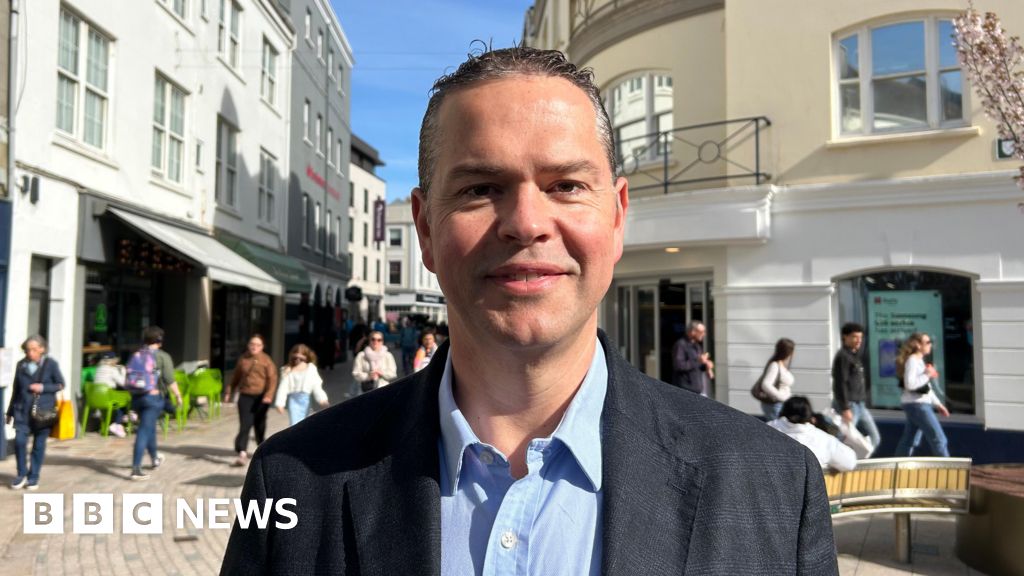
Bosses say a good start to the year has been put at risk, but opportunities have also emerged.

Operator
Good morning, ladies and gentlemen, and welcome to today’s Investcorp Credit Management BDC’s Quarter ended December 31, 2025 Earnings Call. It is now my pleasure to turn the floor over to Andrew Muns, Chief Financial Officer.
Andrew Muns
COO, CFO, Treasurer & Secretary
Thank you, operator. Welcome, everyone, to Investcorp Credit Management BDC’s earnings call for the quarter ended December 31, 2025. I’m joined today by Suhail Shaikh, President and Chief Executive Officer of the company.
I would like to remind everyone that today’s call is being recorded and that this call is the property of Investcorp Credit Management BDC. Any unauthorized broadcast of this call in any form is strictly prohibited. An audio replay of the call will be available on the Investor Relations page of our website at icmbdc.com.
I would also like to call your attention to the safe harbor disclosure in our press release regarding forward-looking information and remind everyone that today’s call may include forward-looking statements and projections. Actual results may differ materially from these projections. We will not update forward-looking statements unless required by law. To obtain copies of our latest SEC filings, please visit the company’s registration statement on the SEC’s EDGAR platform or our Investor Relations page on our website.
The format for today’s call is as follows: Suhail will provide an overall business and portfolio summary, and then I will provide an overview of our results, summarizing the financials. This will be followed by Q&A. Please note that today’s discussion will focus on our financial results. As stated in our press release, we do not intend to comment further regarding

S&P 500 Earnings And A StyleBox Update For March 31, 2026

He highlighted that this is the third consecutive April—2024, 2025, and now 2026—when markets are hovering around similar levels despite earnings growth of nearly 10–12% over the past two years. According to him, this divergence suggests that markets have already undergone a significant correction in terms of valuations, and much of the downside risk appears to be priced in. As a result, he sees every decline from here as a potential buying opportunity.
Maheshwari, however, cautioned that volatility is far from over. With geopolitical tensions capable of triggering sudden market swings, investors should not expect a smooth upward trajectory. Instead, he recommends a disciplined approach to investing—allocating capital in parts rather than all at once. For instance, deploying 10–15% of funds at current levels and adding more on further declines allows investors to navigate uncertainty without trying to perfectly time the market bottom. He also pointed out that valuations, currently at around 17–18 times FY27 earnings, appear reasonable, especially under his assumption that earnings growth could remain flat between FY26 and FY27 due to risks such as rising oil prices. Even with conservative estimates, he sees a fair value zone emerging that supports gradual accumulation.
On the sectoral front, Maheshwari expressed strong confidence in banking stocks, particularly private sector lenders. He noted that these stocks have underperformed over the past two years and are now trading at valuations not seen in four to five years, despite maintaining healthy earnings growth of 12–15%, strong capital positions, and stable asset quality. He attributed the weakness largely to selling pressure from foreign institutional investors (FIIs), who have been reducing exposure to Indian equities. This, he believes, has created an attractive entry point for domestic investors. Alongside banking, he also sees a short-term trading opportunity in the IT sector, where he expects a potential upside of 10–15% over the next three months, though he clearly emphasized that this is a tactical play rather than a long-term investment.
Discussing specific pockets of the market, Maheshwari maintained a positive stance on InterGlobe Aviation, calling current levels favourable for buying. In contrast, he advised caution on retail stocks, suggesting that while existing investors can continue to hold positions, fresh investments may be better directed toward sectors offering more attractive valuations. For those looking to play the consumption theme, he prefers the automobile sector, naming Mahindra & Mahindra as his top pick. At the same time, he urged investors to stay away from high-valuation stocks across the board, stressing that with several sectors now available at reasonable prices, there is little justification for chasing expensive names.
He also flagged certain areas where caution is warranted. In the pharma sector, he recommended a wait-and-watch approach due to potential disruptions from global developments, particularly the possibility of tariffs being discussed by former U.S. President Donald Trump. As for PSU banks, while he acknowledged that recent corrections have made them more attractive, he views them primarily as short-term trading opportunities rather than long-term investment bets, given that their valuations are now comparable to private sector peers.
Overall, Maheshwari’s strategy reflects a balanced and pragmatic outlook. While he acknowledges that markets may continue to swing sharply in the near term, he believes the broader correction has already played out. His core message to investors is simple yet effective: avoid trying to predict the exact bottom, focus on fundamentally strong yet undervalued sectors like banking, participate selectively in tactical opportunities such as IT, and most importantly, build positions gradually. In a market defined by uncertainty, he suggests that consistency and discipline, rather than aggressive timing, will ultimately drive better outcomes.

Thailand will increase retail diesel prices starting April 5, reducing subsidies for B7 and B20 grades, resulting in prices exceeding 50 baht per litre to align with market conditions.
Key Points
- Starting April 5, Thailand will raise retail diesel prices due to the Oil Fuel Fund Management Committee’s decision to reduce subsidies on diesel grades. The B7 price will exceed 50 baht per litre, increasing transport and living costs.
- The subsidy for diesel B7 will decrease by 2.61 baht per litre, from 20.71 baht to 18.10 baht. Similarly, the subsidy for diesel B20 will drop from 22.22 baht to 19.61 baht per litre.
- As a result, the retail prices will rise by 2.80 baht per litre: B7 from 47.74 to 50.54 baht, and B20 from 42.75 to 45.54 baht. This adjustment aims to align prices with market conditions and alleviate pressure on the Oil Fuel Fund.
Price Increase Announcement
Thailand is set to increase retail diesel prices starting April 5 due to a decision by the Oil Fuel Fund Management Committee to reduce subsidies on essential diesel grades. The retail price of diesel B7 is expected to rise above 50 baht per litre, thereby exerting new pressure on both transport and living costs in the country. This decision comes amid ongoing economic challenges, with the aim of aligning fuel prices more closely with current market conditions while also managing the finances of the Oil Fuel Fund.
Subsidy Reductions for Diesel Grades
The committee has announced a 2.61 baht per litre reduction in subsidies for both diesel B7 and diesel B20. Specifically, the subsidy for diesel B7 is being reduced from 20.71 baht to 18.10 baht per litre, while the subsidy for diesel B20 will decrease from 22.22 baht to 19.61 baht per litre. Consequently, the retail price of diesel B7 will increase by 2.80 baht per litre, resulting in a new price of 50.54 baht per litre. Similarly, diesel B20 will see an increase leading to a new price of 45.54 baht per litre. These new pricing adjustments will take effect on April 5, highlighting the government’s efforts to stabilize the Oil Fuel Fund.
Financial Implications of the Decision
The rationale behind this decision is to ensure the liquidity of the Oil Fuel Fund, which has been severely tested due to ongoing subsidies amidst fluctuating market conditions. The anticipated subsidy reductions are projected to decrease the fund’s daily outflow from 1.70875 billion baht to 1.49672 billion baht, yielding a savings of approximately 212.03 million baht daily. The adjustments in diesel pricing and subsidy levels reflect a broader strategy to navigate the economic landscape while maintaining service levels and safeguarding the fund against significant financial strain.
Other People are Reading

Baidu: Pivoting To AI Infrastructure, Robotaxis, And Embodied Robotics At A Discount


North Korea working on carbon-fibre ICBM for multi-warhead delivery, Seoul says
Business
Samsung to Discontinue Messages App in July 2026, Urges Galaxy Users to Switch to Google Messages
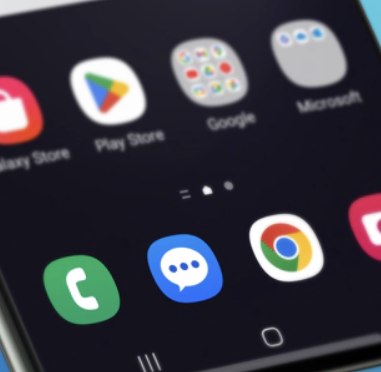
Samsung Electronics will discontinue its long-running Samsung Messages app in July 2026, officially ending support for the native messaging application on Galaxy devices and directing millions of users to adopt Google Messages as the default SMS and RCS platform.

The South Korean tech giant posted an “End of Service Announcement” on its U.S. website, confirming that the Samsung Messages application will cease operations in July 2026. Users still relying on the app are encouraged to switch to Google Messages immediately to ensure uninterrupted texting, with Samsung providing guided transition instructions within the app.
The move marks the culmination of a years-long shift by Samsung toward Google’s messaging ecosystem. Starting with the Galaxy S21 series in 2021, the company began promoting Google Messages as the default on many devices. Newer models, including the Galaxy S25 and S26 series, ship with Google Messages pre-installed as the primary app, and the S26 lineup skipped Samsung Messages entirely. The July 2026 cutoff will remove the app from the Galaxy Store and Google Play Store, preventing new downloads.
Devices running Android 11 or older remain unaffected, but users on Android 12 and newer will lose the ability to send or receive standard SMS and MMS messages through Samsung Messages after the discontinuation date, except for emergency service numbers or predefined emergency contacts. Samsung has not yet specified the exact day in July, advising users to check the app for precise timing.
The decision aligns Samsung more closely with Google’s broader Android strategy, particularly around Rich Communication Services, or RCS. Google Messages offers enhanced RCS features, including high-quality media sharing, typing indicators, read receipts, reactions and improved end-to-end encryption in supported chats. The app also integrates Gemini AI tools for smarter replies and scam detection, features that Samsung Messages lagged in updating.
Industry analysts view the change as practical for both companies. By ceding messaging responsibilities to Google, Samsung can focus engineering resources on hardware innovation, One UI customization and other core Galaxy experiences. For Google, the shift standardizes RCS across more Android devices, especially important after Apple enabled RCS support in iMessage, improving cross-platform texting between Android and iPhone users.
Samsung has assured users that data migration will be seamless during the switch. Conversations, contacts and message history should transfer without loss when setting Google Messages as the default. To make the change, users can open Google Messages, tap the prompt to set it as the default SMS app, or navigate through Settings > Apps > Choose default apps > SMS app on their Galaxy device.
Some users have expressed nostalgia for Samsung Messages, praising its cleaner integration with One UI themes, quick reply options and occasional exclusive features. Online forums buzzed with mixed reactions, with some lamenting the loss of a Samsung-branded experience while others welcomed the consistency and faster feature rollout from Google. A common complaint in recent years was that Samsung Messages stopped receiving major RCS updates on certain carriers, pushing users toward Google’s app anyway.
The transition comes at a pivotal time for mobile messaging. With RCS now bridging the gap between Android and iOS, Google Messages serves as a more universal platform. Features like satellite-based texting, already hinted at in Google’s roadmap, could further enhance reliability in areas with poor cellular coverage. Samsung’s move ensures its vast Galaxy user base — hundreds of millions worldwide — benefits from these advancements without fragmentation.
For existing Samsung Messages users, the company recommends acting soon to avoid any disruption. After July 2026, the app will no longer function for regular messaging on supported devices. Samsung has begun displaying in-app notifications and on-screen prompts guiding users through the switch, including step-by-step instructions and links to download Google Messages if needed.
The change primarily affects the U.S. market in the initial announcement, though similar shifts are expected in other regions as Samsung harmonizes its global software strategy. Carriers have largely embraced Google Messages for RCS certification, simplifying backend support and reducing compatibility issues that sometimes arose with dual messaging apps.
Privacy and security considerations also factor into the decision. Google Messages benefits from Google’s extensive infrastructure for spam filtering, phishing protection and regular security updates. The app’s integration with Google’s ecosystem allows features like message syncing across Android phones, tablets and even web access via messages.google.com.
Samsung emphasized that the discontinuation does not impact other core Galaxy apps or services. Users can continue enjoying One UI features, Bixby routines and device-specific customizations. The company will maintain support for emergency messaging capabilities during the wind-down period.
Tech observers note this fits a broader industry pattern of OEMs streamlining software to reduce maintenance overhead. Similar moves have occurred with other pre-installed apps as manufacturers partner more deeply with Google for core Android experiences. For Samsung, the focus remains on hardware leadership, foldables, AI enhancements like Galaxy AI and ecosystem integration with wearables and smart home devices.
As the July deadline approaches, Samsung is expected to ramp up awareness campaigns, possibly through Galaxy Store notifications, email alerts to registered users and support articles. Community forums and social media will likely see increased guides on backing up messages and troubleshooting any temporary RCS hiccups during the switch.
For most users, the change should feel incremental rather than disruptive. Many Galaxy owners already use Google Messages as default, especially on recent flagships. Those who preferred Samsung Messages can prepare by exporting any unique settings or themes before the cutoff.
The announcement underscores the maturing Android ecosystem, where collaboration with Google on foundational services allows manufacturers like Samsung to deliver polished, feature-rich devices without reinventing every wheel. Google Messages, with its cross-device continuity and rapid iteration, now becomes the unified messaging hub for Galaxy smartphones.
Users with questions can visit Samsung’s support pages or the official Samsung Messages announcement site for detailed migration steps. Google also offers comprehensive help resources for setting up RCS chats and optimizing the app experience.
In an era of rapid technological change, Samsung’s decision to retire its Messages app reflects a pragmatic choice: prioritize user experience through standardization while freeing internal teams to innovate elsewhere. As July 2026 nears, Galaxy users have ample time to make the switch and enjoy an upgraded, future-proof messaging platform.
The move is expected to affect a significant portion of Samsung’s user base still on older devices or those who manually installed Samsung Messages. With roughly 12 weeks remaining from early April announcements, the company urges proactive migration to prevent any last-minute issues.
Overall, the transition promises a more consistent Android messaging experience across devices and carriers, benefiting everyday users with richer features and better interoperability in a multi-platform world.
How to Switch to Google Messages on Galaxy Devices:
- Download or open Google Messages from the Google Play Store.
- Tap “Set as default” when prompted.
- Alternatively, go to Settings > Apps > Default apps > SMS app and select Google Messages.
- Enable RCS chat features in Google Messages settings for enhanced functionality.
For the latest updates, check Samsung’s official announcement page or Google’s Messages support resources. The change does not affect users on very old Android versions.

India’s services growth slows to 14-month low as Middle East war hits demand, PMI shows
Why Minnesota Has Real Buzz for the 2028 NFL Draft

Restaurants are forcing us to put phones away, and I’m not complaining

The White House Easter Egg Roll explained


-

 NewsBeat3 days ago
Steven Gerrard disagrees with Gary Neville over ‘shock’ Chelsea and Arsenal claim | Football
-

 Business3 days ago
No Jackpot Winner and $194 Million Prize Rolls Over
-

 Fashion2 days ago
Weekend Open Thread: Spanx – Corporette.com
-
Entertainment7 days ago
Fans slam 'heartbreaking' Barbie Dream Fest convention debacle with 'cardboard cutout' experience
-

 Crypto World4 days ago
Gold Price Prediction: Worst Month in 17 Years fo Save Haven Rock
-

 Business7 hours ago
Three Gulf funds agree to back Paramount’s $81 billion takeover of Warner, WSJ reports
-
Crypto World6 days ago
Dems press CFTC, ethics board on prediction-market insider trades
-

 Sports1 day ago
India men’s 4x400m and mixed 4x100m relay teams register big progress | Other Sports News
-

 Business4 days ago
Login and Checkout Issues Spark Merchant Frustration
-

 Tech7 days ago
Apple will hide your email address from apps and websites, but not cops
-

 Tech6 days ago
EE TV is using AI to help you find something to watch
-

 Sports6 days ago
Tallest college basketball player ever, standing at 7-foot-9, entering transfer portal
-

 Politics6 days ago
Should Trump Be Scared Strait?
-

 Tech6 days ago
Flipsnack and the shift toward motion-first business content with living visuals
-
Tech6 days ago
Daily Deal: StackSkills Premium Annual Pass
-

 Fashion7 days ago
The Best Spring Trends of 2026
-

 Crypto World6 days ago
U.S. rule change may open trillions in 401(k) funds to crypto
-

 Sports6 days ago
Women’s hockey camp eyes fitness boost, tactics ahead of WC 2026 campaign | Other Sports News
-

 Tech6 days ago
How to back up your iPhone & iPad to your Mac before something goes wrong
-

 Politics7 days ago
BBC slammed for ignoring author of The Fraud
You must be logged in to post a comment Login