Connect with us
DAPA Banner

Business

Frank Elsner Builds Big Ideas Through Steady Action

Published

on

Frank Elsner Builds Big Ideas Through Steady Action

Big ideas often get credit for changing careers and industries. But ideas alone do nothing without follow-through. Frank Elsner’s career shows how steady action, applied over time, can turn practical ideas into real results.

His path is not built on sudden wins. It is built on discipline, learning, and showing up prepared.

Today, Elsner serves as Chief of Safety and Security for the Natural Factors Group of Companies. His work reflects decades of experience across high-pressure roles, leadership positions, and continuous education. Along the way, he has focused on one core belief: simple ideas work best when they are practiced every day.

Early Experiences That Shaped His Thinking

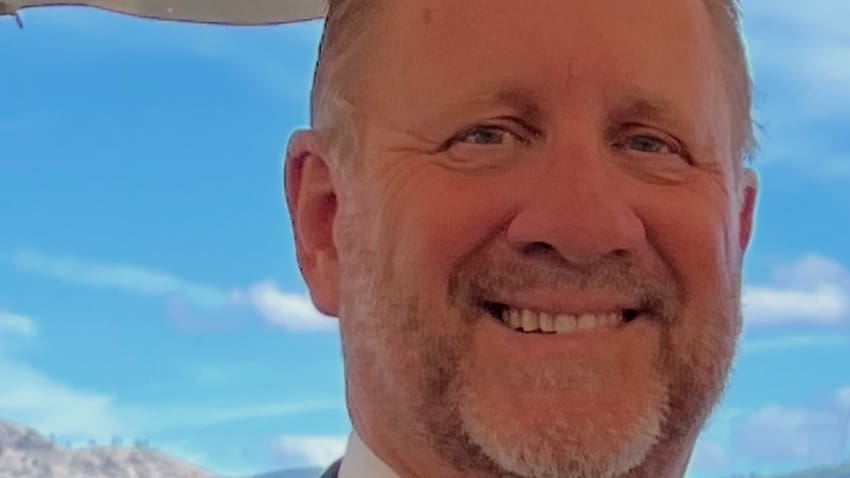
Frank Elsner

was born in Germany and moved to Canada in 1965. He grew up in Vancouver and later in Oliver, British Columbia. Sports played a major role in his early life. He wrestled competitively and ranked second in the province in his weight class. He also played rugby and soccer.

Advertisement

“Wrestling taught me patience,” he says. “You don’t rush your way to success. You earn it one move at a time.”

By age 17, he became a certified expert diver. This early skill later shaped parts of his professional work. He also served as student council president, gaining early exposure to leadership and responsibility.

“At the time, I didn’t think of it as leadership,” he says. “I just wanted things to run better.”

These experiences formed the base of how he approaches ideas today. Start small. Stay focused. Learn from pressure.

Advertisement

Learning to Turn Ideas Into Action

Frank’s career unfolded across a wide range of demanding roles. He worked in undercover assignments, investigations, intelligence operations, dive teams, tactical environments, and senior leadership positions. Each role forced him to think clearly under stress.

“Undercover work taught me awareness,” he explains. “Tactical work taught me teamwork. Intelligence work taught me patience.”

Rather than chasing titles, he chose assignments that stretched his skills. This helped him develop ideas that were tested in real conditions. One example is his continued use of short debriefs.

“After anything important, I ask three questions,” he says. “What worked. What didn’t. What needs to change. It keeps you honest.”

Advertisement

This simple habit followed him into leadership roles and later into the private sector. It became a way to turn experience into improvement.

Education as a Tool for Better Thinking

Frank returned to school as a mature student at Lakehead University. He completed a four-year Political Science degree in three years while working full time. The experience reshaped how he approached problem-solving.

“Going back to school at 32 was hard,” he says. “But it forced me to slow down my thinking.”

More than two decades later, he earned a Master of Public Administration from Western University. This helped him connect ideas with systems.

Advertisement

“Big ideas only matter if you can make them work,” he says. “Education helped me understand how policy, people, and structure fit together.”

His academic journey reinforced a pattern in his life. When he lacked a tool, he went and learned it.

Applying Big Ideas in the Private Sector

As Chief of Safety and Security for Natural Factors Group of Companies, Frank applies lessons from decades of experience. His focus is not on complex systems. It is on culture, clarity, and awareness.

“Safety isn’t just about rules,” he says. “It’s about how people think when no one is watching.”

Advertisement

One of his key ideas is that clarity beats speed. He believes rushed decisions often create more work later.

“Patience will take you further than adrenaline,” he says.

He also encourages leaders to create space for silence.

“Silence is underrated,” he explains. “You learn more when you listen.”

Advertisement

These ideas influence how teams communicate, respond to risk, and make decisions under pressure.

Habits That Keep Ideas Alive

Frank credits much of his consistency to small personal habits. One is writing things down by hand, a practice he adopted during university.

“Handwriting forces you to slow down,” he says. “It helps ideas stick.”

Another is finding ways to reset. For Frank, that reset comes from motorcycle riding.

Advertisement

“When you’re riding, you’re fully present,” he says. “It clears the noise.”

These habits help him stay focused and grounded, even in demanding roles.

A Career Built Through Consistency

Frank Elsner’s career shows that big ideas do not need big speeches. They need practice. His story is one of steady progress shaped by discipline, learning, and reflection.

“Most big ideas start as small habits,” he says. “If you repeat them long enough, they become part of who you are.”

Advertisement

Rather than chasing attention, Frank focused on execution. That focus allowed his ideas to grow quietly but effectively, shaping his career and the organizations he serves.

Advertisement
Continue Reading
Click to comment

You must be logged in to post a comment Login

Leave a Reply

Business

US military says it killed three people in latest Caribbean boat strike

Published

on


US military says it killed three people in latest Caribbean boat strike

Continue Reading

Business

Gold prices dip as Iran tensions re-emerge, oil prices jump

Published

on


Gold prices dip as Iran tensions re-emerge, oil prices jump

Continue Reading

Business

Schools to get $2.1b in pre-budget splash

Published

on

Schools to get $2.1b in pre-budget splash

More than $2.1 billion has been committed to state school infrastructure funding ahead of the May budget.

Continue Reading

Business

WA govt splashes $3.8m to keep food relief services running

Published

on

WA govt splashes $3.8m to keep food relief services running

A WA government cash injection will keep vital food relief delivery trucks on the road as demand for their services ramps up due to rising fuel bills.

Continue Reading

Business

Concurrent Technologies Plc (COTGF) Discusses Full Year Results and Leadership Transition with Strategic Business Updates Transcript
Published

on

OneWater Marine Inc. (ONEW) Q1 2026 Earnings Call Transcript

Concurrent Technologies Plc (COTGF) Discusses Full Year Results and Leadership Transition with Strategic Business Updates April 17, 2026 6:30 AM EDT

Company Participants

Miles Adcock – CEO & Executive Director
Kim Maria Garrod – CFO & Executive Director

Presentation

Advertisement

Operator

Good morning, and welcome to the Concurrent Technologies Plc Final Results Investor Presentation. [Operator Instructions]

Before we begin, I would like to submit the following poll. And I would now like to hand you over to CEO, Miles Adcock. Good morning to you.

Advertisement

Miles Adcock
CEO & Executive Director

Good morning, and welcome to our full year results for 2025.

Next slide, please. So my name is Miles. I’m the CEO. This is my fourth set of annual results, and I’m joined by Kim, our CFO. And I should note that at the same time as we issued our full year results, we also announced that Kim has decided to retire at the end of this year. My good friend and colleague, Kim, do you want to say a few words?

Advertisement

Kim Maria Garrod
CFO & Executive Director

Yes. So I achieved a milestone birthday this year, and that made me rethink what I was going to do. So I have decided to retire, but I’m in the business until the end of the year. I’m very excited about the business, and I will be watching it very closely after I’ve gone, and I’ll be regularly calling Miles for updates. But I’m fully committed to the business. And as I say, I’ll be taking out for most of this financial year.

Miles Adcock
CEO & Executive Director

Advertisement

Thank you, Kim. And just to note, Kim has generously given us until the end of the year to seek a replacement, and I’ve engaged Korn Ferry this week, and we’re working hard at finding a worthy successor.

Advertisement
Continue Reading

Business

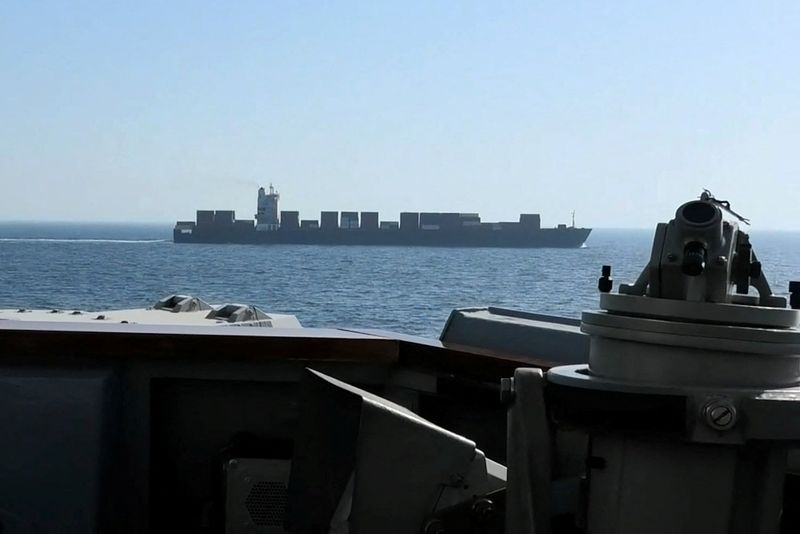
World weighs fate of Mideast ceasefire after US seizes Iranian cargo ship

Published

on

World weighs fate of Mideast ceasefire after US seizes Iranian cargo ship


World weighs fate of Mideast ceasefire after US seizes Iranian cargo ship

Continue Reading

Business

MPLX: A Sound Growth Story Irrespective Of Iran Headlines

Published

on

Atmos Energy: A Stable Income Growth Stock In Uncertain Times (NYSE:ATO)

MPLX: A Sound Growth Story Irrespective Of Iran Headlines

Continue Reading

Business

Budget won't be bonanza for cutting red tape: minister

Published

on

Budget won't be bonanza for cutting red tape: minister

Business groups have urged the government to cut a raft of regulations ahead of the federal budget, but the finance minister says changes have to make sense.

Continue Reading

Business

China leaves lending benchmarks unchanged for 11th month in April

Published

on

China leaves lending benchmarks unchanged for 11th month in April


China leaves lending benchmarks unchanged for 11th month in April

Continue Reading

Business

IPOs could raise up to $25 billion in 2026, too, despite D-St caution

Published

on

IPOs could raise up to $25 billion in 2026, too, despite D-St caution
Mumbai: A clutch of large IPOs is expected to prop up India’s primary market in 2026 even as market uncertainty slows down broader activity compared to the previous two robust years, said Ranvir Davda, co-head of investment banking at HSBC India.

“The number of deals may come down, but the size and aggregate value may still be similar (to the previous years),” said Davda in an interview.

Reliance Industries’ telecom arm Jio Platforms, National Stock Exchange, Zepto, PhonePe, Manipal Hospitals and and SBI Funds Management are among the large issuances expected to hit the market in 2026. Together, these issues could raise ₹1 lakh crore (about $10.8-10.9 billion).

So far this year, 20 companies have raised $2.5 billion, according to Prime Database and ETIG Database. That comes after two record years that saw 94 and 115 mainboard IPOs in 2024 and 2025, raising nearly $21-23 billion.

Advertisement

This year’s IPO fundraise could be between $21 billion and $25 billion.


“This year, a larger percentage of companies are mid to large-sized,” said Davda. “Many of these are backed by large groups or private equity investors and, therefore, have the flexibility to wait, ride volatility, and avoid pressing forward if valuations are not aligned.”
The early part of this year has been slower for the IPO market, with the West Asia conflict weighing on secondary markets, IPO subscriptions and listing gains, prompting several companies to defer offerings. “This year will be volatile. Windows to complete trades will be shorter, so readiness is critical,” Davda said.

At the same time, companies that need capital are showing more willingness to negotiate.

Issuers are increasingly tapping AIFs, family offices and special situations funds alongside traditional investors, while using pre-IPO placements as a bridge to raise capital with visibility to a listing over the next 6-18 months, he said. According to Davda, technology faces sharper scrutiny amid AI disruption, global uncertainty and profitability concerns, though large consumer-tech and fintech offerings are still likely to proceed as “must-own” India exposures.

Advertisement
Continue Reading

Trending

Copyright © 2025