
Business
French AI boom exposes Europe’s funding gap as startups turn to U.S.




Roivant Sciences: Diverse Exposure To Biotech Niches Through Vants

Venture capital investment in California has reached an astonishing 366 billion USD this year alone.
The funding appears to be heavily concentrated. 86 cents of every dollar went to AI companies, and a large percentage of this to the world’s largest AI firms.
This concentration of capital however, risks starving the smaller, more innovative companies that stand ready to bring new and disruptive products to our market. It’s time venture capital refreshed its approach.
Why can small startups be so disruptive?
Small startups tend not to have the stifling bureaucratic layers or lengthy approval processes that weigh down technology giants such as Meta or Google.
A small team at a growing startup can pivot from one project to another and act independently at the drop of a hat. This agility is a real asset, making smaller companies more likely to pursue unconventional ideas that might never be approved at a large firm but could change an industry forever.
Smaller firms and startups can also go all-in on a single problem or niche. Large firms, however, are forced spread resources across numerous competing priorities to mitigate risk for profit hungry shareholders. For innovation, deep focus on one problem will always beat spreading resources thinly across multiple issues.
Small firms also benefit from flat hierarchies. Engineers and developers can talk directly to decision-makers because they are often sat right next to them, ensuring those doing the grunt work quickly receive the leadership backing they need.
Rotem Farkash: venture capital is overlooking smaller innovators
So far this year, California, the global centre of the technology industry, has attracted an astonishing $366 billion, or around 90% of all the venture capital in the US.
And while this sounds like good news for small startups in the state, worryingly, just two of tech’s biggest players, Anthropic and OpenAI, accounted for half of the $366 billion raised.
Rotem Farkash, an entrepreneur and frequent commentator on tech, argued that venture capital’s chase of wild AI returns risks leaving many promising startups without the backing they need.
“Investors are being drawn towards a small number of highly valued AI companies. But when so much capital is concentrated in a small number of firms, startups across every sector are overlooked, regardless of the quality of their product.”
Farkash added: “Smaller startups – not only those working in AI – deserve and require more access to funding. Giving more of them the resources they need could unlock significant innovation.”
How startups are solving problems big and small
A technology disruptor might revolutionise an entire industry and change daily working habits. It might also solve a small, but significant problem.
One company that is revolutionising customer service is Sierra, which was founded in 2023.
AI chatbots developed in the past reduced customer service response times but still left most issues for people to deal with. Sierra’s agents change that. They can handle open-ended conversations, manage complexity and ambiguity, and solve complex problems without human intervention.
Sierra also has a novel pricing system which is based on successful outcomes. The company reports a 70% resolution rate and a customer satisfaction score of 4.5 out of 5.
Another disruptor is Faivelo, recently founded by Benjamin Brookarsh, which was created to solve a problem that frustrates many businesses.
Major email platforms have raised their prices for the third consecutive year, many using the compulsory integration of AI tools such as smart replies – whether you want them or not – into their offering as the latest reason. In response, Faivelo has developed an email platform offering unlimited mailboxes on a custom domain. This reduces the growing burden of per-seat pricing on businesses, particularly SMEs.
Small startups are key to innovation
Tech giants like OpenAI, Anthropic, Meta and Google have produced innovations that are changing the world. It is likely they will continue to develop groundbreaking technology and products.
But smaller companies are fast-moving innovators unencumbered by bureaucracy, bloating and the internal politics of technology’s giants. More venture funding should be directed towards truly innovative startups. Who knows, one of them could become the next Microsoft or Google.

InvestingPro’s Fair Value spotted 65% gain in Inspire Medical stock


Jussi Askola is the President of Leonberg Capital, a value-oriented investment boutique that consults hedge funds, family offices, and private equity firms on REIT investing. He has authored award-winning academic papers on REIT investing, has passed all three CFA exams, and has built relationships with many top REIT executives.
He is the leader of the investing group High Yield Landlord, where he shares his real-money REIT portfolio and transactions in real-time. Features of the group include: three portfolios (core, retirement, international), buy/sell alerts, and a chat room with direct access to Jussi and his team of analysts to ask questions. Learn more.
Analyst’s Disclosure: I/we have a beneficial long position in the shares of SHUR; CCI; VNA; SBAC; ARE either through stock ownership, options, or other derivatives. I wrote this article myself, and it expresses my own opinions. I am not receiving compensation for it (other than from Seeking Alpha). I have no business relationship with any company whose stock is mentioned in this article.
Seeking Alpha’s Disclosure: Past performance is no guarantee of future results. No recommendation or advice is being given as to whether any investment is suitable for a particular investor. Any views or opinions expressed above may not reflect those of Seeking Alpha as a whole. Seeking Alpha is not a licensed securities dealer, broker or US investment adviser or investment bank. Our analysts are third party authors that include both professional investors and individual investors who may not be licensed or certified by any institute or regulatory body.

Bitcoin slips below $77,000 as rate pressure clashes with diversification case
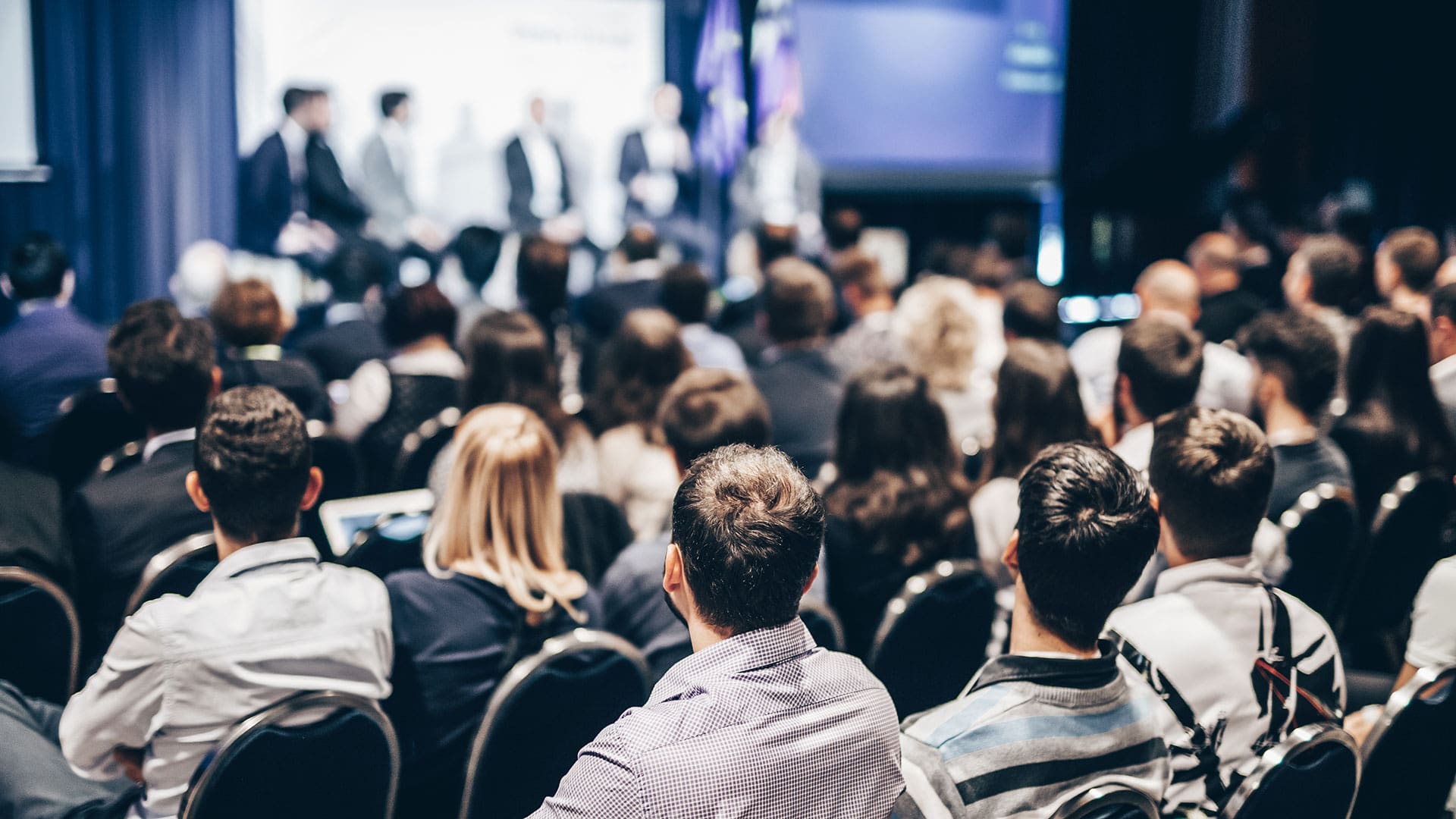
Its title is “Creativity: Minds and Machines.” The event will link philosophy, artificial intelligence, consciousness, cognitive science, and the arts. It will compare human and machine creativity. It will also ask what creative work can tell us about the system that helped make it.
The ICCS Conference
The International Center for Consciousness Studies holds an annual conference on philosophy of mind and the study of consciousness. The 2026 meeting is the third in the series. It will focus on creativity in humans and machines. That theme reaches beyond art. It also bears on practical judgment, personal identity, and the way people understand other minds.
Dmitry Volkov, Pietro Perconti, and Alessio Plebe founded the center in 2024. They did so in collaboration with the University of Messina. The center is a non-profit cultural association that supports philosophical and interdisciplinary research on mind and consciousness.
The annual meeting uses current cases to test old questions. AI now writes, makes images, gives advice, and helps people tell stories about their lives. Each case calls for its own kind of evidence. A good result may show what a tool can do. It may say less about what the tool knows or feels. A record of prompts and edits may reveal who shaped the work. Critics can still judge the work on its own terms. The ICCS philosophy is to understand how these forms of inquiry fit together.
What Counts as Creativity in Humans and Machines?
Creativity can refer to an agent’s capacity. It can describe how a work was made. It can also name a quality that an audience finds in the work. These uses are linked, but they are not the same. A reader may find a poem original. That judgment does not show that the system that generated it had an aim or understood the poem.
AI also makes control hard to place. Developers build and train a model. Writers and artists created much of the material used in training. A user sets the task and chooses among the results. An editor or curator may then revise the work. The model can still affect what options appear and which forms recur. Such cases raise plain questions: who made the key choices, who changed the work, and who should count as its author?
Recombination is not a clean test of machine creativity. Human artists also work with old forms, styles, and materials. Better questions concern whether a system can pursue a project over time. Can it weigh options and revise its work for reasons it grasps? Can it maintain a goal without being prompted again? The history of a work may matter as much as its novelty.
An impressive result does not by itself show that a system understands what it made. Nor does it establish intention, consciousness, practical judgment, or subjective experience. Similar works can come from very different processes. Audiences therefore look at the work and what they know about how it was made. “Synthetic Creativity. The Observer’s Perspective” will ask how AI changes those judgments.
The panel on artificial wisdom moves from works of art to choices. Practical wisdom is not just skill at finding an efficient means. It also involves judging which ends are worth pursuing in a given case. What is appropriate may depend on the needs and vulnerabilities of the people involved. A system can give useful advice without being wise itself.
The ICCS Conference 2026 Program
The Third Annual Conference, “Creativity: Minds and Machines,” will address the theme through panels on artificial wisdom, creative processes, artificial consciousness, human agency, self-narrative, theory of mind, and the arts. The program will move between questions about AI systems, human responses to them, and broader problems of consciousness and perspective.
The event is organized under the patronage of Università Roma Tre, Pontificia Università Gregoriana, Comune di Roma, the UNESCO Chair in Ethics of AI and Practical Wisdom, and the Society for the Ethics and Politics of AI (SEPAI).
| Day | Date | Venue | Main themes |
| Day 1 | September 1 | Roma Tre University | The Possibility of Artificial Wisdom; AI and Consciousness in Creative Processes; Synthetic Creativity. The Observer’s Perspective; Standards for Artificial Consciousness |
| Day 2 | September 2 | Pontifical Academy of Sciences, Casina Pio IV | The Existential Agency of AI; Creating Self-Narrative in the Age of AI; Art, Theory of Mind, and the Layers of Consciousness |
| Day 3 | September 3 | Pontifical Gregorian University; Sala della Protomoteca, Capitoline Palace | Consciousness, Perspectivism, and the Arts; general discussion; Dennett Prize ceremony |
Day 1 will take place at Roma Tre University. One panel will ask whether an AI system can be wise. Another will study the place of consciousness in creative work. Pietro Perconti’s panel will focus on the judgments made by an audience. The last panel will ask what could count as evidence that a machine is conscious. Such a standard would need to identify the relevant indicators. It would also need to say how strong the evidence must be.
Day 2 will take place at the Pontifical Academy of Sciences in Casina Pio IV. “The Existential Agency of AI” will study how AI can affect human choice. The self-narrative panel will look at memory and life stories. An AI tool may draft a passage or suggest a reading of the past. That influence does not make the tool the author of a person’s life. The final panel will ask how artworks represent minds and how audiences interpret the mental states they portray.
Day 3 will begin at the Pontifical Gregorian University. “Consciousness, Perspectivism, and the Arts” will compare several uses of perspective. Art can present a point of view. Psychology can study how people grasp another person’s view. Philosophy can ask what it takes to have a point of view at all. A general discussion will follow. The day will end with the Dennett Prize ceremony in the Sala della Protomoteca at the Capitoline Palace.
Questions that recur across the three days include:
- What would count as evidence of creative agency?
- What evidence could support a claim about conscious experience?
- How should a work’s history affect judgments of authorship?
- When AI helps shape an autobiographical narrative, who controls the story?
- Who is responsible when an AI system shapes a decision?
Perconti, Plebe, and Volkov Across the 2026 Program
The three co-founders will all take part in the 2026 program. Pietro Perconti will chair “Synthetic Creativity. The Observer’s Perspective” on September 1. The panel will ask how viewers, readers, and curators judge AI-made work. They may consider the work itself, but also its history. Facts about prompts, edits, and public display can change a judgment about authorship.
Alessio Plebe will speak later that day. His panel is “Standards for Artificial Consciousness.” It will ask what researchers should look for in an artificial system. Behavior may be one source of evidence. A system’s design, its checks on its own activity, and its contact with the world may also matter.
On Day 2 of the ICCS, Dmitry Volkov will take part in a panel titled “The Existential Agency of AI.” Its focus is the effect of AI on human freedom and self-understanding. AI tools can shape how people write, form ties, and interpret their own choices. They can also create new forms of reliance. The panel will ask what this means for human agency. It will also ask whether any form of agency should be ascribed to the systems themselves. Volkov is also scheduled on September 3. He is listed with Keith Frankish and Andy Clark for the introduction of Nicholas Humphrey.
Nicholas Humphrey and the 2026 Dennett Prize
The Dennett Prize is an annual ICCS award. It honors a scholar whose work has greatly advanced the study of the brain and consciousness. The prize is named after Daniel Dennett. Andy Clark received the first award in 2025.
Nicholas Humphrey is the 2026 laureate. He is a theoretical psychologist who studies how consciousness evolved. His work on blindsight showed that visual skill can remain when conscious sight is impaired. His theory of social intelligence asks why the need to understand and predict other beings helped shape human thought.
Humphrey’s work on animal cognition gives the AI debate a wider base for comparison. Adult human thought is not the only model available. Other animals have different forms of perception, memory, and social skill. It does show why mere likeness to adult human performance is a poor test for consciousness.
Humphrey is due to give the Dennett Lecture on the final day. Its title is “Consciousness and the Soul: the reality of an illusion.” The lecture will take place in the Sala della Protomoteca at the Capitoline Palace. It will link the idea of the soul with the self, personhood, and agency. It will also place the felt self in an account of human evolution.
The title points to an illusionist view of phenomenal consciousness. An account of evolution asks how the felt self arose and what it does. Illusionism asks how we should understand the way that experience seems. Keith Frankish, Dmitry Volkov, and Andy Clark are scheduled to introduce Humphrey.
Creative Output, Agency, and Consciousness
The program separates two questions that often blur together. One concerns the work. The other concerns the system that helped make it. “Synthetic Creativity” looks at the work, its history, and the judgments of an audience. “Standards for Artificial Consciousness” asks what facts about the system would support a claim that it is conscious. A work can seem original even when that second question stays open.
The Day 2 panels show why the issue is not limited to machine minds. An AI tool can affect a human life without having a life of its own. It may select a memory, draft part of an autobiography, or suggest a view of the past. Those acts can shape how a person understands their own life. The hard question is how much control the person keeps.
The arts panels add a related distinction. A work can present a point of view. An audience can then infer a thought, feeling, or aim. Yet the act of presenting a view does not prove that the system has one. Theory of mind studies how people read hidden mental states. The study of consciousness asks whether there is a subjective point of view at all.
Humphrey’s work changes the frame once more. Blindsight shows that useful vision can occur without conscious sight. Research on other animals shows that other minds need not resemble adult human cognition in every respect. Set beside the AI panels, these examples warn against one simple test. Similar behavior may have different causes. The history of the system and the work still matters.
ICCS Conference 2026 FAQ:
What is the ICCS Conference?
It is the annual conference of the International Center for Consciousness Studies, focused on philosophy of mind and interdisciplinary research on consciousness. The program draws on psychology, neuroscience, cognitive science, and artificial intelligence. The 2026 meeting, “Creativity: Minds and Machines,” is the third event in the series.
Where will the event be held in 2026?
It will run from September 1 to 3, 2026, in Rome and Vatican City. Day 1 will be at Roma Tre University. Day 2 will be at the Pontifical Academy of Sciences in Casina Pio IV. Day 3 sessions will be held at the Pontifical Gregorian University, with the final ceremony at the Sala della Protomoteca in the Capitoline Palace.
What topics are on the ICCS program?
Day 1 of the full program focuses on AI, creativity, wisdom, and possible signs of machine consciousness. Day 2 turns to human agency, self-narrative, art, and theory of mind. Day 3 focuses on perspectivism and the arts. Nicholas Humphrey’s lecture will add an evolutionary and comparative perspective on consciousness, including work on animal cognition.
Who founded the International Center for Consciousness Studies?
Dmitry Volkov, Pietro Perconti, and Alessio Plebe founded the center in 2024. They worked with the University of Messina. All three will take part in the 2026 conference program in Rome. Perconti will chair a panel, Plebe will speak, and Volkov will join a panel and help introduce Nicholas Humphrey.
Who will receive the Dennett Prize in 2026?
Nicholas Humphrey will receive the 2026 award. He will give the Dennett Lecture, “Consciousness and the Soul: the reality of an illusion,” during the final-day ceremony. Keith Frankish, Dmitry Volkov, and Andy Clark are due to introduce him. Clark was the first laureate in 2025. The ceremony will be in the Sala della Protomoteca at the Capitoline Palace.
Minds, Machines, and the Limits of Comparison
The International Center for Consciousness Studies will hold the conference “Creativity: Minds and Machines” in Rome and Vatican City. It will run from September 1 to 3, 2026. The official three-day program ranges from artificial wisdom and artificial-consciousness standards to human agency, self-narrative, art, and perspective. Nicholas Humphrey’s lecture adds an evolutionary and comparative perspective on consciousness. Across these topics, one question returns for researchers and audiences alike: what can a result show about the mind behind it? Human and machine outputs may look alike, yet they may arise from different kinds of minds — or from systems for which the category of mind remains unsettled.

Xi pushes China’s open-source AI vision at BRICS summit

Russia hits truck near Polish border in latest strike near NATO
Nintendo: The Software Payoff Is Still Ahead

Listen on the go! A daily podcast of Wall Street Breakfast will be available by 8:00 a.m. on Seeking Alpha, iTunes, Spotify.

Getty Images
Up for a challenge? Test your knowledge on the biggest events in the investing world over the past week. Take the latest Seeking Alpha News Quiz and see how you stack up against the competition.
Fed decision takes center stage
Wall Street heads into Fed week with Wednesday’s interest-rate decision set to dominate trading, as investors await what would be the central bank’s first rate increase of the current cycle.
Federal funds futures imply an 85% probability of a 25-basis-point hike when the Federal Reserve announces its decision at 2 p.m. ET. With the move largely priced in, attention will turn to the policy statement and Fed Chair Kevin Warsh’s 2:30 p.m. press conference for clues on whether additional tightening is likely.
Investors will also get a fresh read on the consumer Wednesday morning, when August retail sales are released ahead of the Fed decision. The data could shape the final market setup going into the announcement.
Salesforce (CRM) will hold an investor day and analyst session Wednesday during its Dreamforce event, while Lennar (LEN) is among the week’s notable earnings reports.
Elsewhere, the SEC will hold a Thursday roundtable on preparations for 24-hour trading, with major exchanges, brokers and market makers participating. The Bank of England also announces its latest policy decision Thursday, while Friday brings triple witching.
Earnings spotlight: Monday, Sept. 14: Dave & Buster’s (PLAY). See the full earnings calendar.
Earnings spotlight: Wednesday, Sept. 16: Lennar (LEN). See the full earnings calendar.
Earnings spotlight: Thursday, Sept. 17: Carnival (CCL). See the full earnings calendar.
Earnings spotlight: Friday, Sept. 18: VinFast (VFS). See the full earnings calendar.
In case you missed it
Three ways the midterms could move markets
25 dividend stocks to watch as market sentiment turns negative
Jensen Huang says ‘AGI has arrived’
AI could kill every human on earth, Anthropic insider says
Nike booted from S&P 100 after nearly 18-year run
Can Trump really pay everyone $5K if GOP wins midterms?
The consumer landscape is changing as traditional brand loyalty weakens and spending increasingly shifts toward experiences such as travel, entertainment, and events. For investors focused on growth, this evolving trend may create opportunities beyond traditional consumer discretionary stocks. The following analysis from David H. Lerner explores the rise of the Consumer Experience sector and the companies positioned to benefit.
(Free Full Article) Here’s a brief summary of the article:
The article argues that weakening consumer brand loyalty is making traditional consumer discretionary stocks less attractive, particularly as products become easier to replicate and digital platforms allow smaller companies to build direct customer relationships. Instead, the author sees stronger secular growth opportunities in the Consumer Experience (CX) sector, especially travel, entertainment, and events.
Demographic trends support this view, with consumers over 60 already accounting for a significant share of global spending and the “silver economy” expanding rapidly. David highlights asset-light companies such as Live Nation (LYV), Expedia (EXPE), Booking Holdings (BKNG), and Airbnb (ABNB), while also identifying opportunities among asset-heavy travel businesses.
Rising diesel and jet fuel prices have pushed several CX stocks below the author’s preferred 20% discount threshold. As a result, positions were initiated in Alaska Air (ALK), Delta Air Lines (DAL), Carnival (CCL), and Viking (VIK). He remains constructive on the sector but plans to be selective while monitoring inflation and interest-rate developments that could influence the broader market.
Liked the analysis? David H. Lerner runs an Investing Group, The Active Investors Forum, that focuses on identifying similar emerging opportunities across technology and growth sectors, backed by daily market analysis, curated sector lists, and active portfolio management. Members also get guidance on options, charting, hedging, and Cash Management Discipline, along with direct access to David for ideas and questions. You can subscribe for $499/year to lock in the current rate. Learn more >>
What SA Analysts Are Watching
The Fed Faces A Huge Credibility Test
AI Apocalypse Narrative Is A Sales Pitch
Two Things To Focus On Amid All The Noise
Inflation Isn’t Going To Wreck The Party
Lennar Earnings: The Bridge Is Swaying
5 Things Ahead Of The Fed’s Rate Decision
Insider Watch
Check out the week’s top insider trades, highlighting significant purchases and sales by investors, directors, and executives. Notable transactions took place at Nvidia (NVDA), Tesla (TSLA) and Uber (UBER).

Anthropic CEO Calls for Slower, Safer AI Development Pace

Mac Allister Scores Long-Range Screamer To Give Liverpool Win vs. Atletico Madrid

What’s The Difference Between Your iPhone’s Do Not Disturb And Focus Modes?

Memory prices are slowing because buyers ran out of money

Micron Stock Climbs Above $1,031 as AI Memory Crunch and a $50 Billion Outlook Fuel the Rally

AMD Stock Climbs After Management Lifts 2027 Data Center Outlook Toward $70 Billion in AI Sales


-
Tech5 days ago
Memory prices are slowing because buyers ran out of money
-
 Business3 days ago
Micron Stock Climbs Above $1,031 as AI Memory Crunch and a $50 Billion Outlook Fuel the Rally
-
 Business3 days ago
AMD Stock Climbs After Management Lifts 2027 Data Center Outlook Toward $70 Billion in AI Sales
-

 Crypto World4 days ago
Bitcoin price risks $76K drop as $78K support weakens
-

 Crypto World5 days ago
Robinhood Stock: How To Take Advantage With Reduced Risk
-

 Crypto World4 days ago
Ethereum price stalls below $2,500 as ADX drops to 11
-

 Fashion2 days ago
Weekend Open Thread – Corporette.com
-

 Crypto World2 days ago
XAG/USD: Silver’s Short-Term Rally Meets Its Moment of Truth
-

 NewsBeat5 days ago
England up in reading, maths and science rankings as Scotland and Wales dip
-

 Crypto World3 days ago
2 Chip Stocks Broke Out This Week. Neither Was Nvidia
-

 Crypto World3 days ago
OKX launches 10x OpenAI, Anthropic X-Perps in Europe
-

 Crypto World2 days ago
Diesel Tops $6 a Gallon for the First Time as 28 States Set Records
-

 Crypto World5 days ago
Intel Stock Jumps 9% on Chip Price Hike Report, US Stake Gains $36 Billion
-

 Tech3 days ago
Battery life is the only iPhone 18 Pro and iPhone Duo upgrade I care about. Apple didn’t disappoint
-

 NewsBeat4 days ago
What went right this week: an ‘historic’ fall in violent crime, plus more
-

 Crypto World4 days ago
Bitcoin price risks $70K if $78K neckline breaks
-

 Business2 days ago
10 Most-Streamed Songs On Spotify In 2026 So Far, Led By Ella Langley’s Dominant Run On The Charts This Year
-

 Tech4 days ago
Apple Watch Ultra 4 vs Watch Ultra 3: Should you really spend another $799?
-
Crypto World3 days ago
Ethereum Price Analysis: Consolidation at $2.5K Tests Momentum as On-Chain Activity Surges
-
 Crypto World4 days ago
Bitcoin price holds near $79K as cycle drawdowns narrow
You must be logged in to post a comment Login